Method
Prepare the peas and aromatics
Rinse 300 g of yellow split peas in a fine-mesh sieve under cool running water until the water looks mostly clear. Chop 150 g of yellow onion into small pieces and mince 6 g of garlic cloves. Add 300 g of yellow split peas, 150 g of yellow onion, 6 g of garlic cloves, 2 bay leaves, and 900 ml of water to a wide saucepan.
Simmer until the peas collapse
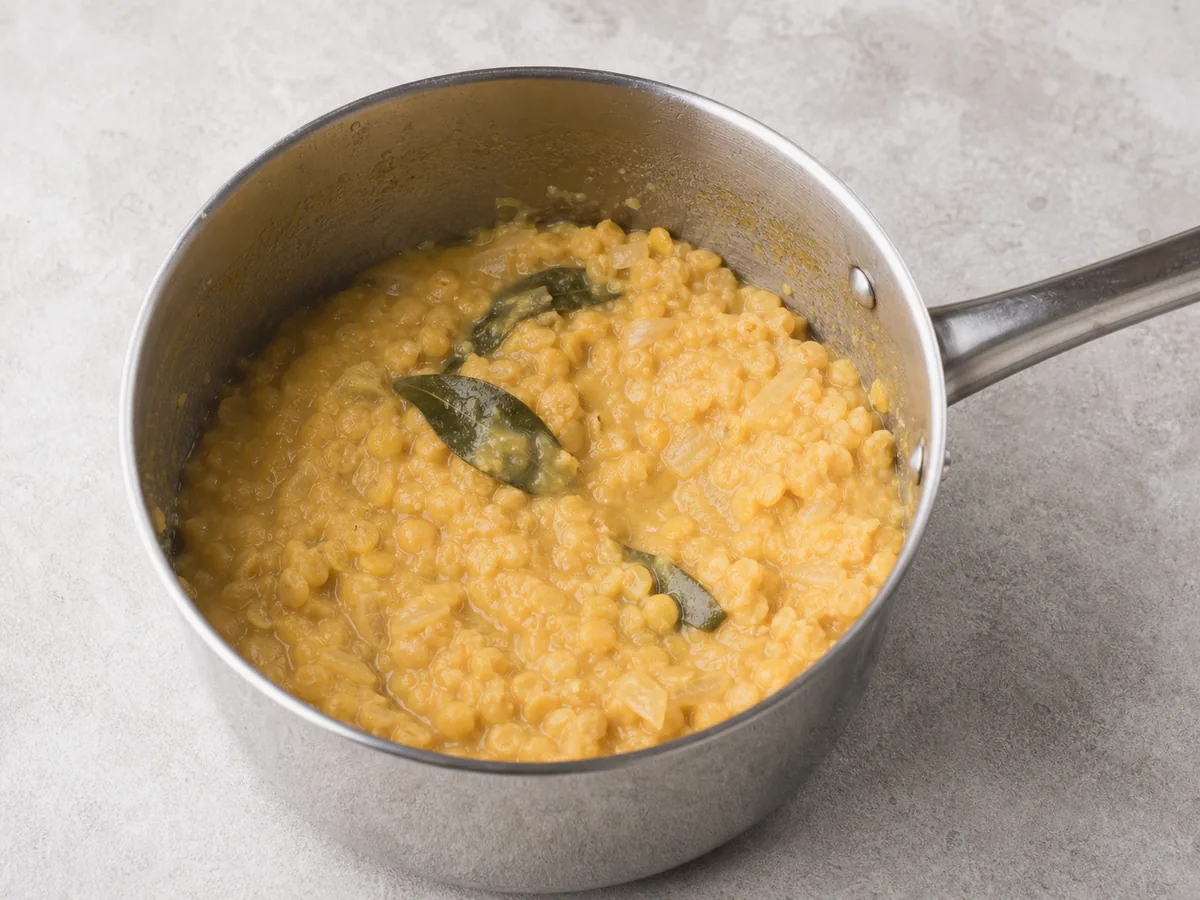
Bring the saucepan to a boil over high heat. Skim off any foam, then reduce the heat to low so the liquid bubbles gently. Partially cover and simmer for 35 to 45 minutes, stirring every 8 to 10 minutes and more often near the end, until the peas have broken down and only a small amount of thick liquid remains. Begin checking at 35 minutes; add a little hot water if the pan looks dry before the peas are completely soft. While the peas simmer, toast the pita as described in the next step.
35:00Toast the pita while the fava simmers
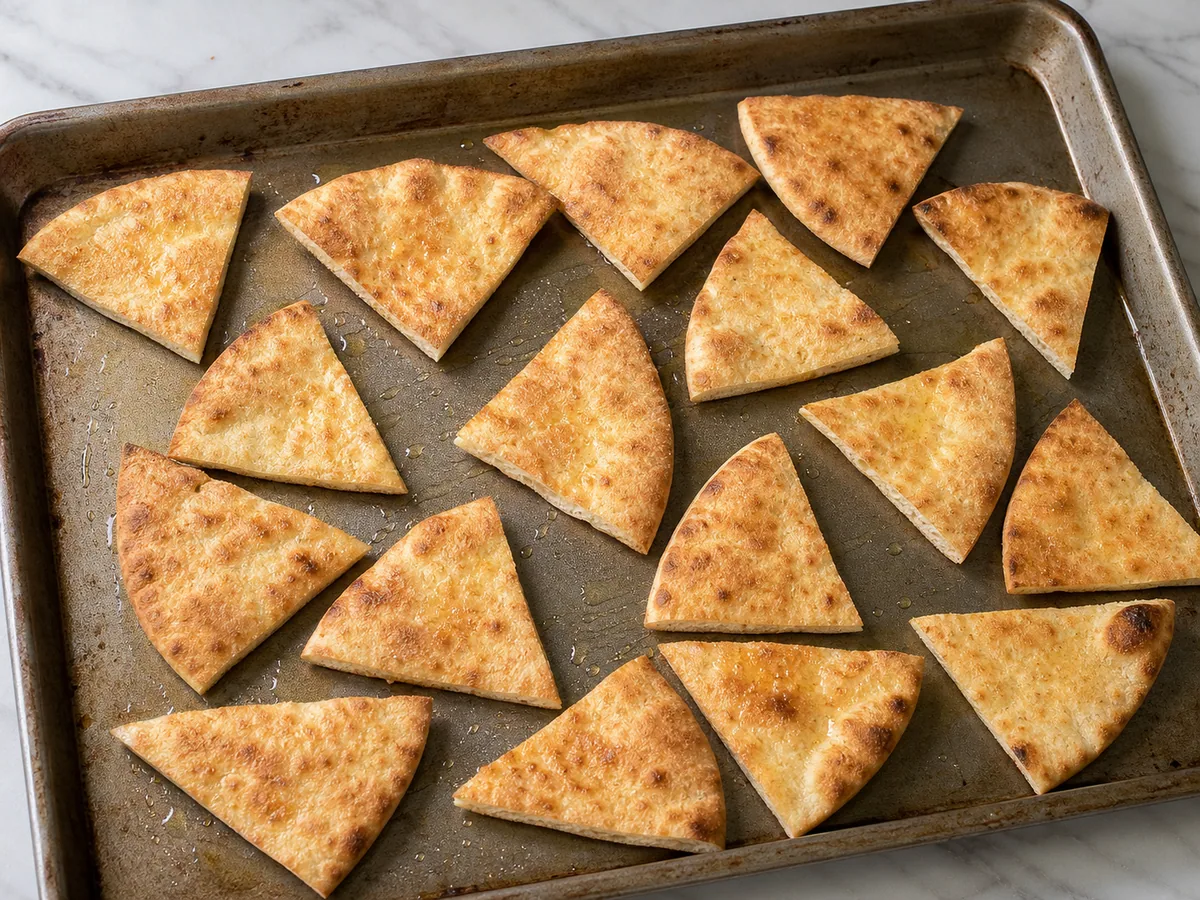
While the fava simmers, heat the oven to 200°C (400°F). Cut 240 g of large wheat pita breads into wedges and spread them on a sheet pan. Drizzle with 15 ml of olive oil for pita, toss to coat, and arrange the wedges in one layer. Bake for 8 to 10 minutes, turning once, until crisp with browned edges. Begin checking at 8 minutes.
08:00Let the fava cool briefly
Remove and discard the bay leaves, then let the pea mixture stand uncovered for 5 minutes so the strongest steam subsides before blending.
05:00Blend the fava until silky
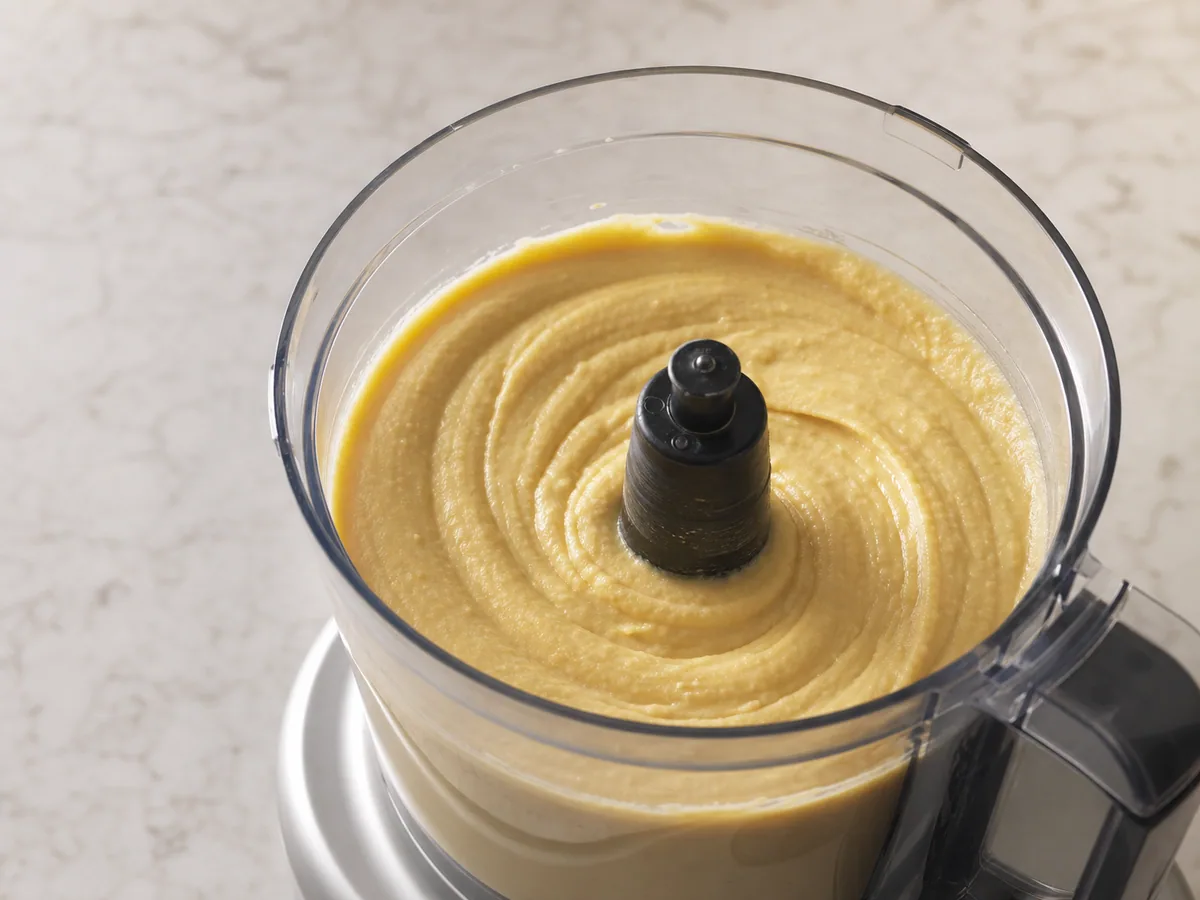
Add 45 ml of extra virgin olive oil, 45 ml of fresh lemon juice, 3 g of kosher salt, and 1 g of black pepper. Blend directly in the pan with an immersion blender for 1 to 2 minutes, moving the blender around the base, until the puree is smooth and glossy. Blend in a little hot water only if needed to make it softly spoonable.
01:00Add the briny topping and serve
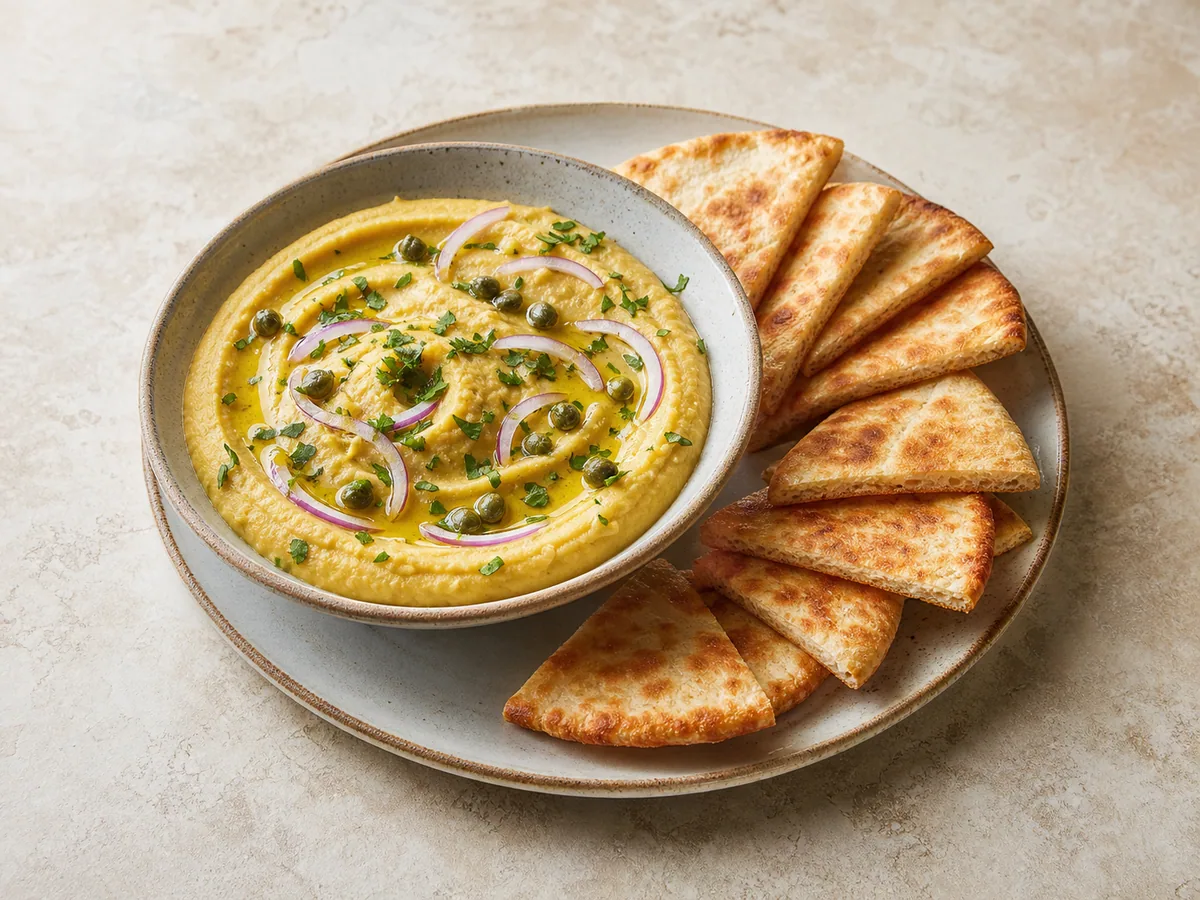
Spread the warm fava in a shallow serving bowl. Slice 60 g of red onion very thinly. Drain and rinse 18 g of capers, then pat them dry. Scatter the onion and capers over the puree and drizzle with 15 ml of extra virgin olive oil for serving. Chop fresh parsley (optional) and scatter it over the top. Serve immediately with the toasted pita wedges.


Smart Substitutions
- No yellow split peas? Use green split peas; the flavor remains earthy, but the color will be muted and the cooking time may be slightly longer.
- No capers? Use chopped green olives for a similarly briny finish.
- No fresh lemon? Use apple cider vinegar, adding it gradually so the puree stays bright rather than sharp.
- No pita? Serve the fava with toasted flatbread, crusty bread, or crisp cucumber slices.
Tips and Variations
- Use a wide saucepan so the peas cook evenly and excess liquid can reduce without prolonged boiling.
- Skim the early foam for a cleaner-tasting puree and wipe the rim of the pan before lowering the heat.
- Rinse the capers briefly so their briny flavor accents the lemon and onion instead of dominating them.
What Went Wrong?
- Puree is grainy The peas need more cooking. Return the pan to low heat with a splash of hot water and simmer until they crush easily, then blend again.
- Fava is too thick Blend in hot water a spoonful at a time until the puree falls softly from the spoon.
- Fava is too loose Simmer it over low heat for a few minutes, stirring constantly, until it holds a gentle swirl.
- Flavor tastes flat Adjust the salt first, then add a small squeeze of lemon and taste again before adding more capers.
Nutrition Estimate
- Fiber: 14 g per serving
- Sodium: 540 mg per serving
Nutrition disclaimer:This recipe is provided for general cooking information only. Nutrition values are estimates and may vary by ingredients, brands, preparation methods, and serving sizes. Check ingredient labels and follow appropriate food-safety practices. This content is not medical, dietary, allergy, or professional food-safety advice.
FAQ
Found an error or have a suggestion?
Help us improve this recipe. Send us your feedback and include the recipe name so we can take a look.