Method
Prepare the chicken and vegetables
Pat 900 g of boneless skinless chicken thighs dry with paper towels on a clean work surface. Wash your hands after handling the chicken, then season it all over with 4 g of kosher salt and 1 g of black pepper. Chop 1 yellow onion, cut 1 carrot into small dice, slice 2 celery stalks, and mince 4 garlic cloves on a separate clean board. Rinse 80 g of pitted green olives briefly and drain well.
Brown the chicken
Heat 15 ml of olive oil in a wide, deep skillet over medium-high heat until it shimmers. Brown 900 g of boneless skinless chicken thighs in two uncrowded batches. For each batch, cook for 8 minutes total, turning once, until both sides have deep golden patches; restart the 8-minute timer for the second batch. The chicken will not be cooked through yet. Move each batch to a clean plate and keep the raw-chicken plate and utensils away from ready-to-eat ingredients.
08:00Soften the aromatics
Reduce the heat to medium. Add 1 yellow onion, 1 carrot, and 2 celery stalks to the skillet. Cook for 7 minutes, stirring and scraping the browned bits from the bottom, until the onion is translucent and the vegetables begin to soften. Lower the heat if the fond starts to darken too quickly.
07:00Build the braising sauce
Stir in 4 garlic cloves, 30 g of tomato paste, 1 g of dried oregano, 1 sprig of fresh rosemary, and 1 bay leaf. Cook for 1 minute, stirring constantly, until the tomato paste darkens slightly and the garlic smells fragrant. Pour in 800 g of no-salt-added crushed tomatoes and 240 ml of low-sodium chicken broth, then scrape the skillet thoroughly so the browned fond dissolves into the sauce. Bring the mixture to a gentle simmer.
01:00Braise until tender
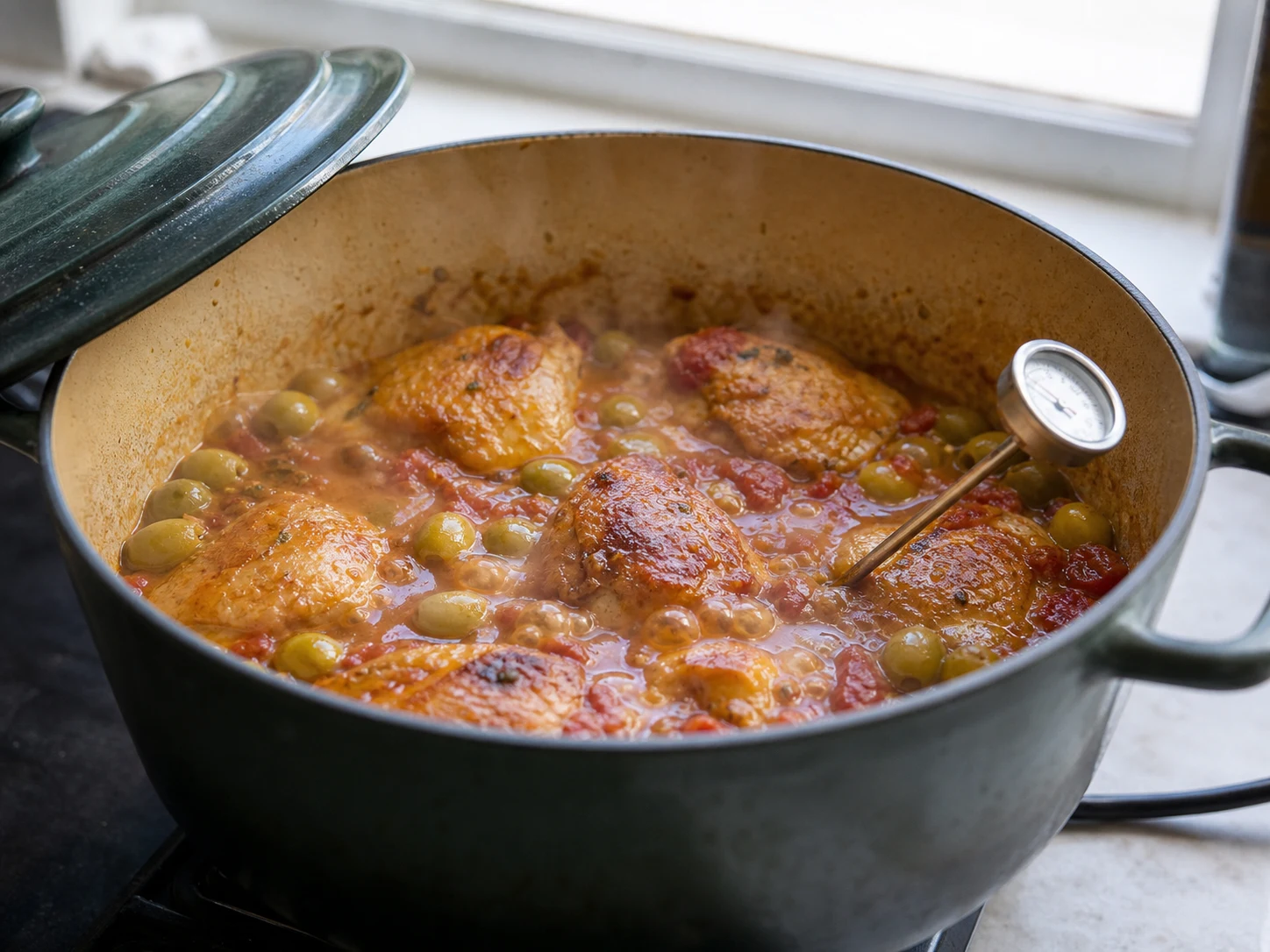
Return 900 g of boneless skinless chicken thighs and any juices to the skillet, nestling the pieces into the sauce, then scatter 80 g of pitted green olives around them. Partially cover and keep the sauce at a gentle bubble for 25 to 30 minutes. Begin checking at 25 minutes: insert a food thermometer into the thickest part of the largest thigh and continue cooking until it reaches at least 74°C/165°F. The chicken should feel tender and the sauce should lightly coat a spoon.
25:00Finish the sauce and serve
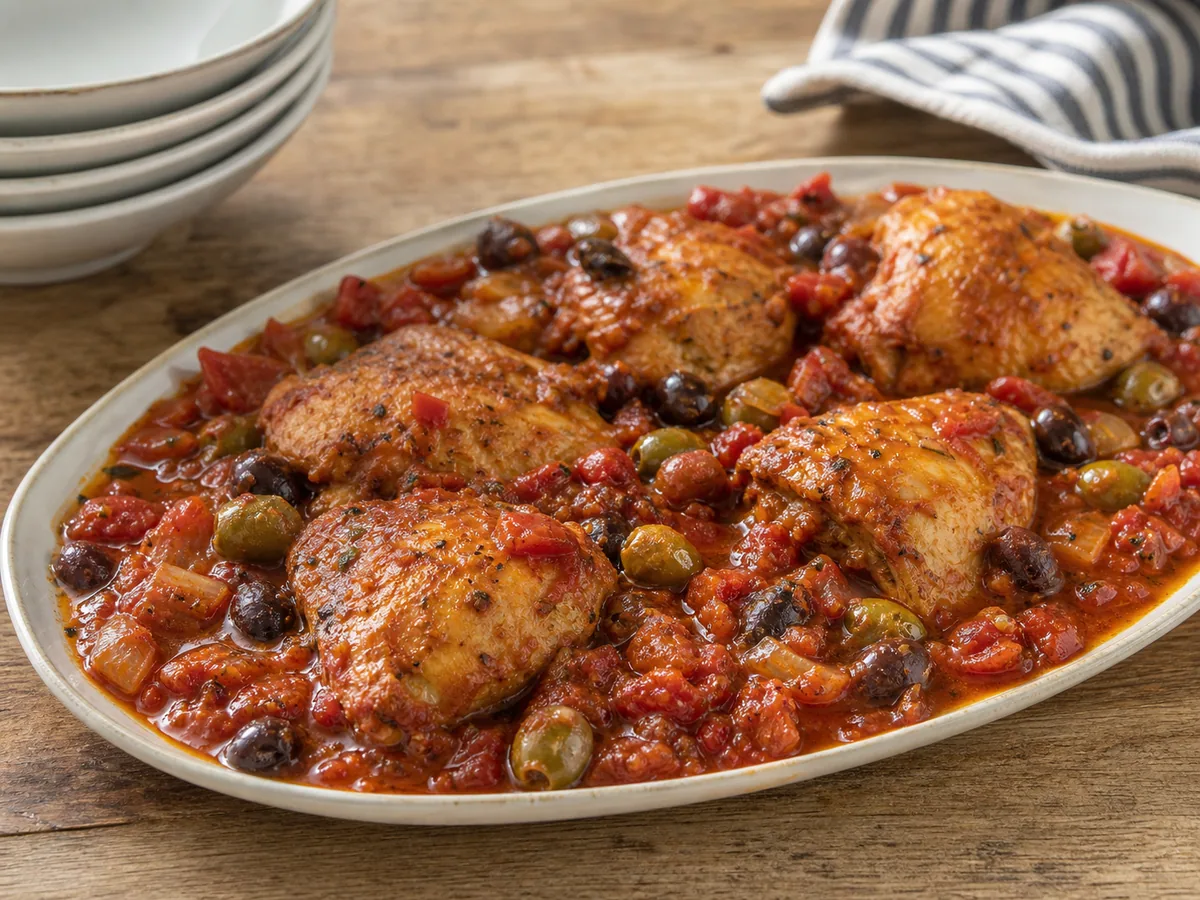
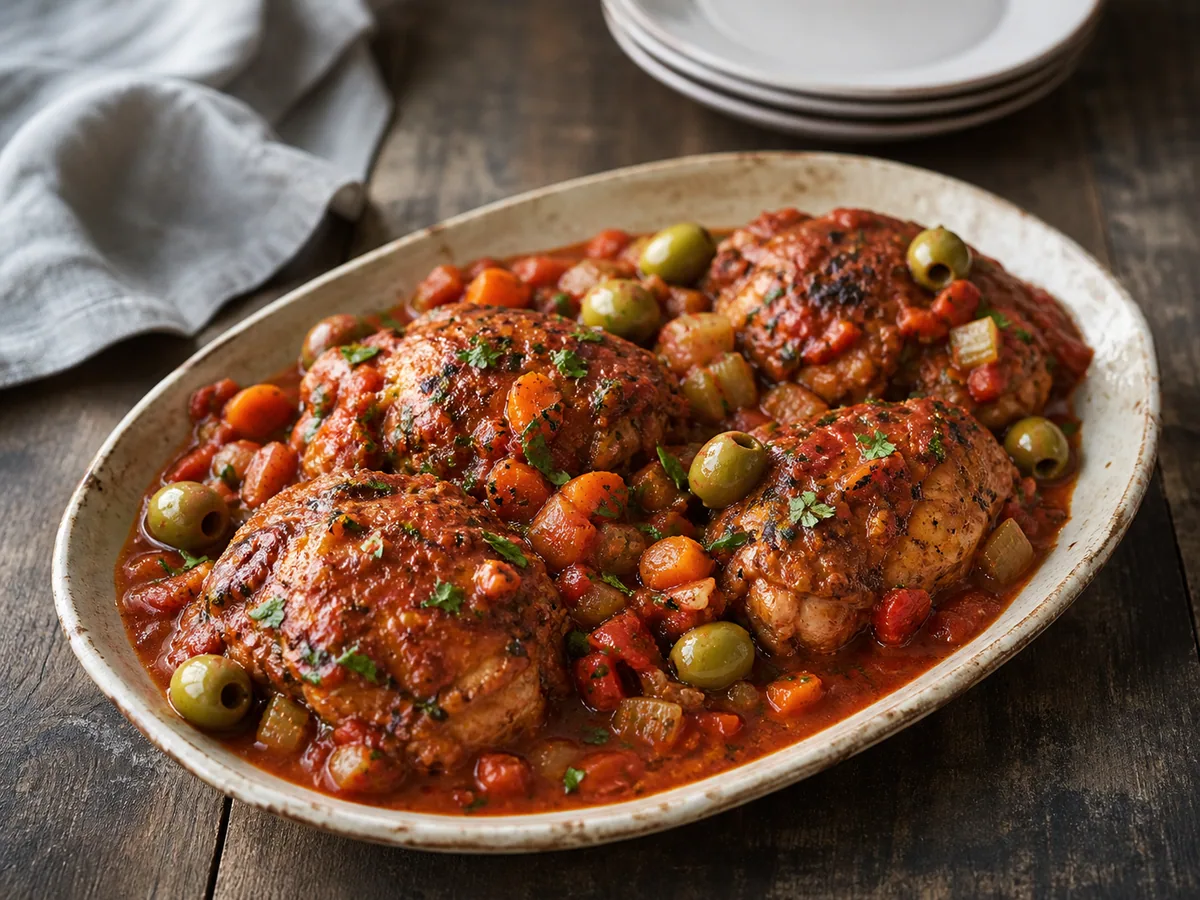
Move 900 g of boneless skinless chicken thighs to a clean serving platter. Discard the rosemary sprig and bay leaf, then simmer the sauce uncovered over medium heat for 5 minutes, stirring occasionally, until glossy and slightly thicker. Stir in 15 ml of red wine vinegar, taste, and adjust the seasoning only if needed. Spoon the tomato-olive sauce over the chicken and finish with fresh parsley (optional).
05:00


Smart Substitutions
- No green olives? Use pitted Kalamata olives for a deeper, fruitier flavor or Castelvetrano olives for a milder buttery note.
- No chicken broth? Use water, then taste the finished sauce before adding any extra salt.
- No fresh rosemary? Use fresh thyme, or use 1/4 teaspoon dried rosemary, crushed between your fingers, so the herb does not dominate the tomatoes.
- Prefer bone-in thighs? Use the same total weight and extend the gentle braise as needed until the thickest part reaches 74°C/165°F and the meat is tender.
Tips and Variations
- Brown the chicken in batches when the skillet is crowded; a little space is what creates the savory crust that flavors the sauce.
- Keep the olives whole or halve only the largest ones so their briny flavor comes through in distinct bites.
- Use a nonreactive skillet such as stainless steel or enamel-coated cast iron for the tomato sauce.
What Went Wrong?
- Sauce is watery Move the cooked chicken to the platter and simmer the sauce uncovered until it coats a spoon.
- Sauce tastes too salty Stir in a splash of unsalted broth or crushed tomatoes, simmer briefly, and taste again before serving.
- Chicken is cooked but not tender Keep it at a gentle simmer for a few more minutes; thigh meat becomes more tender as connective tissue softens.
- Tomato sauce catches on the pan Lower the heat immediately and stir in a small splash of broth, scraping gently without pulling any scorched bits into the sauce.
Nutrition Estimate
- Fiber: 6 g per serving
- Sodium: 970 mg per serving
Nutrition disclaimer:This recipe is provided for general cooking information only. Nutrition values are estimates and may vary by ingredients, brands, preparation methods, and serving sizes. Check ingredient labels and follow appropriate food-safety practices. This content is not medical, dietary, allergy, or professional food-safety advice.
FAQ
Found an error or have a suggestion?
Help us improve this recipe. Send us your feedback and include the recipe name so we can take a look.