Method
Prepare the vegetables and aromatics
Remove the tough core from 800 g of red cabbage and cut the leaves into thin shreds. Core 180 g of tart apple and cut it into small pieces. Chop 100 g of yellow onion for cabbage. Chop 100 g of yellow onion for filling finely, then cut 80 g of dill pickles into narrow batons. Chop 120 g of yellow onion for gravy, 100 g of carrot, and 80 g of celery into small pieces so they soften evenly in the braising pot.
Fill and roll the rouladen
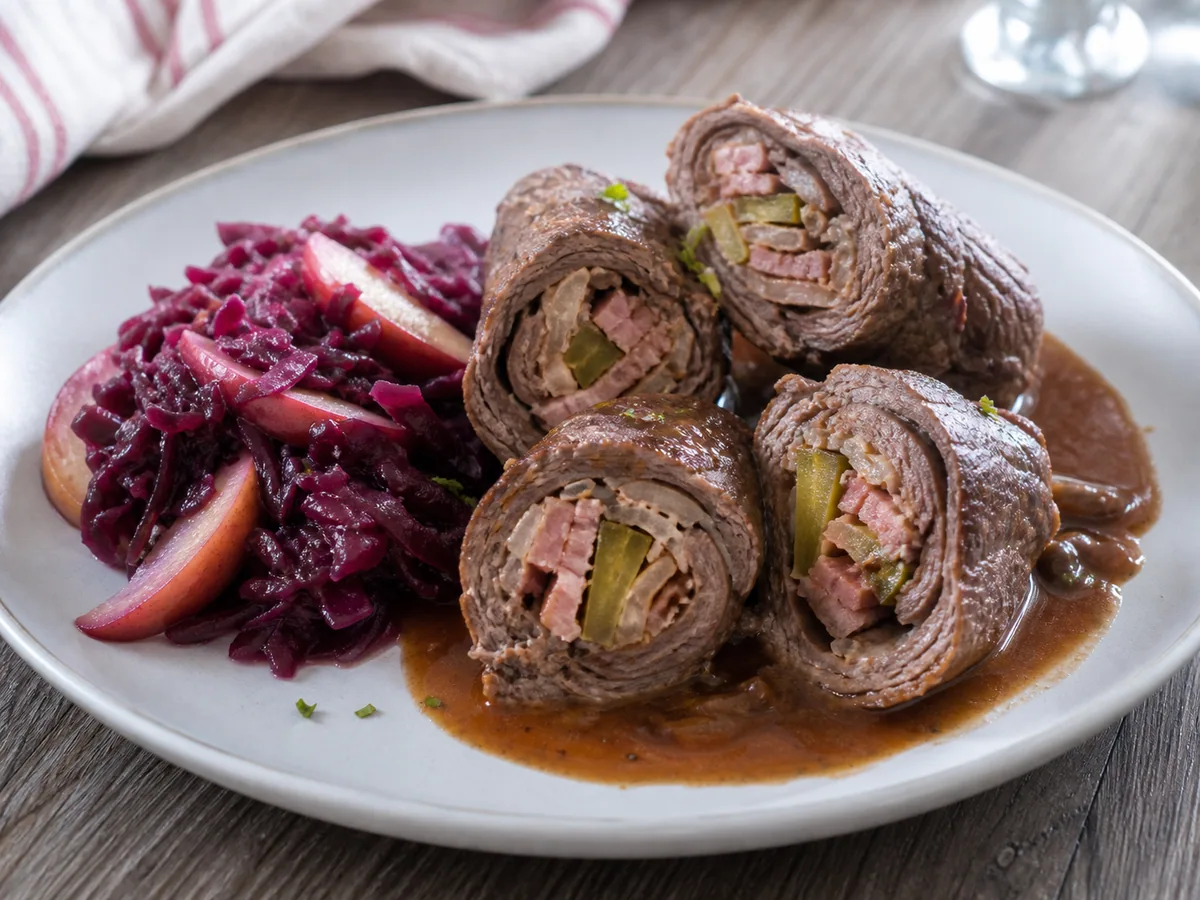
Arrange 4 slices of top round beef slices (about 6 oz/170 g each) on a washable work surface. Pound each slice between sheets of baking paper to an even thickness of about 3 mm (1/8 in), taking care not to tear it. Spread 30 g of Dijon mustard over the upward-facing sides, then season with 1 1/2 g of fine salt for rouladen and 1.3 g of black pepper. Divide 80 g of smoked bacon, 100 g of yellow onion for filling, and 80 g of dill pickles among the slices, leaving a small border. Fold the long edges inward, roll each slice firmly from a short end, and secure the seam with kitchen string or toothpicks. Wash hands, utensils, and the work surface thoroughly before touching cooked food or serving pieces.
Brown the rouladen
Heat a wide Dutch oven or heavy lidded pot over medium-high heat. Add 15 ml of neutral cooking oil. When the oil shimmers, set the rolls in seam-side down without crowding the pot. Brown them in batches on all sides until a dark golden crust forms, then transfer them to a clean plate. Do not return cooked food to the plate or tools that held the raw beef.
Build the braising base
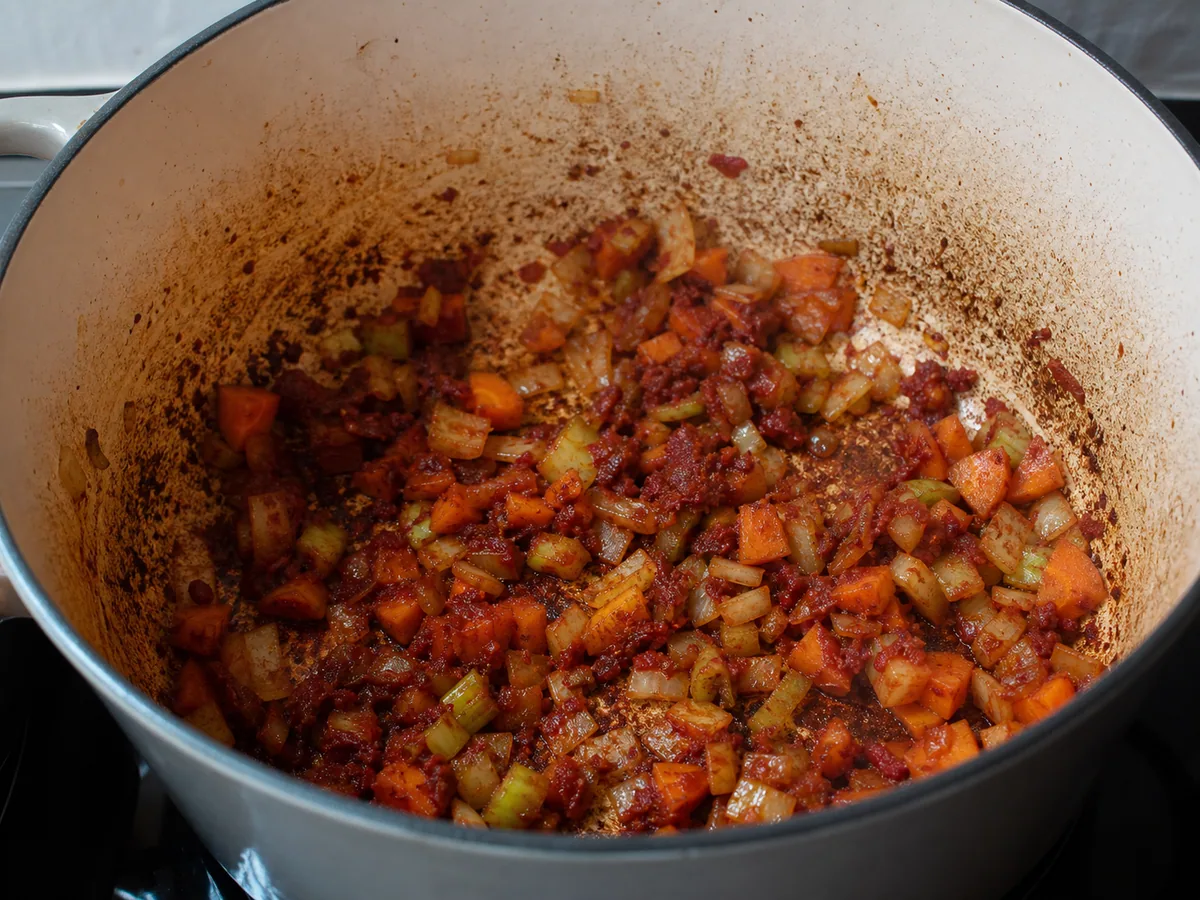
Reduce the heat to medium. Add 120 g of yellow onion for gravy, 100 g of carrot, and 80 g of celery to the same pot. Cook for 7 to 8 minutes, stirring and scraping the browned residue from the bottom, until the vegetables soften and take on a little color. Stir in 20 g of tomato paste and cook until it darkens to brick red and leaves a light film on the pot.
07:00Braise until tender
Pour in 700 ml of low-sodium beef broth and scrape the pot clean. Add 2 bay leaves for gravy and 6 juniper berries, then return the browned rouladen and any juices to the pot. The liquid should come about halfway up the rolls. Bring it just to a simmer, cover, and reduce the heat to low. Braise gently for 90 to 105 minutes, turning the rolls once, until a fork enters easily. Begin checking at 90 minutes. Use a food thermometer through the center of the thickest roll and filling; it must register at least 74°C/165°F. Keep braising if the beef has reached a safe temperature but is not yet tender.
90:00Braise the red cabbage
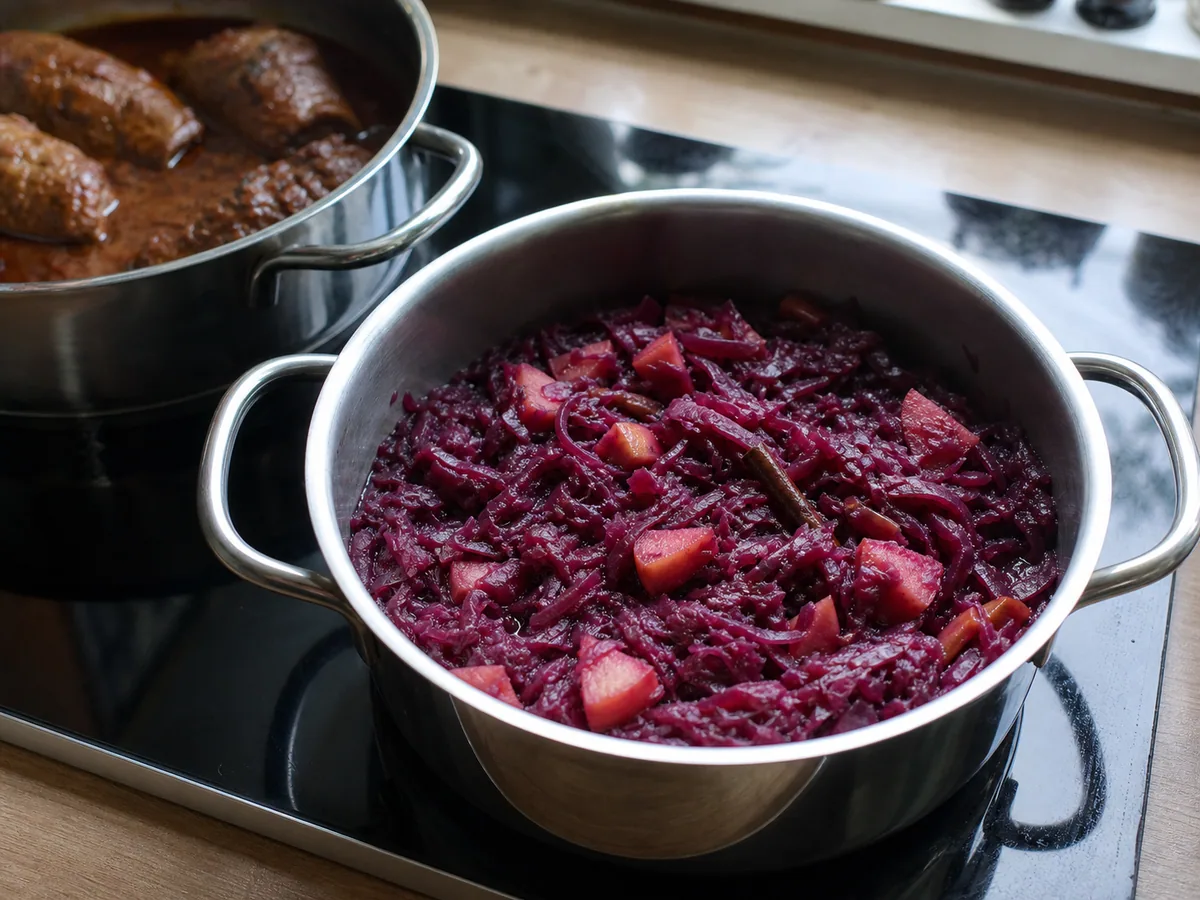
While the rouladen braise, melt 20 g of unsalted butter for cabbage in a second heavy pot over medium heat. Add 100 g of yellow onion for cabbage and cook, stirring, until softened without browning. Add 800 g of red cabbage and 180 g of tart apple, then stir in 20 g of light brown sugar, 45 ml of apple cider vinegar, 120 ml of unsweetened apple juice, 1 bay leaf for cabbage, 4 whole cloves, 1 cinnamon stick, and 1 1/2 g of fine salt for cabbage. Bring the liquid to a gentle simmer, cover, and cook over low heat for 60 to 75 minutes, stirring occasionally. Begin checking at 60 minutes; the cabbage should be tender, glossy, and still hold slender strands rather than collapse into puree. Remove the bay leaf, cloves, and cinnamon stick.
60:00Finish the gravy
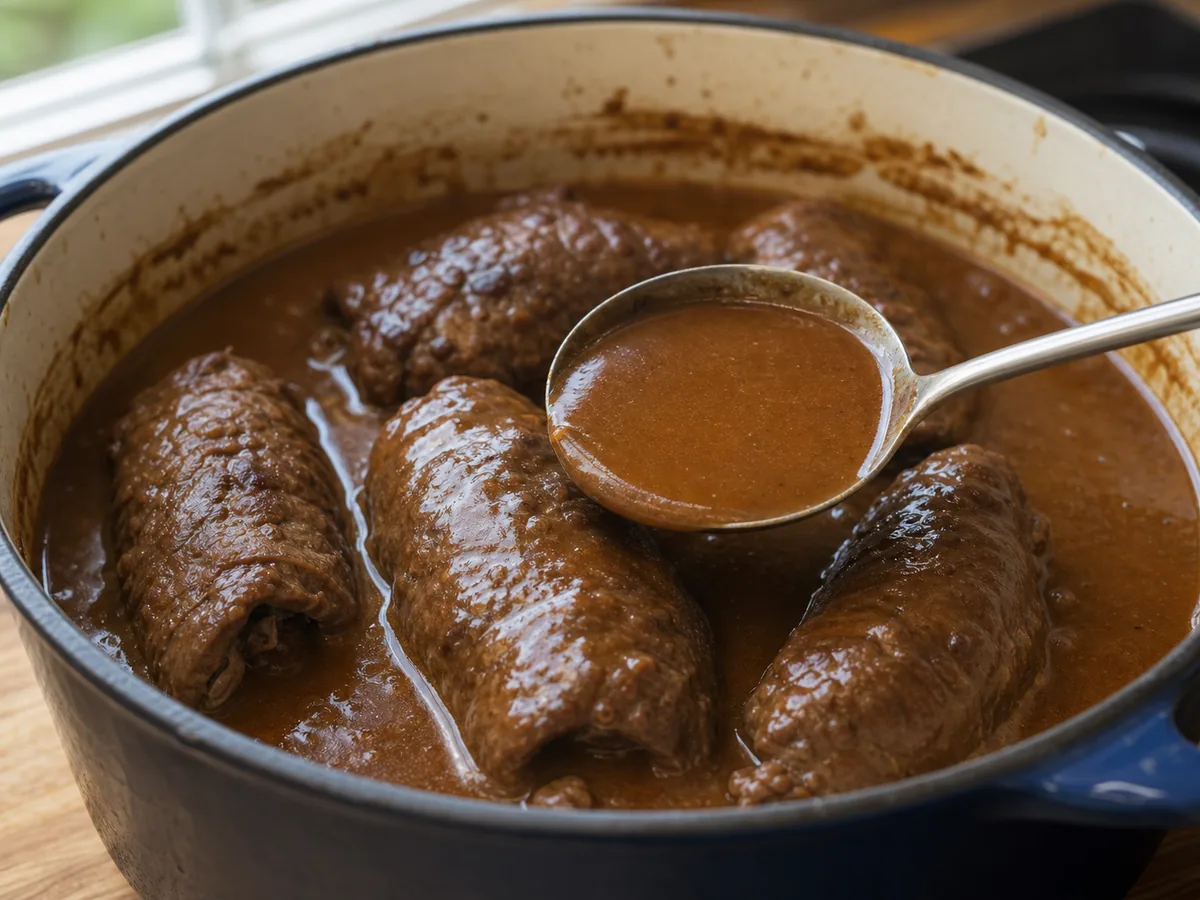
Transfer the fully cooked rouladen to a clean warm plate and remove 2 bay leaves for gravy and 6 juniper berries. Blend the braising liquid and softened vegetables with an immersion blender until smooth, or press them through a fine sieve. Mash 15 g of unsalted butter for gravy with 15 g of all-purpose flour to make a smooth paste. Bring the gravy to a gentle simmer and whisk in small pieces of the paste until the sauce lightly coats a spoon. Simmer for 3 to 5 minutes to cook out the flour taste, beginning the check at 3 minutes. Return the rouladen to the gravy and turn them gently to coat.
03:00Remove the fasteners and serve
Lift the rouladen from the gravy and remove every piece of string or every toothpick. Spoon the braised red cabbage onto warm plates, add the rouladen, and ladle the gravy over the beef. Serve immediately while the gravy is fluid and the cabbage is hot.


Smart Substitutions
- No top round? Use bottom round or sirloin tip cut into broad thin slices, then pound them evenly before filling.
- No juniper berries? Omit them or use two lightly crushed allspice berries for a different but compatible warm note.
- No dill pickles? Use cornichons or another firm sour cucumber pickle rather than a sweet pickle.
- Prefer a lighter filling? Replace the smoked bacon with thin smoked ham; the gravy will be less rich, so brown the rolls thoroughly.
Tips and Variations
- Ask the butcher for broad slices cut across the grain; even thickness matters more than perfectly identical shapes.
- Set each roll seam-side down first when browning so the heat helps seal it before you turn it.
- Start the cabbage as soon as the beef is covered and simmering so both components finish at roughly the same time.
What Went Wrong?
- Rouladen unroll in the pot Secure the center and both ends more firmly, then begin browning seam-side down without moving the rolls until a crust forms.
- Beef is still tough Keep the pot covered at a very gentle simmer and check again after 10 to 15 minutes. Safe temperature confirms doneness, but additional braising time creates tenderness.
- Gravy is too thin Simmer it uncovered for a few minutes before adding more butter-flour paste; reduction gives better flavor than excess flour.
- Cabbage tastes too sharp Stir in a little more brown sugar and let it simmer briefly, then taste again before adding any more.
Nutrition Estimate
- Fiber: 8 g per serving
- Sodium: 1210 mg per serving
Nutrition disclaimer:This recipe is provided for general cooking information only. Nutrition values are estimates and may vary by ingredients, brands, preparation methods, and serving sizes. Check ingredient labels and follow appropriate food-safety practices. This content is not medical, dietary, allergy, or professional food-safety advice.
FAQ
Found an error or have a suggestion?
Help us improve this recipe. Send us your feedback and include the recipe name so we can take a look.