Method
Mix and knead the dough
Whisk 300 g of all-purpose flour with 4 1/2 g of fine sea salt in a wide bowl. Make a well, pour in 180 ml of warm water and 15 ml of extra-virgin olive oil for dough, and stir until a shaggy dough forms. Knead on a clean work surface for 7 to 8 minutes, until smooth, firm, and springy. Set the timer for 7 minutes as the first texture check; continue briefly if the surface still looks rough.
07:00Rest the dough
Shape the dough into a ball and cover it with an inverted bowl. Let it rest for 20 minutes at room temperature. It is ready when a pressed edge relaxes instead of snapping back immediately.
20:00Heat the oven and roll the dough
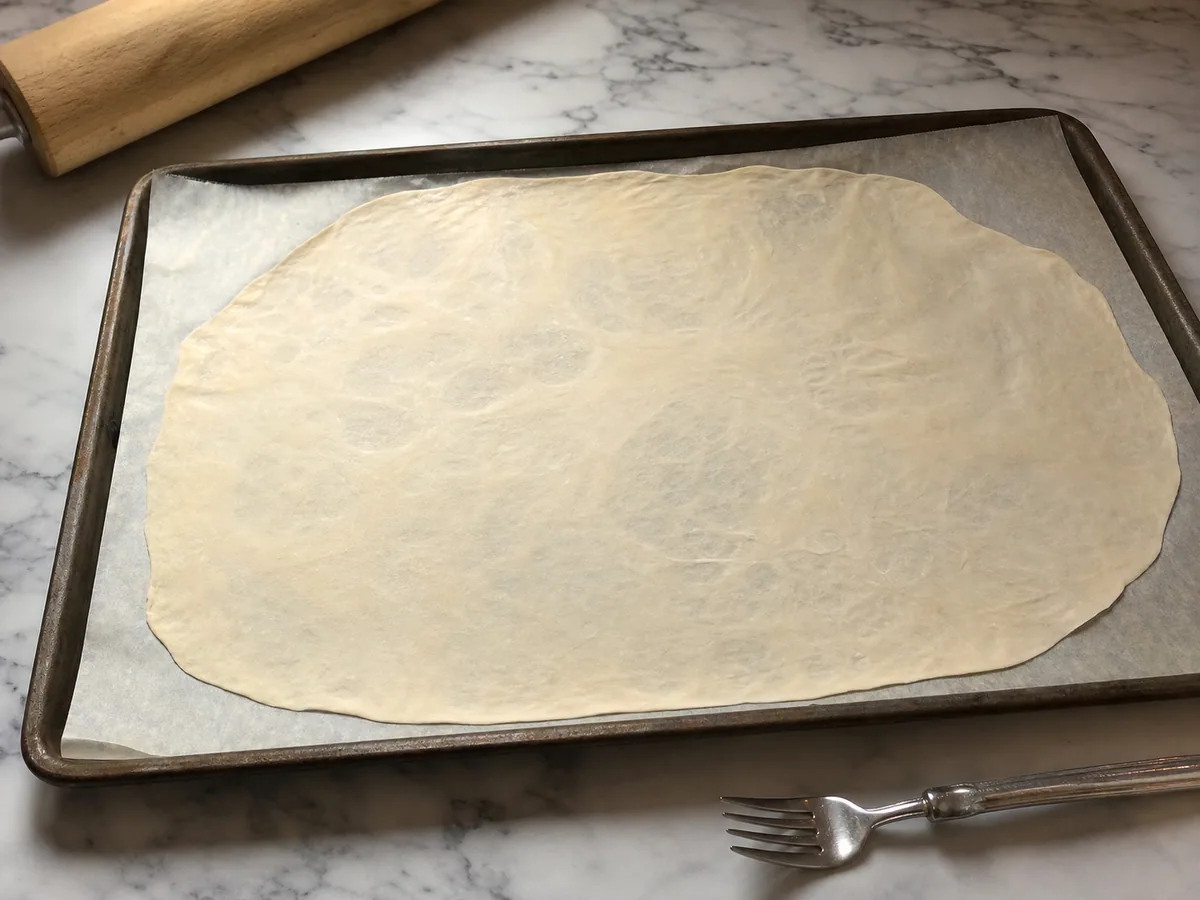
Heat the oven to 220°C (425°F). Arrange racks in the upper and lower thirds when baking two sheets at once, or use a centered rack for a single-sheet batch. Line one or two flat baking sheets with parchment, according to the batch size. Divide the dough into four equal pieces for the default batch, about 125 g each; when scaling, make one similarly sized piece for every 2 servings. Work with one piece at a time and cover the others with the inverted bowl. Roll each piece between two sheets of parchment to about 1 mm thick, nearly translucent, and large enough to fit comfortably on a baking sheet. Peel away the top parchment and prick the dough all over with a fork.
Add sesame and score the sheets
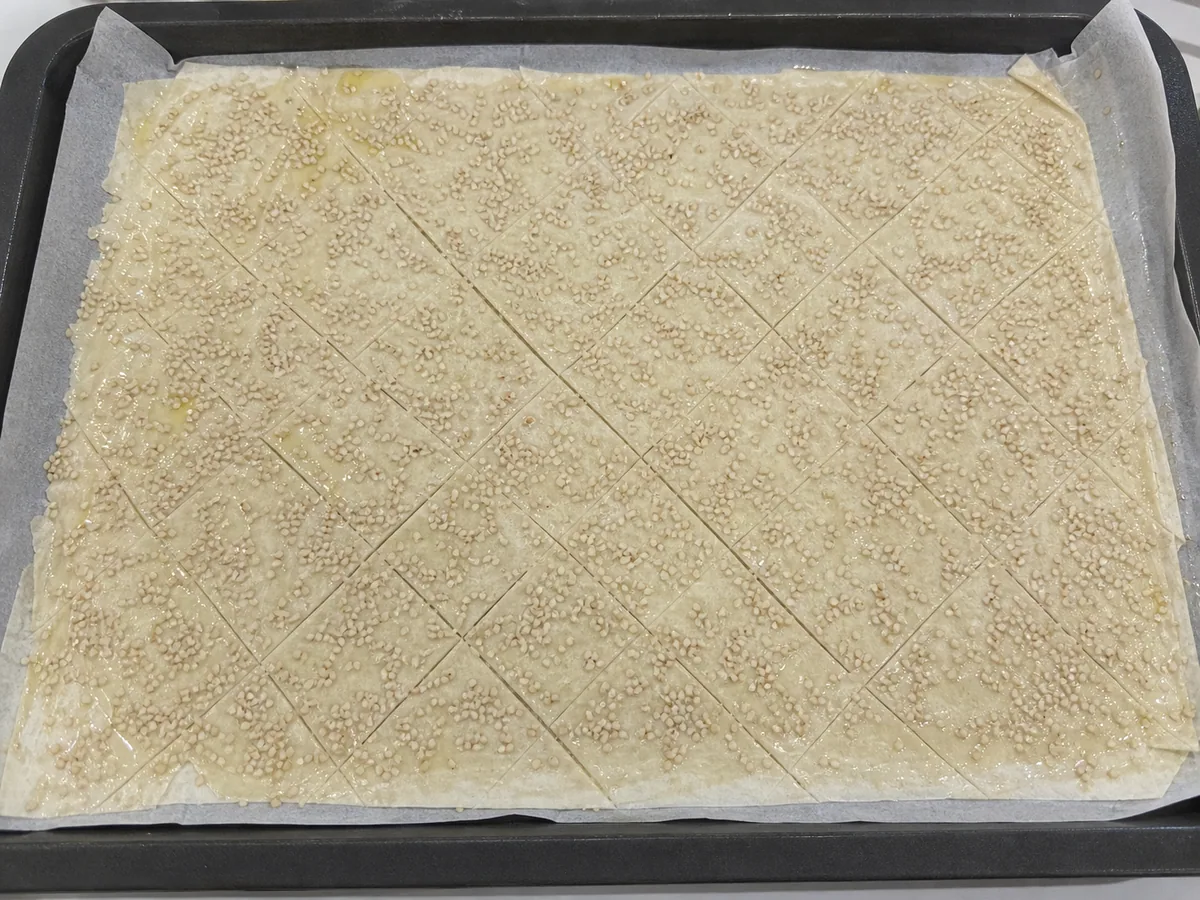
Brush 15 ml of extra-virgin olive oil for brushing in a very thin layer over the rolled sheets. Scatter 27 g of sesame seeds evenly across the surface and press gently with the rolling pin so the seeds sit flush with the dough. Score each sheet into rough diamonds with a pizza wheel or sharp knife, cutting almost but not completely through.
Bake until blistered and crisp
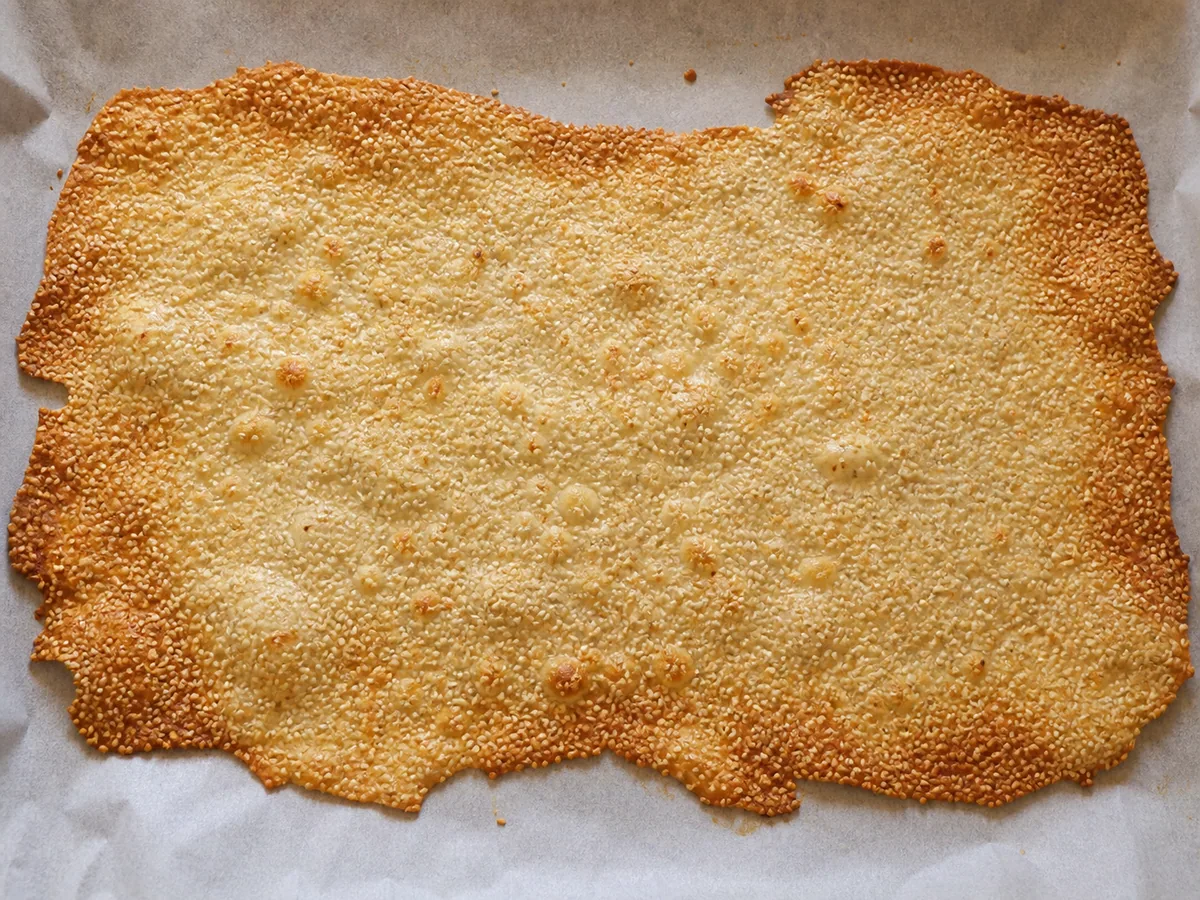
Slide up to two parchment sheets onto the baking sheets. Bake for 8 to 10 minutes, turning each sheet once halfway through and, when baking two sheets, swapping their rack positions, until the edges are deep golden, the centers look dry, and small blisters have formed. Set the timer for 8 minutes as the first check because thin spots darken quickly. Repeat until all sheets are baked; use the centered rack for any single-sheet batch.
08:00Cool, break, and serve
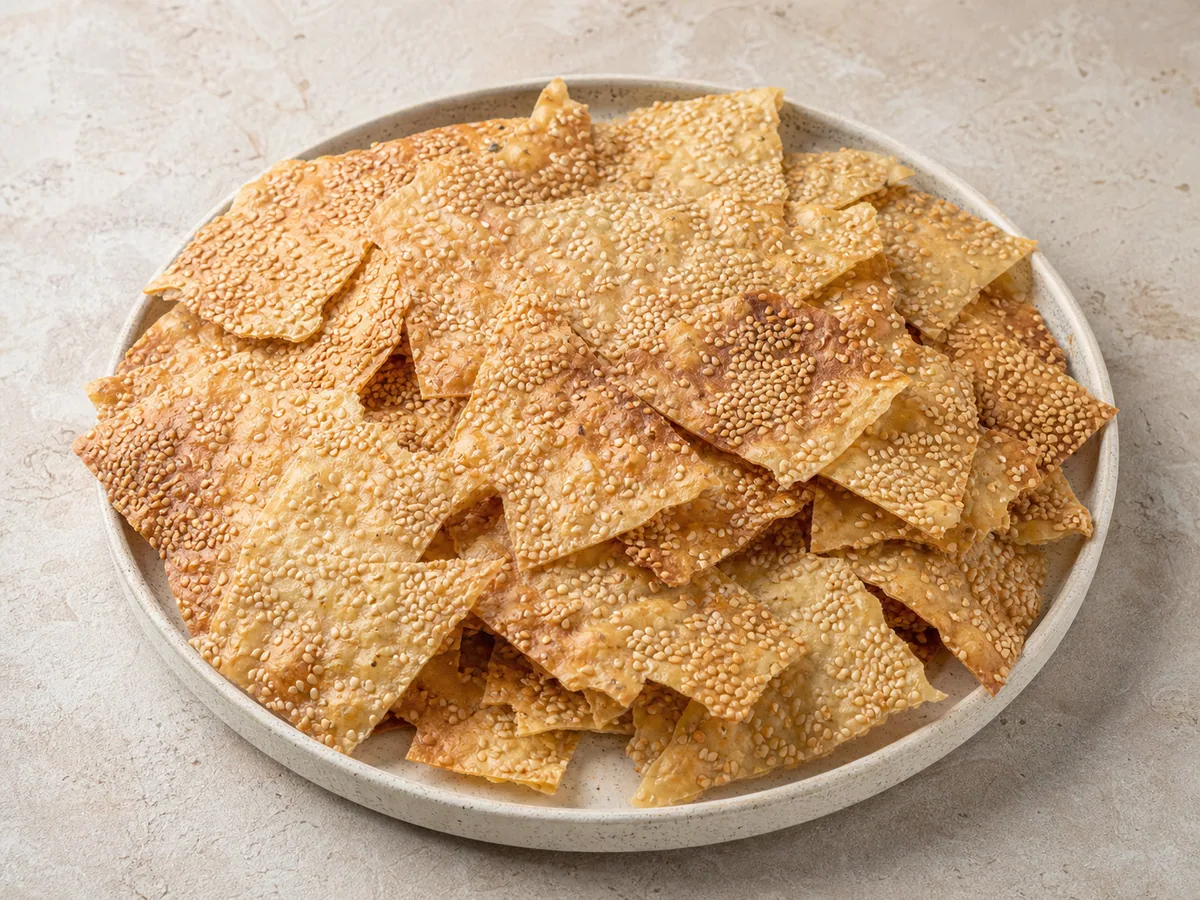
Leave the baked sheets on the pans for 5 minutes so their structure firms. Break them along the score lines into irregular crackers and serve when the pieces feel dry, brittle, and crisp rather than bendy.
05:00


Smart Substitutions
- Want whole-grain flavor? Replace up to one-quarter of the all-purpose flour with whole-wheat flour; add warm water 1 teaspoon (5 ml) at a time only if the dough remains dry or crumbly.
- No white sesame? Use black sesame seeds or a mixture of black and white seeds.
- No olive oil? Use a mild neutral oil in the dough and for brushing.
- Prefer a plainer cracker? For a plainer cracker, use half the listed sesame seeds and press them firmly into the oiled surface.
Tips and Variations
- Roll from the center outward and rotate the parchment often so thick bands do not form near the edges.
- Hold the rolled sheet up to the light; opaque patches need another pass with the rolling pin.
- Watch the final two minutes closely because the thinnest corners can move from golden to scorched very quickly.
What Went Wrong?
- Crackers bend instead of snap Roll the next sheet thinner and bake until the center looks fully dry, not merely pale.
- Edges burn before the center crisps Even out thick and thin areas while rolling, and remove individual dark pieces as soon as they are ready.
- Dough keeps shrinking Cover it and let it relax a little longer before rolling again.
- Sesame seeds fall away Use a thinner coat of oil, then press the seeds flush with the dough before scoring.
Nutrition Estimate
- Fiber: 2 g per serving
- Sodium: 220 mg per serving
Nutrition disclaimer:This recipe is provided for general cooking information only. Nutrition values are estimates and may vary by ingredients, brands, preparation methods, and serving sizes. Check ingredient labels and follow appropriate food-safety practices. This content is not medical, dietary, allergy, or professional food-safety advice.
FAQ
Found an error or have a suggestion?
Help us improve this recipe. Send us your feedback and include the recipe name so we can take a look.