Method
Rinse and soak the rice
Put 75 g of basmati rice in a fine-mesh sieve and rinse under cool running water until the runoff is nearly clear. Transfer it to a bowl, cover generously with cool water, and soak for 20 minutes. Drain thoroughly before cooking.
20:00Prepare the cardamom and nuts
While the rice soaks, lightly crush 7 green cardamom pods with the flat side of a knife just enough to split the husks. Chop 25 g of blanched almonds and 20 g of shelled unsalted pistachios into uneven small pieces. Toast the nuts in a dry skillet over medium-low heat for 2 to 3 minutes, stirring, until fragrant and lightly golden; tip them onto a plate so they do not keep browning.
02:00Bring the milk to a gentle simmer
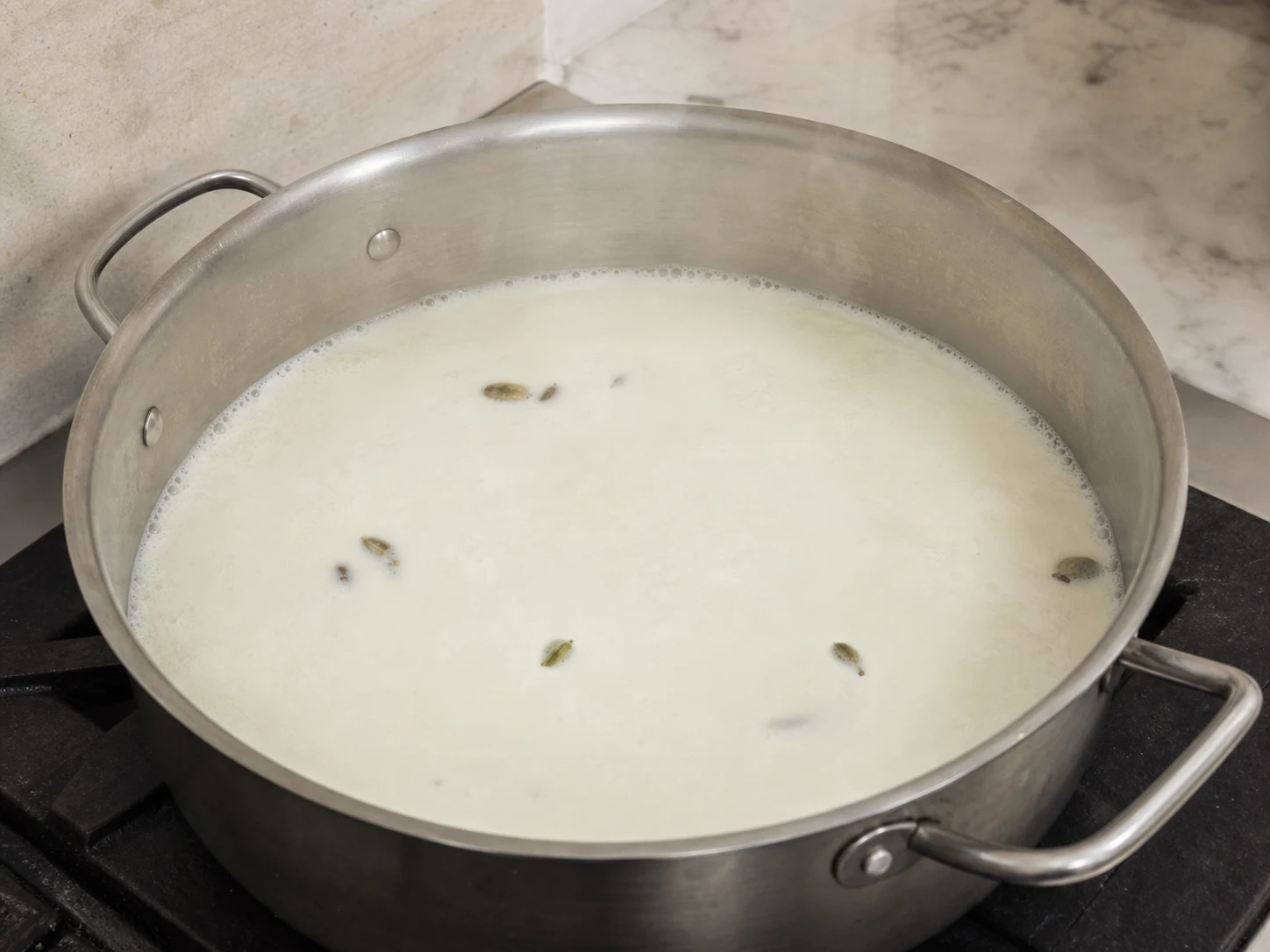
Add 1200 ml of pasteurized whole milk, 7 green cardamom pods, and 3/4 g of fine sea salt to a wide, heavy-bottomed saucepan. Heat over medium, stirring across the base and around the edges every minute, until the milk is steaming and small bubbles gather at the rim, about 8 to 10 minutes. Do not let it boil vigorously.
08:00Cook the rice until very soft
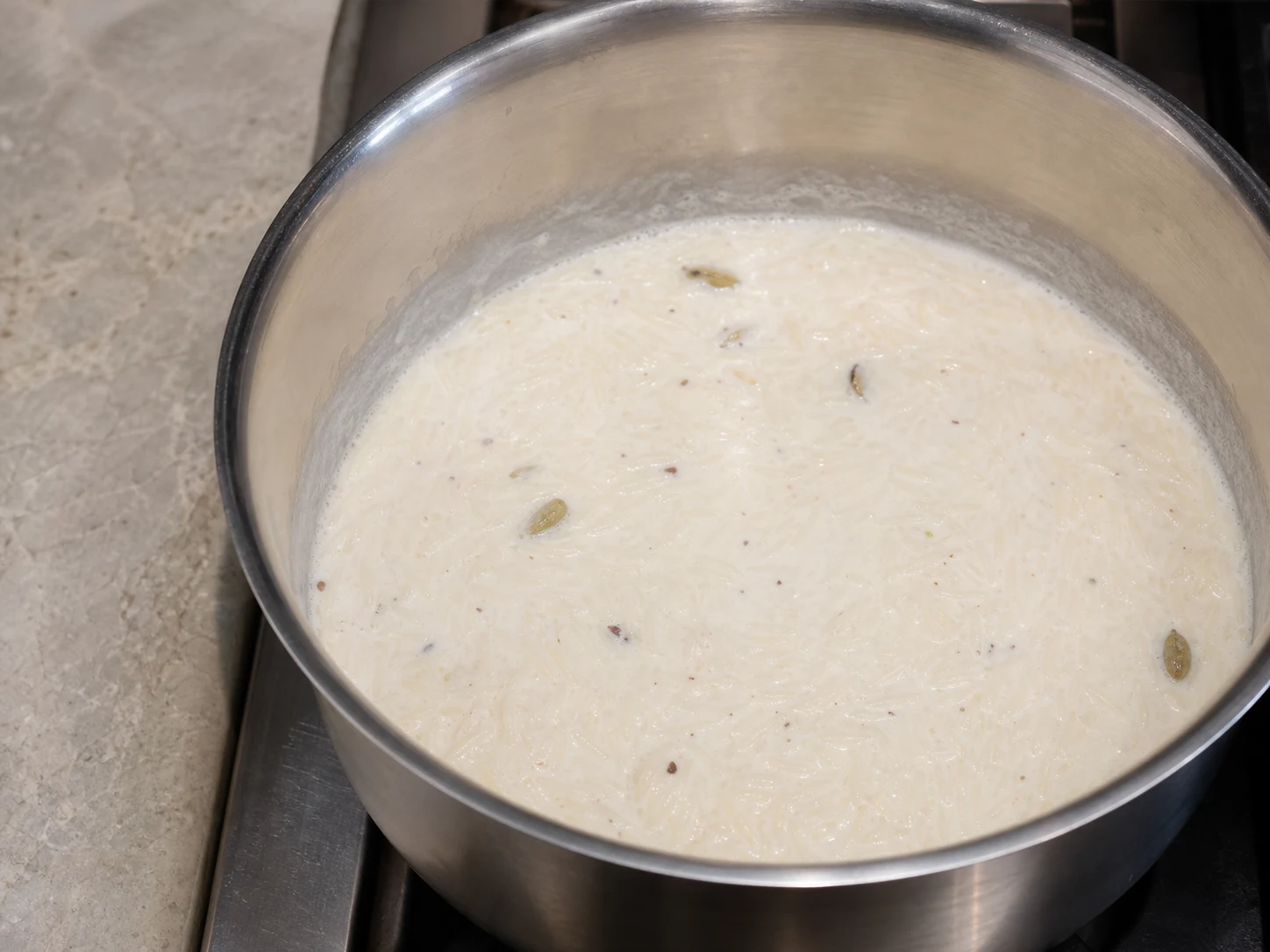
Add 75 g of basmati rice, now soaked and drained, and lower the heat to maintain a bare simmer. Cook for 30 to 35 minutes, stirring every 2 to 3 minutes and scraping the base and milk solids from the sides back into the pot. Begin checking at 30 minutes: the grains should look swollen, break easily against the side of the pan, and sit in milk that has reduced but is still loose.
30:00Sweeten and thicken the kheer
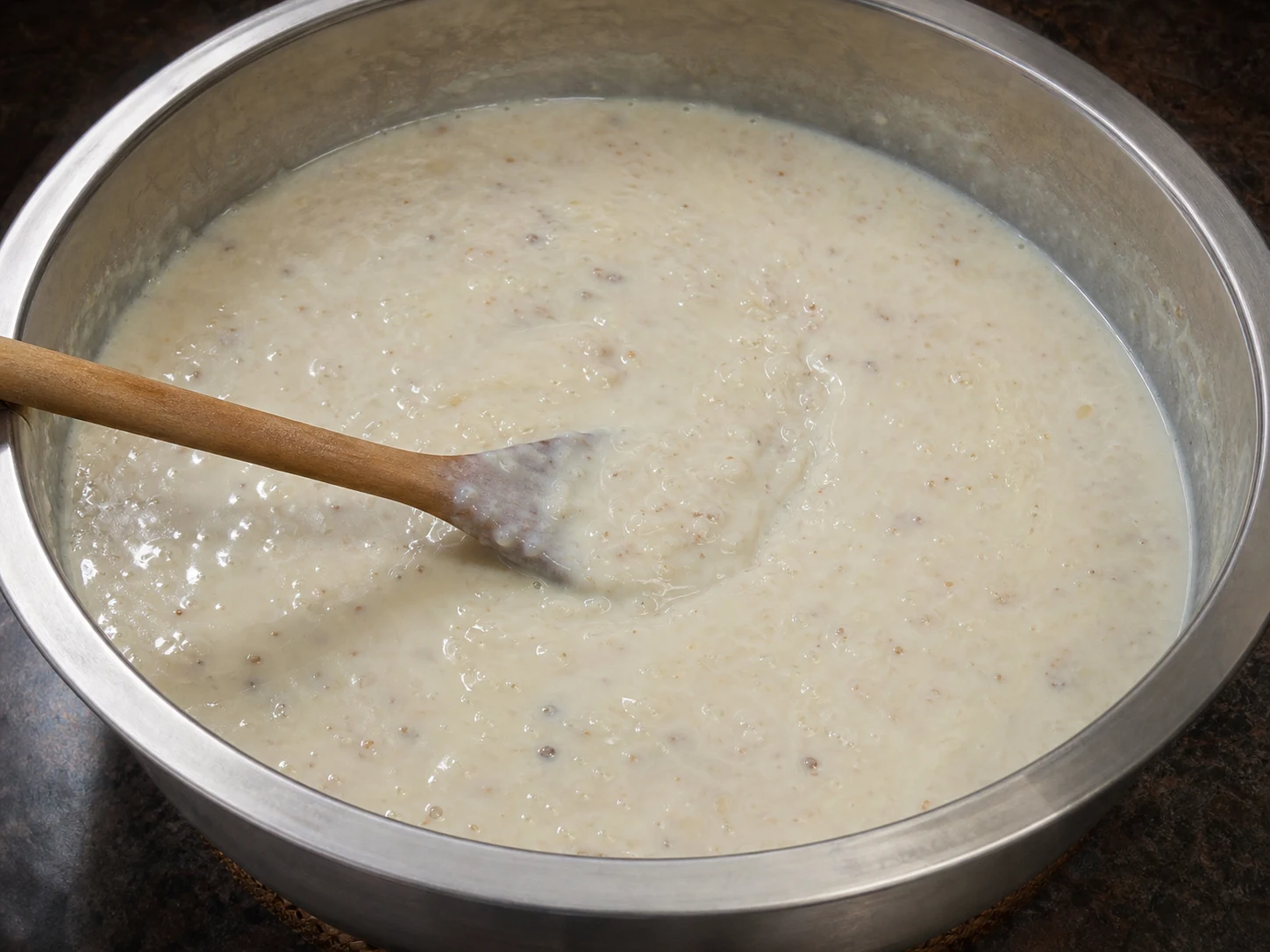
Stir in 100 g of granulated sugar and keep the kheer at a bare simmer for 10 to 12 minutes. Stir every minute or two, reaching into the corners of the pan, until the sugar has dissolved and the kheer looks glossy. It is ready when a spoon drawn through the pot leaves a trail that stays visible for a second before closing.
10:00Finish with rose water and toasted nuts
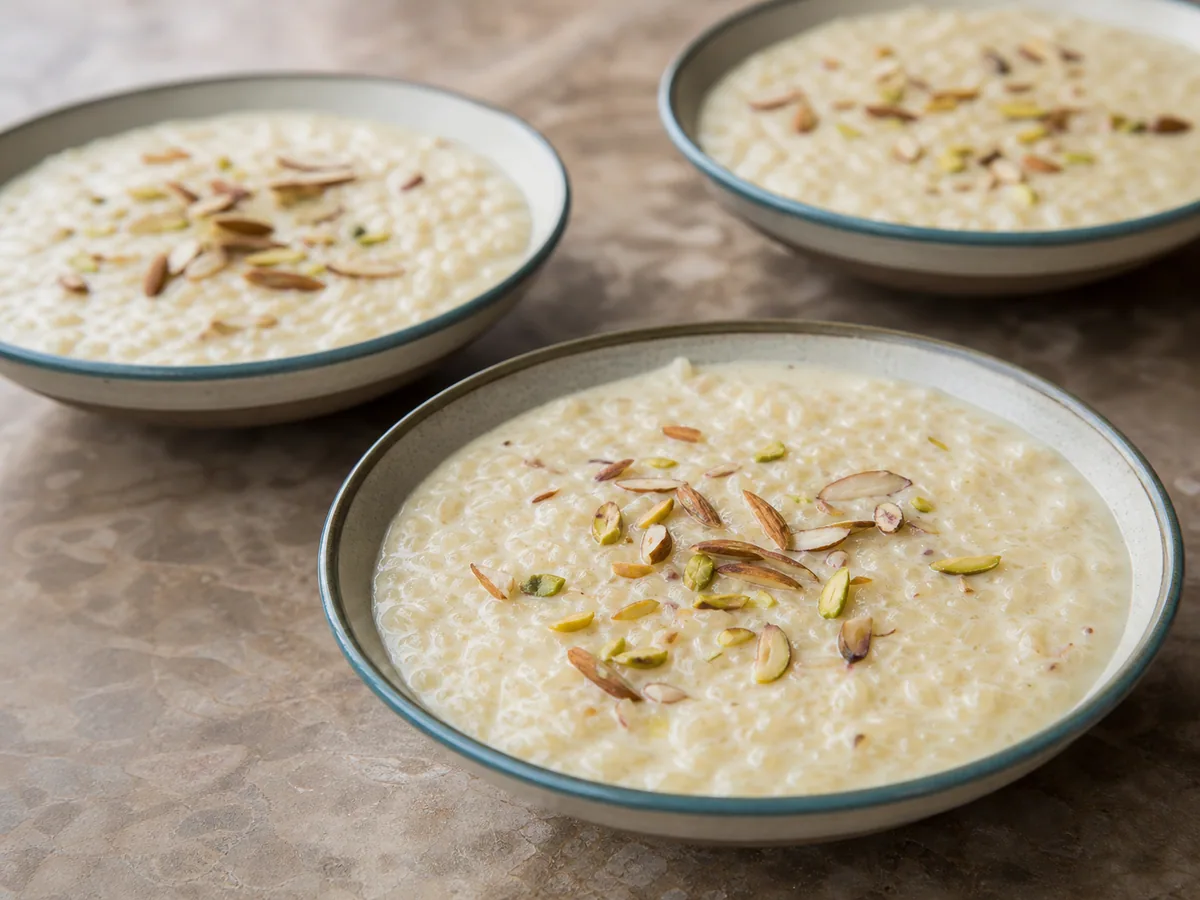
Remove the pan from the heat and pick out the cardamom husks you can see. Stir in rose water (optional) when using it, then fold in most of the toasted nuts. Spoon the kheer into small shallow bowls while it is still softly pourable and scatter the reserved nuts over the top. Serve warm.


Smart Substitutions
- No cardamom pods? Use 3/4 teaspoon ground green cardamom and stir it in with the sugar so its aroma stays fresh.
- No rose water? Leave it out, or use 1/2 teaspoon kewra water for a different floral note.
- Prefer no nuts? Omit the almonds and pistachios and serve the cardamom kheer plain.
- Only 2% milk? It works, but simmer a little longer and expect a lighter, less rounded texture than whole milk gives.
Tips and Variations
- A wide, heavy saucepan encourages steady evaporation and gives you more room to scrape the base before milk catches.
- Add the sugar only after the rice is tender; sweetening too early can slow the grains from softening fully.
- Crack the cardamom pods rather than crushing them to powder so the perfume infuses the milk without gritty husks.
- Small shallow bowls show the creamy texture and let the toasted nuts stay on the surface.
What Went Wrong?
- Milk is catching on the bottom Lower the heat and stir with a flat-edged spatula, sweeping the entire base. If it smells scorched, pour the unburned kheer into a clean pan without scraping the dark layer.
- Rice is still firm Keep the pot at a bare simmer and stir in a small splash of hot milk if the mixture is already thick. Continue until the grains mash easily against the pan.
- Kheer is too thin Continue simmering uncovered, stirring every minute, until a spoon leaves a brief trail through the mixture.
- Kheer became too thick Stir in a splash of hot milk over low heat until it returns to a softly pourable consistency.
Nutrition Estimate
- Fiber: 1 g per serving
- Sodium: 140 mg per serving
Nutrition disclaimer:This recipe is provided for general cooking information only. Nutrition values are estimates and may vary by ingredients, brands, preparation methods, and serving sizes. Check ingredient labels and follow appropriate food-safety practices. This content is not medical, dietary, allergy, or professional food-safety advice.
FAQ
Found an error or have a suggestion?
Help us improve this recipe. Send us your feedback and include the recipe name so we can take a look.