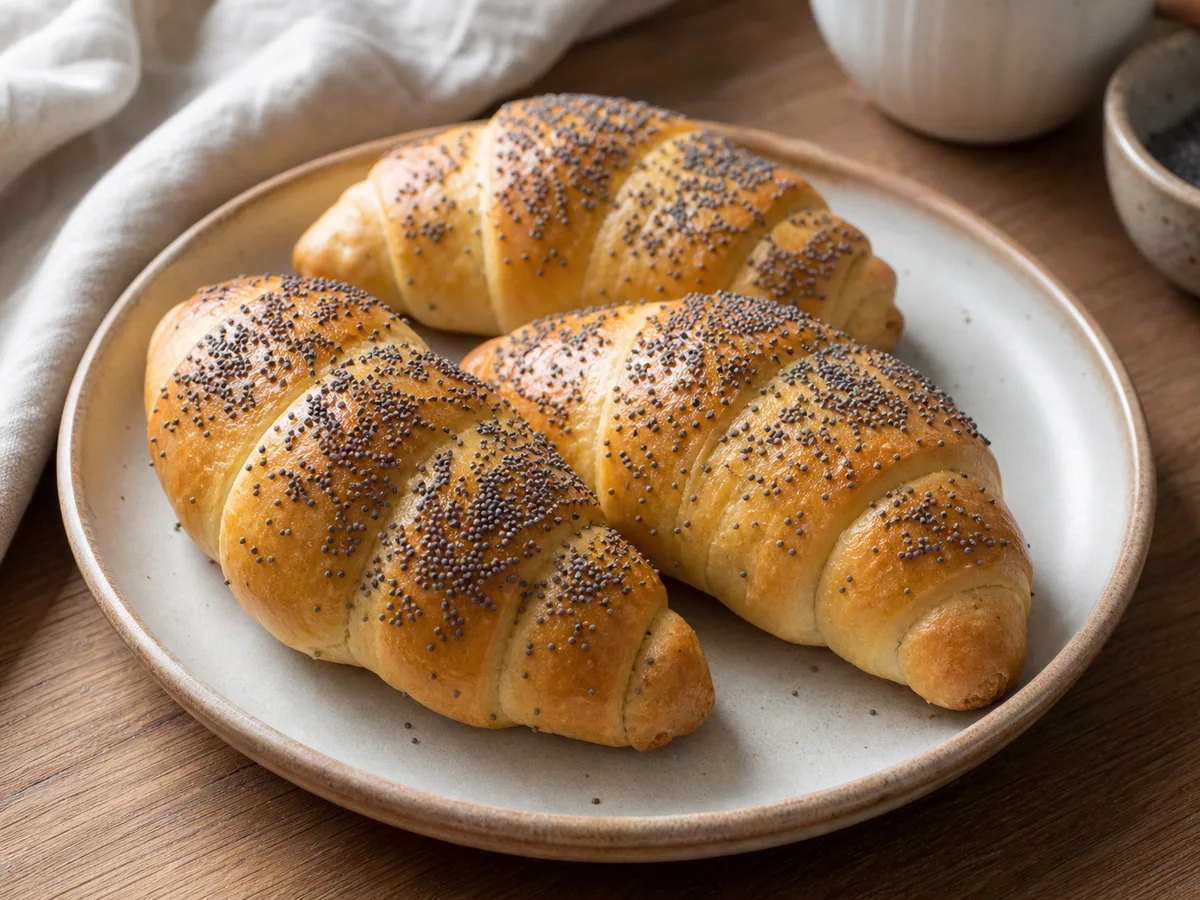
Method
Mix and rest the dough
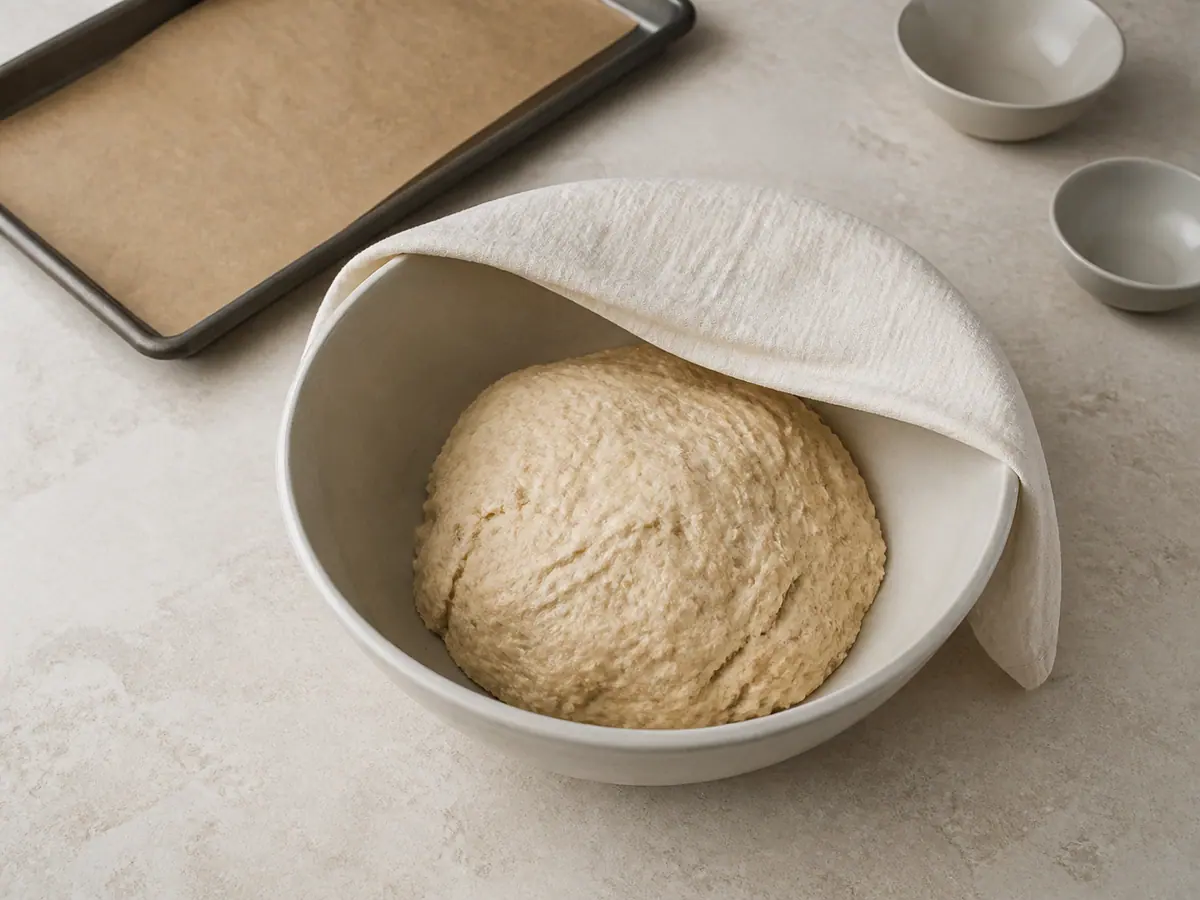
Warm 210 ml of whole milk to 35°C (95°F); it should feel gently warm, never hot. Place 1 large egg yolk in a large mixing bowl, then whisk in 210 ml of whole milk, 50 g of granulated sugar, and 7 g of instant yeast. Add 360 g of all-purpose flour and stir until no dry patches remain. Cover the bowl and let the rough dough stand for 10 minutes so the flour can hydrate.
10:00Knead in the butter
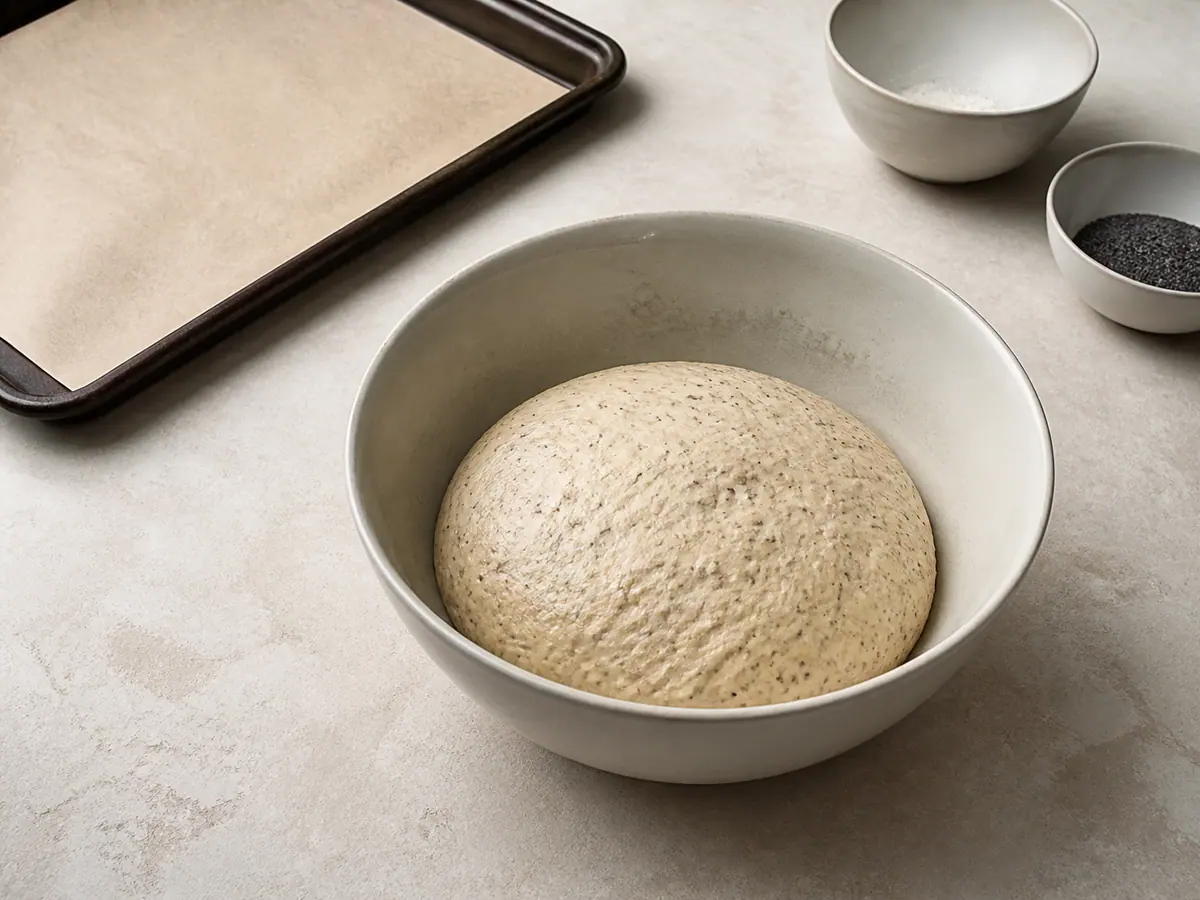
Sprinkle 5 g of fine sea salt over the dough and knead until it begins to look cohesive. Cut 60 g of unsalted butter into small pieces and add them gradually, waiting until each addition is mostly absorbed before adding more. Continue kneading for 8 to 10 minutes on medium-low speed, or firmly by hand on an unfloured surface, until the dough is smooth, elastic, and slightly tacky. Begin checking at 8 minutes; a small piece should stretch into a thin translucent window without tearing.
08:00Let the dough rise
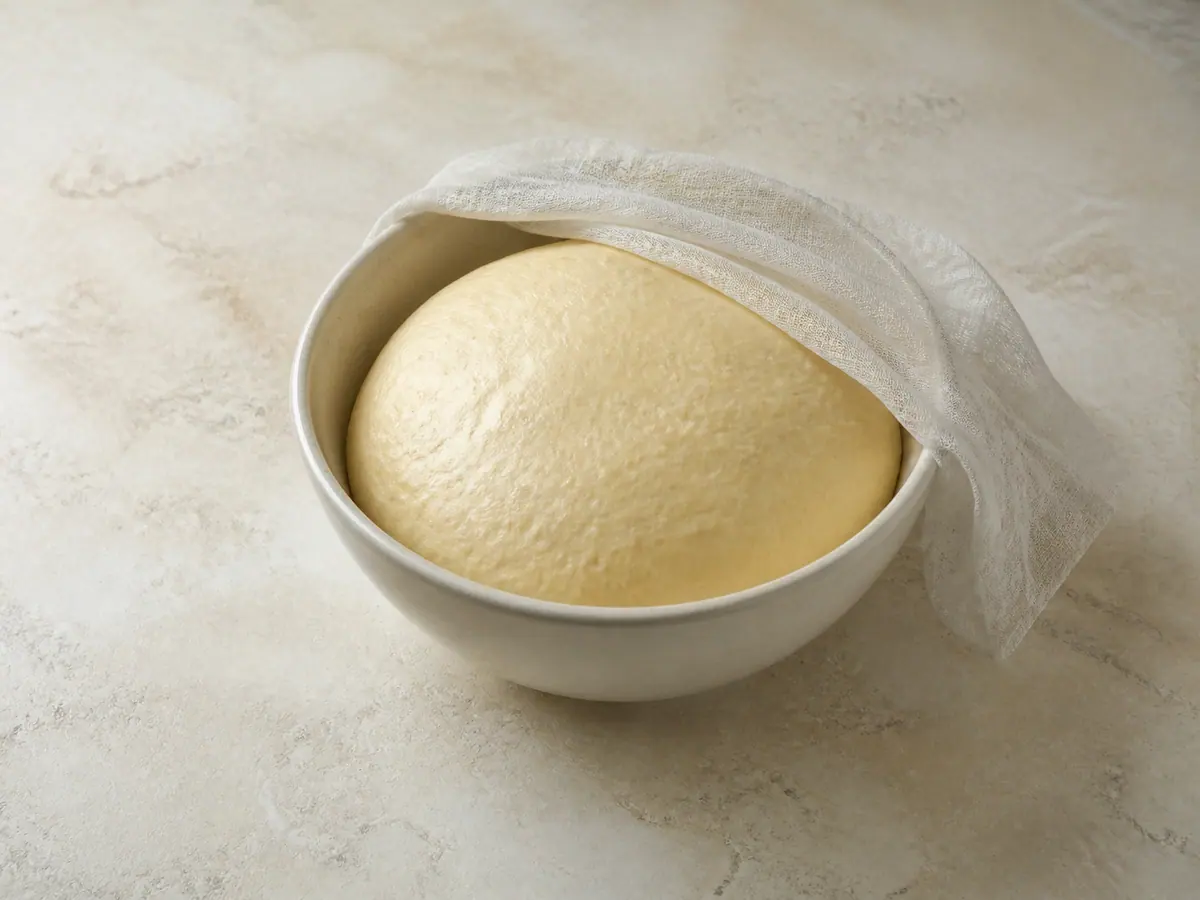
Shape the dough into a ball and place it in a clean bowl. Cover and let it rise in a comfortably warm, draft-free place for 60 to 90 minutes, until nearly doubled and visibly domed. Begin checking at 60 minutes; when pressed lightly with a fingertip, the indentation should ease back slowly rather than springing shut at once.
60:00Portion and relax the dough
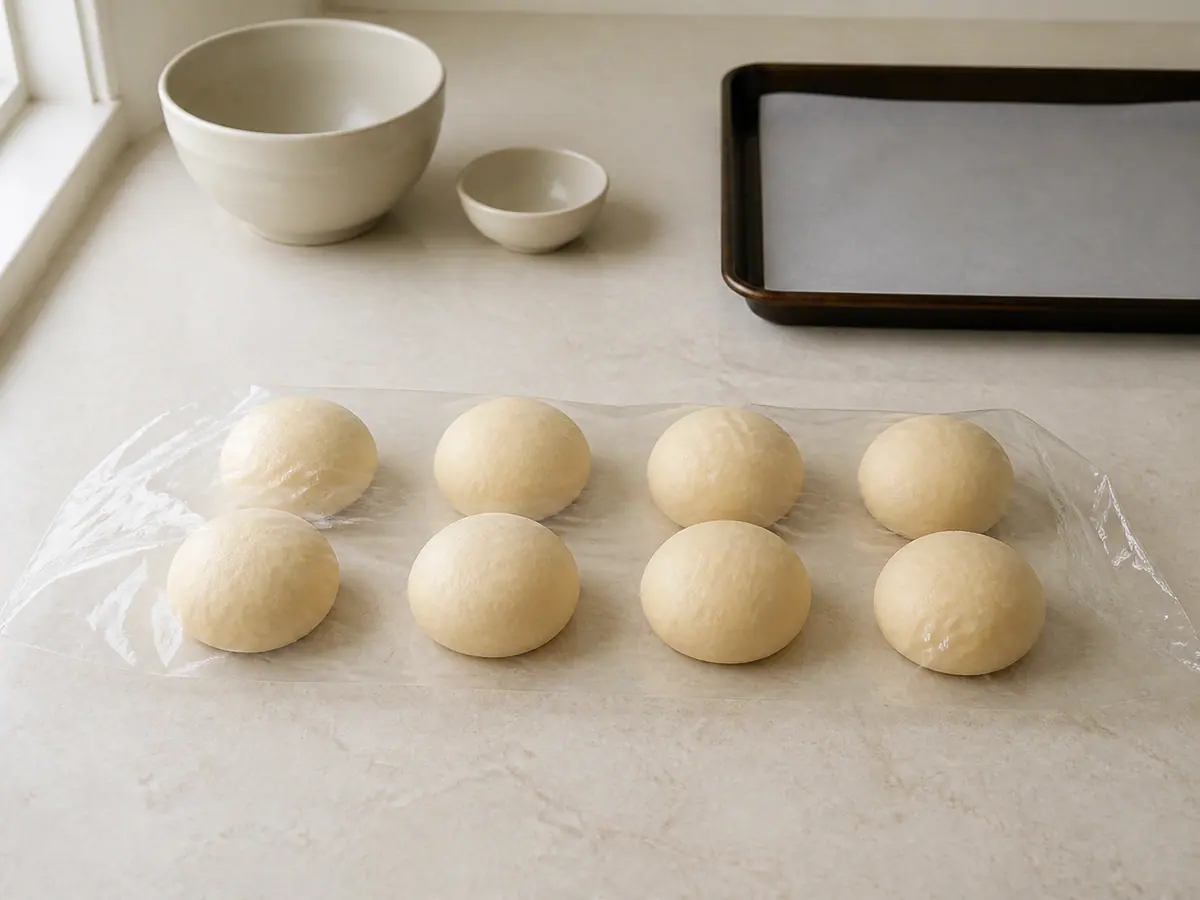
Turn the risen dough onto a clean work surface and press it gently to release only the largest gas pockets. Divide it into one equal piece per serving, then round each piece into a taut ball. Cover the portions and let them relax for 10 minutes; this keeps the dough from shrinking back during shaping.
10:00Shape the crescent rolls
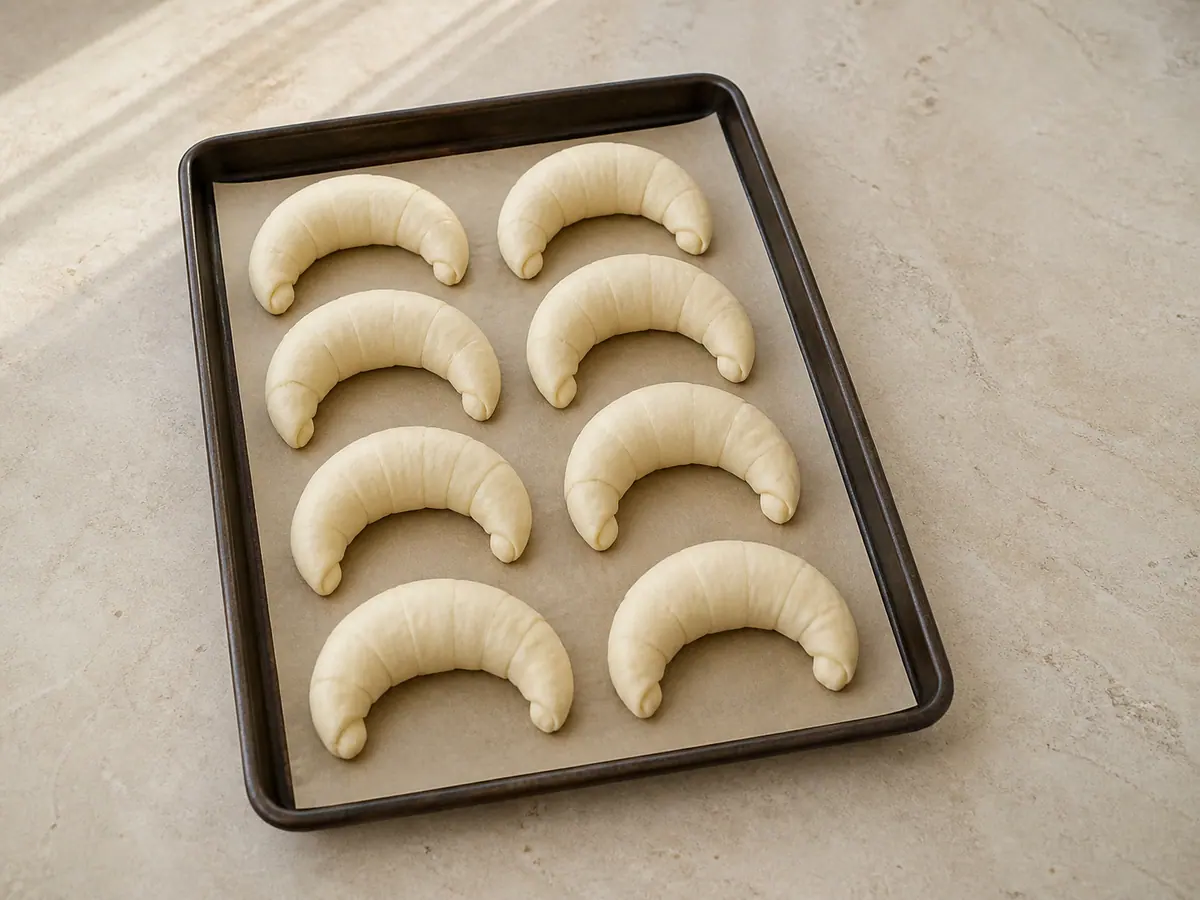
Working with one portion at a time, roll it into an elongated triangle about 10 cm wide and 22 cm long (4 x 9 in), with the point thinner than the base. Gently lengthen the point, then roll firmly from the wide base toward the tip so several distinct ridges form. Set the roll seam-side down with the tip tucked underneath, and curve the ends inward into a broad crescent. Repeat with the remaining portions.
Proof the shaped rolls
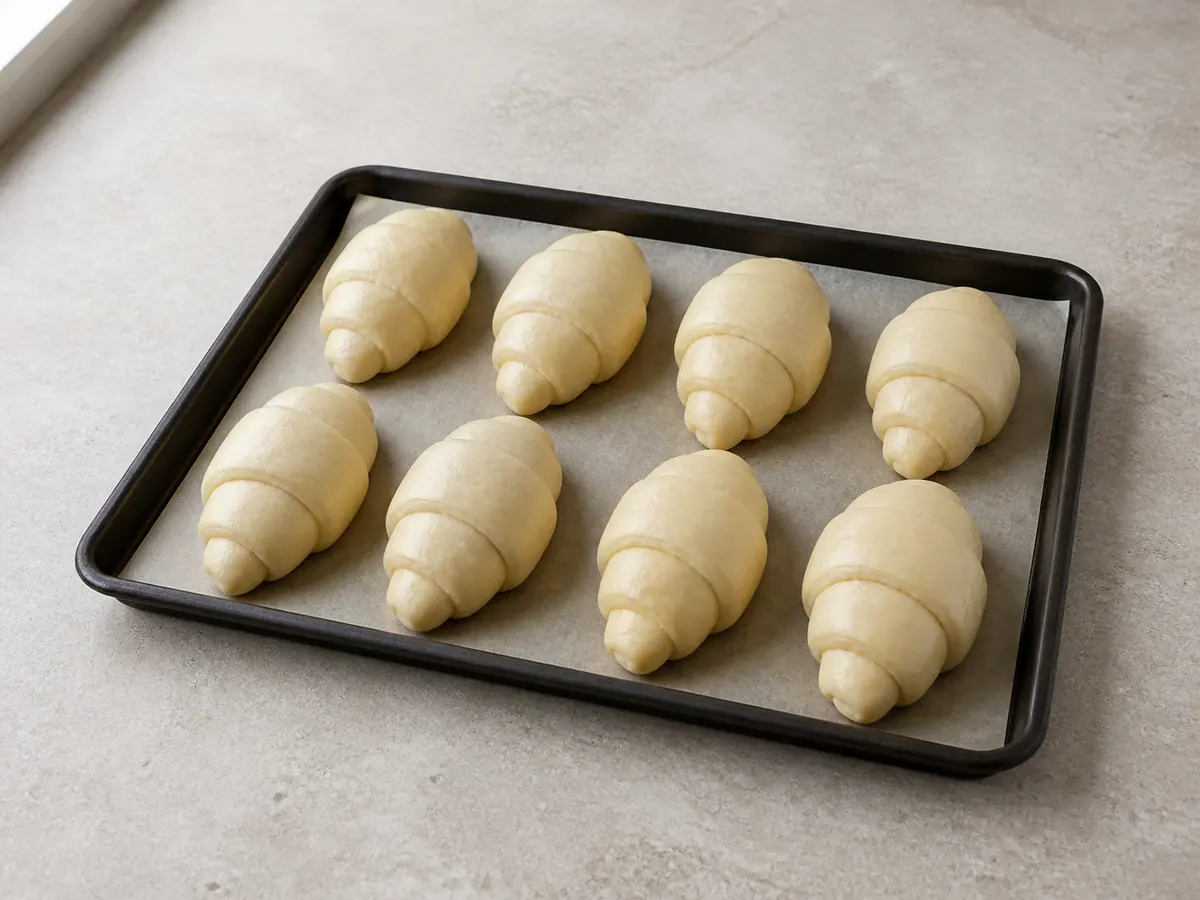
Arrange the crescents seam-side down on a parchment-lined baking sheet, leaving enough room for them to expand without touching. Cover loosely and let them rise for 30 to 45 minutes, until noticeably puffy and the ridges look rounded rather than tight. Begin checking at 30 minutes; a gentle fingertip press should return slowly and leave a faint impression. Toward the end of the rise, heat the oven to 190°C (375°F).
30:00Brush, seed, and bake
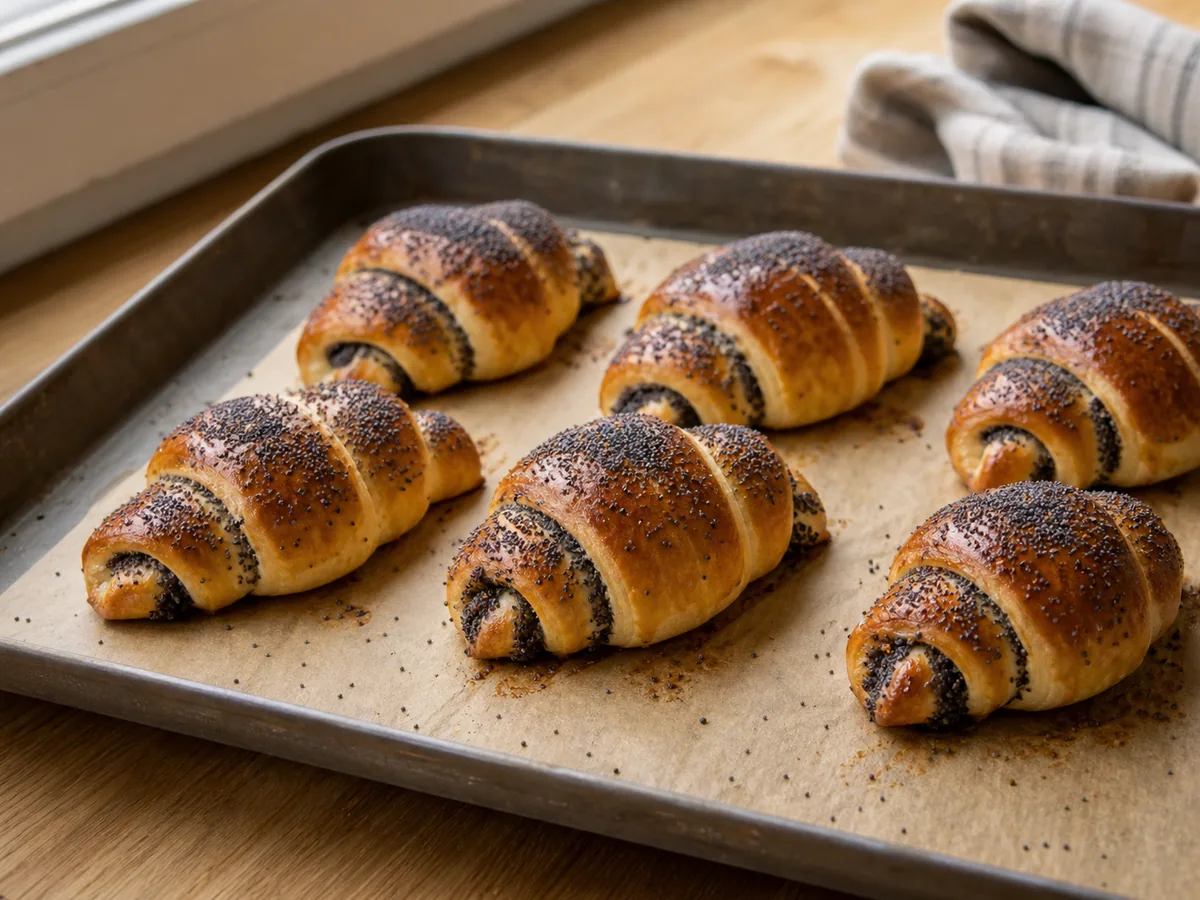
Whisk 1 large egg for egg wash in a small clean bowl until blended, then brush a thin, even coat over the proofed rolls without pressing out their air. Sprinkle 10 g of whole poppy seeds evenly over the tops. Bake for 16 to 20 minutes, rotating the sheet after 8 minutes for even color, until the rolls are rich golden brown and the center of one roll reaches 88°C (190°F) on a food thermometer. Begin checking at 16 minutes. After brushing, wash the bowl, pastry brush, your hands, and any splashed work surface with hot, soapy water before handling the baked rolls.
16:00Let the crumb settle
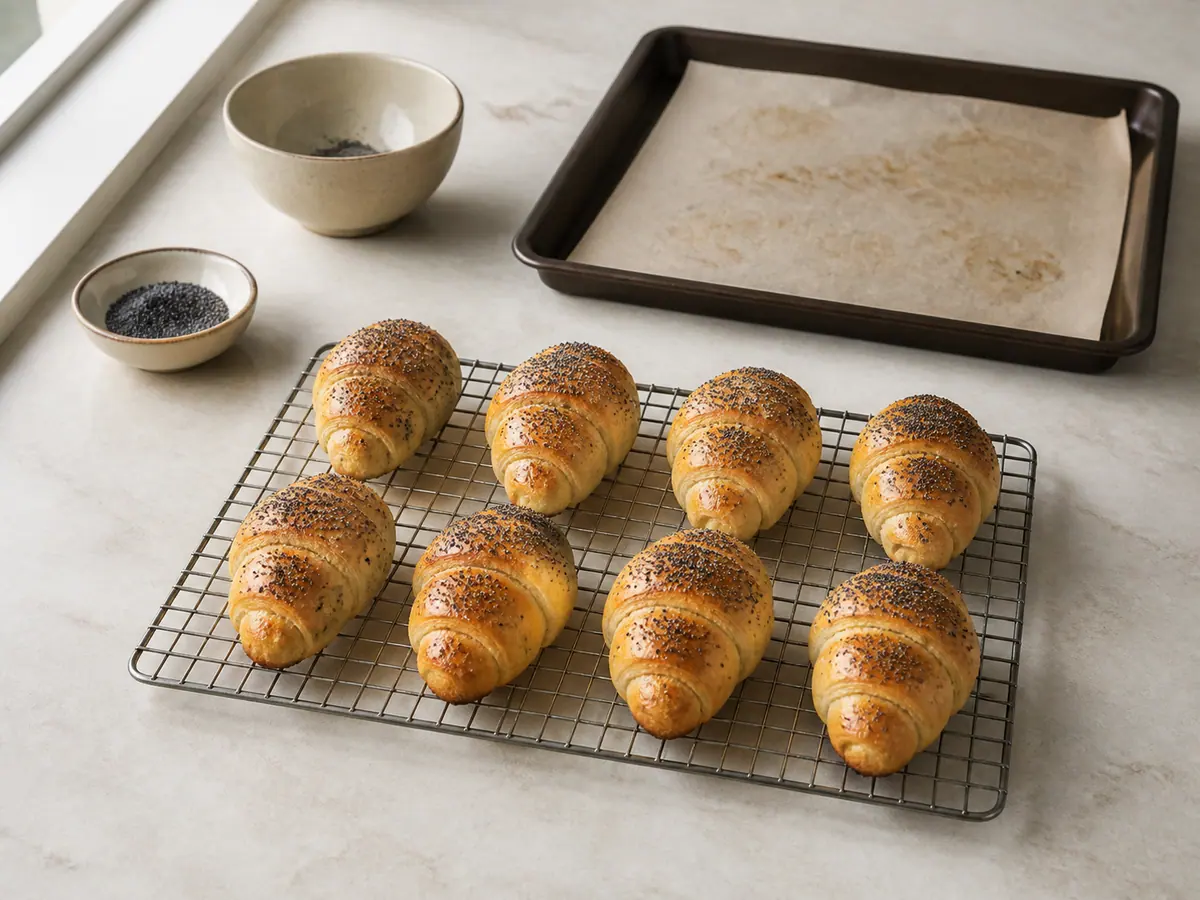
Move the rolls to a wire rack and let them stand for 10 minutes. Serve while still pleasantly warm, when the crust is delicate and the crumb has finished setting without losing its tenderness.
10:00


Smart Substitutions
- No instant yeast? Use 21 g fresh yeast and crumble it into the warm milk before mixing the dough.
- Prefer lard? Replace the unsalted butter with the same weight of rendered lard for a tender crumb and a more old-fashioned Czech bakery character.
- No whole milk? Use 2% milk; the rolls will be slightly less rich but will shape and rise in the same way.
- No poppy seeds? Use sesame seeds for a crisp topping, knowing the rolls will lose their most characteristic Czech finish.
Tips and Variations
- Weigh the flour when possible. A heavily packed cup can make this soft dough stiff and produce dense rolls.
- Keep each pointed tip underneath the crescent; the weight of the roll helps prevent it from unwinding in the oven.
- Brush on a thin film of egg wash. Heavy puddles can glue the rolls to the parchment and create leathery patches.
What Went Wrong?
- Rolls are dense Give both rises more time and judge by volume and fingertip response rather than the clock alone. Also avoid working extra flour into the dough.
- Crescents unwind Roll the triangles more firmly, lengthen the points, and set every roll down with its tip securely tucked underneath.
- Crust is pale Make sure the oven is fully heated and apply an even egg-wash coat before adding the poppy seeds.
- Crumb is dry Begin checking at 16 minutes and remove the rolls as soon as the centers reach 88°C (190°F); excess flour can also dry the crumb.
Nutrition Estimate
- Fiber: 2 g per serving
- Sodium: 270 mg per serving
Nutrition disclaimer:This recipe is provided for general cooking information only. Nutrition values are estimates and may vary by ingredients, brands, preparation methods, and serving sizes. Check ingredient labels and follow appropriate food-safety practices. This content is not medical, dietary, allergy, or professional food-safety advice.
FAQ
Found an error or have a suggestion?
Help us improve this recipe. Send us your feedback and include the recipe name so we can take a look.