Method
Whisk the hojicha concentrate
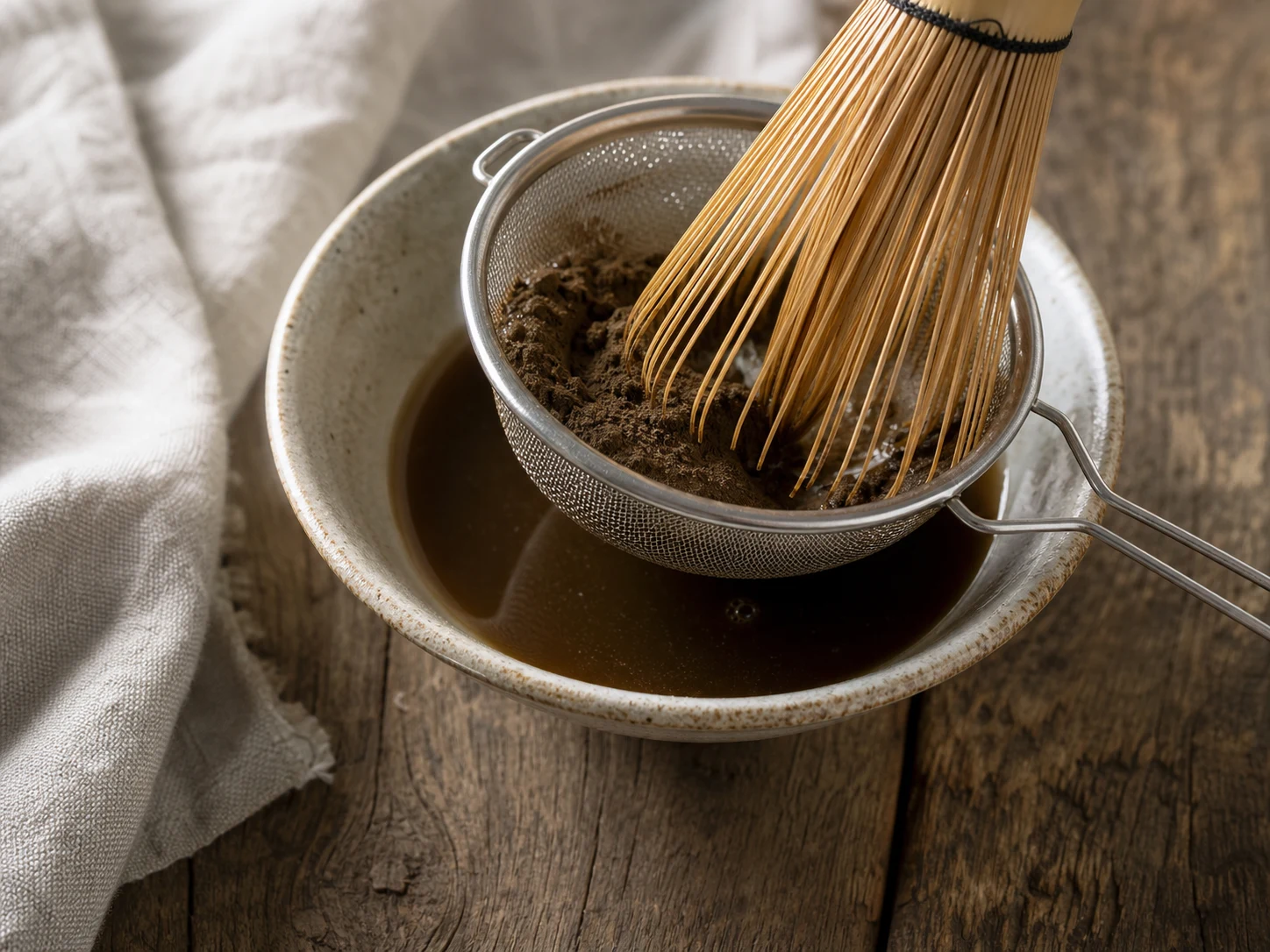
Heat 120 ml of filtered water to 80°C (176°F). Set a fine-mesh strainer over a heatproof jug or spouted bowl and sift 4 g of hojicha powder through it. Pour in the hot water and whisk briskly for 20 to 30 seconds, scraping around the bottom and sides, until the concentrate is smooth, glossy, and lightly foamy with no visible dry clumps.
00:20Warm and sweeten the oat milk
Add 480 ml of barista-style oat milk and 30 ml of pure maple syrup to a saucepan large enough to hold the scaled batch with ample room for stirring. Heat over medium-low, stirring often and scraping the base of the pan, until steaming and about 65°C (149°F). For the default 2-serving batch, this usually takes 3 to 4 minutes; start checking at 3 minutes. Larger scaled batches will take longer, so use 65°C (149°F), rather than elapsed time, as the endpoint. Do not let the mixture simmer or boil, which can dull the flavor and make the oat milk feel heavy.
03:00Froth the oat milk
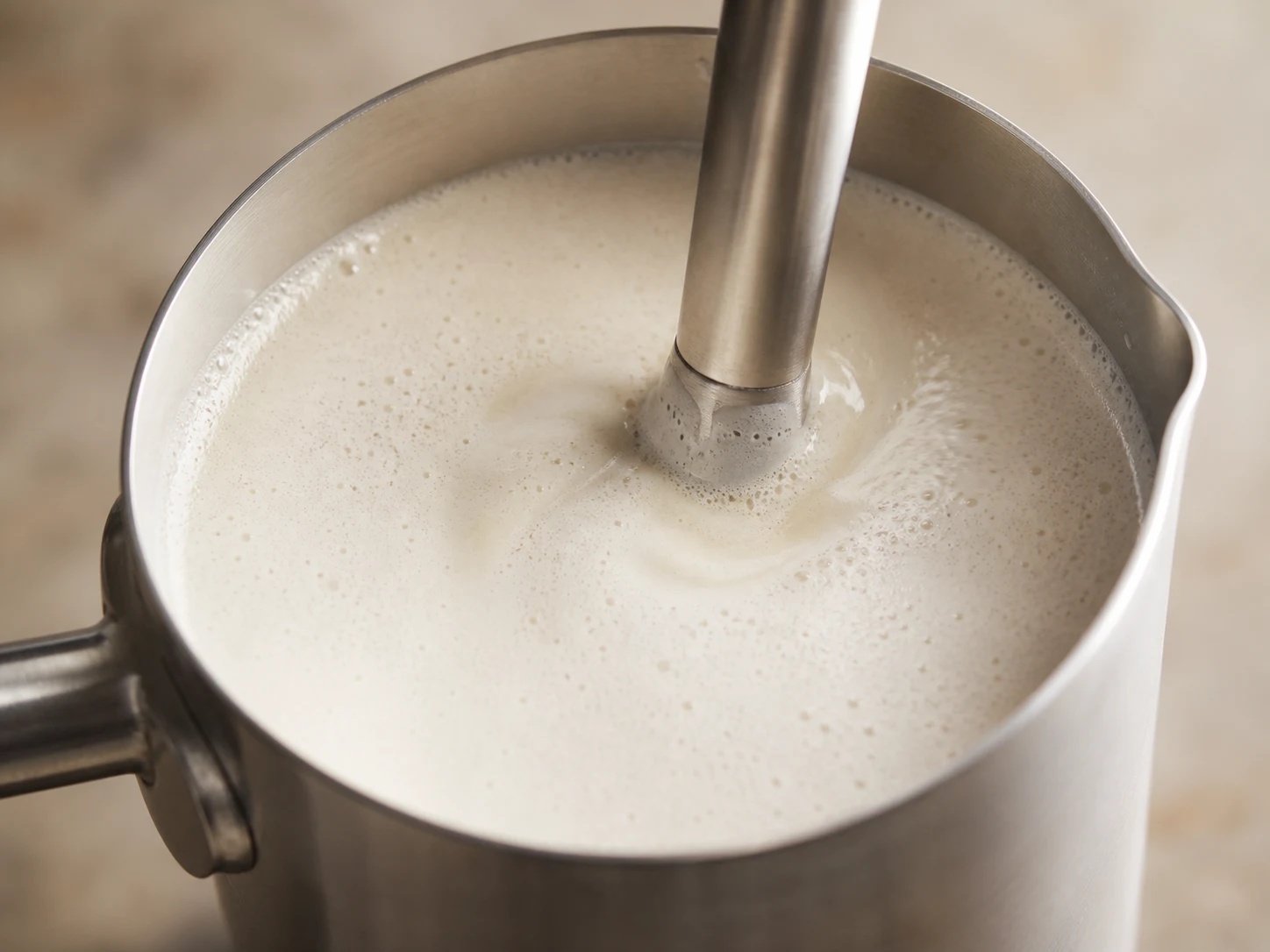
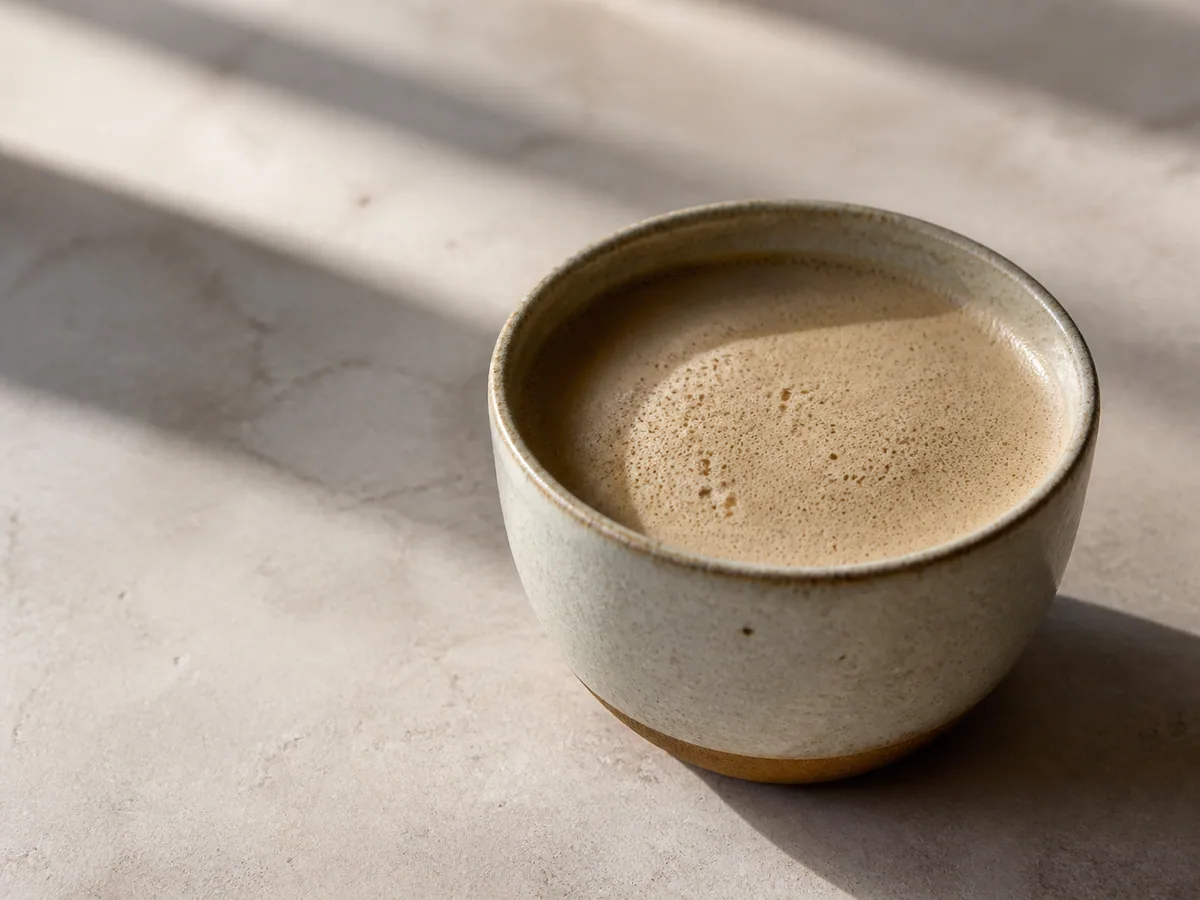
Remove the saucepan from the heat. Froth the warm mixture for 20 to 30 seconds with a handheld frother, or whisk vigorously in the pan, until the milk increases slightly in volume and forms fine, even bubbles rather than large airy foam. Tap the pan once on the counter and swirl gently to settle any oversized bubbles.
00:20Pour and serve
Whisk the hojicha concentrate once more, then divide it evenly among heatproof cups. Pour in the warm oat milk while holding back the foam, stir each drink gently, and spoon the foam over the top. Serve immediately while the roasted aroma is strongest and the texture is silky.


Smart Substitutions
- No barista-style oat milk? Use regular oat milk; the flavor will stay balanced, though the foam may be thinner and fade more quickly.
- No maple syrup? Use light brown sugar or agave syrup, adjusting the sweetness after the milk is warm.
- No hojicha powder? Use 10 g loose-leaf hojicha. Steep it in 150 ml (about 2/3 cup) filtered water at 80°C (176°F) for 1 minute, strain thoroughly, then measure 120 ml (1/2 cup) of the concentrate for the recipe, topping it up with hot water if the leaves absorbed more. The latte will be lighter-bodied but will keep the same roasted-tea character.
- No milk frother? Use a balloon whisk in the saucepan or pump the warm milk carefully in a clean French press until fine bubbles form.
Tips and Variations
- Sift the hojicha even when it looks fine; tiny compacted grains are the main cause of a gritty concentrate.
- Keep the water near 80°C (176°F) so the powder opens up cleanly without a scorched edge.
- For the smoothest foam, angle the frother just below the milk's surface first, then lower it slightly once fine bubbles appear.
What Went Wrong?
- Hojicha concentrate is clumpy Press the clumps through a fine-mesh strainer, add a small splash of the measured hot water, and whisk into a paste before adding the rest.
- Latte tastes bitter Check that the water is near 80°C (176°F), not boiling, and whisk only until the powder is evenly dispersed.
- Oat milk will not foam Use barista-style oat milk and stop heating before it simmers; overheated milk and very low-fat formulas usually make weaker foam.
- Powder settles in the cup Whisk the concentrate again immediately before pouring and stir the finished latte gently once or twice.
Nutrition Estimate
- Fiber: 3 g per serving
- Sodium: 100 mg per serving
Nutrition disclaimer:This recipe is provided for general cooking information only. Nutrition values are estimates and may vary by ingredients, brands, preparation methods, and serving sizes. Check ingredient labels and follow appropriate food-safety practices. This content is not medical, dietary, allergy, or professional food-safety advice.
FAQ
Found an error or have a suggestion?
Help us improve this recipe. Send us your feedback and include the recipe name so we can take a look.