Method
Steam the rice
Rinse 300 g of Japanese short-grain white rice in several changes of cool water until the water is only lightly cloudy, then drain well. Combine 300 g of Japanese short-grain white rice and 420 ml of water for rice in a medium saucepan. Bring to a boil over medium-high heat, cover tightly, and reduce the heat to low. Cook for 15 minutes without lifting the lid.
15:00Rest and fluff the rice
Remove the covered saucepan from the heat and let the rice stand for 10 minutes without lifting the lid. Uncover and fluff gently with a fork or rice paddle.
10:00Steam the broccoli
While the rice cooks, place 400 g of broccoli florets and 60 ml of water for broccoli in a large skillet. Cover and cook over medium-high heat for 4 to 5 minutes, until the florets are bright green and crisp-tender. Transfer them to a serving dish, pour away any remaining water, and wipe the skillet dry.
04:00Mix the teriyaki glaze
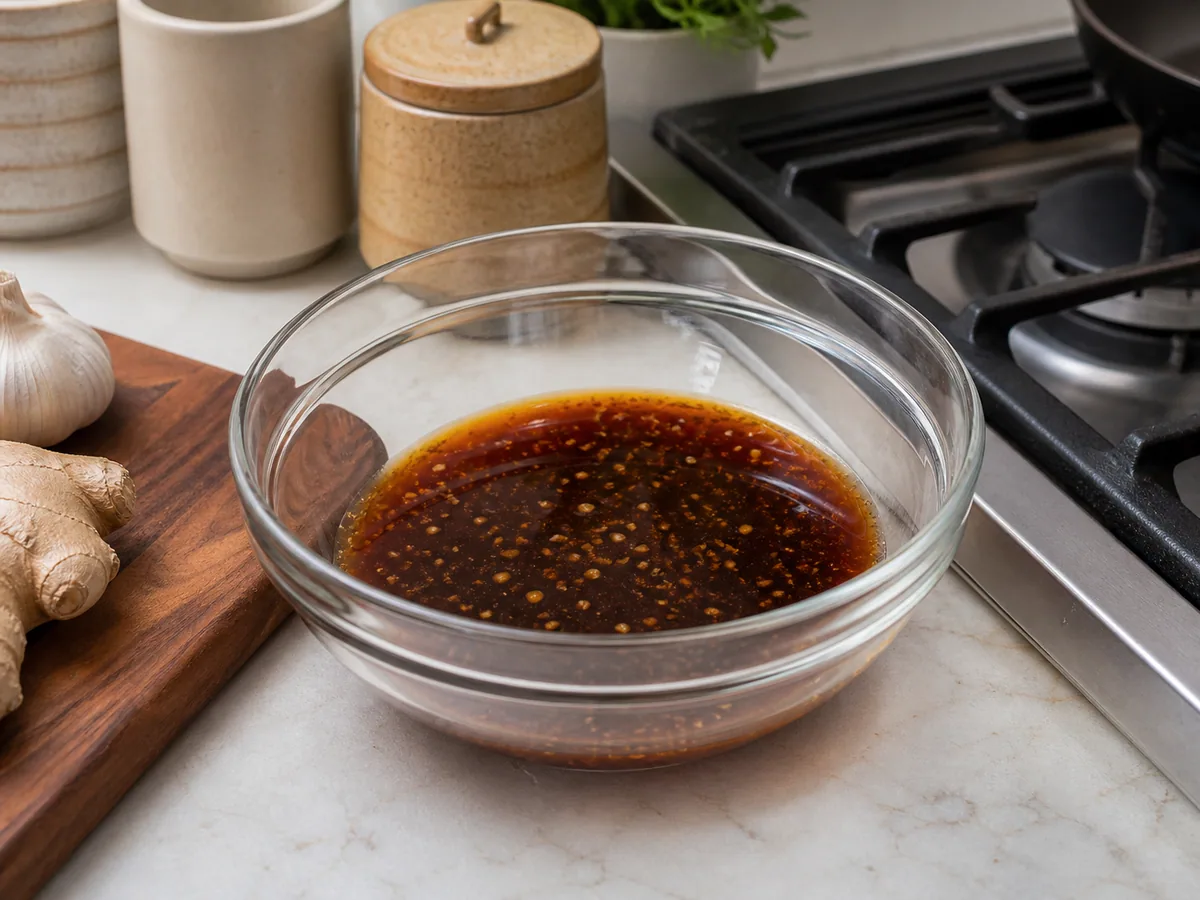
Whisk 60 ml of reduced-sodium soy sauce, 30 g of light brown sugar, 30 ml of unseasoned rice vinegar, 60 ml of water for glaze, and 8 g of cornstarch in a bowl until smooth. Grate 15 g of fresh ginger and mince 2 garlic cloves, then whisk both into the mixture. Set the glaze beside the stove and whisk it again just before it goes into the pan.
Sear the salmon
Pat 600 g of skin-on salmon fillets dry with paper towels. Wash your hands and clean any surface or utensil that touched the raw fish before handling ready-to-eat garnishes. Heat 15 ml of neutral cooking oil in the dry skillet over medium-high heat. Place the fillets skin-side down and press each gently with a fish spatula for the first 20 seconds so the skin stays flat. Continue cooking skin-side down for a total of 4 to 5 minutes, until the skin is crisp and the sides look opaque about halfway up.
04:00Cook the second side
Turn the fillets and cook for 2 minutes, until the second side is lightly browned. Reduce the heat to medium-low.
02:00Glaze and finish the salmon
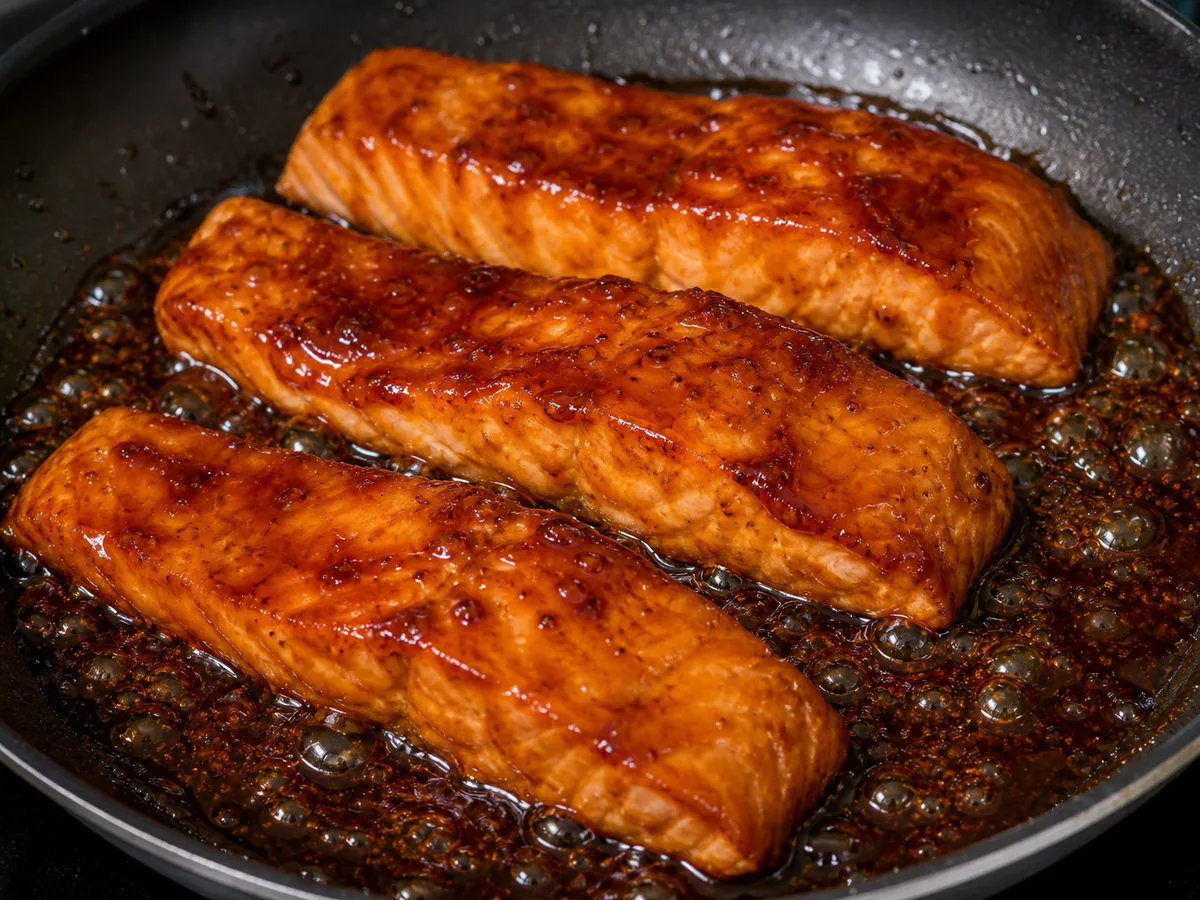
Whisk the glaze again, then pour it around the fish. Simmer for 2 to 4 minutes, spooning the bubbling glaze over the tops, until it thickly coats a spoon. Begin checking at 2 minutes. Insert a clean food thermometer into the thickest part of each fillet without touching the pan, and continue cooking until every piece reaches 63°C/145°F. Lower the heat if the glaze bubbles aggressively or begins to darken too quickly.
02:00Build the bowls
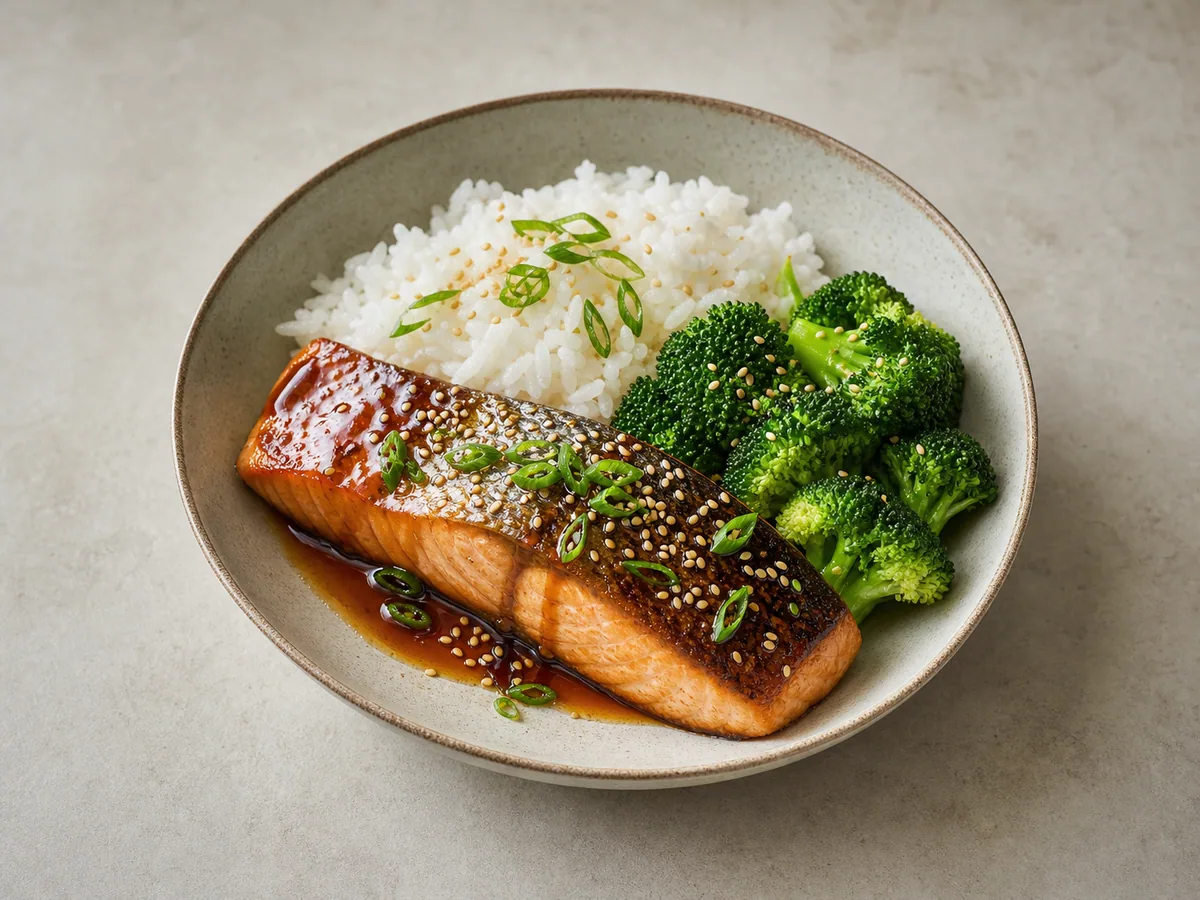
Divide the rice and broccoli among serving bowls. Set a salmon fillet on each portion and spoon over the glossy pan sauce. Finish with toasted sesame seeds (optional) and scallions (optional). Serve as soon as the bowls are assembled so the skin stays crisp.


Smart Substitutions
- No short-grain rice? Use medium-grain white rice and follow the water ratio printed on its package.
- Need a wheat-free soy sauce? Use reduced-sodium tamari labeled gluten-free, and check the labels on every packaged ingredient.
- No broccoli? Use snap peas, green beans, or halved baby bok choy and cook only until crisp-tender.
- Using skinless salmon? Sear the presentation side first and turn it only after a golden crust releases cleanly from the pan.
Tips and Variations
- Choose fillets of similar thickness so they reach the safe temperature at about the same time.
- Keep the pan at medium-low after adding the glaze; the sugar can scorch before the salmon finishes.
- Spoon sauce from the pan rather than repeatedly turning the fillets, which helps the fish stay intact.
What Went Wrong?
- Salmon skin sticks Give it another 30 to 60 seconds. Crisp skin releases more readily once it has browned.
- Glaze is too thick Take the skillet off the heat and stir in a small splash of water until the sauce loosens and shines again.
- Glaze is too thin Move the cooked salmon to the bowls and simmer the sauce briefly until it coats the back of a spoon.
- Rice is still firm Add a small splash of water, cover, and cook over the lowest heat for a few more minutes before letting it stand.
Nutrition Estimate
- Fiber: 5 g per serving
- Sodium: 720 mg per serving
Nutrition disclaimer:This recipe is provided for general cooking information only. Nutrition values are estimates and may vary by ingredients, brands, preparation methods, and serving sizes. Check ingredient labels and follow appropriate food-safety practices. This content is not medical, dietary, allergy, or professional food-safety advice.
FAQ
Found an error or have a suggestion?
Help us improve this recipe. Send us your feedback and include the recipe name so we can take a look.