Method
Prepare the watercress
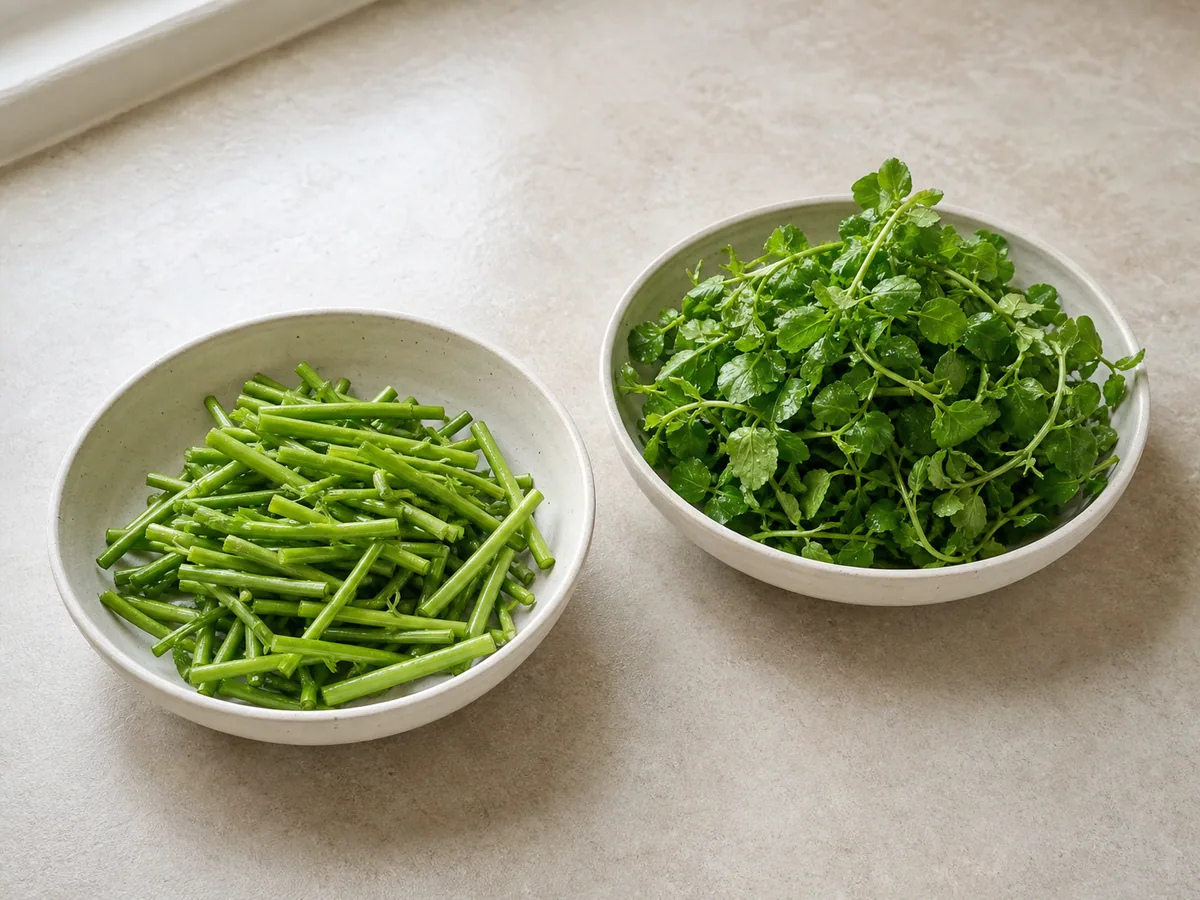
Trim tough ends from 450 g of fresh watercress, then separate the thicker stems from the tender leafy tops. Wash both portions thoroughly in several changes of cool water, drain well, and keep them in separate clean bowls away from raw meat.
Blanch the ribs
Ask the butcher to cross-cut 680 g of meaty pork ribs into 5 cm (2 in) pieces, or leave them in manageable sections rather than chopping bone with a standard kitchen knife. Fill a large pot with enough water to cover the ribs and bring it to a rolling boil. Add the ribs, return the water to a boil, and cook for 3 minutes. Drain and discard the blanching water. Wash the pot, colander, tongs, sink, and your hands with hot soapy water before continuing.
03:00Build the clear rib broth
Return the blanched ribs to the clean pot. Smash 28 g of fresh ginger with the flat side of a sturdy knife and add it with 2400 ml of water. Bring the pot just to a boil over medium-high heat, skimming off any foam that rises. Immediately reduce the heat to low, partially cover, and maintain a bare simmer for 80 minutes. Look for an occasional lazy bubble rather than a rolling boil, and skim any large pools of fat from the surface.
80:00Simmer the watercress stems
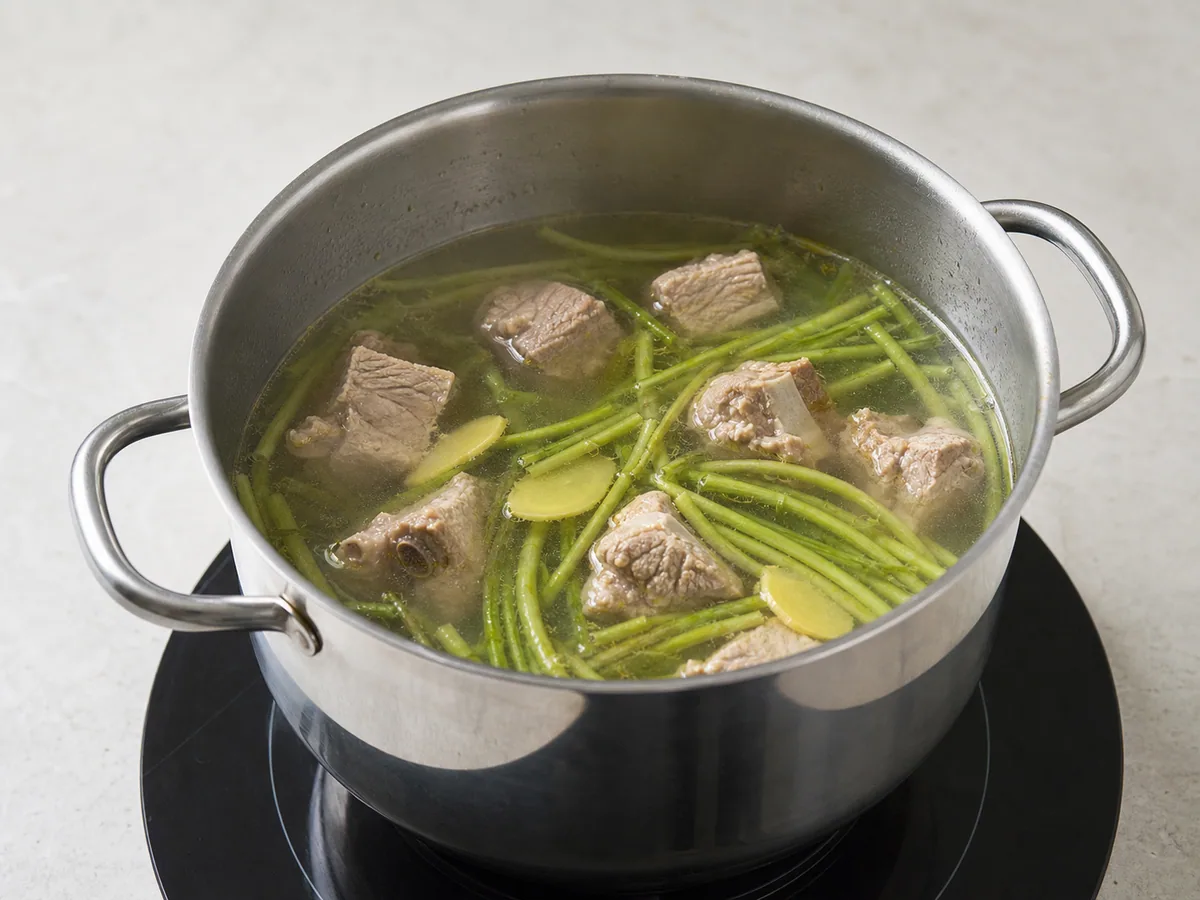
Add the separated watercress stems to the broth and press them below the surface. Continue the bare simmer, partially covered, for 20 minutes. The stems should lose their raw snap, the broth should take on a faint green tint, and the ribs should look opaque and tender without the liquid boiling vigorously.
20:00Finish with the leafy watercress
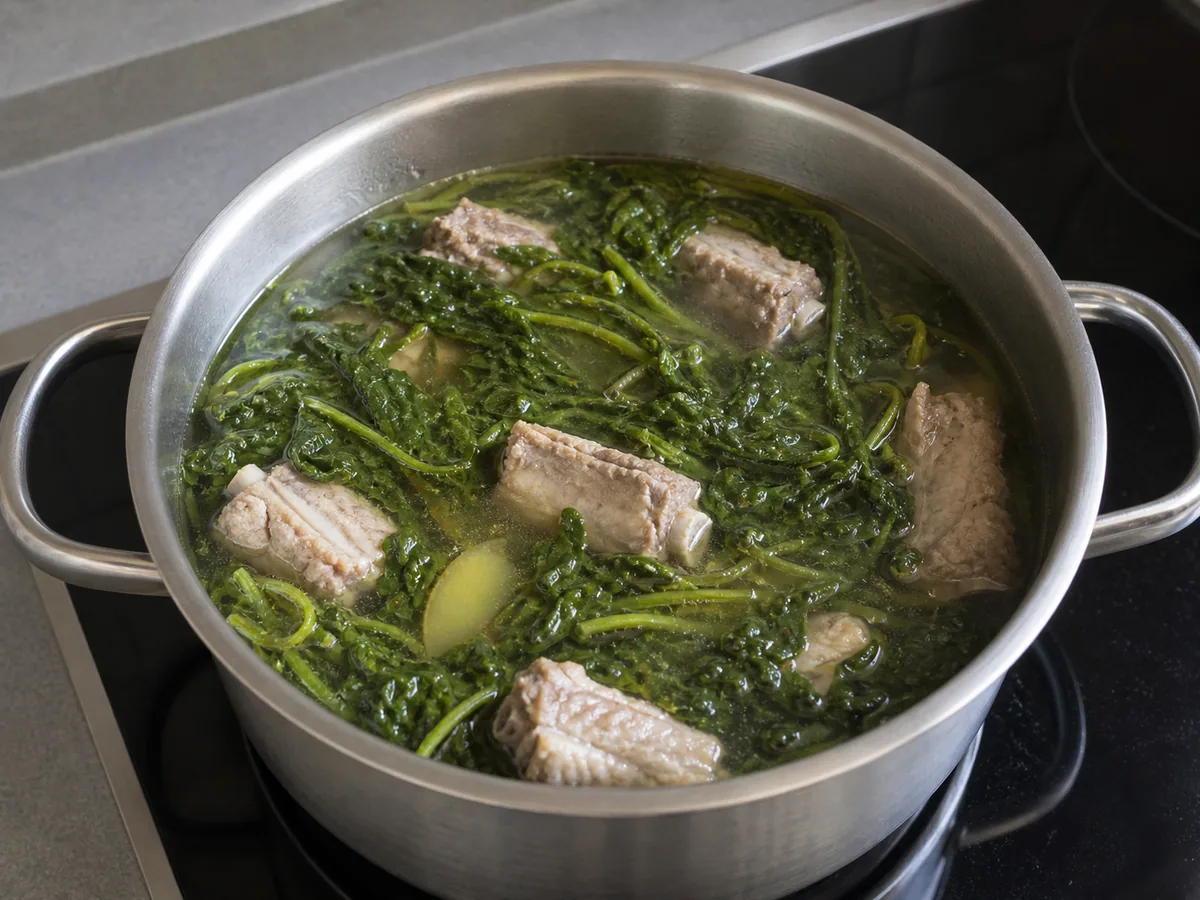
Add the leafy watercress tops in two or three handfuls, allowing each addition to wilt before adding the next. Stir in 7 g of kosher salt and 1/2 g of ground white pepper, then simmer gently for 10 minutes. The leaves should turn deep olive green and become tender while the broth remains clear. Taste and adjust the seasoning if needed, then leave the soup in the pot for the final pork check.
10:00Check the pork, rest, and serve
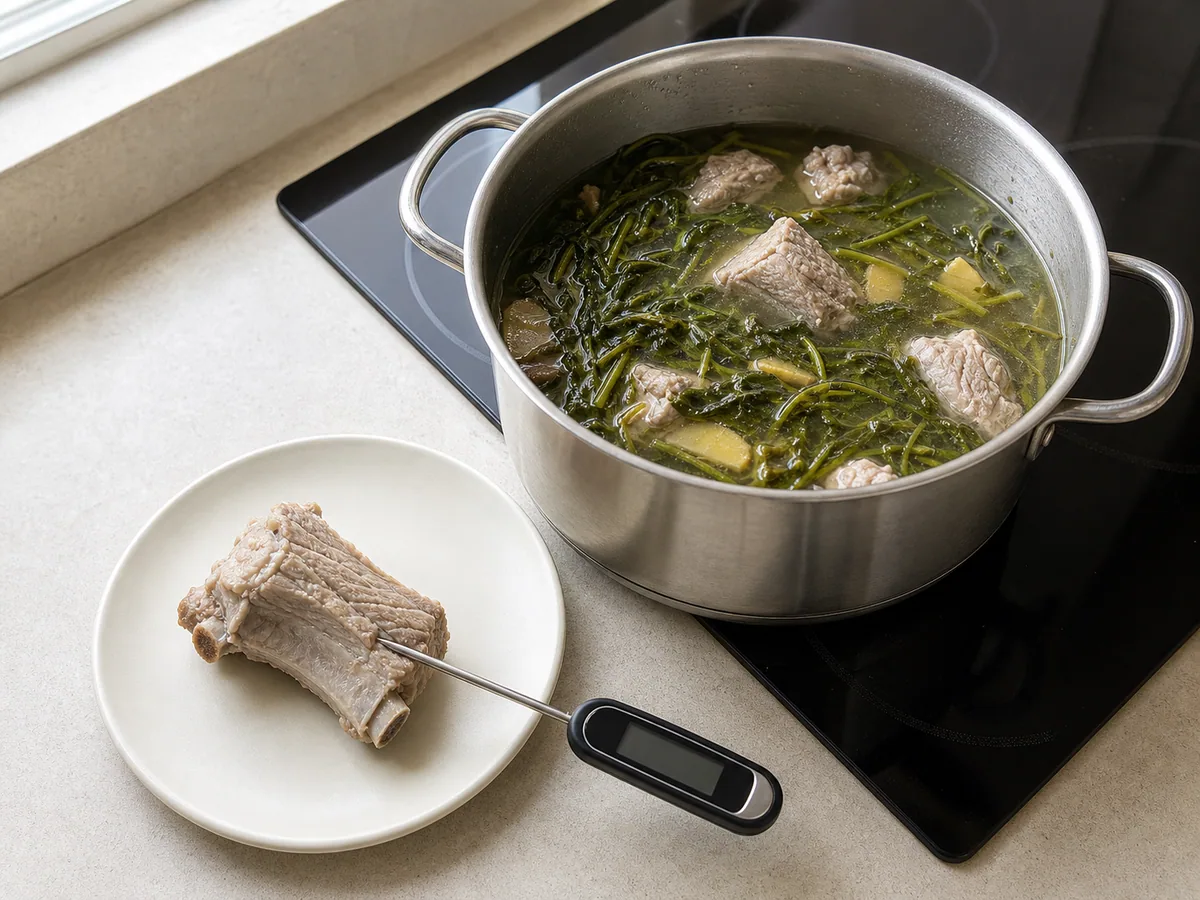
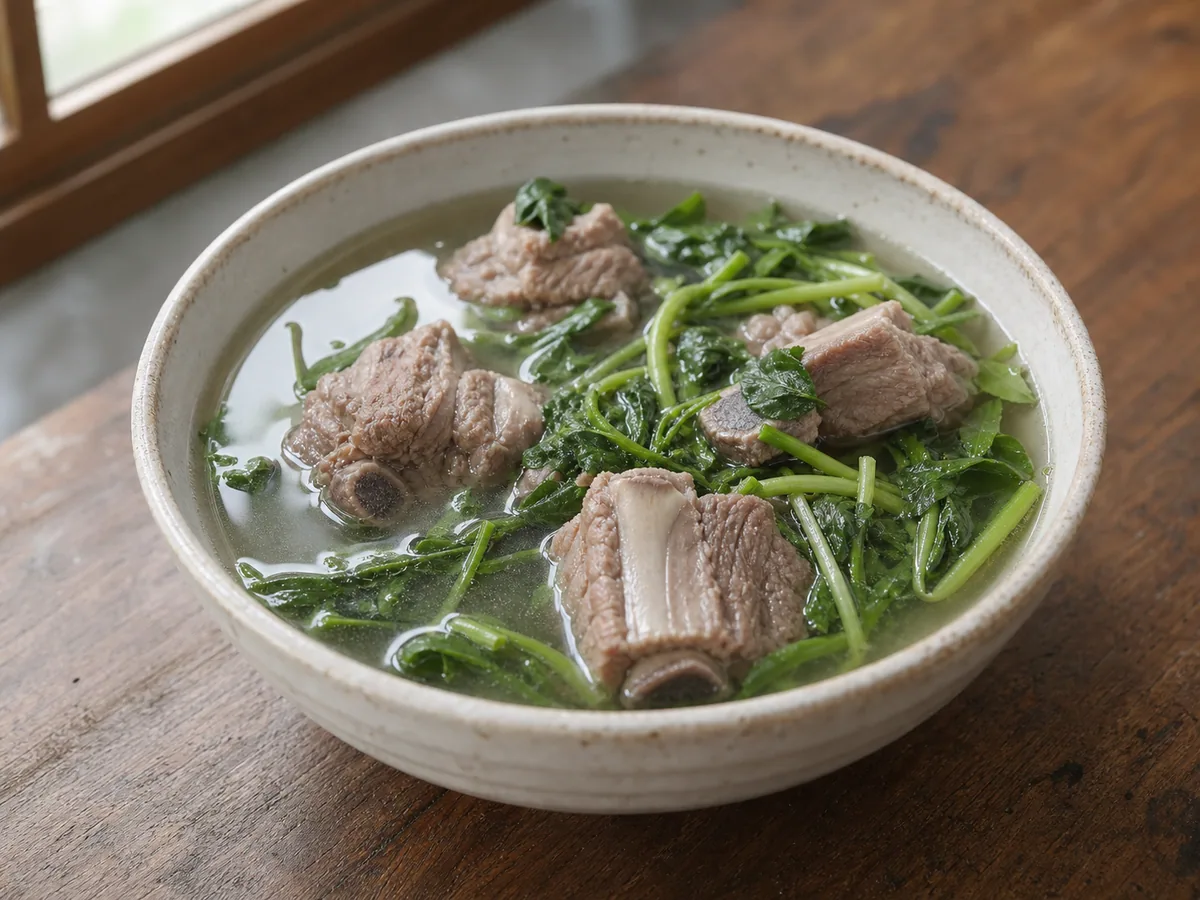
Use a clean food thermometer in the thickest meat on a rib, avoiding contact with bone. The pork must register at least 63°C/145°F and should pull away easily when pressed with a fork; if it is still firm, keep the soup at a bare simmer until fork-tender, checking periodically. Once the temperature and tenderness are verified, remove the pot from the heat and let the soup stand for at least 3 minutes. Then distribute the ribs, watercress, and broth evenly among warm bowls.
03:00


Smart Substitutions
- No watercress? Use Chinese mustard greens for a sharper edge, adding the stems for the final 20 minutes and the leaves for the final 8 to 10 minutes.
- No pork ribs? Use pork neck bones in the same weight and simmer until the attached meat is tender and reaches the same safe temperature.
- No white pepper? Use a smaller amount of freshly ground black pepper for a different but still warming finish.
- No fresh ginger? Omit the ginger rather than using ground ginger; the soup will be milder, but the broth will remain cleaner and clearer.
Tips and Variations
- Choose watercress with crisp stems and vivid leaves; thick mature stems need more trimming.
- Skim foam early and fat later, using a shallow ladle so you remove as little broth as possible.
- Turn the heat down before covering the pot; trapped heat can quickly push a bare simmer into a boil.
What Went Wrong?
- Broth is cloudy The pot probably boiled too hard. Lower the heat immediately and skim the surface; the flavor will still be good even if the broth is less clear.
- Pork is still tough Keep the soup at a bare simmer and check every 15 minutes. Rib connective tissue softens with time, not higher heat.
- Watercress is stringy Trim away more of the thick lower stems and give the remaining stems extra simmering time before adding the leaves.
- Soup tastes thin Simmer uncovered for 10 minutes to concentrate the broth slightly, then adjust the salt and white pepper.
Nutrition Estimate
- Fiber: 1 g per serving
- Sodium: 720 mg per serving
Nutrition disclaimer:This recipe is provided for general cooking information only. Nutrition values are estimates and may vary by ingredients, brands, preparation methods, and serving sizes. Check ingredient labels and follow appropriate food-safety practices. This content is not medical, dietary, allergy, or professional food-safety advice.
FAQ
Found an error or have a suggestion?
Help us improve this recipe. Send us your feedback and include the recipe name so we can take a look.