Method
Mix and knead the coconut dough
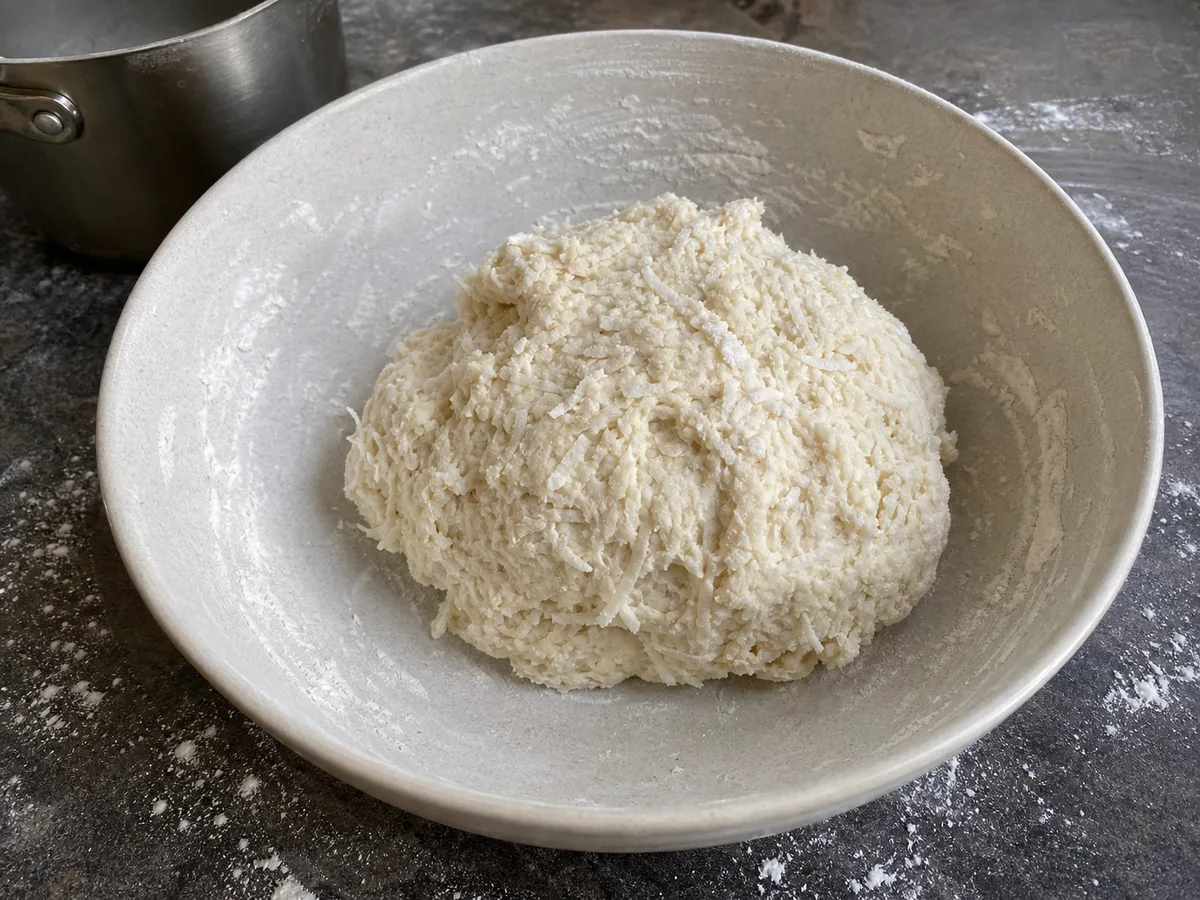
Warm 300 ml of full-fat coconut milk with 120 ml of water in a small saucepan over low heat until 38–43°C (100–110°F); the liquid should feel warm, never hot. In a large bowl, whisk 500 g of all-purpose wheat flour, 7 g of instant yeast, 25 g of light brown sugar, 7 g of fine sea salt, and 1 g of ground nutmeg. Cut 57 g of unsalted butter into small pieces and rub it into the dry mixture with your fingertips until no large pieces remain. Grate 80 g of fresh coconut meat finely, then stir it through. Pour in the warm liquid and mix until a shaggy dough forms. Knead on a clean surface for 8 to 10 minutes, until smooth, elastic, and slightly tacky. Keep kneading before considering extra flour; a stiff dough produces a dense bake.
08:00Let the dough rise
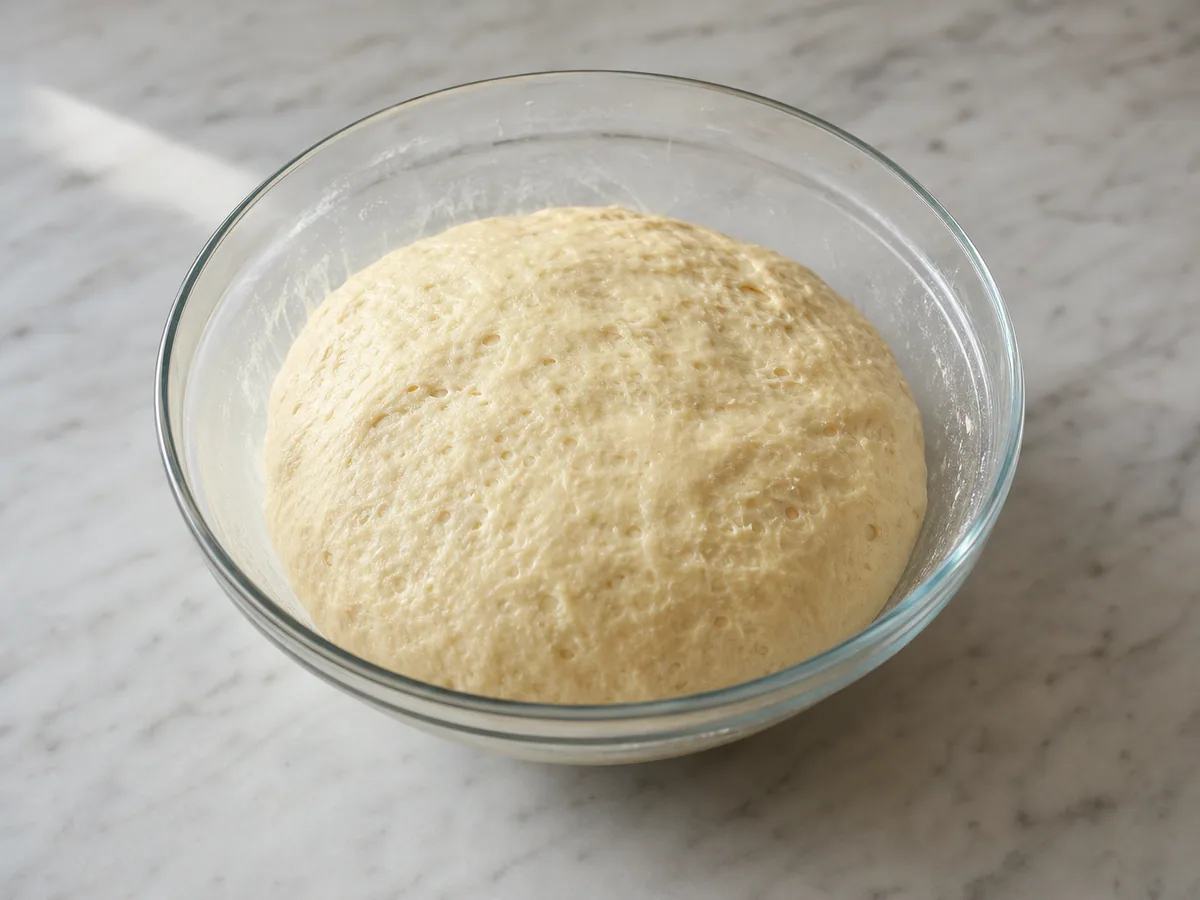
Place the dough in a clean bowl and cover it loosely. Let it rise in a warm, draft-free spot for 45 to 60 minutes, until noticeably puffy and about one and a half times its original size. Start checking at 45 minutes; enriched coconut dough may rise more slowly in a cool kitchen.
45:00Shape the bake and proof again
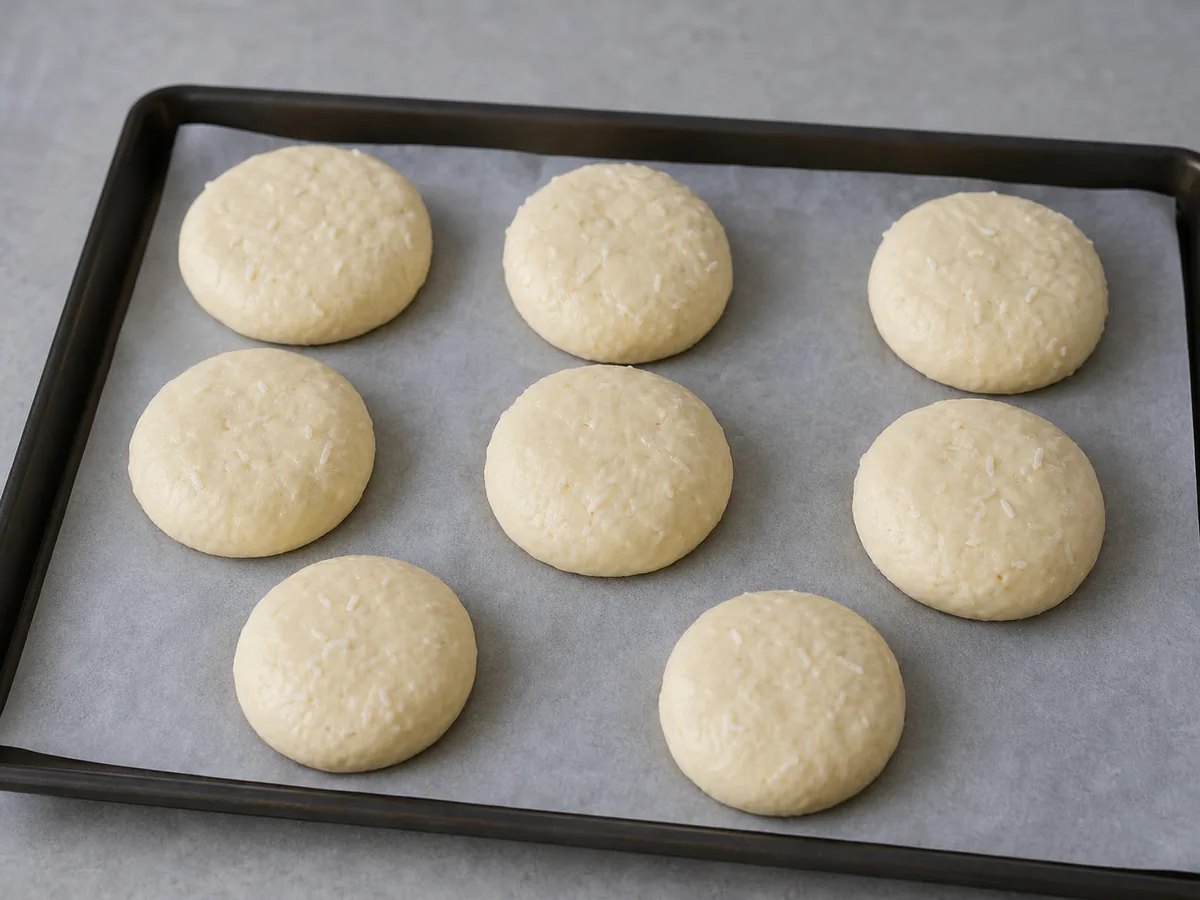
Line a baking sheet with parchment and heat the oven to 200°C (400°F). Gently press out the largest gas pockets, then, for the default 8 servings, divide the dough into 2 equal pieces and shape each into a round about 20 cm (8 in) across and 2.5 cm (1 in) deep. When scaling the recipe, change the number of rounds rather than their approximate diameter and depth so the centers bake at the same rate. Set the rounds on the sheet, cover loosely, and let them stand for 15 to 20 minutes, until their surfaces look softly inflated.
15:00Bake until deeply golden
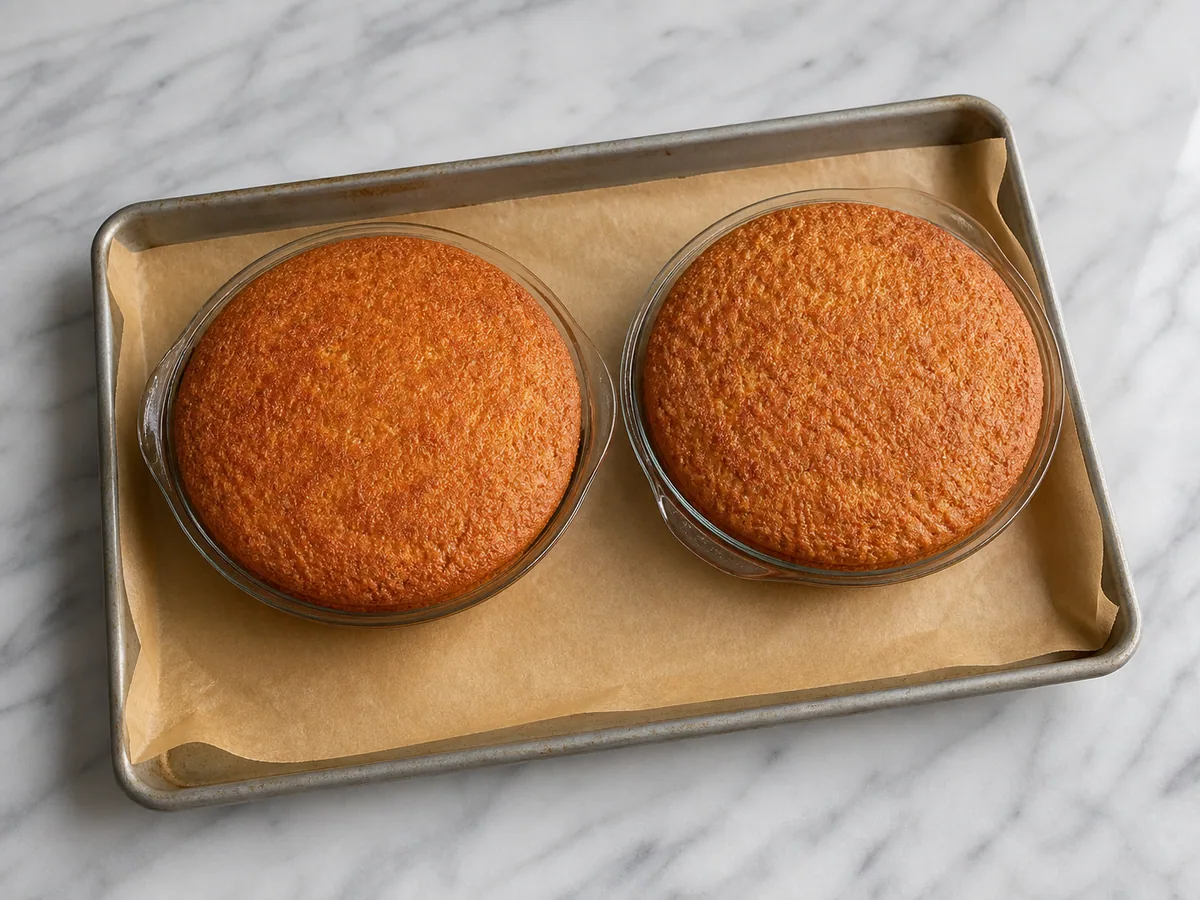
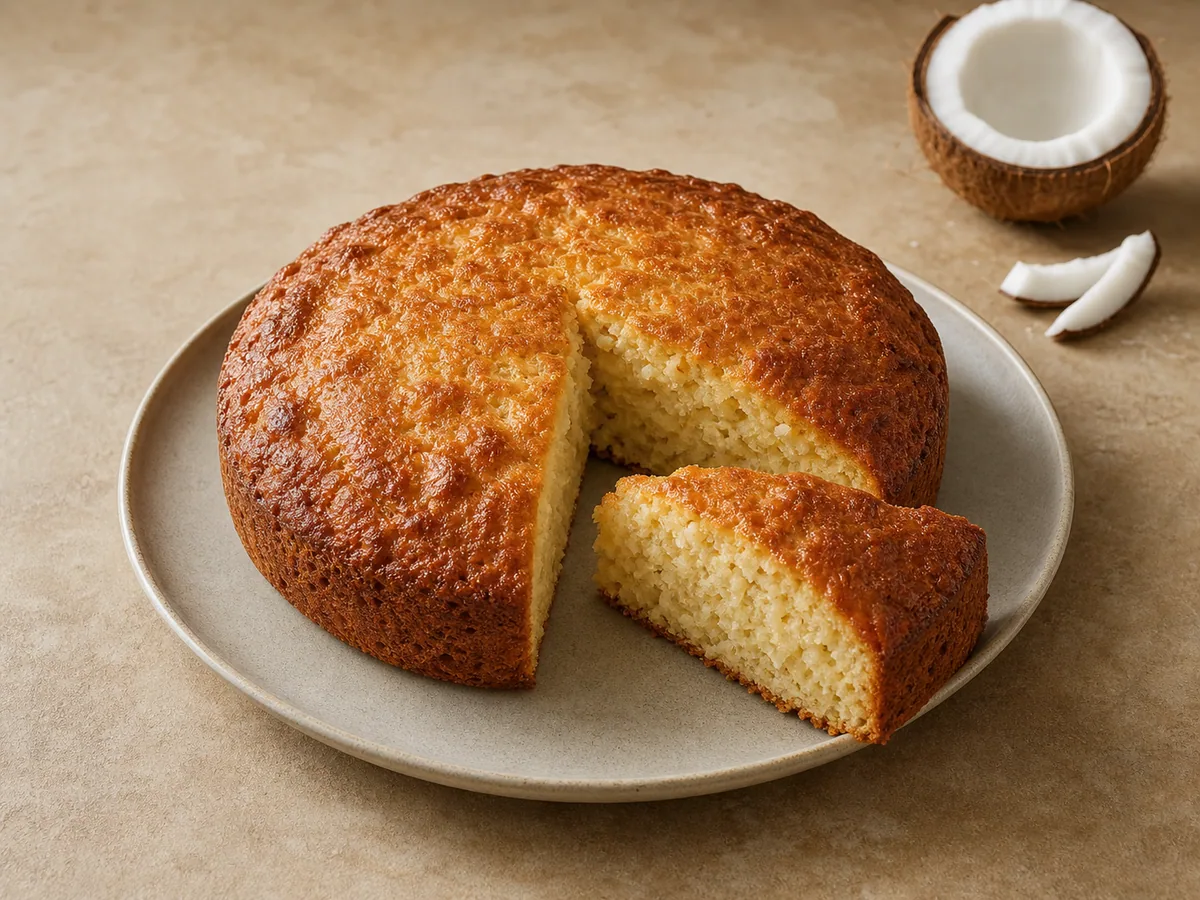
Bake for 22 to 28 minutes, rotating the sheet once if the oven browns unevenly. Start checking at 22 minutes. The crust should be evenly golden, the underside should feel firm, and the center should register about 93°C/200°F on an instant-read thermometer. If the top darkens before the center is ready, cover it loosely with foil for the final minutes.
22:00Rest before slicing
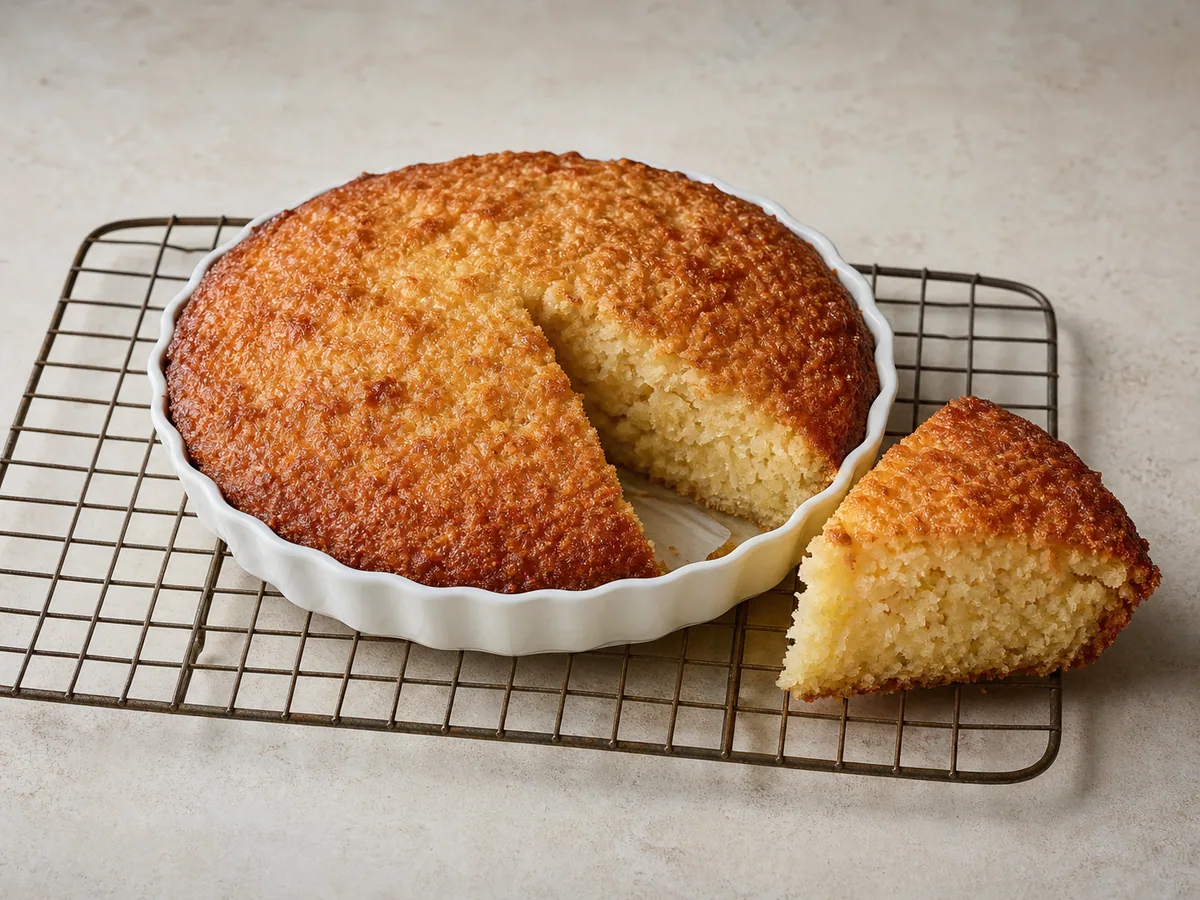
Transfer the coconut bake to a wire rack and let it rest for 10 minutes. This brief pause lets steam settle into the crumb instead of escaping through a gummy cut surface. Slice into wedges or split into thick pieces and serve warm.
10:00


Smart Substitutions
- No fresh coconut? Use unsweetened desiccated coconut. Rub it between your fingers to break up long strands before mixing it into the dough.
- No full-fat coconut milk? Use light coconut milk, but reduce the water slightly if the dough feels loose and expect a less rich crumb.
- Replacing butter? Use a firm plant-based baking fat in the same amount for a similar short, tender texture.
- Using active dry yeast? Stir it into the warm coconut milk and water with the sugar, then wait 5 to 10 minutes for a foamy cap before adding it to the flour mixture.
Tips and Variations
- Weigh the flour when possible; packed cups can make the dough dry and heavy.
- Knead until the surface becomes smooth before judging stickiness. Coconut dough should remain softer than sandwich-bread dough.
- Shape every round to the same depth so the crust browns without leaving a doughy center.
What Went Wrong?
- Crumb is dense The dough was likely too stiff or under-risen. Keep it slightly tacky and wait for visible expansion rather than relying only on the clock.
- Dough barely rises Check that the liquid was warm rather than hot and that the yeast is active. Move the covered bowl to a warmer, draft-free spot.
- Edges are dry The rounds may be too thin or baked too long. Preserve a thick profile and begin checking at the stated first-check time.
- Center is gummy Bake until the underside is firm and the center reaches about 93°C/200°F, then give the bread its full resting time before slicing.
Nutrition Estimate
- Fiber: 4 g per serving
- Sodium: 355 mg per serving
Nutrition disclaimer:This recipe is provided for general cooking information only. Nutrition values are estimates and may vary by ingredients, brands, preparation methods, and serving sizes. Check ingredient labels and follow appropriate food-safety practices. This content is not medical, dietary, allergy, or professional food-safety advice.
FAQ
Found an error or have a suggestion?
Help us improve this recipe. Send us your feedback and include the recipe name so we can take a look.