Method
Season the chicken and let it stand
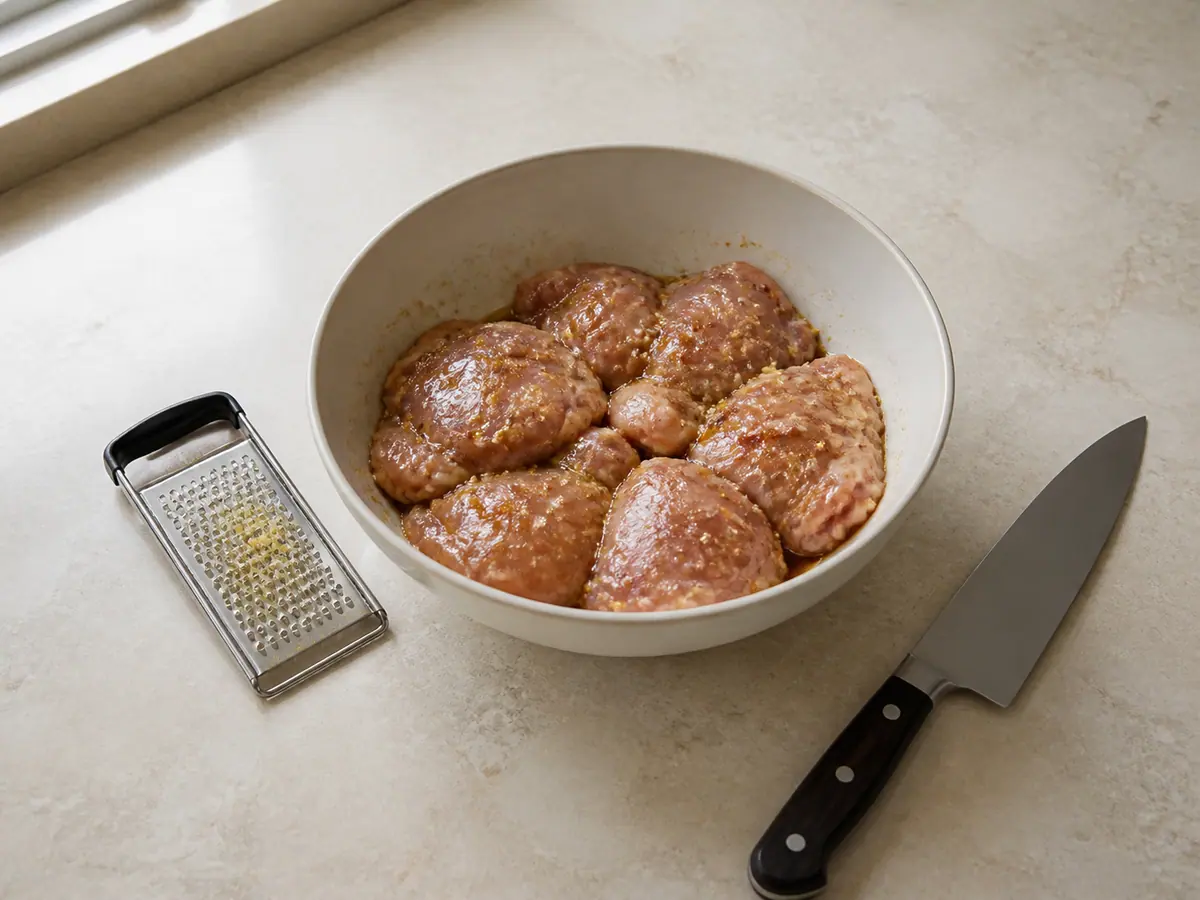
Do not rinse the chicken. Pat 800 g of boneless skinless chicken thighs dry with paper towels and place them in a bowl reserved for raw poultry. Add 30 ml of low-sodium soy sauce for chicken and 15 ml of toasted sesame oil. Grate 20 g of fresh ginger into the bowl, mince 3 garlic cloves and add it, then sprinkle in 4 g of Chinese five-spice powder and 3 g of kosher salt. Toss until every piece is evenly coated and let stand for 20 minutes. Wash your hands, knife, grater, bowl rim, and work surface before handling the cabbage or cooked chicken.
20:00Roast the chicken until fully cooked
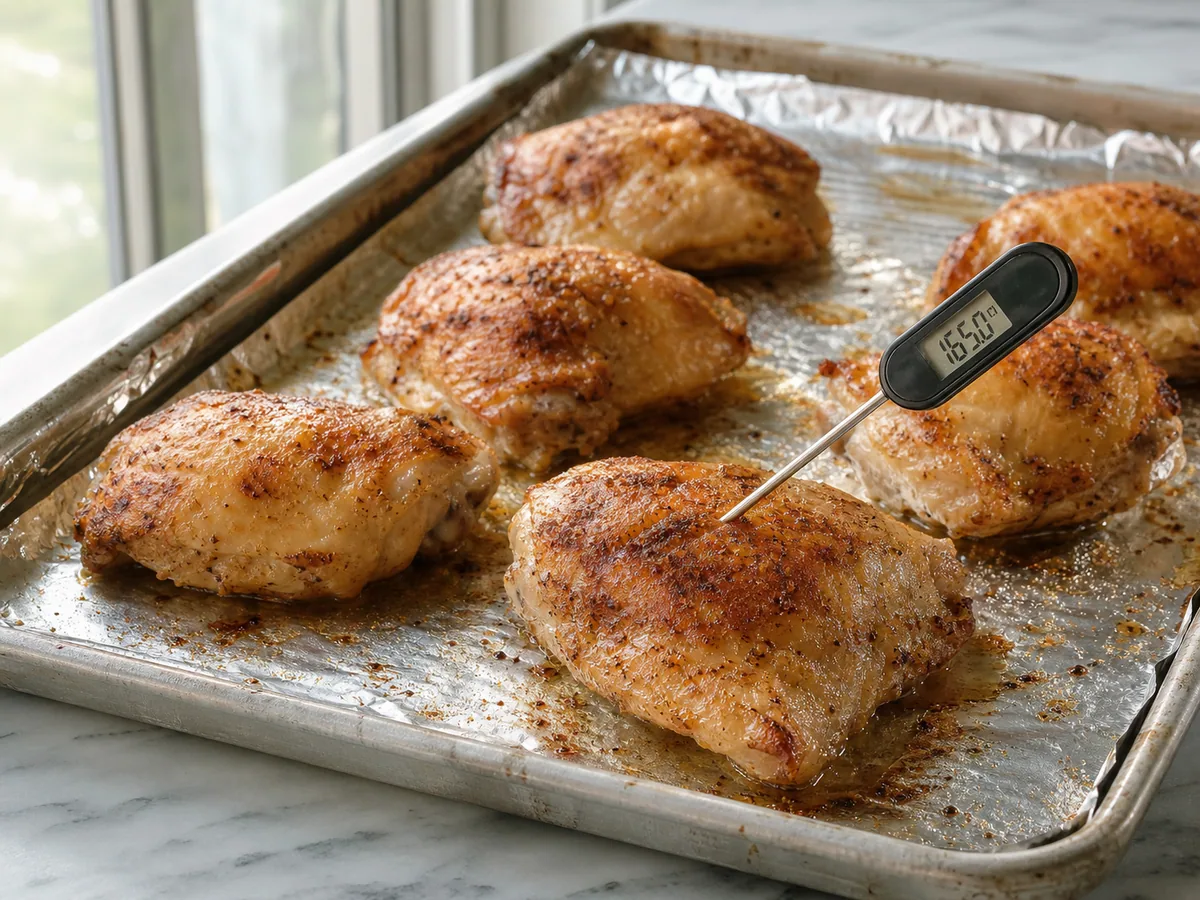
Heat the oven to 220°C (425°F). Arrange 800 g of boneless skinless chicken thighs in a single layer on a foil-lined rimmed baking sheet, leaving space between the pieces. Roast for 18 to 24 minutes. Begin checking at 18 minutes with a food thermometer inserted into the thickest part; every piece must reach 74°C/165°F before smoking. Transfer the cooked chicken with clean tongs to a clean wire rack and discard any raw-poultry juices left on the sheet.
18:00Build the tea-smoking setup
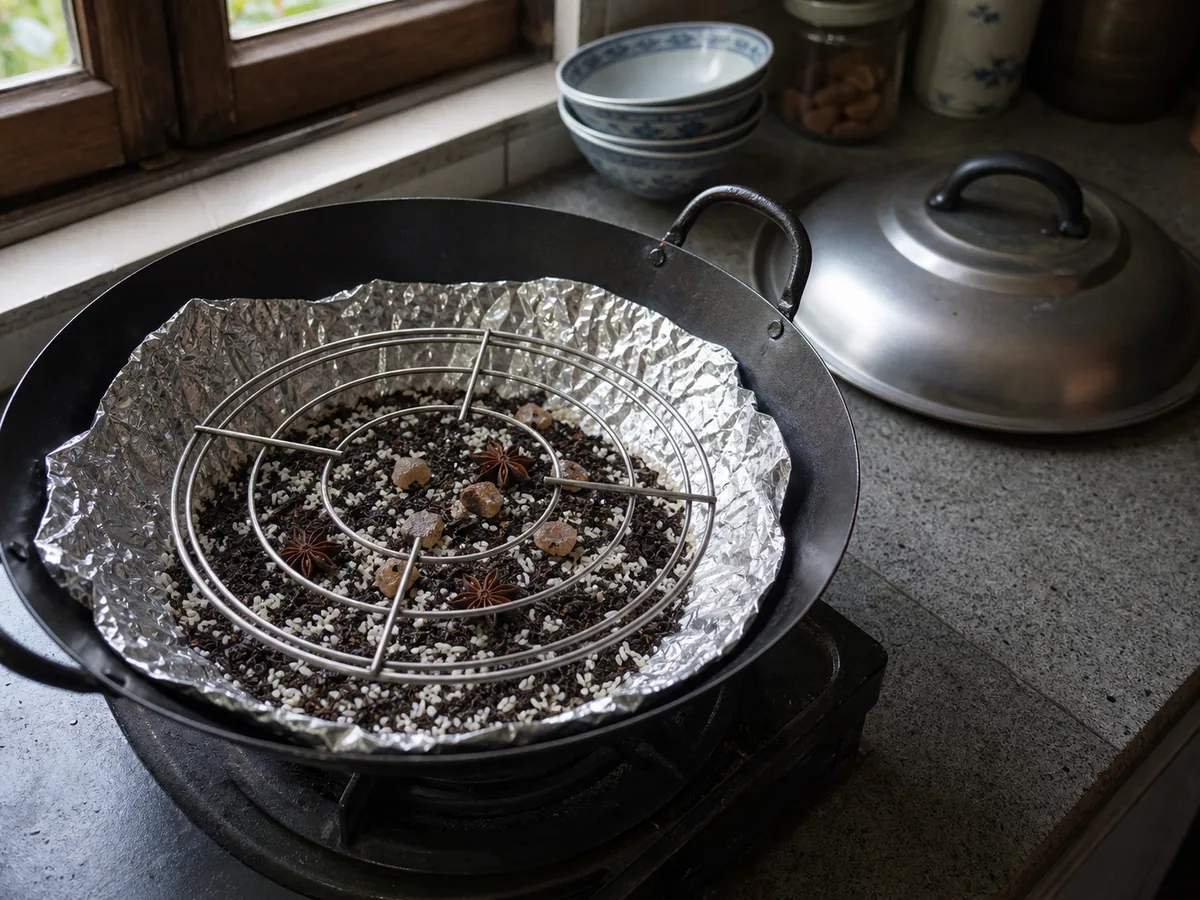
Run the extractor fan on high and open a nearby window. Double-line a carbon-steel wok or heavy stainless-steel pot with foil; do not use nonstick cookware for this high-heat step. Spread 15 g of loose black tea leaves, 65 g of uncooked white rice, 45 g of light brown sugar, and 2 star anise pods over the foil. Set a metal rack about 2.5 cm (1 in) above the mixture and choose a lid that closes tightly. Keep the setup away from paper towels and never leave it unattended.
Tea-smoke the cooked chicken
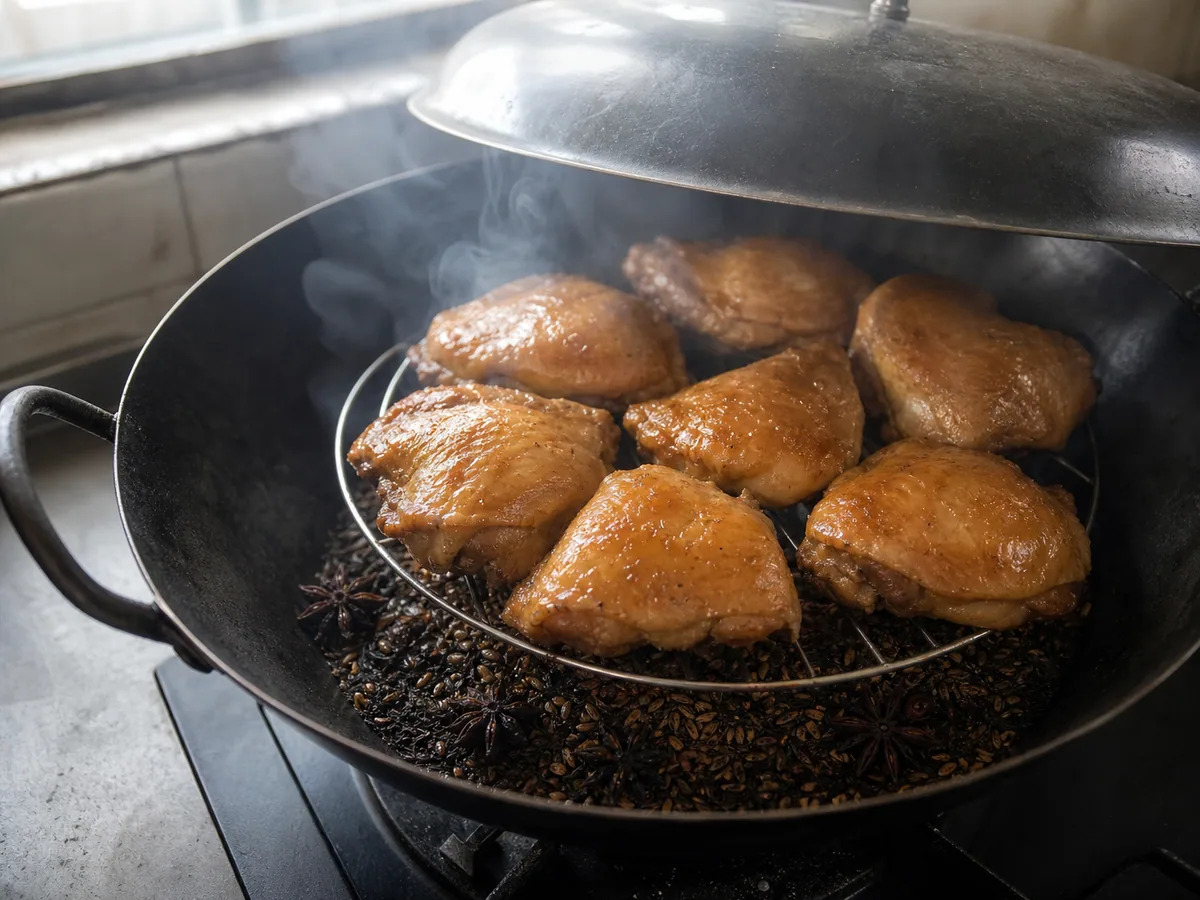
Place 800 g of boneless skinless chicken thighs, now fully cooked, on the rack without crowding. Cover tightly and heat the wok over medium-high heat until a thin ribbon of smoke escapes at the edge. Immediately reduce the heat to medium-low and smoke for 6 to 8 minutes, using 6 minutes as the first check. Turn off the heat, uncover carefully away from your face, and transfer the chicken to a clean platter once the surface is lightly amber and fragrant. The smoking mixture is for aroma only and is not eaten.
06:00Prepare the cabbage and scallions
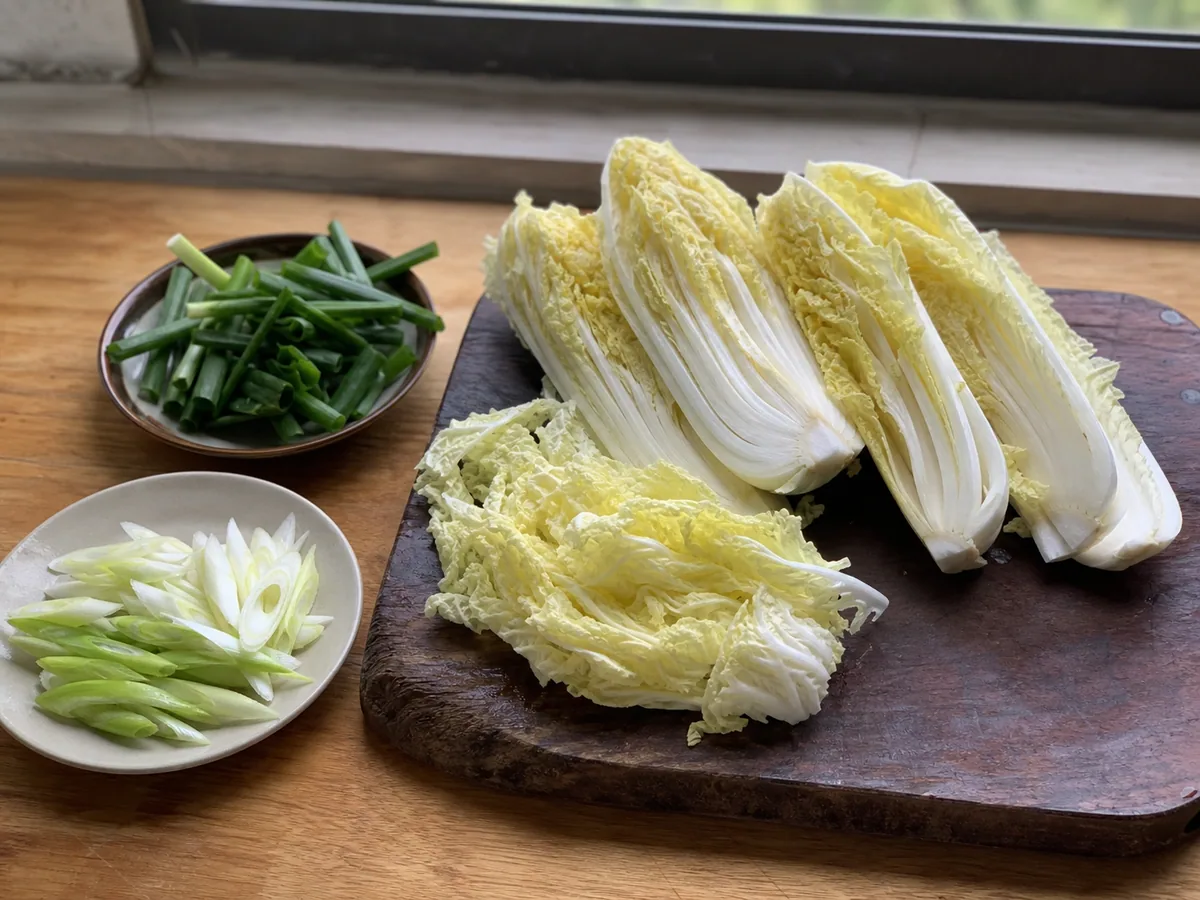
While the chicken smokes, cut 700 g of Napa cabbage lengthwise into quarters. Remove only the thickest core, then cut the pale ribs crosswise into 2 cm (3/4 in) pieces and tear the leafy sections into broad pieces; keep the ribs and leaves separate. Slice 4 scallions and separate the pale parts from the green tops.
Soften the cabbage ribs
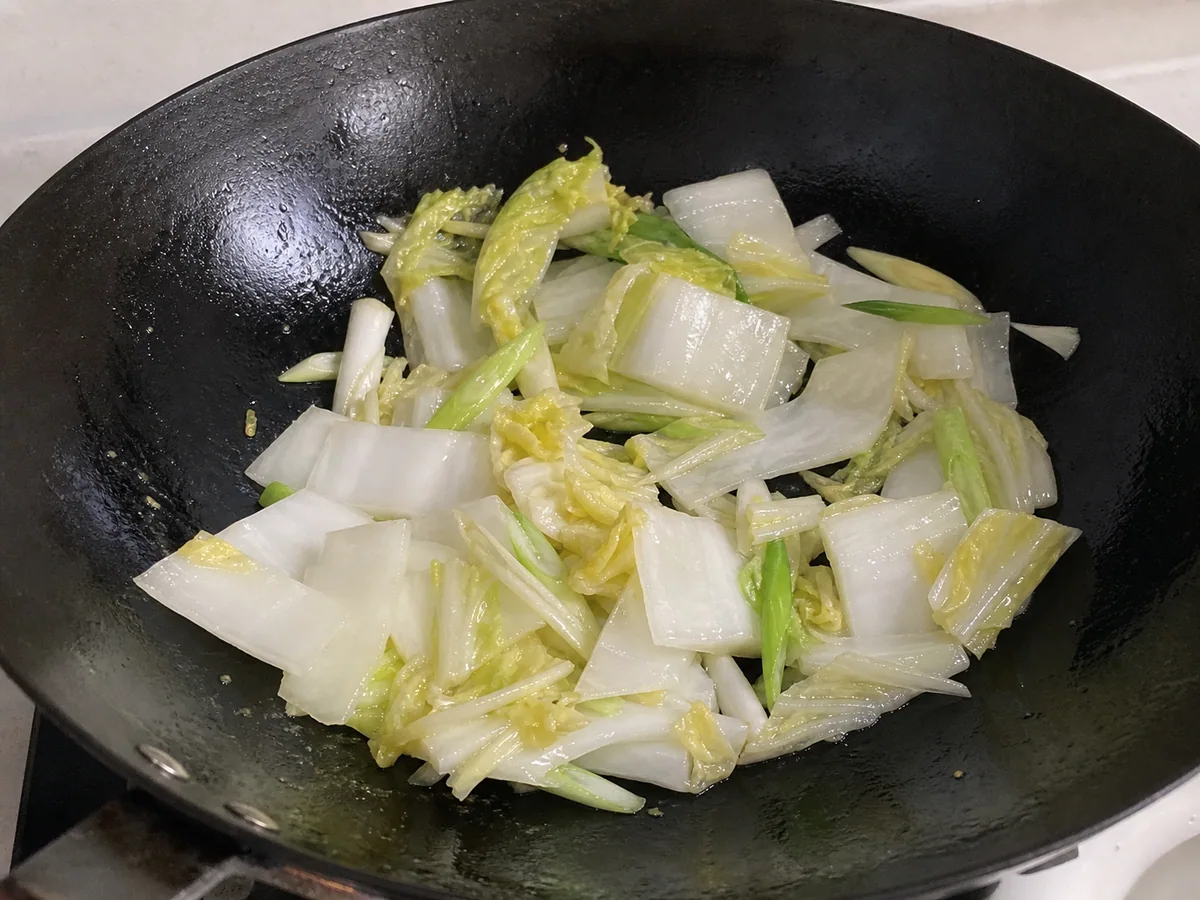
Heat 30 ml of neutral cooking oil in a large wok or wide skillet over medium-high heat until shimmering. Add the prepared cabbage ribs and pale scallion parts. Stir-fry for 3 minutes, tossing frequently, until the ribs brighten and begin to bend but still feel firm at the center.
03:00Wilt and season the cabbage leaves
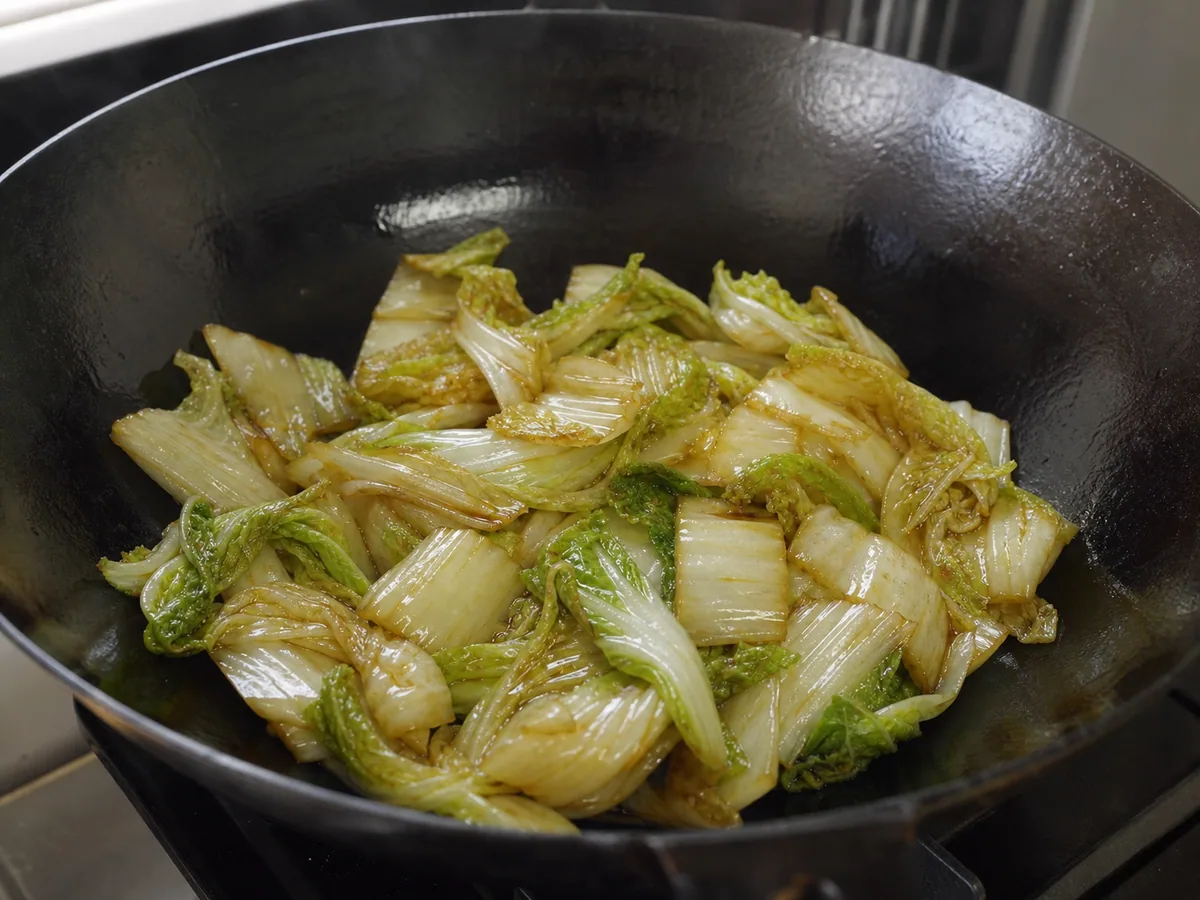
Add the prepared cabbage leaves, 15 ml of low-sodium soy sauce for cabbage, and 30 ml of unseasoned rice vinegar. Toss continuously for 3 to 4 minutes, using 3 minutes as the first check, until the leaves are glossy and wilted while the ribs remain crisp-tender. Let excess moisture bubble away so the cabbage is coated rather than soupy, then remove the wok from the heat.
03:00Slice the chicken and serve
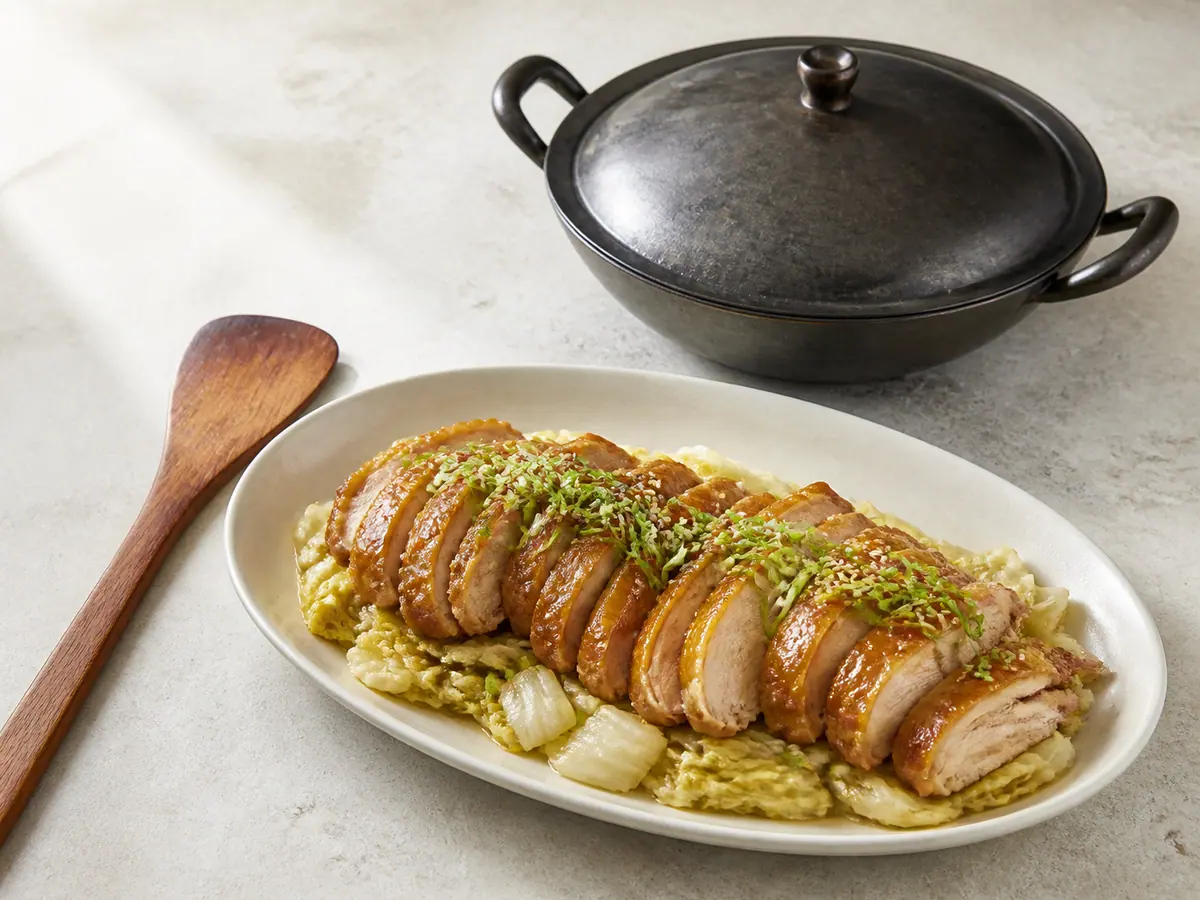
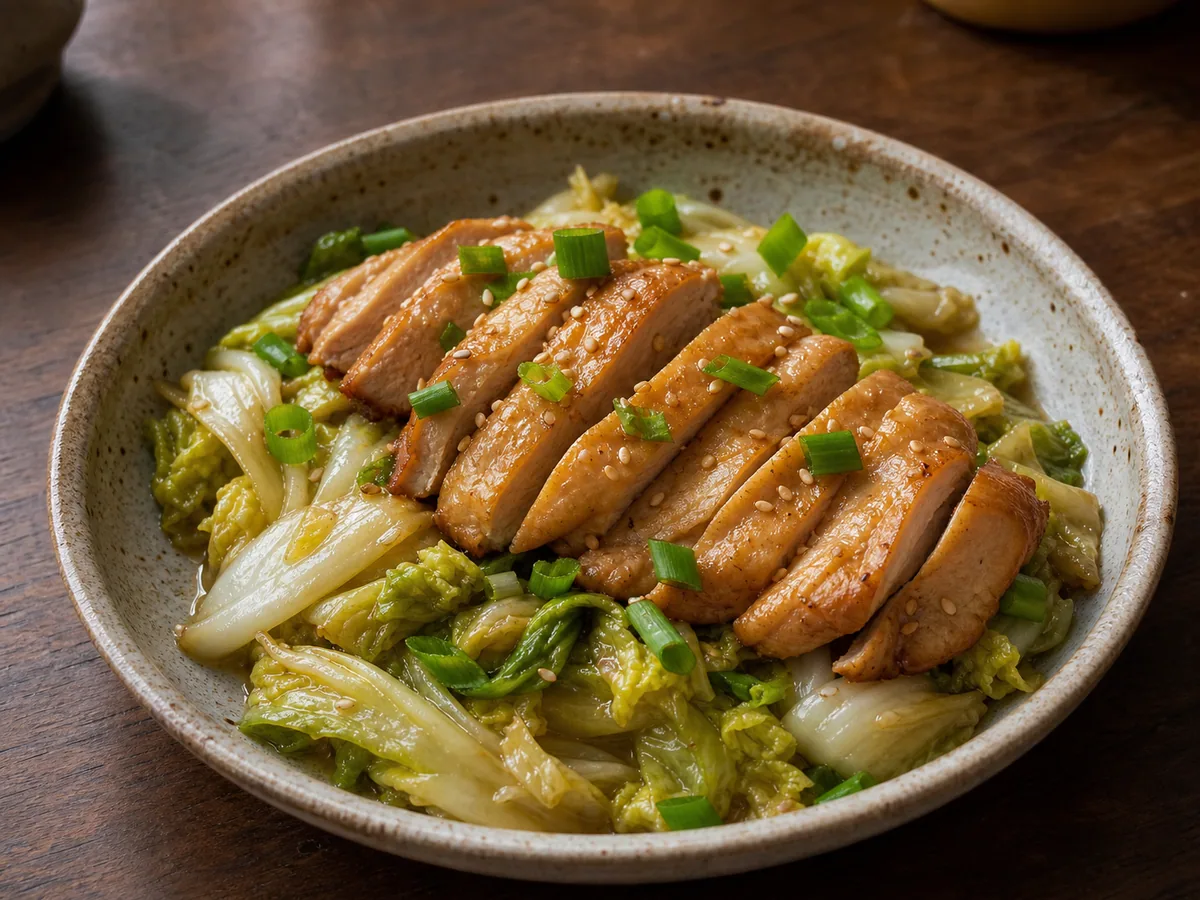
Spread the hot cabbage on a serving platter. Slice the tea-smoked chicken across the grain and arrange it over the cabbage, spooning over any juices from the clean platter. Scatter 18 g of toasted sesame seeds and the green scallion tops over everything, then serve immediately while the cabbage still has bite and the smoke aroma is fresh.


Smart Substitutions
- No black tea? Use loose oolong or jasmine green tea for a lighter aroma; avoid strongly flavored dessert teas.
- No Napa cabbage? Use green cabbage cut into small pieces, or separate bok choy stems and leaves and cook them in the same order.
- Prefer chicken breast? Use thick chicken breast cutlets and begin checking early; each piece still needs to reach 74°C/165°F before smoking.
- Avoiding sesame? Replace toasted sesame oil with neutral oil and omit the sesame seeds; the dish will be less nutty but the tea smoke remains clear.
Tips and Variations
- Keep the smoking time short. A pale amber surface tastes fragrant; a dark brown surface can turn harsh and bitter.
- Use strong ventilation and a tight lid so the smoke stays in the wok instead of filling the kitchen.
- Reserve clean tongs, a clean rack, and a clean platter for the cooked chicken to avoid contact with raw-poultry juices.
What Went Wrong?
- Smoke tastes bitter The mixture burned too aggressively or the chicken smoked too long. Use lower heat once smoke appears and stop when the surface is only lightly amber.
- Smoking mixture does not smoke Make sure the mixture and wok are dry, then raise the heat briefly until a thin ribbon of smoke appears before reducing it.
- Chicken is dry Use a thermometer and remove the chicken from the oven as soon as every piece reaches 74°C/165°F; the smoking stage adds more heat.
- Cabbage is watery Use a wide hot pan, keep the ribs and leaves separate, and let moisture bubble away before taking the wok off the heat.
Nutrition Estimate
- Fiber: 4 g per serving
- Sodium: 825 mg per serving
Nutrition disclaimer:This recipe is provided for general cooking information only. Nutrition values are estimates and may vary by ingredients, brands, preparation methods, and serving sizes. Check ingredient labels and follow appropriate food-safety practices. This content is not medical, dietary, allergy, or professional food-safety advice.
FAQ
Found an error or have a suggestion?
Help us improve this recipe. Send us your feedback and include the recipe name so we can take a look.