Method
Soak the mushrooms and prepare the ingredients
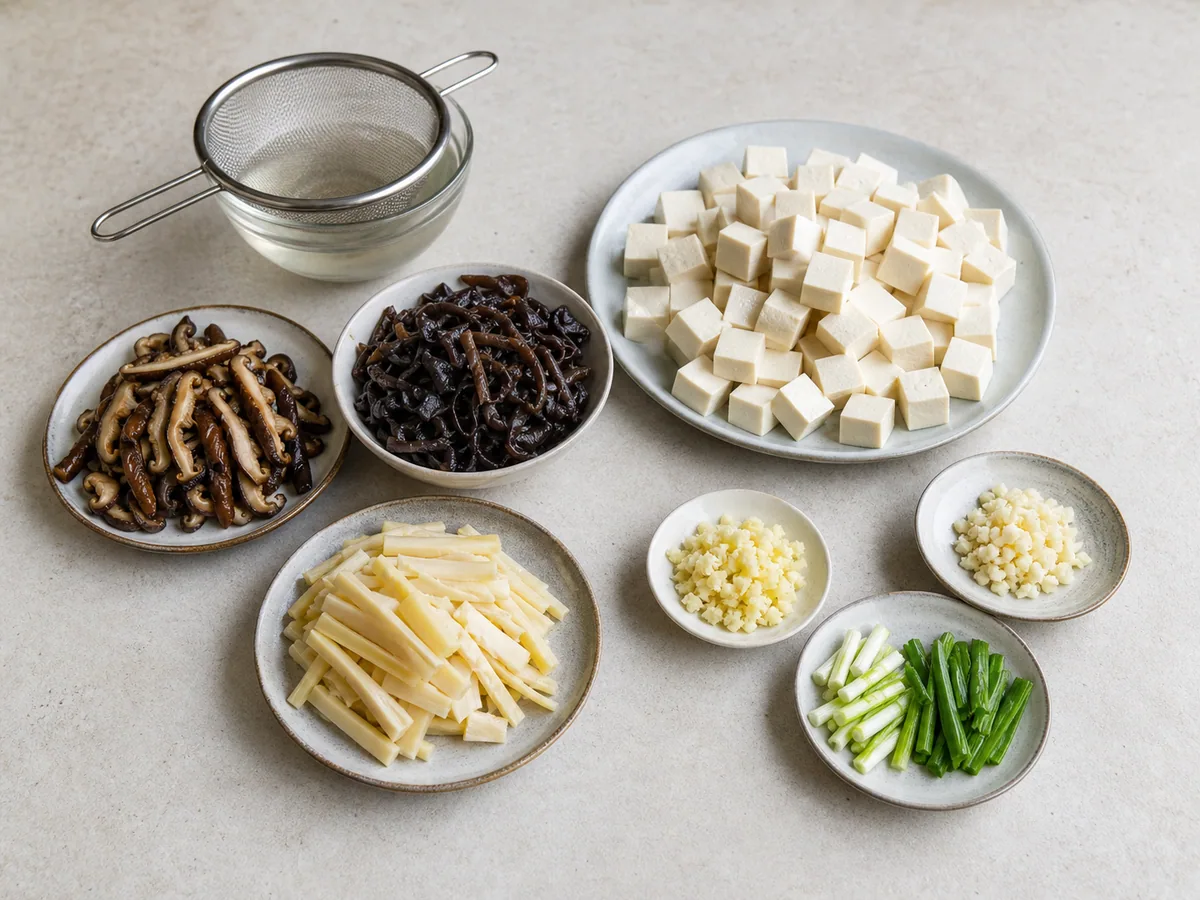
Heat 1250 ml of water until steaming but not boiling. Place 20 g of dried shiitake mushrooms and 10 g of dried wood ear mushrooms in a heatproof bowl, pour over enough hot water to cover them, and soak for 15 minutes, or until fully flexible. Reserve the remaining hot water. Lift out the mushrooms, rinse them well, trim away any firm centers, and strain the soaking liquid through a fine sieve into the reserved water. Slice the mushrooms into slender strips. Cut 400 g of firm tofu into 1 cm (3/8 in) cubes. Drain and rinse 120 g of canned bamboo shoots. Mince 15 g of fresh ginger, mince 2 garlic cloves, and slice 4 scallions, keeping the white and green parts separate.
15:00Build the mushroom broth
Pour the strained mushroom liquid and remaining water into a large saucepan. Add 20 g of dried shiitake mushrooms, 10 g of dried wood ear mushrooms, 120 g of canned bamboo shoots, 15 g of fresh ginger, 2 garlic cloves, and the white parts of 4 scallions. Bring to a boil over medium-high heat, then lower the heat and simmer gently for 8 minutes, until the mushrooms are tender and the broth smells deeply savory.
08:00Season and thicken the soup
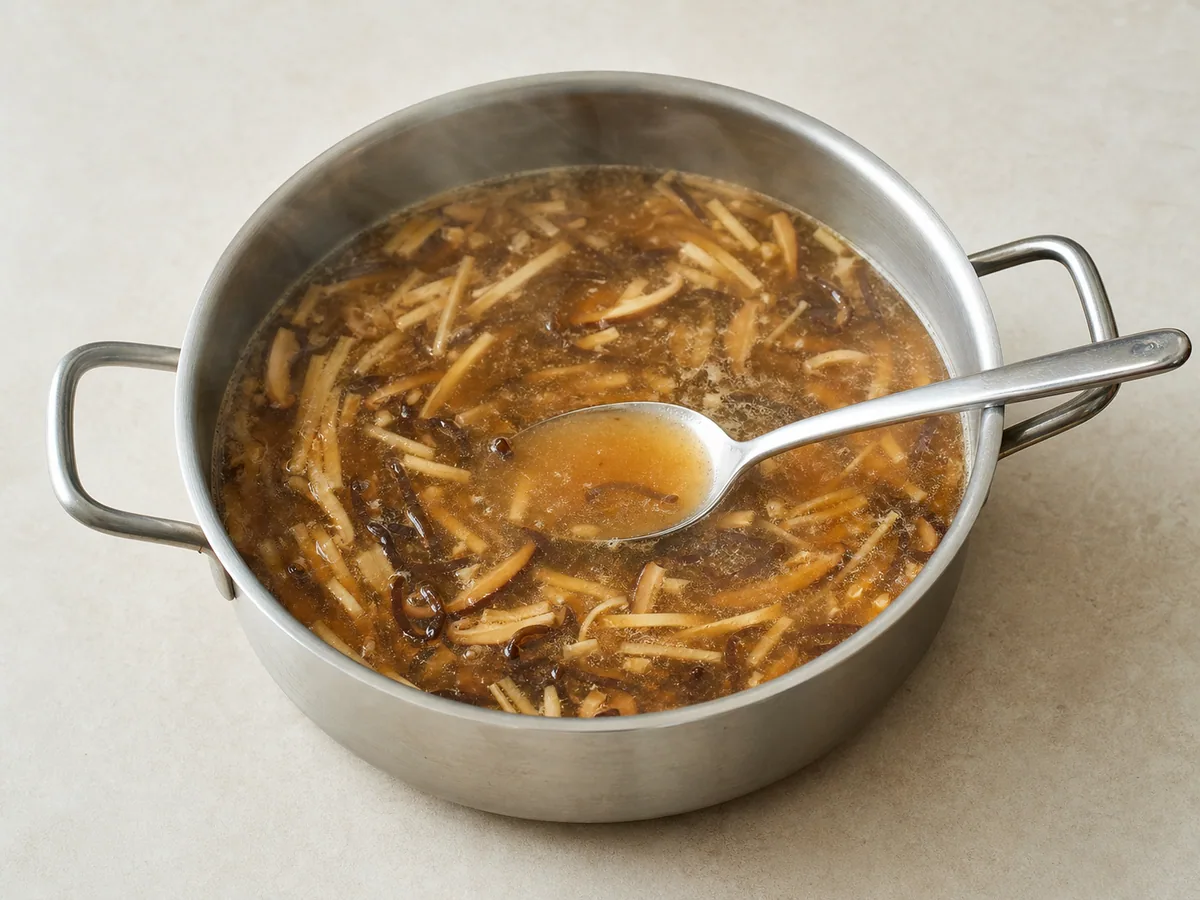
Stir in 30 ml of reduced-sodium soy sauce, 5 g of granulated sugar, 3 g of kosher salt, and 3 g of ground white pepper. In a small bowl, whisk 30 g of cornstarch with 60 ml of cool water until completely smooth. Bring the soup back to a gentle boil. Stir continuously while pouring in the slurry in a thin stream, then simmer for 1 to 2 minutes, until the broth looks glossy and lightly coats a spoon without becoming gelatinous.
01:30Warm the tofu and finish the soup
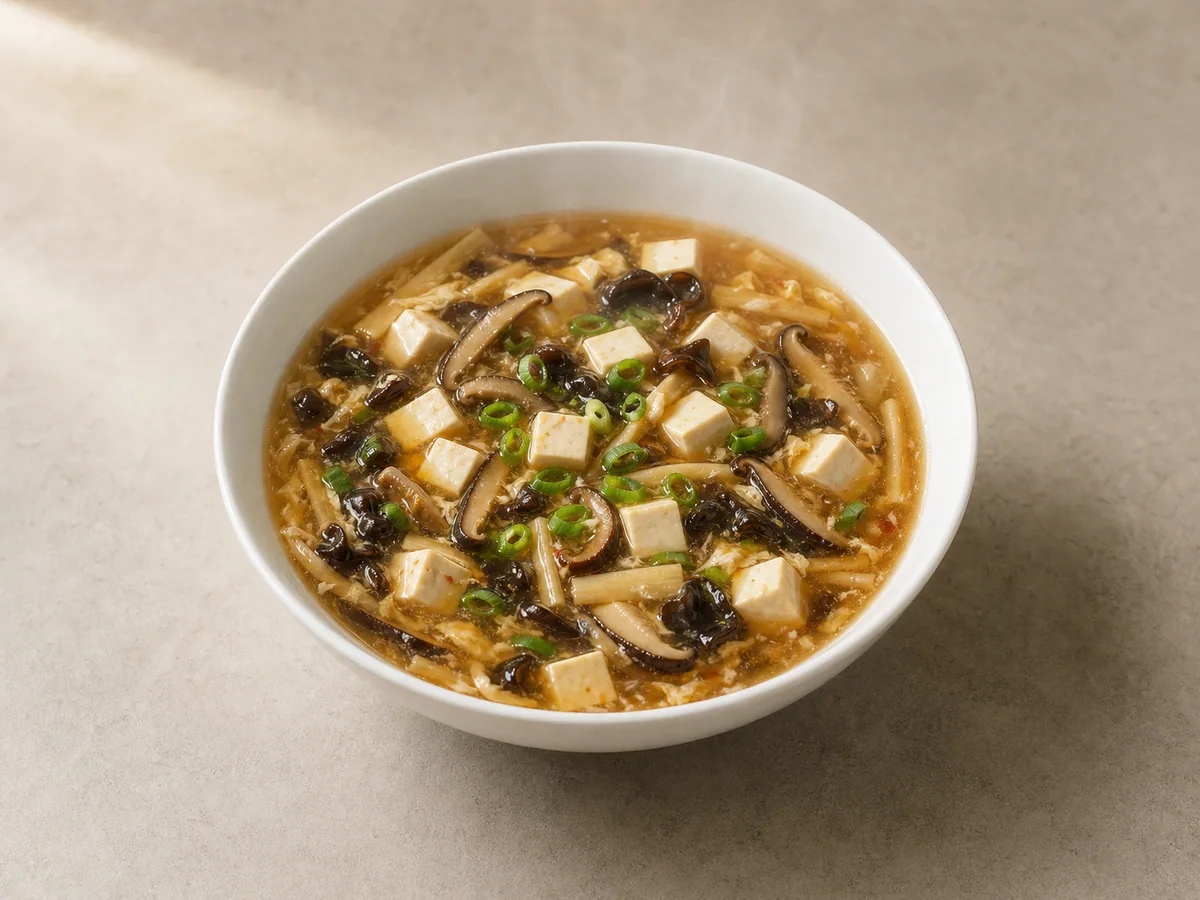
Slide 400 g of firm tofu into the pot and stir gently so the cubes stay intact. Simmer for 3 to 4 minutes, checking at 3 minutes, until the tofu is hot through and the broth returns to a quiet simmer. Remove the pan from the heat. Stir in 75 ml of Chinkiang black vinegar, 10 ml of toasted sesame oil, and the green parts of 4 scallions. Ladle into bowls and serve immediately while the vinegar aroma is vivid.
03:00


Smart Substitutions
- No Chinkiang vinegar? Use plain rice vinegar for a cleaner acidity, or combine four parts rice vinegar with one part balsamic vinegar for a darker, rounder flavor.
- No wood ear mushrooms? Use more shiitake mushrooms or thinly sliced oyster mushrooms; the soup will be less crisp but still savory.
- No bamboo shoots? Use thin strips of napa cabbage or carrot and simmer them until just tender.
- Avoiding wheat? Choose a soy sauce alternative specifically labeled wheat-free, and compare its sodium level before seasoning the soup.
Tips and Variations
- Cut the tofu and vegetables into small, spoon-friendly pieces so each bowl gets a balanced mix.
- Stir the cornstarch slurry again immediately before pouring; starch settles quickly at the bottom of the bowl.
- Keep the soup at a gentle simmer after adding tofu so the cubes stay neat and the thickened broth remains smooth.
What Went Wrong?
- Soup is too thin Bring it back to a gentle boil and add a little more slurry made from equal parts cornstarch and cool water, stirring as you pour.
- Soup is too thick Whisk in hot water a splash at a time until the broth flows easily from a spoon.
- Flavor tastes dull Check the salt first, then sharpen the bowl with a small splash of black vinegar.
- White pepper formed clumps Whisk it with the soy sauce before adding, then stir the soup briskly to disperse it.
Nutrition Estimate
- Fiber: 6 g per serving
- Sodium: 620 mg per serving
Nutrition disclaimer:This recipe is provided for general cooking information only. Nutrition values are estimates and may vary by ingredients, brands, preparation methods, and serving sizes. Check ingredient labels and follow appropriate food-safety practices. This content is not medical, dietary, allergy, or professional food-safety advice.
FAQ
Found an error or have a suggestion?
Help us improve this recipe. Send us your feedback and include the recipe name so we can take a look.