Method
Boil the beans
Sort through 225 g of dried pinto beans, discard any stones or damaged beans, and rinse well under cool running water. Put 225 g of dried pinto beans, 1 1/2 L of water, one half of 160 g of white onion, and 2 garlic cloves in a heavy pot. Bring to a full rolling boil over high heat and boil uncovered for 10 minutes.
10:00Simmer until tender
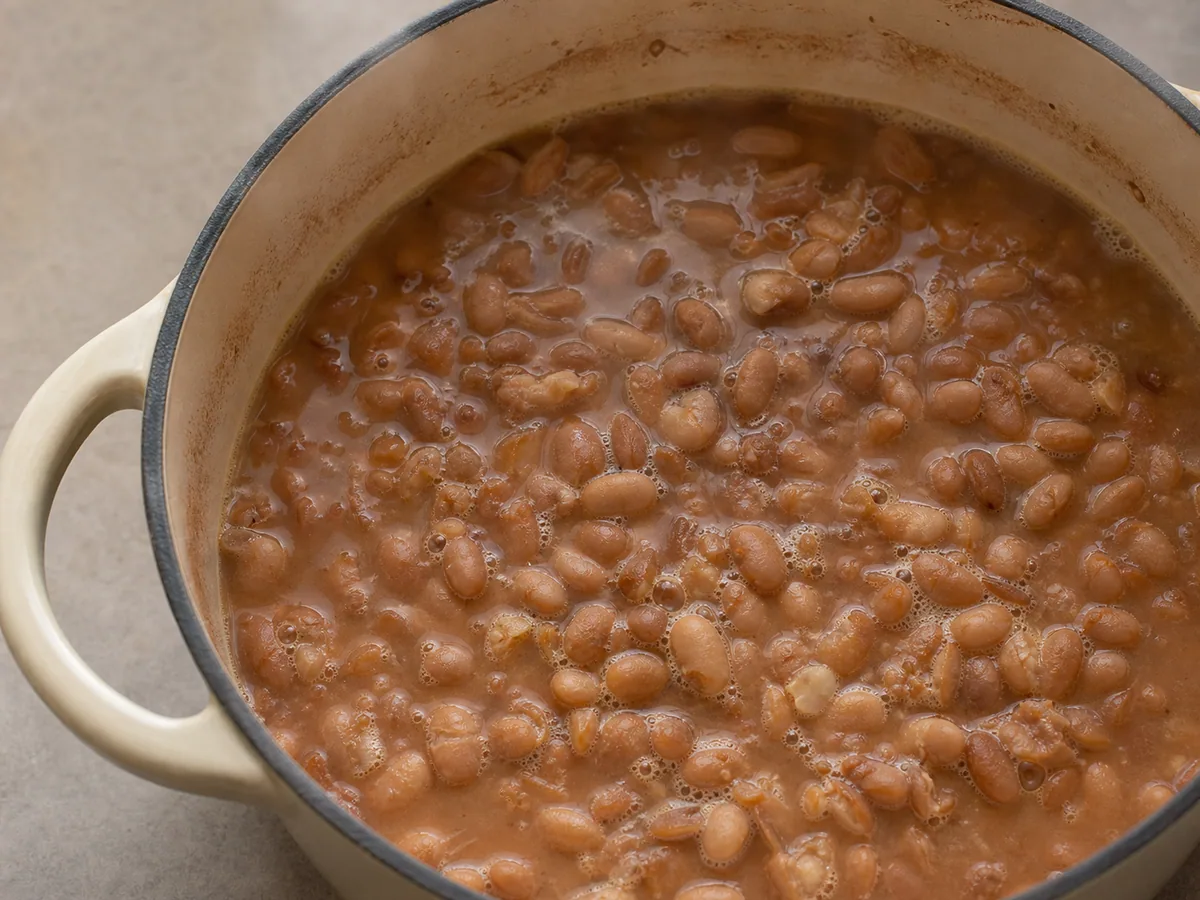
Reduce the heat to maintain a steady simmer, partially cover, and cook for 75 to 105 minutes, stirring occasionally. Start checking at 75 minutes; the beans are ready when one crushes easily between two fingers and the center is creamy. Add more hot water as needed to keep the beans submerged.
1:15:00Season and reserve the cooking liquid
Stir 6 g of fine sea salt into the pot and simmer for 10 minutes so the seasoning reaches the beans. Remove the pot from the heat. Measure out 180 ml of reserved bean cooking liquid, then drain off only the excess liquid; keep the softened onion and garlic with the beans.
10:00Fry the aromatics and mash the beans
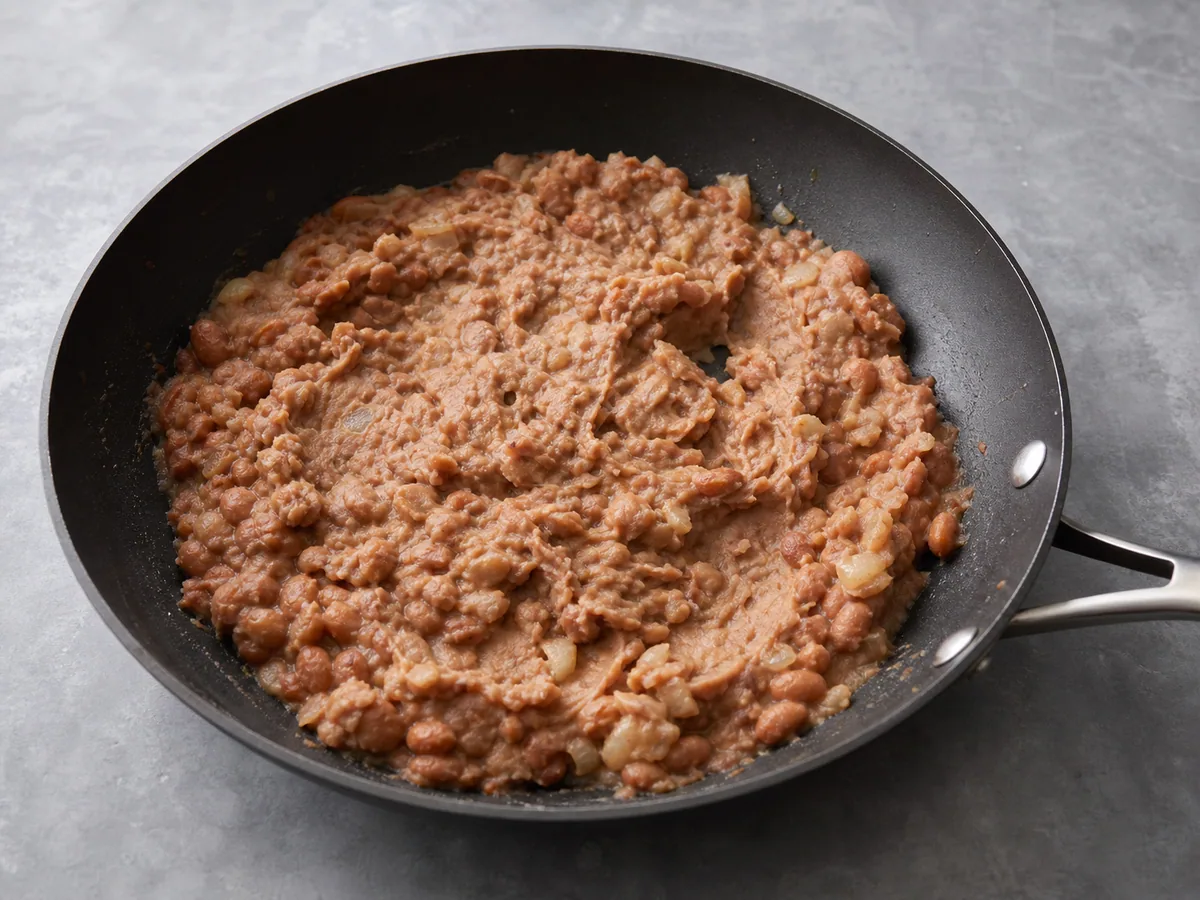
Mince the remaining half of 160 g of white onion. Heat 26 g of lard in a wide, heavy skillet over medium heat. Add the minced onion and cook for 4 to 6 minutes, stirring often, until soft and translucent with pale golden edges. Lower the heat to medium-low. Add the drained beans carefully to limit splattering, then mash with a potato masher while stirring the beans through the fat and onion. Work in about half of 180 ml of reserved bean cooking liquid a little at a time until the mixture is thick, creamy, and still lightly textured.
04:00Finish the texture and serve
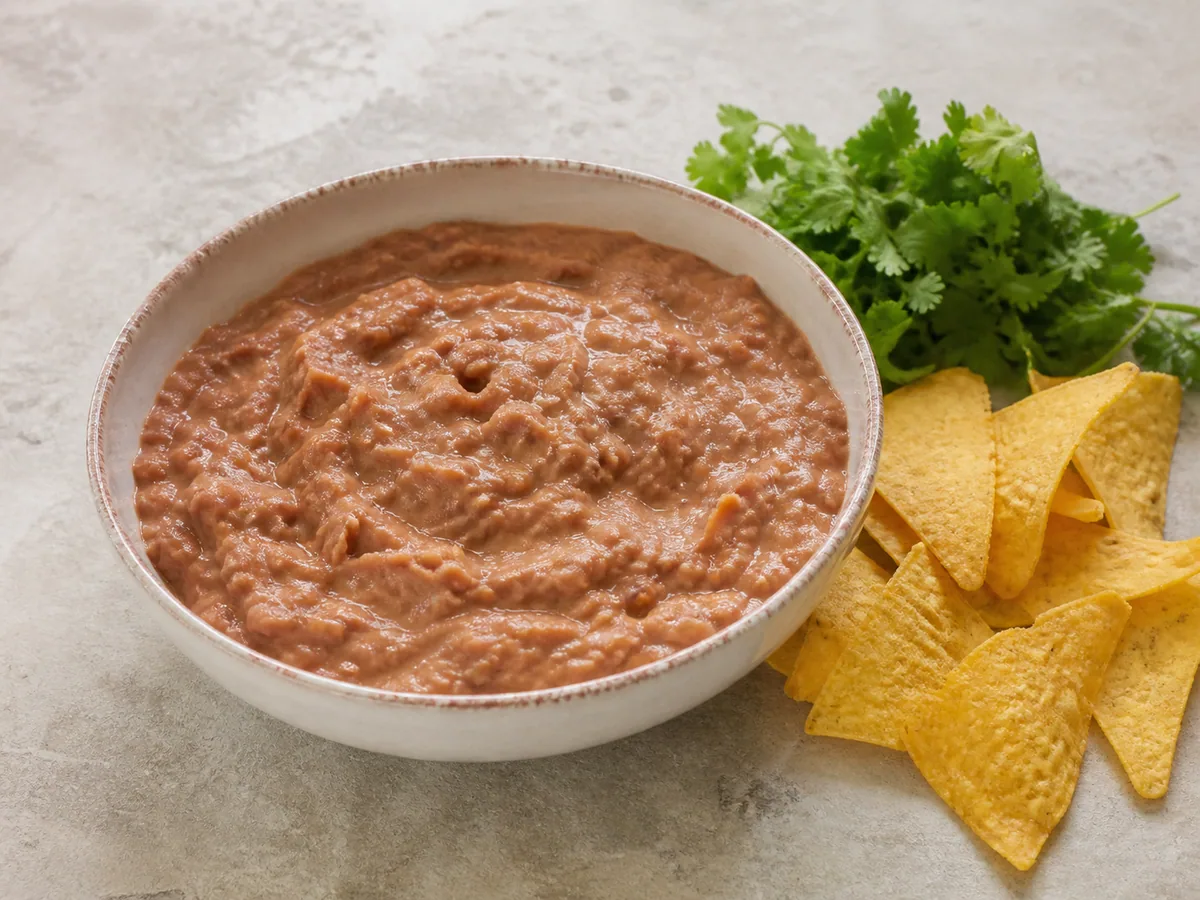
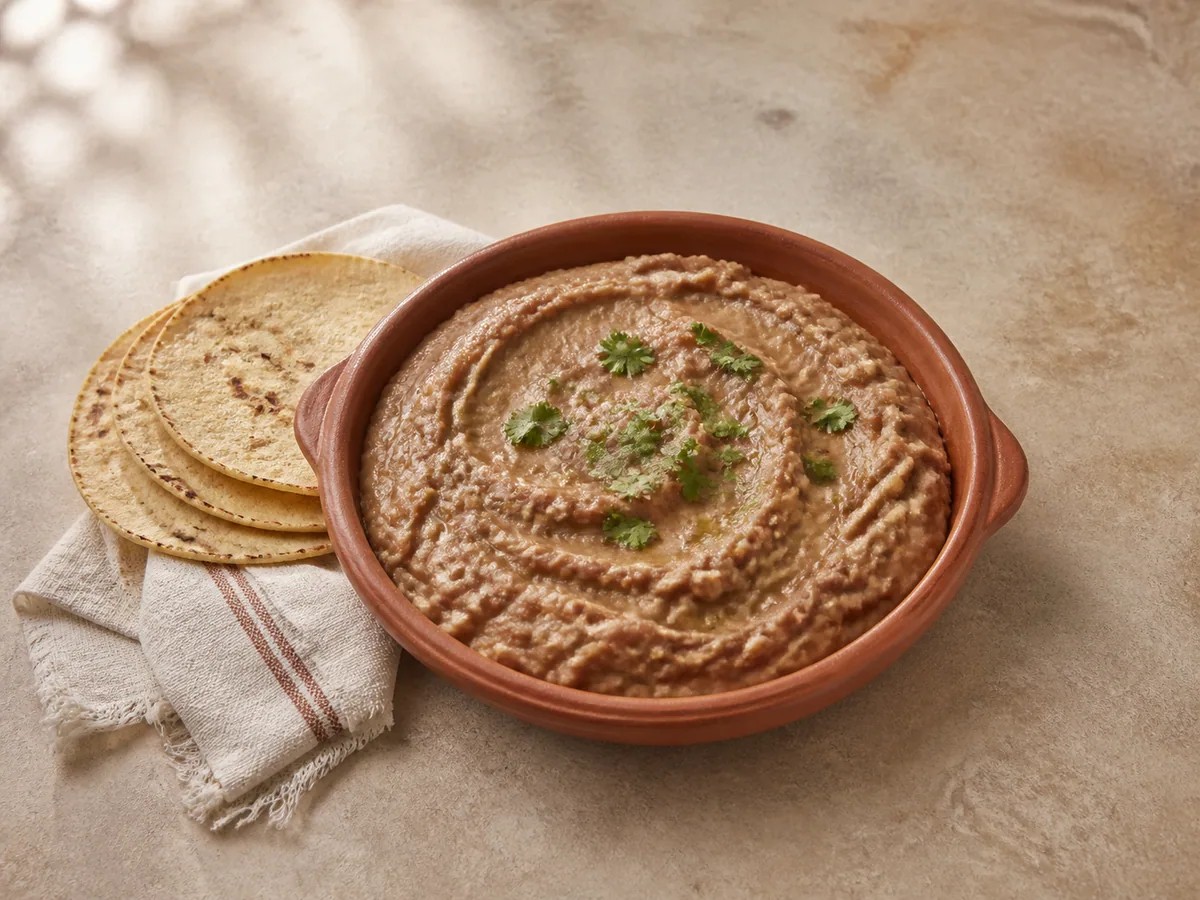
Cook the mashed beans over medium-low heat for 5 to 8 minutes, stirring and scraping the skillet so nothing catches. Begin checking at 5 minutes. Add more 180 ml of reserved bean cooking liquid by small splashes until a spoon drawn through the beans leaves a trail that slowly closes. Finish with fresh cilantro (optional) and serve immediately with corn tortillas (optional).
05:00


Smart Substitutions
- No lard? Use the same amount of neutral vegetable oil for a lighter, plant-based finish.
- No pinto beans? Use dried black beans or bayo beans and cook until fully tender before mashing.
- No fresh garlic? Stir 1/2 teaspoon garlic powder into the beans with the salt.
- No cilantro? Leave it off; the beans are fully flavored without a garnish.
Tips and Variations
- A wide skillet gives steam room to escape, making it easier to control the final thickness.
- Older dried beans can take longer to soften; judge doneness by the creamy center rather than the clock.
- Add the cooking liquid gradually. It is simple to loosen thick beans, but excess liquid takes time to cook away.
What Went Wrong?
- Beans stay firm Keep simmering and add hot water as needed. Very old beans may need substantially more time.
- Beans are too thick Stir in reserved bean cooking liquid a small splash at a time until the spoon trail slowly closes.
- Beans are too loose Cook uncovered over medium-low heat, stirring often, until excess moisture evaporates.
- The skillet splatters Lower the heat before adding the beans and spoon them in gradually, keeping your hands and face back from the pan.
Nutrition Estimate
- Fiber: 12 g per serving
- Sodium: 590 mg per serving
Nutrition disclaimer:This recipe is provided for general cooking information only. Nutrition values are estimates and may vary by ingredients, brands, preparation methods, and serving sizes. Check ingredient labels and follow appropriate food-safety practices. This content is not medical, dietary, allergy, or professional food-safety advice.
FAQ
Found an error or have a suggestion?
Help us improve this recipe. Send us your feedback and include the recipe name so we can take a look.