Method
Prepare the vegetables and herbs
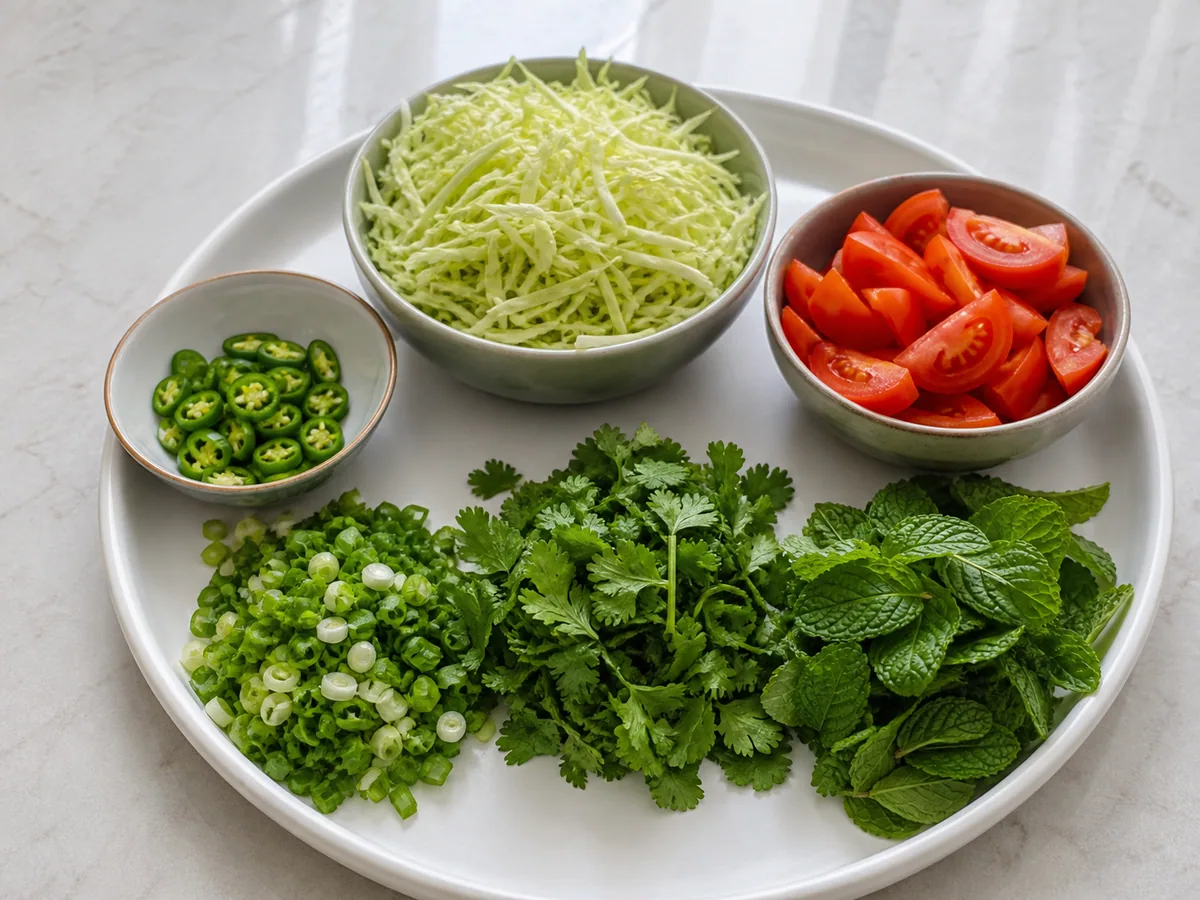
Shred 180 g of green cabbage into thin ribbons and place it in a large mixing bowl. Cut 200 g of ripe tomatoes into bite-size wedges and add them to the bowl. Slice 1 green chile into thin rings, removing the seeds for gentler heat. Chop 15 g of fresh cilantro and keep it separate for the final toss.
Fry the garlic and infuse the oil
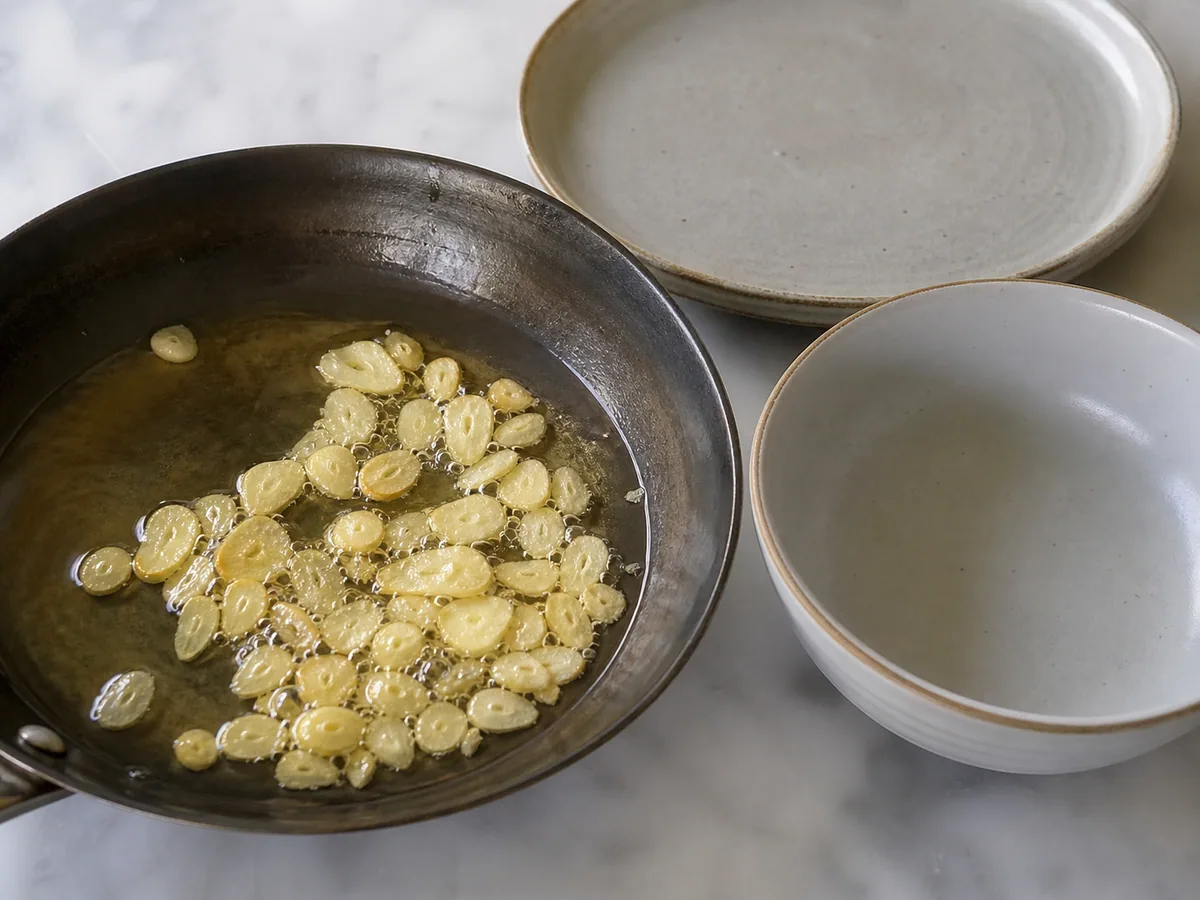
Slice 4 garlic cloves as evenly as possible. Pour 30 ml of peanut oil into a small skillet and set it over medium-low heat. Add the garlic and fry it slowly, stirring often. Set a 3-minute timer as the first check, then continue cooking for 30 to 90 seconds longer if needed, until the slices are pale gold and crisp; remove them before they turn deep brown because they continue to darken after leaving the oil. Lift the garlic onto a plate with a slotted spoon and take the skillet off the heat, leaving the oil infused with garlic.
03:00Make the tea leaf dressing
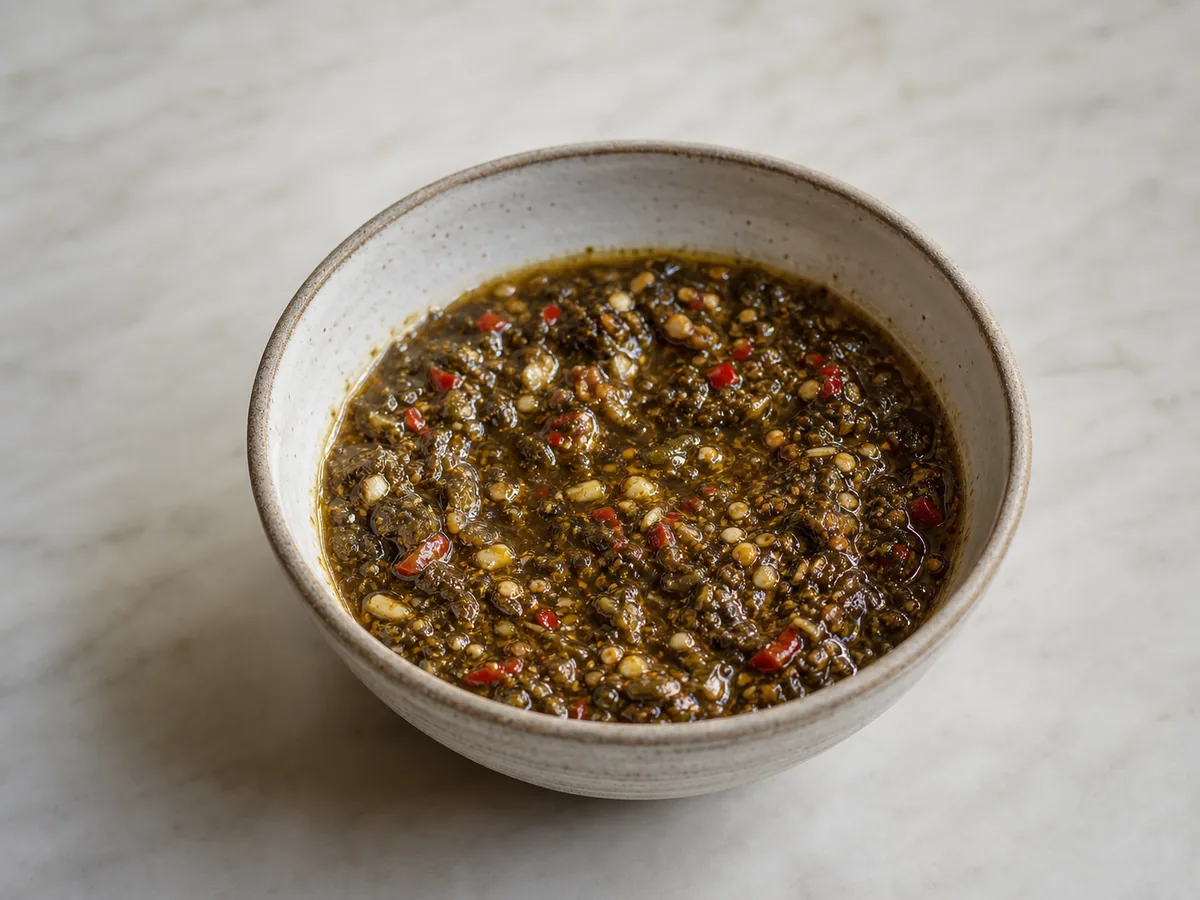
Put 60 g of plain prepared fermented tea leaves (lahpet) in a small bowl. Add 30 ml of fresh lime juice and 15 ml of fish sauce, then stir in the reserved garlic-infused oil a little at a time. Mash and stir until the leaves loosen into a thick, glossy dressing. Taste before adding all the oil; prepared tea leaves vary in richness and may need slightly less.
Toss the salad and finish with crunch
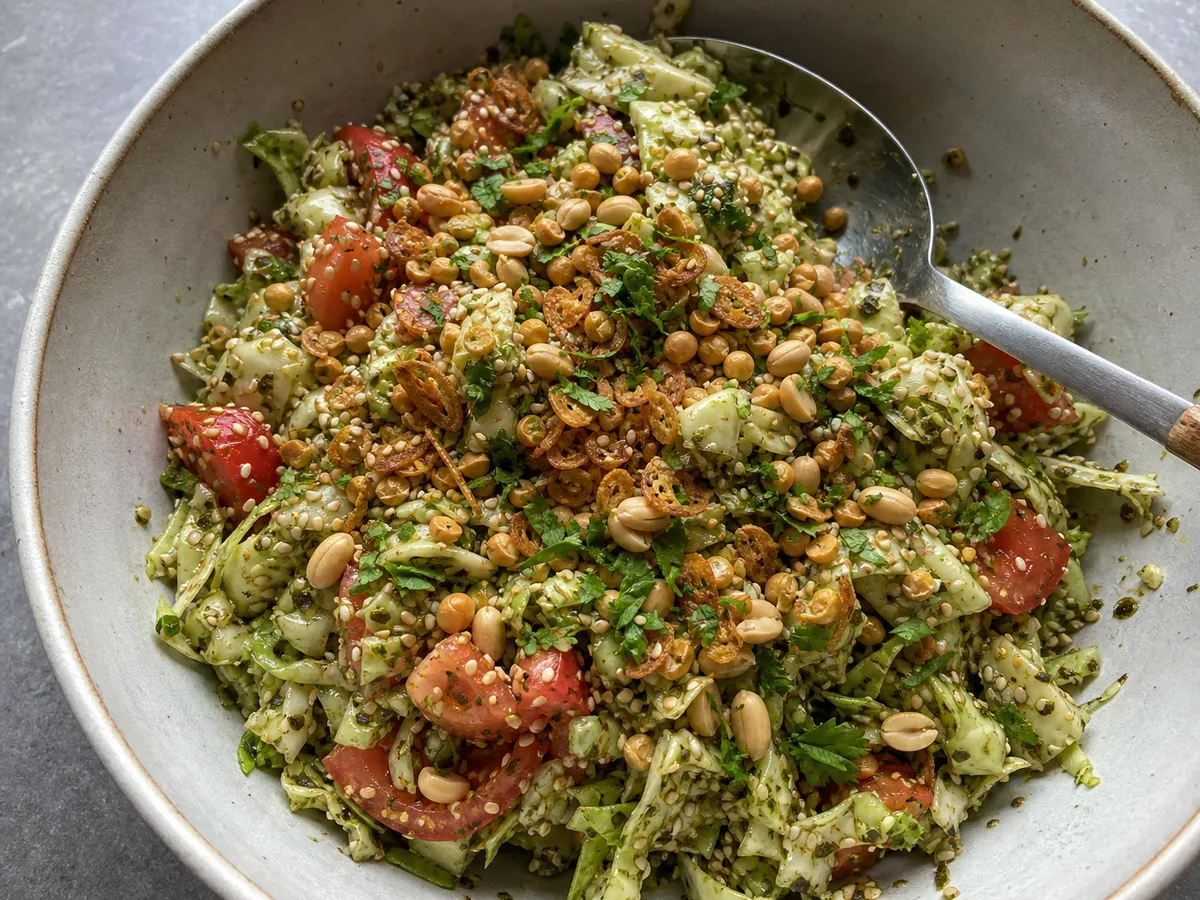
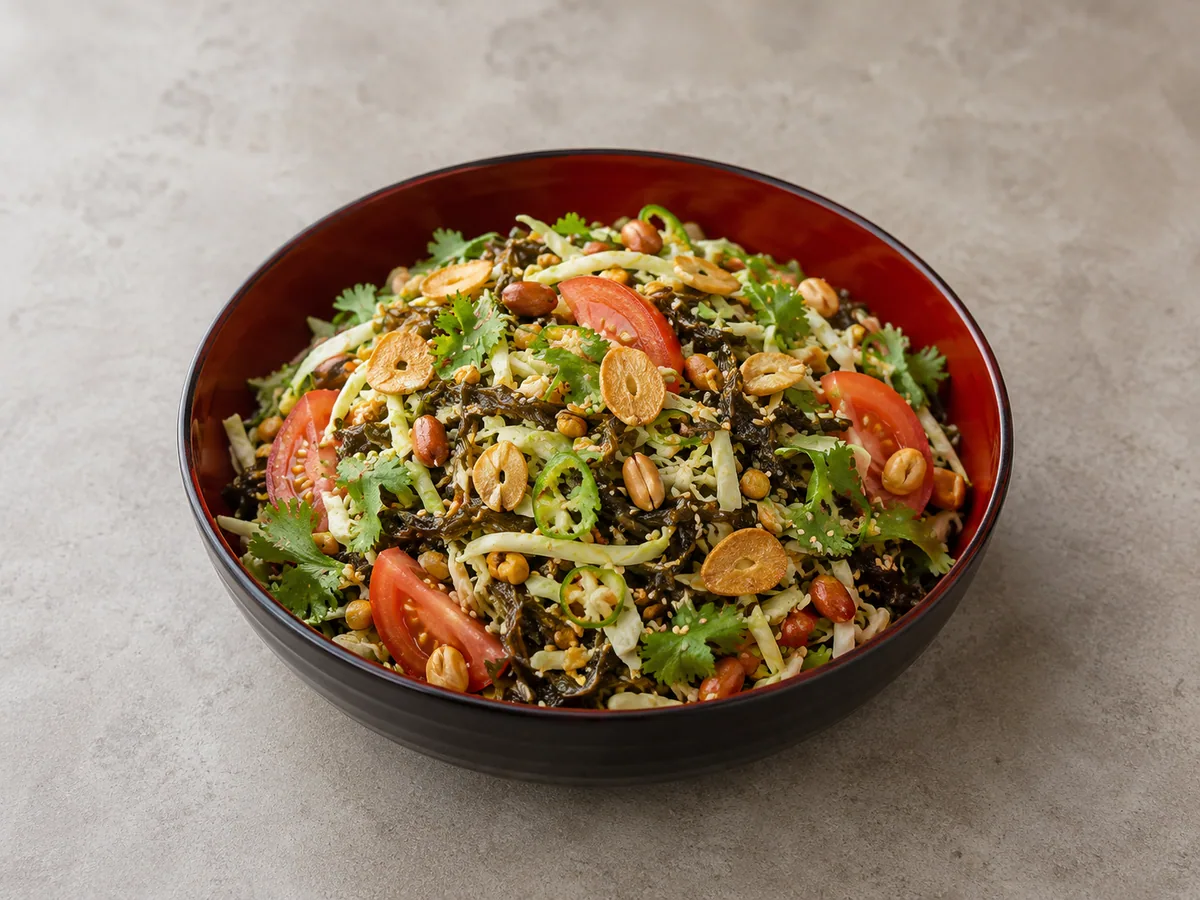
Add 40 g of unsalted roasted peanuts, 15 g of toasted sesame seeds, and 40 g of roasted split chickpeas to the bowl of prepared vegetables. Spoon the tea leaf dressing over the top and toss firmly until the cabbage is lightly coated and the tomatoes remain intact. Fold in the chopped cilantro, scatter the fried garlic over the salad, and serve immediately while the toppings are crisp.


Smart Substitutions
- No peanut oil? Use sunflower, grapeseed, or another neutral cooking oil.
- No roasted split chickpeas? Use roasted chana dal or crisp fried yellow split peas.
- Avoiding fish sauce? Use light soy sauce for salt and savoriness, noting that it introduces soy and changes the traditional flavor.
- No fresh green chile? Use a small pinch of red pepper flakes or leave the chile out.
Tips and Variations
- Buy fermented or pickled tea leaves prepared for salads; dry brewing tea leaves do not provide the same tender texture or rounded flavor.
- Keep the garlic slices close in thickness so they crisp at the same rate, and remove them while they are pale gold.
- Add the peanuts, sesame, split chickpeas, and garlic only at the final toss so their textures stay distinct.
What Went Wrong?
- Salad tastes too bitter Add a little more lime juice, tomato, or cabbage to soften the tea leaves' bitterness without masking them.
- Salad tastes too salty Toss in more cabbage and tomato, then brighten the balance with lime juice rather than water.
- Crunchy toppings turned soft Mix the vegetables and dressing first next time, then fold in the nuts, seeds, split chickpeas, and garlic just before serving.
- Garlic became dark or bitter Leave the burned garlic and its oil out; finish the dressing with plain peanut oil instead.
Nutrition Estimate
- Fiber: 5 g per serving
- Sodium: 390 mg per serving
Nutrition disclaimer:This recipe is provided for general cooking information only. Nutrition values are estimates and may vary by ingredients, brands, preparation methods, and serving sizes. Check ingredient labels and follow appropriate food-safety practices. This content is not medical, dietary, allergy, or professional food-safety advice.
FAQ
Found an error or have a suggestion?
Help us improve this recipe. Send us your feedback and include the recipe name so we can take a look.