Method
Cook the cassava until completely tender
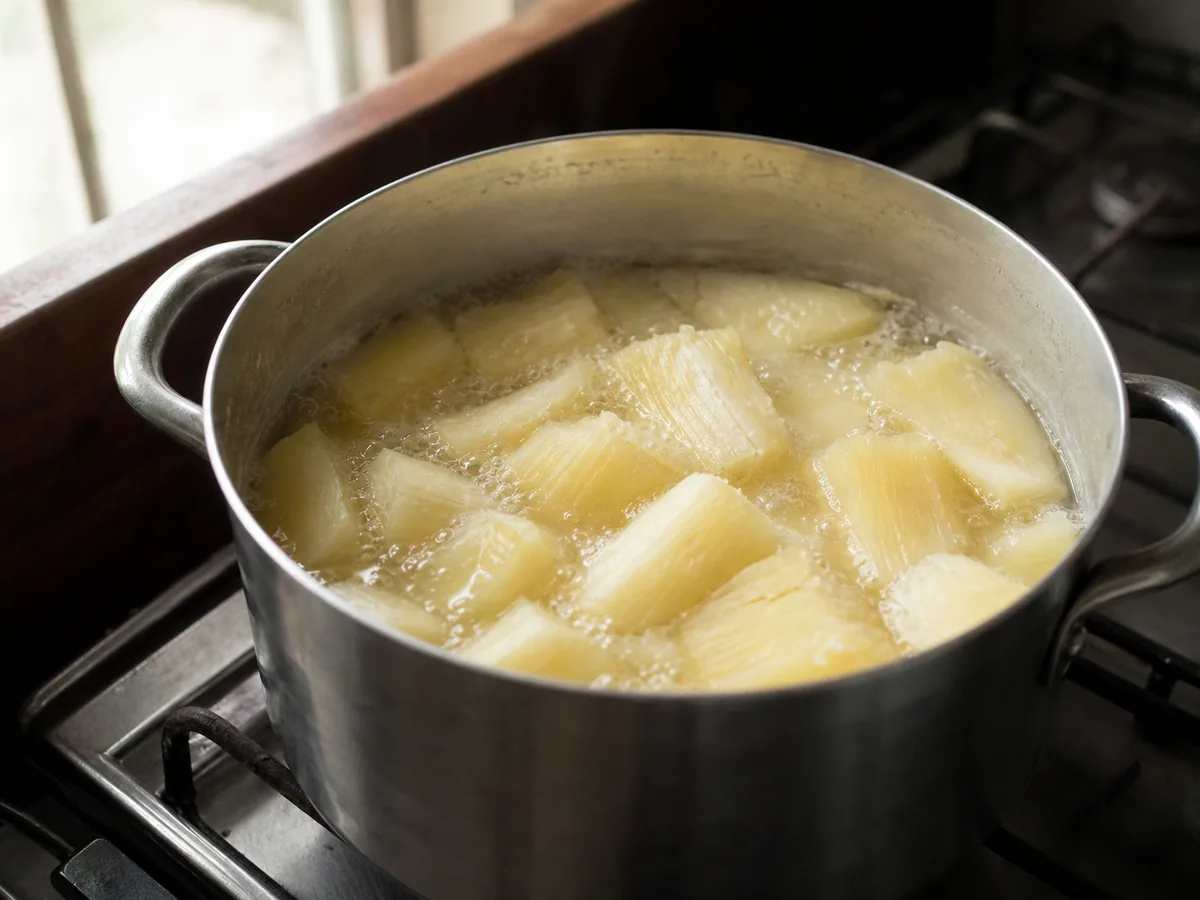
Use only fresh cassava/yuca sold by a reputable food retailer for household cooking; if its type or source is uncertain, use commercially packaged frozen peeled cassava instead. Peel 900 g of fresh cassava root (yuca), cut it crosswise into 5 cm (2 in) pieces, then split thick pieces lengthwise and pull out any obvious woody core. Rinse the pieces, place them in a large pot, and cover with fresh water by 2.5 cm (1 in). Bring to a boil over high heat, then reduce to a steady simmer. Cook uncovered for 25 to 35 minutes, checking at 25 minutes, until every piece is completely tender, opens slightly at the edges, and crushes easily with a fork. Do not taste cassava raw or undercooked. Drain thoroughly and discard the cooking water.
25:00Make the creamy cassava mash
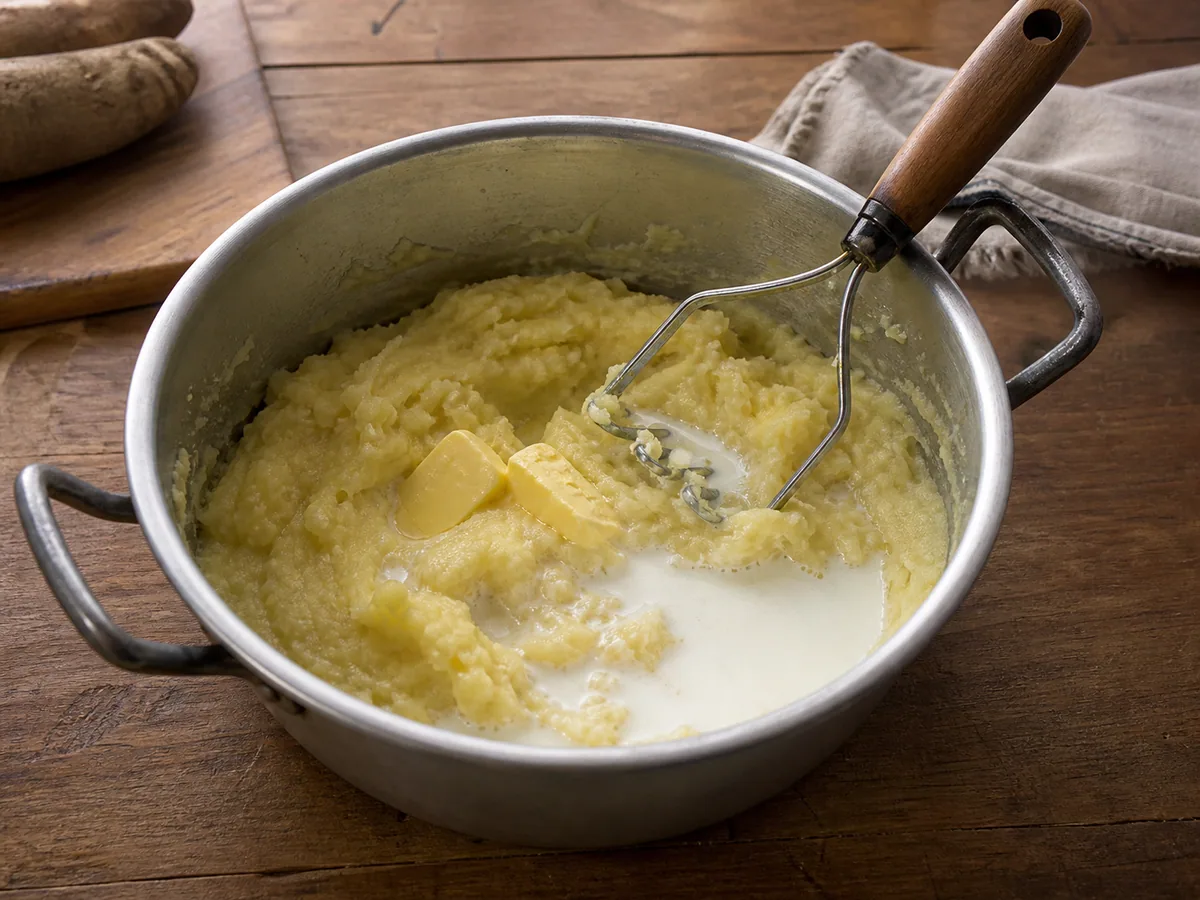
Return the hot cooked cassava to the dry pot and pull out any remaining stiff fibers with tongs or a fork. Mash until no firm lumps remain. Warm 180 ml of whole milk just until steaming. Set the pot over low heat and beat in 30 g of unsalted butter, then add 180 ml of whole milk gradually until the mash is thick, creamy, and easy to spread. Stir in 4 g of fine sea salt for mash. Cook, stirring, for 2 to 3 minutes, checking at 2 minutes, until the mash holds soft ridges without becoming gluey, then remove from the heat.
02:00Brown the beef safely
While the cassava cooks, heat 15 ml of olive oil in a wide skillet over medium-high heat. Add 500 g of 90% lean ground beef in an even layer, keeping raw meat and its utensil away from cooked or ready-to-eat ingredients. Cook for 2 minutes without stirring, then break the beef into small crumbles and continue cooking for 6 to 8 minutes, stirring as needed. At 8 minutes total, start checking; continue until browned, no pink remains, and the thickest cluster reaches 71°C/160°F on a food thermometer. Wash and sanitize any surface or utensil that touched raw beef before continuing.
08:00Build and reduce the beef filling
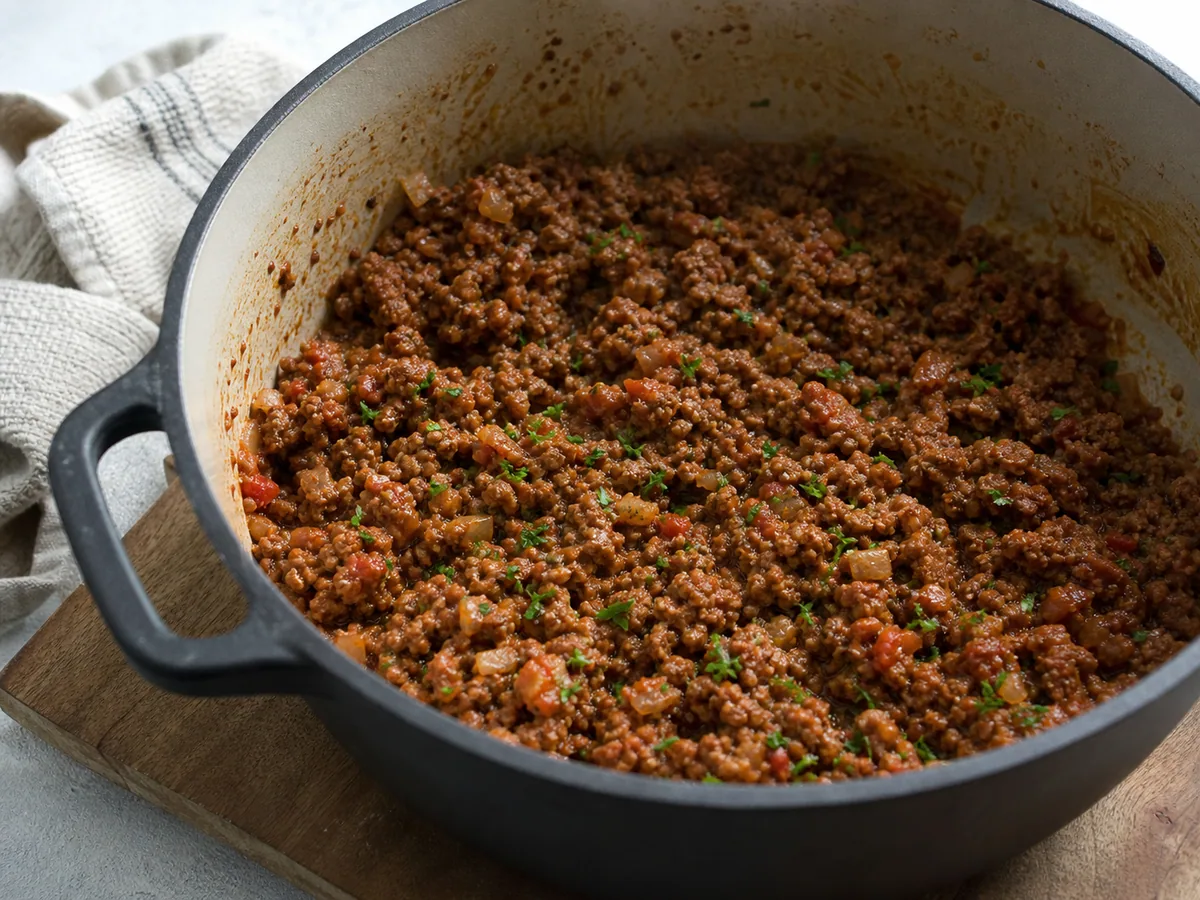
Reduce the heat to medium. Chop 150 g of yellow onion, add it to the browned beef, and cook for 4 to 5 minutes until translucent and the pan moisture has evaporated. Mince 4 garlic cloves, then add it with 30 g of tomato paste, 2 g of ground cumin, 1 g of black pepper, and 5 g of fine sea salt for filling; stir for 1 minute until fragrant. Pour in 200 g of no-salt-added diced tomatoes, scrape up the browned bits, and simmer for 8 to 10 minutes, checking at 8 minutes, until the filling is moist but not watery and a spoon drawn across the skillet leaves a clear track. Chop 15 g of fresh parsley, stir it in, and remove the skillet from the heat.
08:00Layer the escondidinho
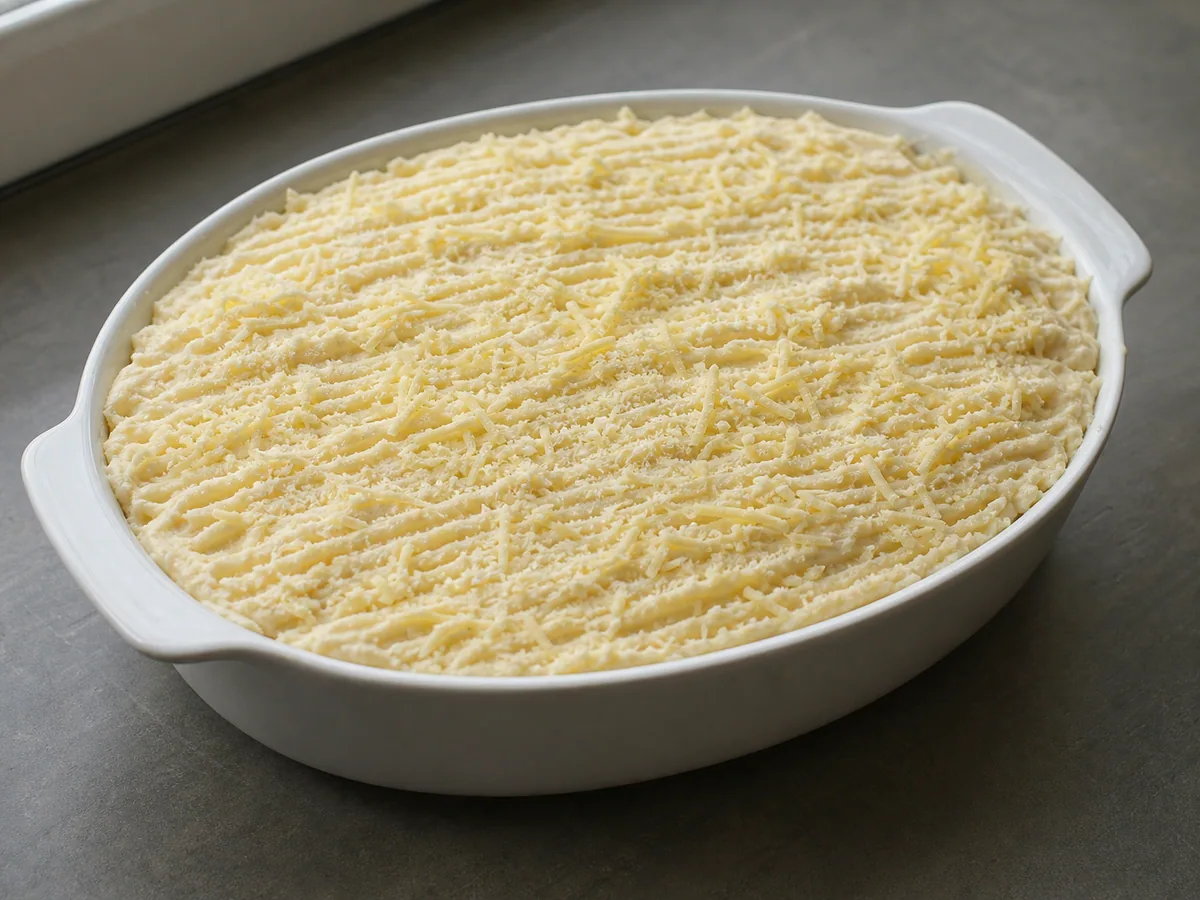
Heat the oven to 200°C (400°F). For 6 servings, use a shallow 2-quart (2-liter) ceramic baking dish, about 20 cm (8 in) square, or an equivalent-capacity dish; use a proportionally sized dish when scaling the recipe so the layers remain similar in depth. Spoon the beef filling into the dish and level it. Spread the cassava mash over the filling, sealing it to the edges. Shred 120 g of low-moisture mozzarella if needed and scatter it over the mash, then grate 25 g of parmesan on top. Rake the surface lightly with a fork to create ridges that will brown.
Bake until bubbling and golden
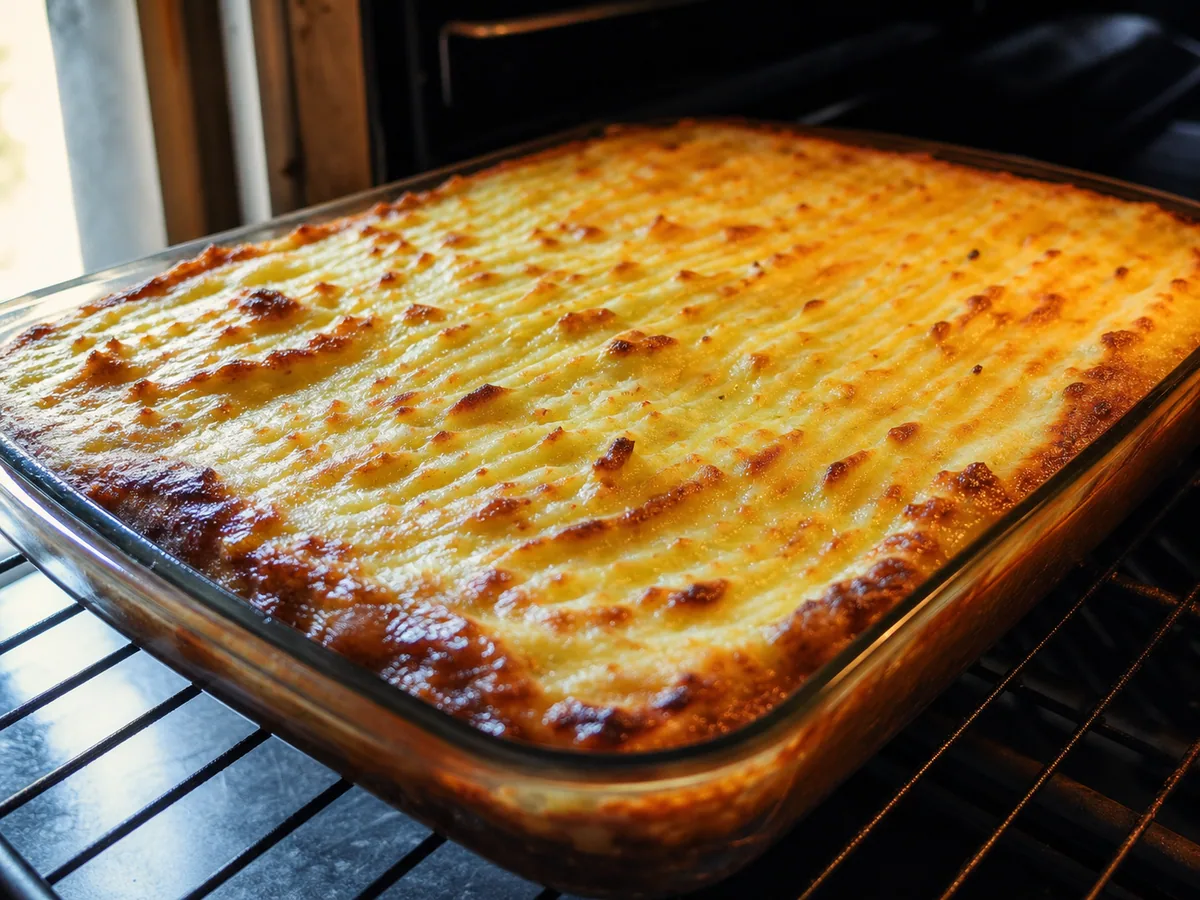
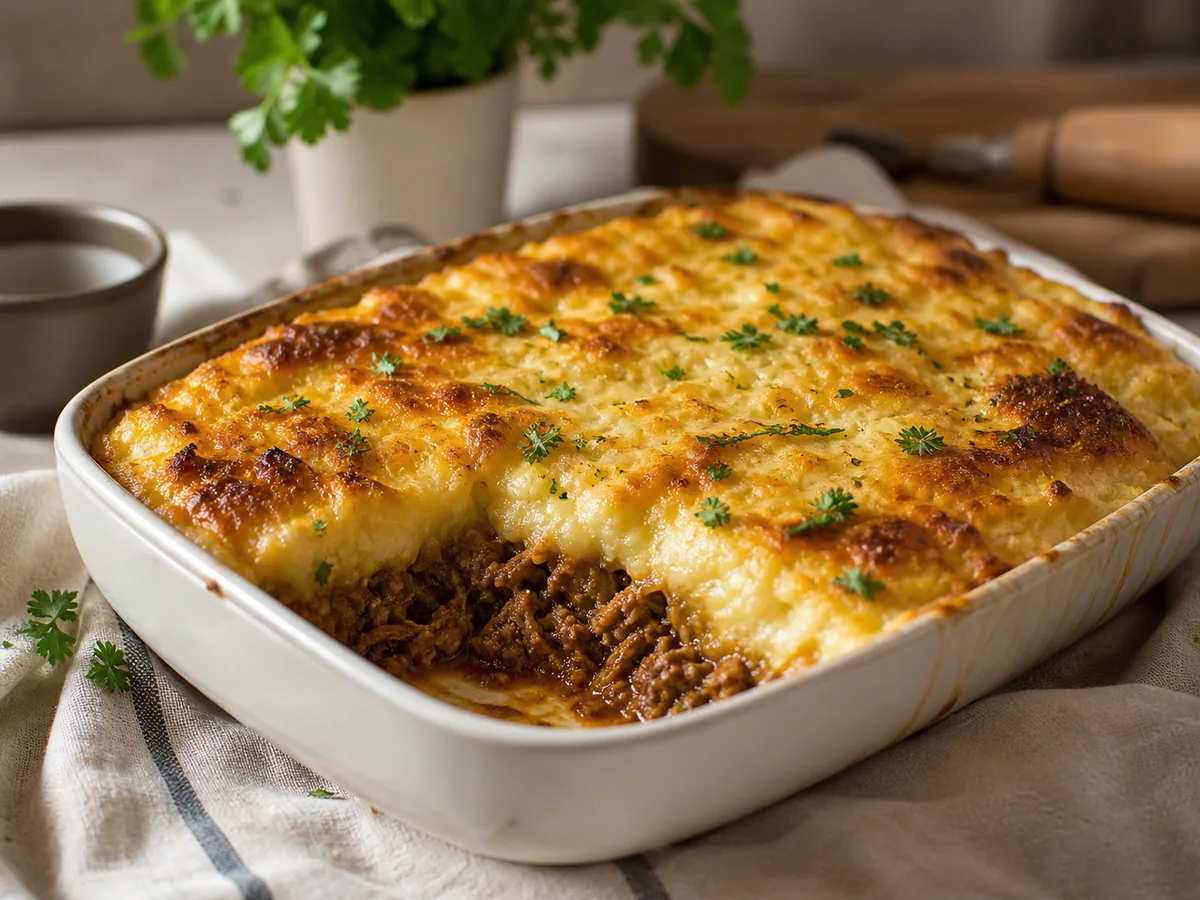
Bake uncovered for 20 to 25 minutes, checking at 20 minutes, until the filling bubbles around the edges and the cheese has melted with deep golden spots on the forked ridges. If the top is still pale once the edges are bubbling, move the dish to an upper rack for the final 2 to 3 minutes and watch closely. Remove the dish carefully from the oven.
20:00Let the layers settle and serve
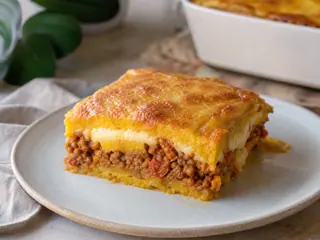
Let the escondidinho stand for 10 minutes so the layers become firm enough to spoon cleanly while the cassava mash stays creamy. Serve hot, scooping through the golden cheese, cassava mash, and savory beef filling in each portion.
10:00


Smart Substitutions
- No fresh cassava? Use frozen peeled cassava and boil it until completely tender before mashing.
- No mozzarella? Use Monterey Jack, mild provolone, or a mixture of the two for a similarly smooth melt.
- No whole milk? Use unsweetened plain oat milk or an equal amount of light cream, adjusting gradually for a spreadable mash.
- No tomato paste? For each 1 tablespoon of tomato paste omitted, add about 50 g (1.75 oz) extra diced tomatoes and simmer the filling longer until it leaves a clear track in the pan.
Tips and Variations
- Mash the cassava while it is piping hot; once it cools, the starches become harder to work smooth.
- Use a wide skillet so the beef browns instead of steaming and the tomato mixture reduces efficiently.
- Seal the mash all the way to the dish edges so the filling bubbles upward rather than flooding the top.
What Went Wrong?
- Cassava mash is stringy Pull out the tough central cores and any remaining fibers, then mash again while the cassava is hot.
- Mash is too stiff to spread Work in a small splash of warm milk at a time until it moves easily under a spoon but still holds ridges.
- Filling looks watery Keep simmering it uncovered until a spoon drawn through the skillet leaves a clear path for a few seconds.
- Cheese browns before the edges bubble Move the dish to a lower oven rack and loosely shield the top with foil until the filling is hot and bubbling.
Nutrition Estimate
- Fiber: 4 g per serving
- Sodium: 850 mg per serving
Nutrition disclaimer:This recipe is provided for general cooking information only. Nutrition values are estimates and may vary by ingredients, brands, preparation methods, and serving sizes. Check ingredient labels and follow appropriate food-safety practices. This content is not medical, dietary, allergy, or professional food-safety advice.
FAQ
Found an error or have a suggestion?
Help us improve this recipe. Send us your feedback and include the recipe name so we can take a look.