Method
Rinse and drain the rice
Place 300 g of Japanese short-grain rice in a bowl and cover it with cool water. Stir gently with your fingers, drain, and repeat until the water is only lightly cloudy. Set the rice in a fine-mesh sieve and let it drain for 5 minutes so the cooking water stays accurately measured.
05:00Cook the rice
Transfer 300 g of Japanese short-grain rice from the sieve to a heavy saucepan and add 390 ml of water for cooking rice. Cover, bring to a gentle boil over medium heat, then reduce the heat to its lowest setting. Cook for 12 minutes without lifting the lid.
12:00Rest and check the rice
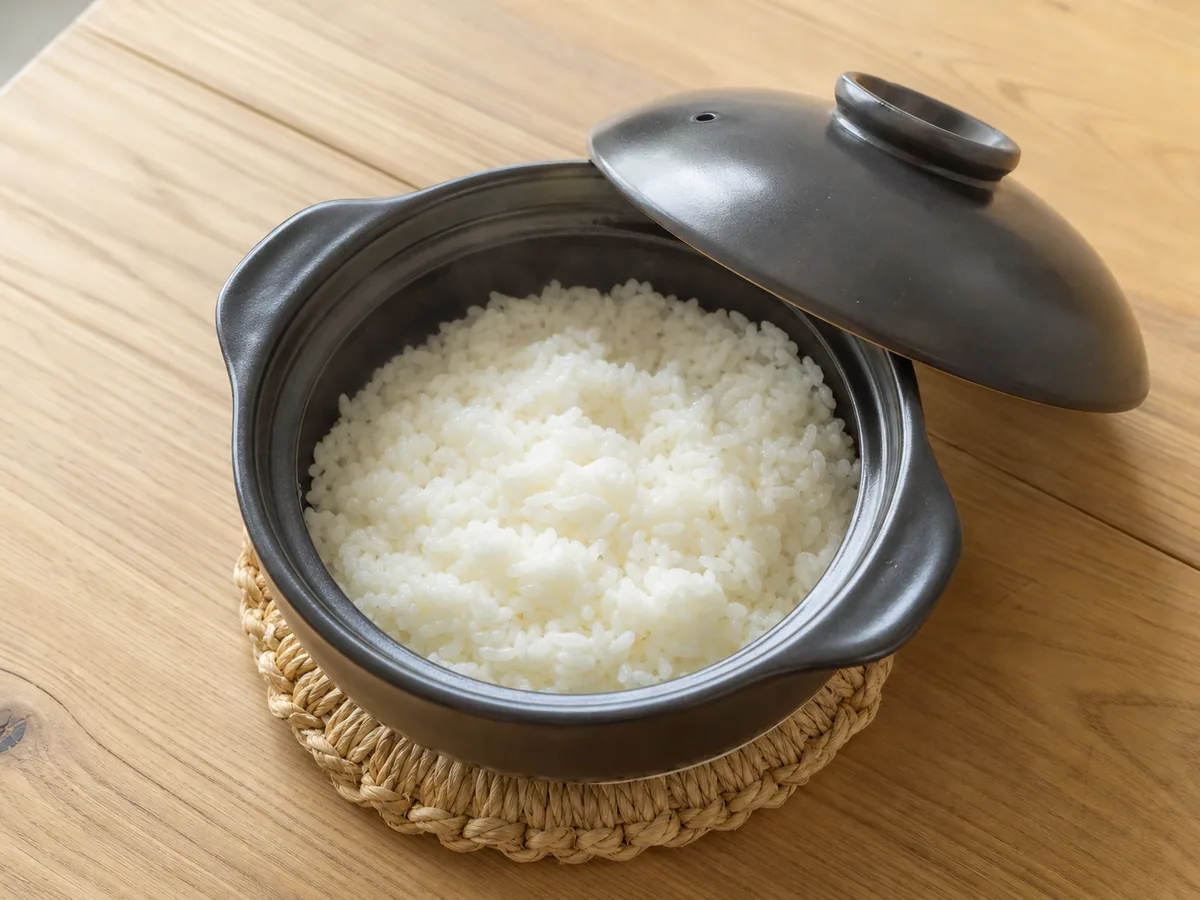
Remove the covered saucepan from the heat and let the rice stand for 10 minutes without lifting the lid. While it rests, continue with the egg mixture and accompaniments. After 10 minutes, the grains should be tender and glossy with no water pooled at the bottom.
10:00Mix the tamagoyaki base
While the rice rests, crack 8 large eggs into a bowl. Add 60 ml of water for egg mixture, 25 g of granulated sugar, 20 ml of reduced-sodium soy sauce (contains soy and wheat), and 2 g of fine sea salt. Stir gently with chopsticks or a fork until the whites and yolks are combined without whipping in much foam. Pour the mixture through a fine sieve for especially even layers. Wash hands and clean any surfaces touched by raw egg before preparing the serving ingredients.
Prepare the breakfast accompaniments
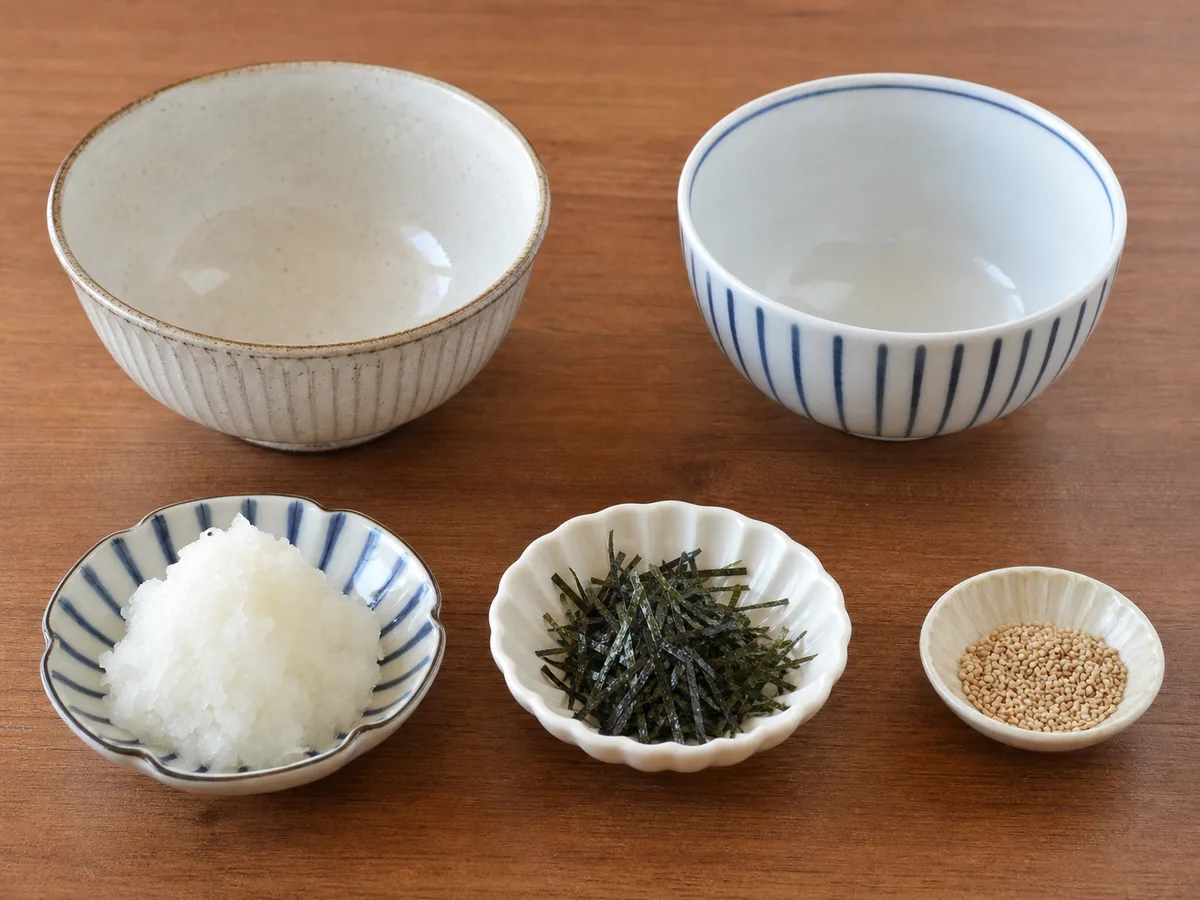
Grate 200 g of daikon radish using the fine side of a box grater, then press it gently once to remove only the excess liquid. Cut 5 g of roasted nori into narrow strips. Set 8 g of toasted sesame seeds near the serving bowls so the cooked egg can be plated without handling raw-egg tools again.
Build and roll the omelette
Heat a tamagoyaki pan or your smallest nonstick skillet over medium-low heat. Fold a small piece of paper towel, dip it into 15 ml of neutral cooking oil, and wipe a thin film across the pan. Pour in enough egg mixture to cover the base in a thin layer. As soon as the surface is mostly set but still slightly tacky, roll it from the far edge toward you with chopsticks or a flexible spatula. Push the roll back to the far edge, wipe the pan lightly with oil, and add another thin layer, lifting the roll so uncooked egg runs underneath. Roll again and repeat until all the mixture is used, about 8 to 10 minutes; begin checking the texture at 8 minutes.
08:00Check doneness and shape the roll
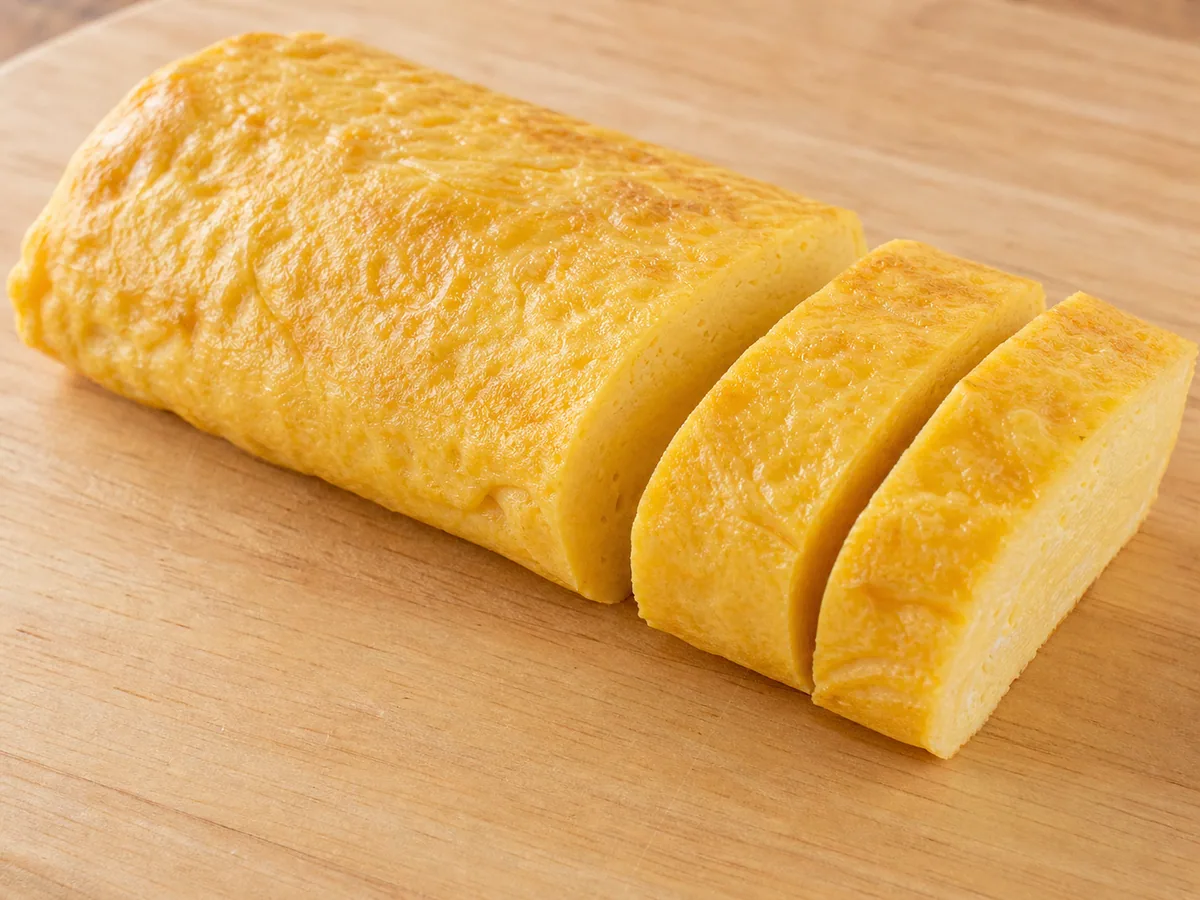
Keep the rolled omelette in the pan over low heat and turn it to set each broad side evenly. Insert a food thermometer into the center; continue cooking until it reaches 71°C (160°F) and no liquid egg remains. Transfer it to a clean cutting board, press the sides gently with a spatula to neaten the shape, and let it stand for 2 minutes before cutting into thick slices.
02:00Assemble the breakfast
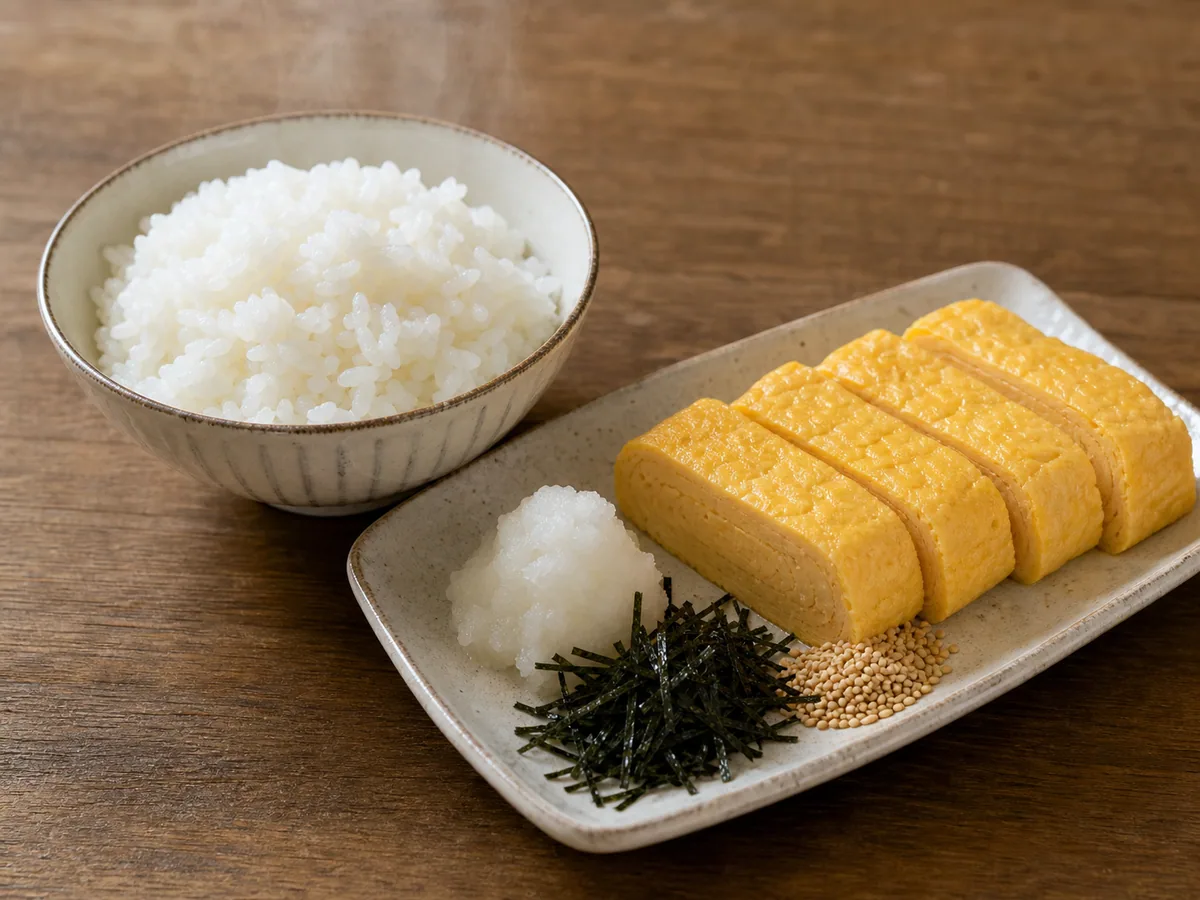
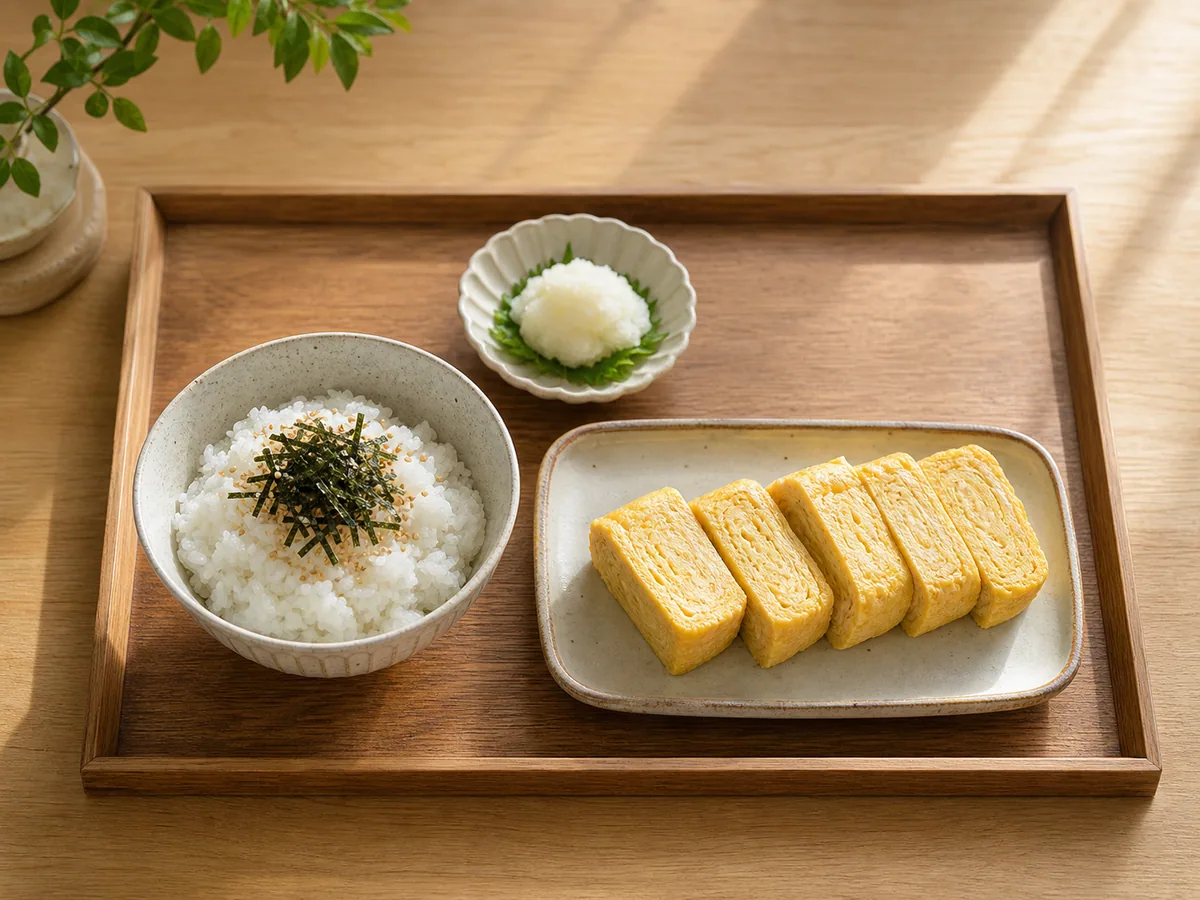
Fluff the cooked rice with a damp rice paddle and divide it among warm bowls. Arrange the tamagoyaki slices alongside the rice, add 200 g of daikon radish, and finish the rice with 5 g of roasted nori and 8 g of toasted sesame seeds. Serve while the rice is steaming and the omelette is still warm.


Smart Substitutions
- No tamagoyaki pan? Use your smallest nonstick skillet. Fold the rounded side edges inward before each roll to build a compact log.
- No daikon? Use finely shredded cucumber or lightly blanched spinach for a fresh vegetable contrast.
- No nori? Leave it off and use a little more toasted sesame for a nutty finish.
- Prefer tamari? Use reduced-sodium tamari in the same amount for a darker seasoning; it still contains soy.
Tips and Variations
- Keep the heat at medium-low. Hard browning makes the layers tougher and more likely to crack.
- Wipe on only a sheen of oil between layers; puddles make the omelette slide instead of bonding.
- Roll when the top is still faintly tacky, not wet. That narrow window creates clean layers that hold together.
What Went Wrong?
- The omelette tears while rolling Lower the heat slightly and let the next layer set a few seconds longer. Small tears can be covered by the following layer.
- The layers slide apart The egg was probably too wet when rolled or the pan was too cool. Wait for a tacky surface and let the pan regain heat before adding more mixture.
- The center is still wet Return the roll to low heat, turn it slowly, and verify that the center reaches 71°C (160°F) before serving.
- The rice is firm after cooking Sprinkle in a small splash of hot water, cover, and let it steam over the lowest heat until the grains are tender.
Nutrition Estimate
- Fiber: 2 g per serving
- Sodium: 570 mg per serving
Nutrition disclaimer:This recipe is provided for general cooking information only. Nutrition values are estimates and may vary by ingredients, brands, preparation methods, and serving sizes. Check ingredient labels and follow appropriate food-safety practices. This content is not medical, dietary, allergy, or professional food-safety advice.
FAQ
Found an error or have a suggestion?
Help us improve this recipe. Send us your feedback and include the recipe name so we can take a look.