Method
Prepare the herb butter
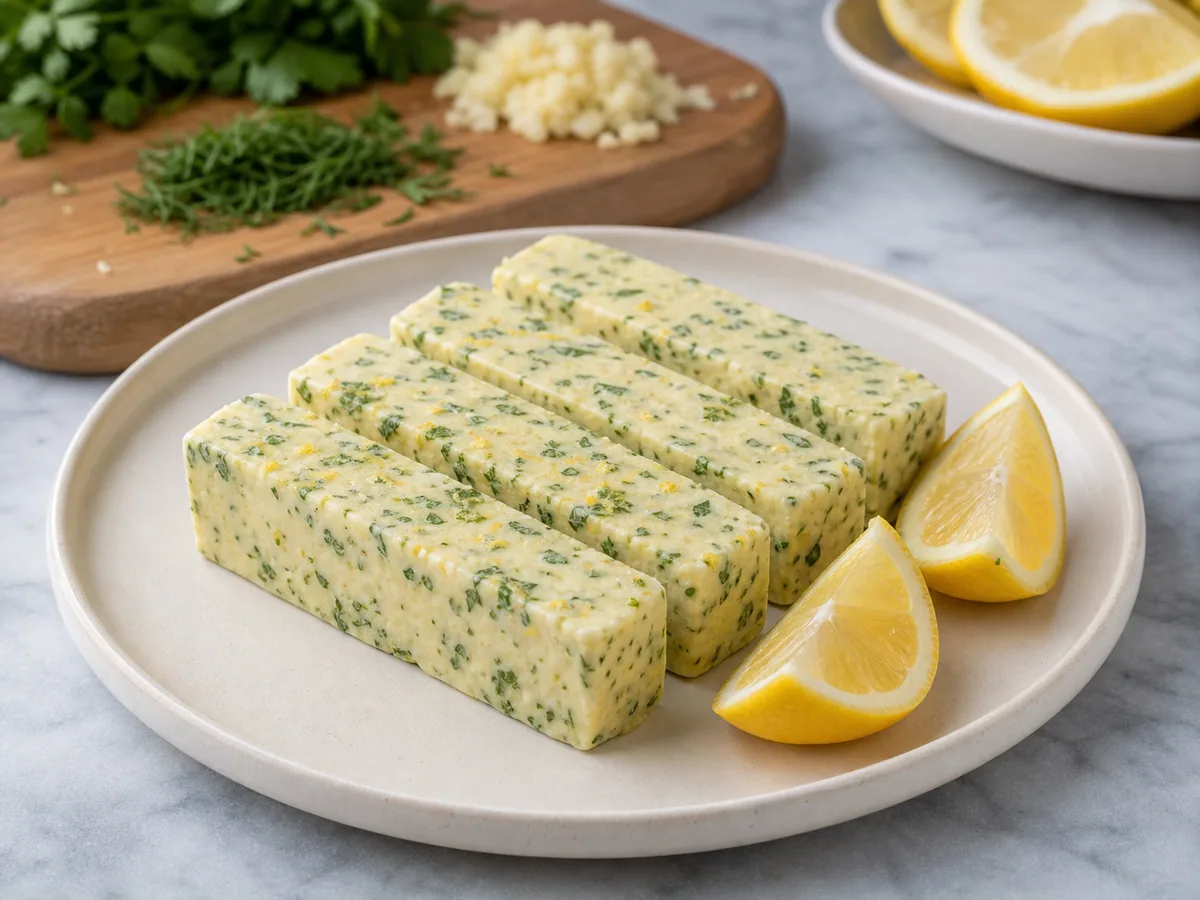
Cut 85 g of unsalted butter into one short baton per chicken breast. Mince 2 garlic cloves, chop 15 g of fresh parsley and 10 g of fresh dill, and finely grate the zest from 1 lemon; cut the zested fruit into wedges for serving. Press the garlic, herbs, and zest firmly over each butter baton so the seasoning adheres. Work quickly so the butter stays firm.
Prepare and season the chicken
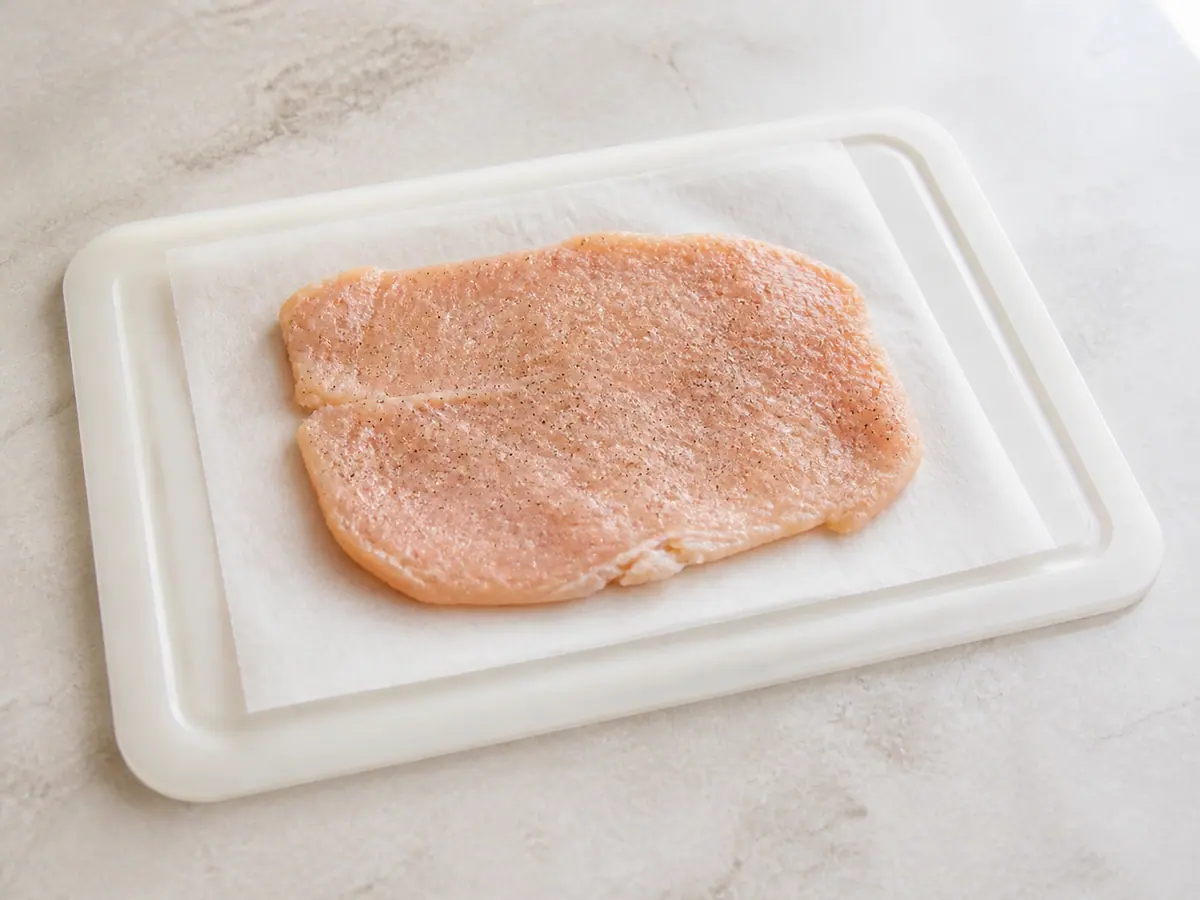
Place 680 g of boneless skinless chicken breasts on a cutting board reserved for raw poultry. Butterfly each breast by slicing horizontally almost through the center, then open it like a book. Put each breast between sheets of parchment and pound gently to an even 6 mm (1/4 in) thickness without tearing the meat. Combine 7 g of kosher salt and 1 g of black pepper in a small bowl; use about two-thirds of the mixture to season both sides of the chicken and reserve the rest for the coating.
Fill and seal the cutlets
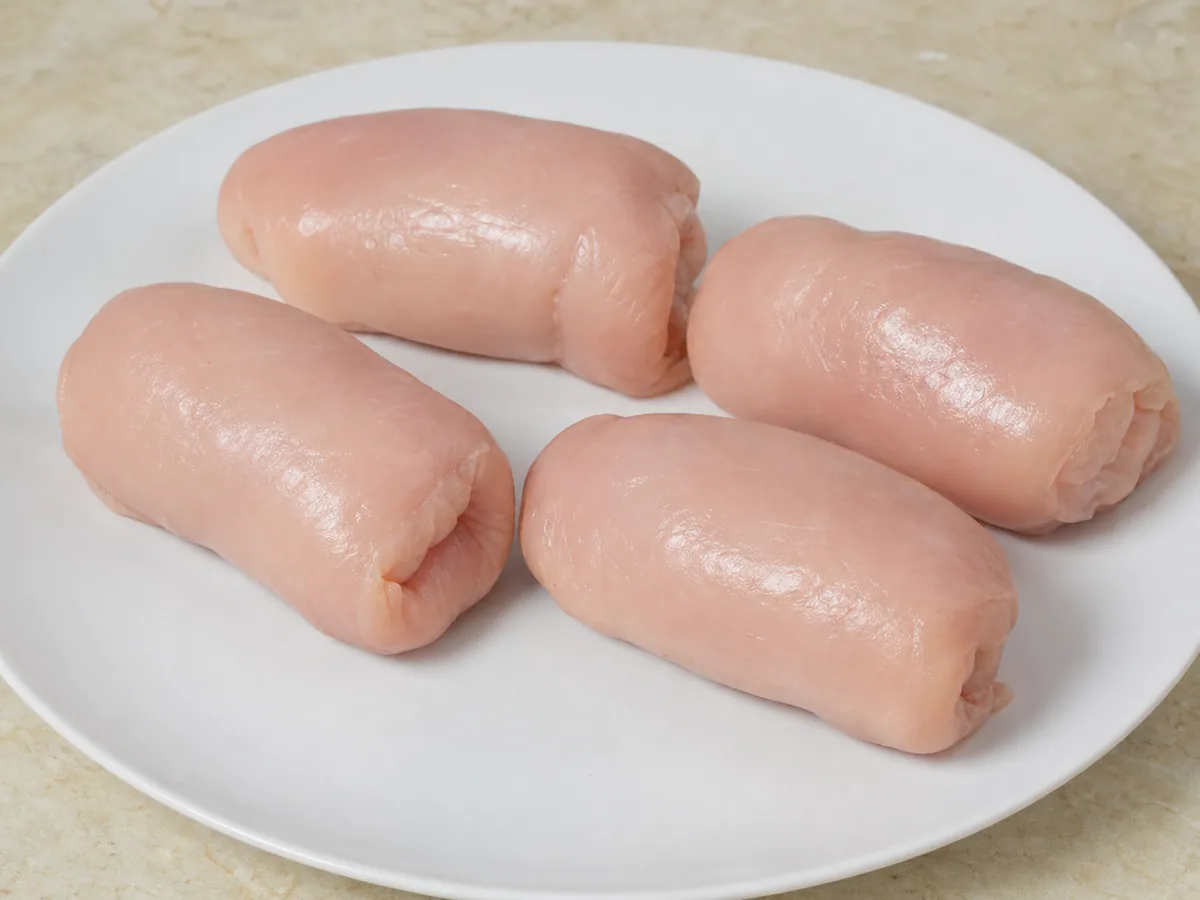
Set one herb-butter baton near a short edge of each flattened breast. Fold the side edges inward over the butter, then roll the chicken tightly so no butter is visible. Pinch the seams closed and place each roll seam-side down. Patch any small tear with a thin flap from the edge of the chicken, pressing firmly so the surface is sealed.
Build the double crumb coating
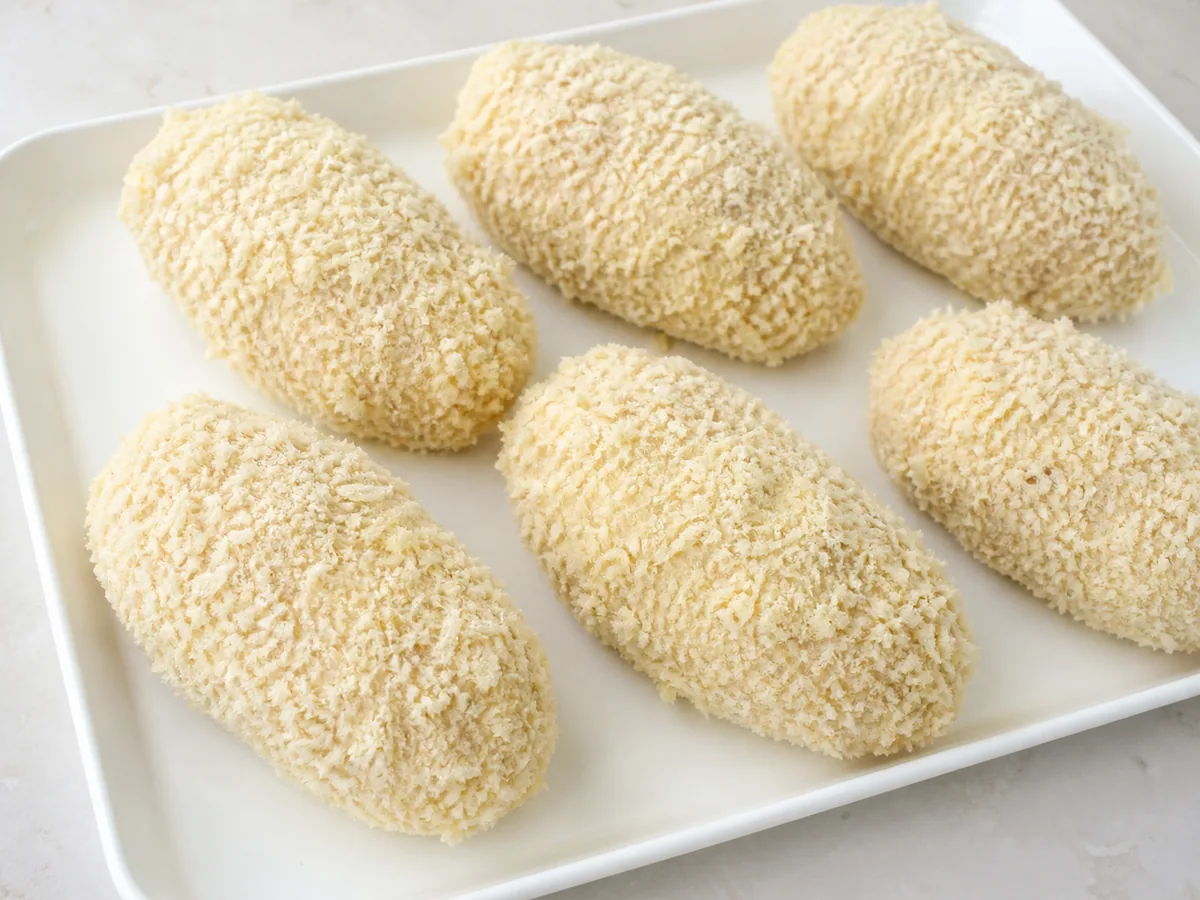
Place 60 g of all-purpose flour, 2 large eggs, and 120 g of plain panko breadcrumbs in three separate shallow bowls. Beat the eggs until smooth and stir the reserved salt-and-pepper mixture into the flour. Coat each chicken roll in flour and shake off the excess, dip it fully in egg, then press it into panko. Dip once more in egg and panko, concentrating crumbs over the seams. Discard any flour, egg, and crumbs that contacted raw chicken, then wash hands and sanitize the board, tools, and work surface before handling ready-to-eat food.
Brown the crumb coating
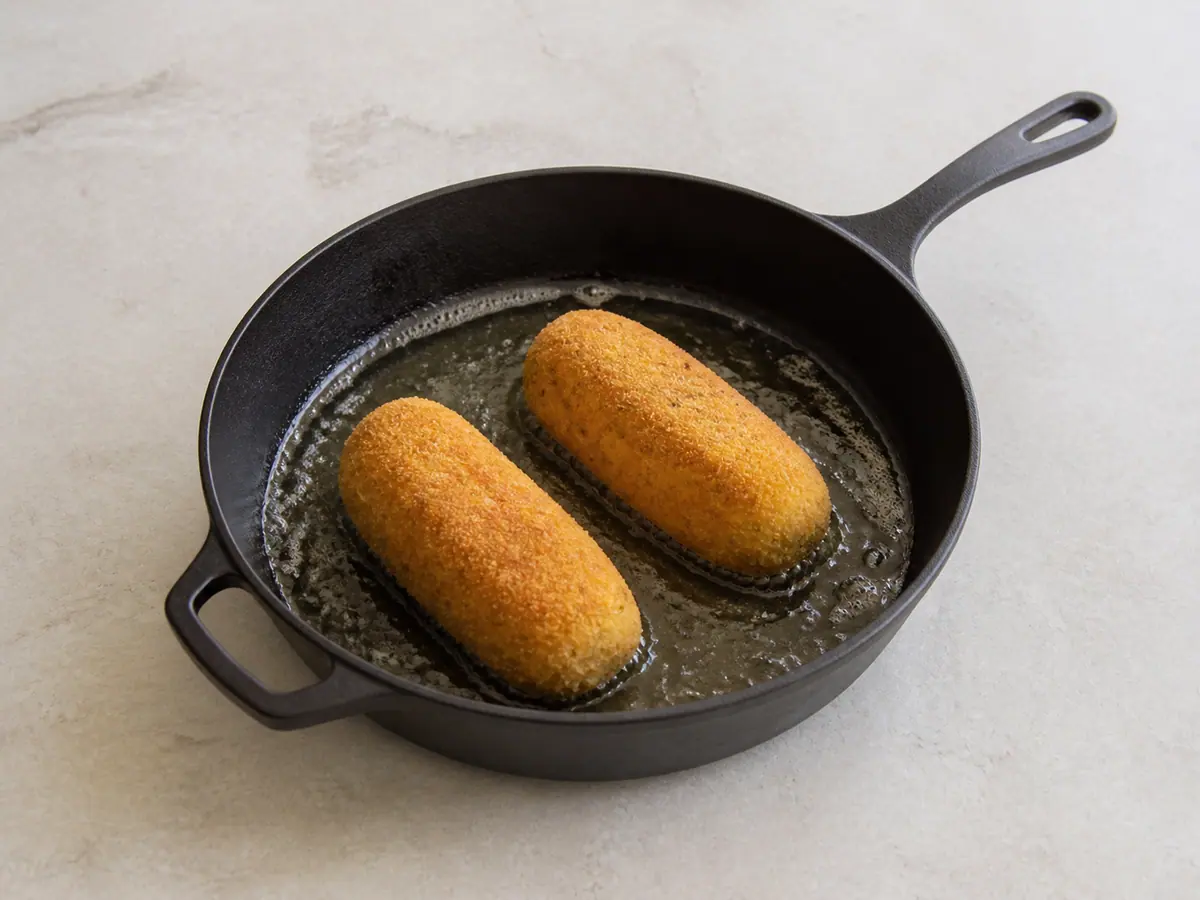
Heat the oven to 200°C (400°F). Warm 60 ml of neutral cooking oil in a wide oven-safe skillet over medium-high heat until shimmering, about 175°C (350°F). Lower the cutlets into the oil seam-side down, leaving space between them; work in batches if needed. Brown for about 2 minutes per side, turning carefully with tongs, until the coating is evenly golden but the chicken is not yet cooked through.
02:00Bake to a safe internal temperature
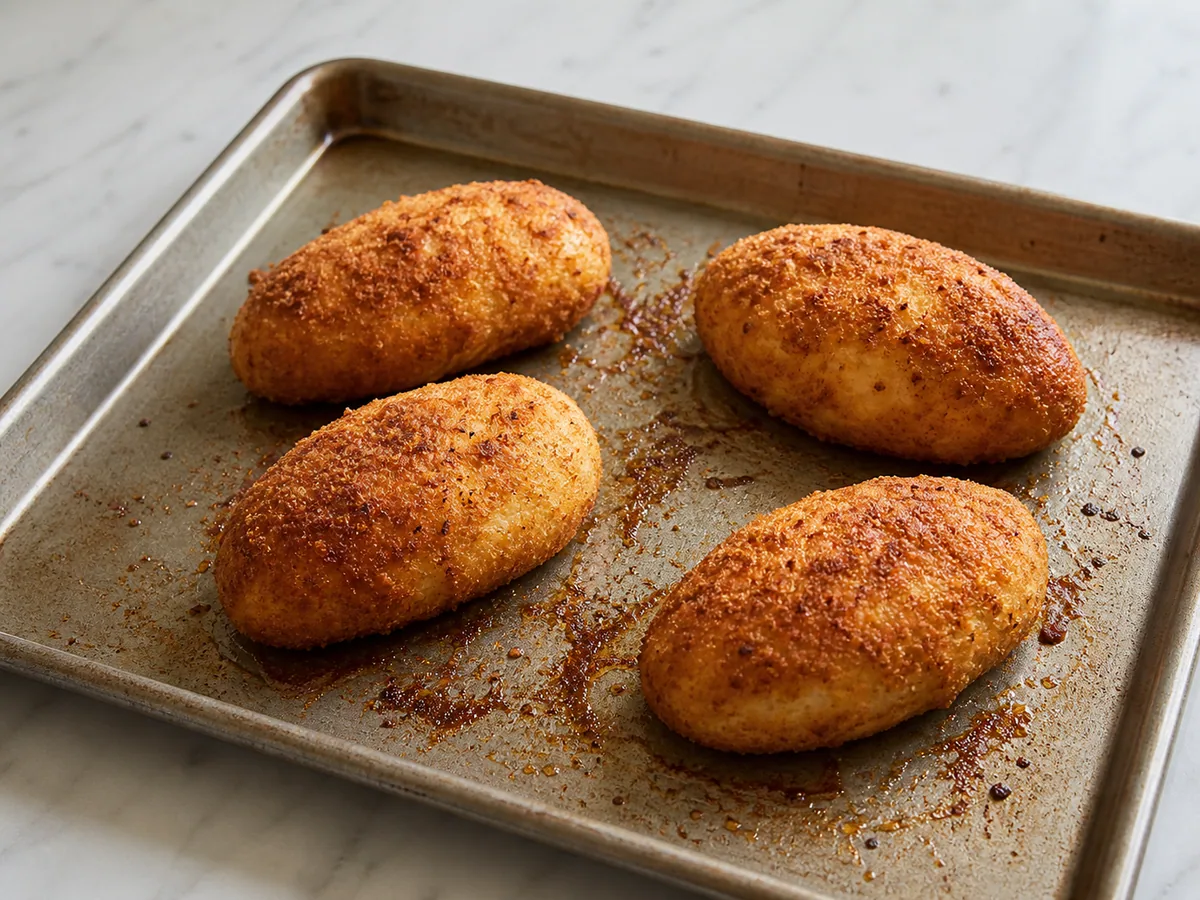
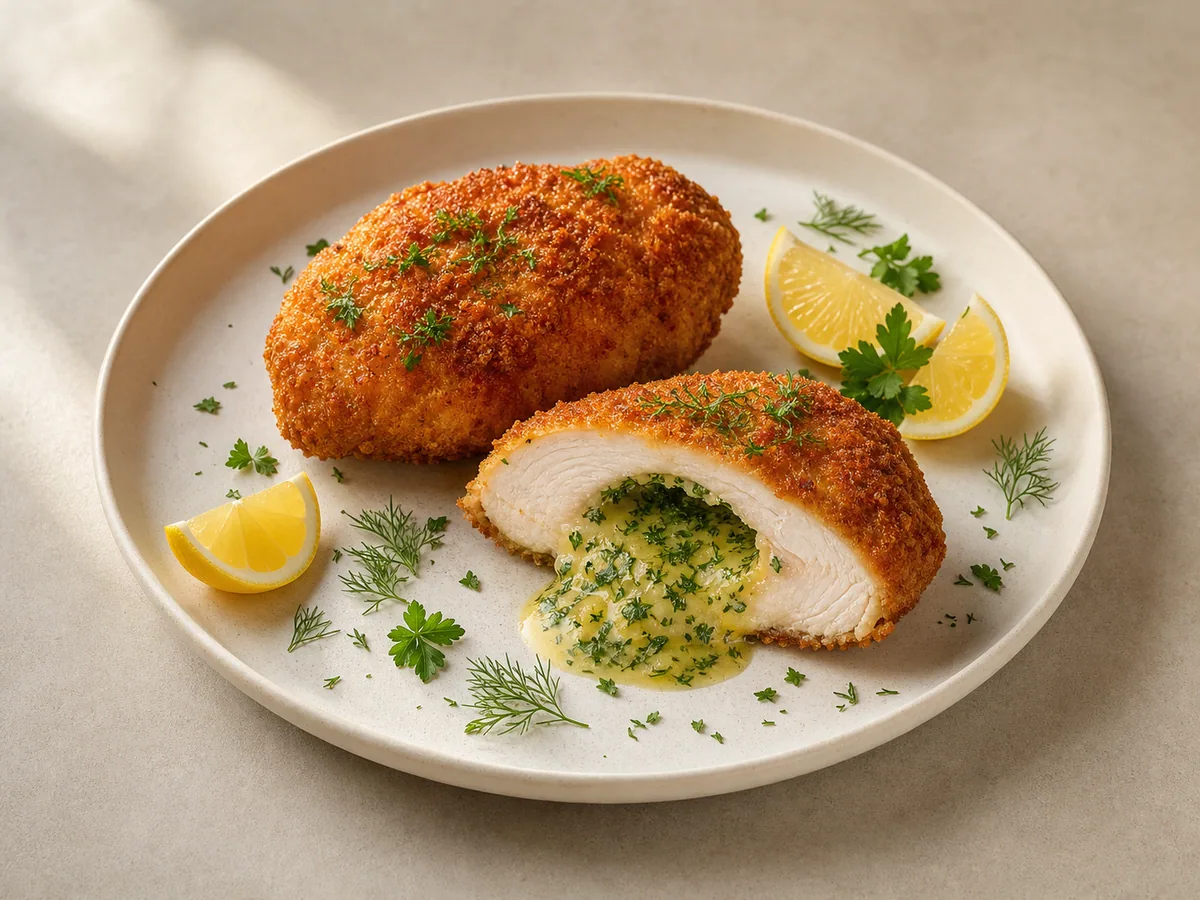
Arrange the browned cutlets seam-side down in the skillet and transfer it to the oven. Bake for 12 to 18 minutes, beginning the temperature check at 12 minutes. Insert a food thermometer from the side into the thickest part of the chicken meat, avoiding the butter cavity; every cutlet must reach 74°C/165°F. Return any cutlet below that temperature to the oven and check again after a few minutes.
12:00Rest briefly and serve
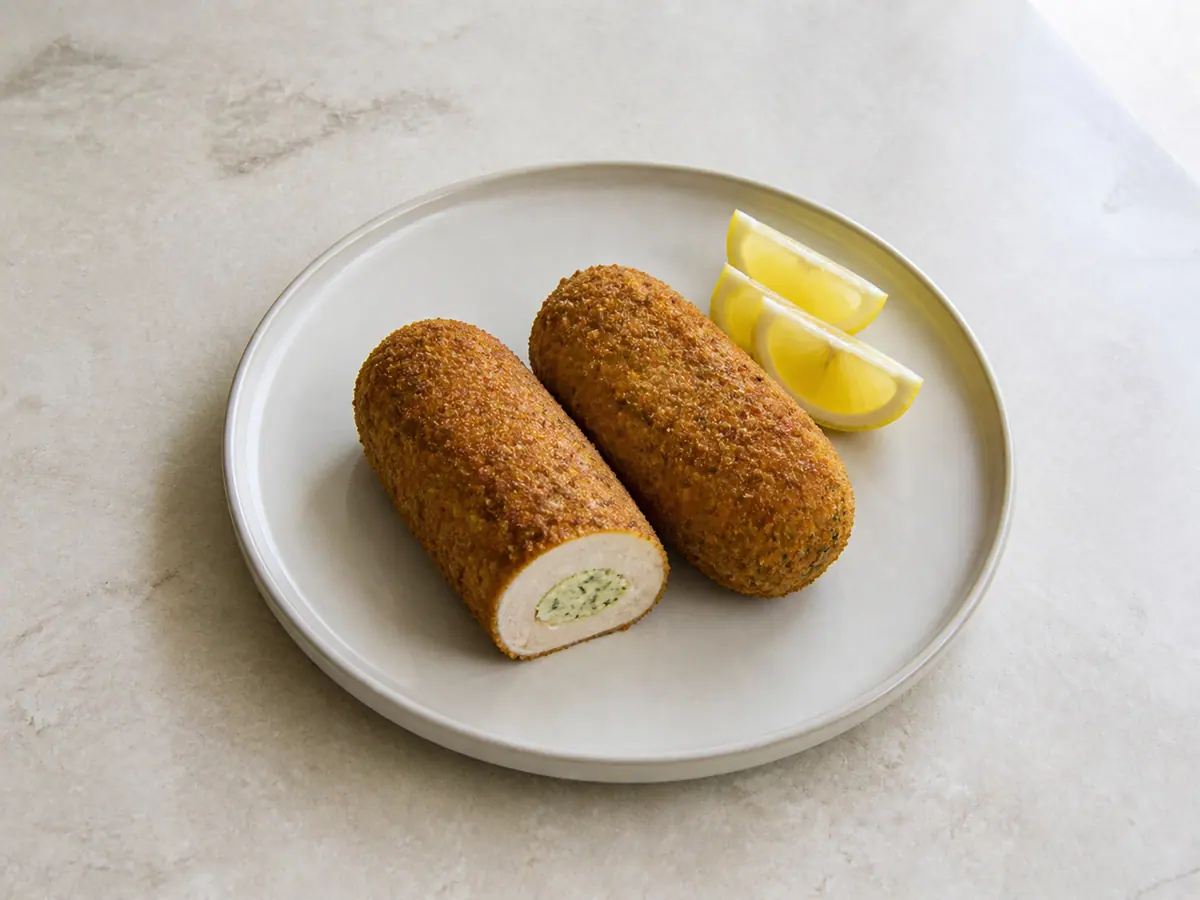
Transfer the Chicken Kyiv to a clean plate and let it stand for 5 minutes so the meat settles and the hot butter is less likely to burst out at once. Serve immediately with the prepared lemon wedges, warning diners that the center remains very hot.
05:00


Smart Substitutions
- No fresh dill? Use extra parsley or replace the dill with fresh chives.
- No panko? Use coarse plain dry breadcrumbs; the crust will be slightly tighter and less flaky.
- No neutral oil? Use sunflower, canola, or another refined high-heat cooking oil.
- Prefer a milder filling? Reduce the garlic and add more lemon zest and parsley while keeping the butter quantity unchanged.
Tips and Variations
- Keep the butter firm and work efficiently; soft butter is harder to seal inside the chicken.
- Press panko firmly over the seams during the second coating to reinforce the most likely leak points.
- Probe from the side with the thermometer so the tip measures chicken meat rather than the hot butter center.
What Went Wrong?
- Butter leaks during cooking The seam may be loose or the chicken may be torn. Seal every opening before breading and add extra egg and panko over weak spots.
- Crust browns too quickly Lower the stovetop heat and move the skillet to the oven as soon as the coating is golden.
- Breading falls away Shake off excess flour, coat fully with egg, and press the panko on firmly before the second coating.
- Chicken cooks unevenly Pound every breast to a consistent thickness and verify each cutlet separately with a food thermometer.
Nutrition Estimate
- Fiber: 2 g per serving
- Sodium: 900 mg per serving
Nutrition disclaimer:This recipe is provided for general cooking information only. Nutrition values are estimates and may vary by ingredients, brands, preparation methods, and serving sizes. Check ingredient labels and follow appropriate food-safety practices. This content is not medical, dietary, allergy, or professional food-safety advice.
FAQ
Found an error or have a suggestion?
Help us improve this recipe. Send us your feedback and include the recipe name so we can take a look.