Method
Mix the butter base
Beat 140 g of unsalted butter with 100 g of granulated sugar on medium speed for 2 to 3 minutes, scraping the bowl once, until smooth and slightly lighter but not whipped. Add 3 large egg yolks one at a time, mixing well after each addition. Mix in 5 ml of vanilla extract and 6 g of lemon zest.
03:00Form the tender dough
Whisk 150 g of all-purpose flour, 200 g of cornstarch, 6 g of baking powder, 2 g of baking soda, and 1 1/2 g of fine sea salt in a separate bowl. Add the dry mixture to the butter base in three additions on low speed. Stop as soon as loose crumbs form, then press and fold the dough gently by hand until it holds together. Do not knead; extra mixing develops gluten and makes the baked cookies firm. Wash your hands and clean mixer attachments, bowls, utensils, and work surfaces that contacted raw flour, egg, or dough with hot, soapy water before handling baked cookies, 320 g of thick dulce de leche, or 40 g of unsweetened shredded coconut.
Rest the dough
Shape the dough into a flat disk, place it between two sheets of baking parchment, and let it rest at cool room temperature for 20 minutes. This pause lets the starches absorb moisture so the dough rolls with fewer cracks.
20:00Roll and cut the cookies
Heat the oven to 175°C (350°F) and line two baking sheets with parchment. Roll the rested dough between the parchment sheets to an even 6 mm (1/4 in) thickness. Cut 5 cm (2 in) rounds, lifting them with a thin spatula, and arrange them about 2.5 cm (1 in) apart. Press the scraps together and reroll once; repeated rerolling can toughen the cookies.
Bake until set but pale
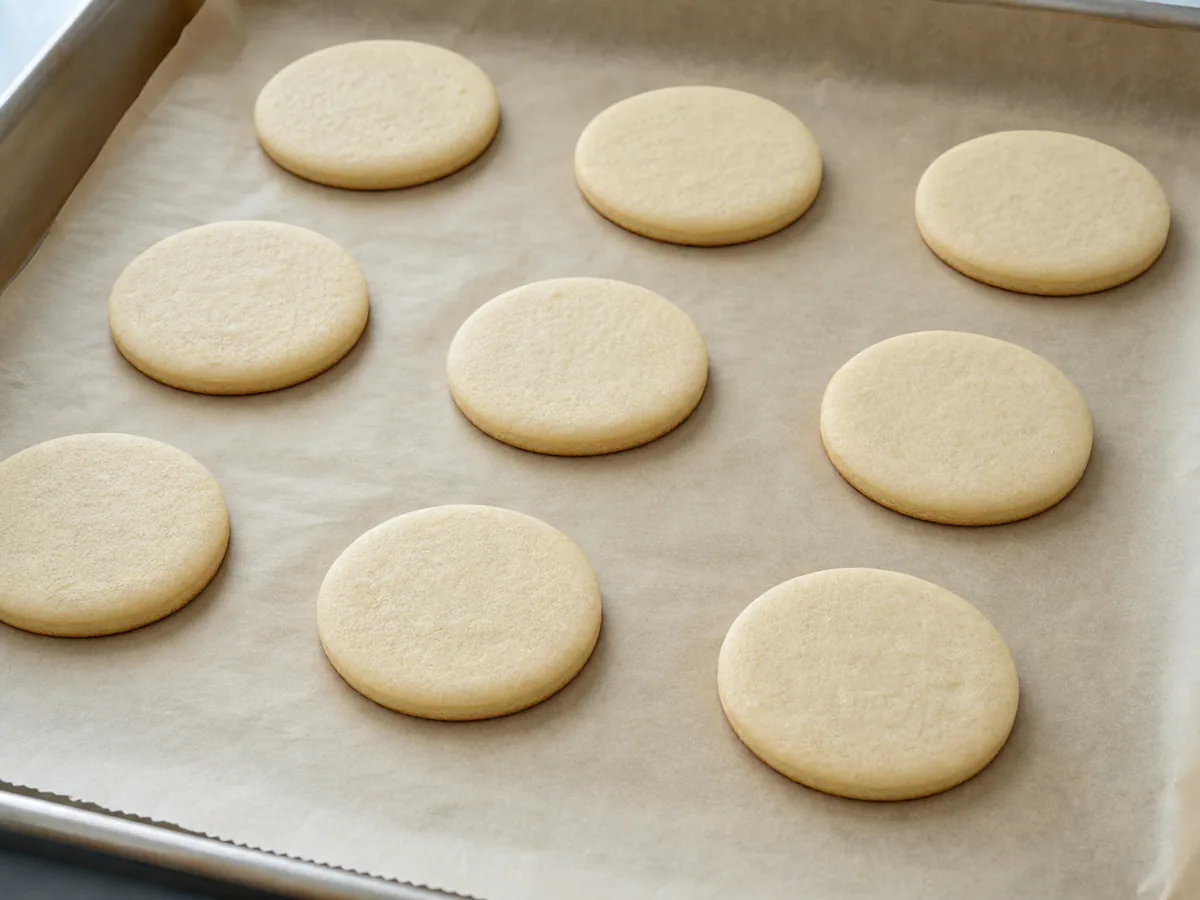
Bake both sheets for 10 to 12 minutes, rotating the sheets from front to back and swapping their positions halfway through. Begin checking at 10 minutes. The tops should look dry, the centers should be set, and only the bottom edges should show a faint ivory-gold tint. Because the dough contains raw egg and flour, do not taste it before baking. For a temperature check, a center cookie should reach at least 71°C/160°F.
10:00Cool the cookies on the sheets
Leave the baked cookies on the baking sheets for 5 minutes so the fragile crumb can firm up before they are moved.
05:00Cool completely on a rack
Transfer the cookies carefully to a rack with a thin spatula and let them cool completely for about 10 minutes before filling; warm cookies can crack and loosen the dulce de leche.
10:00Fill and finish the alfajores
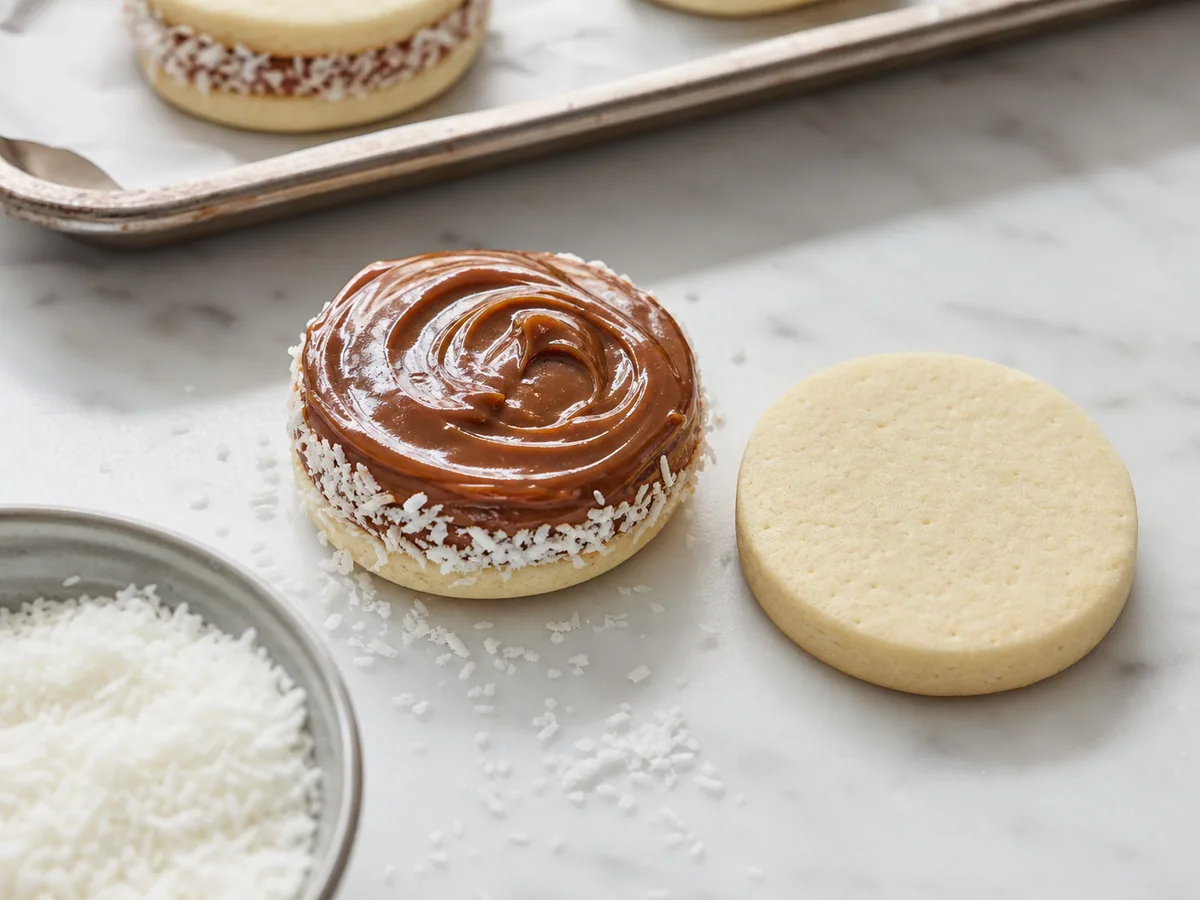
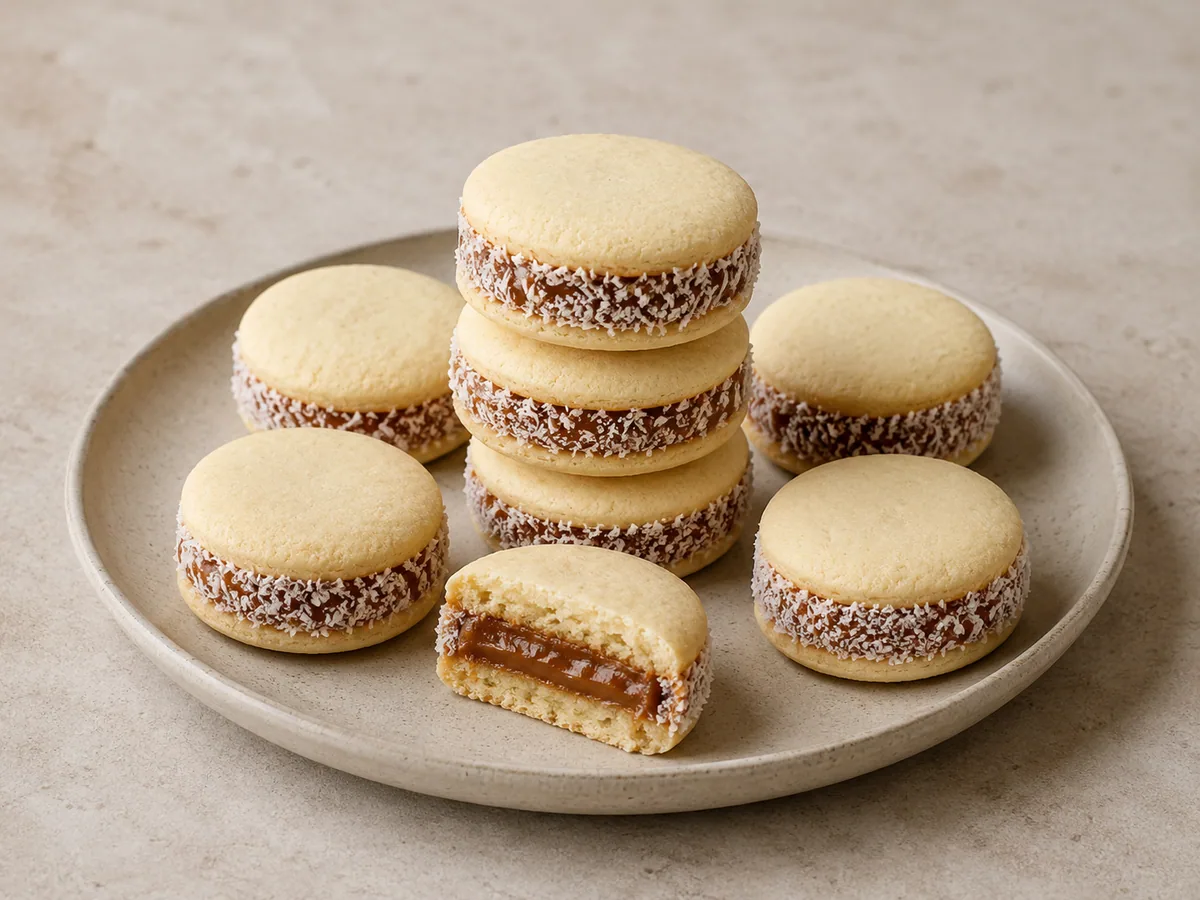
Turn half of the cookies flat-side up. Spread or pipe 320 g of thick dulce de leche over each one, stopping just inside the edge. Top with the remaining cookies and press very gently until the filling reaches the rim. Roll the exposed filling in 40 g of unsweetened shredded coconut, keeping pressure light so the tender cookies stay intact. Serve two alfajores per person.


Smart Substitutions
- No lemon zest? Use orange zest for a slightly rounder citrus aroma, or omit the zest and increase the vanilla modestly.
- No unsweetened coconut? Use finely shredded sweetened coconut, or leave the edges plain for a simpler finish.
- No dulce de leche? Use a very thick milk-caramel spread. Avoid a pourable caramel sauce, which will slip out of the cookies.
- Need a wheat-free version? Use a cup-for-cup gluten-free flour blend in place of the all-purpose flour. The rounds may be more fragile, so lift them with a thin spatula.
Tips and Variations
- Weigh the flour and cornstarch when possible; packed cups can make the dough dry and crumbly.
- Roll between parchment to keep the dough smooth without adding extra flour.
- Pair cookies of similar diameter before filling so the coconut edge looks even.
- Keep the baked rounds pale; visible browning usually means the tender crumb is starting to dry out.
What Went Wrong?
- Dough cracks while rolling Press the dough together through the parchment and let it rest for 5 more minutes before rolling again.
- Cookies spread or lose their shape The butter base was probably too warm or overbeaten. Work in a cooler room and beat only until smooth and slightly lighter.
- Cookies are hard instead of tender Mix the dry ingredients only until the dough holds together, reroll scraps once, and remove the cookies before the tops brown.
- Dulce de leche squeezes out Use a thicker pastry-style filling and press the top cookie only until the filling reaches the rim.
Nutrition Estimate
- Fiber: 2 g per serving
- Sodium: 280 mg per serving
Nutrition disclaimer:This recipe is provided for general cooking information only. Nutrition values are estimates and may vary by ingredients, brands, preparation methods, and serving sizes. Check ingredient labels and follow appropriate food-safety practices. This content is not medical, dietary, allergy, or professional food-safety advice.
FAQ
Found an error or have a suggestion?
Help us improve this recipe. Send us your feedback and include the recipe name so we can take a look.