Method
Mix and begin the fermentation
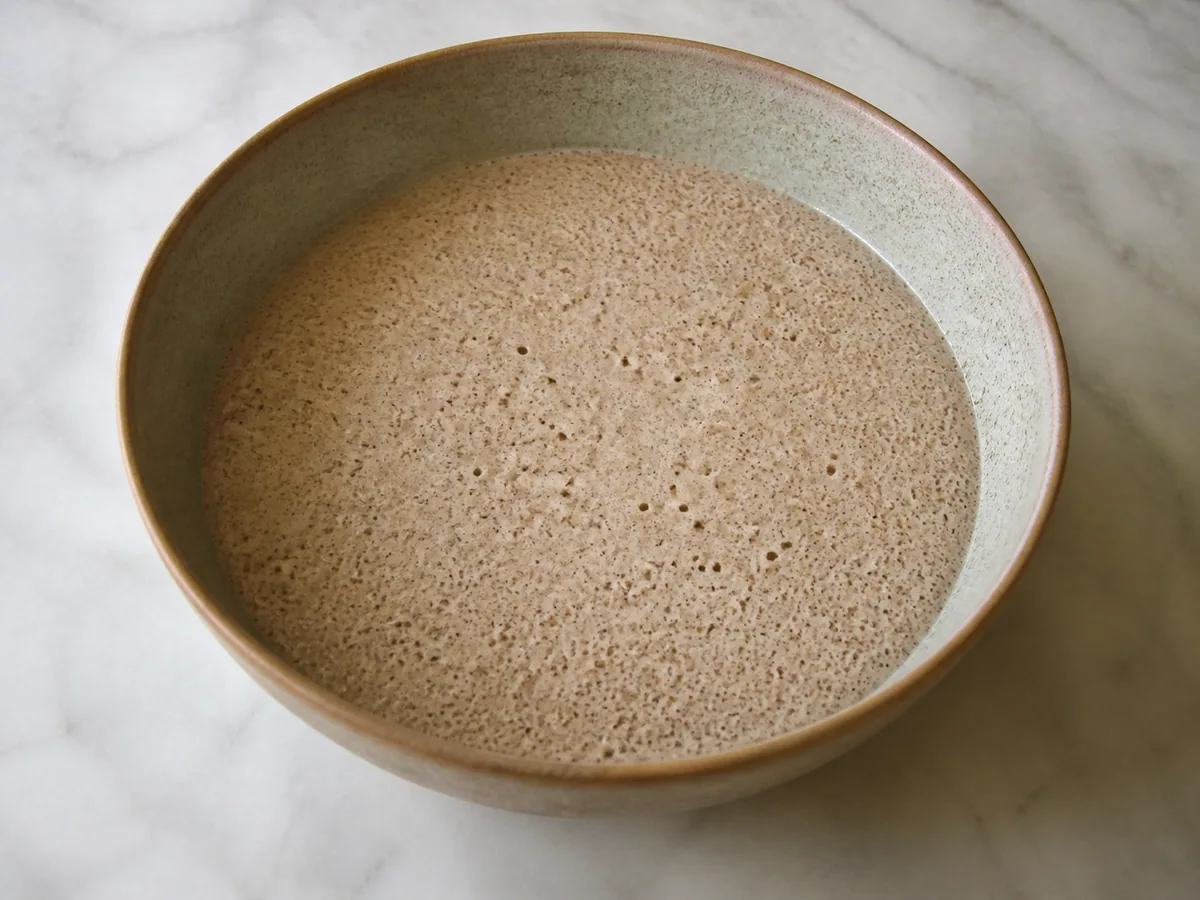
Whisk 240 g of brown whole-grain teff flour with 480 ml of room-temperature water in a clean nonreactive bowl until smooth and free of dry pockets. The batter should be loose but not watery. This first-batch method uses spontaneous fermentation rather than an ersho starter, so its pace and acidity can vary. Cover the bowl loosely so gas can escape, then leave it undisturbed at 24°C to 27°C (75°F to 81°F). Begin checking at 48 hours and continue, if needed, for up to 72 hours. It is ready when small bubbles are visible and the aroma is clean, grainy, and pleasantly sour. Discard the batter and start again if you see fuzzy growth, colored streaks, or smell anything rotten.
48:00:00Cook the absit
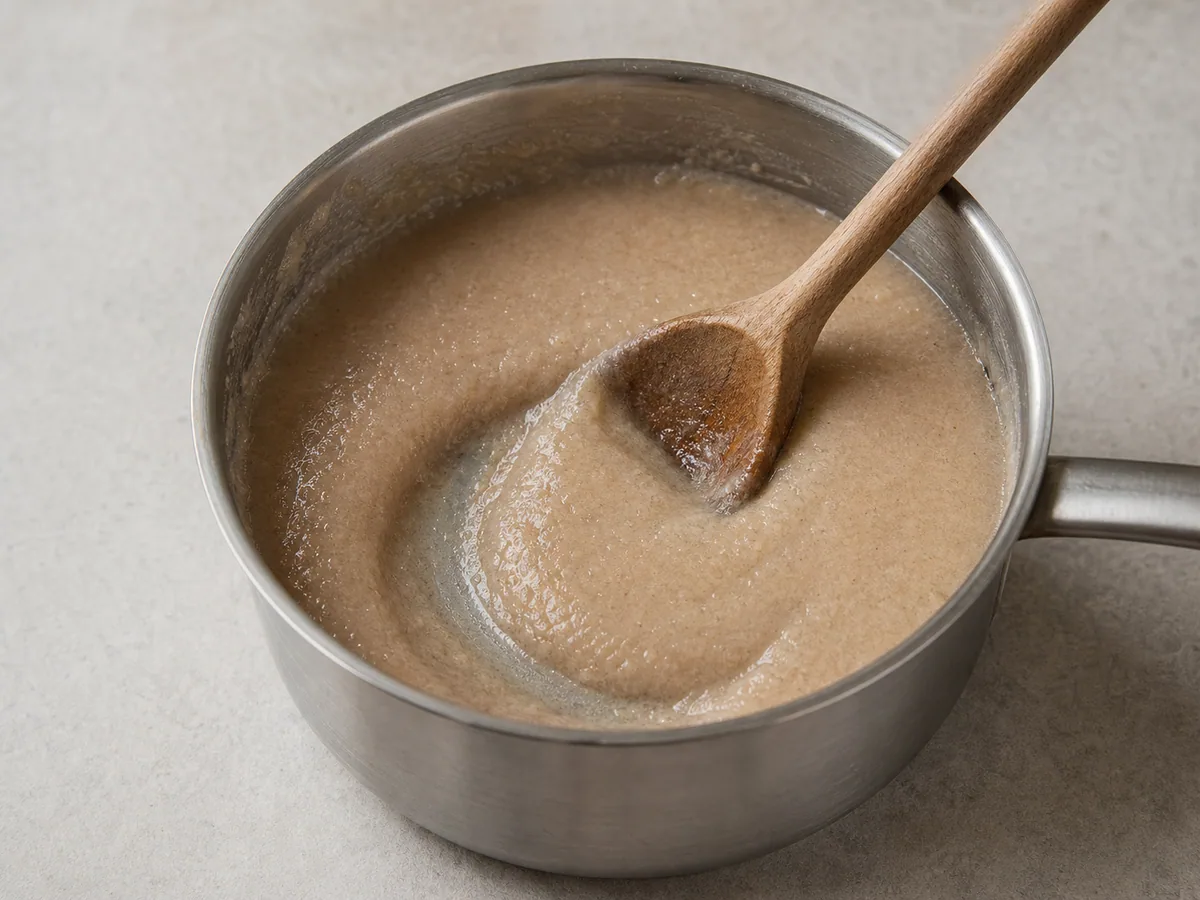
After the first fermentation, stir the batter gently. Transfer roughly one-tenth of it to a small saucepan and whisk in 120 ml of water for absit. Set the pan over medium heat and cook for 3 to 5 minutes, stirring constantly, until the mixture becomes glossy and thick enough to leave a clear trail behind the spoon. Remove it from the heat and let it cool until lukewarm, about 20 minutes.
00:03:00Finish and ferment the batter again
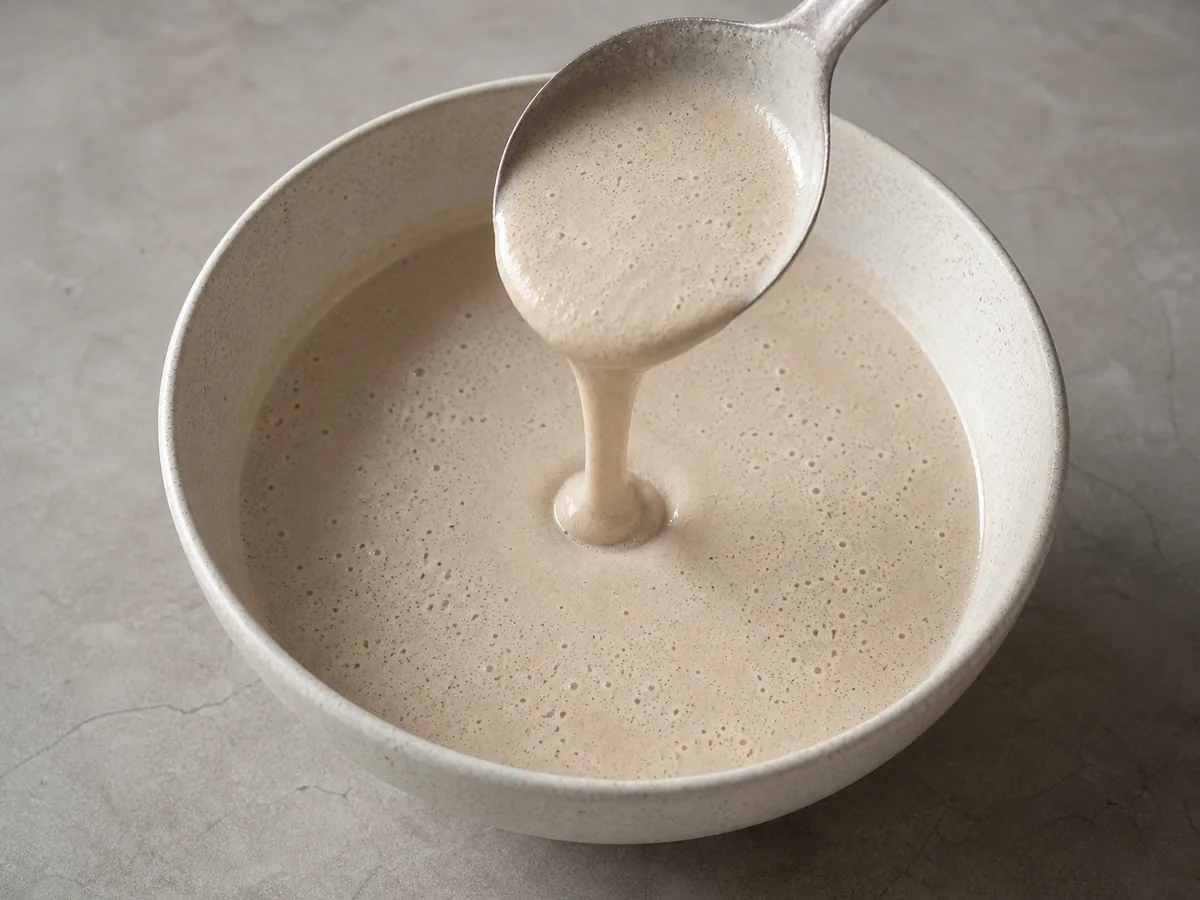
Whisk the lukewarm absit back into the remaining batter, then add 3 g of fine sea salt. Gradually whisk in 120 ml of water for thinning until the batter pours in a steady ribbon and has the consistency of light cream; stop before adding all of it if the batter already flows easily. Cover loosely and leave at 24°C to 27°C (75°F to 81°F) for 4 hours, until the surface looks aerated and a spoonful releases bubbles when stirred.
04:00:00Heat and prepare the pan
For the 4-serving batch, set a 12-inch (30 cm) wide nonstick skillet over medium heat for 4 to 5 minutes. Use 15 ml of neutral oil to brush the surface with a very thin film, then hold a folded heatproof towel with heatproof tongs and wipe away any visible pools. The pan is ready when a drop of water skitters briefly before evaporating; if it disappears instantly with smoke, lower the heat.
04:00Cook the injera
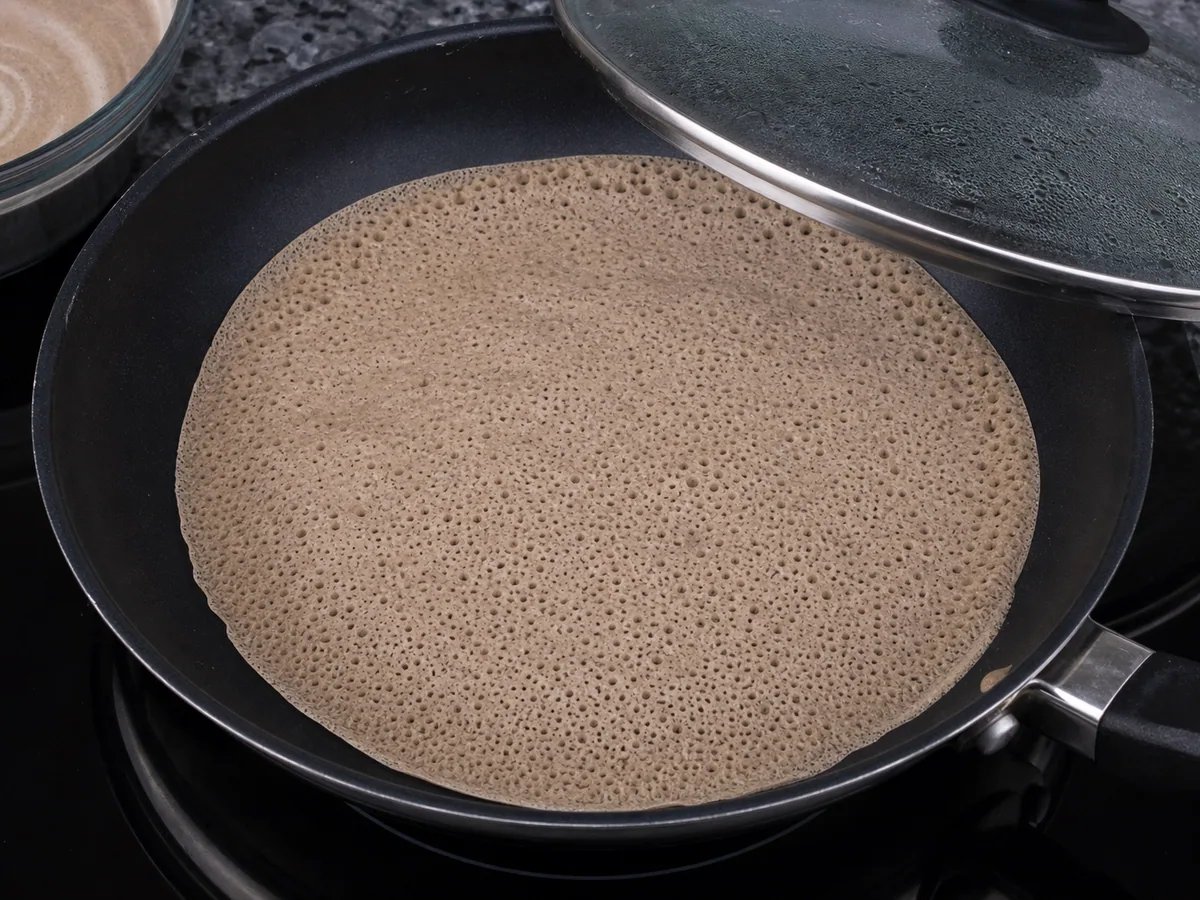
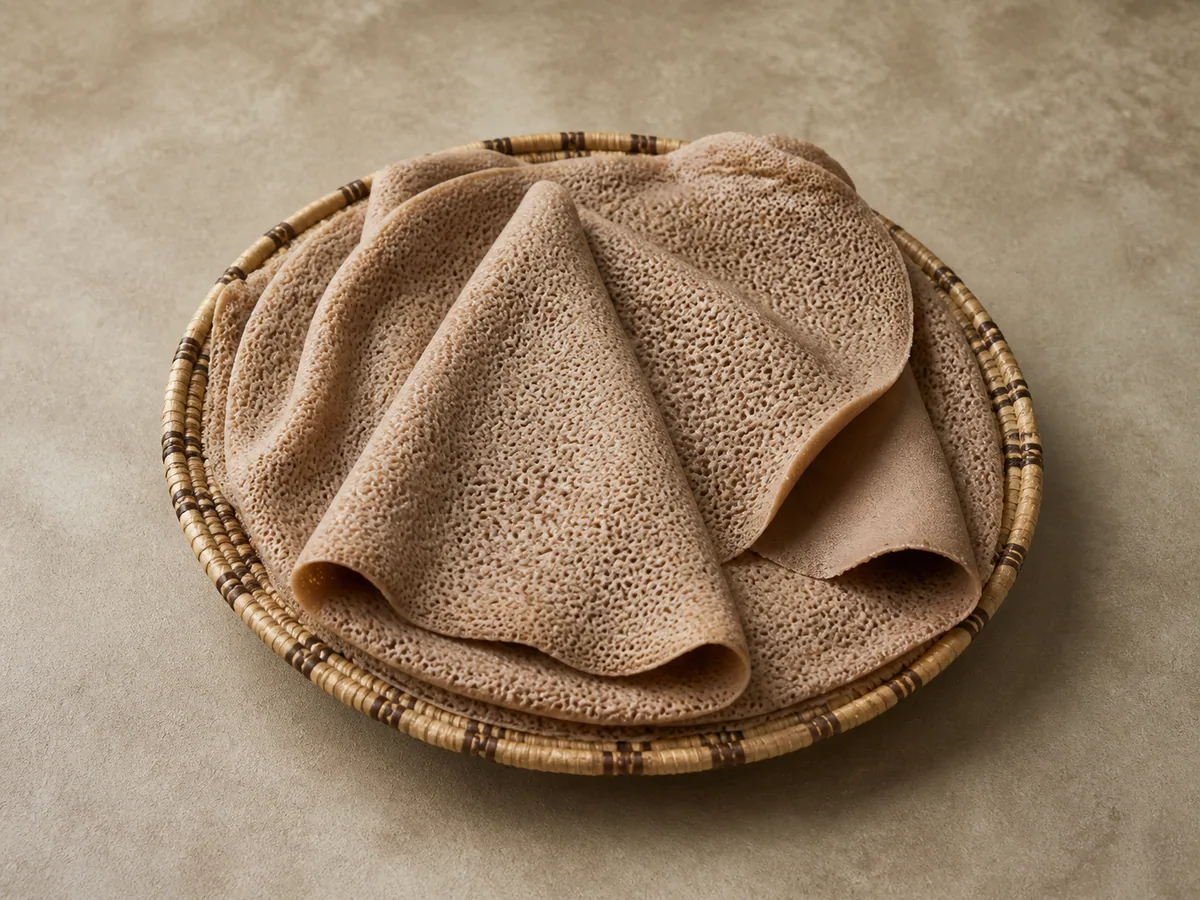
Stir the batter once, gently, without knocking out all the bubbles. For each round, pour about 1/2 cup (120 ml) batter into the center of the 12-inch (30 cm) skillet, moving outward in a quick spiral so it forms a thin, even round. Cover immediately. Start checking after 2 minutes and cook for 2 to 3 minutes total, until the top is dry, the surface is covered with open eyes, and the edge releases from the skillet. Do not flip. Slide a wide spatula underneath and transfer the injera to a clean cloth-lined tray. Leave it uncovered until the steam subsides, then repeat with the remaining batter, adjusting the heat if the bottoms darken before the tops set. The full 4-serving batch should yield about 8 injera.
00:02:00Set the texture and serve
Let each injera stand just until it feels cool, flexible, and easy to lift without sticking. Arrange the rounds flat, folded, or rolled on a platter and serve immediately. Tear off pieces rather than cutting them so the porous surface stays ready to scoop and absorb sauce.


Smart Substitutions
- No brown teff flour? Use ivory teff flour for a lighter color and a milder, slightly sweeter grain flavor.
- Want a gentler tang? Begin checking the first fermentation at 36 hours and move on when the batter is bubbly and clean-smelling.
- Need a more forgiving batter? Replace up to one-quarter of the teff flour with fine rice flour; the injera will be less traditional but easier to spread.
- No nonstick skillet? Use a smooth, well-seasoned cast-iron skillet and apply the oil in the thinnest possible film before each round.
Tips and Variations
- Warmth matters more than the clock: aim for 24°C to 27°C (75°F to 81°F) during both fermentation stages.
- Pour in one continuous spiral and cover the skillet right away so steam sets the top before the bottom becomes tough.
- Wait for each injera to stop steaming before placing another one over it; this keeps the surfaces distinct and supple.
What Went Wrong?
- The injera has very few eyes Give the second fermentation more time, or raise the pan heat slightly. The batter should look aerated before cooking and bubble quickly when it meets the skillet.
- The center stays gummy Pour a thinner round, keep the skillet covered, and cook until the entire top loses its wet sheen before lifting the injera.
- The injera cracks at the edges The batter is probably too thick or the pan is too hot. Whisk in a little of the measured thinning water and reduce the heat slightly.
- The batter develops unusual growth Discard it if you see fuzzy patches or pink, orange, green, or black streaks. Begin again with a thoroughly cleaned bowl and fresh ingredients.
Nutrition Estimate
- Fiber: 5 g per serving
- Sodium: 300 mg per serving
Nutrition disclaimer:This recipe is provided for general cooking information only. Nutrition values are estimates and may vary by ingredients, brands, preparation methods, and serving sizes. Check ingredient labels and follow appropriate food-safety practices. This content is not medical, dietary, allergy, or professional food-safety advice.
FAQ
Found an error or have a suggestion?
Help us improve this recipe. Send us your feedback and include the recipe name so we can take a look.