Method
Prepare the ingredients safely
Use a dedicated cutting board for raw meat. Cut 500 g of boneless pork shoulder into 2.5 cm (1 in) cubes and cut 200 g of raw smoked pork sausage into thick coins. Chop 150 g of yellow onion and mince 15 g of garlic for tochitura on a separate clean surface. Wash the meat board, knife, sink area, and your hands with hot, soapy water before handling the cheese, mujdei ingredients, or cooked food.
Brown the pork
Heat a wide, heavy pot over medium-high heat. Add 10 g of lard, then add 500 g of boneless pork shoulder in a single layer; work in batches so the pieces sear instead of steaming. Brown each batch for 8 to 10 minutes, turning as needed, until several sides have a deep golden crust. Restart the 8-minute timer for every batch and begin checking that batch when it rings. Transfer browned pieces to a clean plate as each batch finishes.
08:00Build the savory base
Reduce the heat to medium. Add 200 g of raw smoked pork sausage and 150 g of yellow onion to the pot. Cook for 8 to 10 minutes, stirring often, until the sausage is browned at the edges and the onion is soft and lightly golden; start checking at 8 minutes. Stir in 15 g of garlic for tochitura, 30 g of tomato paste, 4 g of sweet paprika, 1 g of dried thyme, 1 g of black pepper, 1 bay leaf, and 3 g of fine salt for tochitura. Cook just until the tomato paste darkens slightly and the garlic smells mellow, scraping up the browned film on the bottom.
08:00Simmer until tender and safely cooked
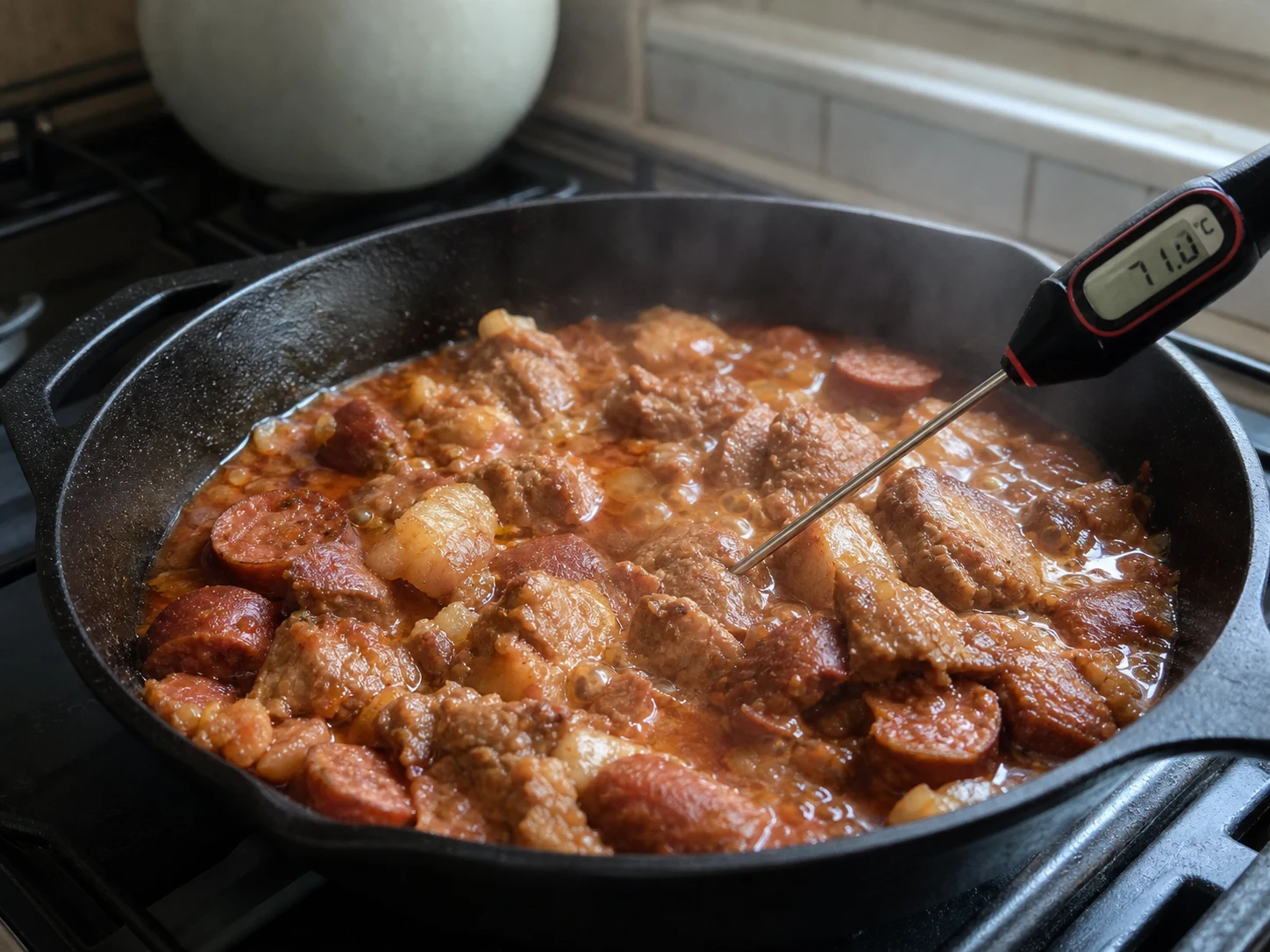
Return the browned pork and any collected juices to the pot. Pour in 240 ml of water for tochitura and scrape the bottom clean. Bring to a gentle simmer, then partially cover and cook over low heat for 35 to 45 minutes, stirring occasionally. Start checking at 35 minutes. The pork should be fork-tender, and the thickest pork and sausage pieces must each reach at least 71°C/160°F when checked with a food thermometer. Add a small splash of water if the pan becomes dry before the pork is tender.
35:00Cook the mamaliga
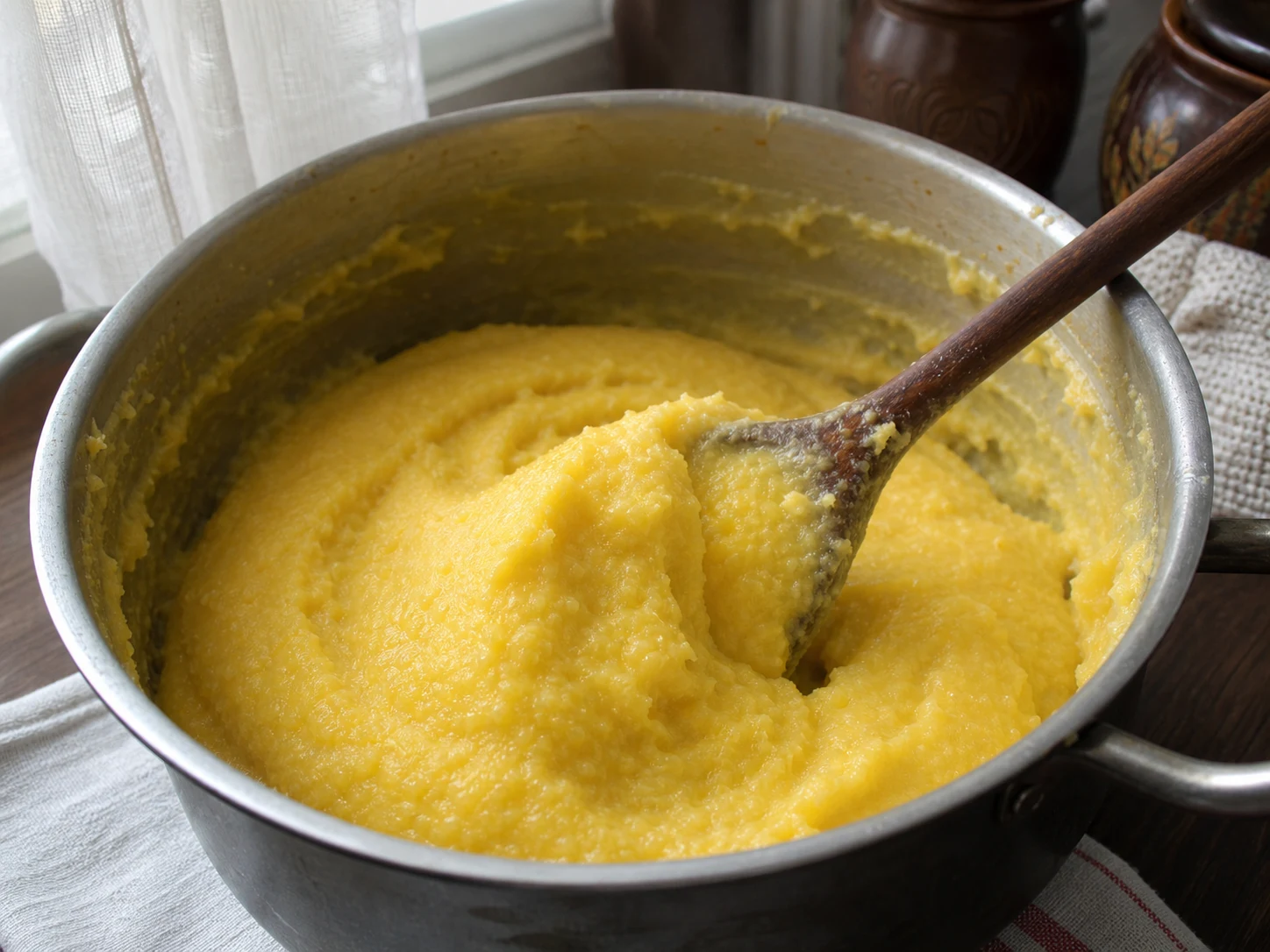
While the meat simmers, bring 780 ml of water for mamaliga and 2 g of fine salt for mamaliga to a boil in a heavy saucepan. Whisk in 160 g of yellow cornmeal in a thin, steady stream so it does not clump. Reduce the heat to low and cook for 18 to 22 minutes, stirring frequently with a sturdy spoon, until the mamaliga is thick, smooth, and pulling cleanly from the sides of the pan. Start checking at 18 minutes.
18:00Make the garlic sauce
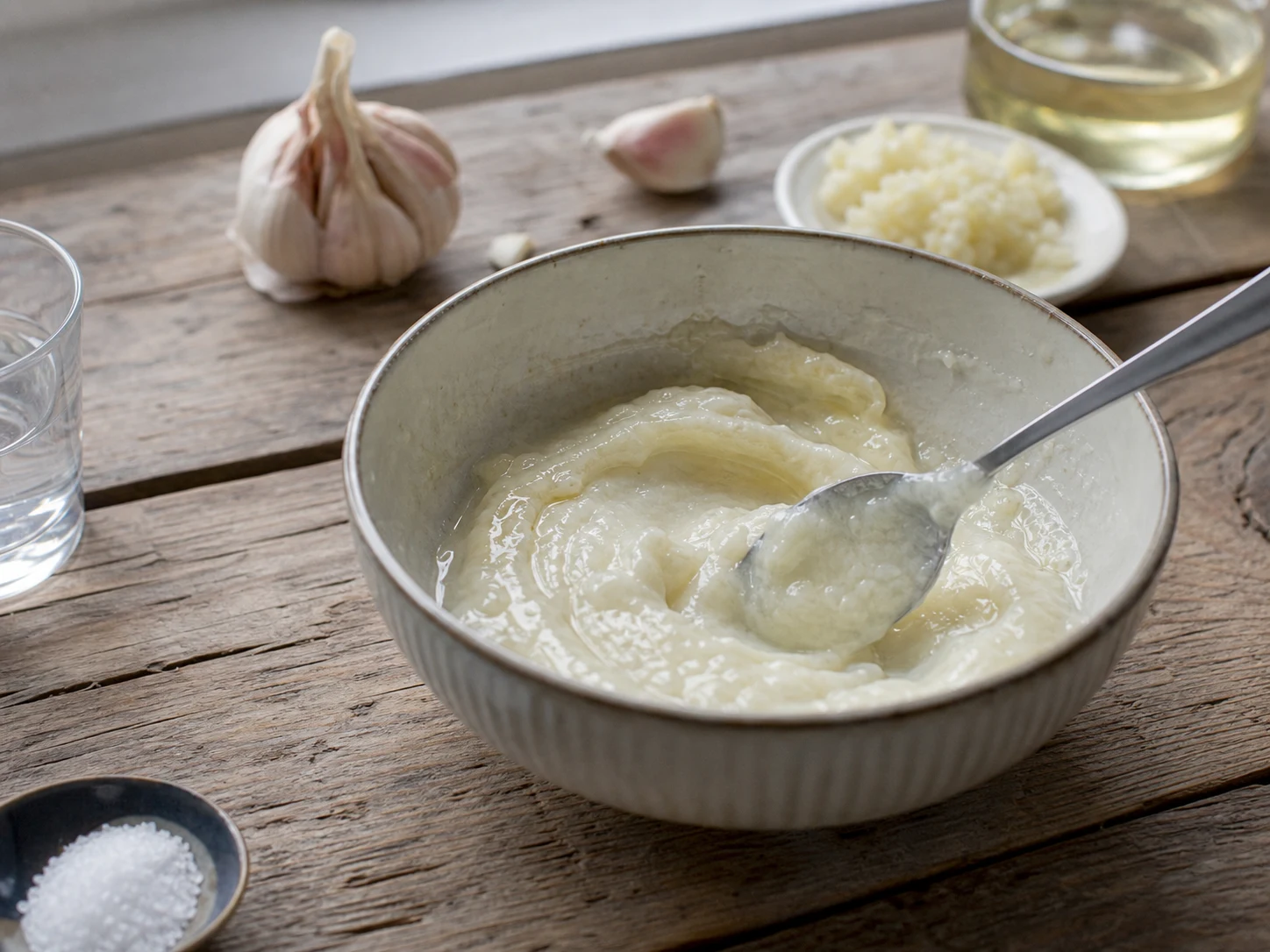
Mince 20 g of garlic for mujdei, then mash it with 1 g of fine salt for mujdei in a small bowl or mortar until it becomes a rough paste. Stir constantly while drizzling in 15 ml of sunflower oil for mujdei until the mixture looks creamy and slightly thickened. Stir in 45 ml of water for mujdei a little at a time to make a spoonable, milky sauce with a clear fresh-garlic bite.
Cook the eggs until firm
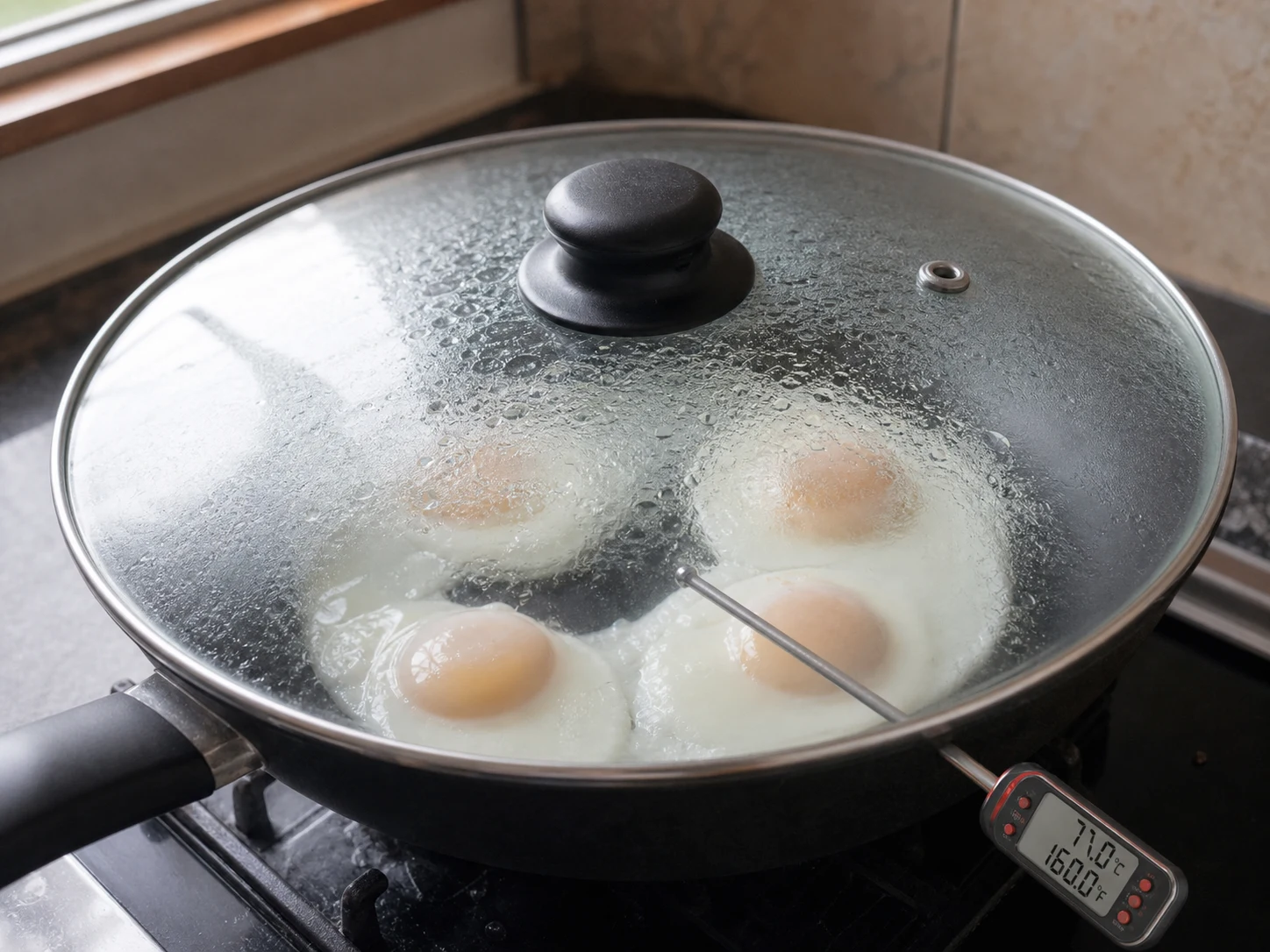
Heat a clean nonstick skillet over medium-low heat and add 15 ml of sunflower oil for eggs. Crack in 4 large eggs, cover, and cook for 4 to 6 minutes, starting the check at 4 minutes. The whites and yolks must both be fully firm; use a food thermometer to verify 71°C/160°F at the center. Keep these utensils separate from anything that touched raw pork.
04:00Assemble and serve
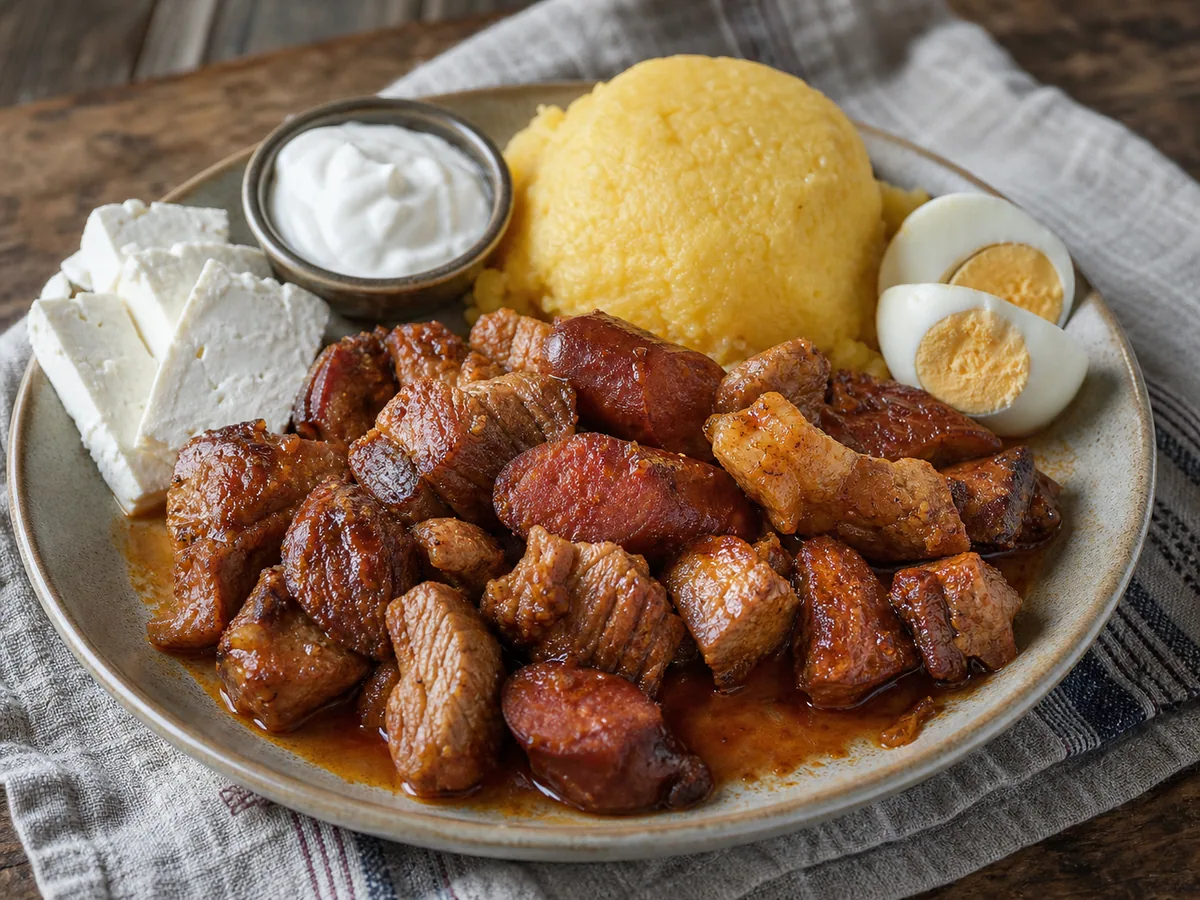
Remove the bay leaf from the tochitura. Spoon the mamaliga onto warm plates and add the pork, sausage, and glossy pan juices. Divide the firm-cooked eggs among the plates, crumble 80 g of telemea or feta cheese over the mamaliga, and serve the mujdei alongside so each person can add it to taste.


Smart Substitutions
- No lard? Use the same amount of sunflower oil; the stew will taste a little lighter but will still brown well.
- No telemea? Use feta or another firm, salty brined sheep's-milk cheese.
- No smoked sausage? Use a garlicky fresh pork sausage and cook it to 71°C/160°F before serving.
- Prefer a tomato-free version? Omit the tomato paste and let the browned meat juices, paprika, onion, and garlic form the sauce.
Tips and Variations
- Dry the pork surface before browning so it develops a crust instead of releasing steam.
- Keep the mamaliga over low heat and stir from the bottom; the thick cornmeal can catch quickly near the end.
- Mix the mujdei while the pork simmers so the garlic has a few minutes to mellow before serving.
What Went Wrong?
- Pork is still tough Keep the pot at a gentle simmer and add a small splash of water. Shoulder softens with time, not higher heat.
- Tochitura looks greasy Lower the heat and spoon off a little surface fat, leaving enough to keep the pan juices glossy.
- Mamaliga is lumpy Whisk firmly while it is still loose, then switch to a sturdy spoon once it thickens.
- Mujdei is too sharp Stir in a little more water, then add oil drop by drop until the garlic tastes balanced rather than harsh.
Nutrition Estimate
- Fiber: 5 g per serving
- Sodium: 1320 mg per serving
Nutrition disclaimer:This recipe is provided for general cooking information only. Nutrition values are estimates and may vary by ingredients, brands, preparation methods, and serving sizes. Check ingredient labels and follow appropriate food-safety practices. This content is not medical, dietary, allergy, or professional food-safety advice.
FAQ
Found an error or have a suggestion?
Help us improve this recipe. Send us your feedback and include the recipe name so we can take a look.