Method
Make the pandan syrup
Tie 5 fresh pandan leaves into a loose knot and place them in a small saucepan with 300 ml of water, 180 g of granulated sugar, and 3 g of fine salt. Bring to a gentle simmer over medium heat, stirring until the sugar dissolves. Simmer for 3 minutes, then remove from the heat, discard the leaves, and let the syrup stand until warm rather than hot.
03:00Mix and divide the batter
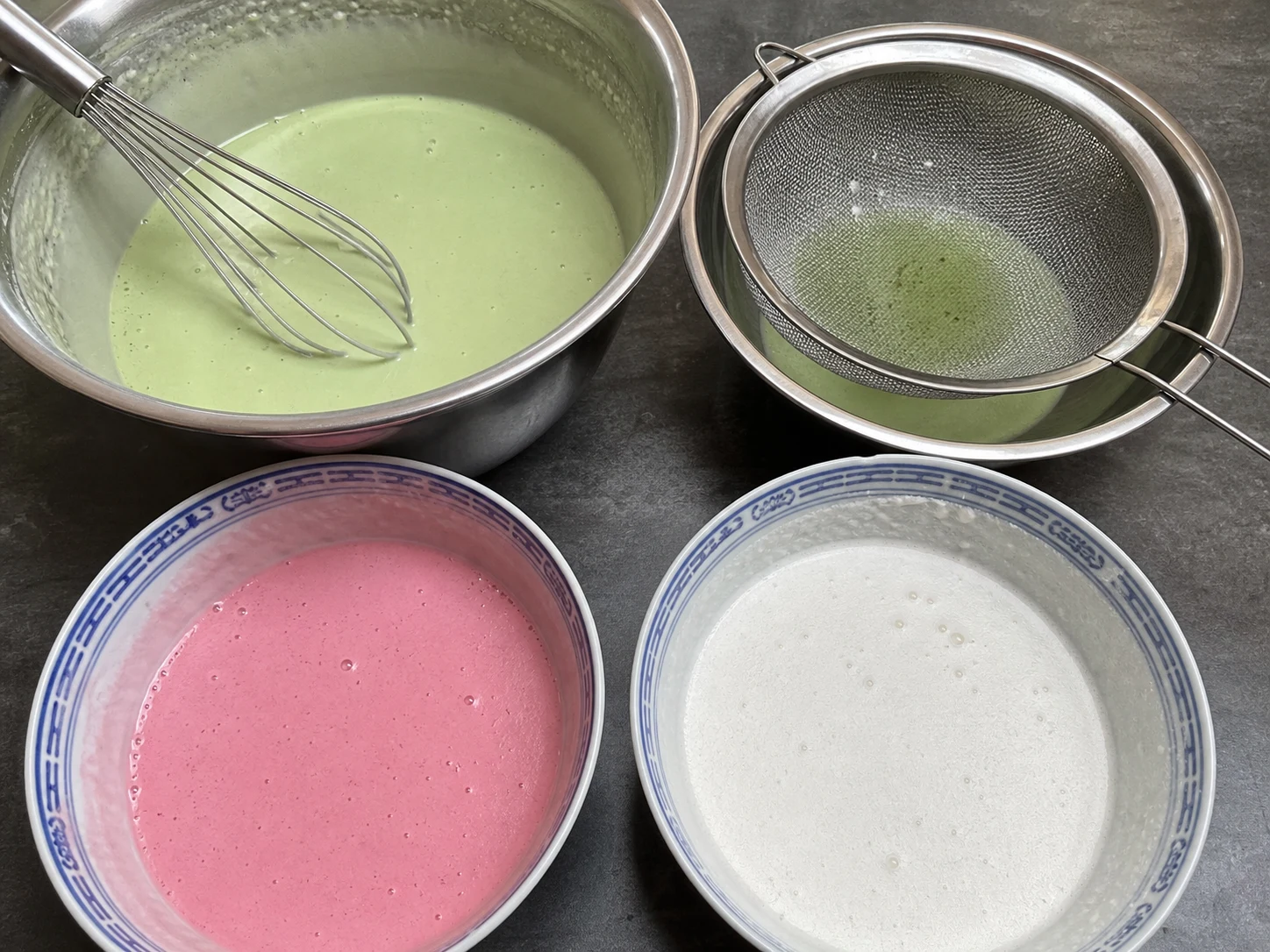
Whisk 180 g of tapioca starch and 80 g of rice flour in a large bowl. Add 400 ml of full-fat coconut milk gradually while whisking to make a smooth slurry, then whisk in the warm pandan syrup. Strain the batter through a fine-mesh sieve to remove lumps. Weigh the strained batter, then transfer five-ninths to one bowl and four-ninths to a second bowl. Calculate one-ninth of the total batter weight and use that amount for every layer. Stir 0.6 ml of red liquid food coloring into the larger share for five pink layers and leave the smaller share white for four layers.
Prepare the steamer and pan
Set a steamer over enough water for about 1 hour of cooking and bring it to a steady boil. Reserve a few drops from 5 ml of neutral oil for cutting, then brush the rest over the base and sides of a 20 cm (8 in) round heatproof pan (for 8 servings). For a scaled batch, choose a vessel that keeps the batter at a similar depth rather than scaling the dimensions directly. Place the pan in the steamer, cover, and preheat for 5 minutes. Lift the lid level and wipe its underside between layers so condensation does not fall onto the batter.
05:00Steam the first pink layer
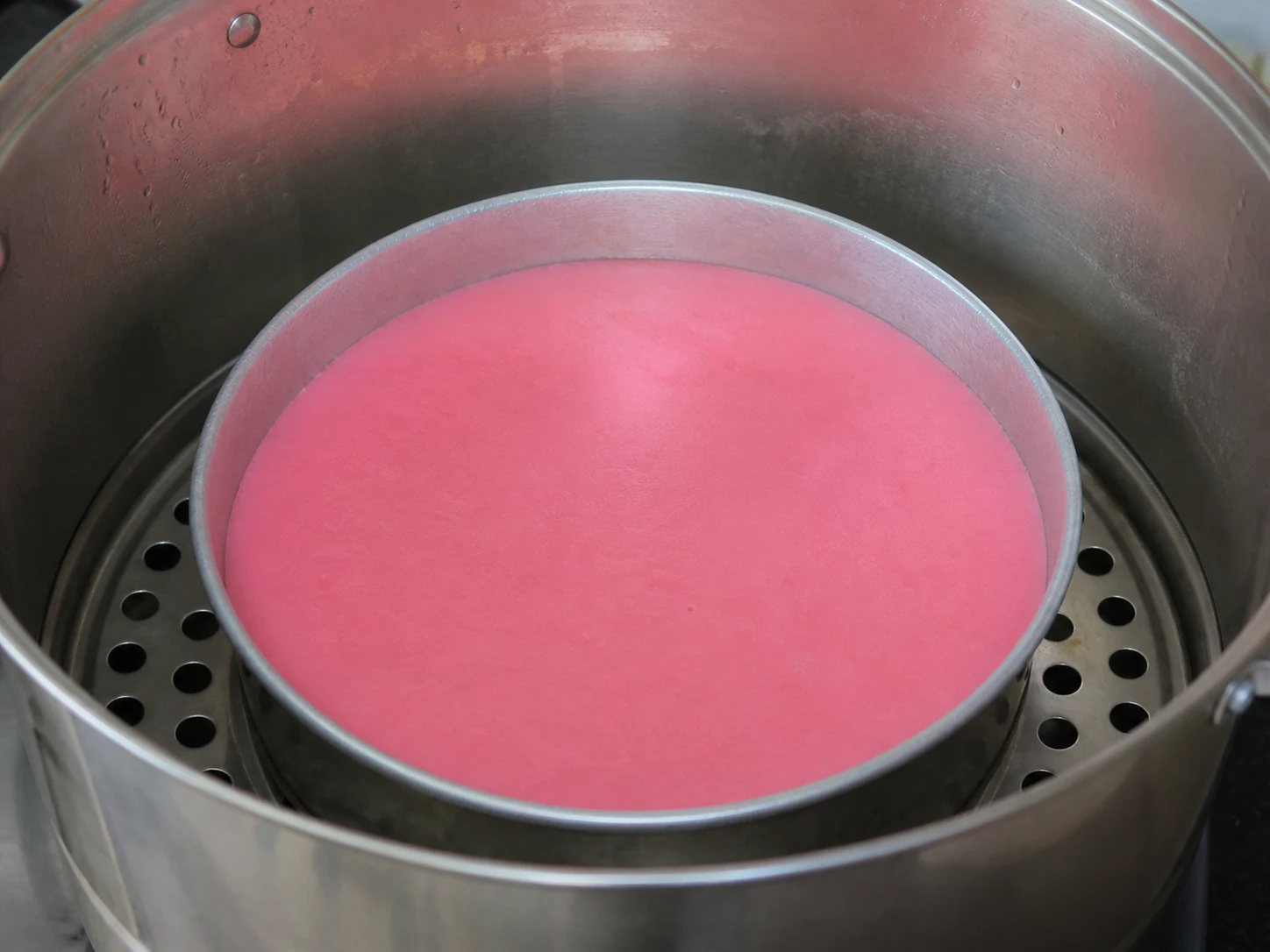
Stir the pink batter thoroughly to redistribute the starch. Open the steamer lid away from you so the steam vents safely. Keeping the hot pan level, pour one measured layer portion into the center and use the back of a heatproof ladle to spread it gently into a thin, even layer without lifting or tilting the pan. Cover and steam over medium-high heat for 5 minutes, until the surface looks matte and set with no liquid movement when the pan is gently nudged. If the center still looks wet, steam for 1 minute more before continuing.
05:00Build layers two through eight
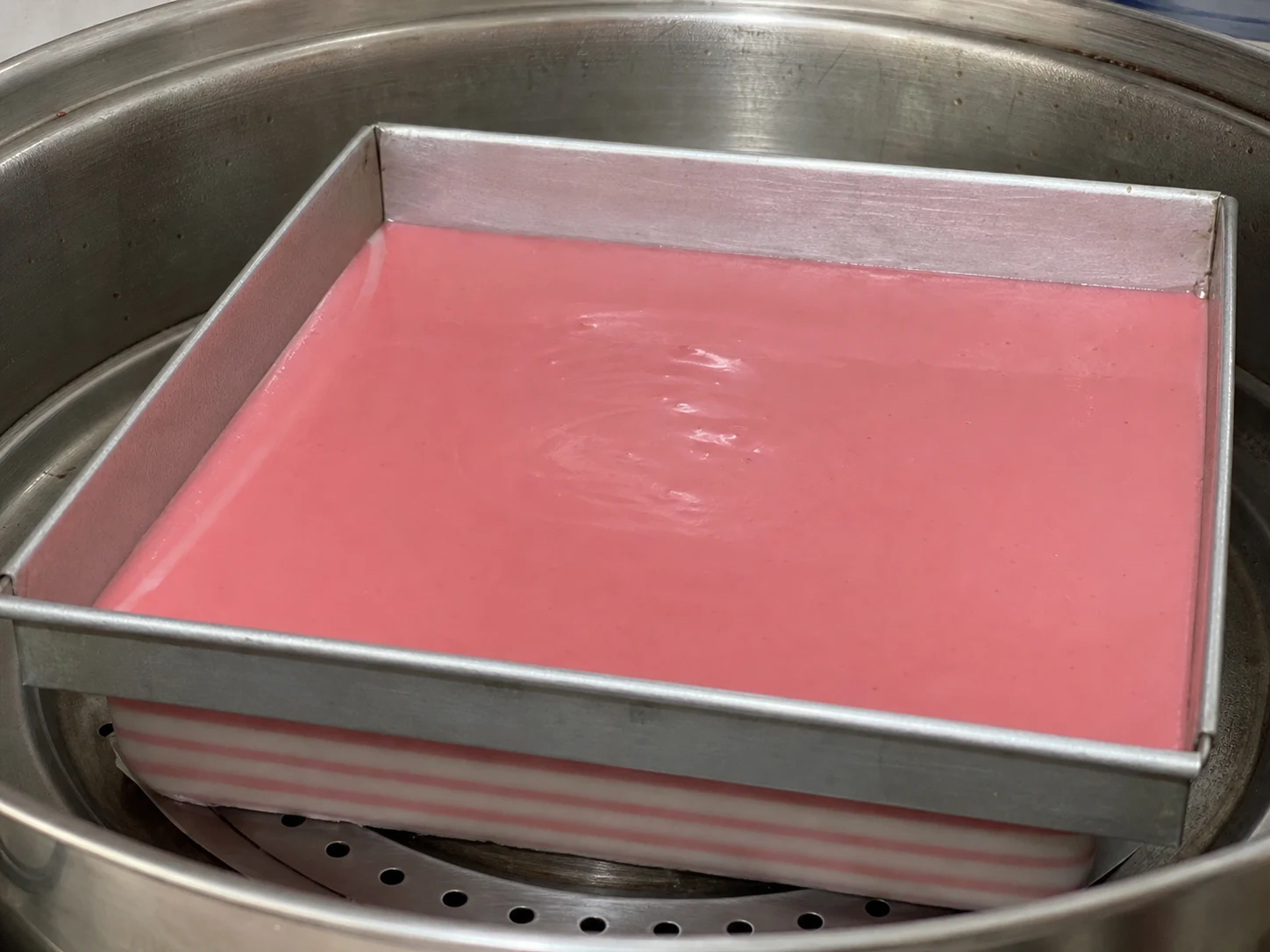
Stir the white batter, weigh or measure one layer portion using the target established earlier, pour it over the set pink layer, and steam for 5 minutes. Continue alternating measured pink and white portions, stirring the appropriate bowl before every pour, until layer eight is set. Steam every layer for 5 minutes, resetting the timer each time, and do not pour again until the surface is matte and no longer ripples. Keep the water at a steady boil; when needed, open the lid away from you and add boiling water carefully down the side of the steamer, directing it away from the pan.
05:00 per layerSteam the final pink layer
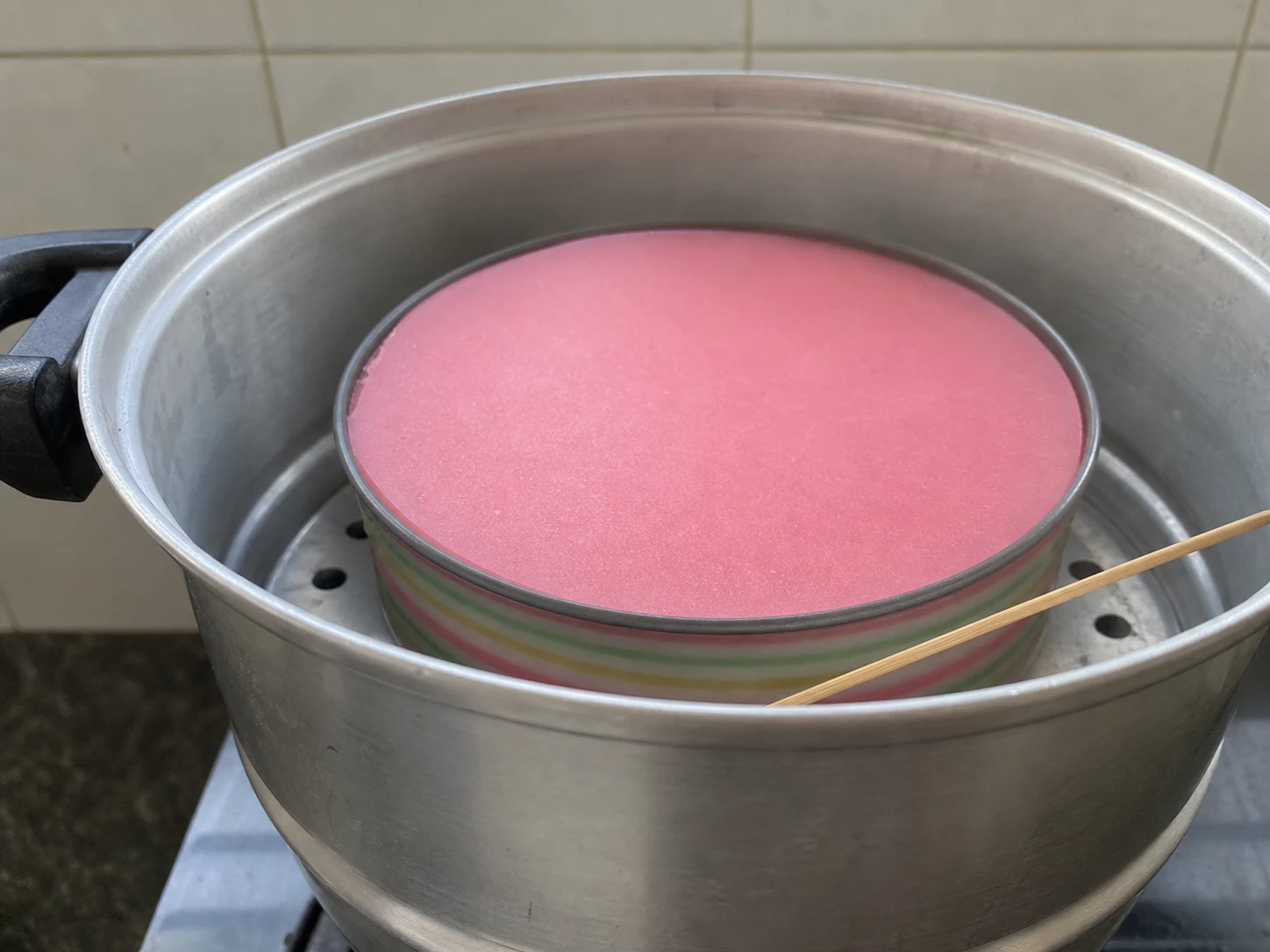
Stir the remaining pink batter and pour it evenly over the eighth layer. Cover and steam for 10 minutes, until the top is fully set and the edge begins to release slightly from the pan. A skewer inserted through the center should come out without liquid batter; a little moist starch residue is normal.
10:00Cool, unmold, and cut
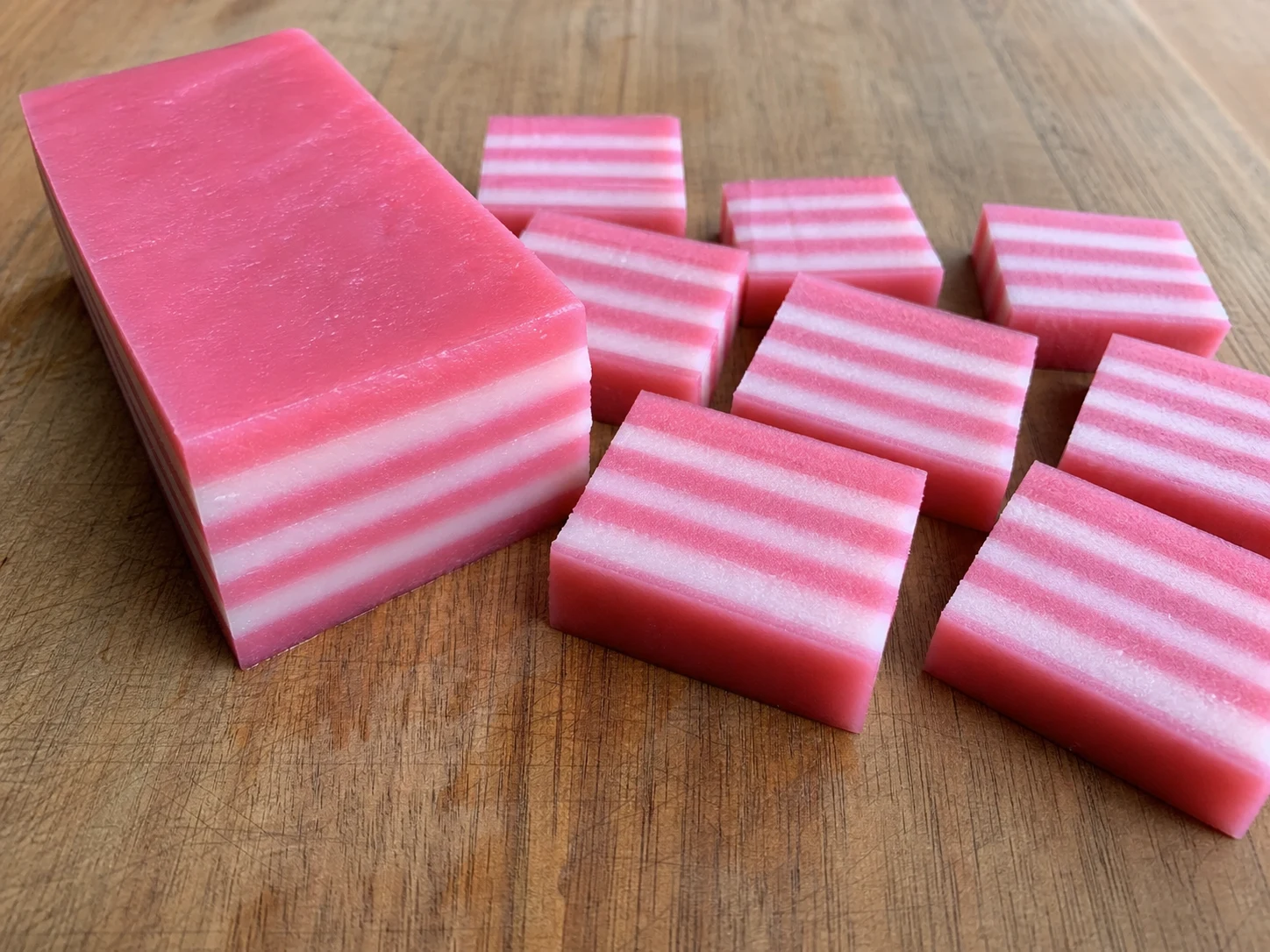
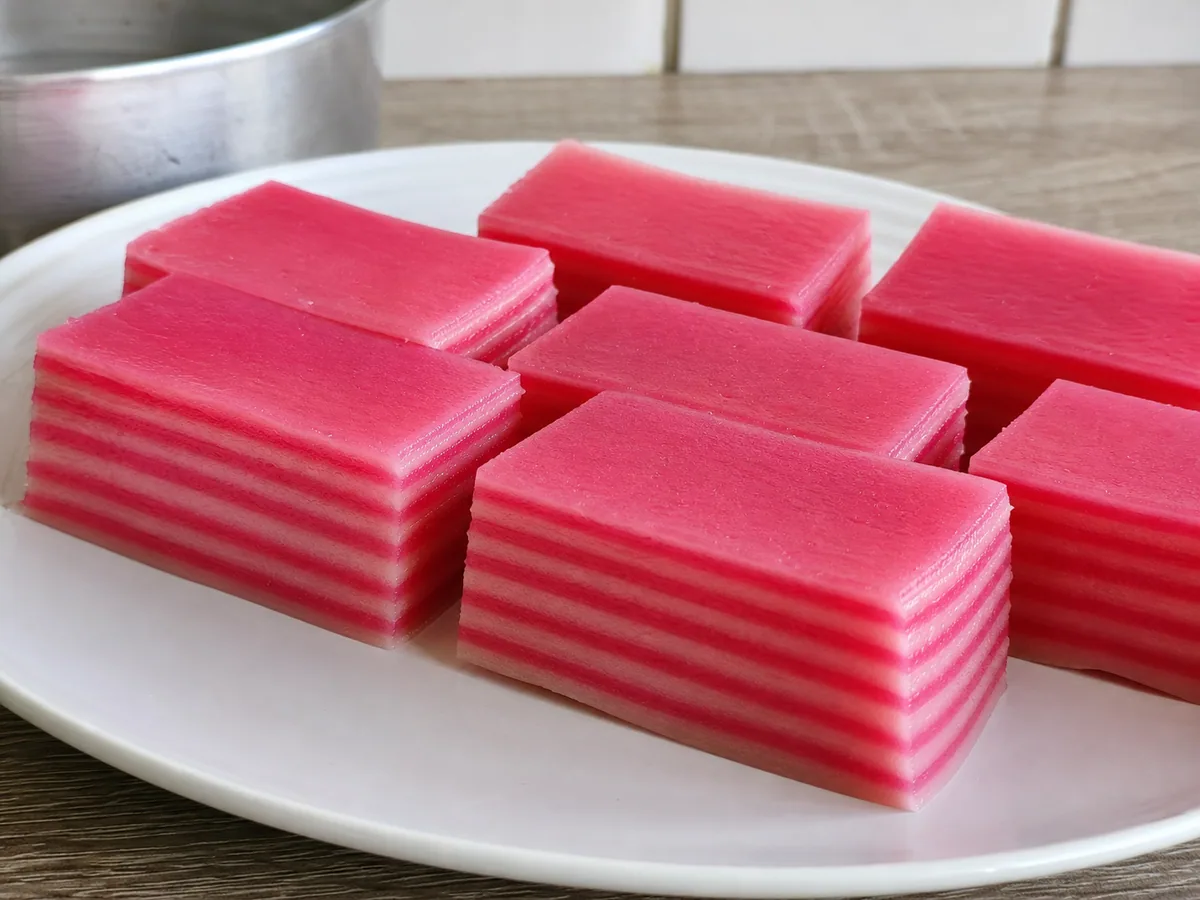
Lift the pan from the steamer with heatproof mitts and set it on a rack. Cool undisturbed for at least 3 hours, until the cake is completely cool and firm enough to hold its layers. Run a thin spatula around the edge, invert the cake onto a cutting board, and turn it right-side up. Coat a sharp knife with the reserved oil, then cut the cake into small rectangles or diamonds, allowing about two pieces per serving. Serve once cut; the layers should pull apart cleanly with a tender, springy bite.
3:00:00


Smart Substitutions
- No fresh pandan? Start with 1/8 teaspoon pandan paste whisked into the warm syrup after it comes off the heat, then add more one drop at a time only if the aroma is too faint. Because many pastes are strongly green, the nominally white layers may become pale green; reduce the red coloring if needed to keep the stripes clear.
- No red liquid color? Use pink gel coloring sparingly, or leave both batters uncolored for a monochrome cake with the same texture.
- Using coconut cream? Whisk equal parts unsweetened coconut cream and water, then use that mixture in place of the coconut milk.
- Prefer a softer bite? Replace up to one-sixth of the tapioca starch with rice flour; the layers will be less elastic and slightly more tender.
Tips and Variations
- Keep the steam steady rather than violent; aggressive boiling can wrinkle the surface and push bubbles into the layers.
- Stir each bowl from the bottom immediately before pouring because both starches settle while the previous layer cooks.
- Wipe condensation from the underside of the lid between pours so droplets do not mark the next layer.
What Went Wrong?
- Layers bleed into one another The previous layer was still wet. Steam until its surface is matte and does not ripple before pouring again.
- Layers separate when cut A layer may have dried before the next pour. Add each new layer as soon as the one below is set but still slightly tacky.
- Center remains pasty The cake may be too deep or the final steam too short. Keep the vessel depth consistent and continue steaming until a skewer shows no liquid batter.
- Top is pitted or watery Lower an overly vigorous boil and wipe condensation from the lid before covering the steamer again.
Nutrition Estimate
- Fiber: 0.5 g per serving
- Sodium: 155 mg per serving
Nutrition disclaimer:This recipe is provided for general cooking information only. Nutrition values are estimates and may vary by ingredients, brands, preparation methods, and serving sizes. Check ingredient labels and follow appropriate food-safety practices. This content is not medical, dietary, allergy, or professional food-safety advice.
FAQ
Found an error or have a suggestion?
Help us improve this recipe. Send us your feedback and include the recipe name so we can take a look.