Method
Cook the chicken safely
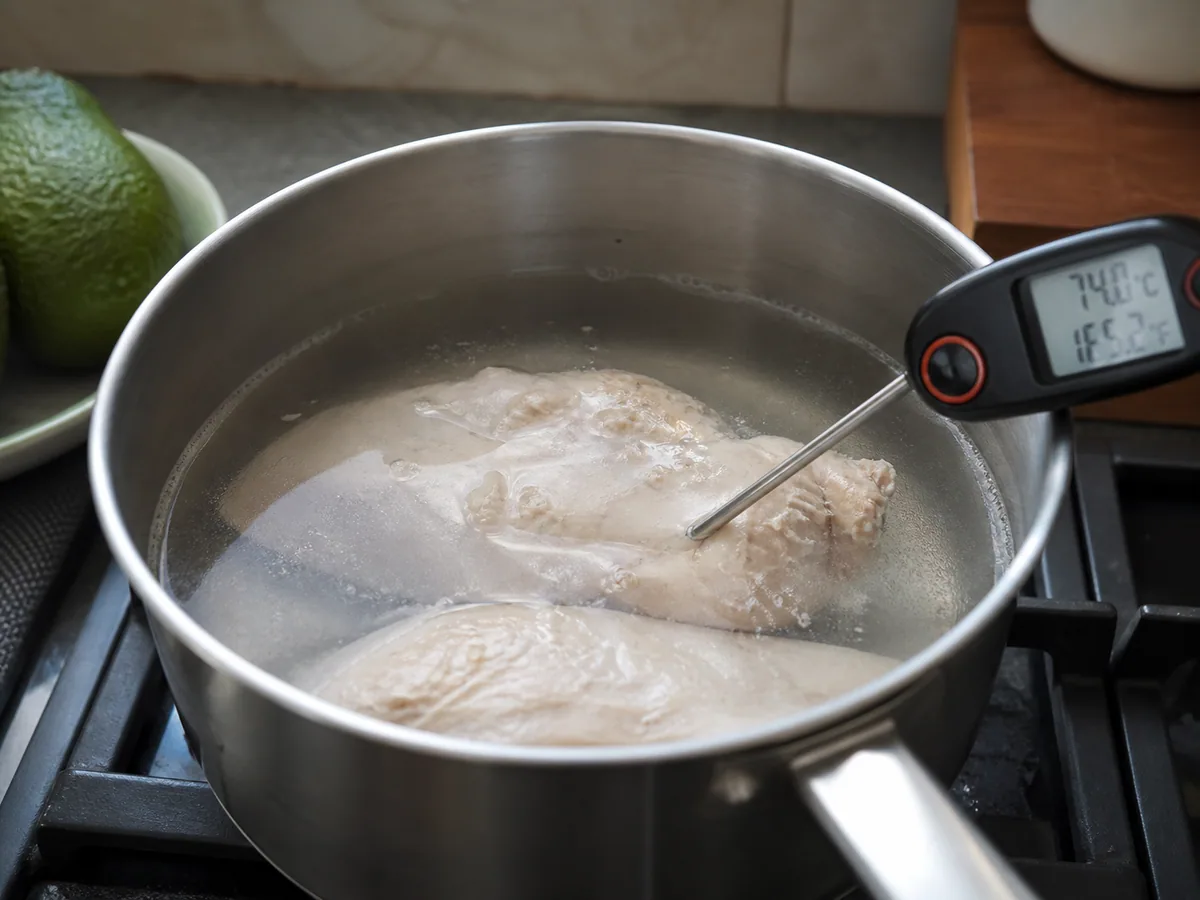
Place 500 g of boneless skinless chicken breasts in a medium saucepan in a single layer. Season with 2 g of kosher salt and 1 g of black pepper, then pour in 240 ml of water, for cooking the chicken. Bring to a bare simmer over medium heat. Cover, reduce the heat to low, and cook for 12 to 16 minutes, turning once, until the thickest part reaches 74°C/165°F on a food thermometer. Transfer the chicken with clean tongs to a clean plate. Wash your hands, then clean and sanitize any surface or utensil that touched raw chicken before preparing the avocado filling.
First check: 12:00Rest and shred the chicken
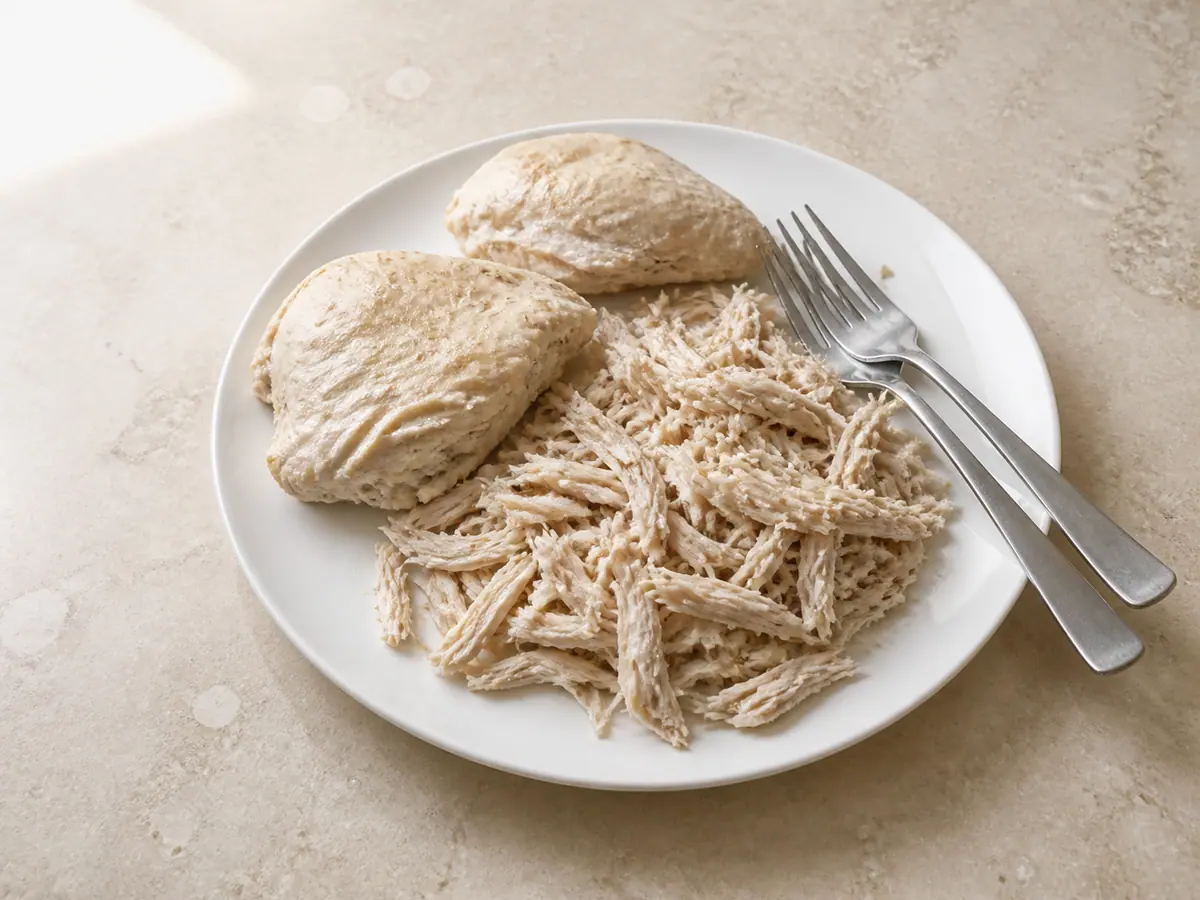
Let the cooked chicken stand for 5 minutes, then pull it into fine shreds with two forks. Spread the shreds across the clean plate so the heavy steam can escape; the chicken should be warm rather than piping hot when it meets the avocado.
05:00Make the chicken-avocado filling
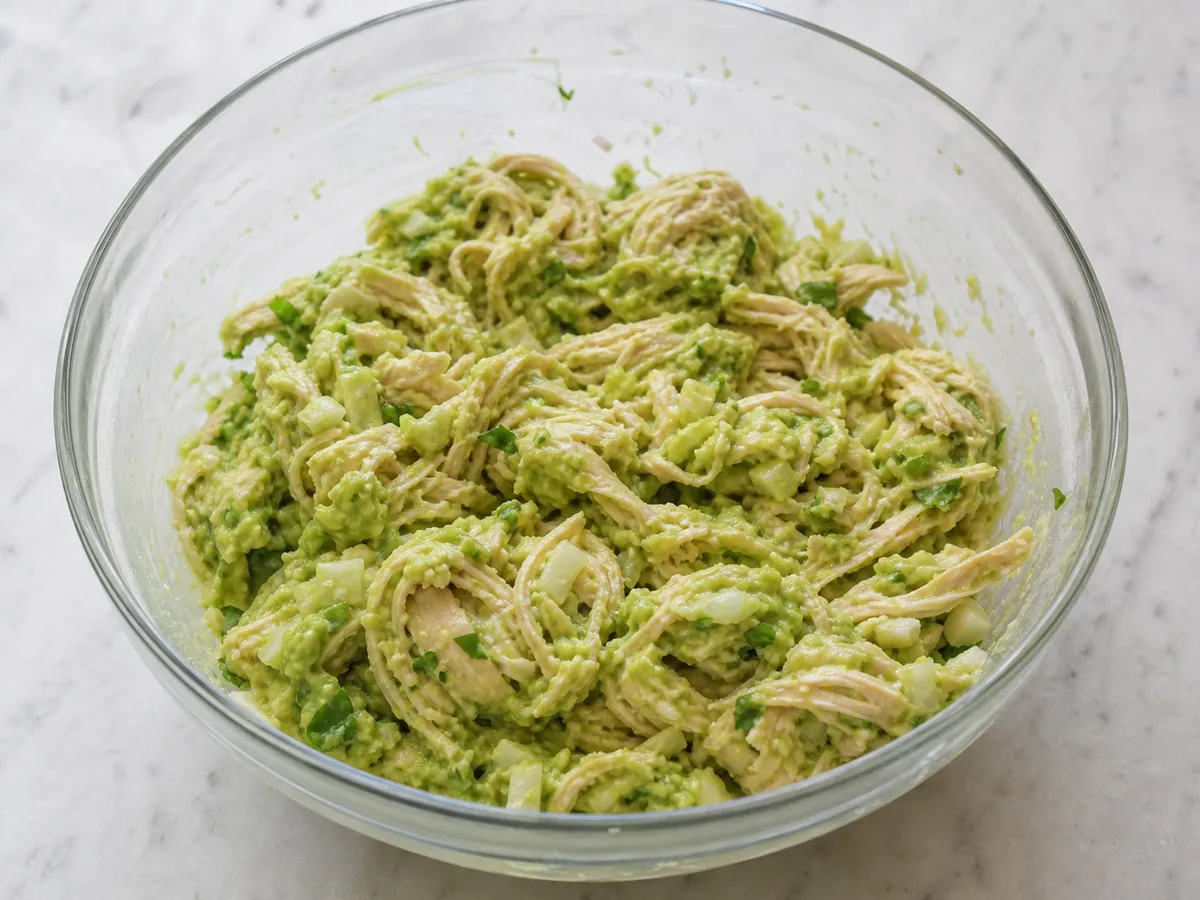
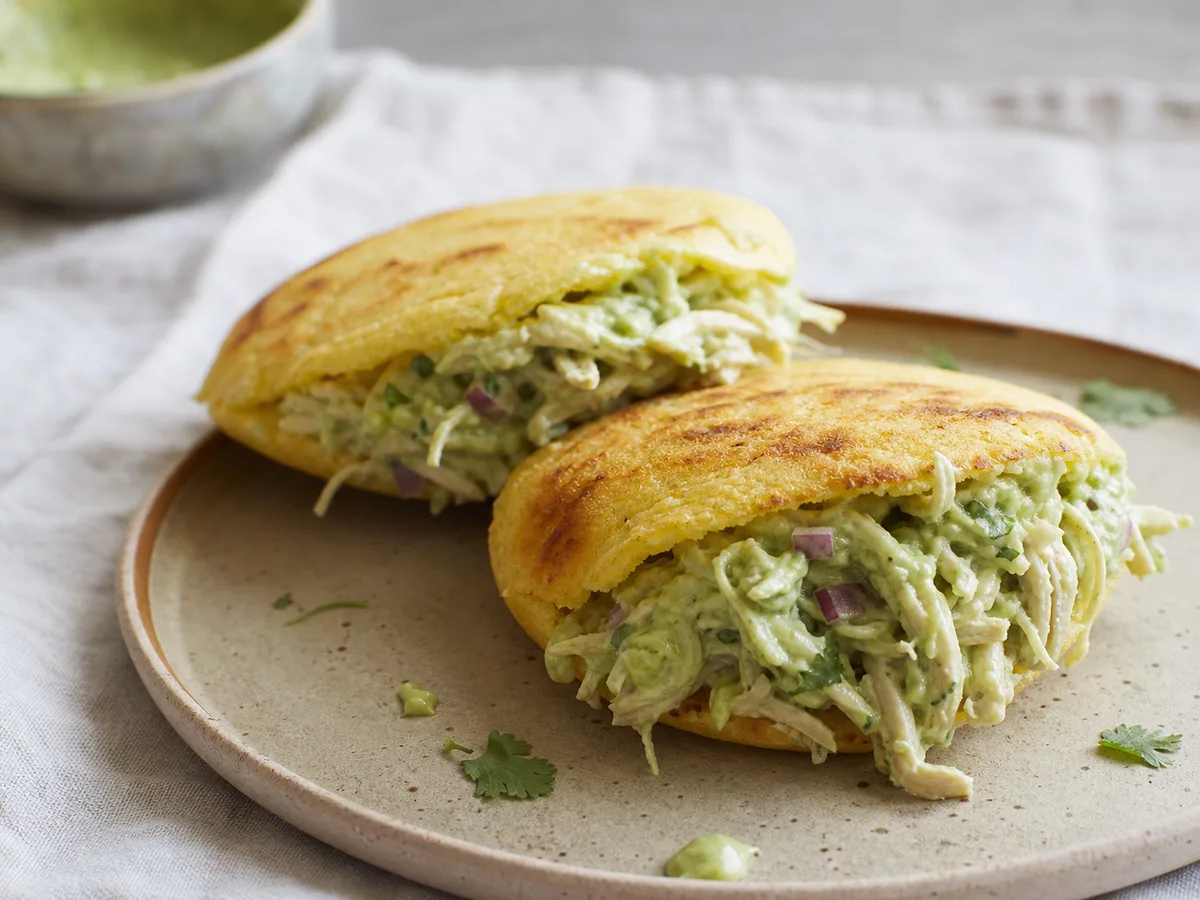
Prepare 300 g of ripe avocados by halving, pitting, and scooping the flesh into a large bowl. Mash until mostly smooth with a few small chunks. Finely chop 80 g of white onion and 15 g of fresh cilantro, then stir them into the avocado with 42 g of mayonnaise (contains egg), 30 ml of lime juice, and the shredded chicken. Fold until evenly coated; the mixture should hold together while keeping visible strands of chicken. Taste and adjust the seasoning if needed.
Mix and rest the arepa dough
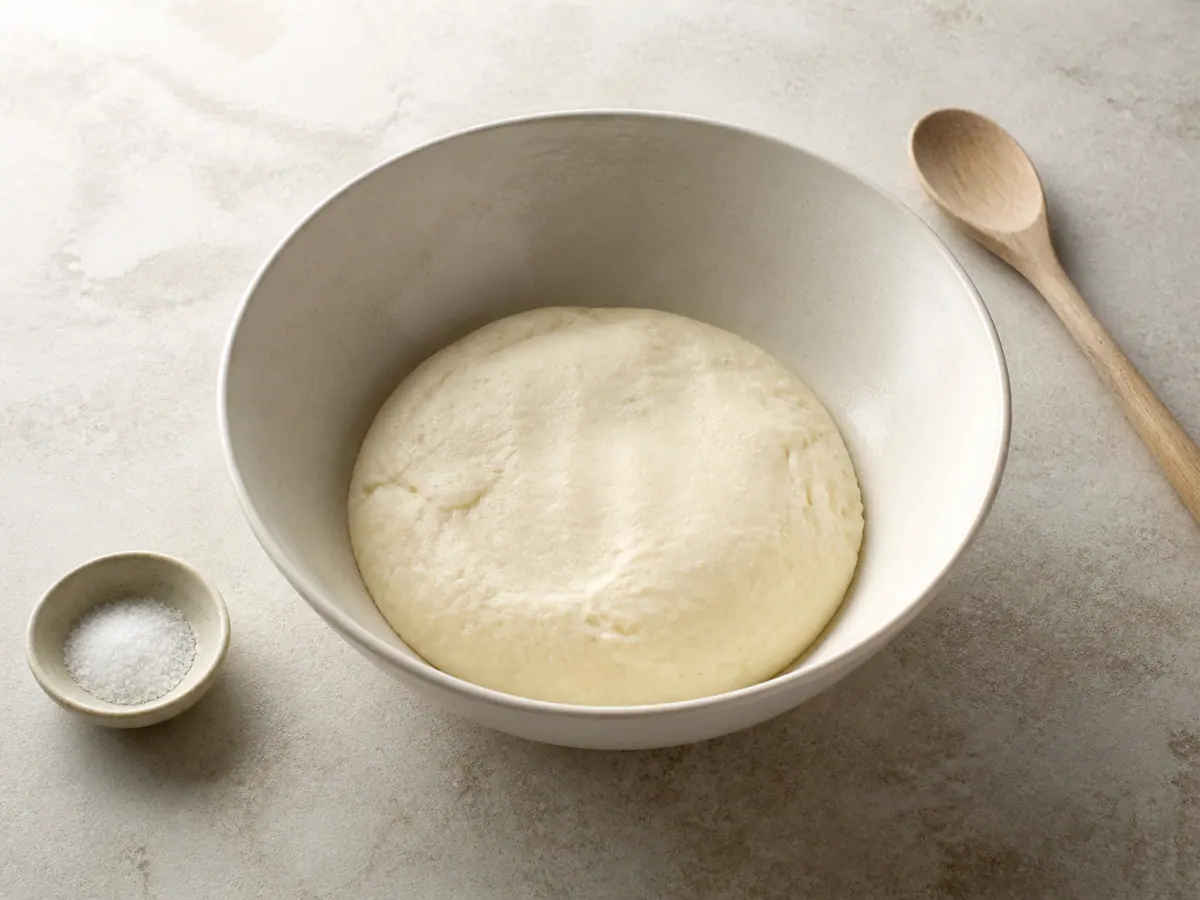
Pour 600 ml of warm water into a large bowl and dissolve 3 g of fine salt in it. Add 240 g of precooked white cornmeal in a steady stream while mixing with your fingers or a spoon. Knead briefly in the bowl until no dry pockets remain and the dough feels soft and moist without sticking. Let it stand for 5 minutes so the cornmeal hydrates fully.
05:00Shape the arepas
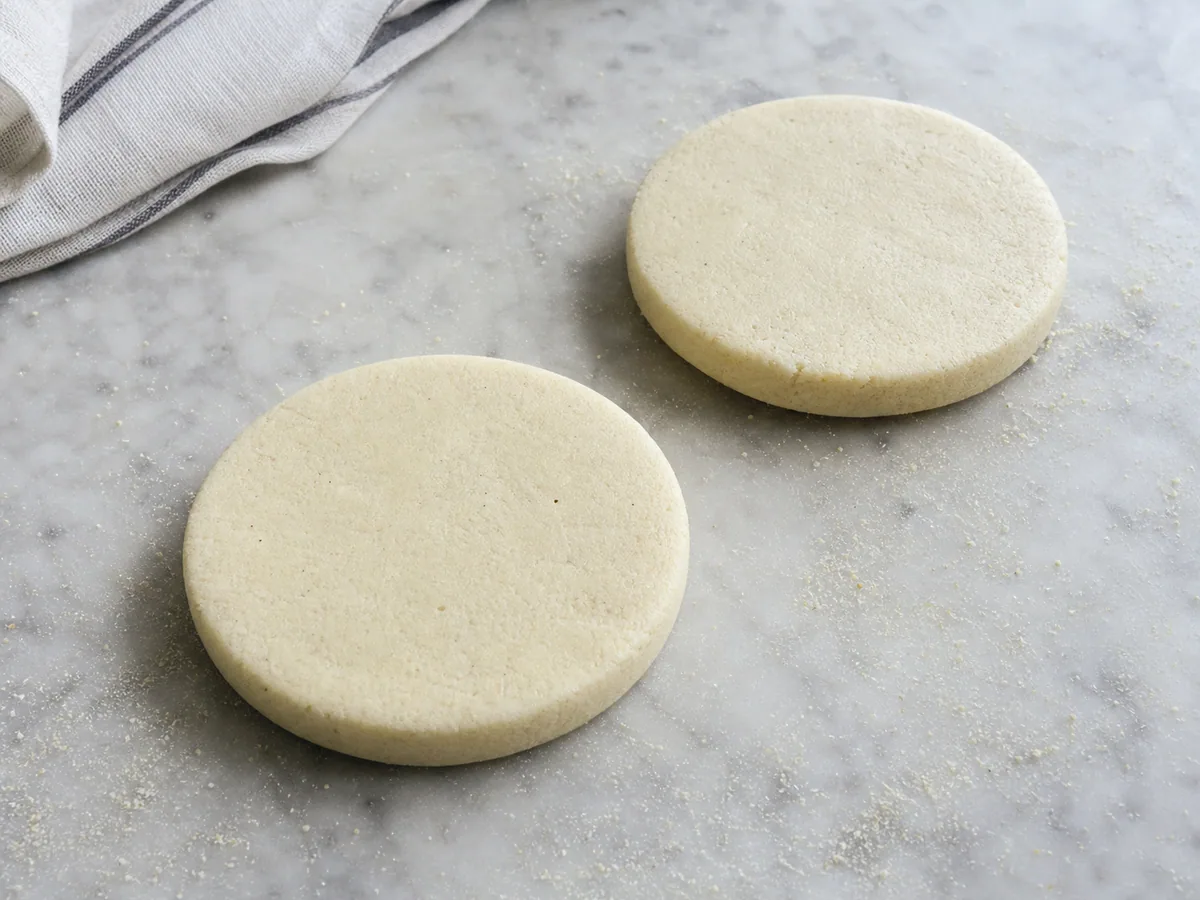
Divide the dough into two equal portions per serving. Roll each portion into a smooth ball, then flatten it into a disk about 9 cm (3 1/2 in) wide and 1.5 cm (5/8 in) thick. Smooth any edge cracks with damp fingertips. Keep every disk close to the same thickness so the centers cook at the same rate.
Griddle the arepas
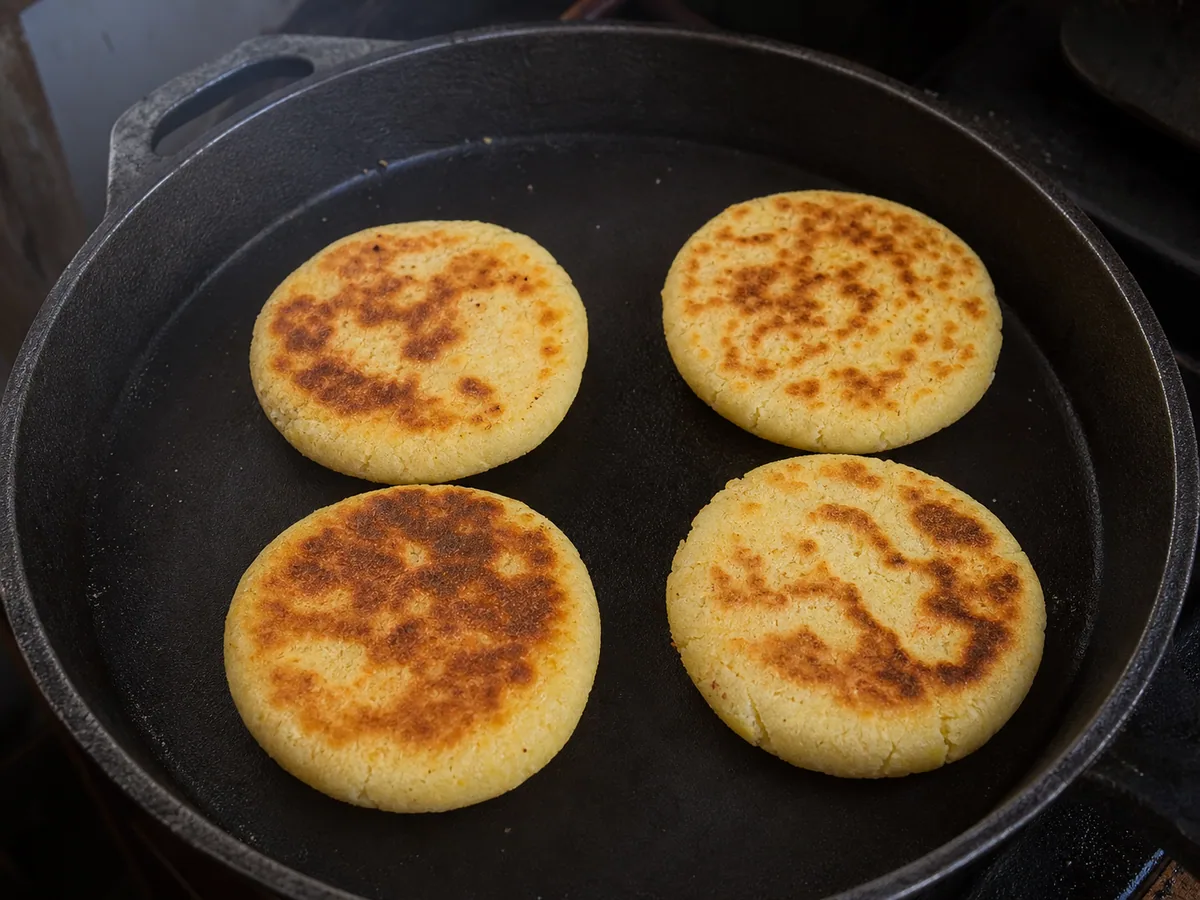
Heat a large cast-iron or other heavy skillet over medium-low heat. Brush the pan with 15 ml of neutral oil, then arrange the arepas in a single layer without crowding, working in batches if necessary. Cook each batch for 16 to 20 minutes total, turning several times for even browning, until both sides have deep golden patches, the edges feel firm and dry, and a tapped arepa sounds hollow. Use 16 minutes as the first doneness check; thicker arepas may need the full 20 minutes.
First check each batch: 16:00Split, fill, and serve
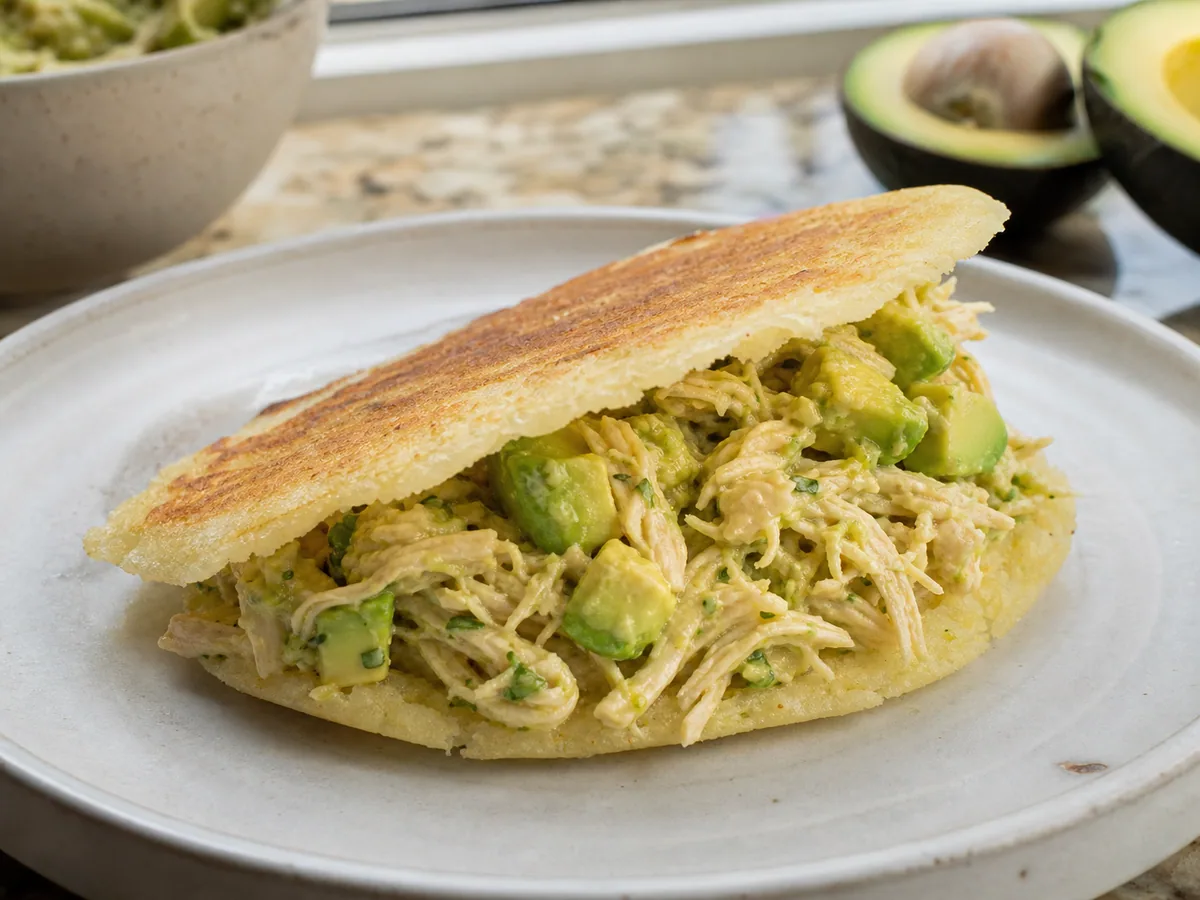
When the arepas are cool enough to handle, cut each one about three-quarters of the way around, leaving a hinge so it opens like a pocket. Gently separate the tender interior without tearing through the crust, then spoon in the chicken-avocado filling. Serve immediately while the shells are crisp and the filling is creamy.


Smart Substitutions
- No white cornmeal? Use yellow precooked cornmeal made for arepas. Do not substitute masa harina, polenta, or ordinary raw cornmeal; they absorb water and cook differently.
- Prefer chicken thighs? Use boneless skinless thighs and cook them to at least 74°C/165°F before shredding.
- No mayonnaise? Use plain full-fat Greek yogurt for a tangier filling, noting that it adds dairy.
- No cilantro? Use flat-leaf parsley for a clean herbal finish.
Tips and Variations
- Dampen your fingertips before smoothing the patties; wet fingers close small cracks without making the dough sticky.
- Use medium-low heat rather than rushing the crust. The slower cook gives the center time to become tender before the outside gets too dark.
- Fill the arepas only when you are ready to serve so the contrast between crisp shell and creamy filling stays clear.
What Went Wrong?
- Dough cracks deeply Knead in warm water a teaspoon at a time until the edges smooth without crumbling.
- Arepas brown before the centers cook Lower the heat and continue turning them until the edges are firm and they sound hollow when tapped.
- Centers feel gummy Cook the arepas a few minutes longer over medium-low heat; very thick disks need extra time for moisture to move through the crumb.
- Filling turns loose Use ripe but not watery avocados, let heavy steam escape from the shredded chicken, and fold rather than vigorously stirring.
Nutrition Estimate
- Fiber: 10 g per serving
- Sodium: 630 mg per serving
Nutrition disclaimer:This recipe is provided for general cooking information only. Nutrition values are estimates and may vary by ingredients, brands, preparation methods, and serving sizes. Check ingredient labels and follow appropriate food-safety practices. This content is not medical, dietary, allergy, or professional food-safety advice.
FAQ
Found an error or have a suggestion?
Help us improve this recipe. Send us your feedback and include the recipe name so we can take a look.