Method
Mix and rest the dough
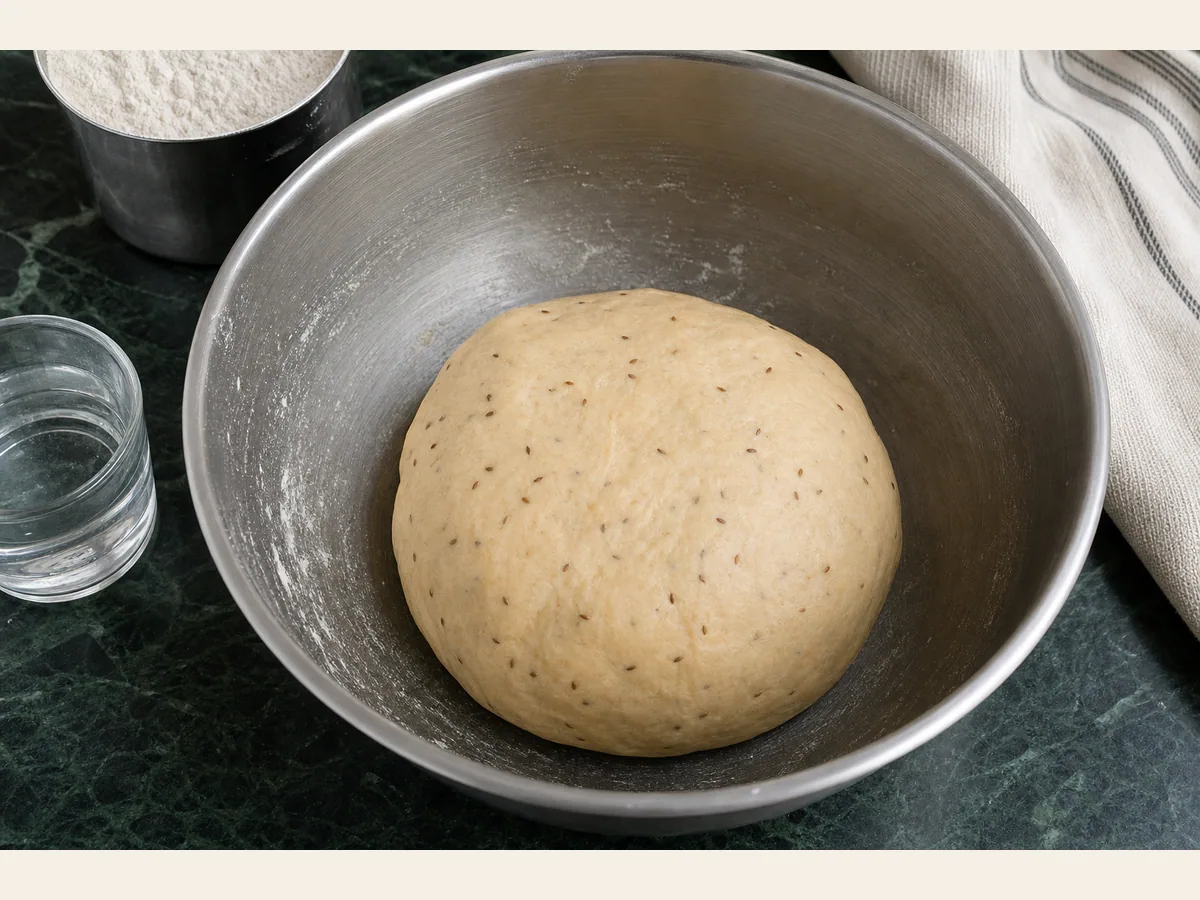
Whisk 250 g of all-purpose wheat flour, 2 g of fine sea salt for dough, and 2 g of ajwain seeds in a wide bowl. Add 45 ml of neutral oil for dough and rub it through the flour with your fingertips for 2 to 3 minutes, until the mixture looks sandy and holds together when squeezed. Pour in 105 ml of cold water gradually and knead for 4 to 5 minutes to make a firm, smooth dough; it should feel stiffer than bread dough, not sticky. Cover with a clean towel and let it rest for 30 minutes.
30:00Cook and dry the potatoes
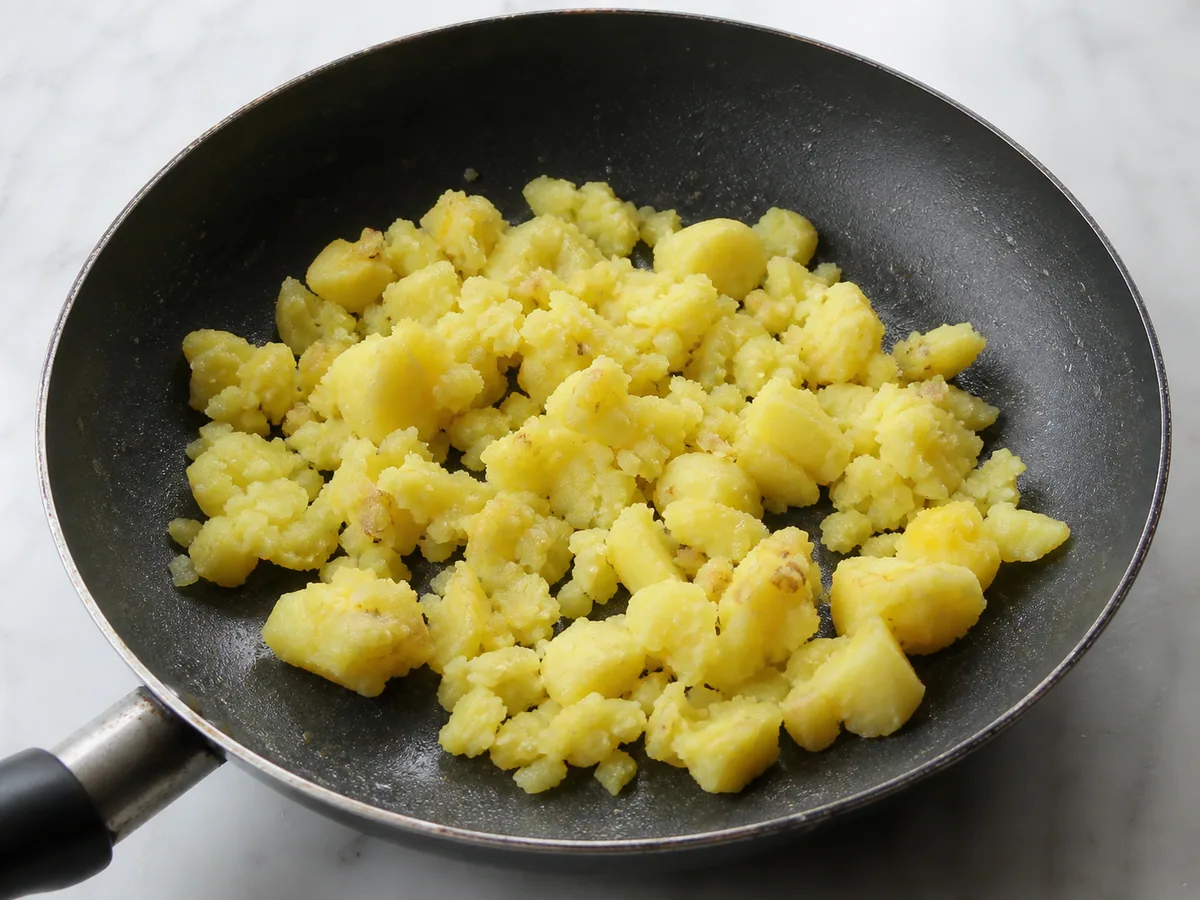
Peel 450 g of Yukon Gold potatoes and cut them into 2 cm (3/4 in) chunks. Put the chunks in a saucepan, cover with cool water, and bring to a boil. Lower the heat and simmer for 10 to 12 minutes, until a knife slides through with little resistance. Drain thoroughly, return the potatoes to the warm pan for 1 minute to release excess steam, then crush them into rough, bite-size pieces rather than a smooth mash.
10:00Build the spiced vegetable filling
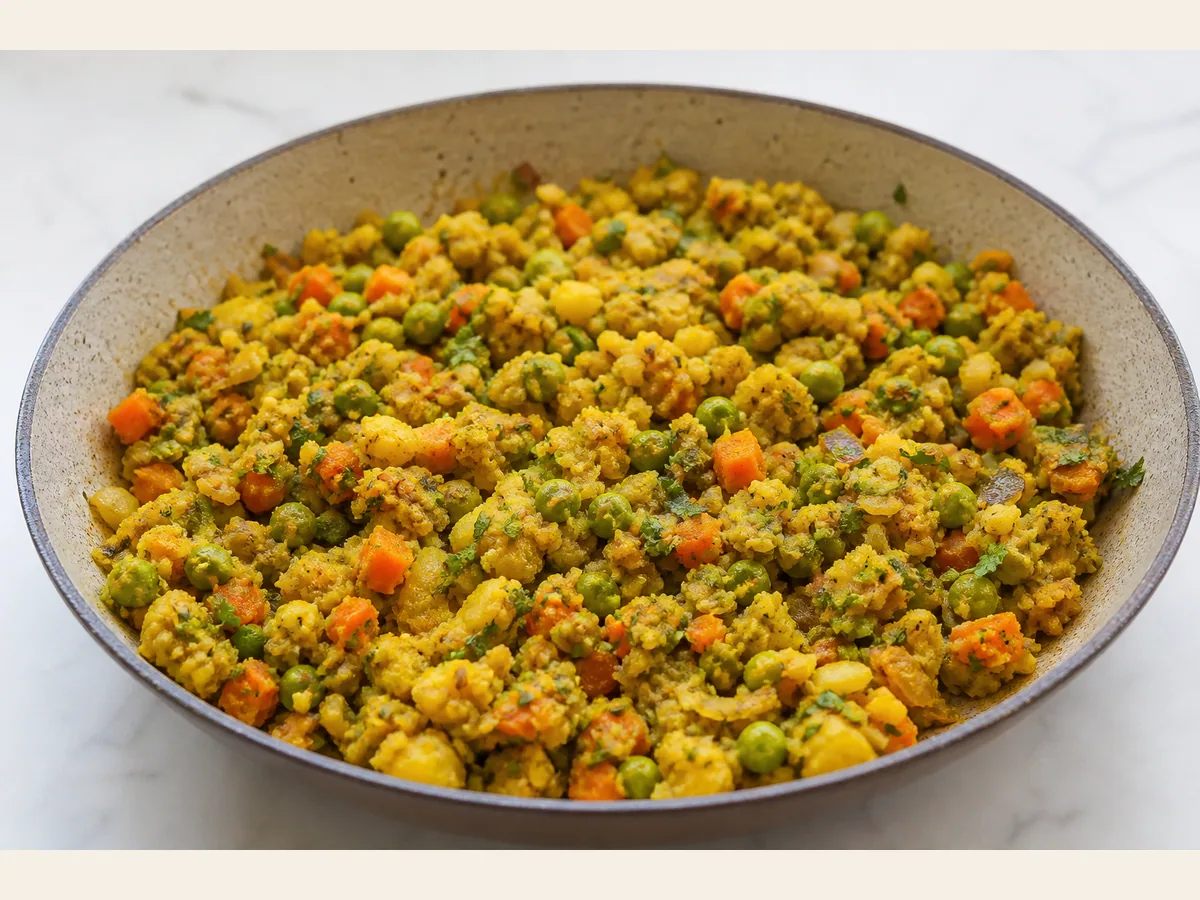
Cut 120 g of medium yellow onion and 100 g of carrots into small dice. Peel and grate 15 g of fresh ginger, finely chop 1 green chile, and chop 15 g of fresh cilantro. Heat 15 ml of neutral oil for filling in a wide skillet over medium heat. Add 3 g of cumin seeds and cook for about 30 seconds, until aromatic. Add 120 g of medium yellow onion and cook for 5 to 6 minutes, stirring often, until soft with lightly golden edges. Stir in 15 g of fresh ginger and 1 green chile for 1 minute. Add 100 g of carrots and cook for 4 minutes, then add 120 g of green peas, 4 g of ground coriander, 3 g of garam masala, 1 g of ground turmeric, and 4 g of fine sea salt for filling. Fold in the crushed potatoes and cook for 2 to 3 minutes, pressing out any wet pockets, until the filling is dry and cohesive. Remove from the heat, stir in 15 ml of fresh lemon juice and 15 g of fresh cilantro, and spread the filling on a plate to stand for 10 minutes, until barely warm.
10:00Roll, fill, and seal the samosas
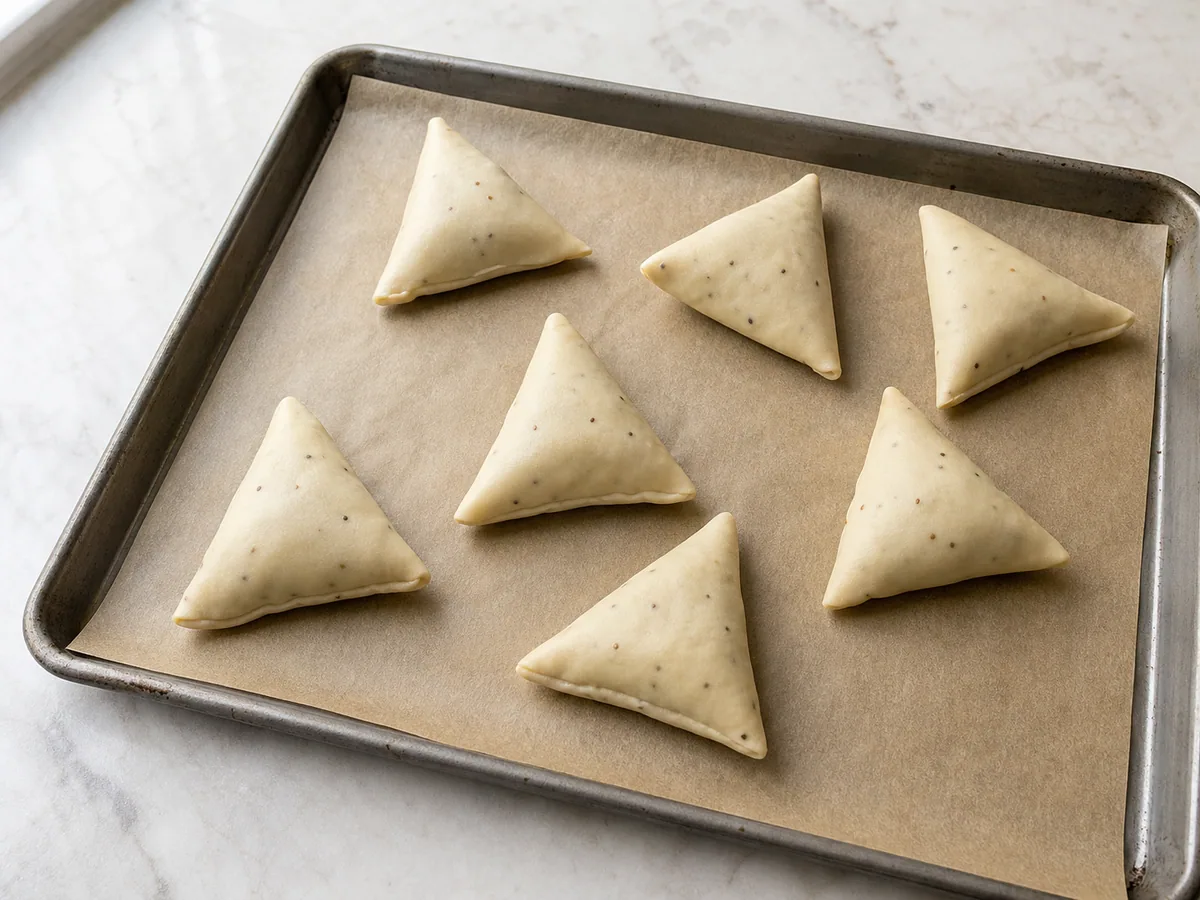
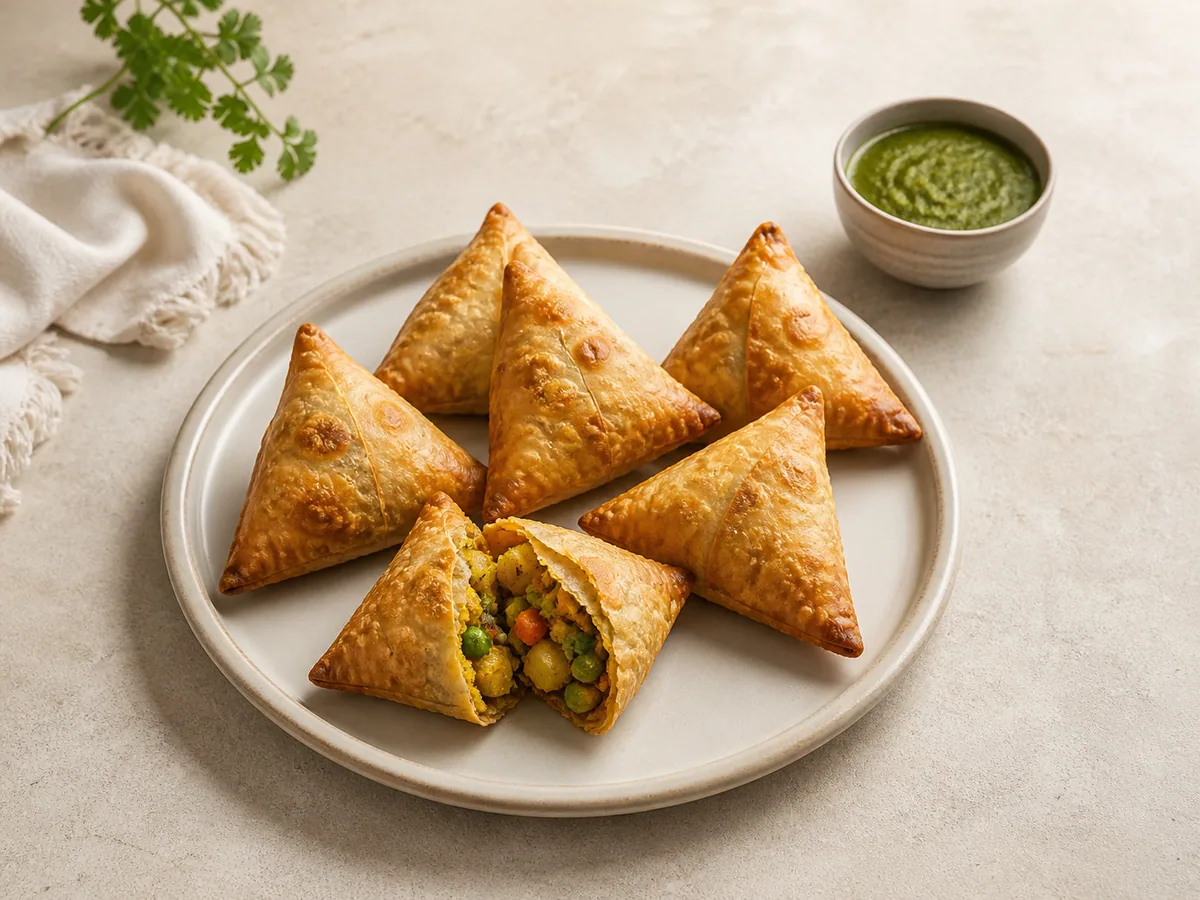
Heat the oven to 200°C (400°F) and line one or more large baking sheets with parchment, as needed to hold the samosas without crowding. Divide the dough into one piece for every two samosas, allowing three samosas per serving, and divide the filling into one equal portion for each samosa. Keep unused dough pieces covered. Roll each dough piece into a thin 15 cm (6 in) circle and cut it in half. Lightly brush one straight edge with 15 ml of water for sealing, overlap the straight edges to form a cone, and press the seam firmly. Add one portion of filling, leaving a 1 cm (1/2 in) clean rim. Moisten the rim with 15 ml of water for sealing, pinch it closed, and set the samosa seam-side down. Repeat with the remaining dough and filling. If the scaled batch requires more than one sheet, bake in batches or rotate the sheet positions for even browning.
Brush and bake until crisp
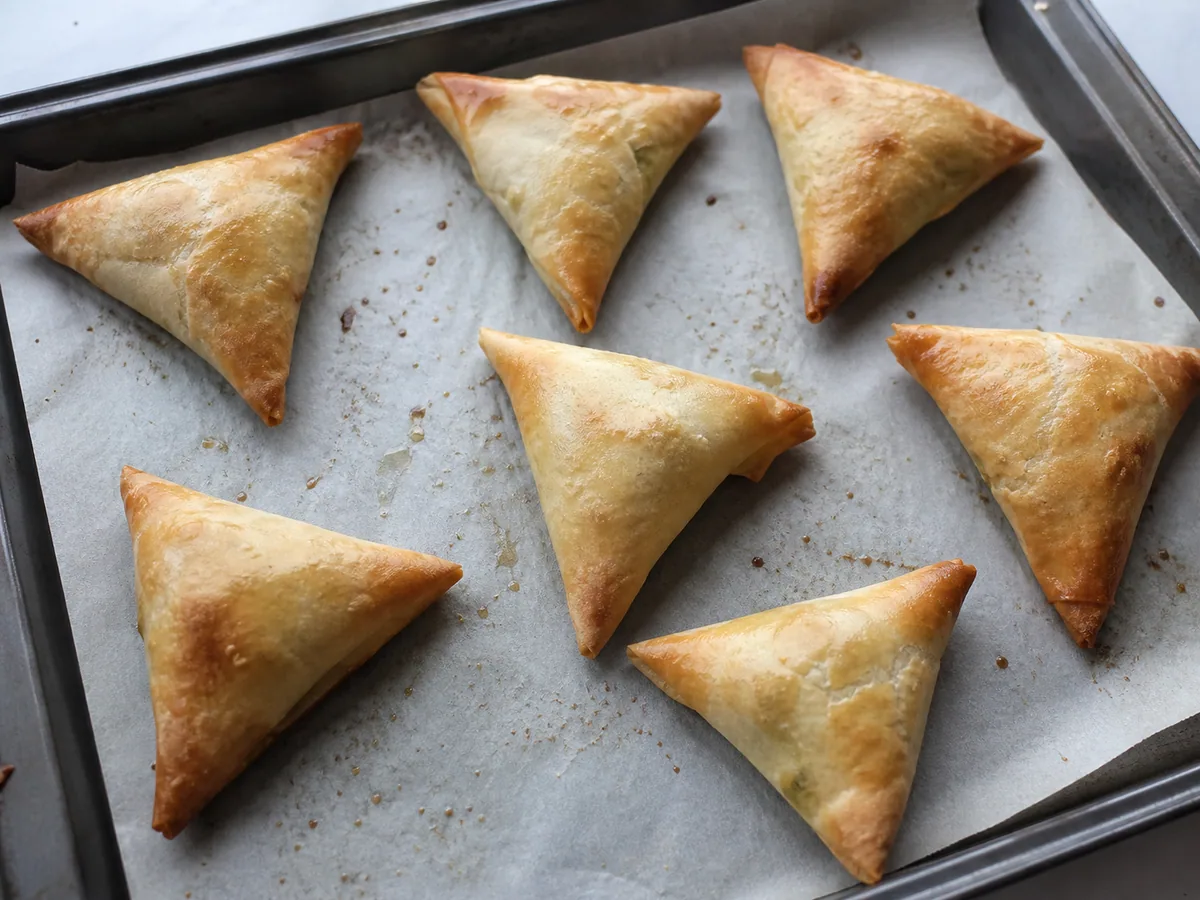
Arrange the samosas on the prepared sheet or sheets with space between them and brush all exposed pastry with 15 ml of neutral oil for brushing. Bake for 25 to 30 minutes, rotating each sheet after 15 minutes and, when using more than one sheet, swapping their oven positions, until the pastry is deeply golden, dry to the touch, and crisp along the seams. Start checking at 25 minutes and continue baking if pale patches remain. Let the samosas stand for 5 minutes, then serve warm with mint chutney (optional).
25:00


Smart Substitutions
- No ajwain? Use nigella seeds for a different aromatic edge, or omit the seeds and keep the cumin in the filling.
- No green peas? Use finely cut green beans or shelled edamame in the same weight.
- No fresh cilantro? Use fresh mint for a cooler flavor or flat-leaf parsley for a milder finish.
- Prefer less heat? Omit the green chile; the ginger and garam masala will still give the filling plenty of warmth.
Tips and Variations
- Rub the oil into the flour until a squeezed handful holds its shape; this is what helps the baked crust turn crisp rather than chewy.
- Keep the filling coarse and dry. Distinct potato pieces give the center better texture, while excess moisture weakens the seams.
- Press each seam twice: once when forming the cone and again after filling. A clean, firmly pinched edge is less likely to open in the oven.
What Went Wrong?
- Dough cracks while rolling Knead it briefly with damp fingertips, cover it, and let it relax for 5 minutes before trying again.
- Samosas open during baking Use less filling, wipe stray filling from the rim, and press the moistened seam firmly from end to end.
- Pastry stays pale Brush every surface lightly with oil and keep baking in 3-minute intervals until the color is evenly golden.
- Bases turn soft Cook the filling until dry, leave space between the samosas, and use parchment on a metal baking sheet so heat reaches the bottoms.
Nutrition Estimate
- Fiber: 8 g per serving
- Sodium: 645 mg per serving
Nutrition disclaimer:This recipe is provided for general cooking information only. Nutrition values are estimates and may vary by ingredients, brands, preparation methods, and serving sizes. Check ingredient labels and follow appropriate food-safety practices. This content is not medical, dietary, allergy, or professional food-safety advice.
FAQ
Found an error or have a suggestion?
Help us improve this recipe. Send us your feedback and include the recipe name so we can take a look.