Method
Make and cool the syrup
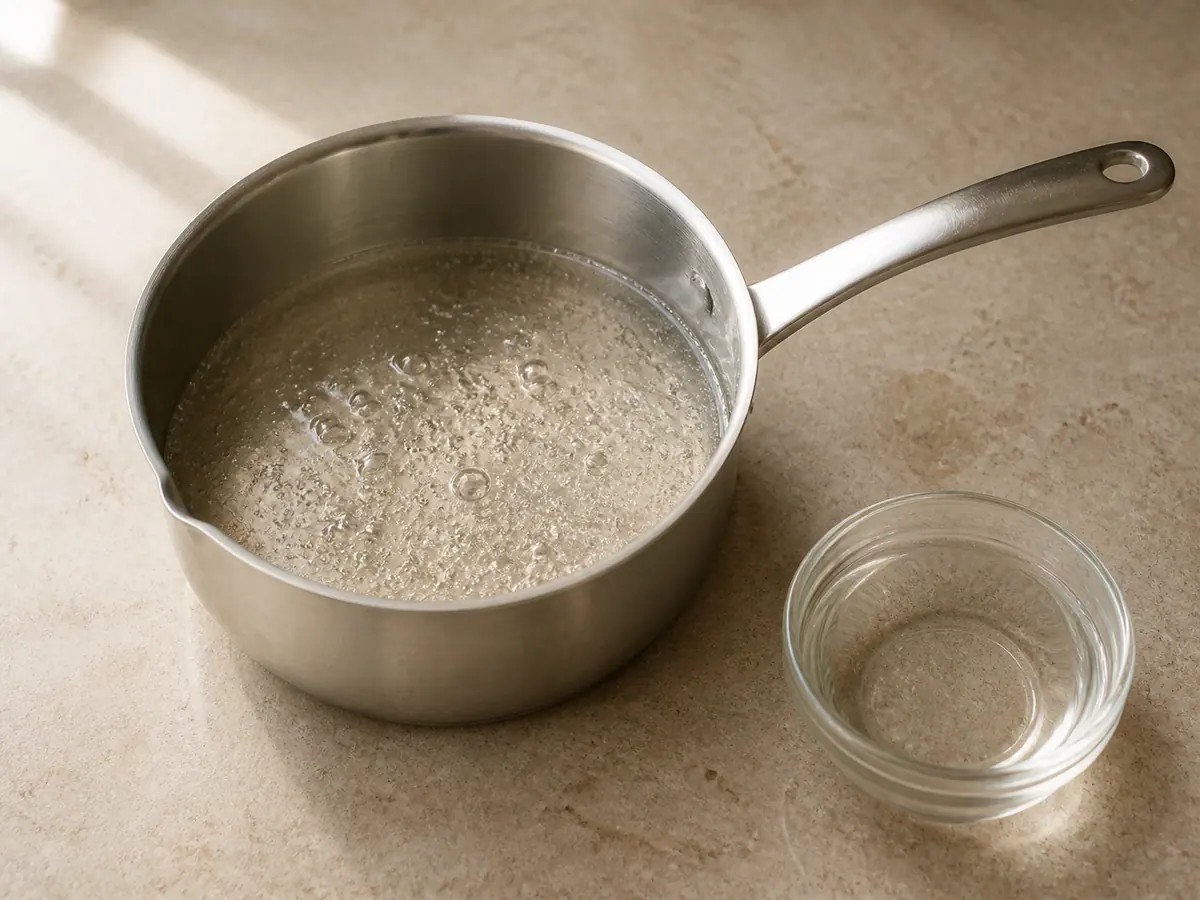
Combine 250 g of granulated sugar and 200 ml of water in a small saucepan over medium heat. Stir just until the sugar dissolves. When the mixture reaches a gentle boil, add 15 ml of fresh lemon juice, stop stirring, and simmer for 8 minutes; the syrup should remain clear and pourable rather than thick. Remove it from the heat and let it cool until it no longer feels warm.
08:00Prepare the pan, phyllo, and pistachios
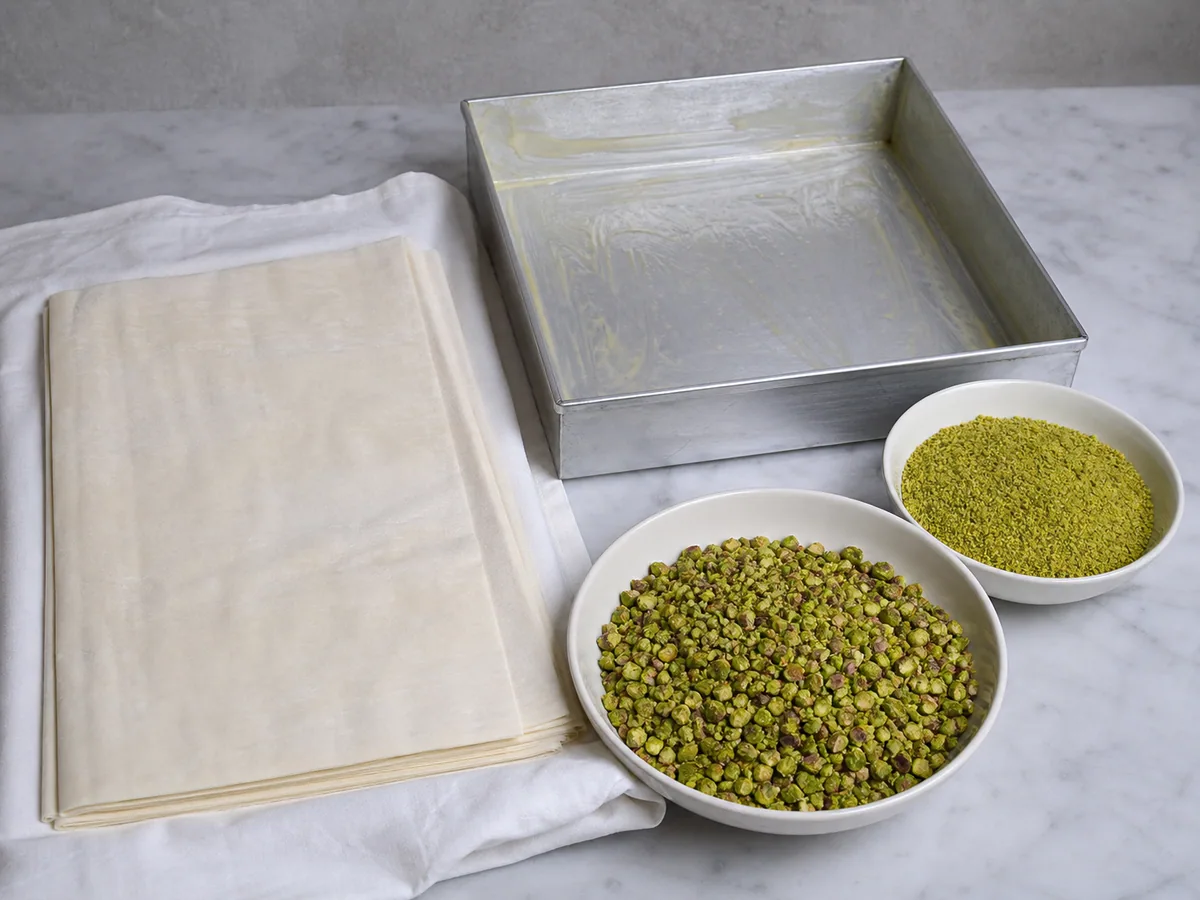
Heat the oven to 175°C (350°F). Use a 20 x 20 cm (8 x 8 in) metal baking pan (for 8 servings); for a scaled batch, choose a pan that keeps the pastry at a similar depth. Unroll 250 g of phyllo dough (wheat) on a clean work surface and keep it covered with plastic wrap beneath a barely damp towel so the sheets stay flexible. Pulse 180 g of shelled unsalted Antep pistachios for filling to coarse crumbs, stopping before they become oily, and grind 20 g of shelled unsalted Antep pistachios for garnish more finely in a separate batch.
Build the phyllo and pistachio layers
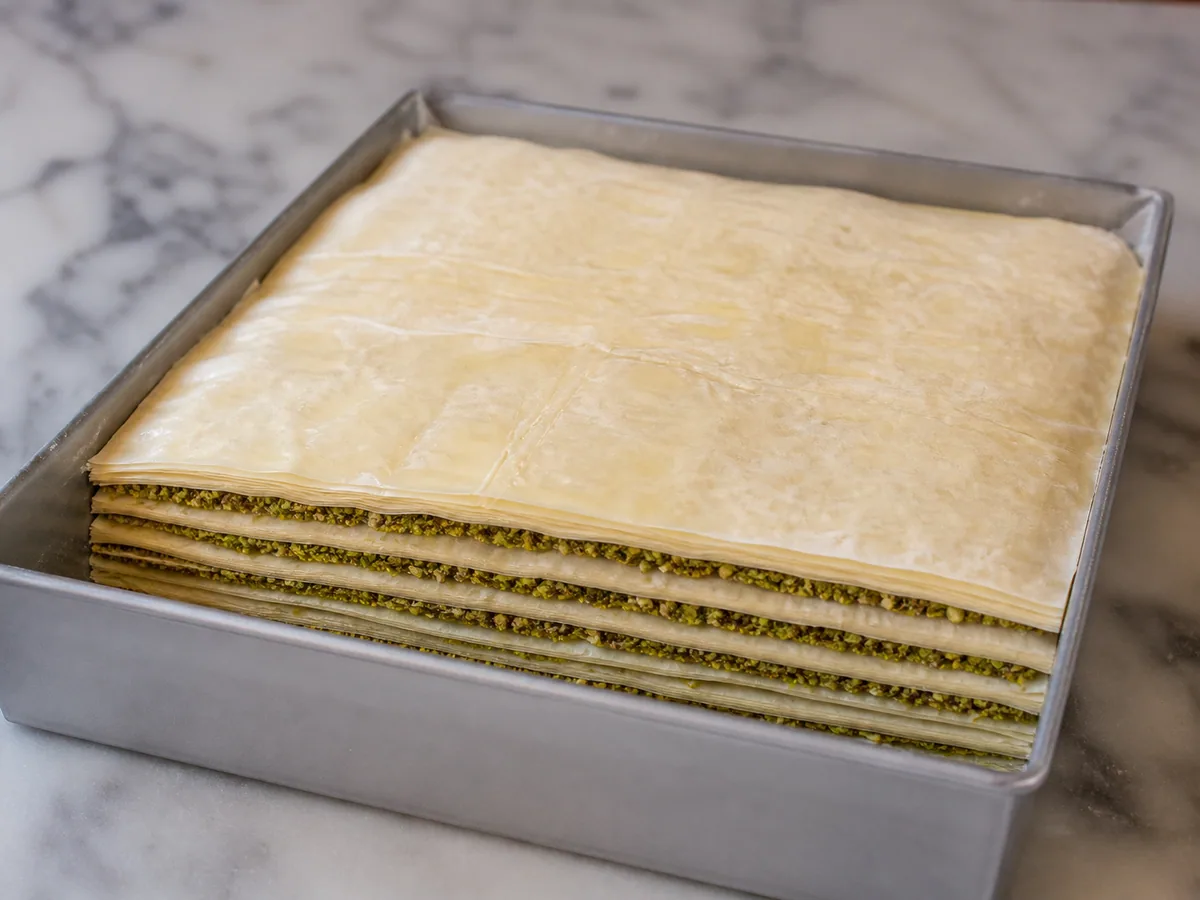
Place 140 g of ghee (clarified butter) beside the pan. Brush a thin film over the base and sides, then fit in one phyllo sheet, folding or trimming it neatly as needed. Brush the sheet lightly with ghee and repeat until roughly half of 250 g of phyllo dough (wheat) is in the pan. Spread 180 g of shelled unsalted Antep pistachios for filling evenly from edge to edge without pressing it down. Add the remaining phyllo one sheet at a time, brushing each layer lightly, then brush the top so no dry patches remain. Avoid puddles of ghee, which can weigh down the layers.
Cut and bake until deeply golden
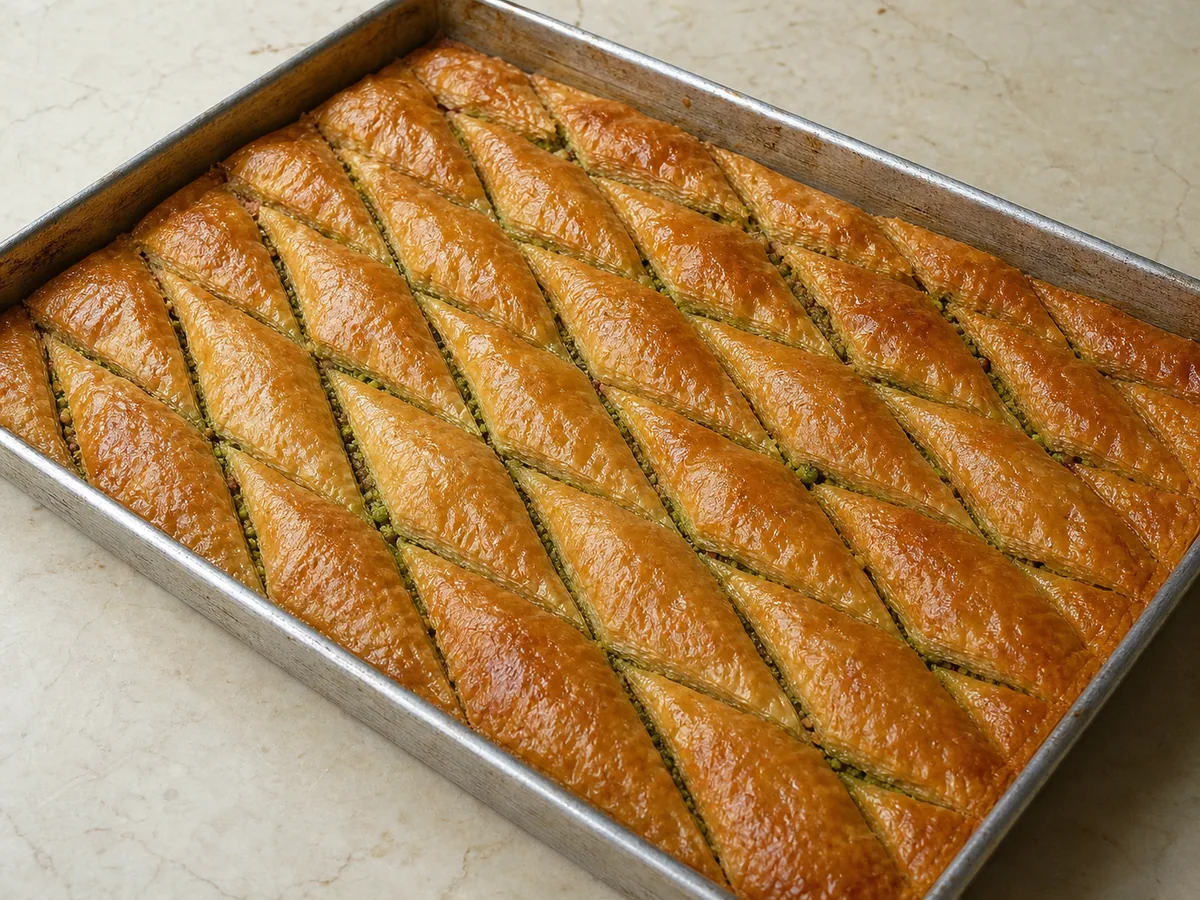
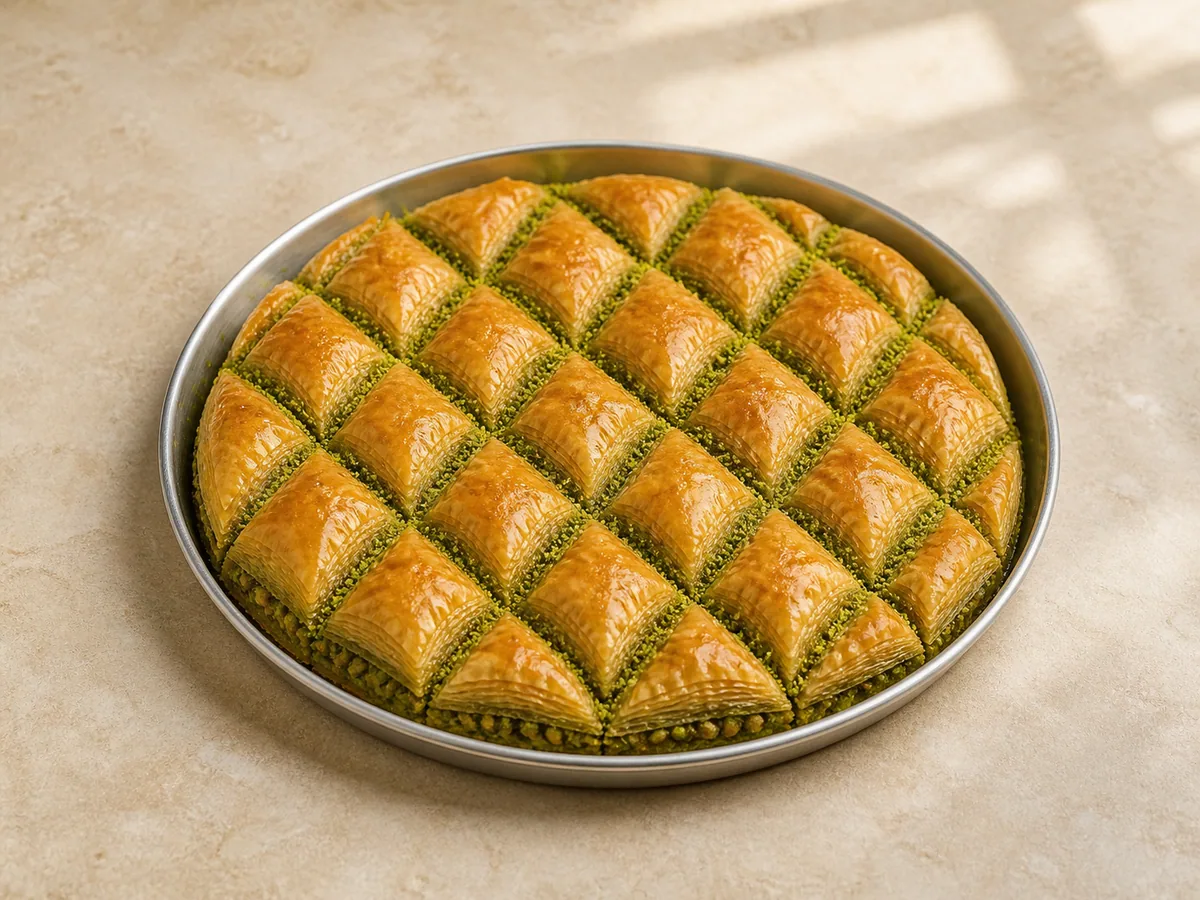
Use a sharp thin knife to cut all the way through the pastry into small diamonds or squares, aiming for about two pieces per serving. Bake on the center rack for 40 to 50 minutes. Begin checking at 40 minutes: the top should be a deep even gold and the cuts should look dry rather than doughy. Use the tip of a thin knife or a small offset spatula to lift one cut edge slightly; the center layers should look separated and crisp rather than pale or compressed. If the surface colors too quickly, shield it loosely with foil while the lower layers finish.
40:00Add the syrup and let the layers settle
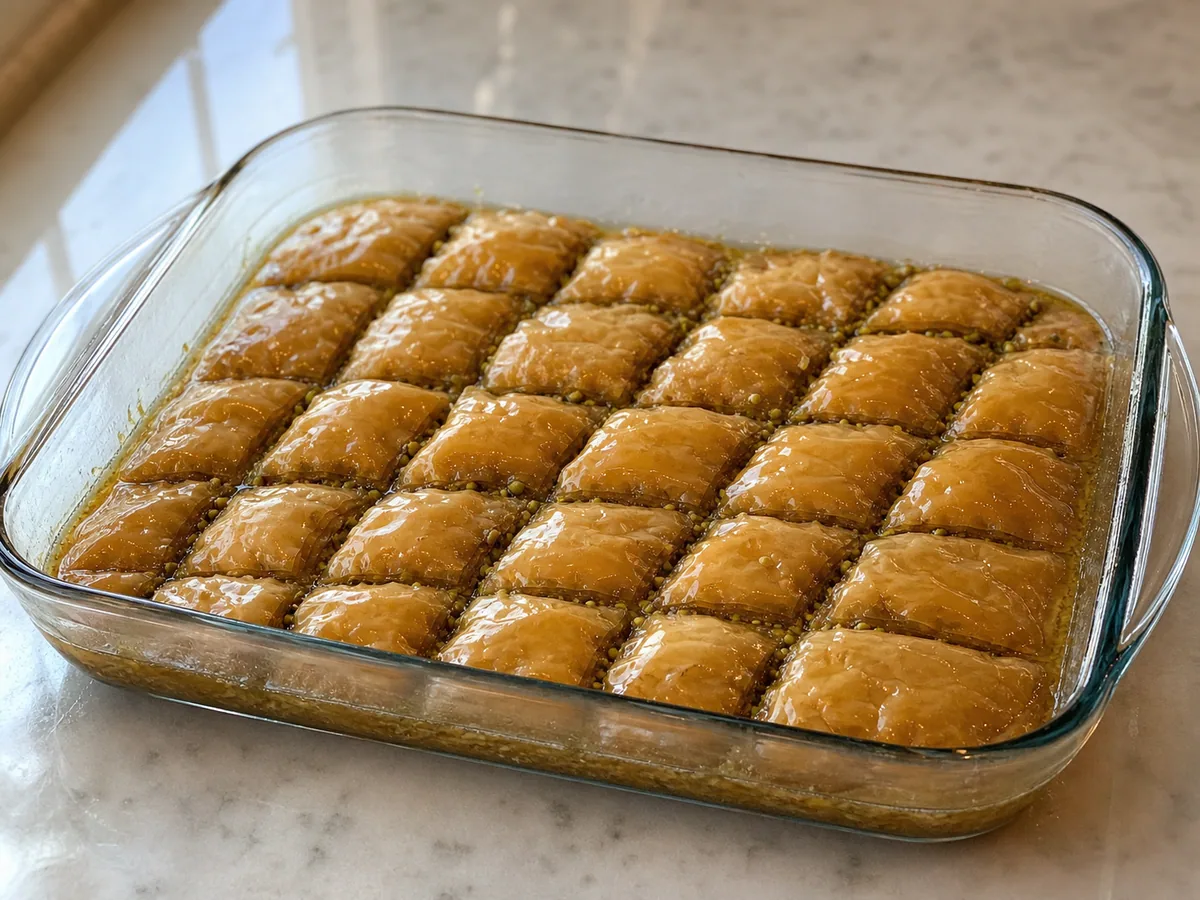
Set the hot pan on a heatproof surface. Slowly pour the cooled syrup over the pastry, directing it along the cut lines and around the edges; a lively sizzle is expected. Let the baklava stand uncovered at room temperature for 2 hours, until the syrup has settled into the lower layers and the top feels crisp rather than wet.
2:00:00Finish and serve
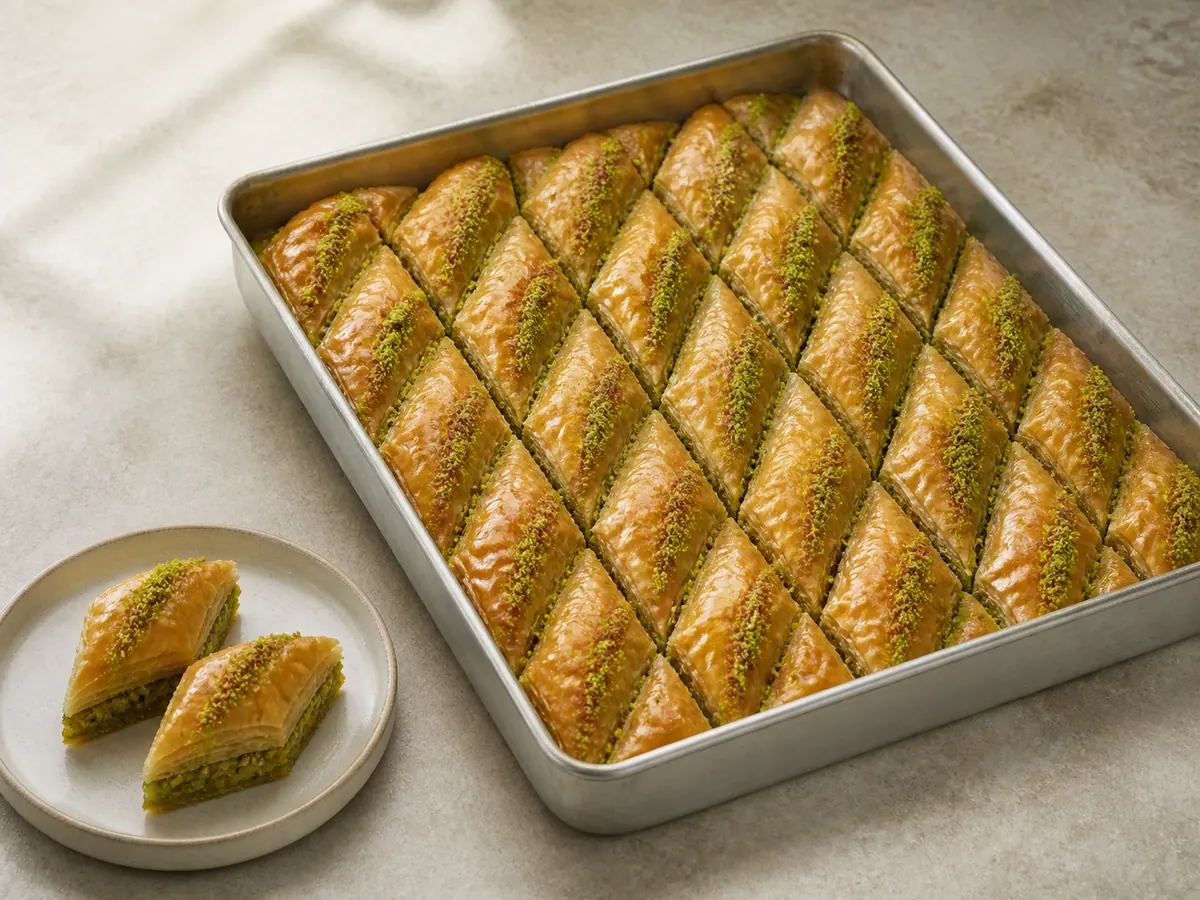
Run the knife through the original cuts once more, then scatter 20 g of shelled unsalted Antep pistachios for garnish along the center of each piece. Lift out the baklava carefully with a small offset spatula and serve at room temperature.


Smart Substitutions
- No Antep pistachios? Use fresh unsalted pistachio kernels from another region. The flavor will still be rich, though the green color may be softer.
- No prepared ghee? Clarify unsalted butter, leave the milk solids behind, and measure the clear butterfat before layering the pastry.
- Phyllo sheets do not fit the pan? Trim them with kitchen scissors or fold the edges flat. Keep the layers even and avoid thick bunches at the corners.
- No fresh lemon? Use the same amount of fresh lime juice for acidity; its flavor will be slightly more pronounced.
Tips and Variations
- Keep the unused phyllo covered every time you lift a sheet; exposed edges become brittle within minutes.
- Pulse the filling pistachios in short bursts so the pieces stay distinct and do not turn into pistachio paste.
- Bake for color, not just time. A pale top usually means the inner phyllo has not yet developed its full crispness.
What Went Wrong?
- Phyllo tears while layering Lay the torn pieces flat and cover them with the next sheet. Small breaks disappear once the layers bake together.
- Baklava turns heavy or greasy Brush thinner coats of ghee and remove any puddles before adding the next sheet.
- Syrup crystallizes Stir only until the sugar dissolves, then leave the pan undisturbed once boiling begins. Lemon juice helps keep the syrup smooth.
- Top is crisp but lower layers are soft Bake until the cut edges look dry and deeply golden. A metal pan and a fully preheated oven improve heat transfer to the base.
Nutrition Estimate
- Fiber: 3 g per serving
- Sodium: 155 mg per serving
Nutrition disclaimer:This recipe is provided for general cooking information only. Nutrition values are estimates and may vary by ingredients, brands, preparation methods, and serving sizes. Check ingredient labels and follow appropriate food-safety practices. This content is not medical, dietary, allergy, or professional food-safety advice.
FAQ
Found an error or have a suggestion?
Help us improve this recipe. Send us your feedback and include the recipe name so we can take a look.