Method
Char the eggplants
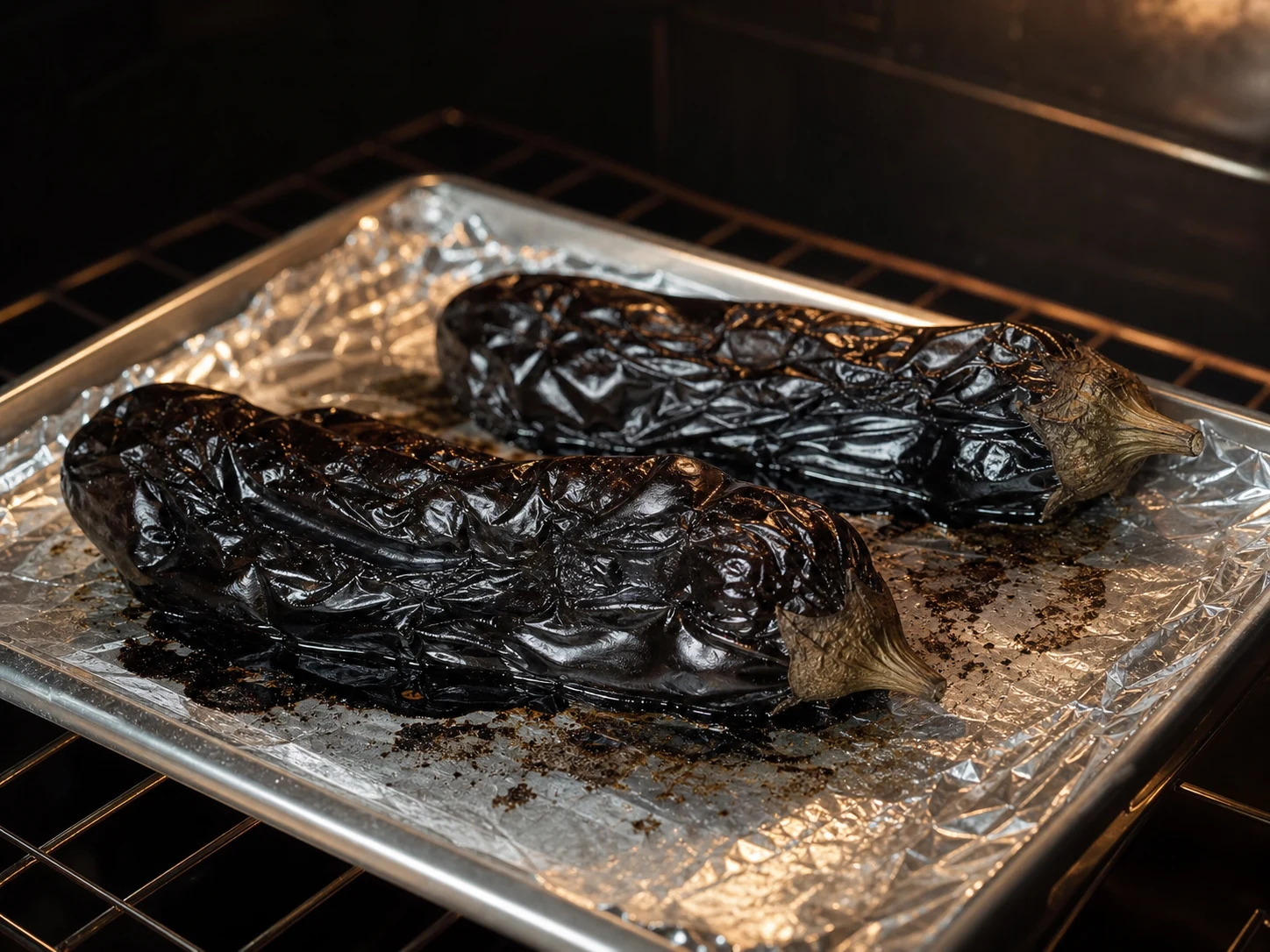
Position an oven rack about 15 cm (6 in) below the broiler and heat the broiler to 250°C (480°F), or its highest setting. Prick 900 g of eggplants all over with a fork and arrange them on a foil-lined rimmed tray. Broil for 25 to 35 minutes, turning every 8 to 10 minutes, until the skins are blackened on every side and the flesh has collapsed; set the timer for the first check at 25 minutes. While the eggplants broil, proceed with preparing and browning the beef.
25:00Prepare the beef safely
While the eggplants broil, use a cutting board reserved for raw meat to cut 600 g of beef chuck into 3 cm (1 1/4 in) cubes and pat the pieces dry with paper towels. Wash your hands, knife, cutting board, and any surface touched by raw beef with hot, soapy water before preparing the vegetables.
Brown the beef
Heat 15 ml of olive oil in a heavy Dutch oven over medium-high heat until shimmering. Add the prepared beef in two batches so the pieces sit in a single layer. Brown for 8 to 10 minutes total, about 4 to 5 minutes per batch, turning to color several sides; begin checking at 8 minutes, then transfer the beef to a clean plate. Avoid crowding the pot, which traps steam and prevents a dark crust.
08:00Build and braise the beef stew
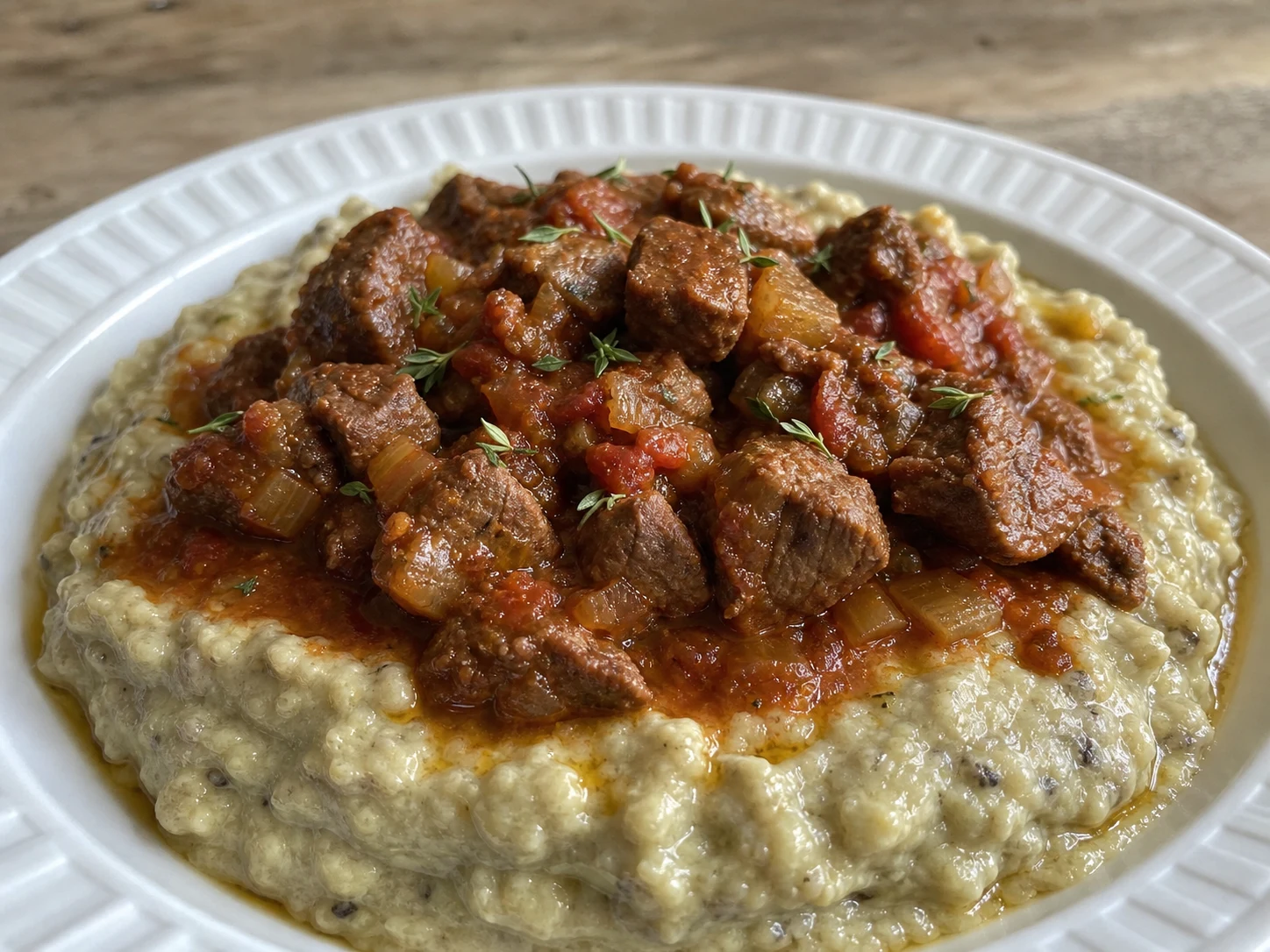
Cut 180 g of yellow onion into small dice. Reduce the heat to medium, add it to the Dutch oven, and cook for 6 to 8 minutes, scraping up the browned layer, until soft and lightly golden. Mince 4 garlic cloves, add it with 30 g of tomato paste, 3.6 g of Morton coarse kosher salt for stew, 1/2 g of black pepper for stew, 2 g of sweet paprika, and 1 g of dried thyme, and stir for 1 minute until fragrant. Add 240 g of crushed tomatoes and 360 ml of water, return the beef and its juices, and bring to a simmer. Partially cover, reduce the heat to low, and simmer gently for 60 to 75 minutes. Set the timer for the first check at 60 minutes; the beef should be fork-tender, with no raw or pink center, and a food thermometer inserted into the largest piece must read at least 74°C/165°F before serving. While the beef braises, peel and drain the charred eggplant and complete the purée in the next four steps.
60:00Peel and drain the eggplant
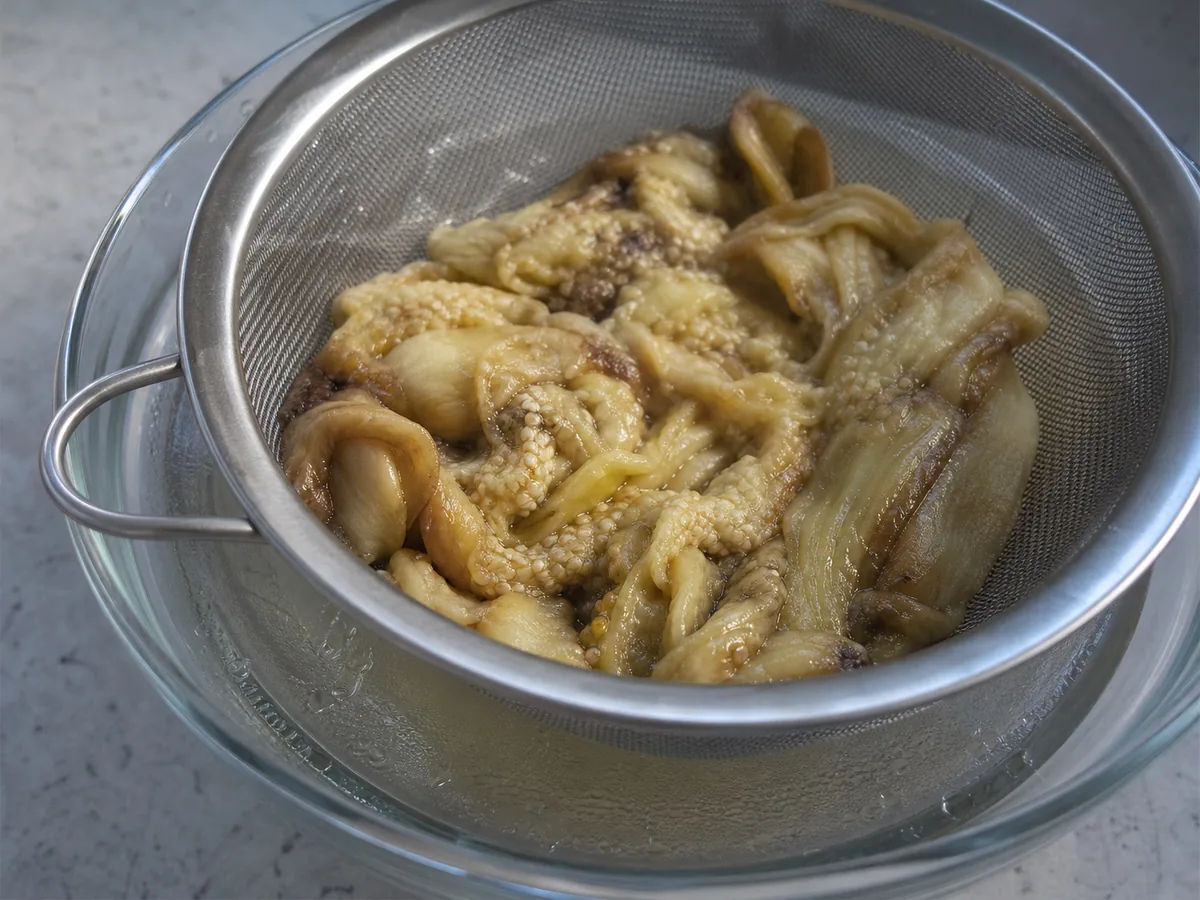
When the charred eggplants are cool enough to handle, split them lengthwise and scoop the soft flesh into a fine-mesh sieve, leaving the black skins behind. Stir in 15 ml of lemon juice, then let the flesh drain over a bowl for 10 minutes. Press only lightly; removing excess liquid keeps the finished purée creamy rather than loose.
10:00Cook the butter and flour base
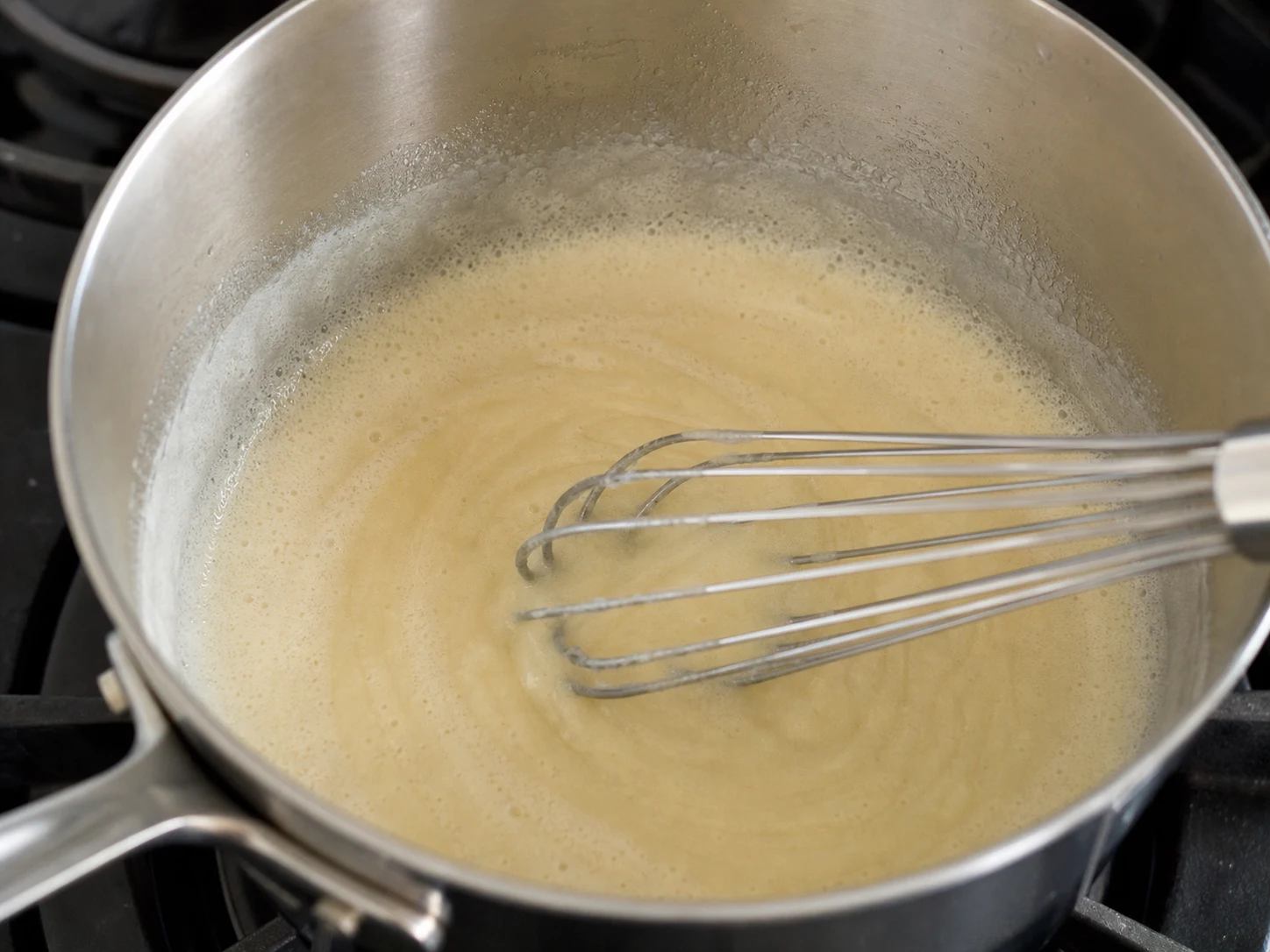
Melt 30 g of unsalted butter in a wide saucepan over medium-low heat. Add 30 g of all-purpose flour and whisk continuously for 2 minutes, until the mixture is smooth and foamy but remains pale. Do not let it brown, because the eggplant purée should keep its soft ivory color.
02:00Thicken the milk sauce
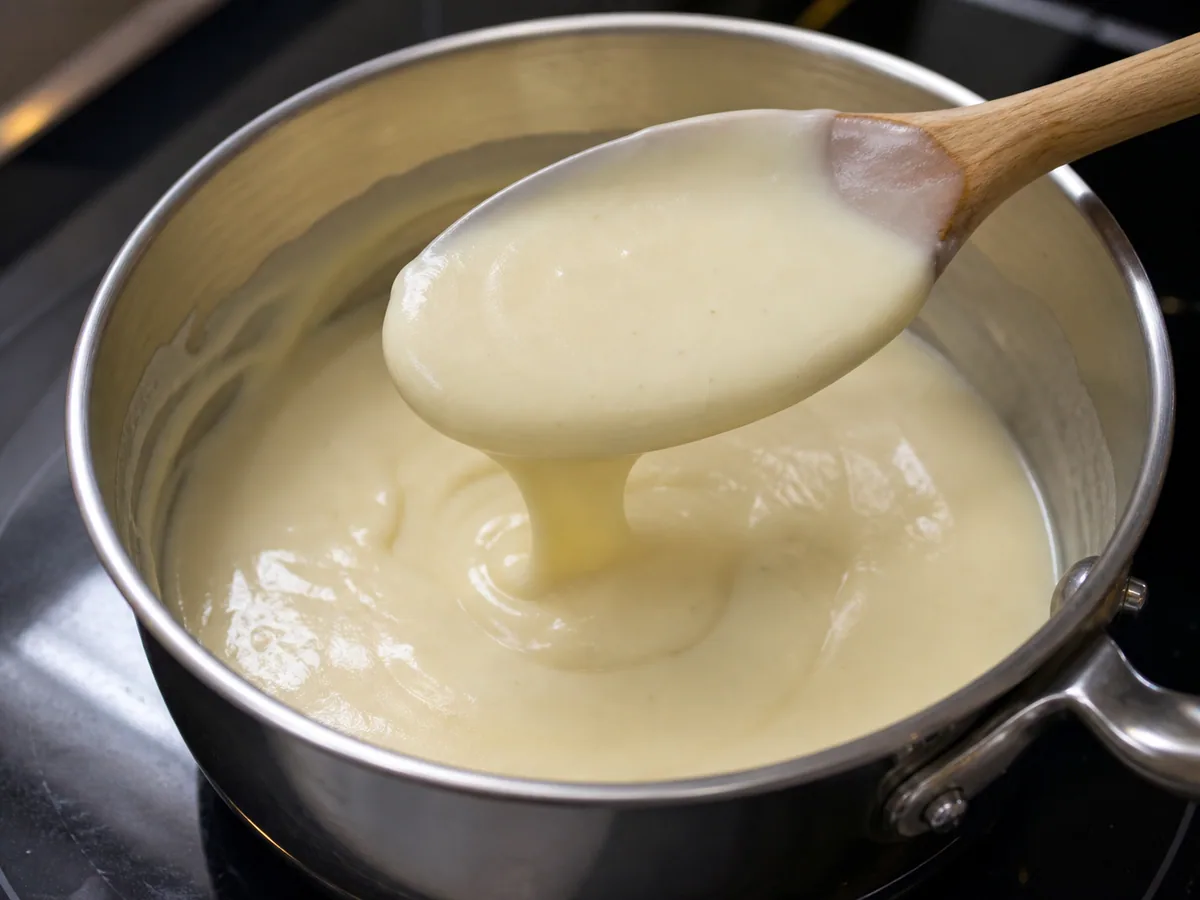
Whisk in 420 ml of whole milk gradually, adding each splash only after the previous one is smooth. Raise the heat to medium and cook for 4 to 6 minutes, whisking often, until the sauce coats the back of a spoon and a line drawn through it stays clear. Lower the heat if the bottom begins to catch.
04:00Finish the smoked eggplant purée
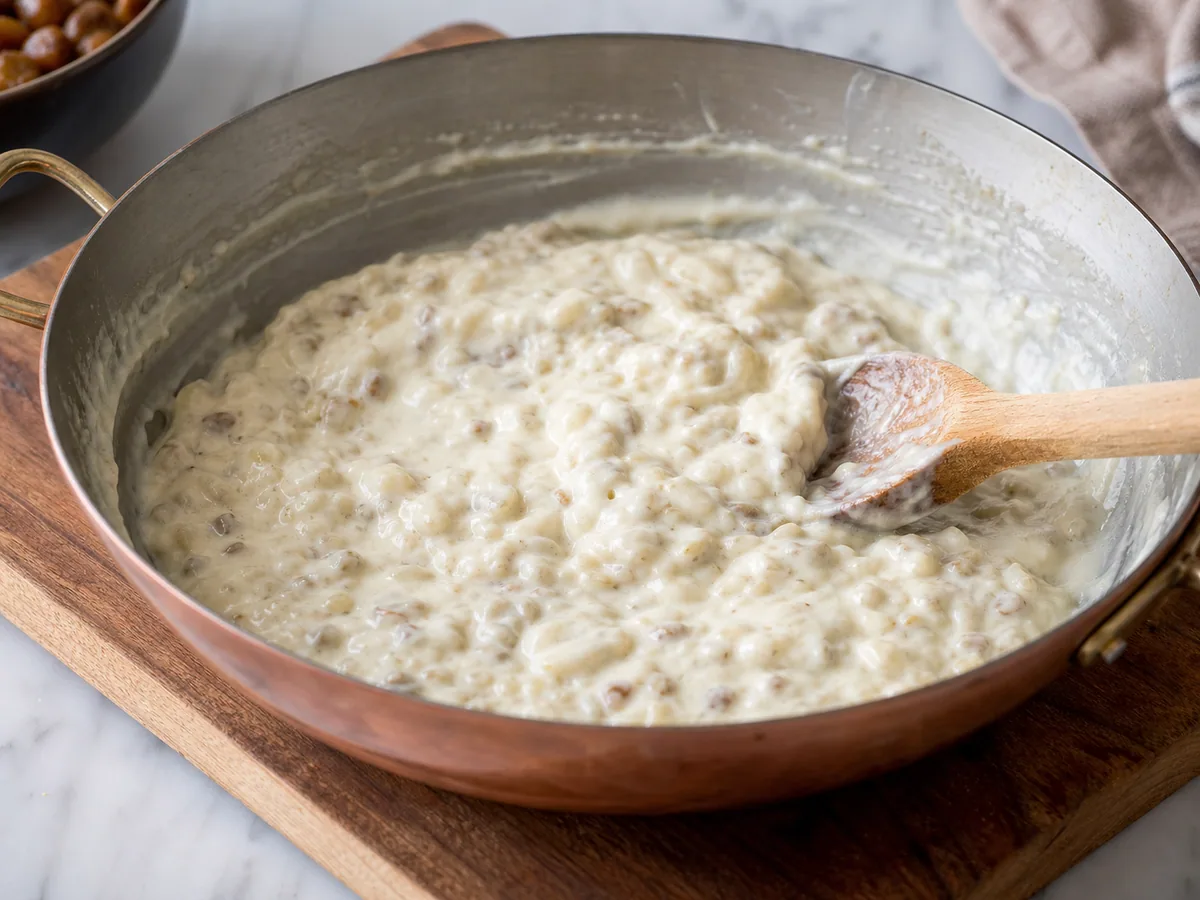
Chop the drained eggplant flesh into a coarse mash, then stir it into the milk sauce. Add 60 g of kaşar cheese, 1.2 g of Morton coarse kosher salt for purée, and 1/2 g of black pepper for purée. Cook over low heat for 3 to 4 minutes, stirring with a wooden spoon; begin checking at 3 minutes and stop when the cheese has melted and the purée is glossy, smoky, and soft enough to spread without running.
03:00Finish the stew and serve
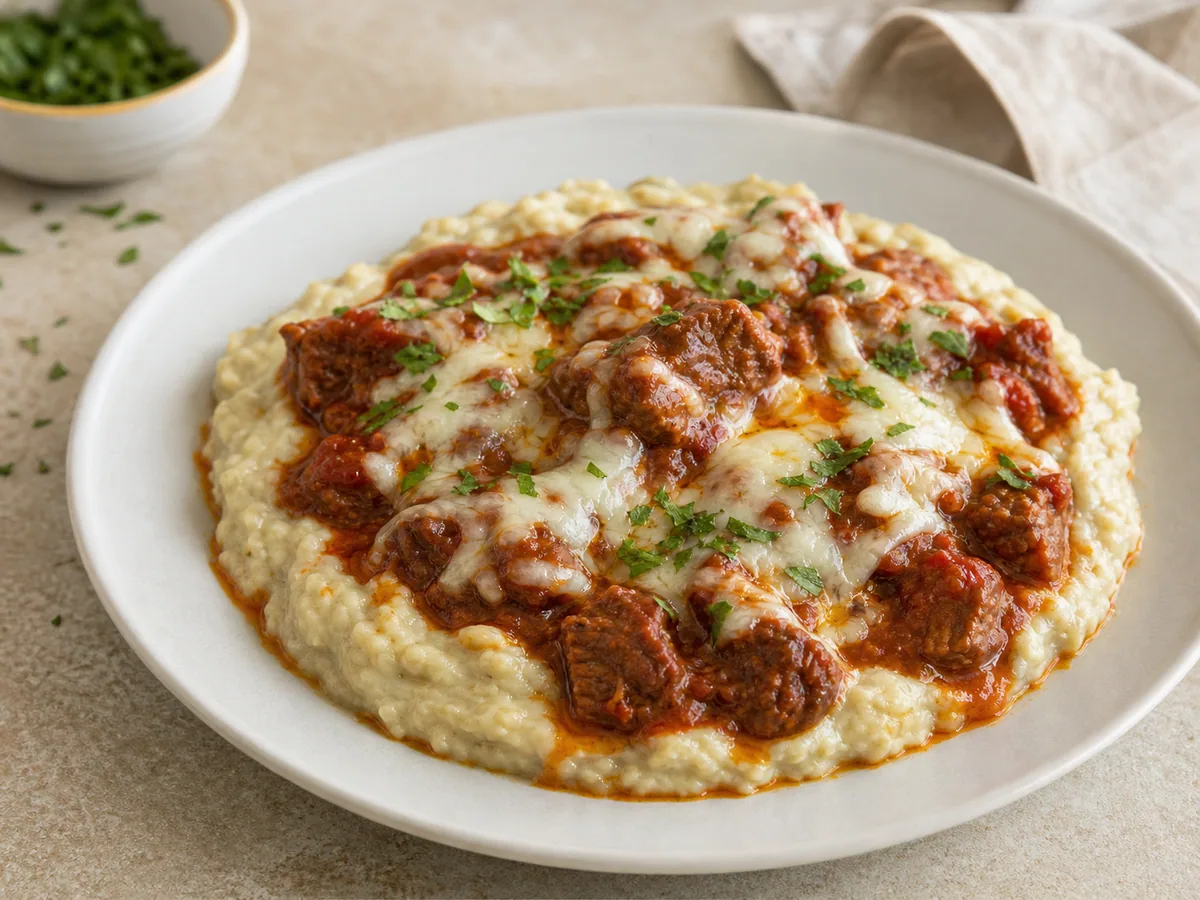
Uncover the beef and simmer for a few minutes if the sauce needs to reduce; it should coat the meat but still spoon easily. Taste and adjust only if needed. Chop 10 g of fresh flat-leaf parsley. Spread the hot eggplant purée across warm shallow plates, spoon the fully cooked beef and tomato sauce over the center, and scatter the parsley on top. Serve immediately while the purée is supple.


Smart Substitutions
- No kaşar cheese? Use mild kasseri, low-moisture mozzarella, or a mild cheddar that melts smoothly.
- No beef chuck? Use well-marbled stewing beef cut into even cubes. Brisket and boneless short rib may need substantially longer than the stated 60 to 75 minute braise.
- No adjustable broiler? Char the eggplants on an outdoor grill over high heat, turning until every side is blackened and the flesh collapses.
- Prefer a lighter purée? Use 2% milk; the result will be slightly less rich but should still thicken well.
Tips and Variations
- Let the eggplant skins become genuinely black and blistered; patchy browning gives a weaker smoky flavor.
- Brown the beef in batches and wait for the pot to regain heat before adding the second batch.
- Keep the eggplant purée below a simmer after adding the cheese so it stays smooth rather than stringy.
What Went Wrong?
- Beef is still tough Keep it at a gentle simmer and check every 10 minutes; chuck softens only after its connective tissue has had enough time to break down.
- Eggplant purée is watery Cook it over low heat, stirring steadily, until excess moisture evaporates and the spoon leaves a clean trail.
- Purée has floury lumps Whisk the milk into the roux more gradually, or press the sauce through a fine sieve before adding the eggplant.
- Stew tastes heavy Spoon off excess surface fat, then simmer the sauce uncovered for a few minutes so the tomato and spices taste more focused.
Nutrition Estimate
- Fiber: 10 g per serving
- Sodium: 810 mg per serving
Nutrition disclaimer:This recipe is provided for general cooking information only. Nutrition values are estimates and may vary by ingredients, brands, preparation methods, and serving sizes. Check ingredient labels and follow appropriate food-safety practices. This content is not medical, dietary, allergy, or professional food-safety advice.
FAQ
Found an error or have a suggestion?
Help us improve this recipe. Send us your feedback and include the recipe name so we can take a look.