Method
Prepare the papaya and vegetables
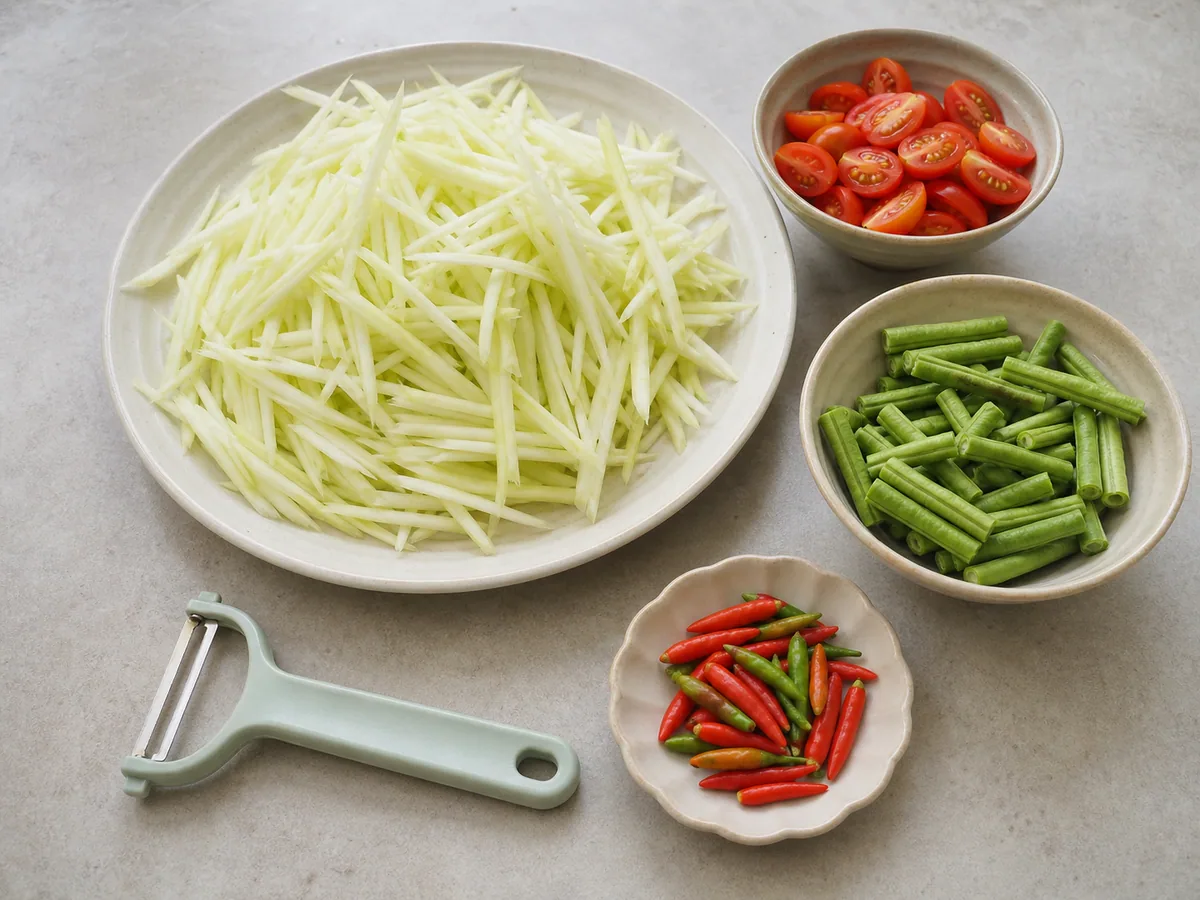
Rinse the whole papaya, tomatoes, beans, and chilies under running water and dry them. Peel 500 g of green papaya, cut it lengthwise, and scoop out the seeds. Shred the firm flesh into sturdy matchsticks with a julienne peeler or a knife. Halve 150 g of cherry tomatoes. Trim 100 g of yardlong beans and cut them into 5 cm (2 in) lengths. Remove the stems from 2 Thai bird chilies.
Toast the shrimp and peanuts
Set a small dry skillet over medium heat. Add 15 g of ready-to-eat small dried shrimp and 40 g of dry-roasted unsalted peanuts, then stir for 2 to 3 minutes, until the shrimp smell savory and the peanuts are warm and fragrant. Transfer everything to a plate so the hot skillet does not darken the nuts further.
02:00Pound the aromatics and build the dressing
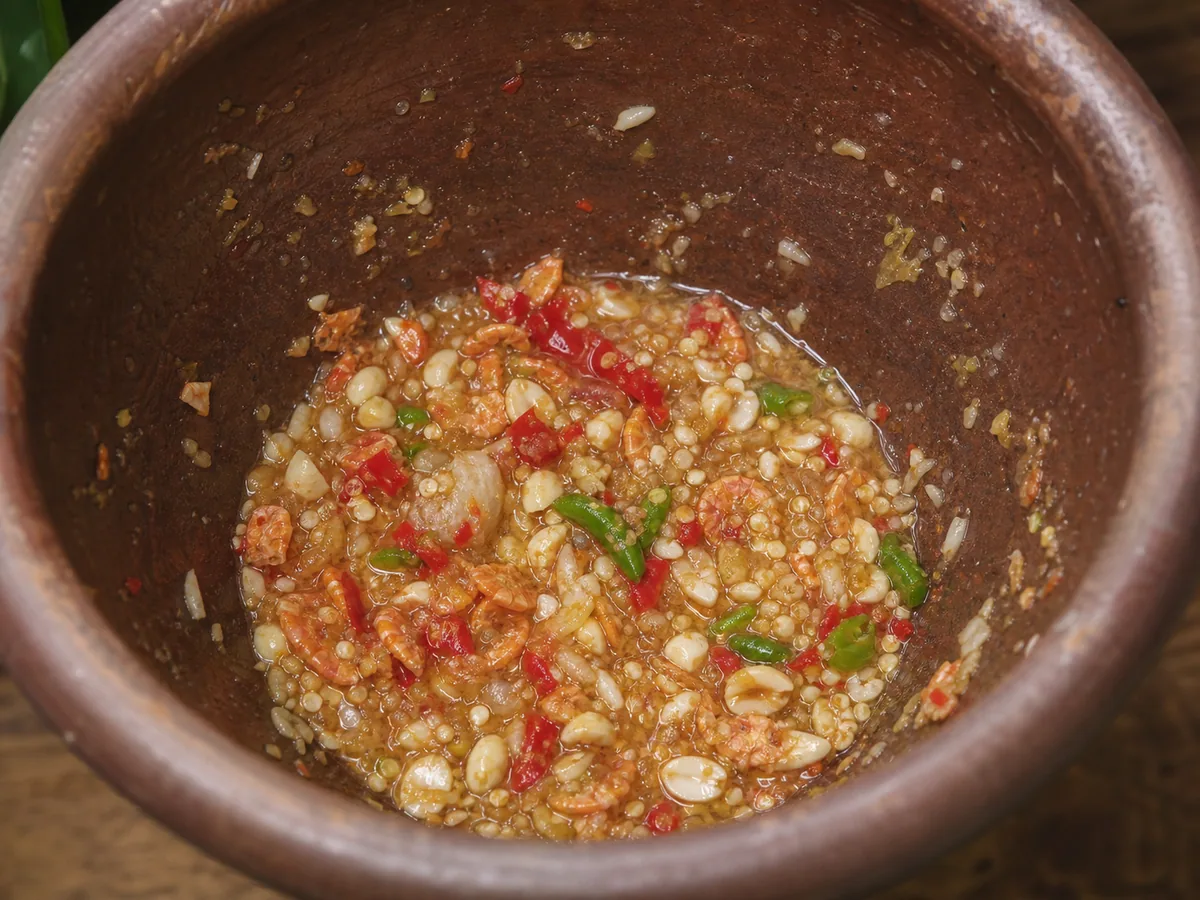
Put 2 garlic cloves and 2 Thai bird chilies in a large clay or wooden mortar. Pound with controlled strokes until broken into a coarse, juicy mixture, keeping your face back from any chile splashes. Reserve half of 40 g of dry-roasted unsalted peanuts for finishing, then add the rest with 15 g of ready-to-eat small dried shrimp and pound just enough to crack them. Add 30 g of palm sugar, pressing it against the mortar wall until crumbly. Reserve a little of 60 ml of fresh lime juice and 30 ml of fish sauce for final balancing, then pour the rest into the mortar and stir and press for about 1 minute, until the sugar dissolves.
01:00Bruise the vegetables and dress the papaya
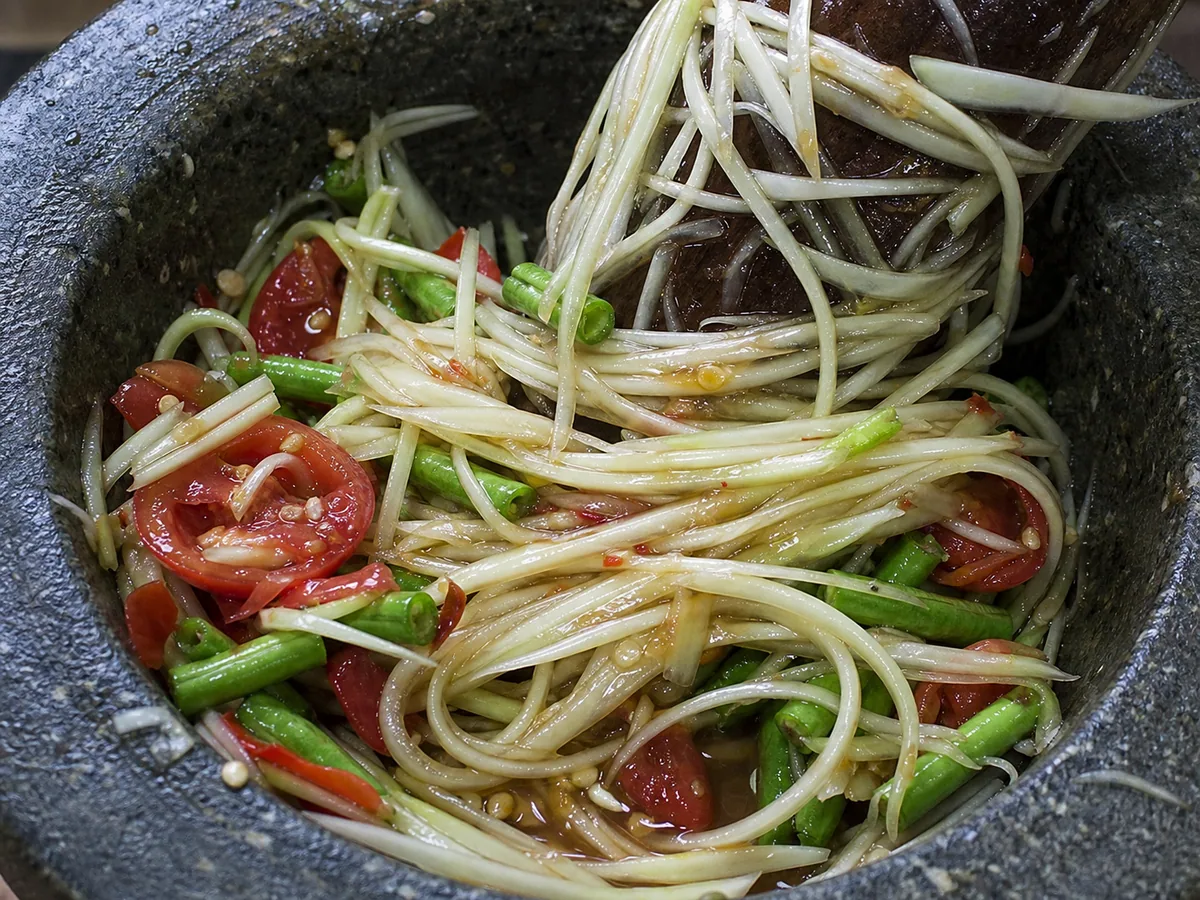
Add 100 g of yardlong beans and pound with two or three firm strokes so the pieces split slightly but remain crisp. Add 150 g of cherry tomatoes and press gently until a little juice runs into the dressing. Add 500 g of green papaya in two additions, lifting with a large spoon while tapping down the mortar sides with the pestle. Stop after about 45 seconds, when every strand is glossy but still springy.
00:45Balance the dressing and serve
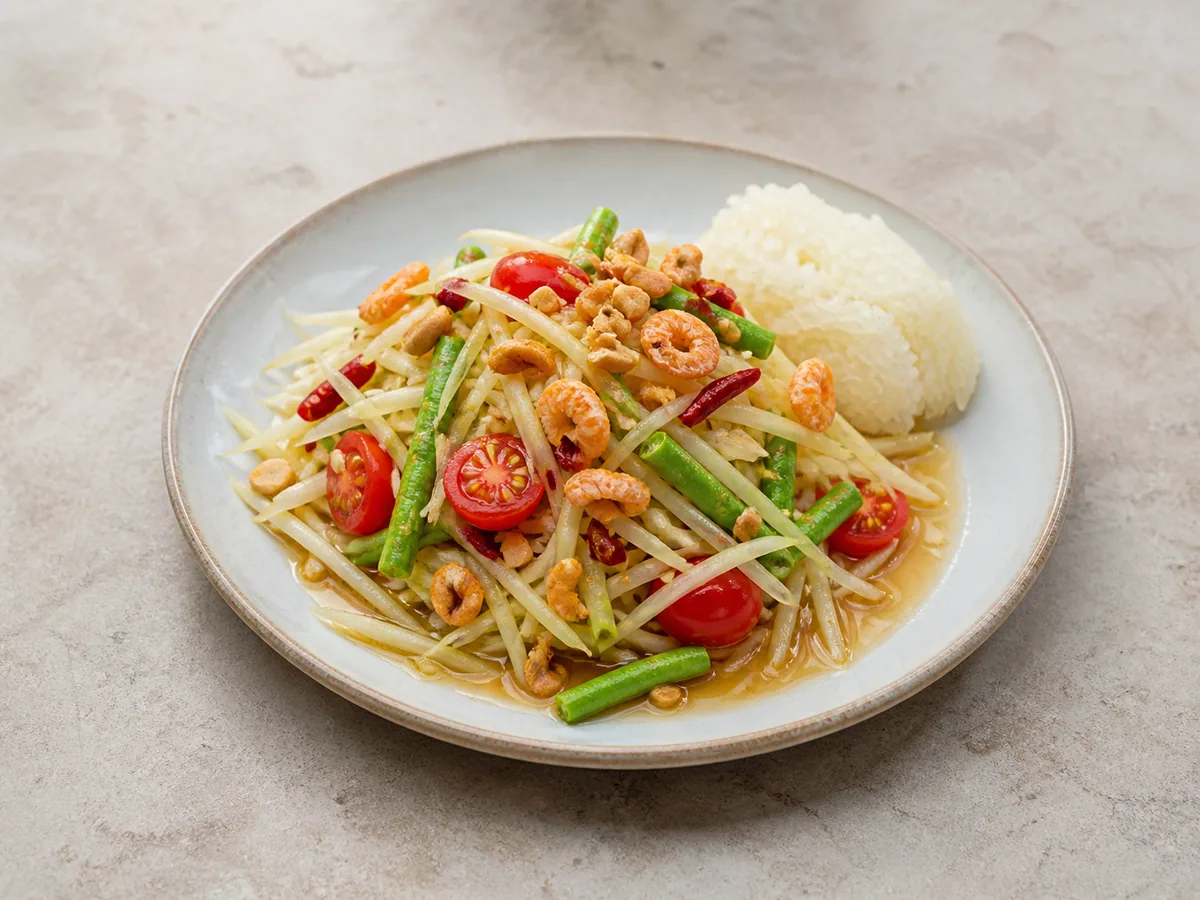
Taste a strand of papaya with some dressing. Add a little more of 60 ml of fresh lime juice or 30 ml of fish sauce from the reserved portions only when the balance needs it; the finished salad should lead with sourness, followed by savory depth, gentle sweetness, and chile heat. Transfer to a shallow serving plate, spoon the dressing over the top, scatter with the reserved peanuts, and serve with cooked sticky rice (optional) alongside.


Smart Substitutions
- No green papaya? Use firm kohlrabi or a mixture of kohlrabi and tart green mango for a similarly crisp base.
- No yardlong beans? Use thin green beans and cut them into the same short lengths.
- No palm sugar? Use light brown sugar, starting with slightly less and adjusting after it dissolves.
- No dried shrimp? Omit it and add a little more fish sauce to taste for savory depth.
Tips and Variations
- Use a julienne peeler for quick, sturdy strands; a fine box grater makes the papaya too soft.
- Handle the chilies with a spoon or wear gloves, and avoid touching your eyes while preparing them.
- Work in two batches when the mortar is small, then combine the dressed salad on the serving plate.
What Went Wrong?
- Papaya turned limp Use lighter strokes and stop pounding as soon as the strands look evenly glossy.
- Dressing tastes too sweet Add fresh lime juice a little at a time until sourness leads again.
- Salad is watery Press the tomatoes more gently and toss in additional shredded papaya to absorb the excess dressing.
- Palm sugar stays gritty Press it against the mortar wall with the pestle before adding the papaya, then stir until no hard pieces remain.
Nutrition Estimate
- Fiber: 5 g per serving
- Sodium: 825 mg per serving
Nutrition disclaimer:This recipe is provided for general cooking information only. Nutrition values are estimates and may vary by ingredients, brands, preparation methods, and serving sizes. Check ingredient labels and follow appropriate food-safety practices. This content is not medical, dietary, allergy, or professional food-safety advice.
FAQ
Found an error or have a suggestion?
Help us improve this recipe. Send us your feedback and include the recipe name so we can take a look.