Method
Soften the apples
Peel and core 600 g of firm apples, then cut them into 2 cm (3/4 in) chunks. Put the apple pieces in a small saucepan with 60 ml of water for applesauce, 15 g of granulated sugar, 15 ml of lemon juice, and 1.3 g of ground cinnamon. Bring to a gentle simmer over medium heat, cover, and cook for 12 to 15 minutes, stirring once or twice, until the apples collapse easily under a spoon. Start checking at 12 minutes.
12:00Finish the applesauce
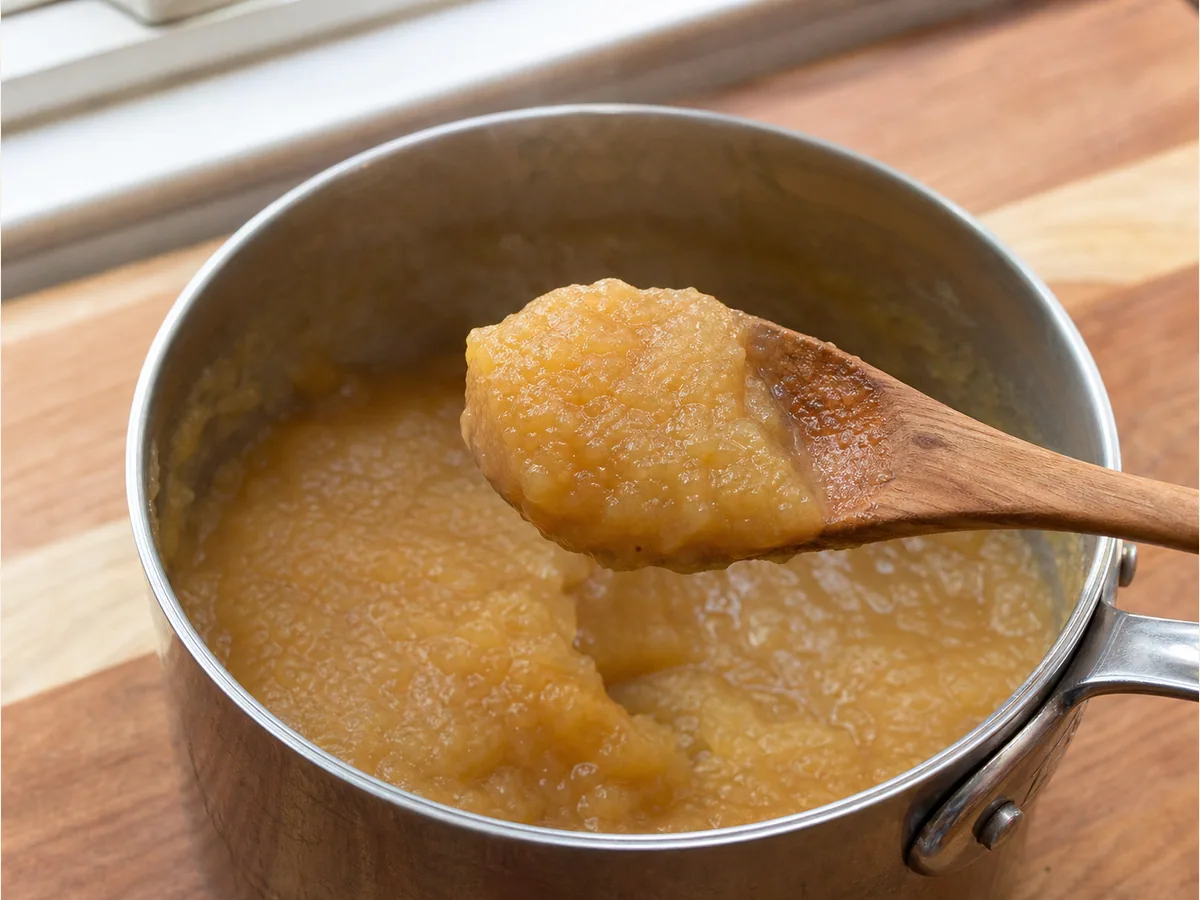
Uncover the saucepan and mash the apples with a potato masher or fork until mostly smooth, leaving a little texture. If the sauce looks watery, stir it over low heat until it mounds softly on the spoon. Remove it from the heat and set it beside the stove for serving.
Brown the onions
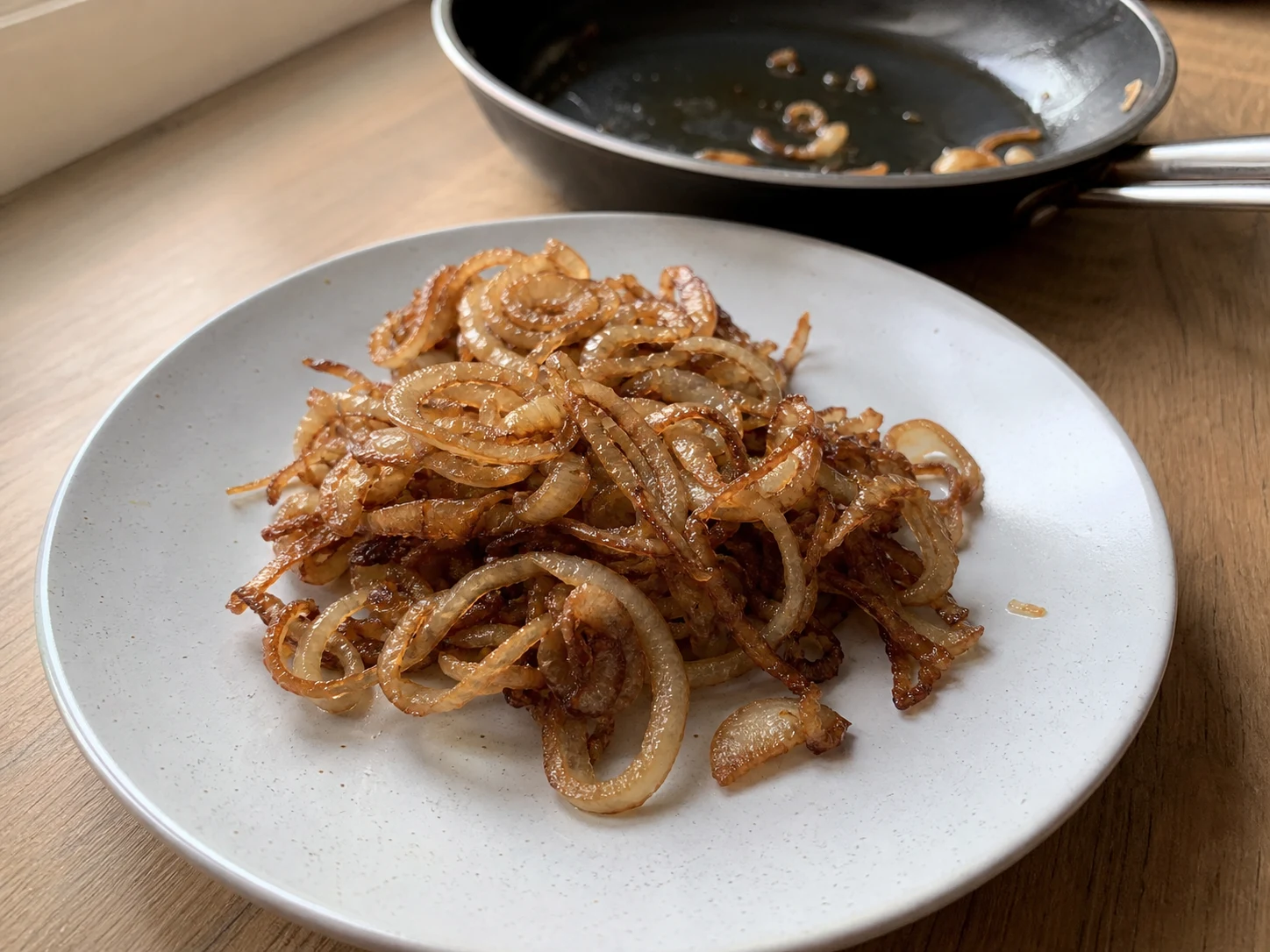
Slice 250 g of yellow onions into thin rings and separate the layers. Toss them evenly with 15 g of all-purpose flour. Melt 30 g of unsalted butter in a wide skillet over medium heat, add the onions in a loose layer, and cook for 10 to 12 minutes, turning often and lowering the heat if the flour darkens too quickly, until the rings are deep golden with crisp edges. Start checking at 10 minutes, then transfer them to a plate.
10:00Start the potatoes
Bring a large pot of water to a rolling boil and stir in 3 g of fine salt for pasta water. Peel 500 g of waxy potatoes, cut them into even 1.5 cm (1/2 in) cubes, add them to the boiling water, and cook uncovered for 4 minutes. The cubes should still feel firm at the center when the timer ends.
04:00Cook the macaroni with the potatoes
Add 250 g of short macaroni to the pot and stir well during the first minute. Cook for 7 to 9 minutes, following the pasta package as a guide, until the macaroni is al dente and a potato cube is tender when pierced but still holds its shape. Start checking at 7 minutes. Before draining, scoop out 120 ml of pasta cooking water, then drain the macaroni and potatoes thoroughly without rinsing.
07:00Warm the cheese mixture
Return the empty pot to low heat. Add 240 ml of whole milk, 80 ml of heavy cream, 2 g of fine salt for cheese mixture, 1 g of black pepper, and 1/2 g of ground nutmeg. Stir for 2 to 3 minutes, starting the first check at 2 minutes, until the mixture is steaming and tiny bubbles appear at the edge; do not let it boil.
02:00Melt the cheese and coat the macaroni
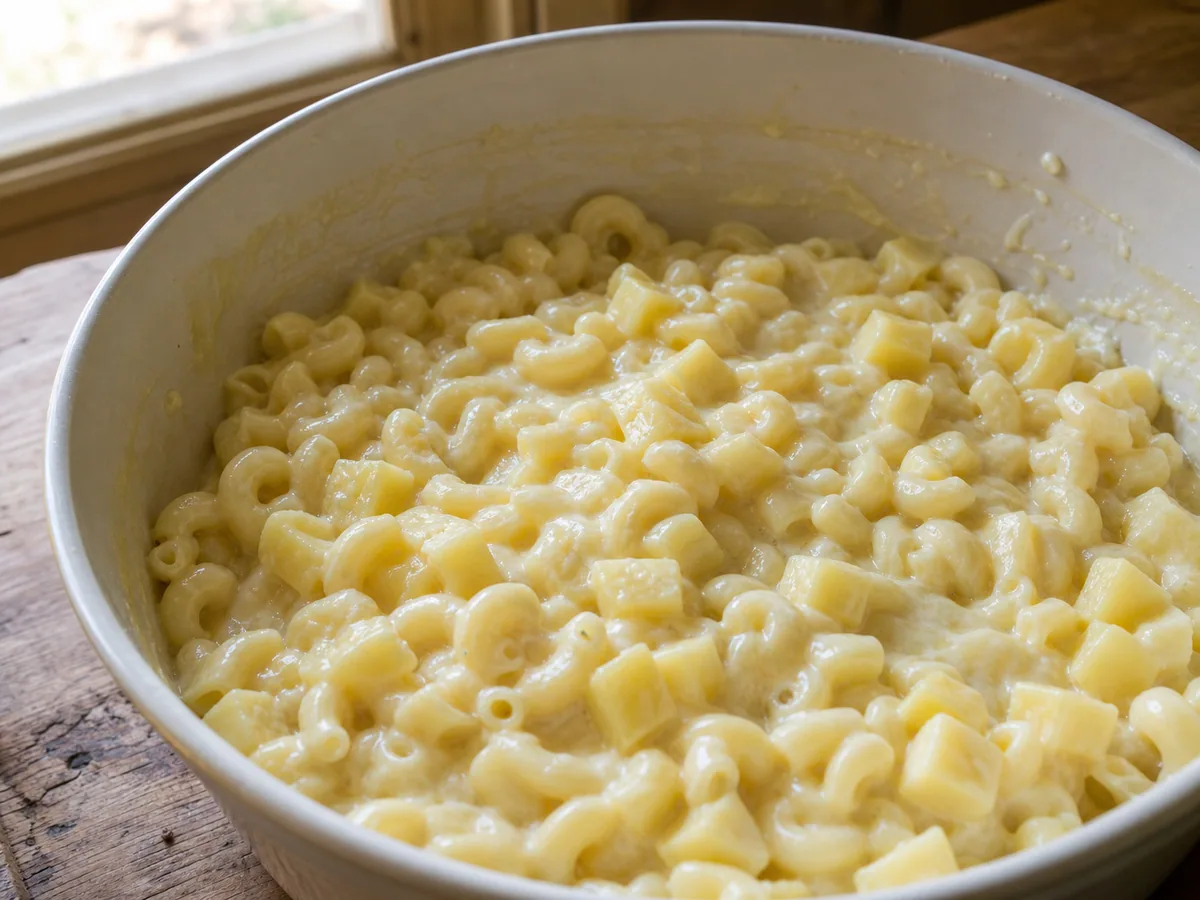
Grate 180 g of Gruyère cheese. Add the drained macaroni and potatoes to the warm dairy mixture, then add the cheese in three batches, folding gently after each addition until it melts. Add 120 ml of pasta cooking water a splash at a time until the coating is glossy and loose enough to move around the pasta without pooling at the bottom. Remove the pot from the heat as soon as the cheese is smooth.
Serve with onions and applesauce
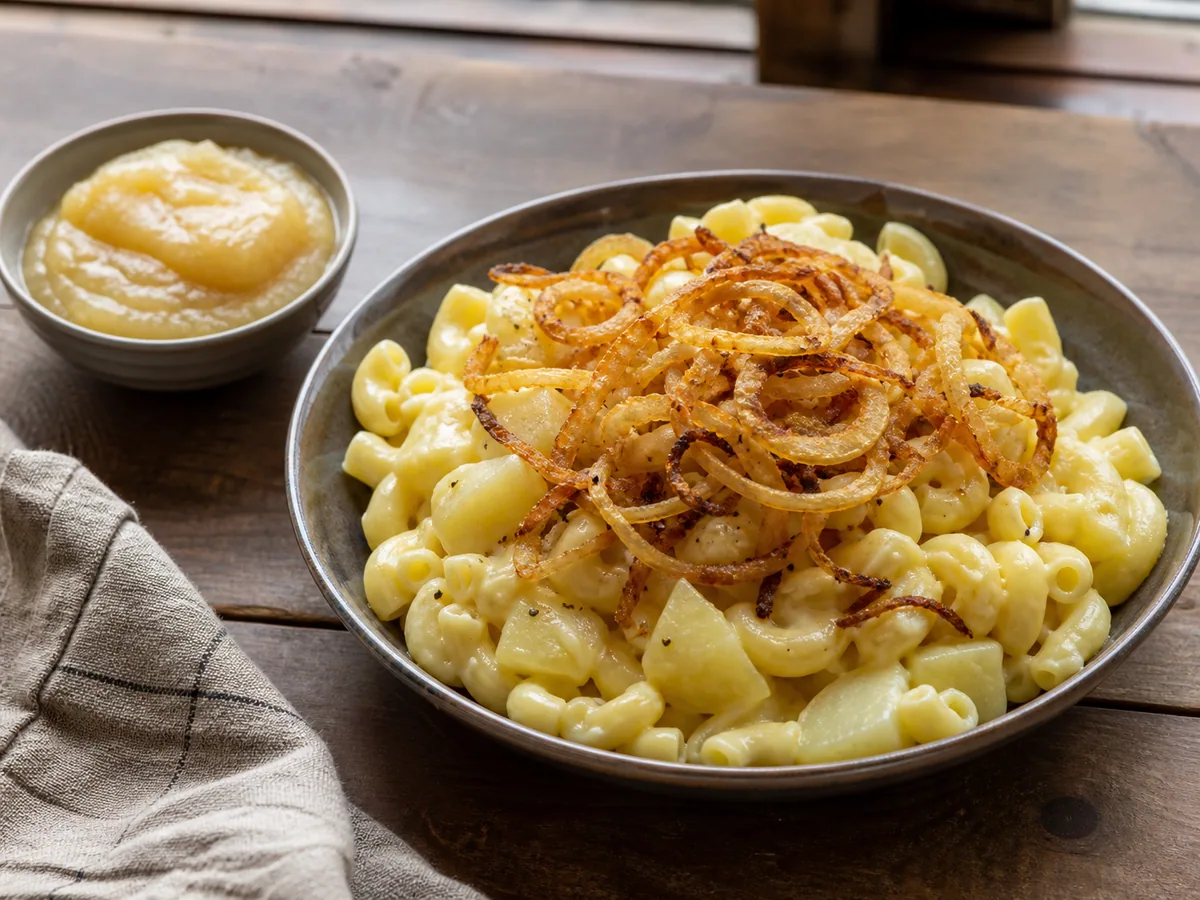
Spoon the macaroni and potatoes into warm bowls while the coating is still fluid. Scatter the browned onion rings over each serving and place the applesauce alongside so each person can add a little sweet-tart contrast to the savory cheese and potatoes.


Smart Substitutions
- No Gruyère? Use Emmental, Appenzeller, or another nutty Alpine-style melting cheese in the same amount.
- No short macaroni? Use small penne, cavatappi, or elbow macaroni with a similar package cooking time.
- No heavy cream? Replace it with the same volume of half-and-half; the coating will be a little lighter.
- Want sharper applesauce? Choose tart apples and leave out the sugar, then adjust only after mashing.
Tips and Variations
- Cut the potato cubes evenly so they become tender at the same moment as the macaroni.
- Keep the milk and cream below a boil; gentle heat helps the Gruyère melt smoothly.
- Plate as soon as the cheese has melted, while the coating is glossy and the onions are still crisp.
What Went Wrong?
- Cheese coating turns grainy Take the pot off the heat and fold in a splash of pasta cooking water; high heat can tighten the cheese proteins.
- Potatoes break apart Use waxy potatoes, keep the cubes even, and begin checking as soon as the macaroni reaches al dente.
- Onions stay soft Use a wide skillet, keep the rings in a loose layer, and continue cooking until moisture has evaporated and the edges crisp.
- Macaroni mixture is too thick Fold in pasta cooking water a spoonful at a time until the coating moves easily around the macaroni and potatoes.
Nutrition Estimate
- Fiber: 10 g per serving
- Sodium: 860 mg per serving
Nutrition disclaimer:This recipe is provided for general cooking information only. Nutrition values are estimates and may vary by ingredients, brands, preparation methods, and serving sizes. Check ingredient labels and follow appropriate food-safety practices. This content is not medical, dietary, allergy, or professional food-safety advice.
FAQ
Found an error or have a suggestion?
Help us improve this recipe. Send us your feedback and include the recipe name so we can take a look.