Method
Prepare the breadfruit
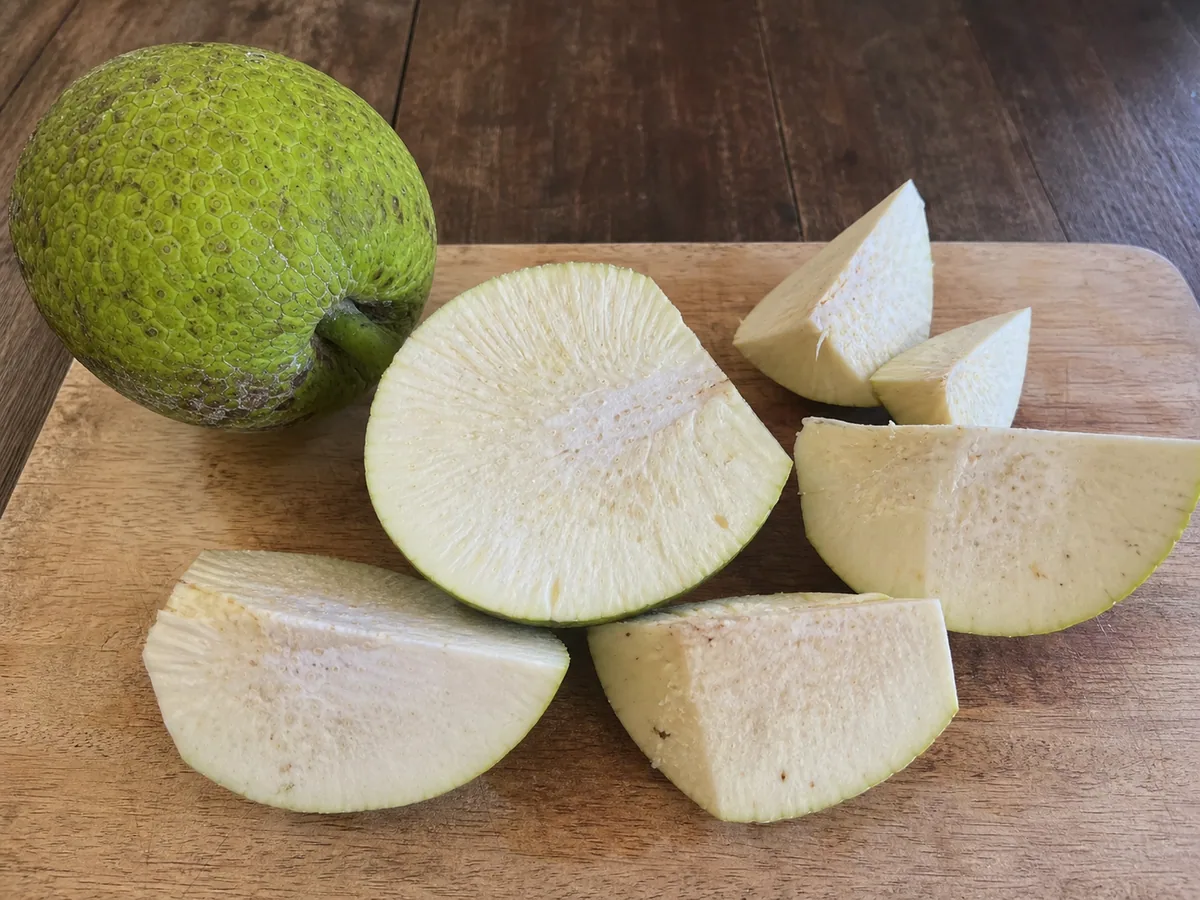
At least 2 hours before cooking, twist or snap the stem from 900 g of mature breadfruit and set the fruit upside down in the sink to let sticky latex drain. When ready to cook, heat the oven to 220°C (425°F). Wash the breadfruit to remove surface sap, and lightly oil a chef’s knife to keep remaining latex from clinging. Cut a thin slice from the stem end to make a stable base, peel the fruit, cut it into quarters, remove the firm central core, and cut the flesh into wedges about 2.5 cm (1 in) thick at the widest point. Rinse the wedges briefly, pat them very dry, and set them on a large rimmed baking sheet. Wash the knife as needed before sap dries on the blade or handle.
2:00:00Season and start roasting
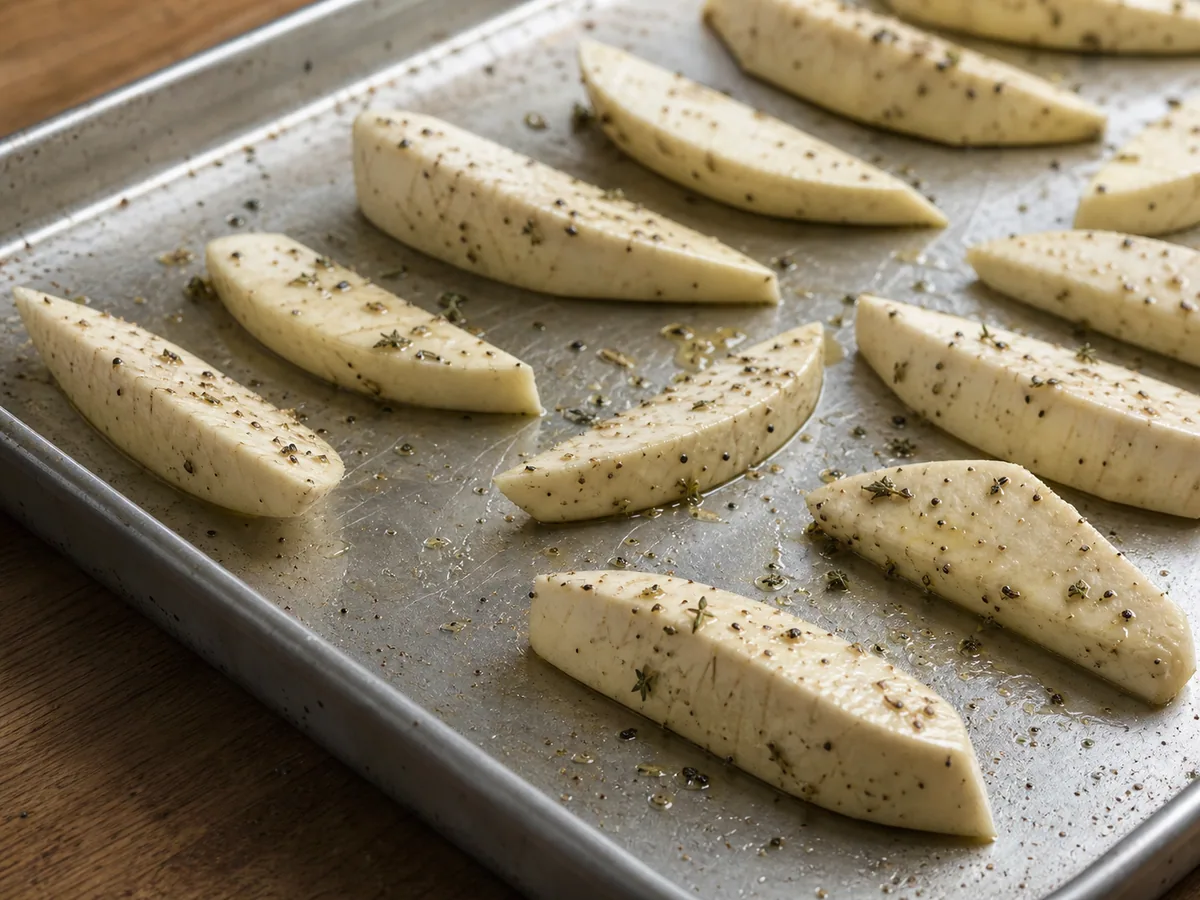
Drizzle 30 ml of neutral cooking oil over the wedges. Add 2 g of ground allspice, 1 g of dried thyme, 4 g of sea salt for breadfruit, and 1 g of black pepper, then toss until every surface is lightly coated. Spread the wedges in one uncrowded layer with a broad cut side against the pan. Roast for 20 minutes, until the undersides begin to color.
20:00Blend and simmer the pepper sauce
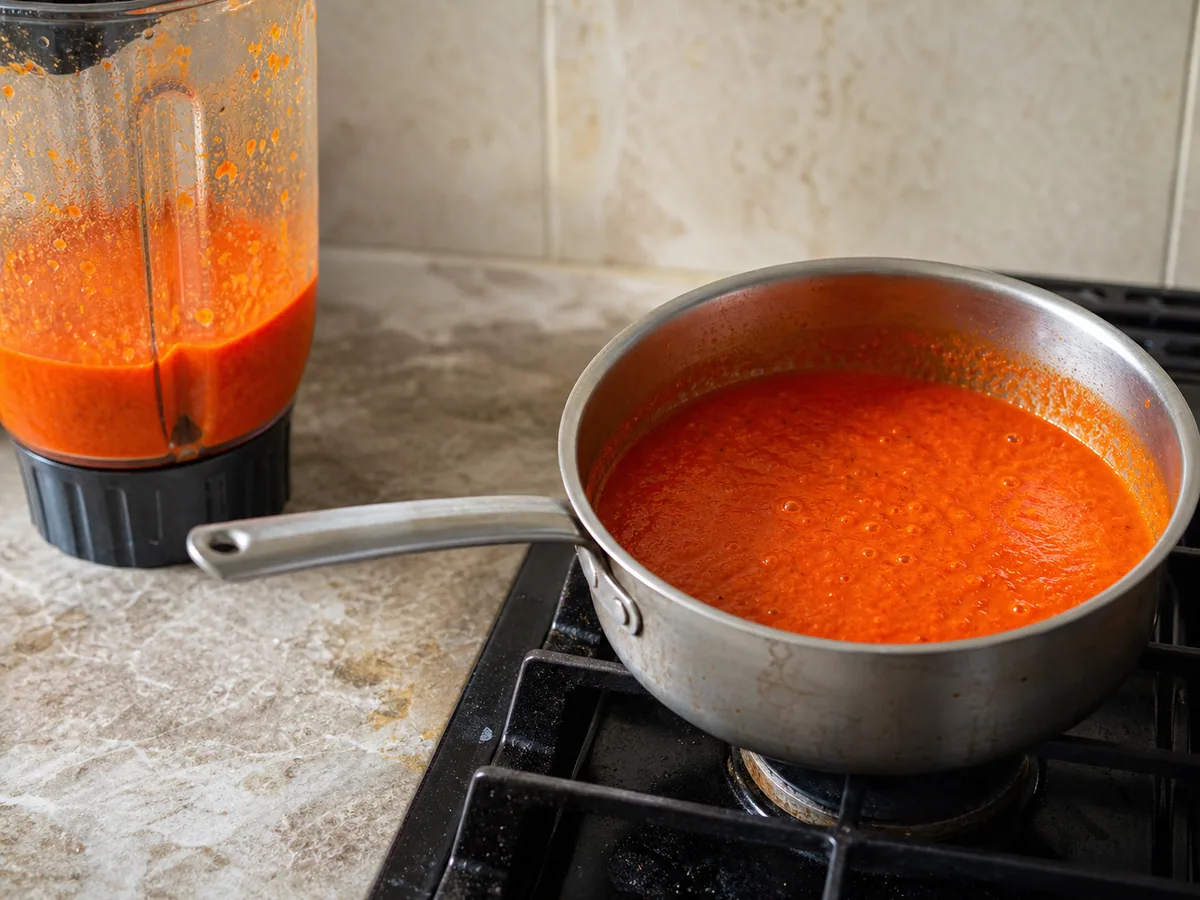
While the breadfruit roasts, open a window or run an exhaust fan and put on food-safe nitrile or rubber gloves. Remove the stem from 1 Scotch bonnet pepper; scrape out the inner membrane and seeds for gentler heat. Roughly cut 80 g of red bell pepper, 60 g of carrot, and 60 g of yellow onion into pieces, and crush 2 garlic cloves. Add them to a blender with 15 g of fresh cilantro, 30 ml of fresh lime juice, 30 ml of white vinegar, 10 g of yellow mustard, 4 g of light brown sugar, 2 g of sea salt for pepper sauce, and 60 ml of water. Blend until smooth, keeping your face away from the blender when removing the lid. Pour into a small saucepan and simmer over medium-low heat for 8 minutes, stirring often, until the sauce loses its raw edge and lightly coats a spoon. Before removing the gloves, wash the knife, cutting board, blender jar and lid, and work surface with hot, soapy water. Then remove the gloves, wash your hands, and avoid touching your face or eyes during cleanup.
08:00Turn and finish roasting
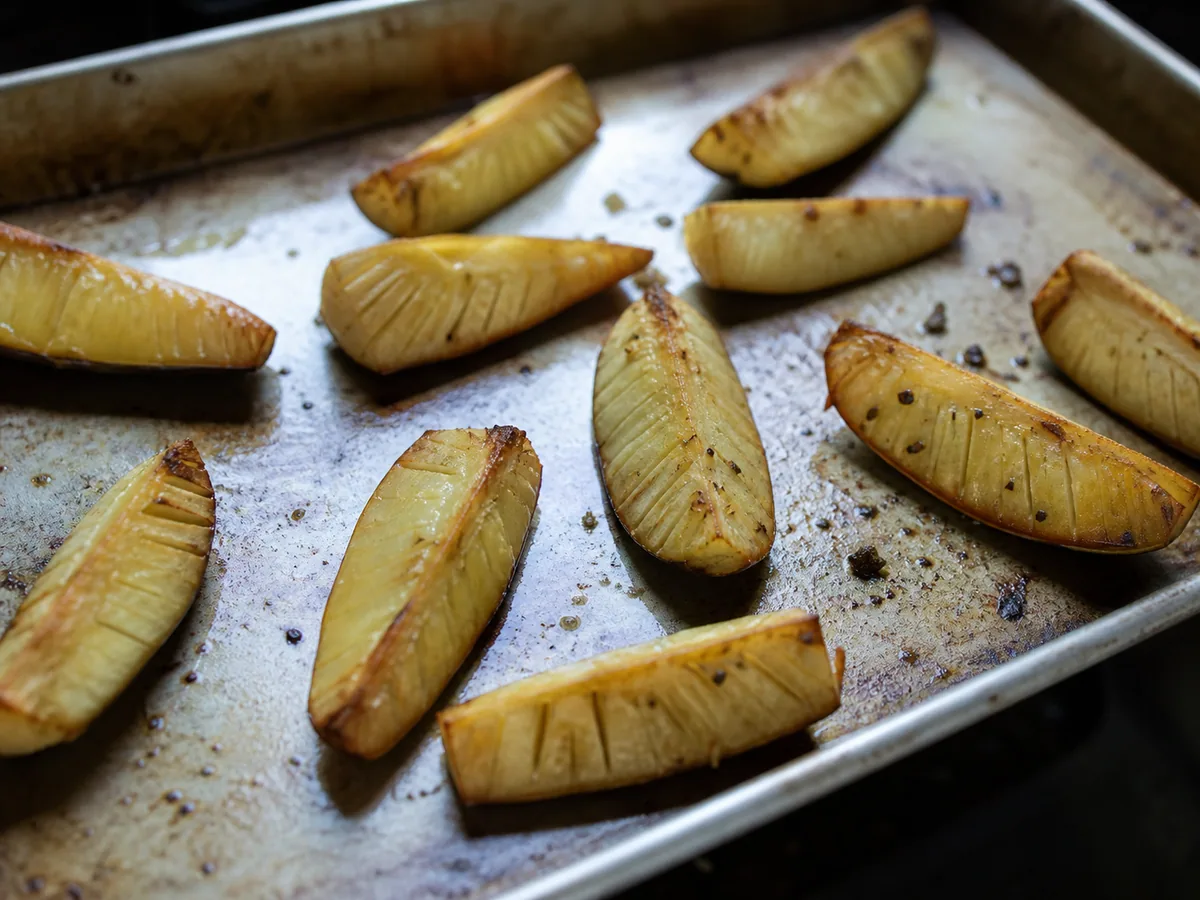
Turn each wedge onto its other broad side. Return the pan to the oven and begin checking after 15 minutes. The breadfruit is ready when the edges are deeply golden, the surfaces feel dry rather than greasy, and a fork slides through the thickest part without resistance; give it up to 5 minutes longer if needed.
15:00Plate and serve
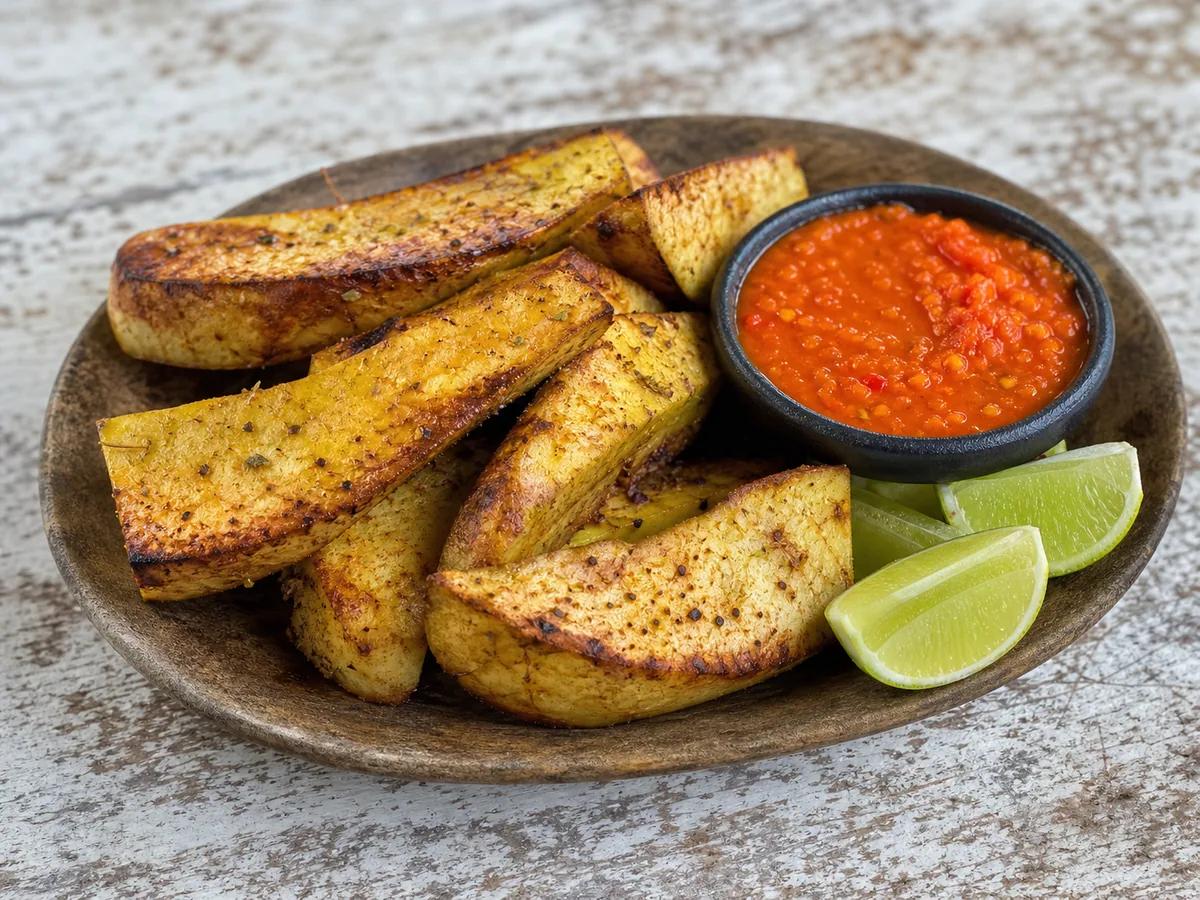
Stir the pepper sauce and spoon it into a small serving bowl. Arrange the hot breadfruit wedges on a platter and serve with the sauce for dipping or drizzling. Add lime wedges (optional) at the table.


Smart Substitutions
- No Scotch bonnet? Use one habanero pepper; it has a similarly fruity heat.
- No yellow mustard? Use Dijon mustard for a sharper, less sweet sauce.
- No fresh cilantro? Use culantro for a stronger Caribbean herb note or flat-leaf parsley for a milder finish.
- Prefer less heat? Use half of the Scotch bonnet and keep the full amount of red bell pepper.
Tips and Variations
- Choose mature breadfruit that feels firm and has green to yellow-green skin; very soft fruit is sweeter and will not hold a wedge shape as well.
- Dry the cut breadfruit thoroughly so the oil clings and the broad sides brown instead of steaming.
- Give the wedges space on the pan. Crowding traps moisture and delays browning.
What Went Wrong?
- Wedges brown before the centers soften Lower the oven to 200°C (400°F) and continue roasting until a fork slides through the thickest piece.
- Wedges are pale Turn the cut sides flat against the hot pan and roast a few minutes longer without crowding.
- Pepper sauce is too hot Blend in more red bell pepper and a squeeze of lime to spread out the heat without making the sauce watery.
- Pepper sauce is too thin Simmer it for 2 to 3 minutes longer, stirring often, until it lightly coats a spoon.
Nutrition Estimate
- Fiber: 13 g per serving
- Sodium: 640 mg per serving
Nutrition disclaimer:This recipe is provided for general cooking information only. Nutrition values are estimates and may vary by ingredients, brands, preparation methods, and serving sizes. Check ingredient labels and follow appropriate food-safety practices. This content is not medical, dietary, allergy, or professional food-safety advice.
FAQ
Found an error or have a suggestion?
Help us improve this recipe. Send us your feedback and include the recipe name so we can take a look.