Method
Caramelize the seeni sambol
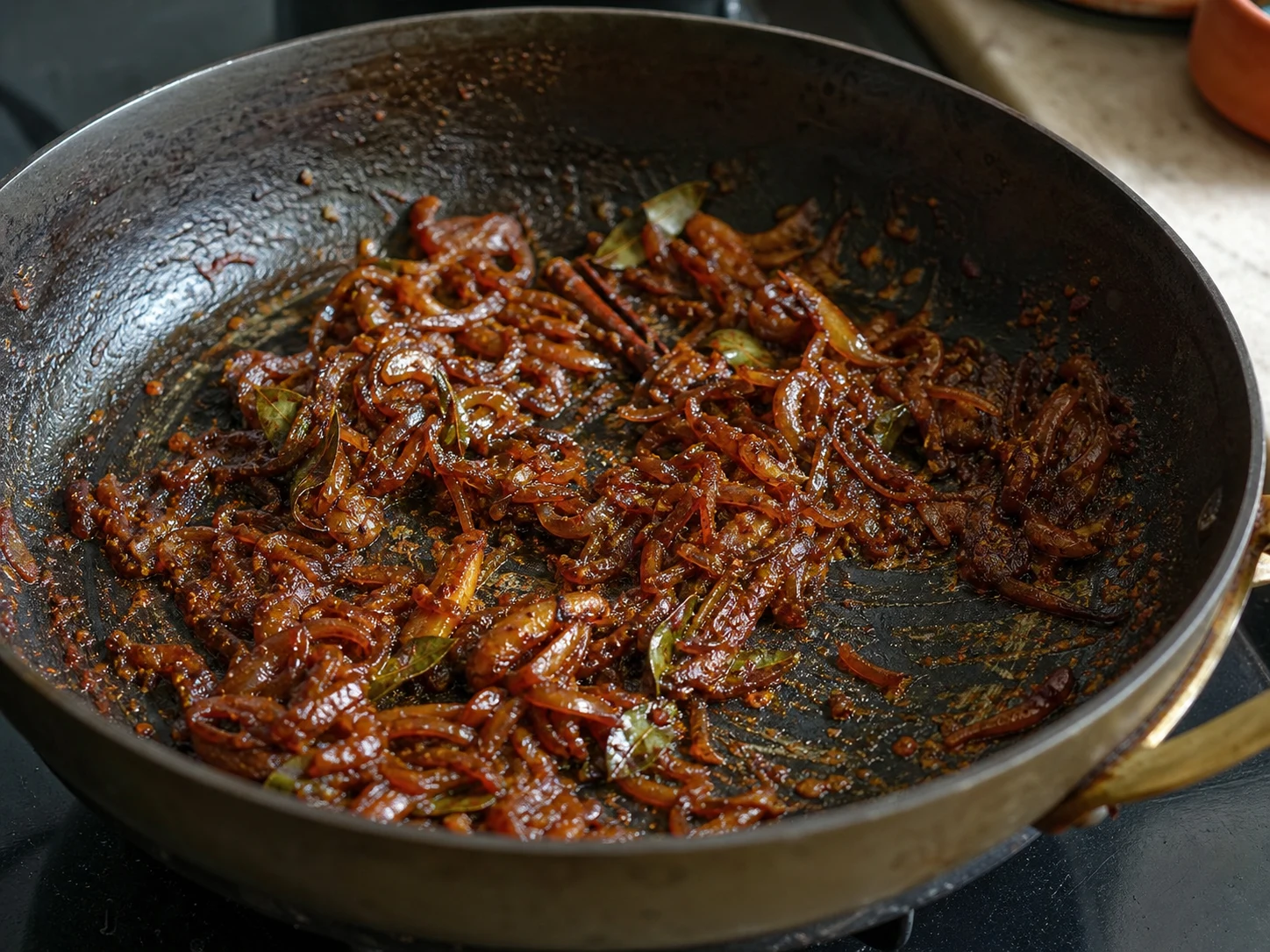
Slice 500 g of red onions into thin half-moons. Heat 15 ml of coconut oil for seeni sambol in a wide skillet over medium-low heat. Add 8 curry leaves for seeni sambol, 1 cinnamon stick for seeni sambol, 500 g of red onions, and 1 g of fine salt for seeni sambol. Cook for 20 to 25 minutes, stirring every few minutes, until the onions are soft, reduced, and deep golden at the edges. After the onions have cooked for about 10 minutes, begin the eggplant pahi in the next step, returning to stir the onions regularly. Stir 20 g of tamarind paste, 20 g of dark brown sugar for seeni sambol, and 2 g of red chile flakes for seeni sambol into the onions. Continue cooking for 8 to 10 minutes until the sambol is dark, sticky, and spoonable with no watery liquid in the pan. Remove the cinnamon stick.
20:00 first checkMake the eggplant pahi
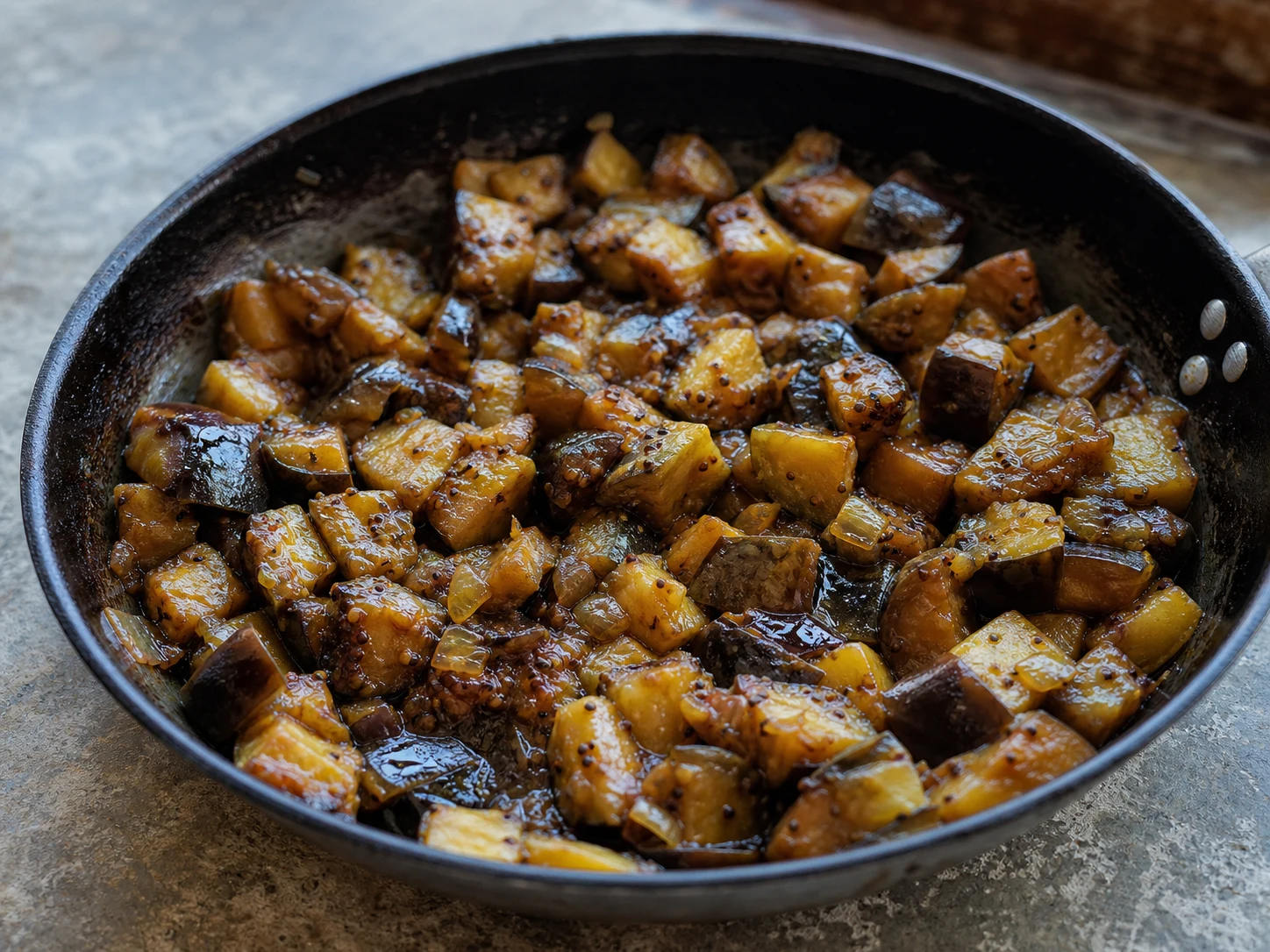
Cook this alongside the seeni sambol, returning to each skillet as needed. Cut 500 g of eggplant into 2 cm (3/4 in) cubes. Heat 30 ml of coconut oil for eggplant in a large skillet over medium-high heat, add the eggplant, and cook for 10 to 12 minutes, turning regularly, until browned and tender without collapsing. Push the eggplant aside, add 3 g of black mustard seeds, and let them sputter for 20 seconds. Add 30 ml of apple cider vinegar, 20 g of dark brown sugar for eggplant, 2 g of red chile flakes for eggplant, and 1 g of fine salt for eggplant. Toss over medium heat for 4 to 5 minutes until the liquid becomes a glossy sweet-sour coating rather than a loose sauce. Begin the chicken curry in the next step while the sambol completes its final reduction.
10:00 first checkCook the chicken curry
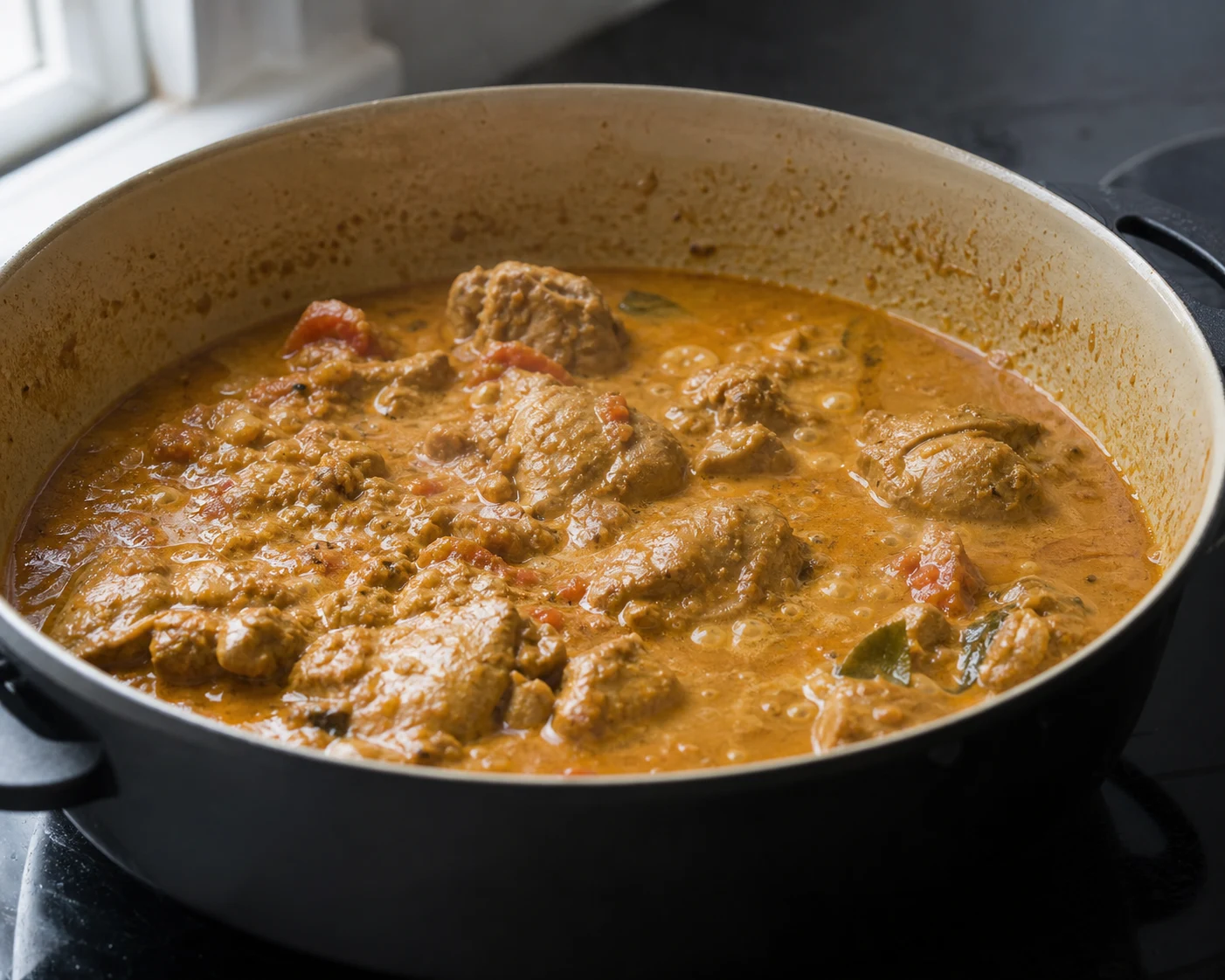
Start this step while the seeni sambol finishes. Heat 15 ml of coconut oil for chicken curry in a wide saucepan over medium heat. Add 18 g of Sri Lankan roasted curry powder and 2 g of ground turmeric and stir for 30 seconds. Mince 15 garlic cloves, grate 15 g of fresh ginger, and add both to the pan. Pat 600 g of boneless skinless chicken thighs dry, cut them into bite-size pieces on a dedicated board, add them to the pan, and cook for 5 to 6 minutes until the surfaces lose their raw color. Stir in 30 g of tomato paste, 200 ml of full-fat coconut milk, 3 g of fine salt for chicken curry, and 1 g of black pepper for chicken curry. Simmer uncovered for 18 to 22 minutes, stirring often, until the sauce is thick enough to mound on a spoon. Once the curry is simmering steadily, begin the stock rice in the next step and continue returning to stir the curry. Use a food thermometer to confirm the thickest chicken pieces reach 74°C/165°F, then stir in 30 ml of fresh lime juice. Wash the board, knife, bowl, work surface, and hands thoroughly after contact with raw chicken and before handling cooked components.
18:00 first checkCook the stock rice
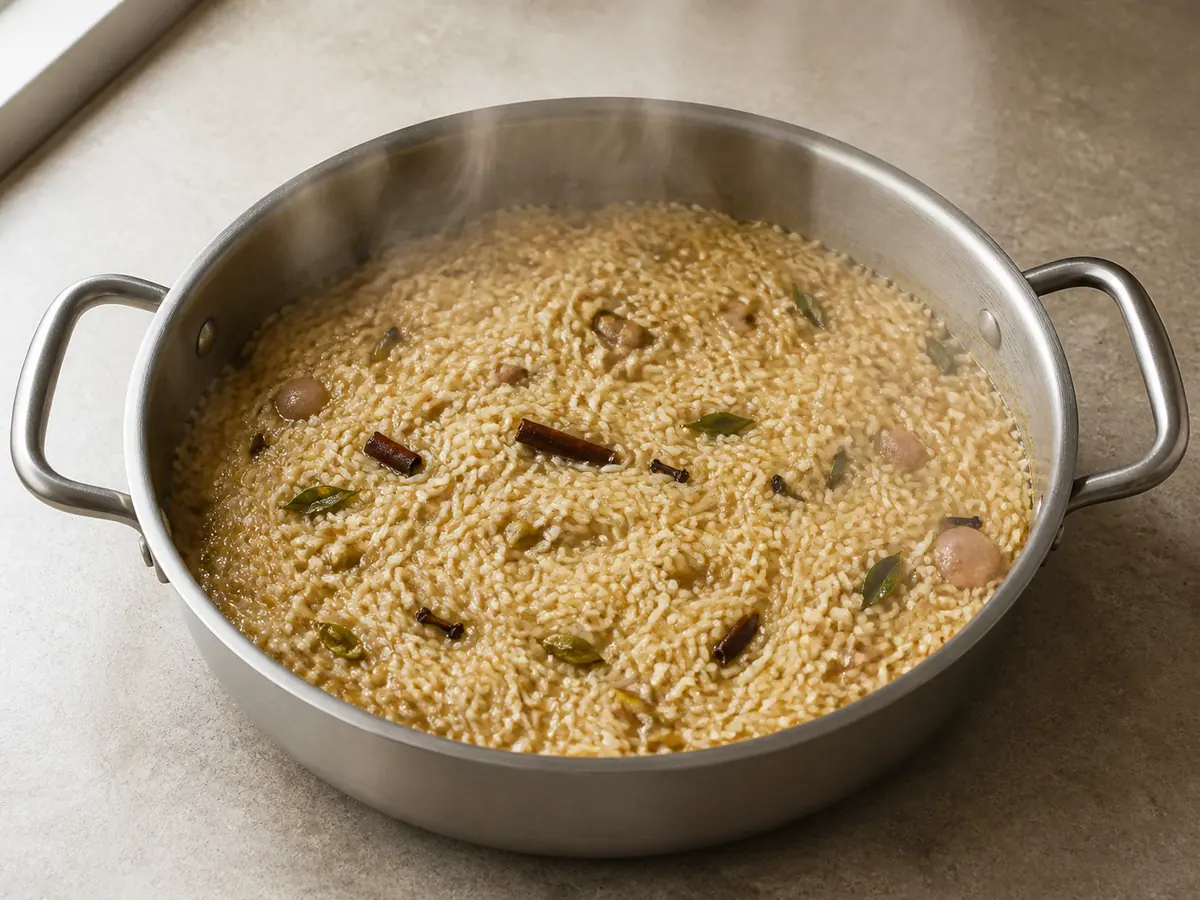
Begin this step once the chicken curry is simmering, returning to stir the curry often. Rinse 320 g of samba short-grain white rice until the water runs mostly clear, then drain well. Melt 30 g of ghee for rice in a heavy saucepan over medium heat. Slice 120 g of shallots and cook them for 4 to 5 minutes until softened. Lightly crush 4 green cardamom pods for rice, then add it with 12 curry leaves for rice, 1 cinnamon stick for rice, and 4 whole cloves for rice. Stir for 30 seconds, add 320 g of samba short-grain white rice, and turn the grains through the ghee for 1 minute. Pour in 600 ml of low-sodium chicken stock, add 2 g of fine salt for rice, and bring to a boil. Cover, reduce the heat to low, and cook for 16 minutes, until the liquid is absorbed and the grains are tender but separate.
16:00Rest and fluff the rice
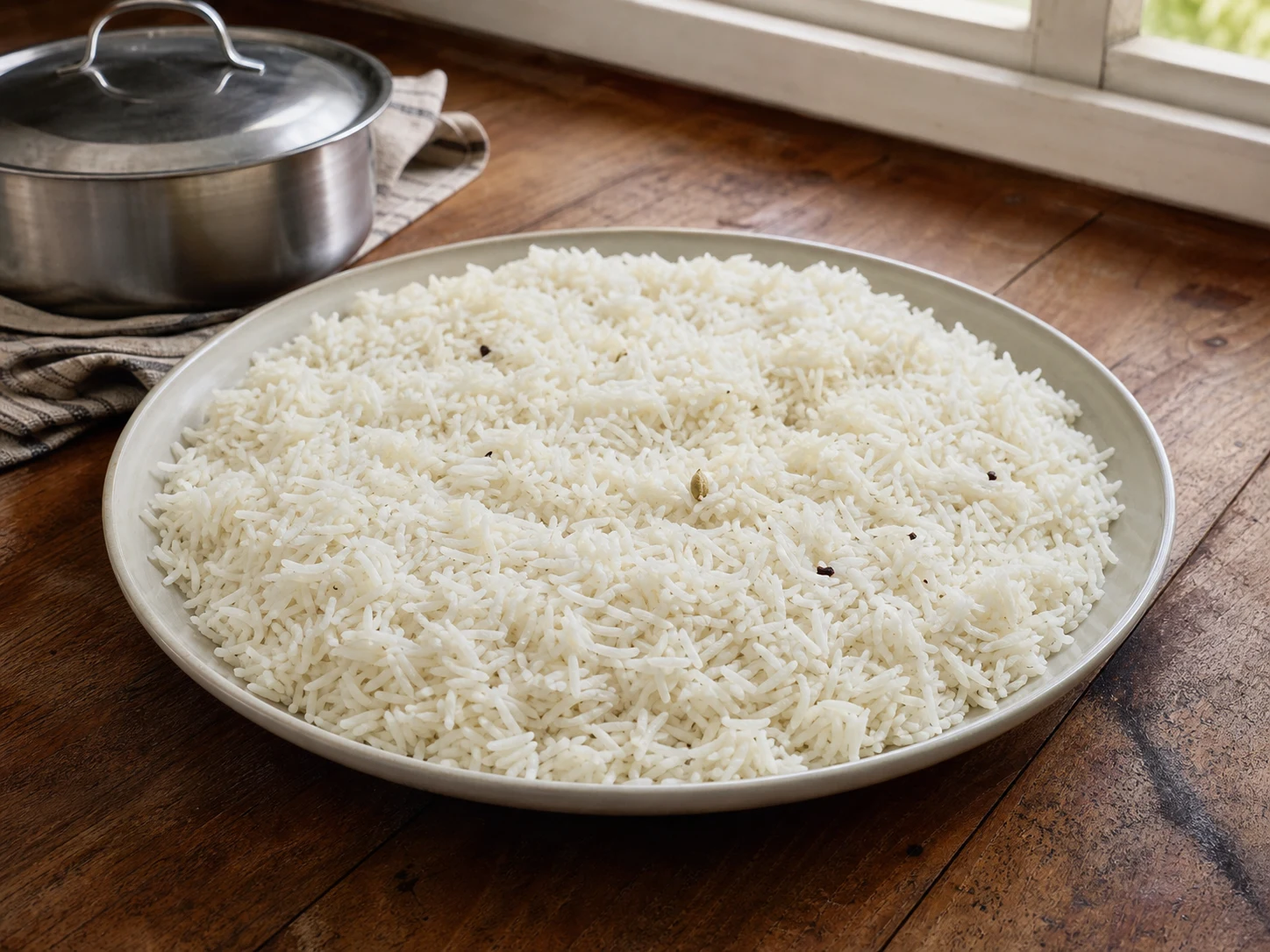
Remove the rice from the heat and leave it covered for 10 minutes so the steam finishes the center of each grain. Cook the parcel eggs in the next step during this covered rest. Remove the cinnamon stick, cardamom pods, and cloves, then fluff gently with a fork. Spread the rice in a wide dish so excess steam can escape while the frikkadels and leaves are prepared.
10:00Cook the eggs
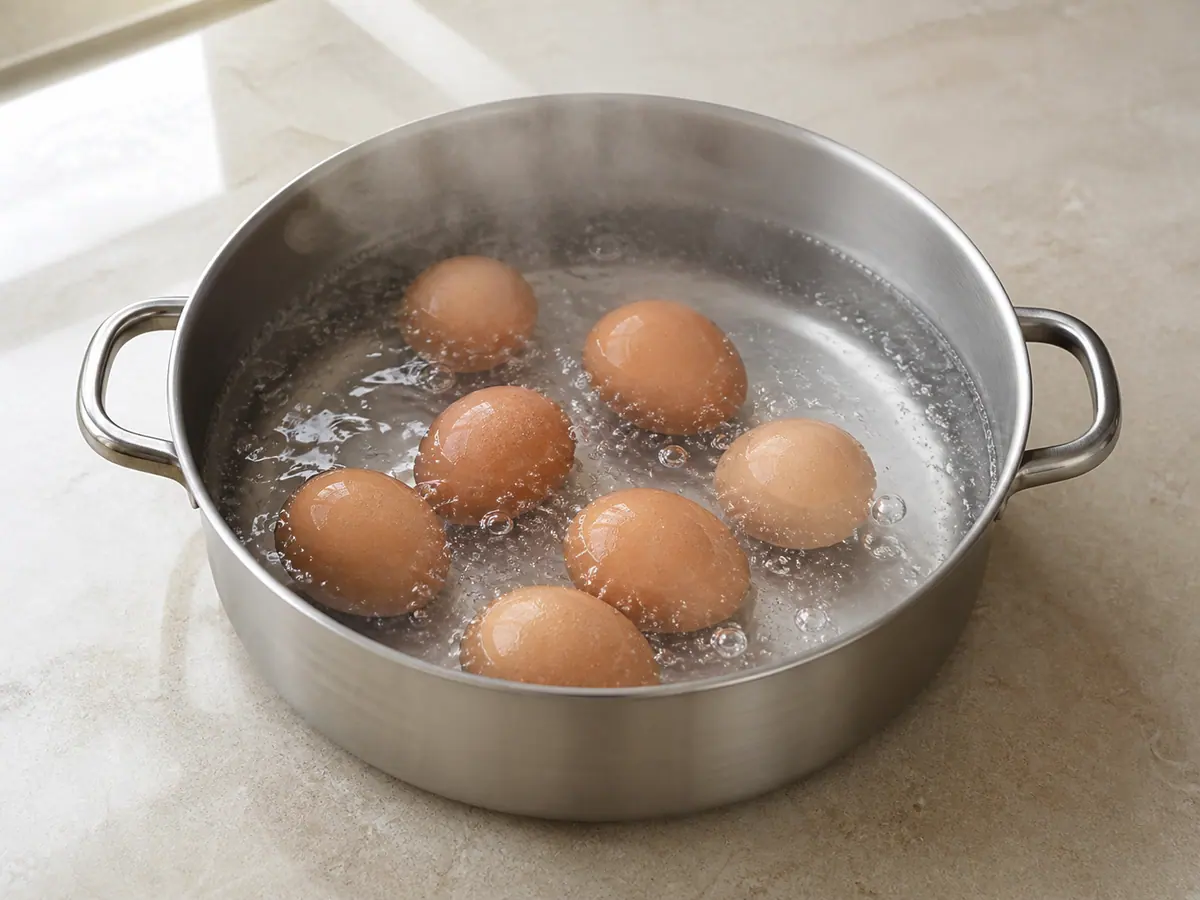
Cook these eggs during the rice's 10-minute covered rest. Place 4 large eggs for parcels in a saucepan and cover with cool water. Bring to a full boil, cover, turn off the heat, and leave for 10 minutes. Transfer the eggs to cold water, peel them when comfortable to handle, and keep them whole for the parcels.
10:00Shape and cook the frikkadels
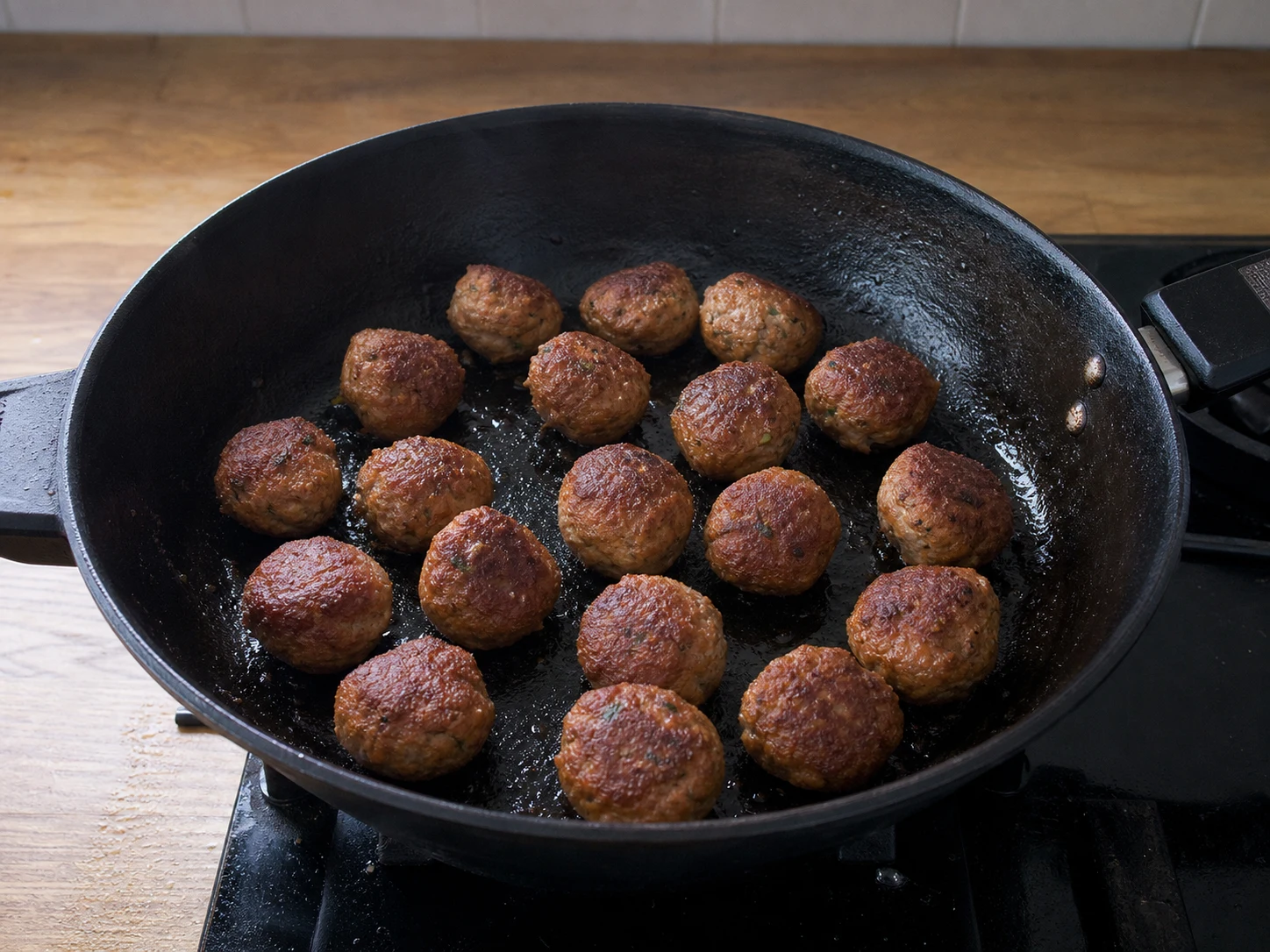
Combine 250 g of ground chicken, 30 g of plain breadcrumbs, 1 egg for frikkadels, 1/2 g of ground nutmeg, 1 g of black pepper for frikkadels, and 2 g of fine salt for frikkadels just until evenly mixed; overworking makes the meatballs firm. Divide the mixture into twice as many evenly sized small meatballs as parcels, so each parcel receives two. Heat 15 ml of coconut oil for frikkadels in a nonstick skillet over medium heat. Cook the frikkadels for 8 to 10 minutes, turning to brown all sides. Use a food thermometer to confirm the centers reach 74°C/165°F. Transfer them to a clean plate, then wash the bowl, utensils, work surface, and hands that contacted the raw mixture before handling cooked food.
08:00 first checkPrepare the banana leaves
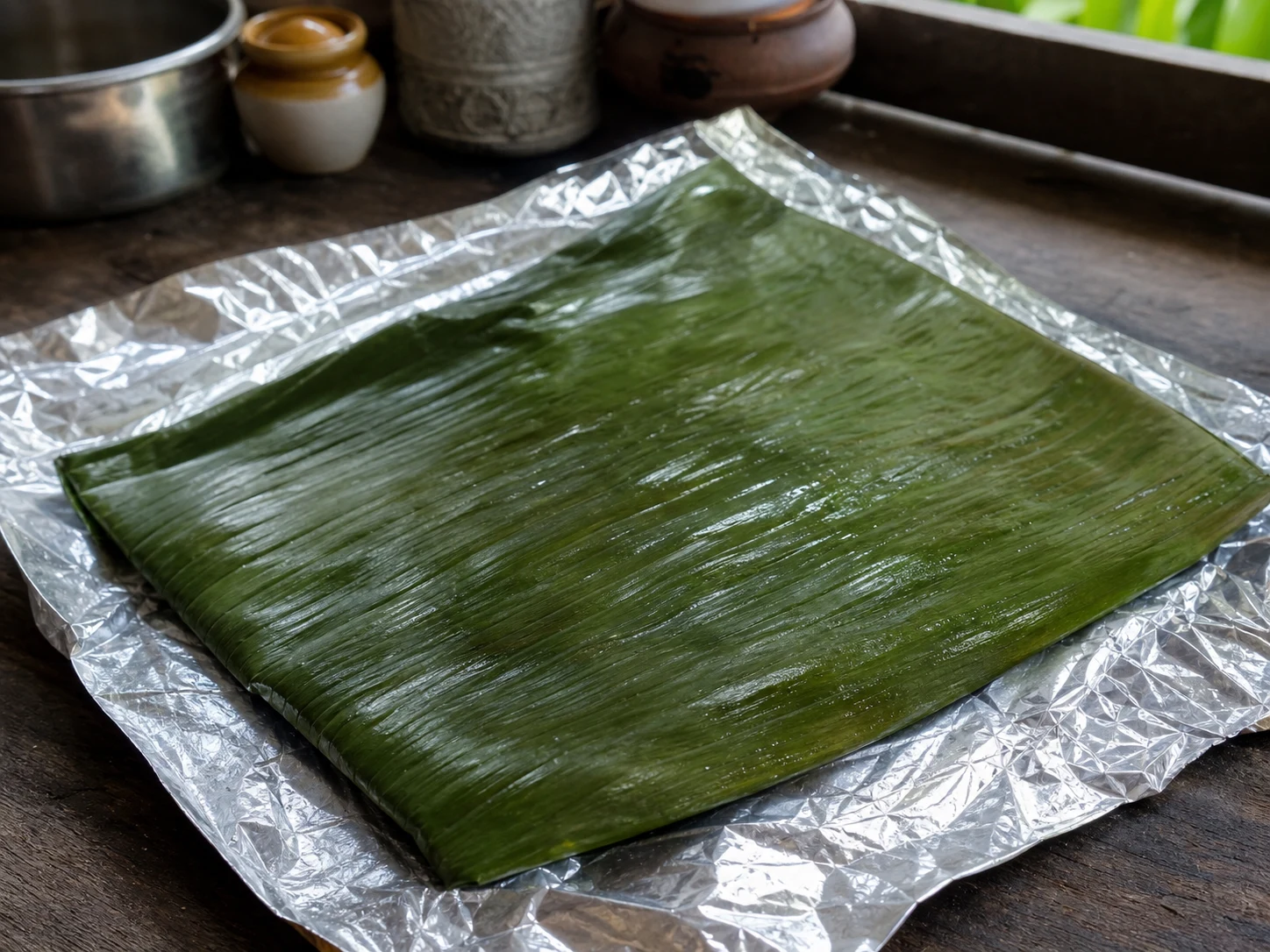
While the frikkadels cook, heat the oven to 190°C (375°F). Wipe 4 large banana leaf sheets clean and trim any thick central ribs that prevent folding. Pass each sheet briefly over a low gas flame with tongs, or warm it for a few seconds at a time in a dry skillet, until the surface turns glossy and the leaf bends without cracking. Lay each softened leaf on a sheet of foil large enough to support the parcel.
Assemble the lamprais parcels
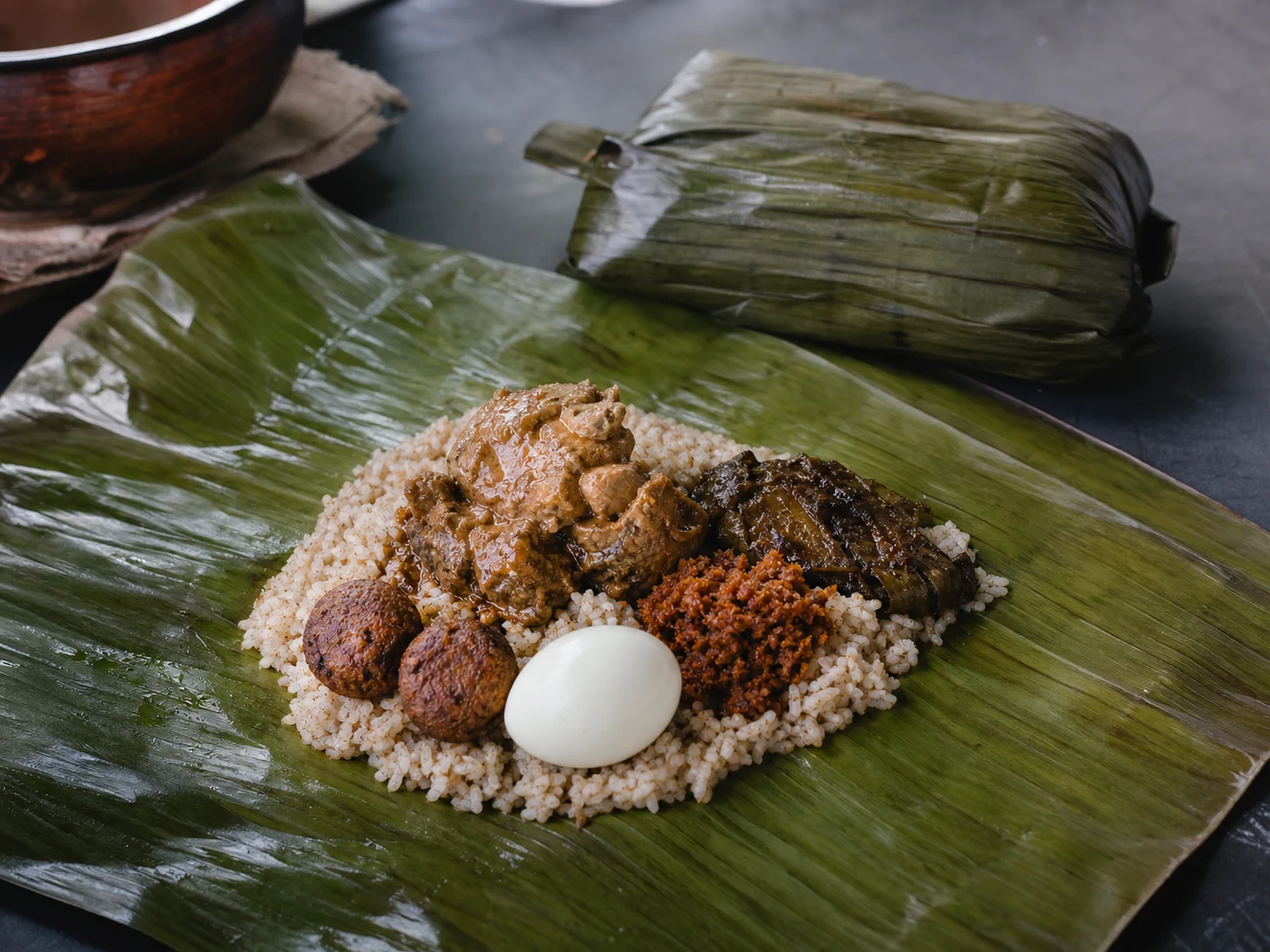
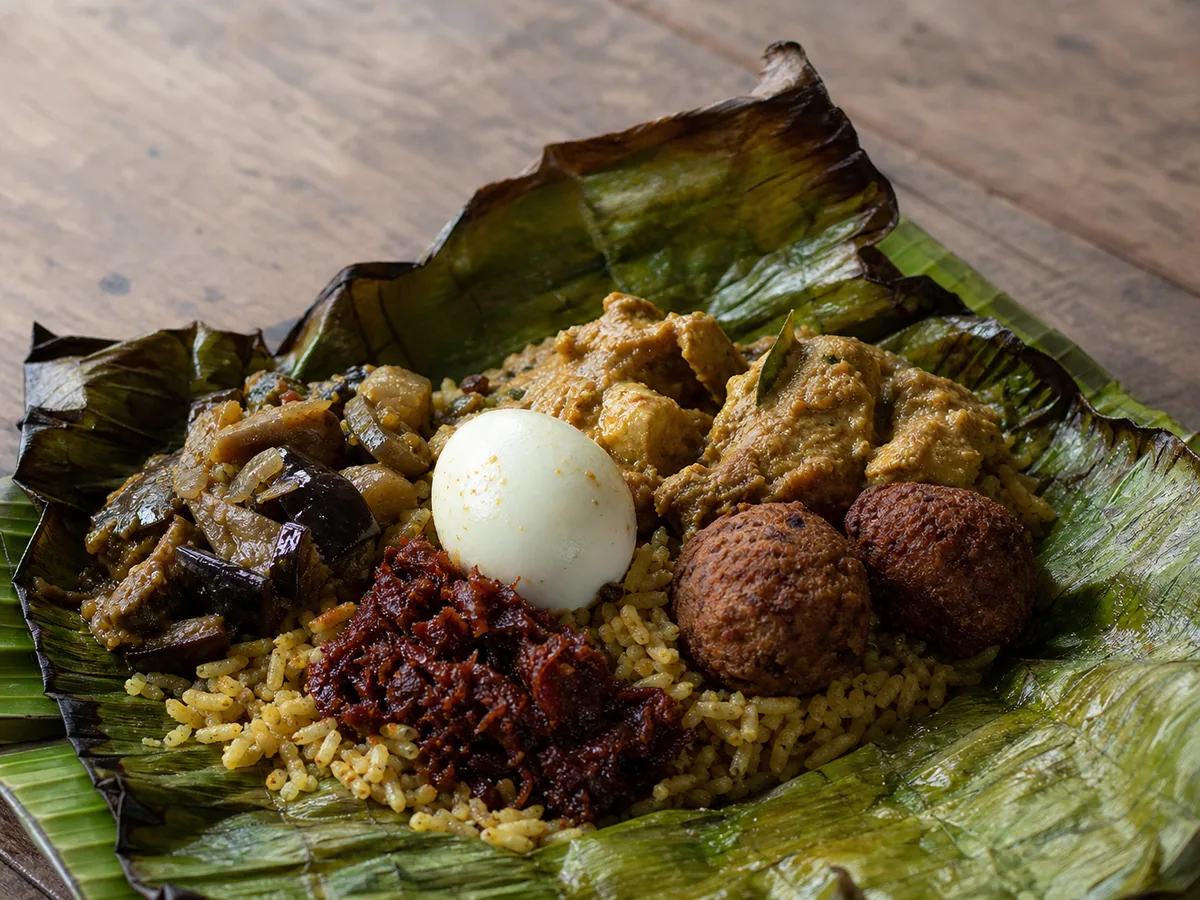
Proceed directly to assembly once the cooked components and softened leaves are ready. Divide the stock rice among the centers of the prepared leaves, keeping a broad border clear. Arrange chicken curry, eggplant pahi, seeni sambol, and two frikkadels per parcel in distinct compact portions over the rice rather than spreading wet sauce to the edges. Divide 4 large eggs for parcels among the parcels, placing one whole egg in each. Fold the long sides of each banana leaf over the filling, tuck in the short ends, turn the parcel seam-side down, and wrap the supporting foil around it without crushing the rice.
Bake and serve
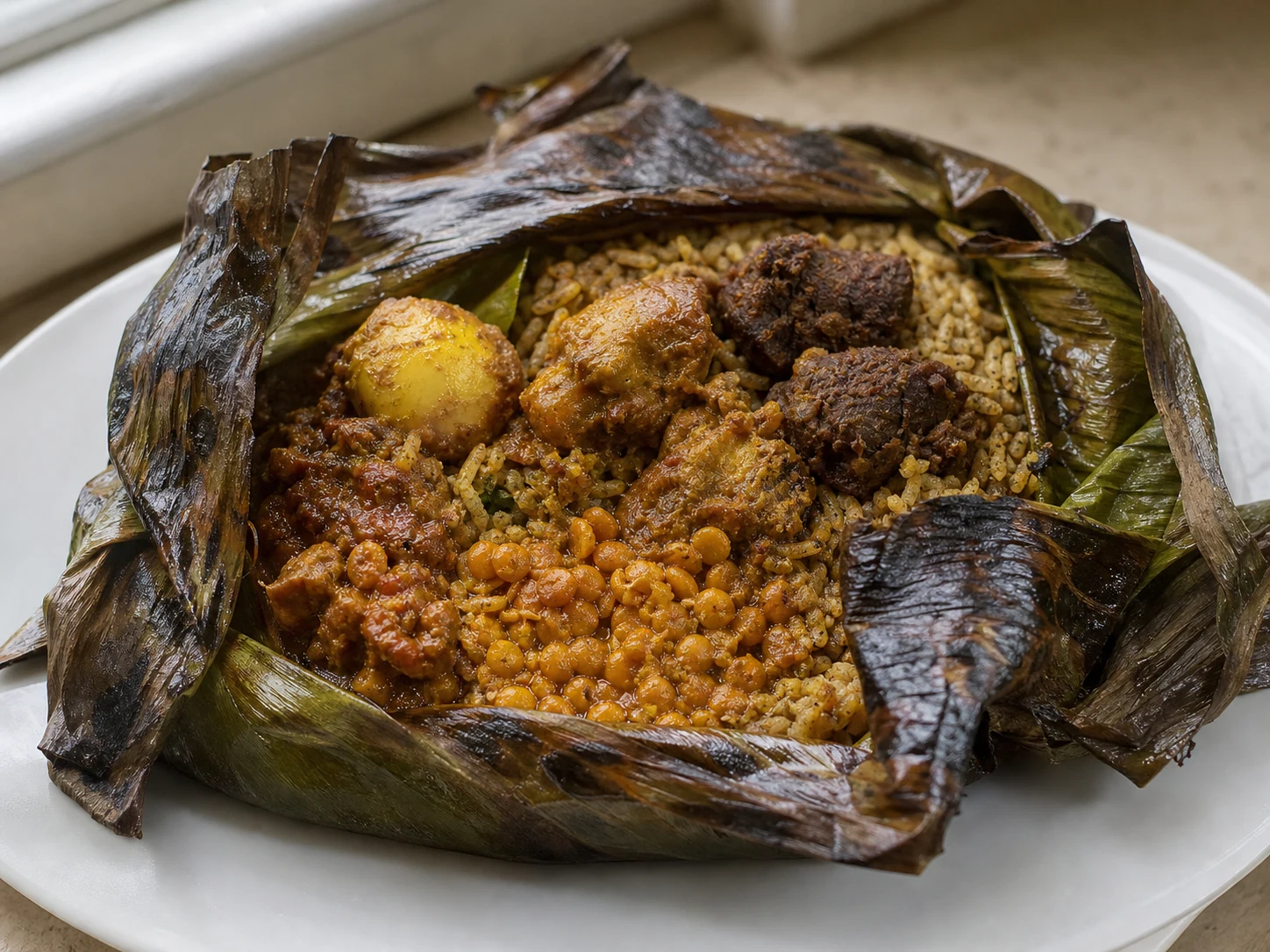
Set the parcels seam-side down on a baking sheet and bake at 190°C (375°F) for 20 minutes. The leaves should darken and smell grassy and toasted, while the fillings become piping hot without releasing a pool of liquid. Let the parcels stand for 5 minutes, then place one parcel on each plate and open the foil and leaf at the table.
20:00


Smart Substitutions
- No samba rice? Use another short-grain white rice, or basmati for a looser, more separate texture.
- No banana leaves? Wrap the portions in baking parchment and foil; the parcel will cook properly, though it will not have the same leaf aroma.
- Prefer less heat? Reduce both measures of chile flakes by half while keeping the curry powder, tamarind, and whole spices unchanged.
- No ghee? Use unsalted butter for the rice, or replace the ghee with coconut oil.
Tips and Variations
- Cook the seeni sambol while the chicken curry simmers; both need steady but mostly unattended reduction.
- Keep the rice slightly firmer than ordinary steamed rice because it receives another enclosed bake.
- Warm banana leaves only until pliable. Prolonged direct flame makes the edges brittle and difficult to seal.
What Went Wrong?
- Parcels leak liquid Return any loose curry or relish to the pan and reduce it until a spoon dragged across the base leaves a clear trail.
- Banana leaves split Warm them a little more and use foil underneath to support weak seams without squeezing the filling.
- Rice turns soft and clumpy Drain rinsed rice thoroughly, keep the cooking heat low, and spread the finished rice so trapped steam can escape before assembly.
- Frikkadels are dense Mix only until the seasoning is distributed and shape with light pressure rather than compacting the meat.
Nutrition Estimate
- Fiber: 12 g per serving
- Sodium: 1230 mg per serving
Nutrition disclaimer:This recipe is provided for general cooking information only. Nutrition values are estimates and may vary by ingredients, brands, preparation methods, and serving sizes. Check ingredient labels and follow appropriate food-safety practices. This content is not medical, dietary, allergy, or professional food-safety advice.
FAQ
Found an error or have a suggestion?
Help us improve this recipe. Send us your feedback and include the recipe name so we can take a look.