Method
Prepare the oven and dry ingredients
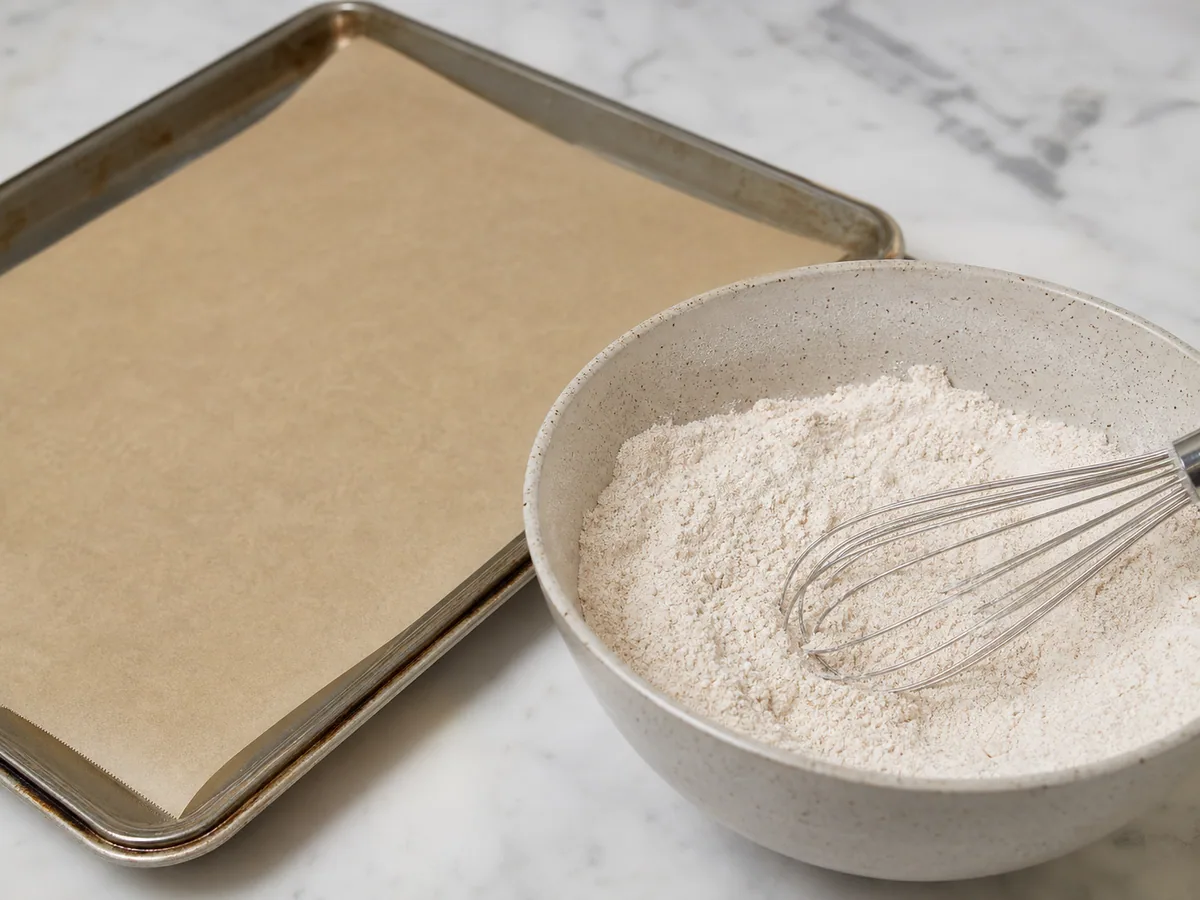
Heat the oven to 220°C (425°F). Line a heavy baking sheet with parchment. In a wide bowl, whisk 300 g of whole-wheat flour, 200 g of all-purpose flour, 5 g of baking soda, and 7 g of fine sea salt, breaking up every visible clump of baking soda so the loaf rises evenly.
Mix a soft dough
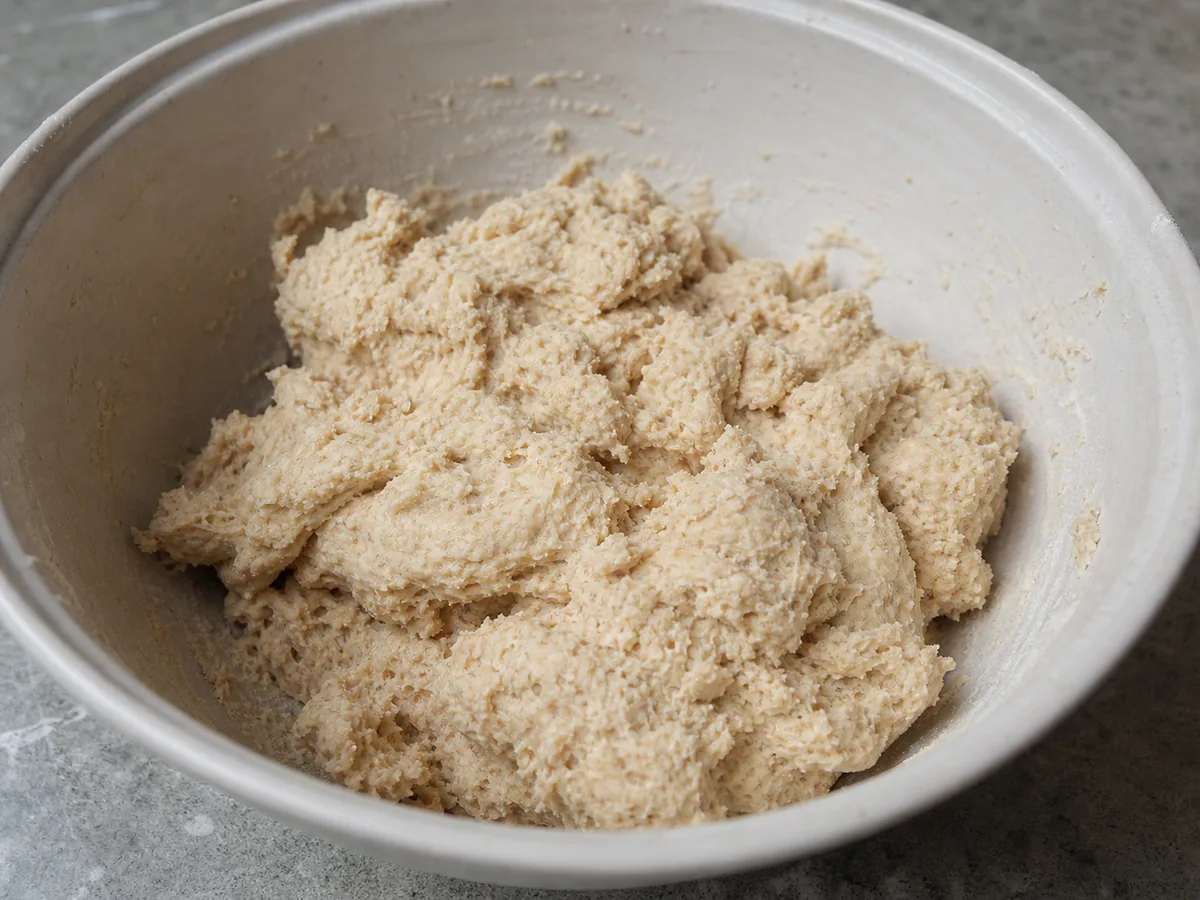
Make a well in the dry ingredients. Add 420 ml of cultured low-fat buttermilk in two additions, stirring from the center outward with a sturdy spoon. Stop as soon as no dry pockets remain. The dough should look rough, soft, and tacky rather than smooth. Do not taste raw dough.
Shape and score the loaf
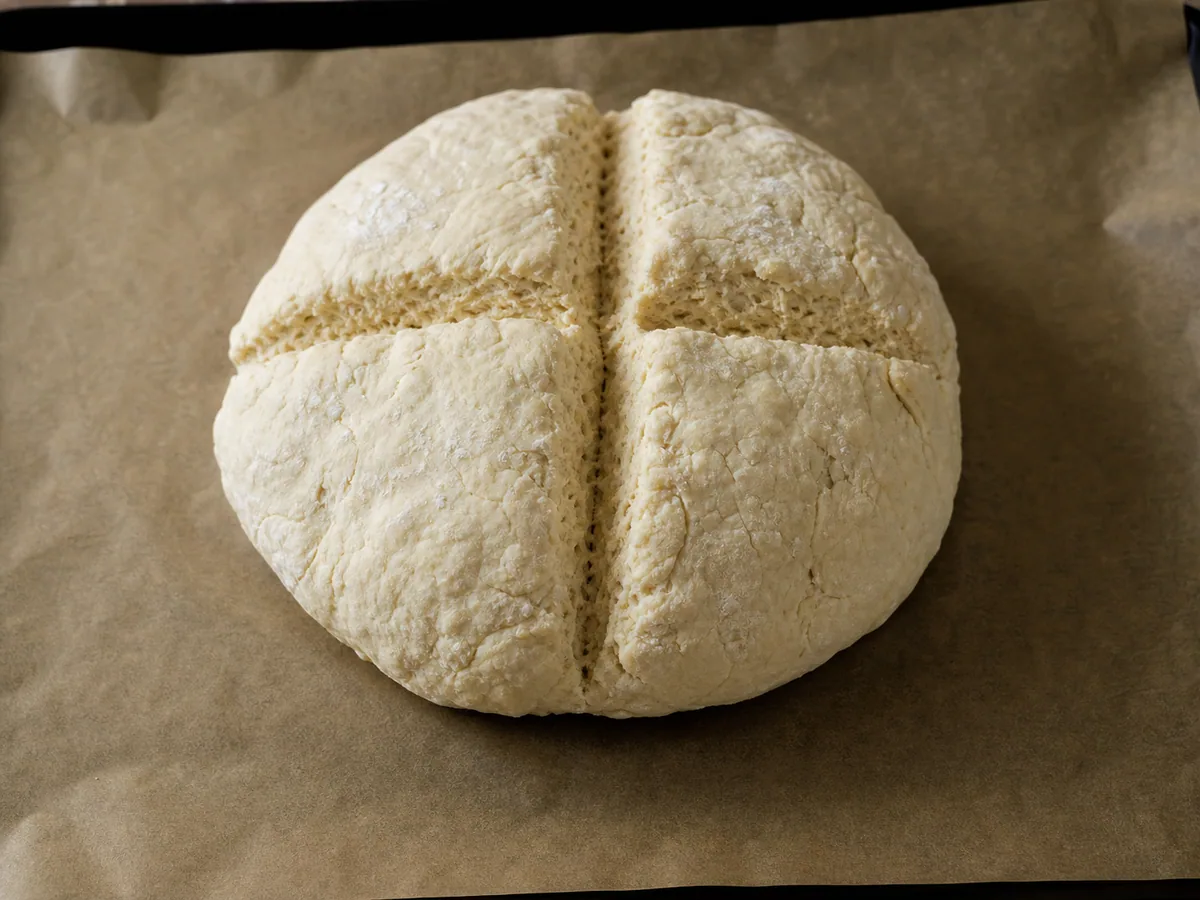
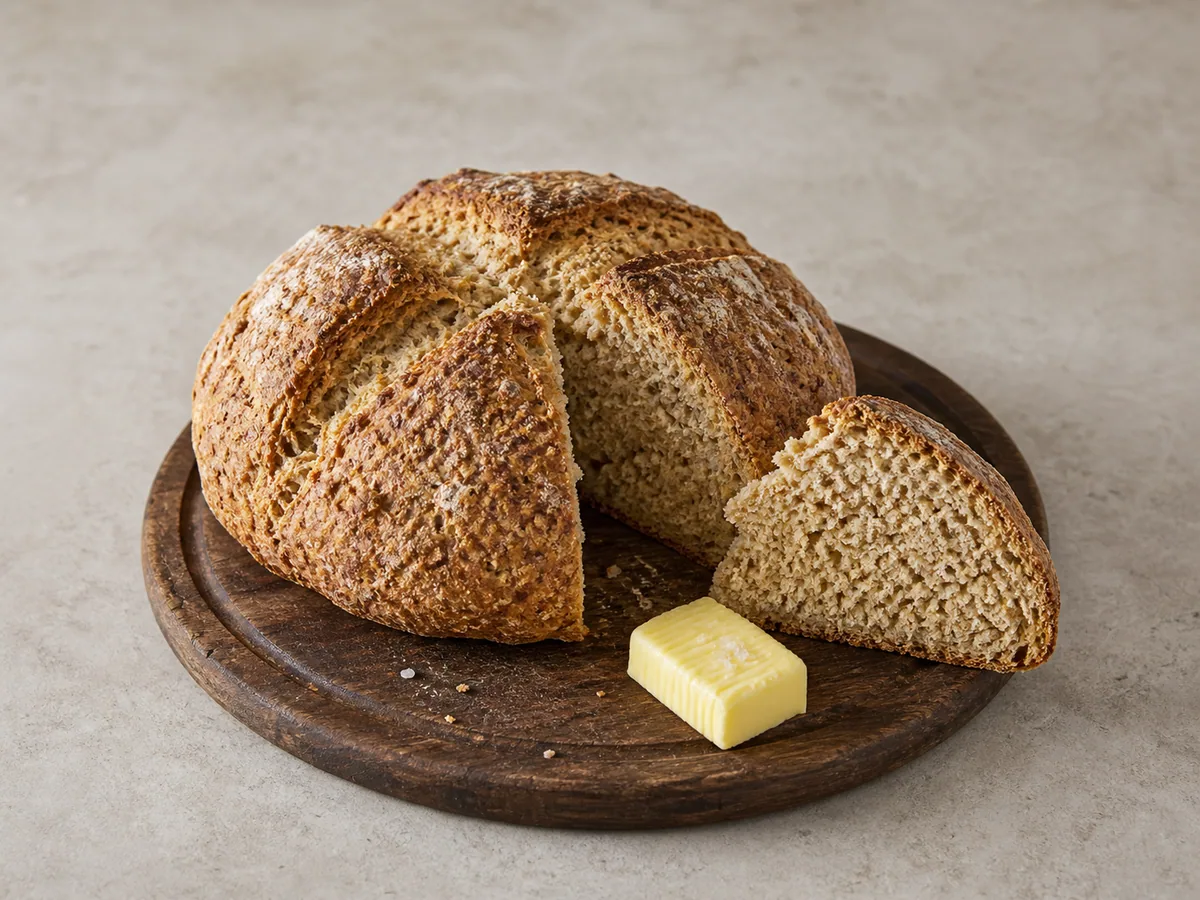
Turn the dough onto the prepared parchment. With lightly damp hands, gather it into one round about 5 cm (2 in) thick, handling it only enough to hold together. For the default 8-serving batch, make the round about 18 cm (7 in) across; for 6, 4, or 2 servings, make one round about 16 cm (6 1/4 in), 13 cm (5 in), or 9 cm (3 1/2 in) across, respectively. Cut a 1.5 cm (1/2 in) deep cross across the top, reaching close to the edges. Wash hands, the mixing bowl, utensils, and any work surface touched by raw flour or dough.
Start with high heat
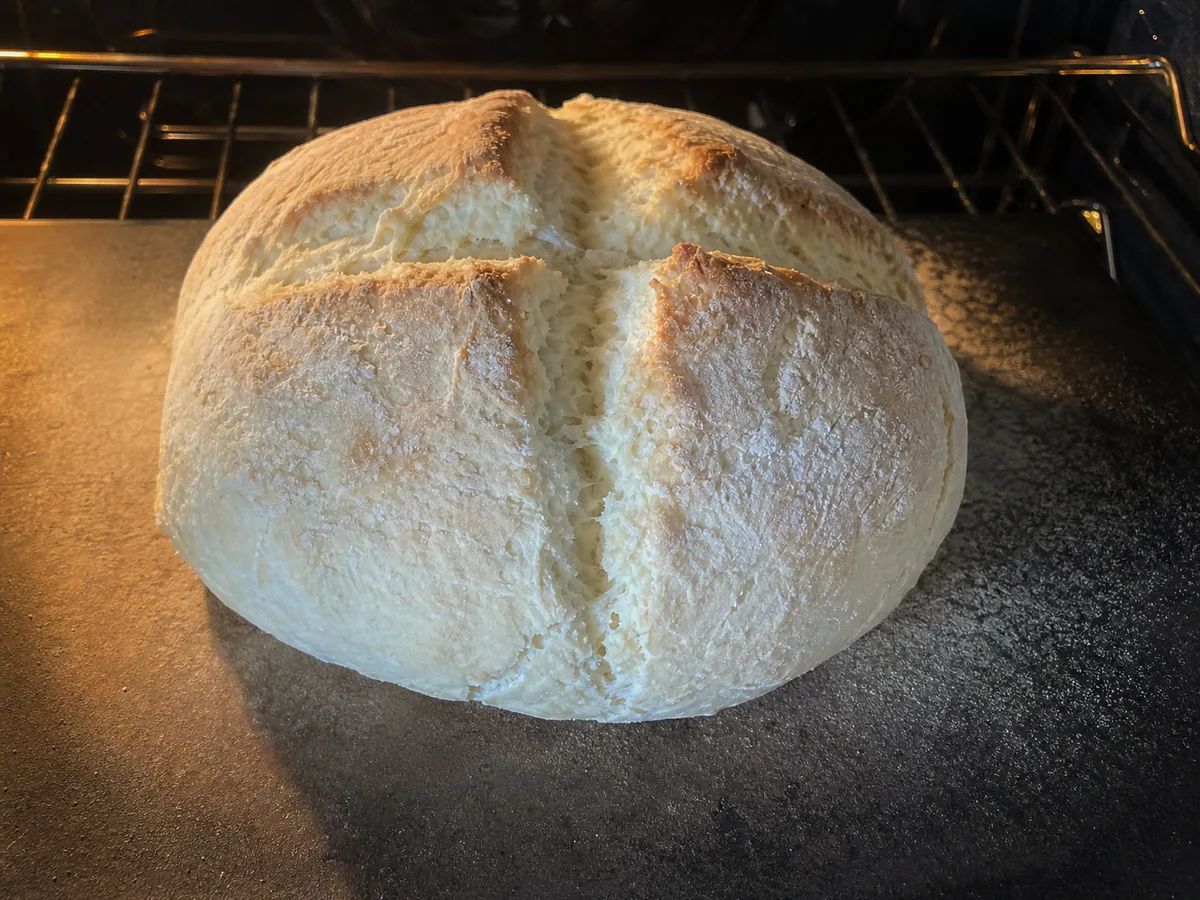
Bake at 220°C (425°F) for 15 minutes. The loaf should begin to lift along the scored cross and take on light color around the edges.
15:00Finish baking the loaf
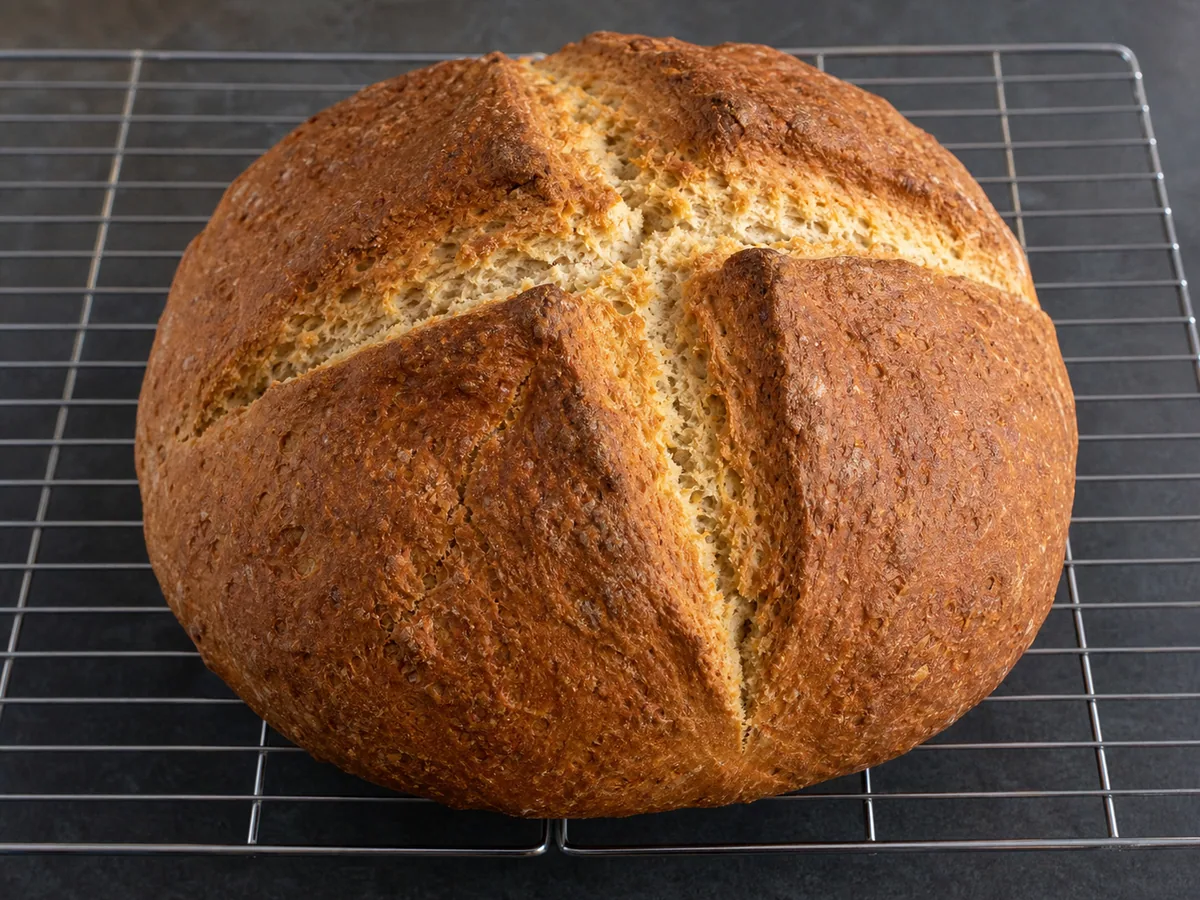
Reduce the oven to 200°C (400°F). For the default 8-serving loaf, bake for 25 to 30 minutes more and begin checking at 25 minutes. For 6, 4, or 2 servings, begin checking after about 20, 15, or 10 minutes at 200°C (400°F), respectively, and continue baking as needed. The loaf is ready when it is deeply browned, the base sounds hollow when tapped, and the center reaches 93°C/200°F on an instant-read thermometer. If the top darkens too quickly, cover it loosely with foil for the final few minutes.
25:00Rest before slicing
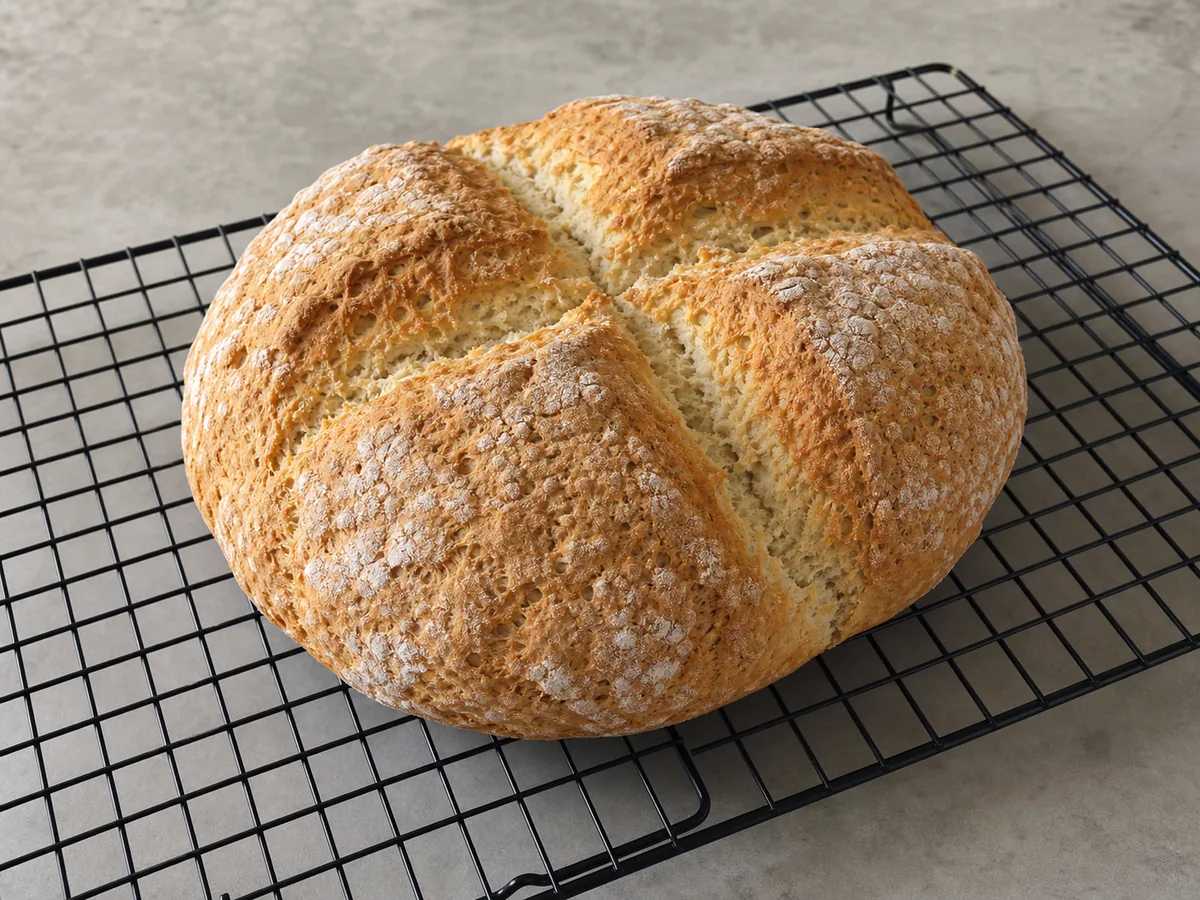
Move the loaf to a wire rack and let it rest for 20 minutes so the steam can finish setting the crumb. Cut into wedges or thick slices and serve with salted butter (optional).
20:00


Smart Substitutions
- No cultured buttermilk? Use plain kefir in the same quantity; its acidity and thickness perform similarly in the dough.
- No whole-wheat flour? Replace it with all-purpose flour and add the buttermilk gradually, stopping when the dough is soft and tacky.
- Want a coarser crumb? Use stone-ground wholemeal flour for the whole-wheat portion and allow a little extra time for it to absorb the buttermilk while mixing.
- Using table salt? Keep the metric weight the same, or use a slightly smaller spoon measure because fine table salt packs more densely.
Tips and Variations
- Measure the baking soda carefully and whisk it through the flour thoroughly; concentrated pockets can taste bitter or soapy.
- Mix and shape promptly once the buttermilk meets the dry ingredients because the leavening reaction begins immediately.
- Keep the cross deep and broad so the thick center bakes at the same pace as the outer crumb.
- Avoid tasting raw dough, and wash hands, utensils, and counters after handling raw flour.
What Went Wrong?
- Bread is dense and low The dough may have been overworked or left standing before baking. Mix only until combined, shape gently, and bake immediately.
- Crumb tastes bitter or soapy Too much baking soda or uneven mixing is the usual cause. Weigh it accurately and break up every clump before adding buttermilk.
- Loaf spreads instead of rising The dough was probably too wet or shaped too loosely. Add buttermilk in stages and gather the dough into a compact round without kneading.
- Center is gummy Bake until the center reaches 93°C/200°F, then give the loaf the full resting time before cutting.
Nutrition Estimate
- Fiber: 5 g per serving
- Sodium: 600 mg per serving
Nutrition disclaimer:This recipe is provided for general cooking information only. Nutrition values are estimates and may vary by ingredients, brands, preparation methods, and serving sizes. Check ingredient labels and follow appropriate food-safety practices. This content is not medical, dietary, allergy, or professional food-safety advice.
FAQ
Found an error or have a suggestion?
Help us improve this recipe. Send us your feedback and include the recipe name so we can take a look.