Method
Prepare the pan and dry ingredients
Heat the oven to 175°C (350°F). Grease a 23 x 33 cm (9 x 13 in) metal baking pan (for 8 servings), line the bottom with parchment, then grease the parchment. For scaled batches, choose a pan that keeps the batter at a similar depth. In a large bowl, whisk 250 g of all-purpose flour, 250 g of granulated sugar, 20 g of natural unsweetened cocoa powder, 5 g of baking soda, and 3 g of fine salt for cake until the mixture is evenly colored and no cocoa lumps remain.
Mix and spread the batter
In a second large bowl, whisk 240 ml of buttermilk, 120 ml of neutral vegetable oil, 2 large eggs, 10 ml of vanilla extract for cake, 15 ml of distilled white vinegar, and 15 ml of liquid red food coloring until smooth and evenly red. Pour the wet mixture into the dry ingredients and whisk just until no dry pockets remain. Scrape the bottom and sides with a flexible spatula; the batter should be fluid, glossy, and uniform. Transfer it to the prepared pan and spread it into an even layer.
Bake the cake
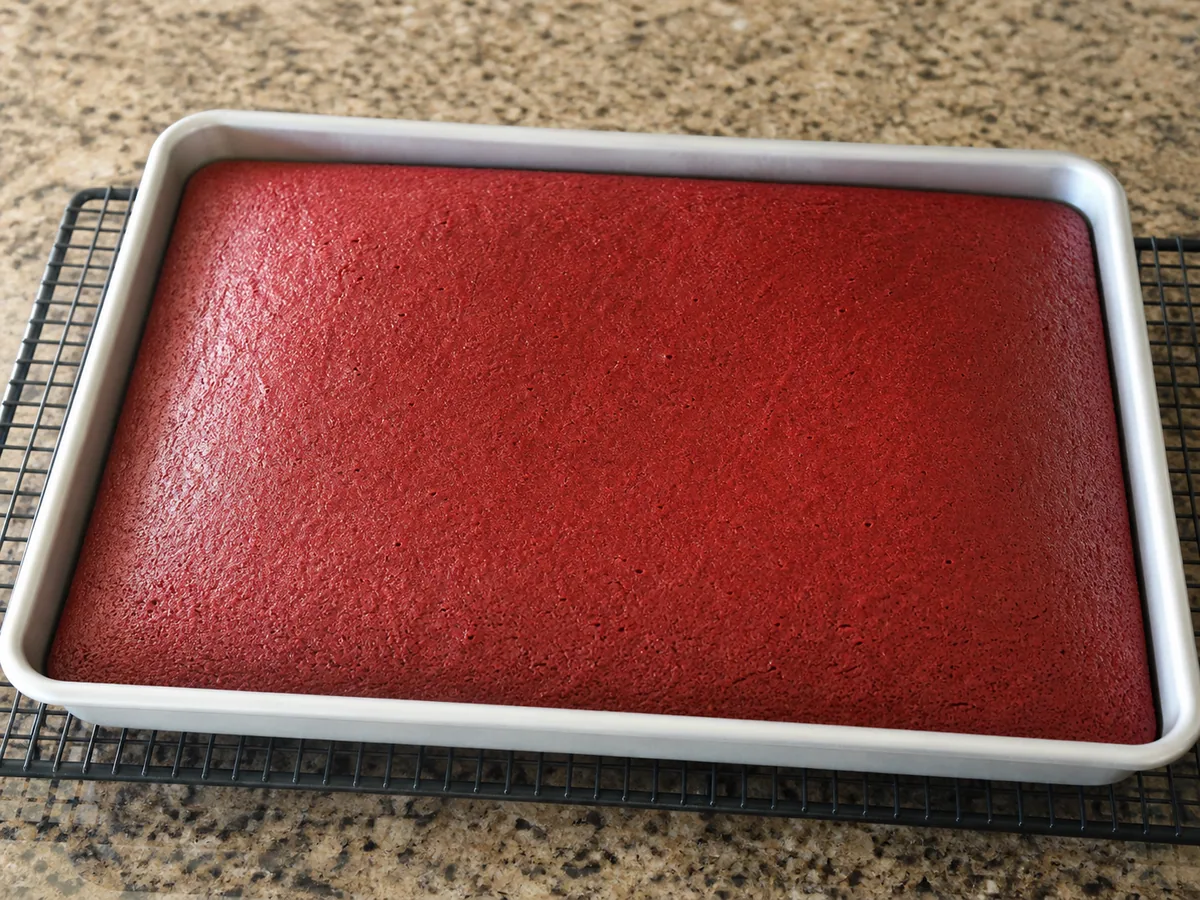
Bake on the center rack for 28 to 34 minutes, starting the first doneness check at 28 minutes. The cake is ready when the center springs back after a light touch, the edges just begin to pull from the pan, and a skewer shows moist crumbs but no wet batter. For an optional objective check, insert a food thermometer into the center without touching the pan; a fully set red velvet cake will generally register about 93 to 96°C (200 to 205°F).
28:00Cool the cake completely
Set the pan on a wire rack and let the cake cool completely, about 60 minutes. The top should feel room-temperature and firm enough that a fingertip leaves no warm indentation before frosting.
60:00Make the cream cheese frosting
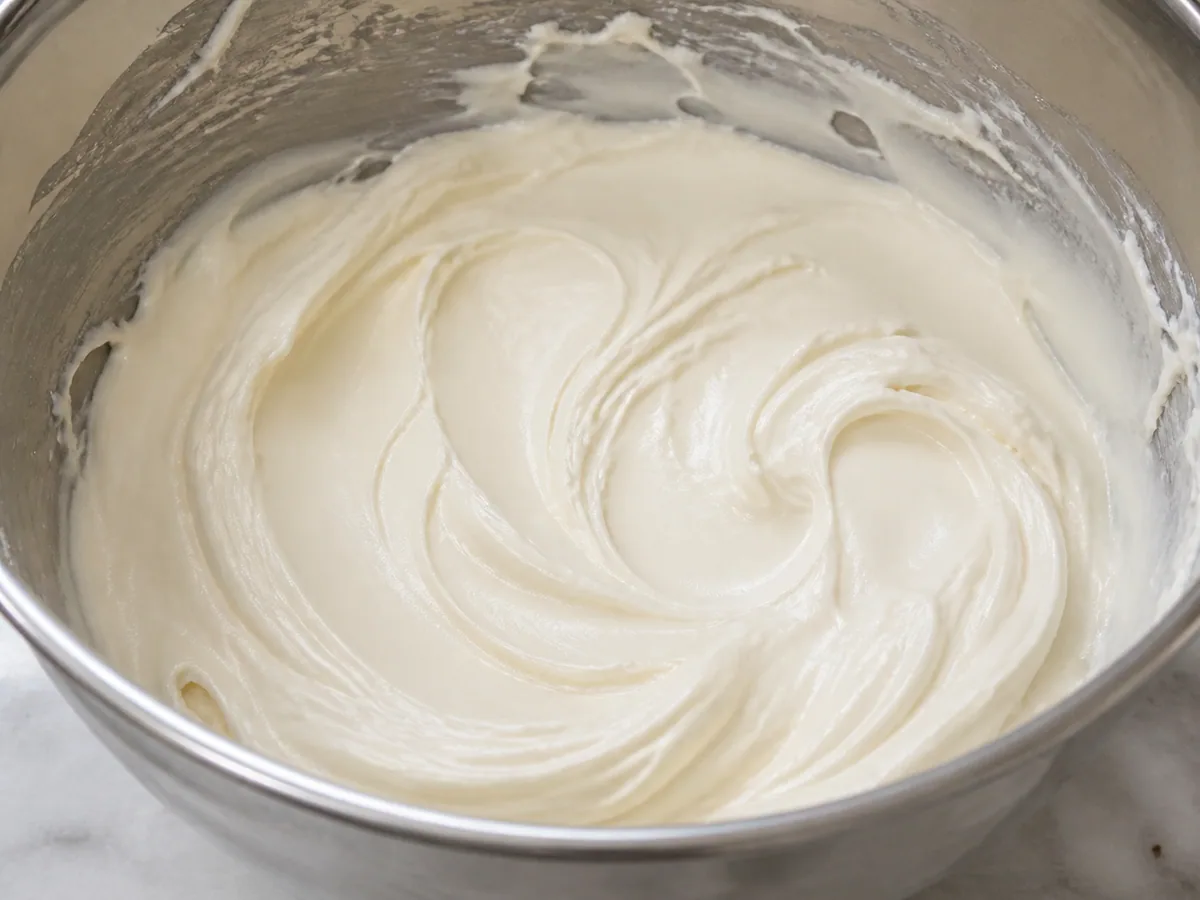
Beat 225 g of full-fat cream cheese with 85 g of unsalted butter on medium speed until completely smooth, scraping the bowl once. Add 240 g of powdered sugar, 5 ml of vanilla extract for frosting, and 1 g of fine salt for frosting. Mix on low speed until the sugar is incorporated, then beat on medium speed until thick, creamy, and free of lumps.
Frost and serve
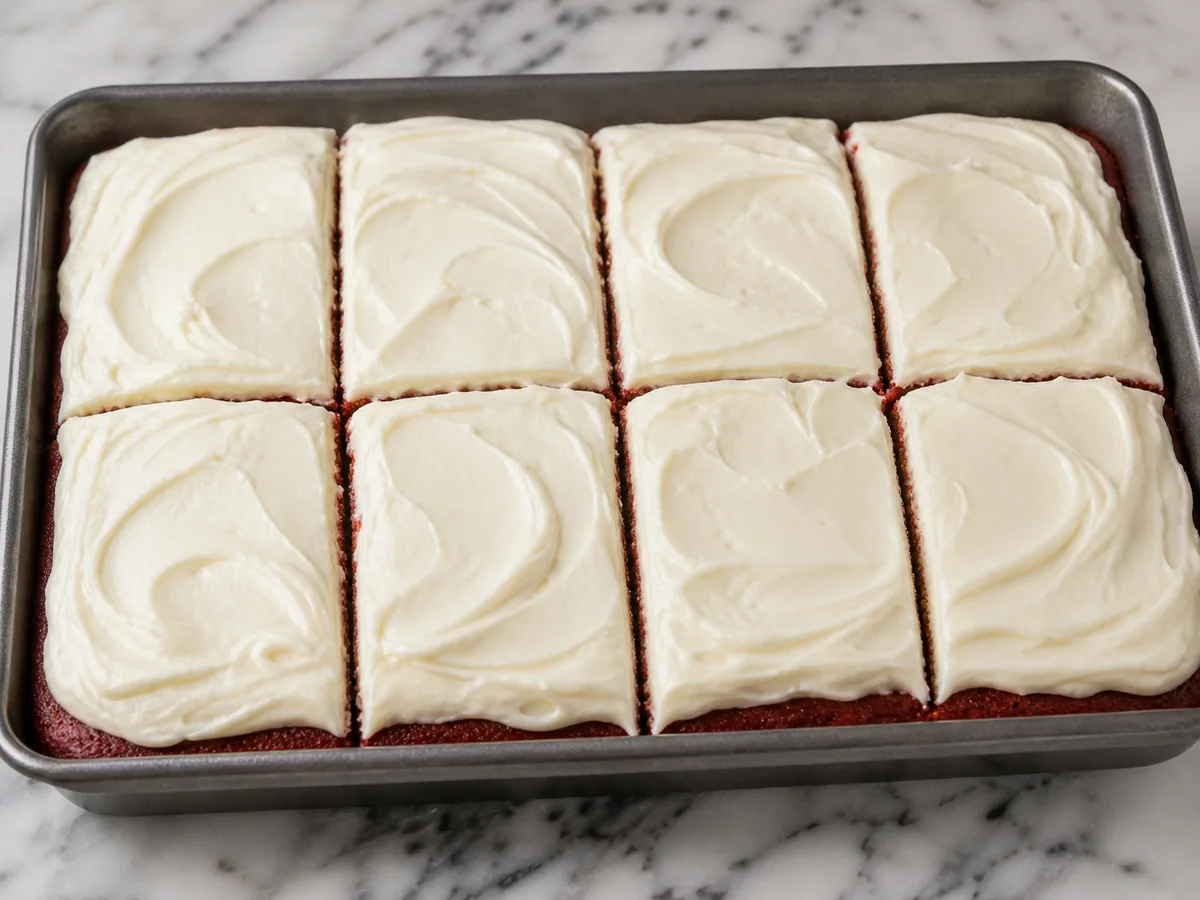
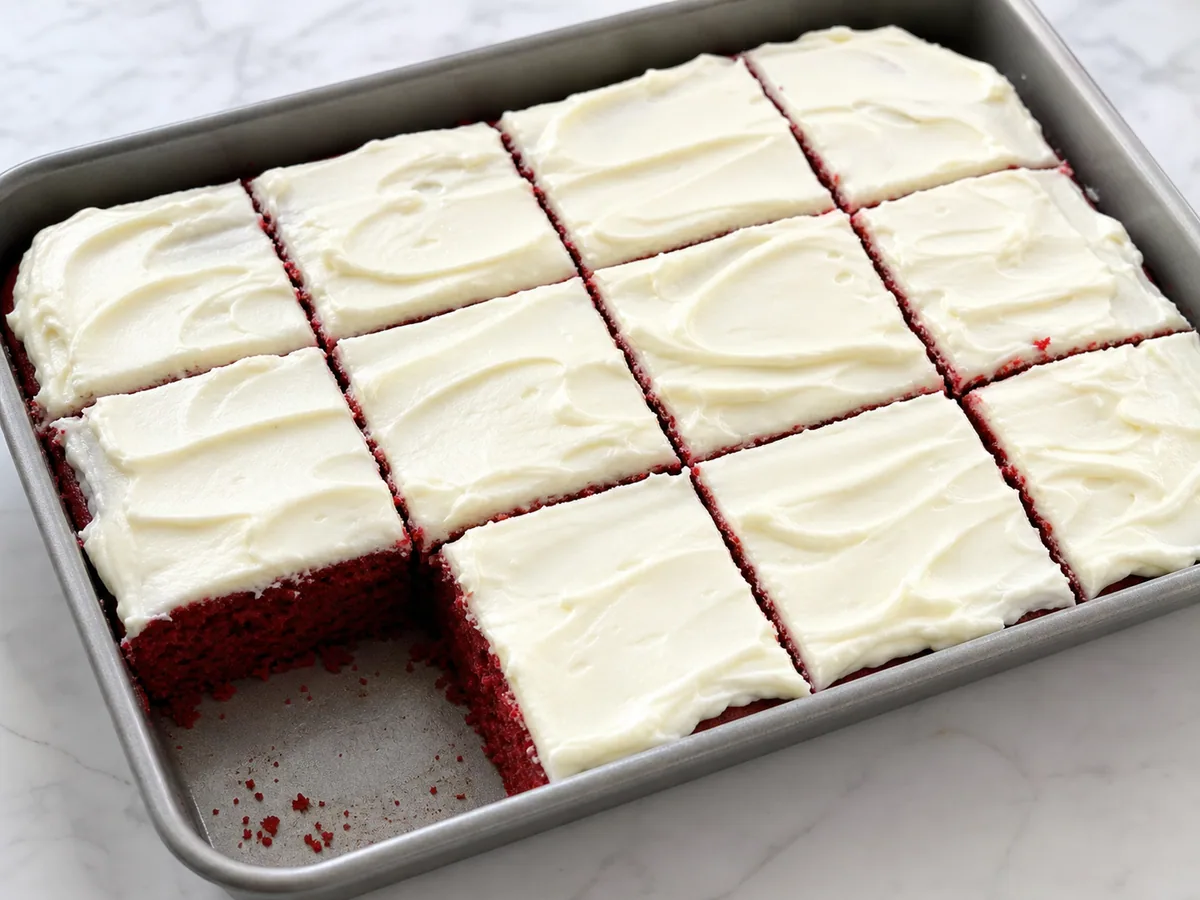
Spread the frosting over the completely cooled cake, working from the center toward the corners and leaving relaxed spatula swirls on top. Cut the cake into 8 even rectangles and serve directly from the pan or lift each piece out with a thin spatula.


Smart Substitutions
- No buttermilk? Use the same volume of plain kefir, or thin plain yogurt with a small splash of water until it pours easily.
- No neutral vegetable oil? Use canola, sunflower, grapeseed, or another mild-tasting baking oil.
- Prefer a softer red? Reduce the food coloring for a muted burgundy cake; the flavor and texture remain the same.
- No cream cheese? Use mascarpone for a milder frosting, beating only until smooth so it does not become loose.
Tips and Variations
- Use natural unsweetened cocoa rather than Dutch-process cocoa for the clearest red velvet tang and a lighter cocoa note.
- Weigh the flour when possible; too much flour is the quickest route to a dry, tight sheet cake.
- Wait until the cake is completely cool before frosting, or the cream cheese mixture will soften and slide.
What Went Wrong?
- Cake has a dense or gummy strip Mix only until the dry ingredients disappear and use a pan that keeps the batter at the intended shallow depth.
- Cake looks brown instead of red Use natural cocoa, measure it accurately, and use liquid red food coloring intended for baking.
- Frosting is too loose Beat in a little more powdered sugar, one spoonful at a time, until the frosting holds soft swirls.
- Frosting has small lumps Beat the cream cheese and butter completely smooth before adding powdered sugar, and scrape the bowl thoroughly.
Nutrition Estimate
- Fiber: 2 g per serving
- Sodium: 520 mg per serving
Nutrition disclaimer:This recipe is provided for general cooking information only. Nutrition values are estimates and may vary by ingredients, brands, preparation methods, and serving sizes. Check ingredient labels and follow appropriate food-safety practices. This content is not medical, dietary, allergy, or professional food-safety advice.
FAQ
Found an error or have a suggestion?
Help us improve this recipe. Send us your feedback and include the recipe name so we can take a look.