Method
Prepare the tomatoes
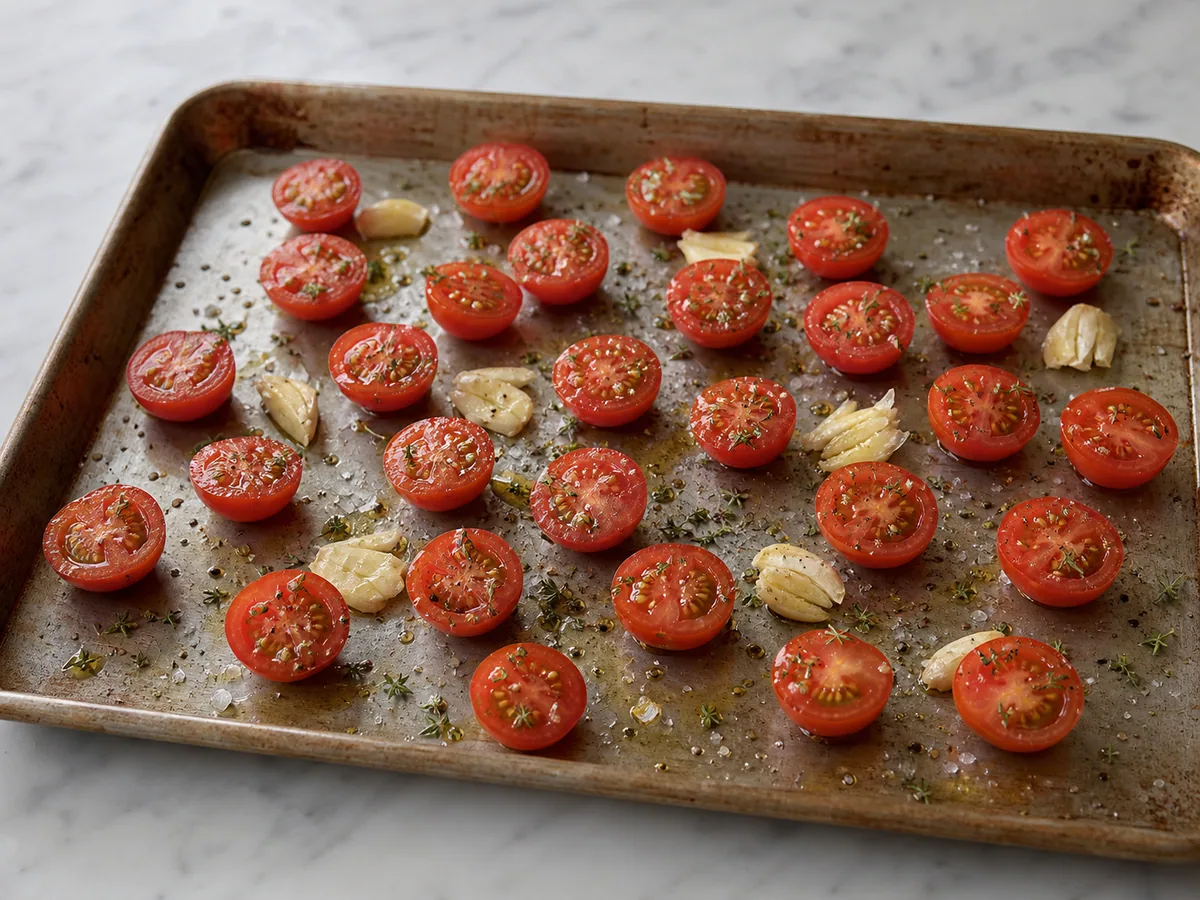
Heat the oven to 220°C (425°F) with a rack in the upper third. Halve 600 g of cherry tomatoes. Lightly crush 2 garlic cloves, then add both to a rimmed baking sheet large enough to hold the tomatoes in one layer. Strip the leaves from 2 g of fresh thyme over the tomatoes. Add 30 ml of extra-virgin olive oil, 1 g of kosher salt for tomatoes, and 1 g of black pepper, then toss and turn the tomatoes cut-side up.
Roast until jammy
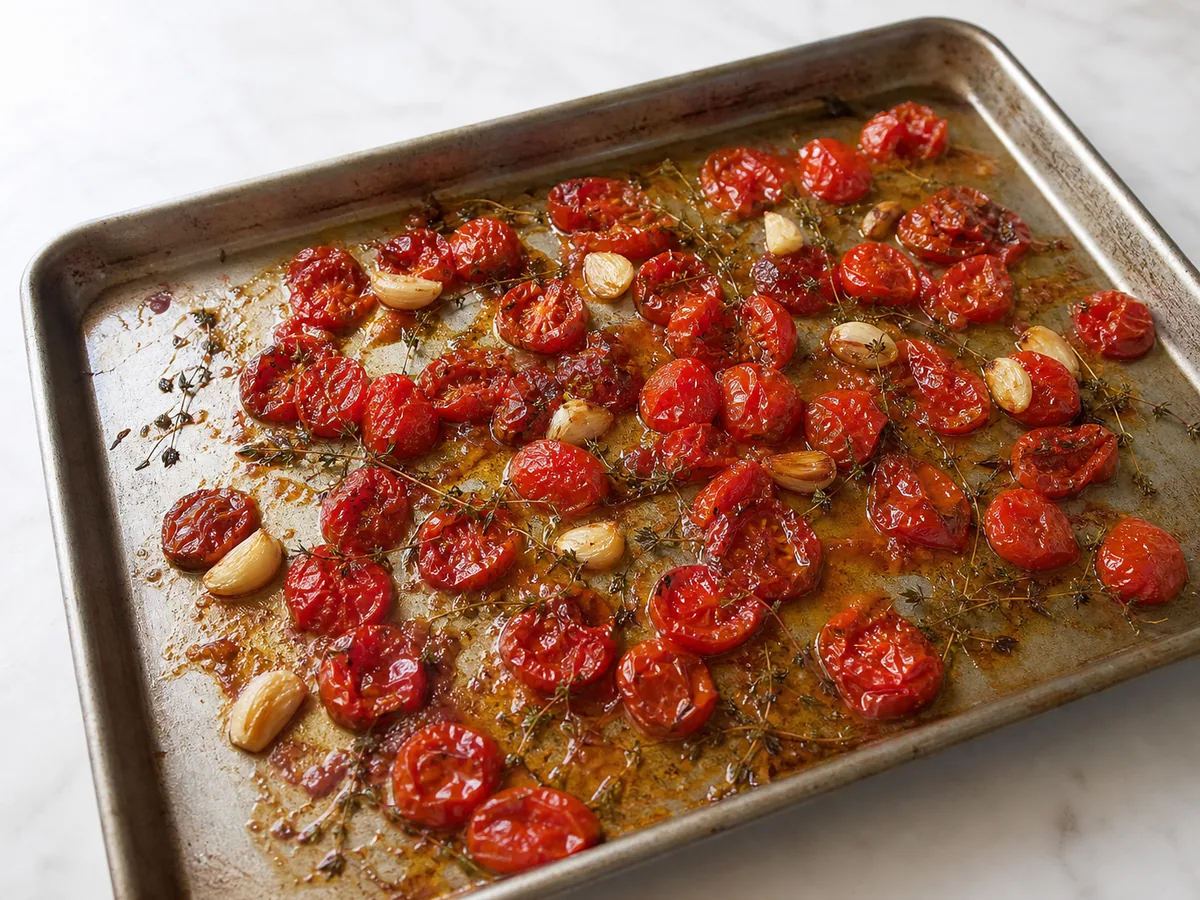
Roast for 20 to 25 minutes, until the tomatoes have collapsed, their edges are browned, and the juices look syrupy rather than watery. Start checking at 20 minutes. If the garlic darkens faster than the tomatoes, tuck it beneath the fruit for the rest of the roasting time.
20:00Start the polenta
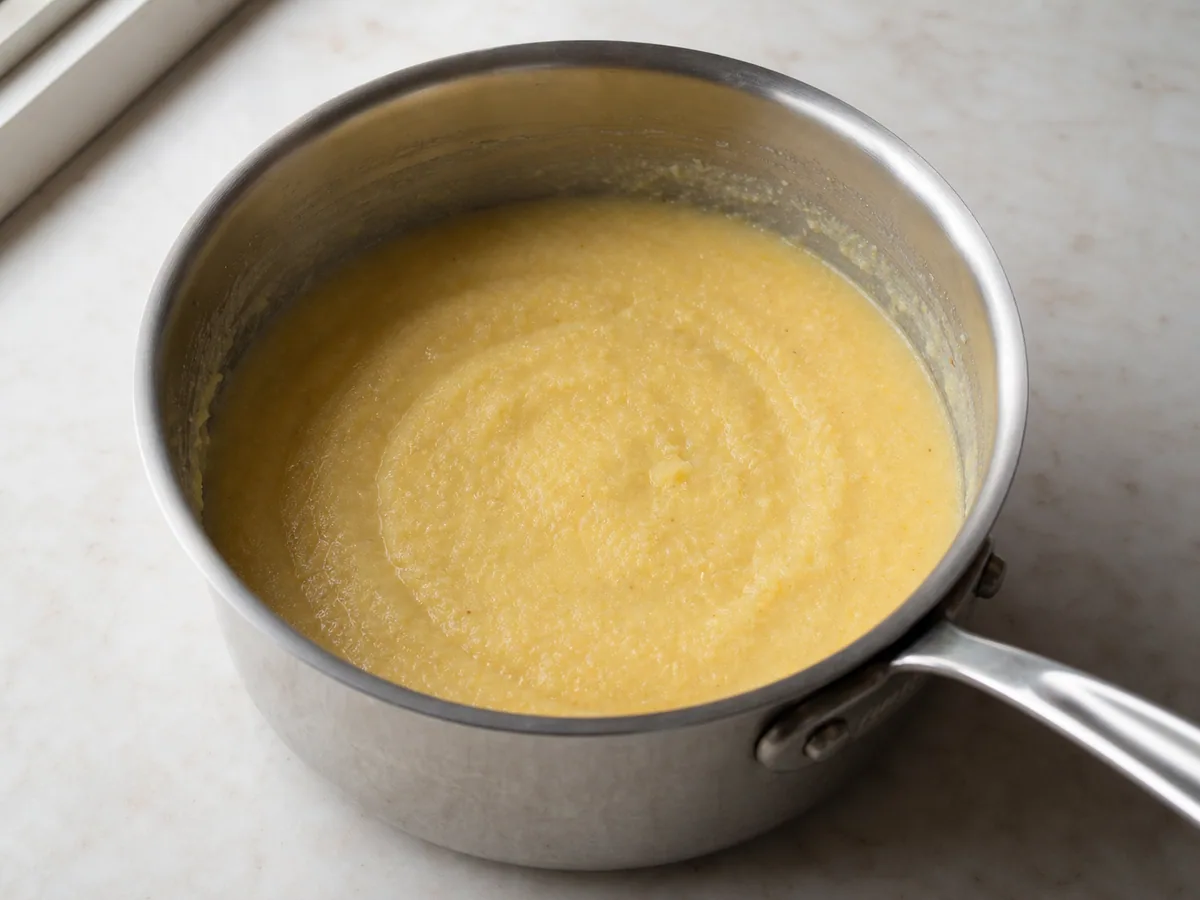
While the tomatoes roast, bring 960 ml of water, 240 ml of whole milk, and 3 g of kosher salt for polenta to a steady simmer in a heavy saucepan over medium-high heat. Reduce the heat to medium. Whisk constantly while pouring in 160 g of coarse yellow polenta in a thin, steady stream, then keep whisking for 2 minutes, until no dry pockets remain and the mixture begins to thicken.
02:00Cook until tender
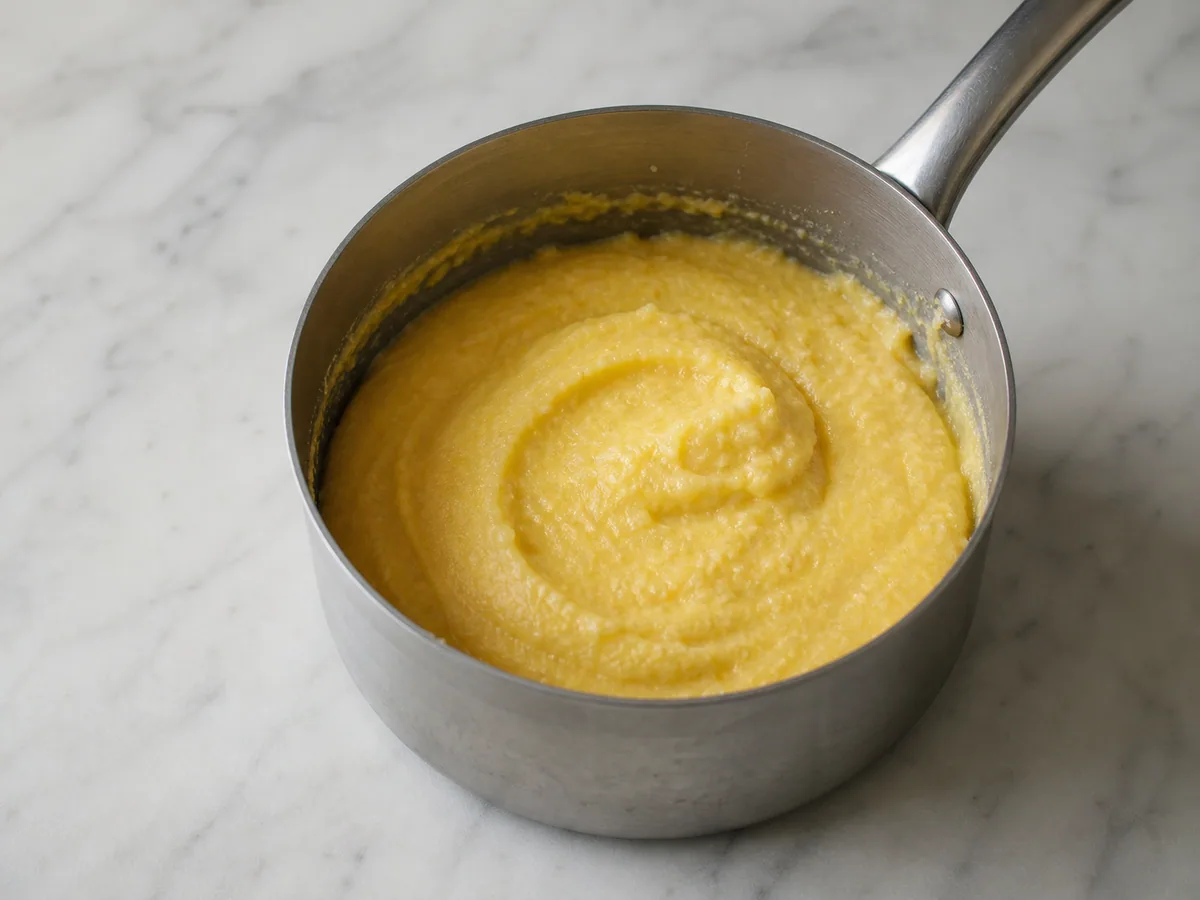
Reduce the heat to low so the surface gives an occasional lazy bubble. Cook for 40 to 45 minutes, stirring thoroughly every 5 minutes and scraping the bottom and corners of the saucepan. Start checking at 40 minutes. The polenta is ready when the grains taste tender rather than gritty and a spoonful settles into a soft mound that slowly spreads. Add a splash of hot water if it becomes stiff before the grains are tender.
40:00Finish the polenta
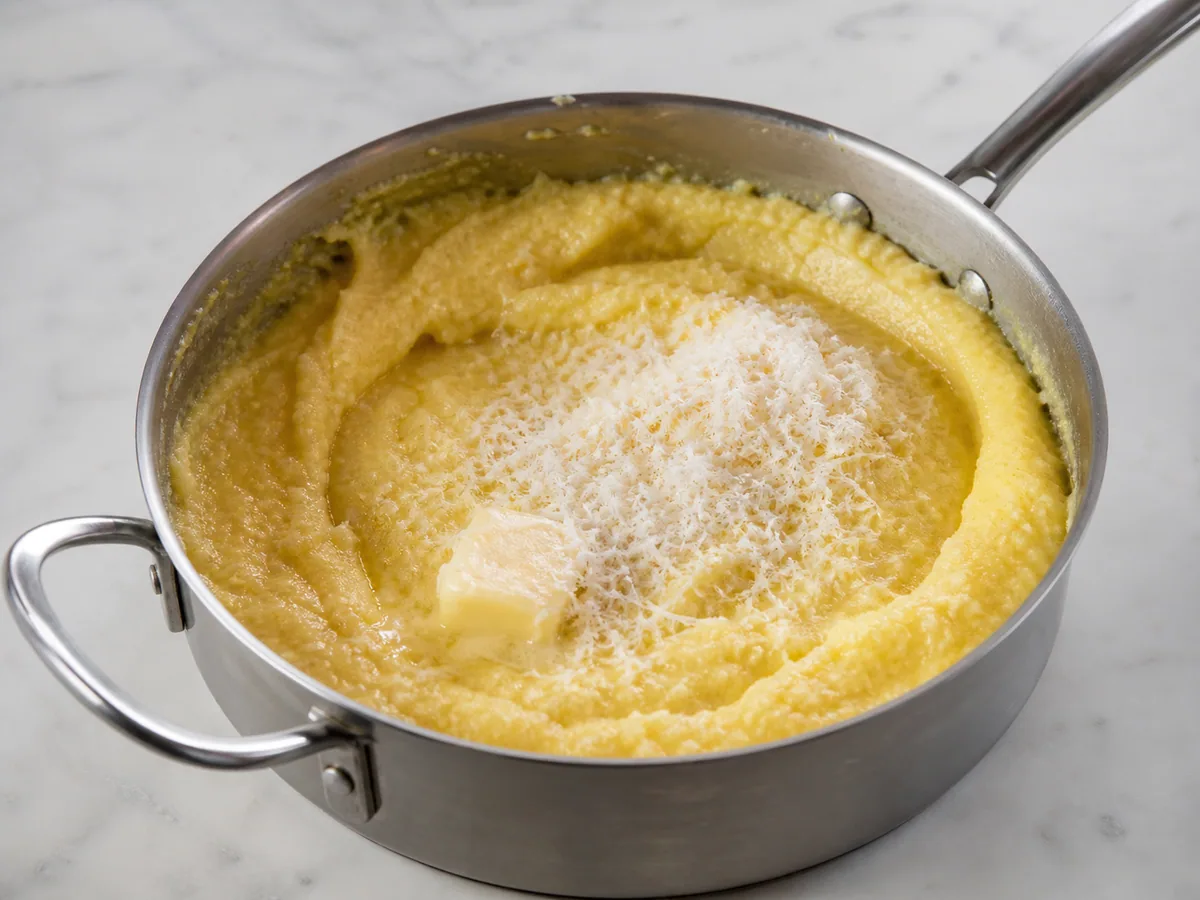
Finely grate 40 g of Parmigiano Reggiano. Remove the saucepan from the heat and stir in 20 g of unsalted butter until fully melted, then stir in the cheese until the polenta looks glossy and cohesive. Taste and adjust the seasoning only after the cheese is incorporated.
Assemble the breakfast bowls
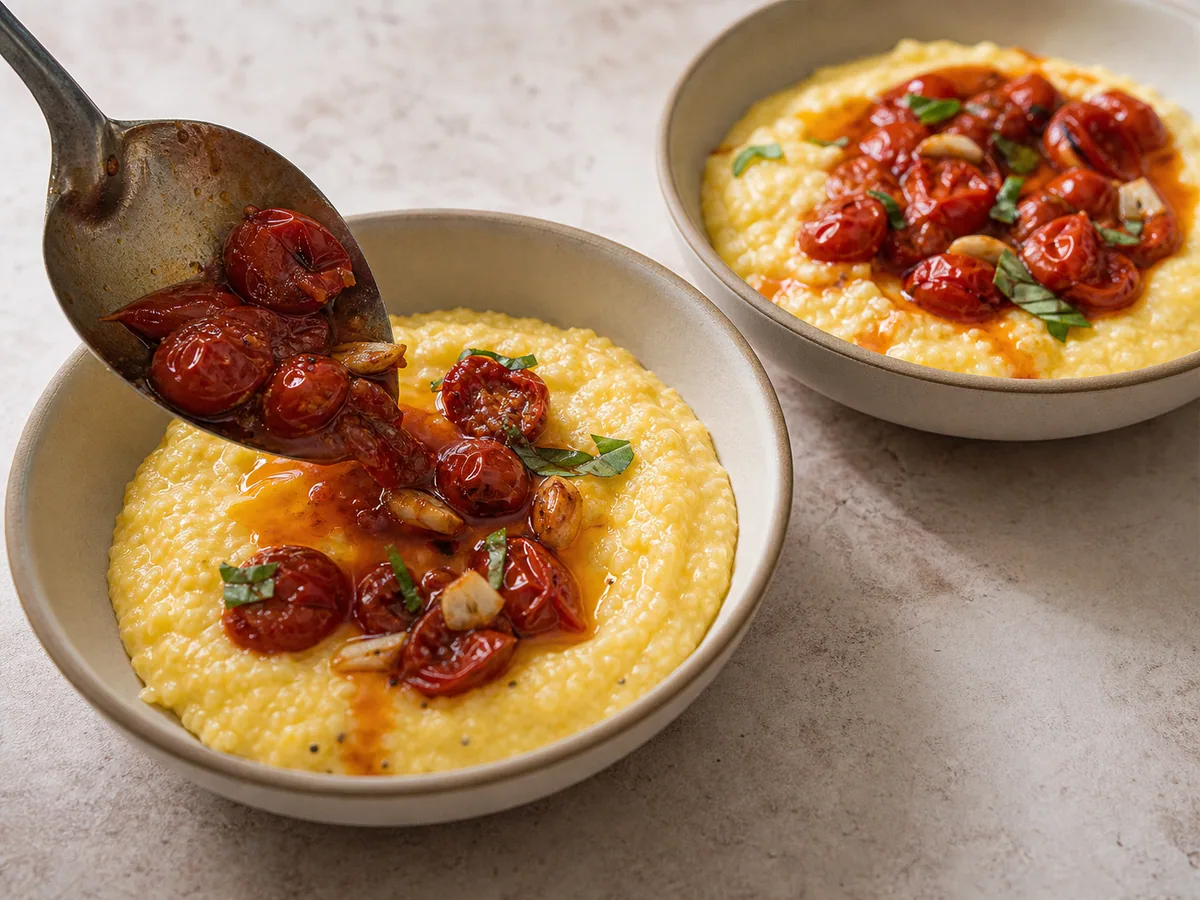
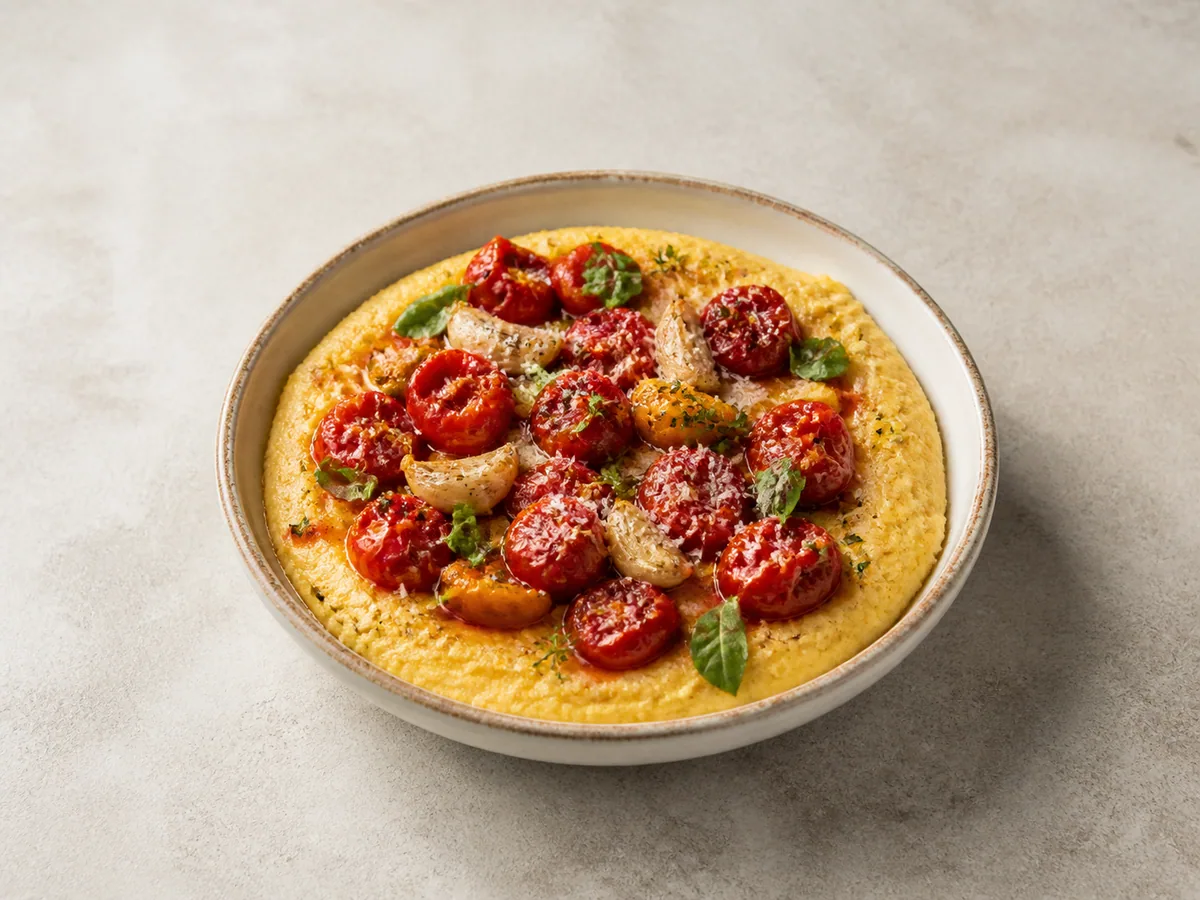
Spoon the polenta into warm shallow bowls. Add the roasted tomatoes and their juices, distributing the softened garlic among the servings. Tear 8 g of fresh basil over the bowls and serve while the polenta is loose and spoonable.


Smart Substitutions
- No whole milk? Use the same volume of water for a cleaner corn flavor, or use unsweetened oat milk for a similarly soft texture.
- No Parmigiano Reggiano? Use pecorino Romano for a sharper finish or nutritional yeast for a savory, cheese-free note.
- No cherry tomatoes? Use grape tomatoes or cut small plum tomatoes into bite-size pieces and roast until collapsed at the edges.
- No fresh thyme? Use fresh oregano or a small amount of finely chopped rosemary.
Tips and Variations
- Choose medium- or coarse-ground polenta rather than instant polenta for a fuller corn flavor and a more substantial texture.
- Whisk continuously during the first 2 minutes; that is when separate grains are most likely to gather into lumps.
- Warm the serving bowls with hot water, then dry them before plating so the polenta stays fluid at the table.
What Went Wrong?
- Polenta is lumpy Whisk vigorously while it is still loose. For stubborn lumps, press them against the side of the saucepan with the whisk and keep cooking gently.
- Polenta still tastes gritty Add a splash of hot water and cook for another 5 to 10 minutes, stirring often, until the grains are tender.
- Tomatoes are pale and watery Spread them in a true single layer and keep the baking sheet in the upper third of the oven so moisture can evaporate and the edges can brown.
- Polenta scorched on the bottom Do not scrape the dark layer into the pot. Transfer the unburned polenta to a clean saucepan, lower the heat, and continue cooking.
Nutrition Estimate
- Fiber: 5 g per serving
- Sodium: 490 mg per serving
Nutrition disclaimer:This recipe is provided for general cooking information only. Nutrition values are estimates and may vary by ingredients, brands, preparation methods, and serving sizes. Check ingredient labels and follow appropriate food-safety practices. This content is not medical, dietary, allergy, or professional food-safety advice.
FAQ
Found an error or have a suggestion?
Help us improve this recipe. Send us your feedback and include the recipe name so we can take a look.