Method
Prepare the pan and dry mixture
Heat the oven to 180°C (350°F). Line a 20 x 20 cm (8 x 8 in) metal baking pan (for 8 servings) with baking paper, leaving enough overhang to lift out the baked slab. For scaled batches, choose a pan that keeps the dough close to 3 cm (1 1/4 in) deep. Whisk 240 g of whole-wheat flour, 120 g of all-purpose flour, 80 g of old-fashioned rolled oats, 40 g of wheat bran, 80 g of light brown sugar, 12 g of baking powder, 4 g of fine salt, and 3 g of ground cinnamon in a large bowl until the leavening and spice are evenly dispersed.
Make the rusk dough
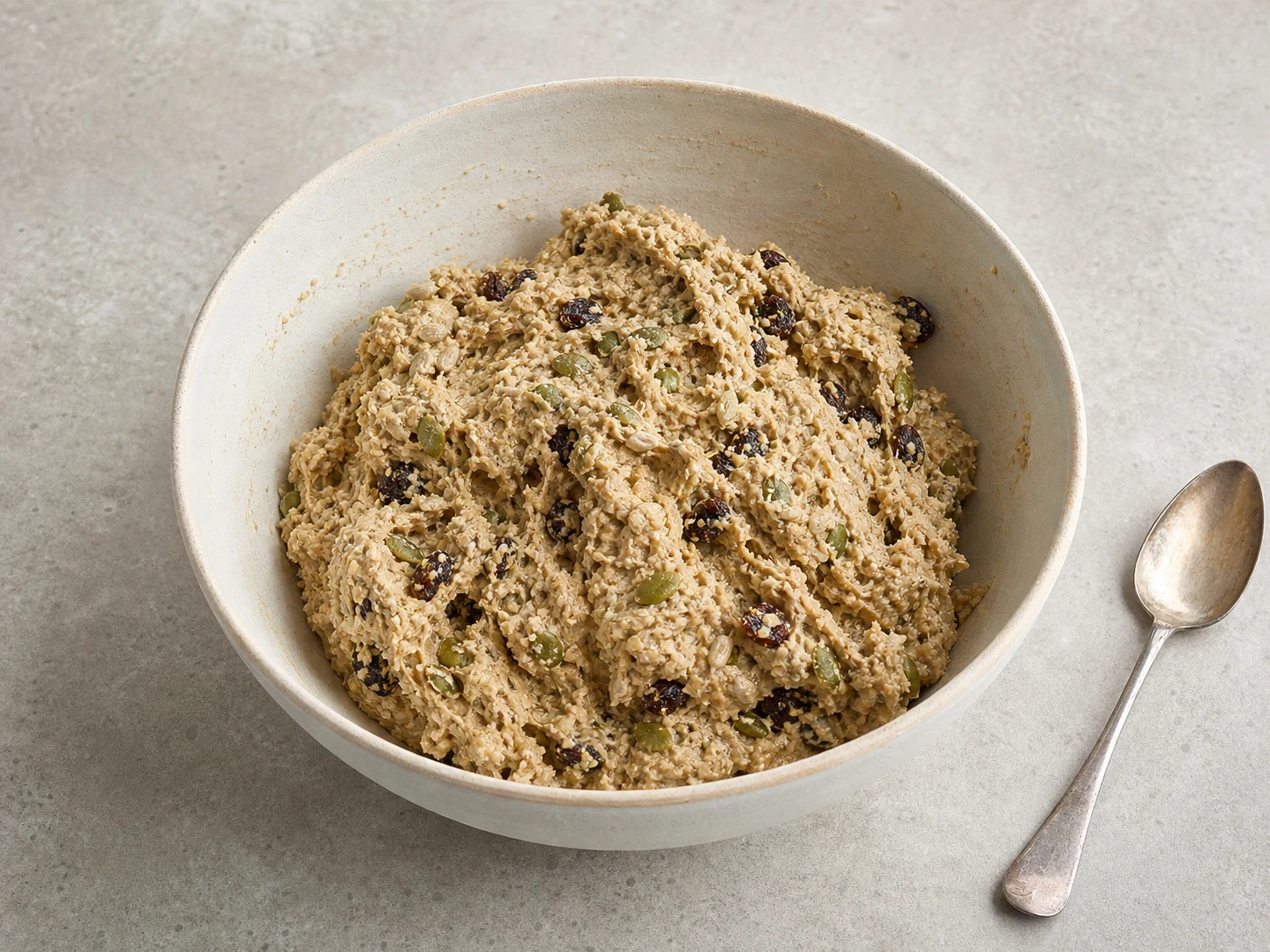
Cut 90 g of unsalted butter into small cubes. Rub it into the dry mixture with your fingertips until the bowl holds coarse, uneven crumbs with a few pea-size pieces remaining. Whisk 1 large egg into 250 ml of cultured buttermilk in a separate jug. Pour the liquid into the bowl and fold with a sturdy spoon just until no dry flour remains. Fold in 80 g of seedless raisins, 35 g of sunflower seed kernels, 35 g of pumpkin seed kernels, and 20 g of sesame seeds. The dough should be thick, sticky, and scoopable rather than pourable.
Press the dough evenly
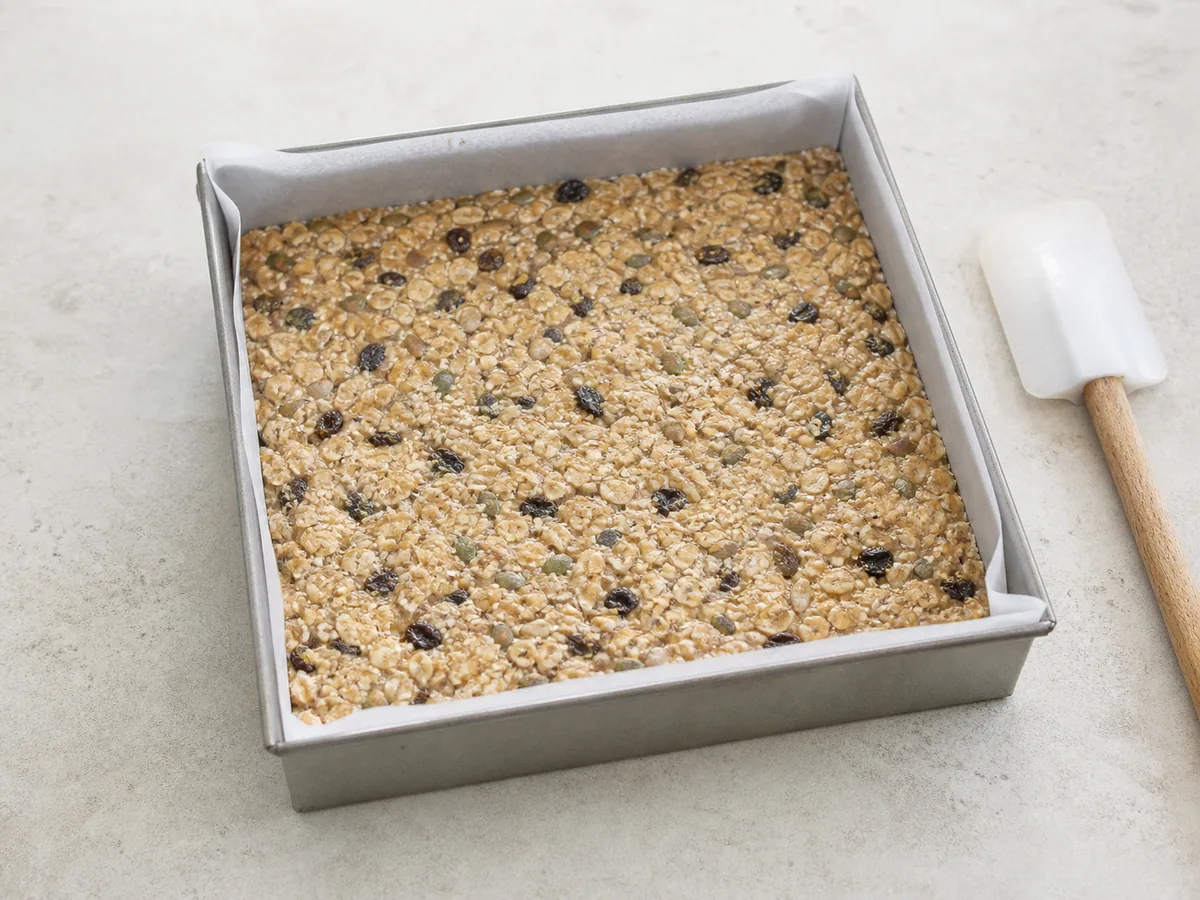
Transfer the dough to the prepared pan. Press it into an even layer with a damp spatula, working it firmly into the corners and smoothing the top without compacting it into a dense paste. Check that the raisins and larger seeds are distributed across the surface rather than clustered in one area.
Bake the rusk slab
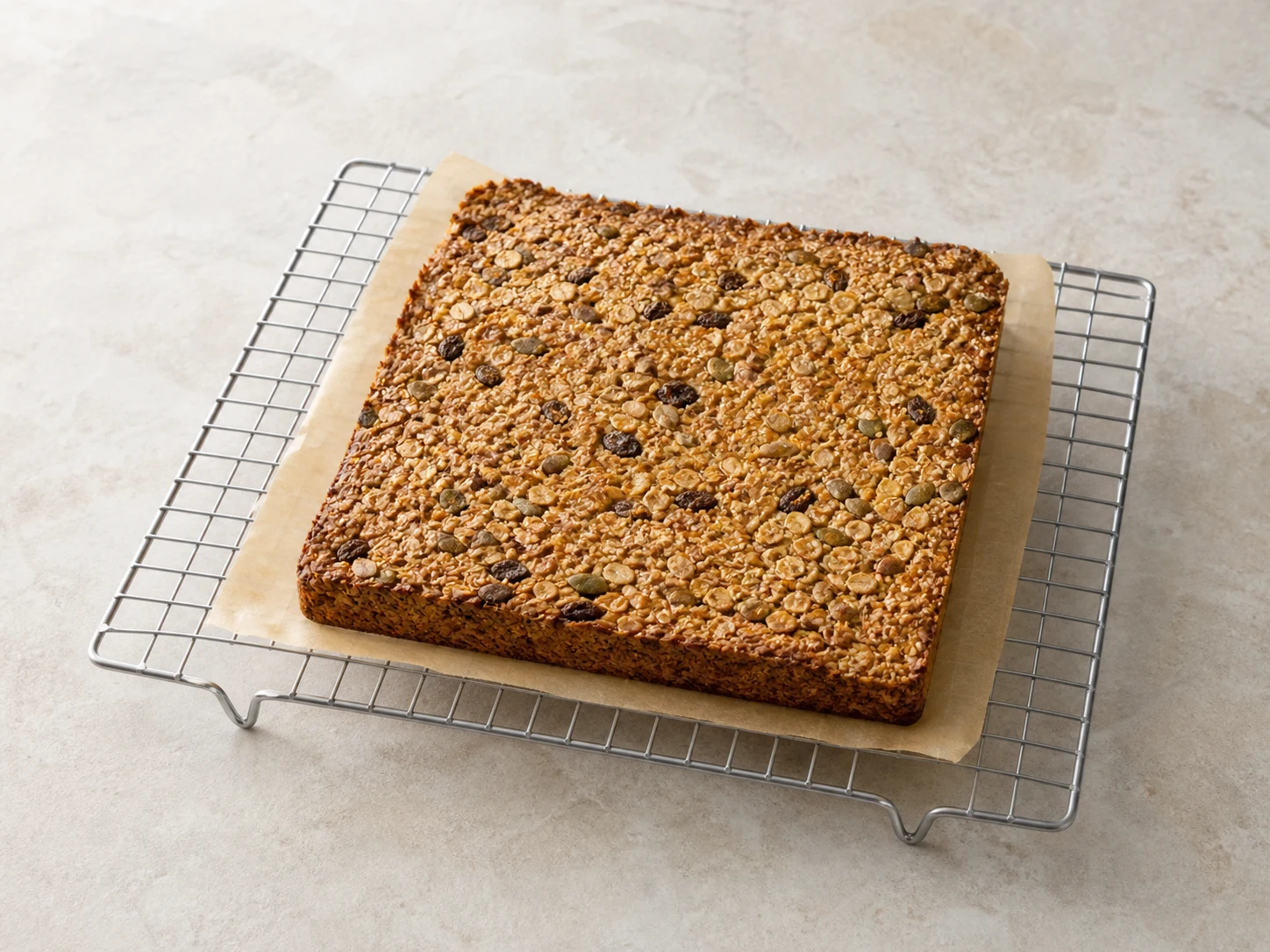
Bake on the middle rack for 40 to 45 minutes, rotating the pan once if the oven browns unevenly. Start checking at 40 minutes. The slab is ready when the top is deep golden, the center feels firm, a skewer comes out without wet batter, and a food thermometer inserted into the center registers 93 to 96°C (200 to 205°F). Lift the slab out by the paper and place it on a rack.
40:00Cool, cut, and arrange
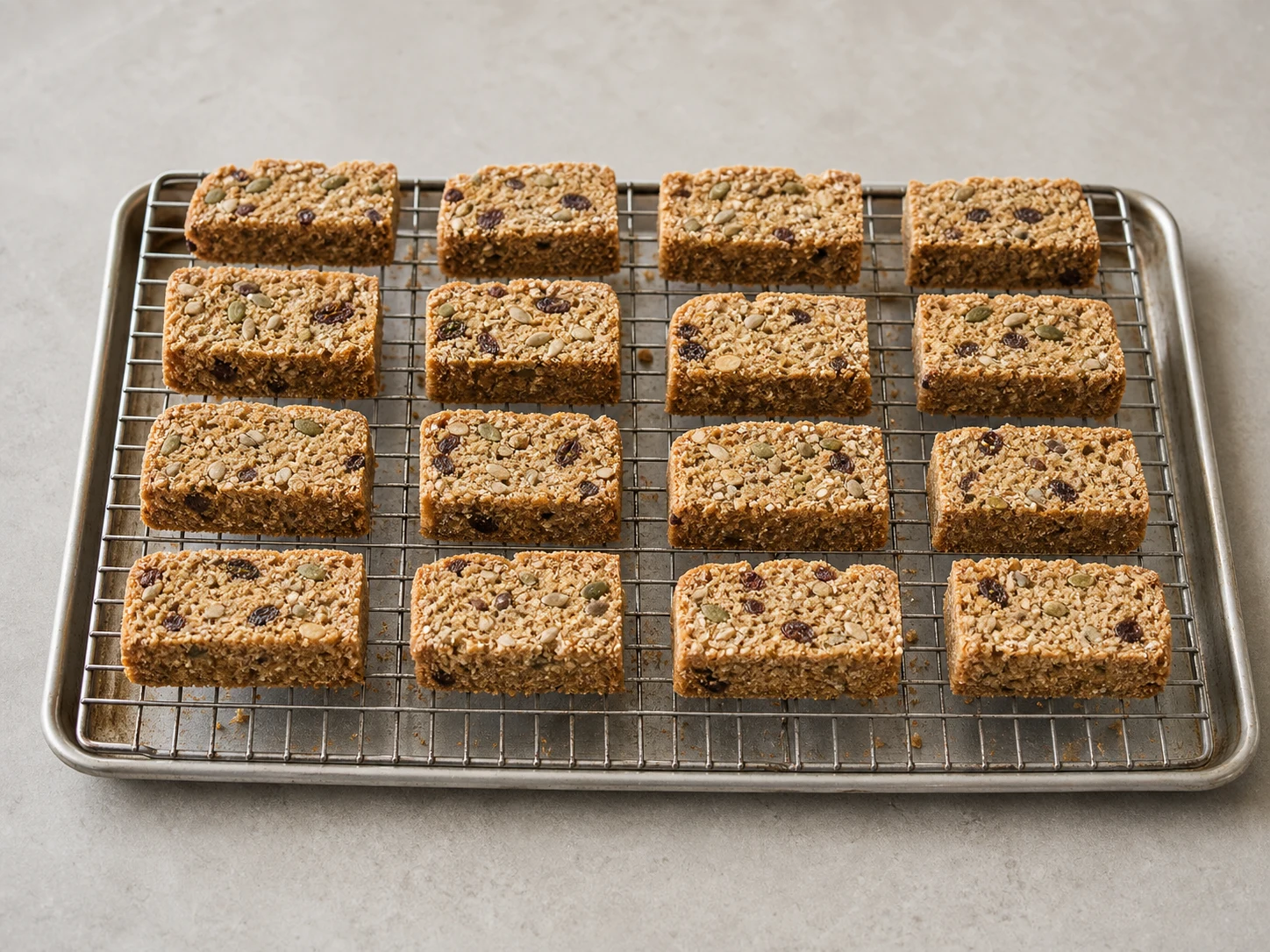
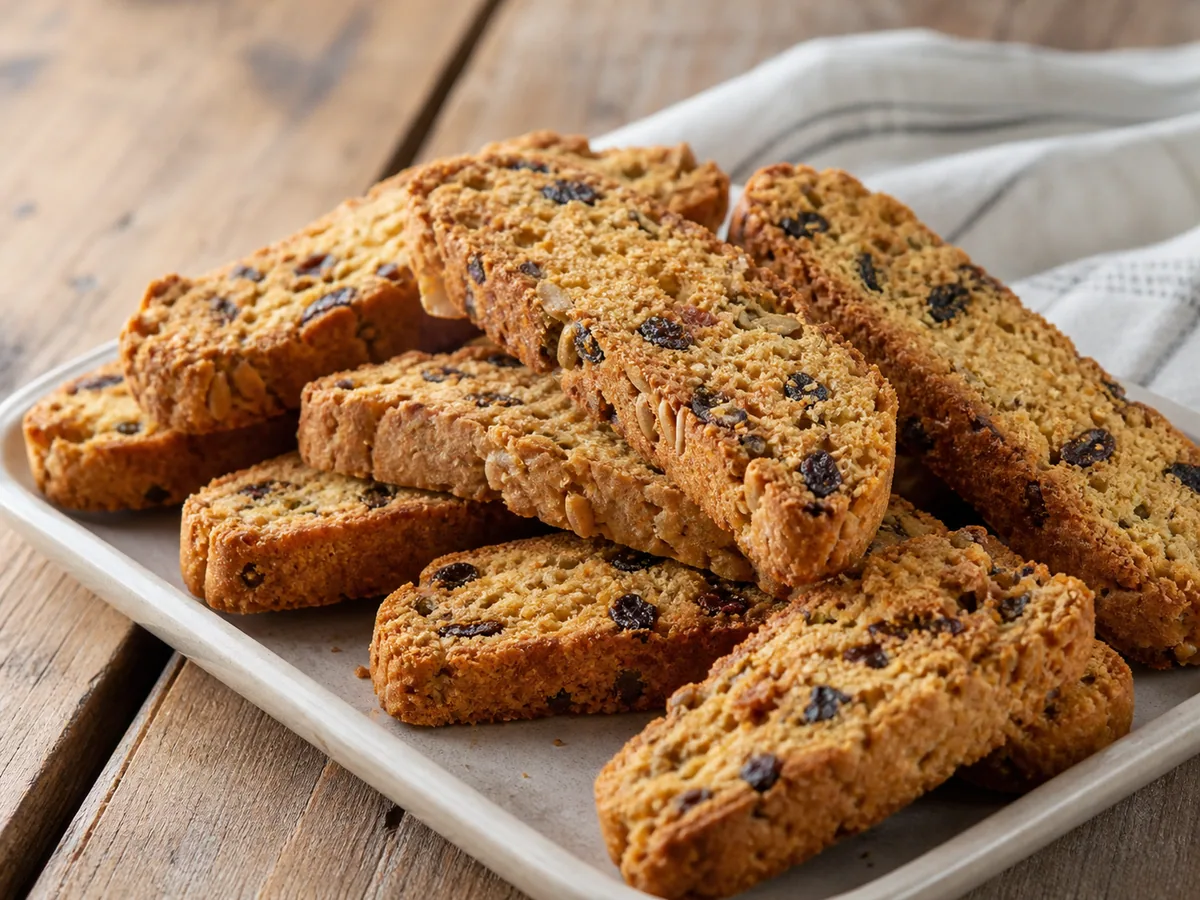
Let the slab cool for 20 minutes so the crumb firms without becoming brittle. Peel away the paper, trim only any very hard edges, then cut the slab into 16 thick fingers for 8 servings. For scaled batches, keep each piece about 3 cm (1 1/4 in) wide so the drying time remains predictable. Arrange the fingers cut-side up on wire racks set over baking sheets, leaving clear gaps between them.
20:00Begin the second bake
Lower the oven to 100°C (210°F). Place the racks in the oven and dry the rusks for 3 hours. If using two oven levels, swap the baking sheets from top to bottom after 90 minutes and turn them front to back so the pieces dry evenly. Keep the fingers separated and leave the oven door closed between checks.
3:00:00Dry until crisp through the center
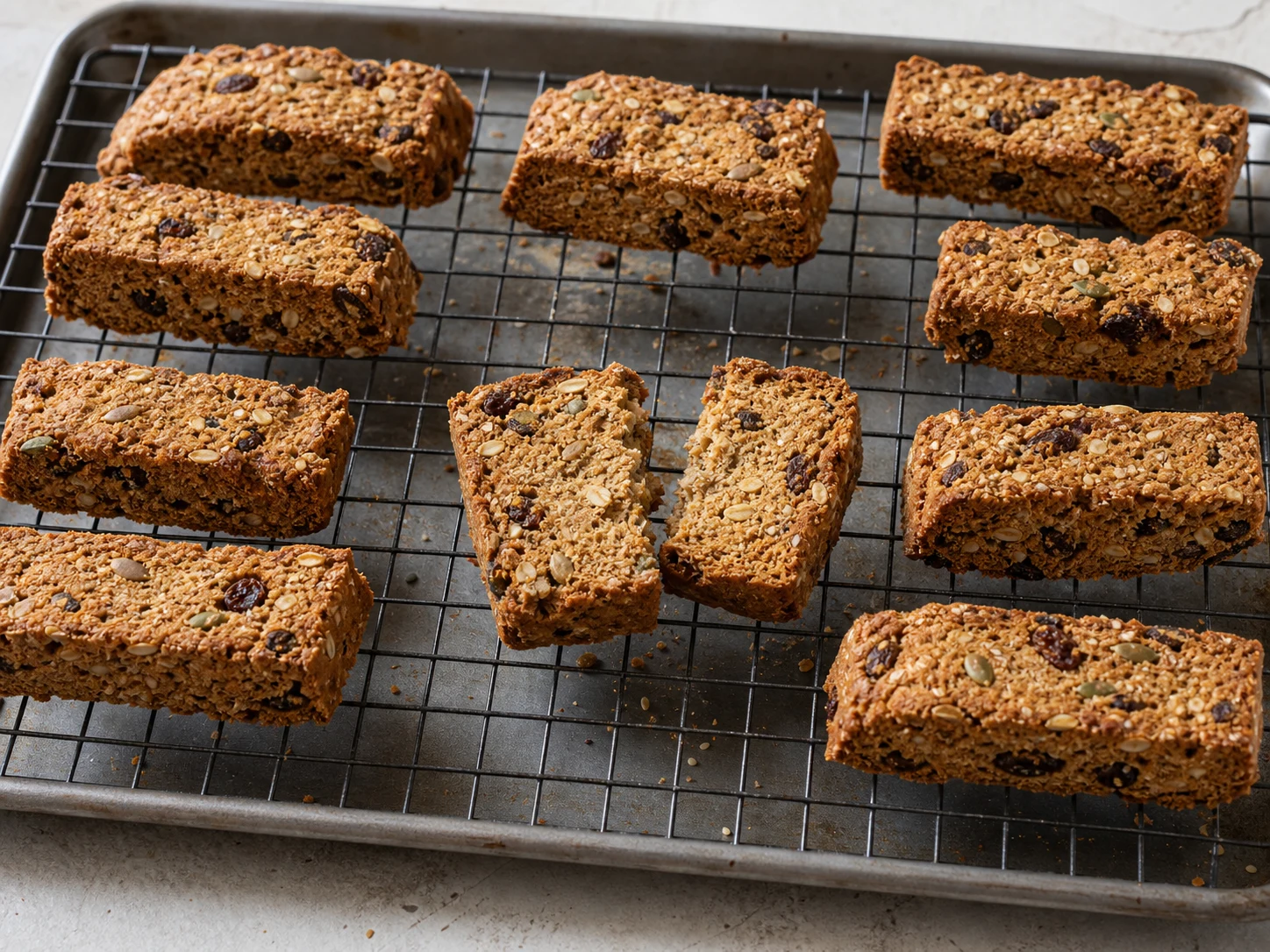
Continue drying at 100°C (210°F) for 3 hours. Then break one of the thickest fingers: the center should be dry, crisp, and evenly colored, with no cool or soft band. Return the batch to the oven in 15-minute intervals if any moisture remains. The raisins should stay chewy but should not make the surrounding crumb damp.
3:00:00Cool and serve
Turn off the oven and transfer the racks to the counter. Let the rusks cool completely for 20 minutes; they will become crisper as steam escapes. Serve two rusks per person with hot tea or coffee (optional) for dunking.
20:00


Smart Substitutions
- No buttermilk? Use plain kefir in the same quantity, or place 1 tablespoon (15 ml) lemon juice or white vinegar in a measuring cup, add milk to make 1 cup (250 ml), stir, and let it stand for 5 to 10 minutes before using.
- No wheat bran? Pulse extra rolled oats into a coarse meal and use the same weight; the crumb will be a little less earthy.
- Different dried fruit? Replace the raisins with chopped dried apricots, dates, or unsweetened cranberries in the same quantity.
- Different seeds? Use any unsalted mix of sunflower, pumpkin, sesame, flax, or poppy seeds while keeping the total seed weight unchanged.
Tips and Variations
- Cut the slab while it is warm and settled, not piping hot or fully cold; that is the window for clean edges with minimal crumbling.
- A damp spatula smooths the sticky dough without forcing extra flour into the mixture.
- During the second bake, generous gaps between the pieces matter more than perfect alignment because air needs to reach every cut face.
What Went Wrong?
- Dough is too dry to press Fold in a spoonful of buttermilk at a time until the mixture is sticky and holds together without becoming pourable.
- Rusks crumble while cutting Let the slab settle for the full cooling interval, then use a long serrated knife with gentle sawing strokes instead of downward pressure.
- Centers stay soft Separate the pieces more widely and continue the low-temperature bake in 15-minute intervals, checking one of the thickest fingers each time.
- Edges brown too quickly During the first bake, loosely shield the top and edges with foil after the center has begun to set, and rotate the pan. During the low-temperature drying bake, center and rotate the baking sheets; if browning continues, reduce the oven to 90°C (195°F) and allow extra drying time.
Nutrition Estimate
- Fiber: 8 g per serving
- Sodium: 420 mg per serving
Nutrition disclaimer:This recipe is provided for general cooking information only. Nutrition values are estimates and may vary by ingredients, brands, preparation methods, and serving sizes. Check ingredient labels and follow appropriate food-safety practices. This content is not medical, dietary, allergy, or professional food-safety advice.
FAQ
Found an error or have a suggestion?
Help us improve this recipe. Send us your feedback and include the recipe name so we can take a look.