Method
Prepare the beef and vegetables
Using a clean knife and cutting board, chop 1 yellow onion, mince 3 garlic cloves, and chop 400 g of ripe tomatoes; set the vegetables aside. On a separate clean cutting board, cut 600 g of beef chuck into 3 cm (1 1/4 in) pieces. After handling the raw beef, wash your hands with soap and wash and sanitize the knife, cutting board, and nearby work surface before touching cooked food or clean utensils.
Brown the beef
Heat 30 ml of vegetable oil in a wide, heavy pot over medium-high heat until shimmering. Pat 600 g of beef chuck dry with paper towels. Brown it in two uncrowded batches, spreading each batch in one layer and cooking for 8 to 10 minutes per batch, turning only after the first surfaces form a dark brown crust. Transfer each batch to the same clean plate; the centers will finish cooking during the simmer.
Soften the onion and garlic
Reduce the heat to medium. Add 1 yellow onion to the pot and cook for about 4 minutes, scraping up the browned bits, until softened at the edges. Add 3 garlic cloves and stir only until fragrant, without letting it color.
04:00Cook the tomato base
Add 400 g of ripe tomatoes, 30 g of tomato paste, 3 g of fine salt for stew, and 1 g of black pepper. Cook for about 5 minutes, stirring often, until the tomatoes slump, their juices reduce slightly, and the paste darkens.
05:00Simmer the beef until tender
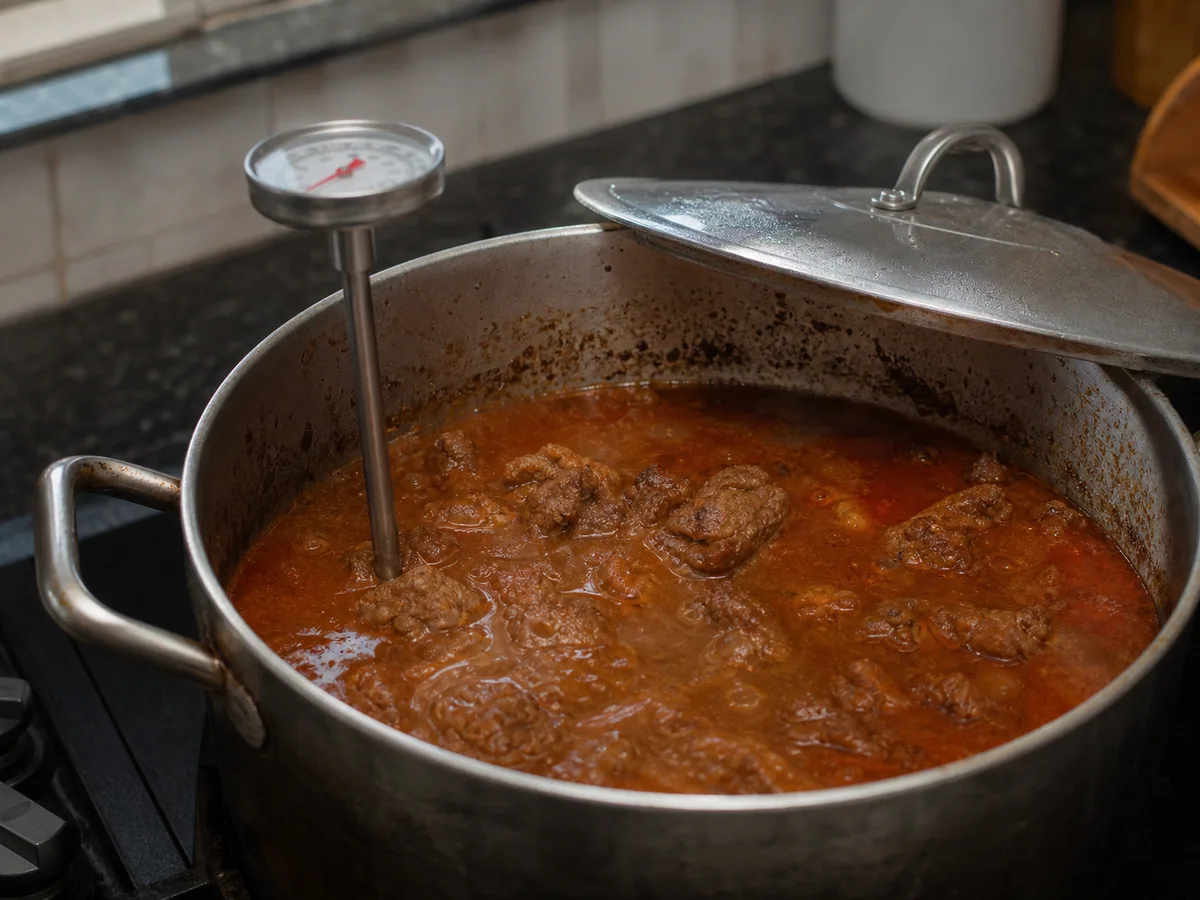
Return the browned beef and any collected juices to the pot. Pour in 500 ml of low-sodium beef stock and bring the liquid to a steady simmer. Partly cover, lower the heat to medium-low, and cook for 45 to 55 minutes, stirring every 15 minutes, until a fork enters the beef with little resistance. At the first tenderness check, use a food thermometer on a thick piece and verify that it has reached at least 71°C/160°F. Continue simmering until the beef is fork-tender and no pink remains in the center.
45:00Add the okra and finish the stew
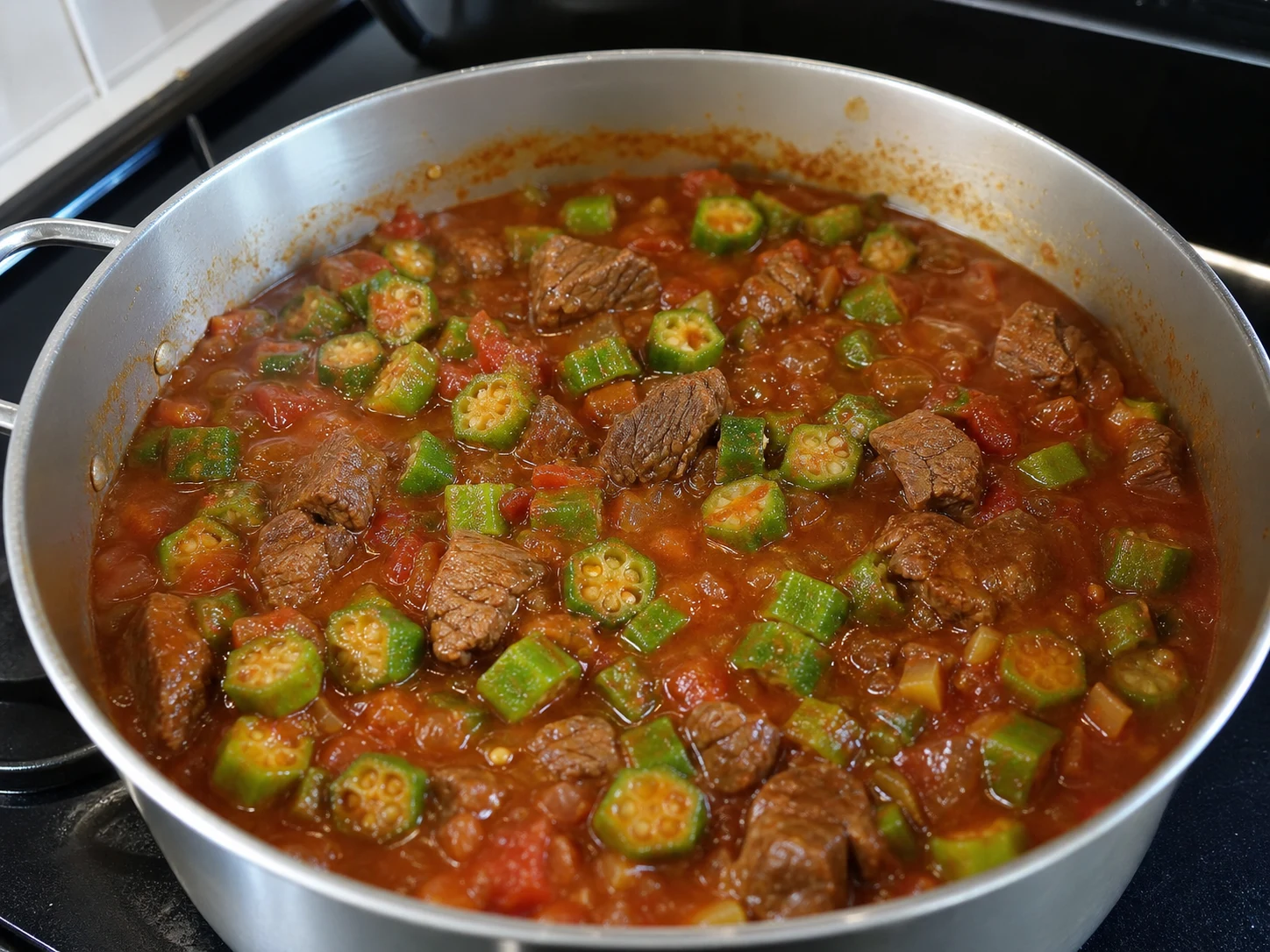
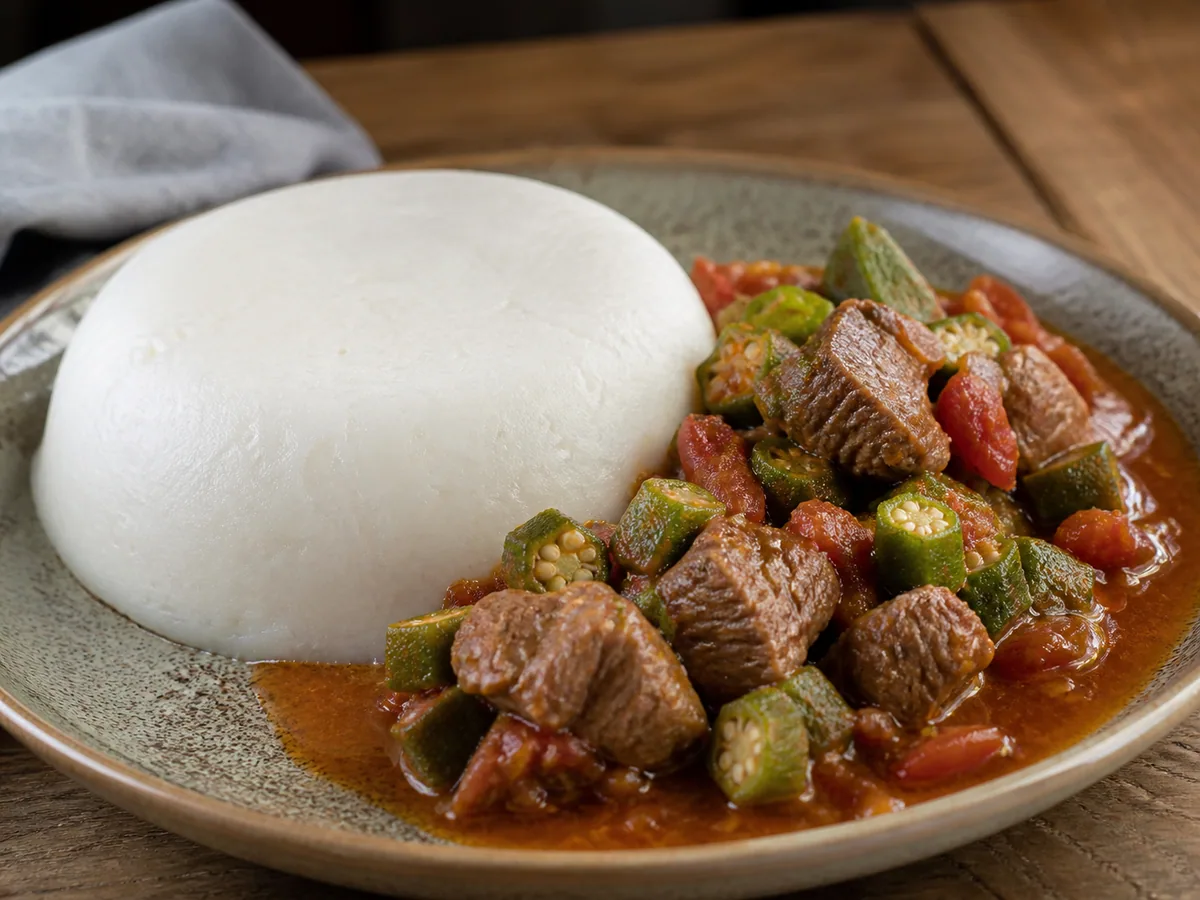
Trim the stem ends from 300 g of fresh okra and cut the pods crosswise into 2 cm (3/4 in) rounds. Stir them into the fully cooked beef stew and simmer uncovered for 10 to 12 minutes, stirring only once or twice, until the okra is tender but still green and distinct. The gravy should lightly coat a spoon; simmer a few minutes longer if it is still watery.
10:00Cook the sadza porridge base
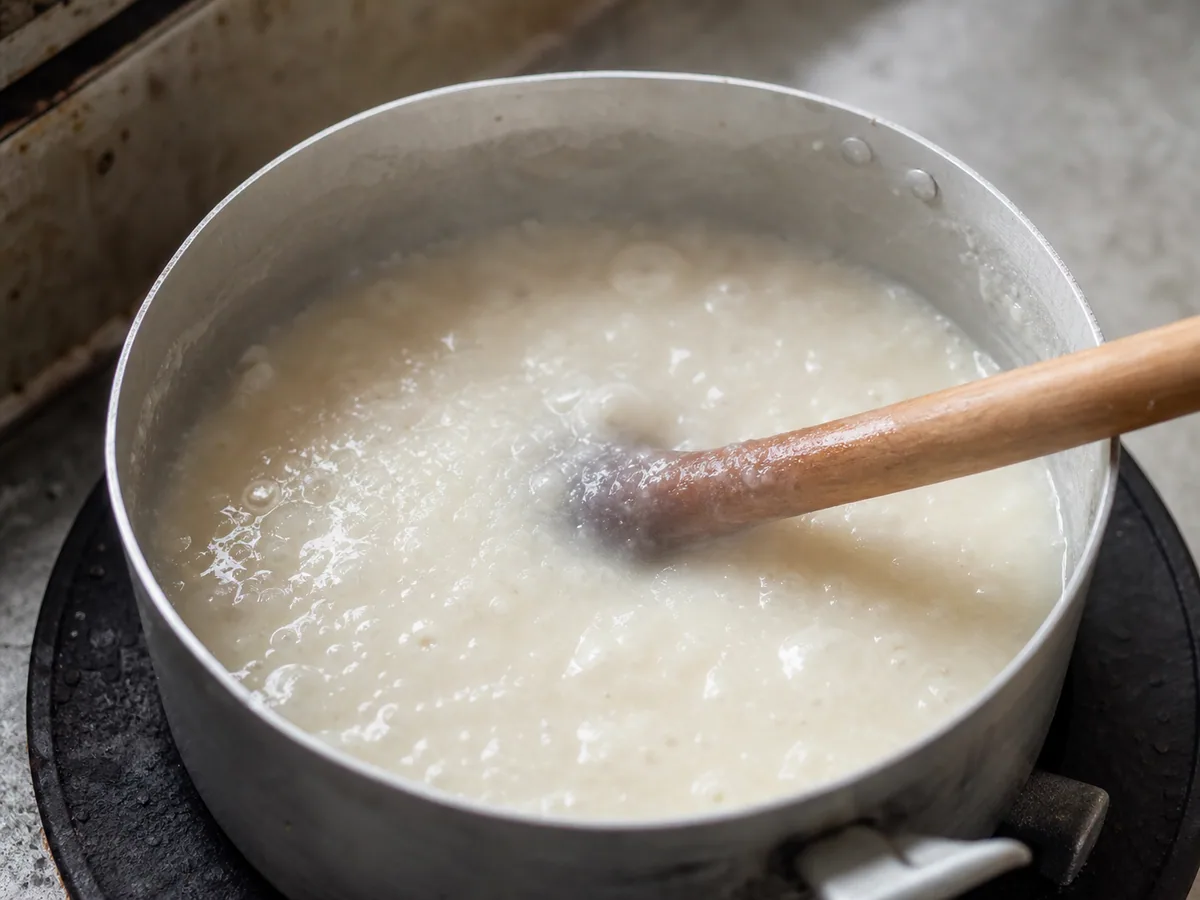
While the beef finishes simmering, place 120 g of white maize meal for porridge in a sturdy saucepan and whisk in 120 ml of cold water for sadza until completely smooth. Set the pan over medium heat. Gradually pour in 720 ml of boiling water for sadza, whisking constantly, then switch to a strong wooden spoon. Cook for 5 to 7 minutes as the loose porridge bubbles and loses its raw maize aroma; lower the heat if it spits.
05:00Thicken and beat the sadza
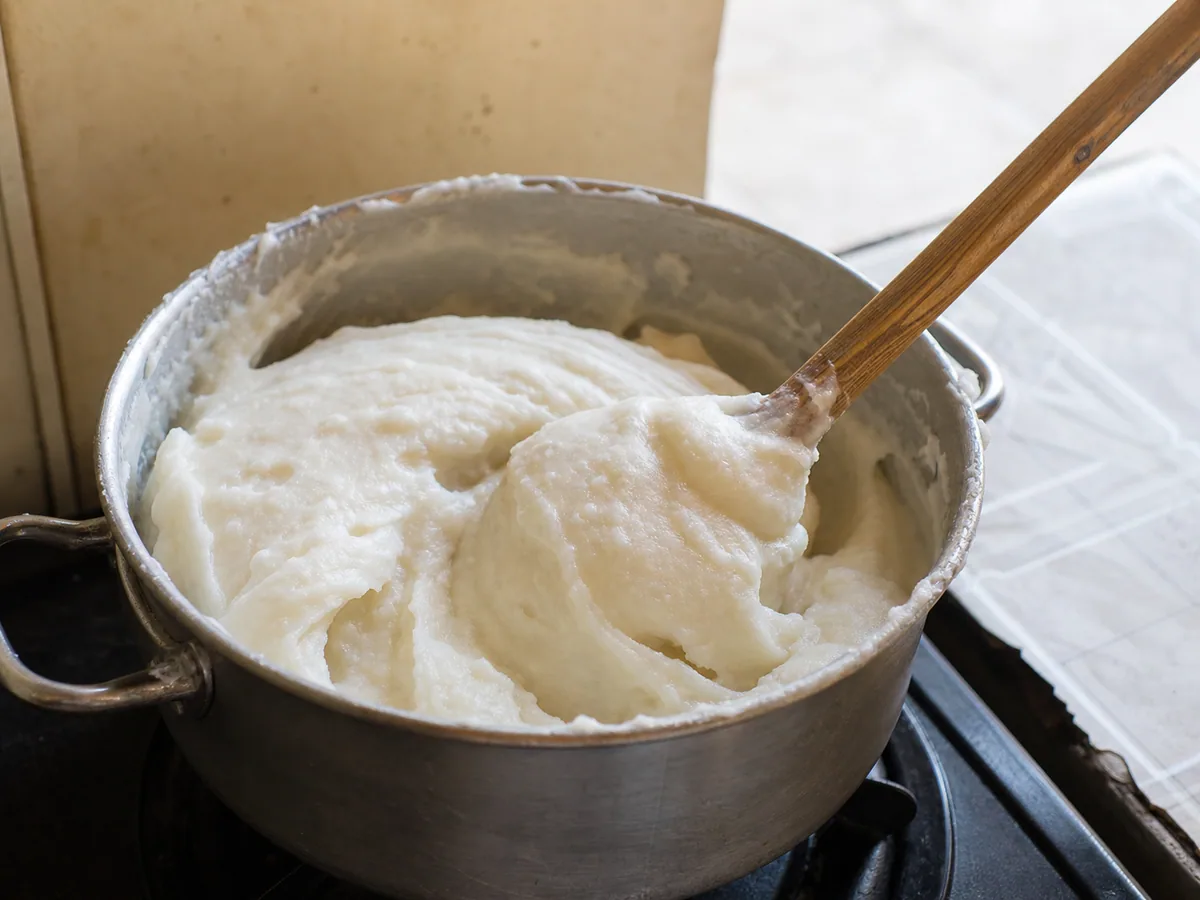
Reduce the heat to low. Sprinkle in 180 g of white maize meal for thickening gradually while stirring firmly so each addition disappears before the next. Add 3 g of fine salt for sadza. Beat and press the mixture against the sides of the pan for 8 to 10 minutes, turning the mass repeatedly, until it is smooth, stiff, slightly stretchy, and pulls cleanly from the pan in places. Use a long-handled spoon and keep your face back from any hot sputters.
08:00Let the sadza finish cooking
Cover the saucepan and keep the sadza over the lowest heat for 5 minutes. Uncover and beat it once more briefly. It should hold a soft mound without flowing; if it is loose, stir over low heat until it firms up.
05:00Taste and serve
Taste the stew and adjust the seasoning only if needed. Spoon the sadza onto warm plates and shape it into mounds with the back of a wet spoon. Ladle the beef and okra stew alongside so the gravy reaches the edge of the sadza, then serve immediately.


Smart Substitutions
- No white maize meal? Use finely ground yellow maize meal. The sadza will have a deeper corn flavor and golden color, but the same gradual thickening method applies.
- No beef chuck? Use boneless blade, shin, or another stewing cut and simmer gently until fork-tender.
- No fresh okra? Use the same weight of fresh green beans cut into 2 cm (3/4 in) pieces. They will not thicken the gravy like okra, so simmer the stew uncovered until it lightly coats a spoon.
- No beef stock? Use the same amount of water and increase the listed tomato paste by half for extra body, then adjust the salt carefully at the end.
Tips and Variations
- Dry the beef well and brown it in batches; crowded meat releases liquid and steams instead of forming a savory crust.
- Stir okra sparingly after it enters the stew so the rounds keep their shape while their natural juices gently thicken the gravy.
- A heavy saucepan and long wooden spoon make the final sadza stirring steadier and safer.
What Went Wrong?
- Sadza has lumps Press the lumps firmly against the side of the pan with the wooden spoon, then beat until the surface looks smooth before adding more maize meal.
- Sadza is too soft Sprinkle in 1 tablespoon of maize meal at a time, beating until smooth after each addition. After the final addition, cook and beat over low heat for 3 to 5 minutes, until the raw maize aroma is gone and the mixture holds a soft mound.
- Beef is still tough Keep the stew at a gentle simmer and check again every 10 minutes; stewing cuts soften after their connective tissue has had enough time to break down.
- Stew is too thin Simmer uncovered for 5 to 10 minutes, stirring occasionally, until the gravy coats a spoon.
Nutrition Estimate
- Fiber: 8 g per serving
- Sodium: 830 mg per serving
Nutrition disclaimer:This recipe is provided for general cooking information only. Nutrition values are estimates and may vary by ingredients, brands, preparation methods, and serving sizes. Check ingredient labels and follow appropriate food-safety practices. This content is not medical, dietary, allergy, or professional food-safety advice.
FAQ
Found an error or have a suggestion?
Help us improve this recipe. Send us your feedback and include the recipe name so we can take a look.