Method
Make the nokoss
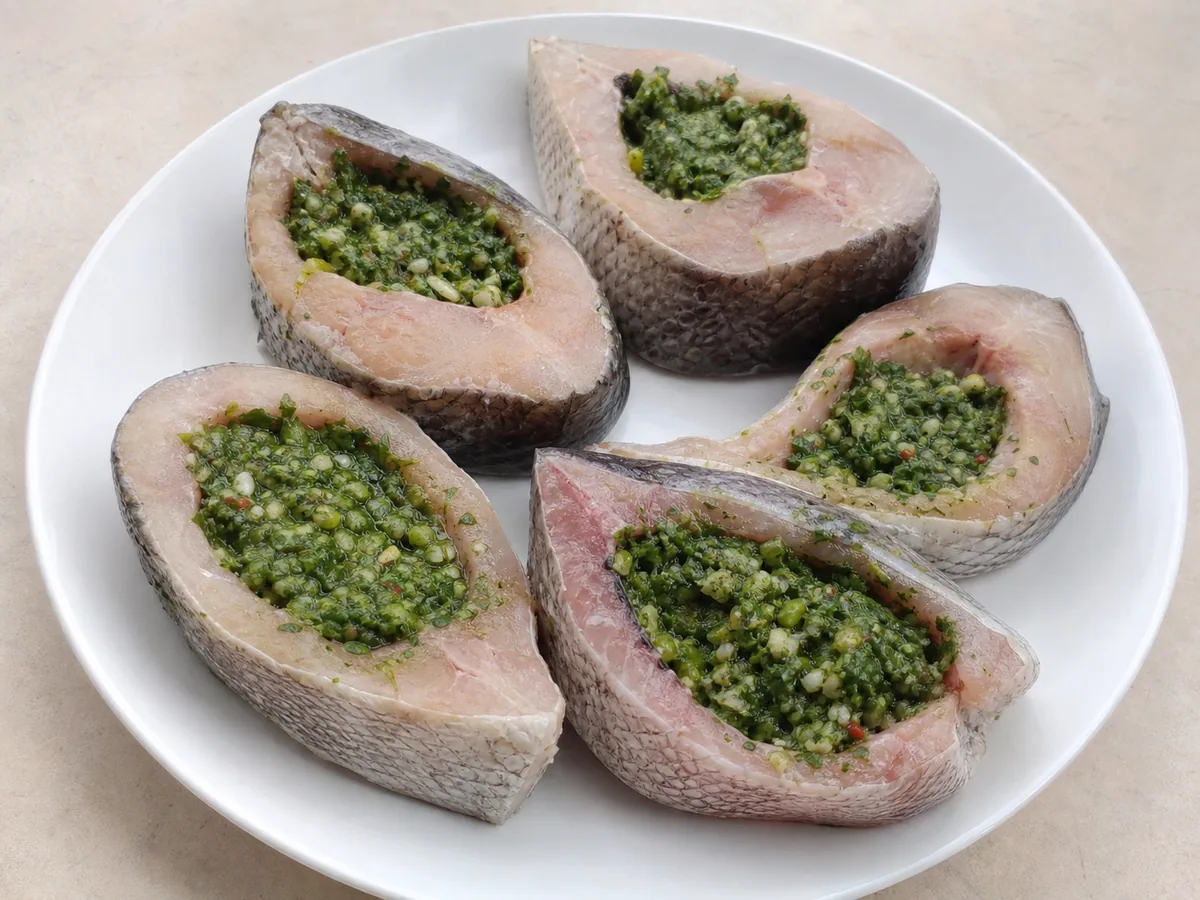
Mince 30 g of flat-leaf parsley, 5 garlic cloves, 3 scallions, and 1 Scotch bonnet pepper into a coarse, damp paste, then mix in 2 g of kosher salt for fish.
Season the fish safely
Pat 680 g of firm white fish fillets dry with paper towels and divide it into thick serving-size portions. Cut a shallow pocket into the side of each portion without slicing through, press the nokoss into the pockets, and set the fish on a plate. Wash your hands, knife, board, plate rim, and work surface with hot soapy water before preparing the vegetables.
Prepare the vegetables and rice
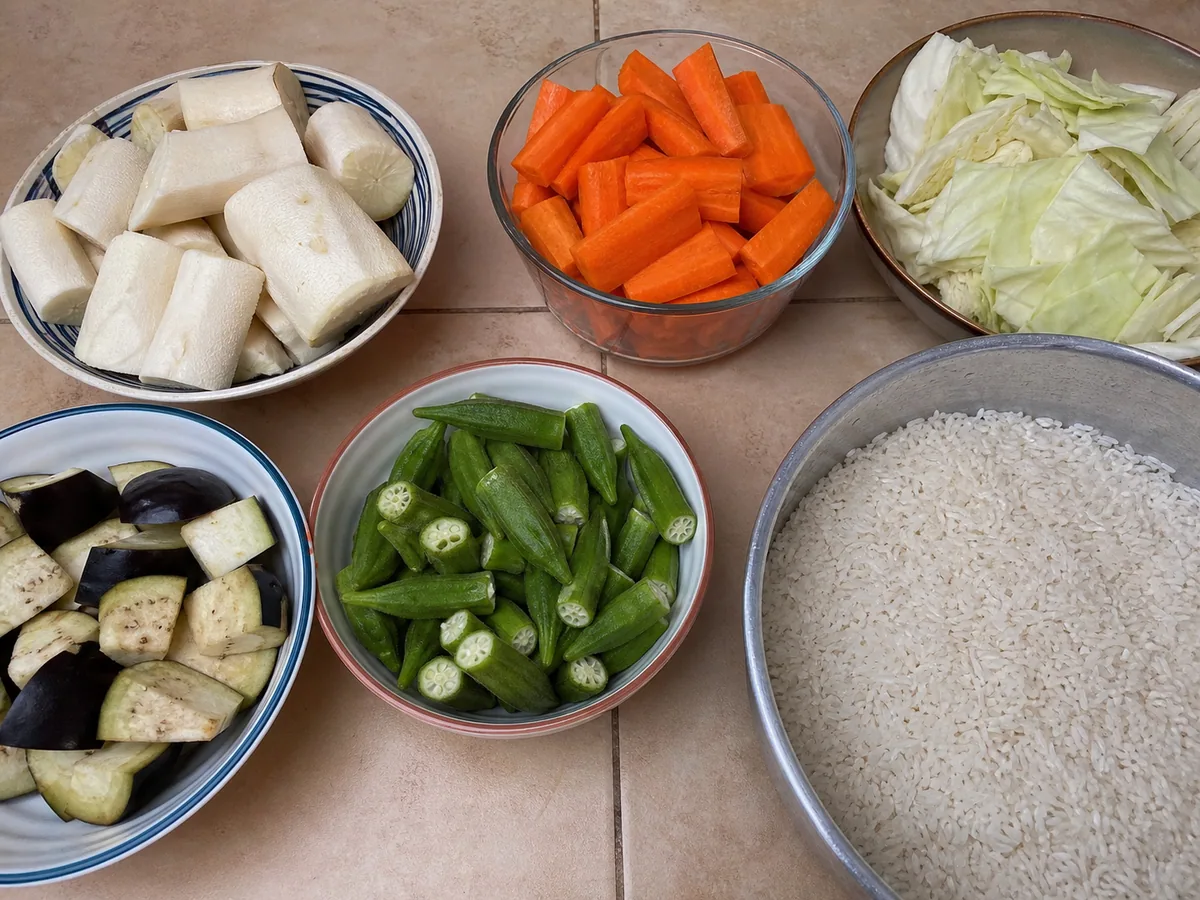
Use only sweet cassava sold commercially and labeled ready to cook; do not use bitter cassava. Keep 200 g of ready-to-cook sweet cassava chunks in large chunks. Cut 250 g of carrots, 300 g of eggplant, and 300 g of green cabbage into sturdy serving pieces. Trim 150 g of okra pods without exposing the seeds. Rinse 250 g of broken white rice in several changes of cool water until the water is mostly clear, then drain well.
Soften the onions
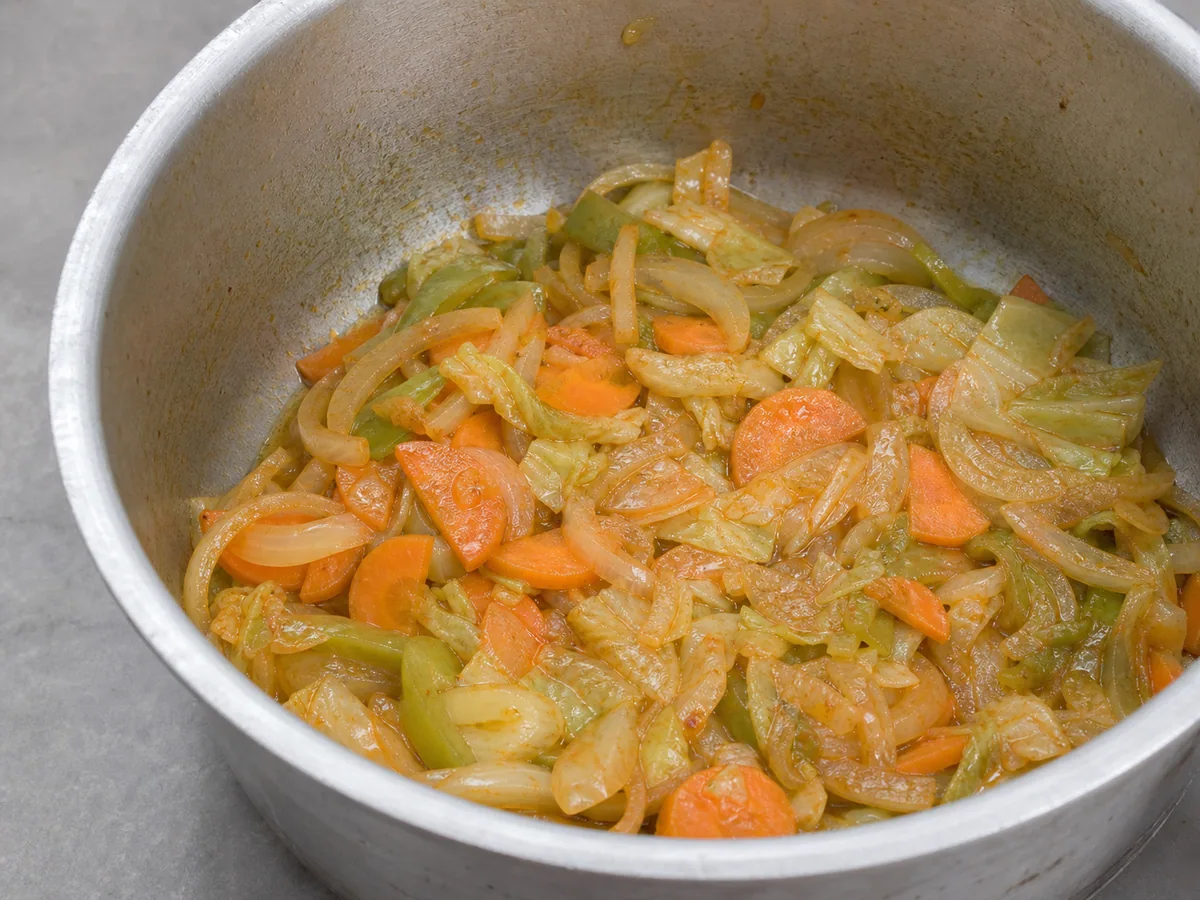
Heat 30 ml of peanut oil in a wide, heavy pot over medium heat. Add 300 g of yellow onions and cook for 7 to 9 minutes, stirring often, until soft and lightly golden; use the timer for the first check.
07:00Deepen the tomato paste
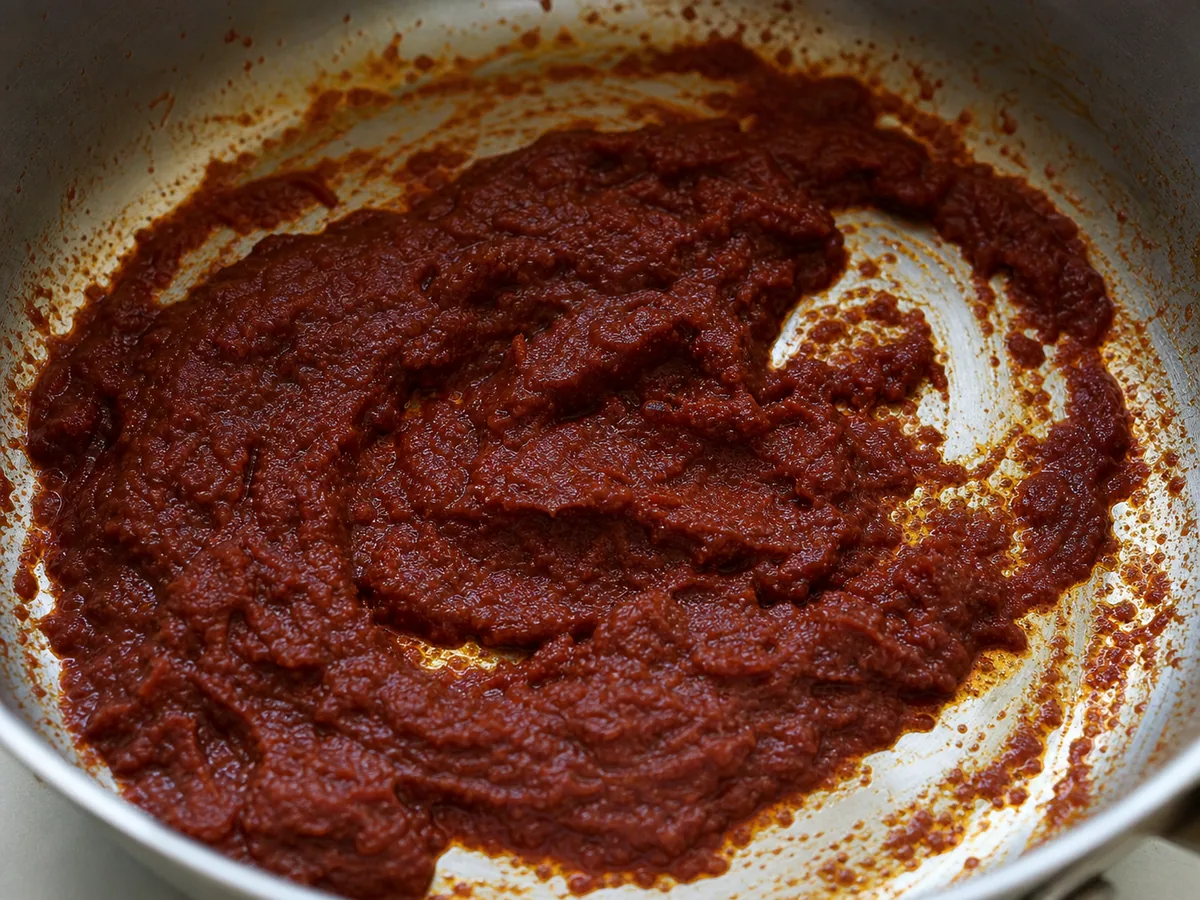
Stir 170 g of tomato paste into the softened onions and cook for 8 to 10 minutes, scraping the bottom frequently, until the mixture darkens to brick red and the oil begins to separate; use the timer for the first check.
08:00Finish the tomato-tamarind broth
Pour in 1400 ml of water, then stir in 30 g of tamarind paste, 15 ml of fish sauce, 2 bay leaves, 2 g of kosher salt for broth, and 1 g of black pepper. Bring the broth to a lively simmer, scraping up the concentrated tomato mixture from the bottom.
Cook the fish safely
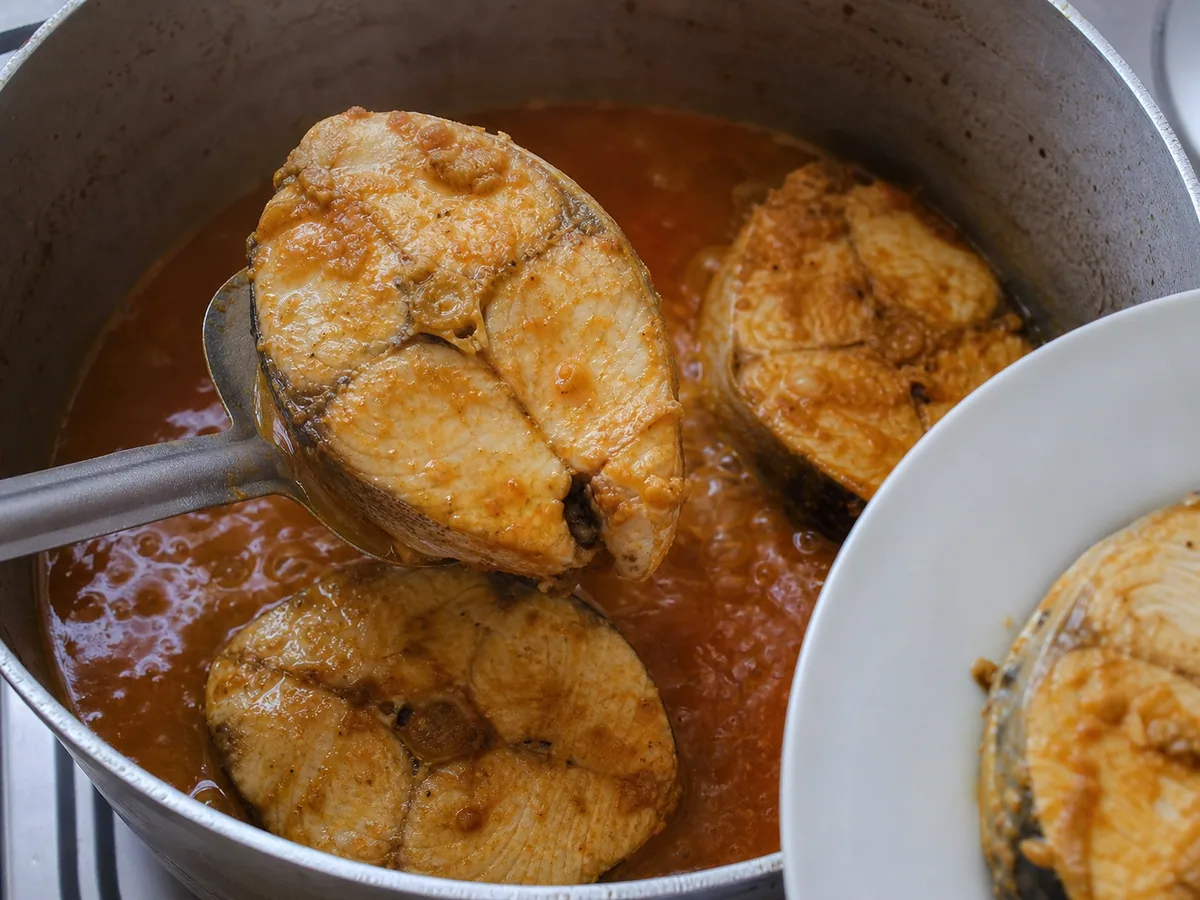
Lower the heat so the broth bubbles gently. Add 680 g of firm white fish fillets in a single layer and spoon broth over the top. Cover and cook for 10 to 14 minutes, using the timer for the first check. Insert a food thermometer into the thickest part of each portion; the fish is ready when it reaches 63°C (145°F), looks opaque, and separates easily. Transfer it with a broad slotted spatula to a clean serving platter.
10:00Start the firm vegetables
Add 200 g of ready-to-cook sweet cassava chunks, 250 g of carrots, and 300 g of green cabbage to the simmering broth. Cover and cook for 15 minutes.
15:00Finish the vegetables
Add 300 g of eggplant and 150 g of okra pods, then cook uncovered for 10 to 15 minutes, using the timer for the first check. The cassava must be completely tender with no firm or chalky center, the carrots should yield to a knife, the cabbage should hold its shape, and the eggplant and okra should be tender but intact. Lift all the vegetables onto the platter with the fish.
10:00Cook the rice in the concentrated broth
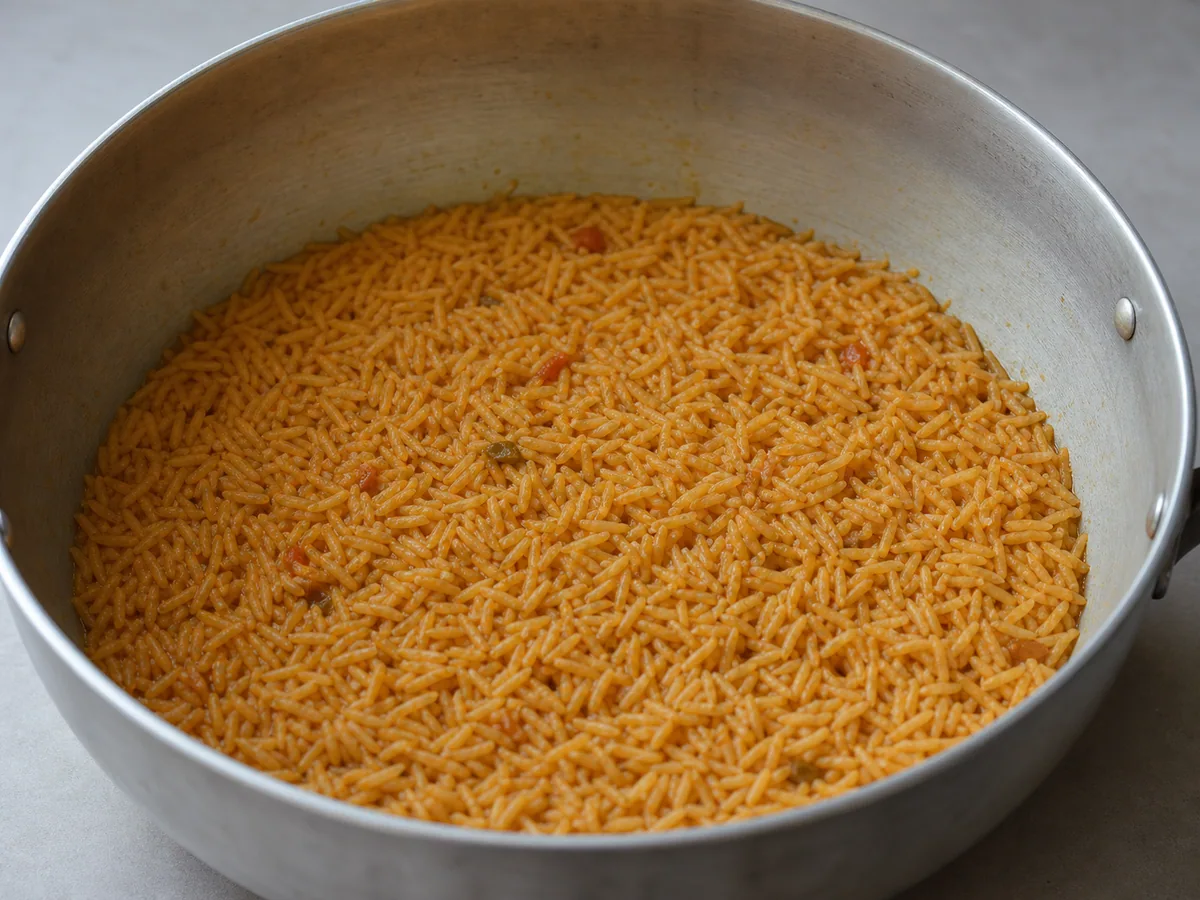
Bring the remaining broth to a steady boil and taste it; it should be boldly seasoned because 250 g of broken white rice will soften the flavor. Add 250 g of broken white rice and stir once. The liquid should sit just above the grains; boil uncovered for a few minutes if it is much deeper, or add a small splash of hot water if the grains are not covered. Reduce the heat to low, cover tightly, and cook for 20 to 25 minutes, using the timer for the first check. The rice is done when the grains are tender and the broth has been absorbed.
20:00Rest and fluff the rice
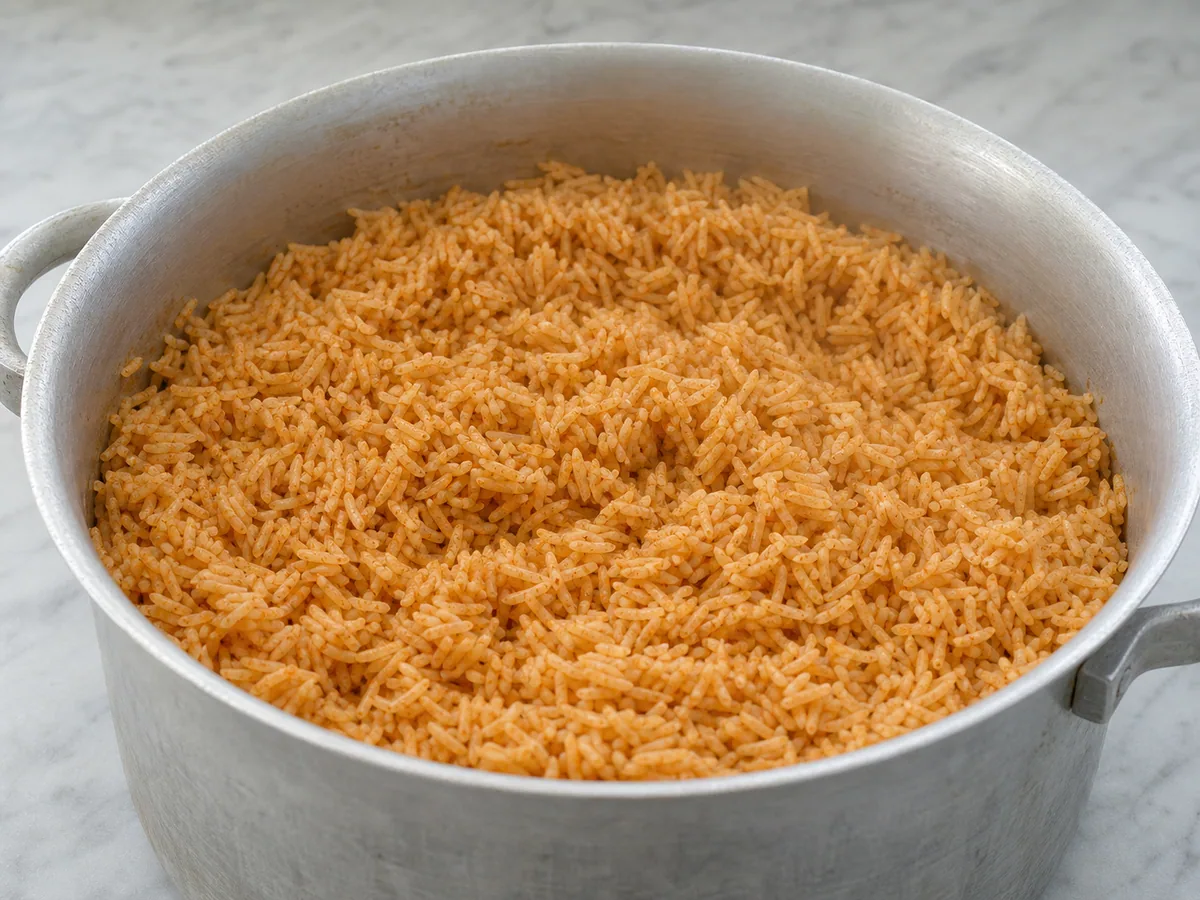
Remove 2 bay leaves, cover the pot again, and let the rice stand off the heat for 10 minutes. Fluff from the bottom to loosen the deeply browned grains without crushing them.
10:00Assemble the platter and serve
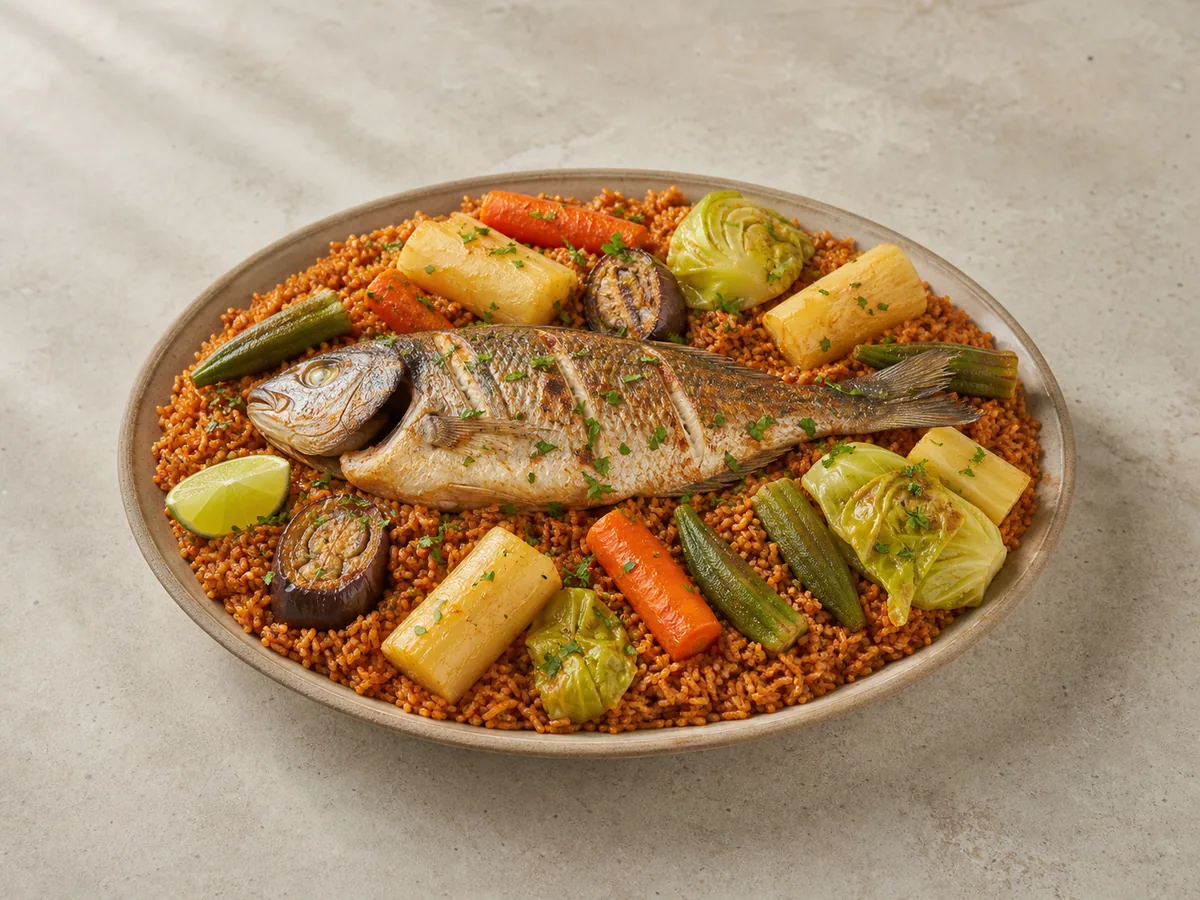
Spread the rice across a wide serving platter, arrange the fish and vegetables over it, and serve immediately with 1 lime cut into wedges for squeezing.


Smart Substitutions
- No cassava? Use sweet potato or a waxy potato, keeping the pieces large so they remain intact.
- No broken rice? Use short-grain white rice and begin checking a few minutes earlier, since brands absorb broth differently.
- No Scotch bonnet? Use habanero for similar heat or a milder red chile for a gentler nokoss.
- No fish sauce? Omit it and adjust the broth with a little extra salt after tasting.
Tips and Variations
- Rinse the rice thoroughly so the finished grains absorb the broth without turning gluey.
- Keep the simmer gentle once the fish goes in; hard boiling can split the fillets and wash out the herb stuffing.
- Let the tomato paste darken properly before adding water. That concentrated stage gives the rice its savory, brick-red base.
What Went Wrong?
- Rice is still firm but the broth is gone Sprinkle in a small amount of hot water, cover tightly, and cook for 5 minutes before checking again.
- Rice looks wet at the end Cook uncovered over low heat for 5 to 8 minutes, lifting the grains gently from the bottom once or twice.
- Fish is breaking apart Lower the heat to a bare simmer and move the portions with a broad slotted spatula instead of tongs.
- Cassava is still firm Return it to the simmering broth and cook until completely tender; do not serve cassava with a raw or chalky center.
Nutrition Estimate
- Fiber: 13 g per serving
- Sodium: 950 mg per serving
Nutrition disclaimer:This recipe is provided for general cooking information only. Nutrition values are estimates and may vary by ingredients, brands, preparation methods, and serving sizes. Check ingredient labels and follow appropriate food-safety practices. This content is not medical, dietary, allergy, or professional food-safety advice.
FAQ
Found an error or have a suggestion?
Help us improve this recipe. Send us your feedback and include the recipe name so we can take a look.