Method
Prepare the stock, vegetables, and seafood
Place 900 ml of low-sodium seafood stock in a saucepan over low heat and warm it until steaming but not boiling. Rub 0.2 g of saffron threads between your fingers, stir it into the stock, and keep the pan over low heat. Finely chop 1 small yellow onion, cut 1 red bell pepper into narrow strips, and mince 4 garlic cloves. Cut 1 lemon into wedges and chop 15 g of fresh flat-leaf parsley; set both on a clean serving plate. Rinse 450 g of live mussels under cold running water, scrub the shells, and pull away any beards. Discard cracked mussels and any open mussels that do not close when tapped. Peel and devein 300 g of large raw shrimp, then cut 250 g of cleaned squid into rings and bite-size tentacle pieces. Keep raw seafood on a separate tray, then wash your hands, knife, board, and sink area before continuing.
Sear the squid and build the sofrito
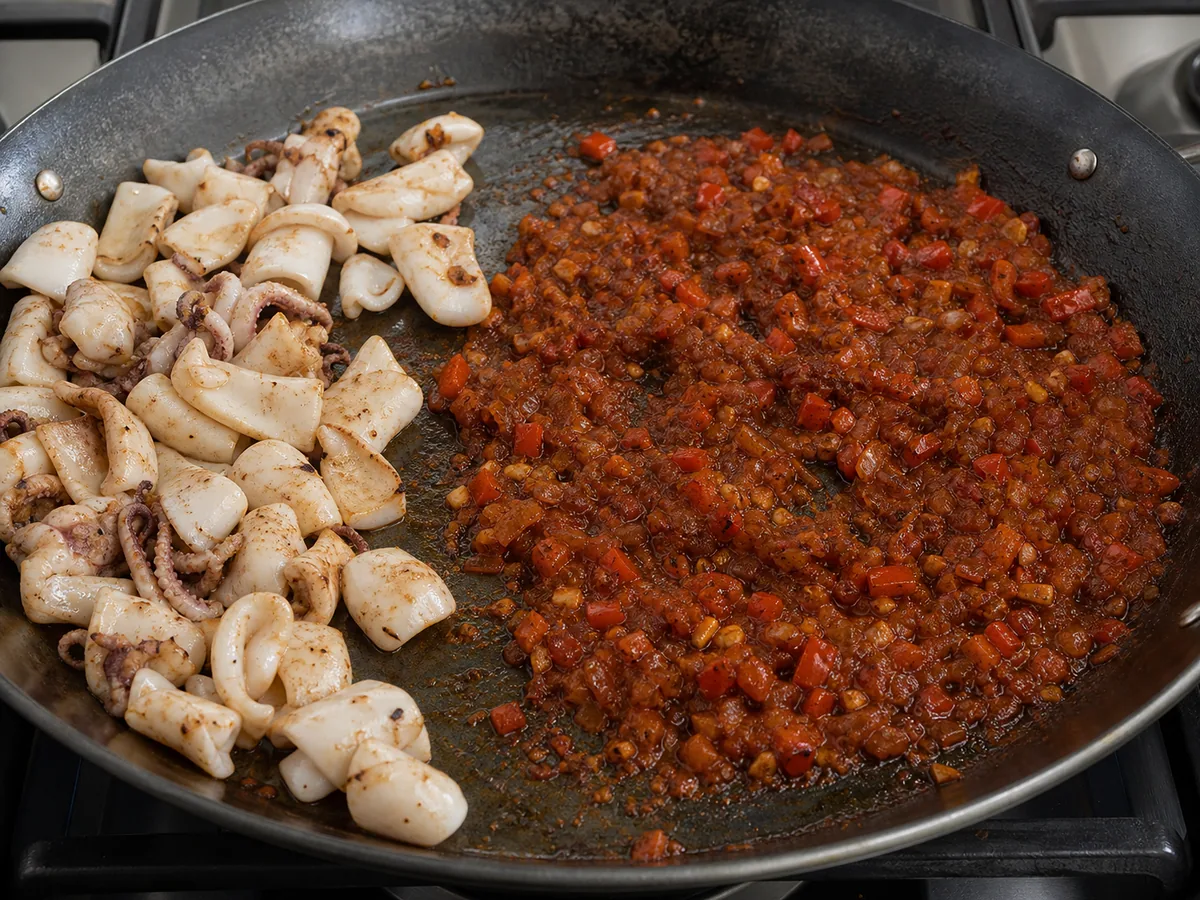
Set a wide paella pan or heavy skillet over medium-high heat. A 34 cm (13.5 in) pan works well for 4 servings; for scaled batches, use a vessel wide enough to preserve a similarly thin rice layer. Add 45 ml of extra-virgin olive oil, then add 250 g of cleaned squid and sear for 60 to 90 seconds, just until the surfaces turn opaque. Transfer the squid to a clean plate. Reduce the heat to medium, add 1 small yellow onion and 1 red bell pepper, and cook for 6 to 8 minutes, stirring often, until softened and lightly golden. Stir in 4 garlic cloves and 2 g of smoked paprika for 30 seconds. Add 200 g of crushed tomatoes, 3 g of fine sea salt, and 1 g of black pepper, then cook for 5 to 7 minutes until the mixture is thick, darkened, and no longer watery.
05:00Start the rice
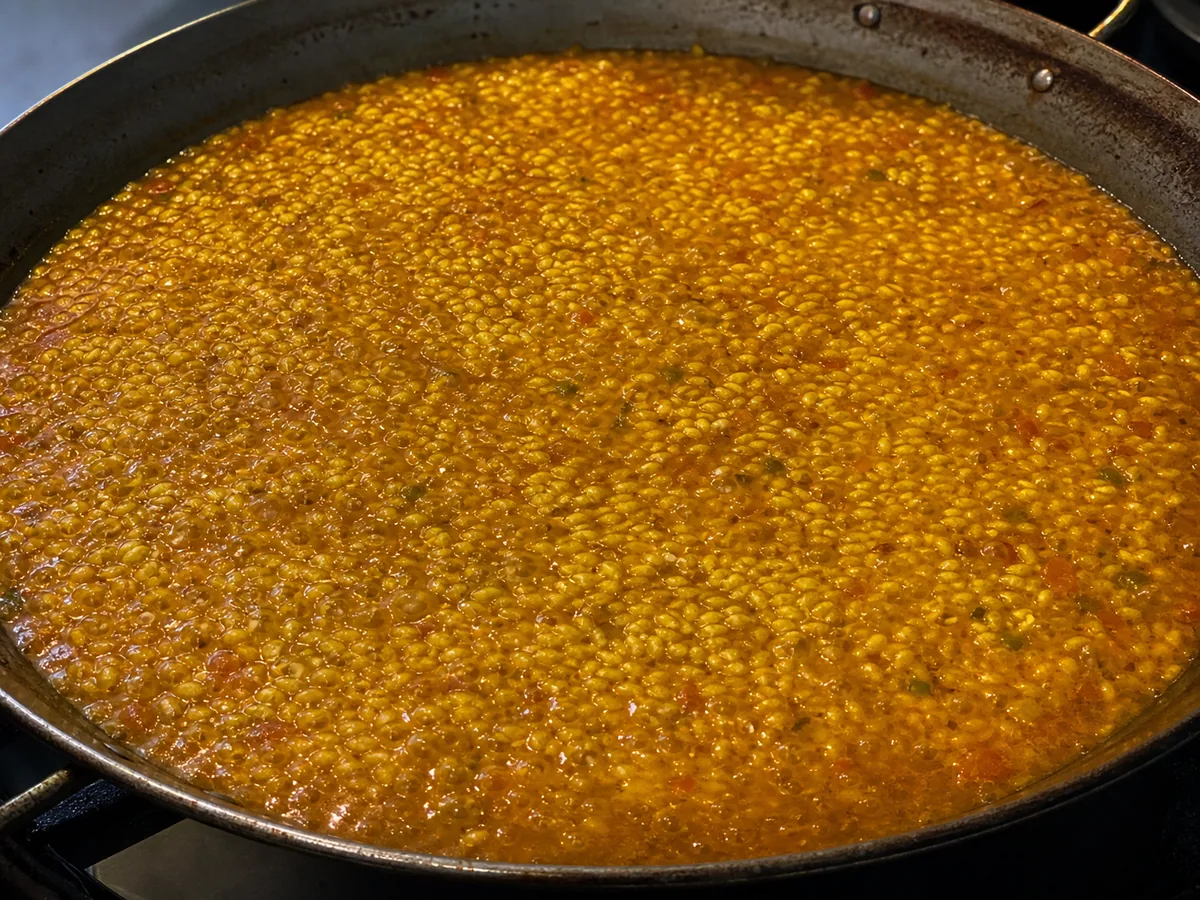
Add 300 g of Spanish round rice to the sofrito and stir for 1 minute so every grain is coated. Pour in 900 ml of low-sodium seafood stock while it is hot and stir once, scraping across the pan to distribute the rice in a thin, even layer. Bring the liquid to a lively simmer over medium-high heat. From this point forward, do not stir. Cook for 8 minutes, rotating the pan over the burner once or twice if the heat is uneven. The timer marks this first high-simmer phase.
08:00Add the seafood and finish cooking
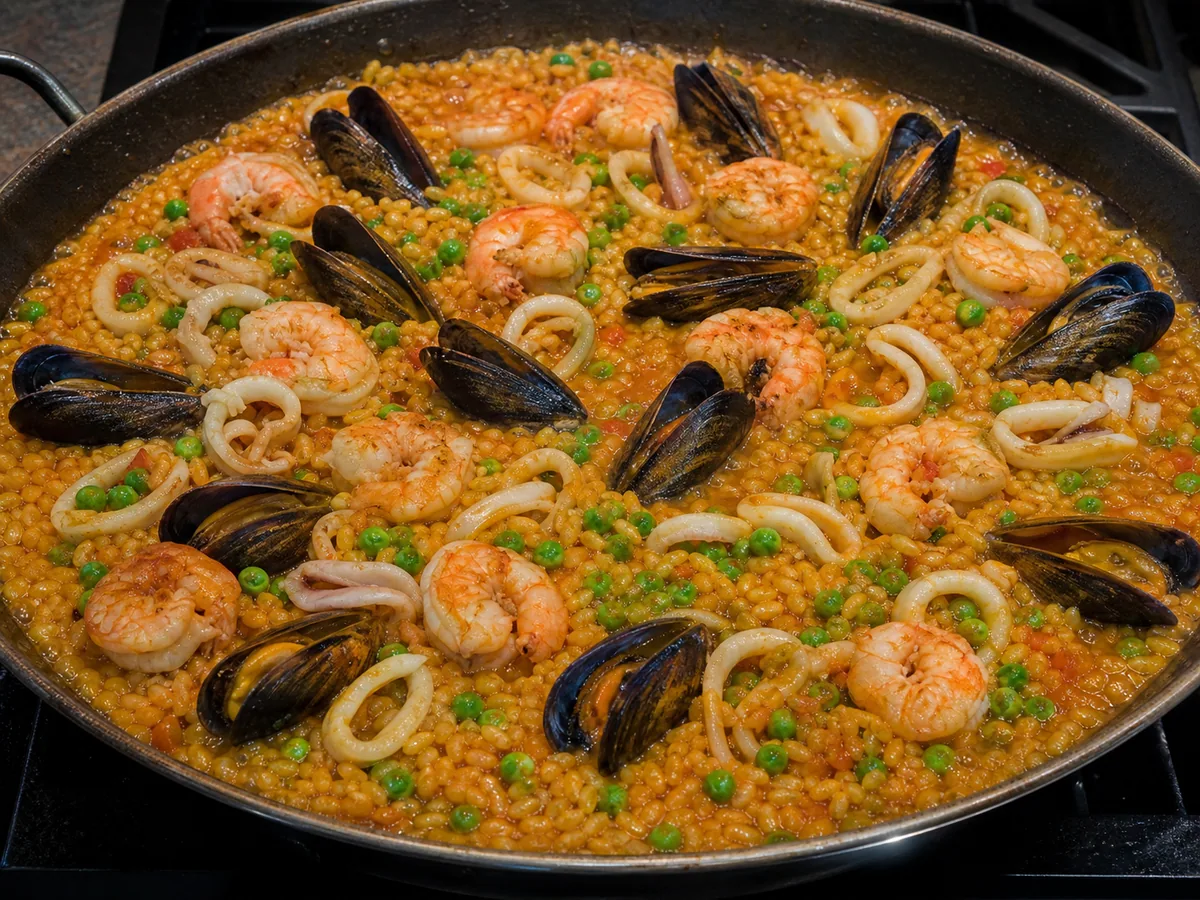
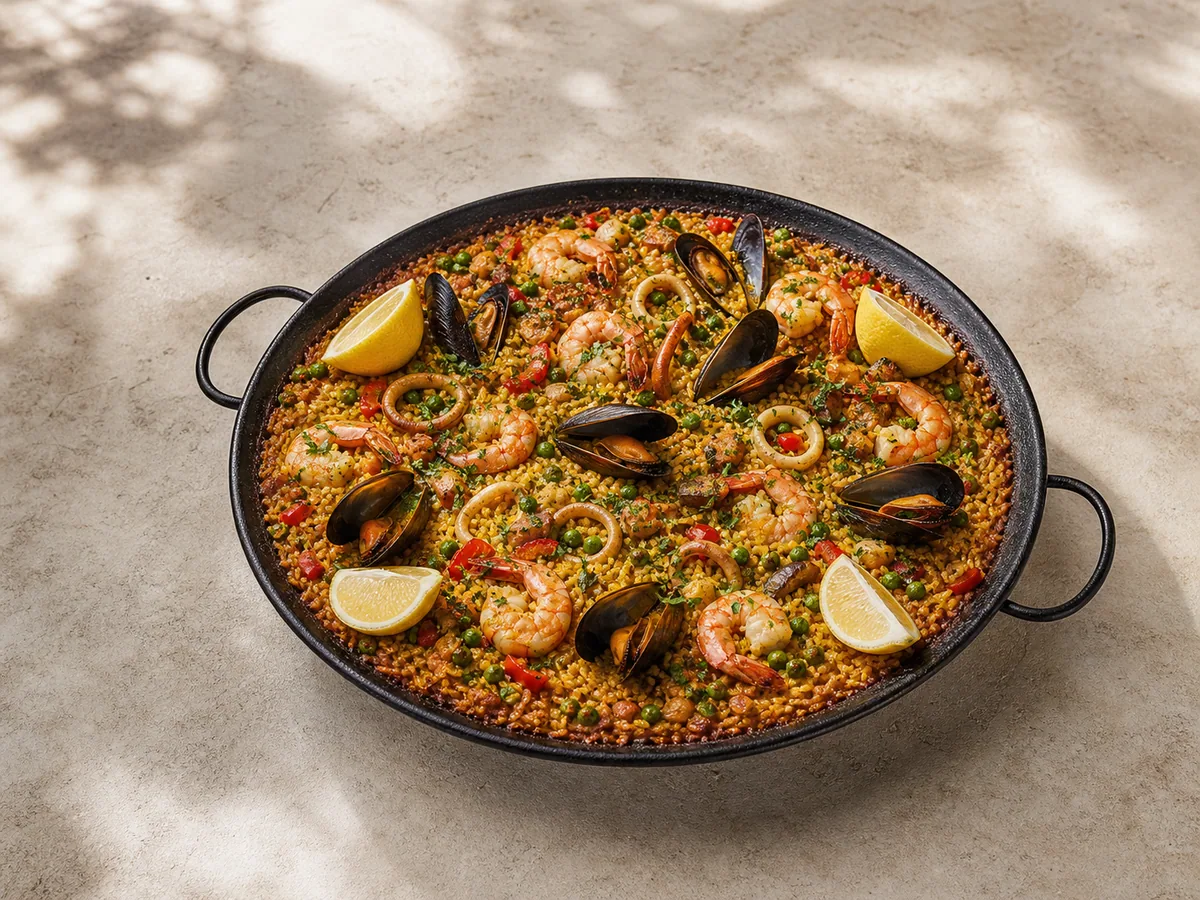
Reduce the heat to medium-low. Arrange 300 g of large raw shrimp and 450 g of live mussels across the rice, return 250 g of cleaned squid to the pan, and scatter 100 g of green peas over the surface. Press the mussel hinges gently into the rice so the shells stand open as they cook, but do not stir. Cook for 8 to 10 minutes, covering the pan loosely with foil for the final 3 to 4 minutes if the mussels need help opening. Begin checking at 8 minutes: the rice should be tender with a slight bite, the shrimp and squid should be opaque and firm, and the mussels should be open. Discard any mussels that stay closed. When a food thermometer can be inserted into the thickest shrimp without touching the pan, it should read 63°C/145°F. If the rice is still chalky and the pan is dry, drizzle in a little hot water around the edge and continue cooking briefly.
08:00Form the socarrat and rest
Remove the foil. Increase the heat to medium-high for 60 to 90 seconds, listening for a gentle crackle and watching for a toasted aroma; stop before the rice smells scorched. Remove the pan from the heat and cover it loosely with a clean kitchen towel for 5 minutes. The timer marks the resting time. Finish with 15 g of fresh flat-leaf parsley and serve immediately with 1 lemon for squeezing over each portion.
05:00


Smart Substitutions
- No Spanish round rice? Use another short-grain paella rice and follow its liquid guidance; choose a variety that stays distinct without stirring.
- No mussels? Use scrubbed clams of a similar size and cook until the shells open, discarding any that stay closed.
- No squid? Use firm white fish cut into large pieces, add it with the shrimp, and cook until opaque and 63°C/145°F in the center.
- No seafood stock? Use low-sodium fish stock or unsalted vegetable stock; taste before adding extra salt.
Tips and Variations
- Add the stock hot so the rice returns to a simmer quickly and cooks evenly from edge to center.
- Once the stock goes in, stir only to level the grains. Further stirring releases starch and pushes the paella toward a creamy texture.
- Rotate the pan during cooking when using a small burner so the outer rice receives as much heat as the center.
What Went Wrong?
- Rice is firm but the pan is dry Drizzle hot water around the outer edge, reduce the heat, and cook for 2 to 3 minutes before checking again.
- Rice turned soft or creamy Too much liquid or stirring released excess starch. Next time, measure the stock carefully and leave the rice undisturbed after leveling it.
- Mussels did not open Give them up to 4 minutes under loose foil, then discard any shells that remain closed.
- The center is browning faster than the edges Lower the heat slightly and rotate the pan every few minutes to spread the burner heat more evenly.
Nutrition Estimate
- Fiber: 5 g per serving
- Sodium: 740 mg per serving
Nutrition disclaimer:This recipe is provided for general cooking information only. Nutrition values are estimates and may vary by ingredients, brands, preparation methods, and serving sizes. Check ingredient labels and follow appropriate food-safety practices. This content is not medical, dietary, allergy, or professional food-safety advice.
FAQ
Found an error or have a suggestion?
Help us improve this recipe. Send us your feedback and include the recipe name so we can take a look.