Method
Extract the malt water
Pour 2500 ml of water into a large bowl. Place 120 g of Korean barley malt powder (yeotgireum) in a clean nut-milk bag or a double layer of cheesecloth, submerge it, and knead the bag in the water for 5 minutes, pressing and turning it so the water becomes evenly cloudy.
05:00Steep and squeeze the malt
Leave the malt bag immersed in the cloudy water for 30 minutes. Squeeze it firmly over the bowl to extract the remaining malt liquid, then remove and discard the spent malt.
30:00Settle the malt water
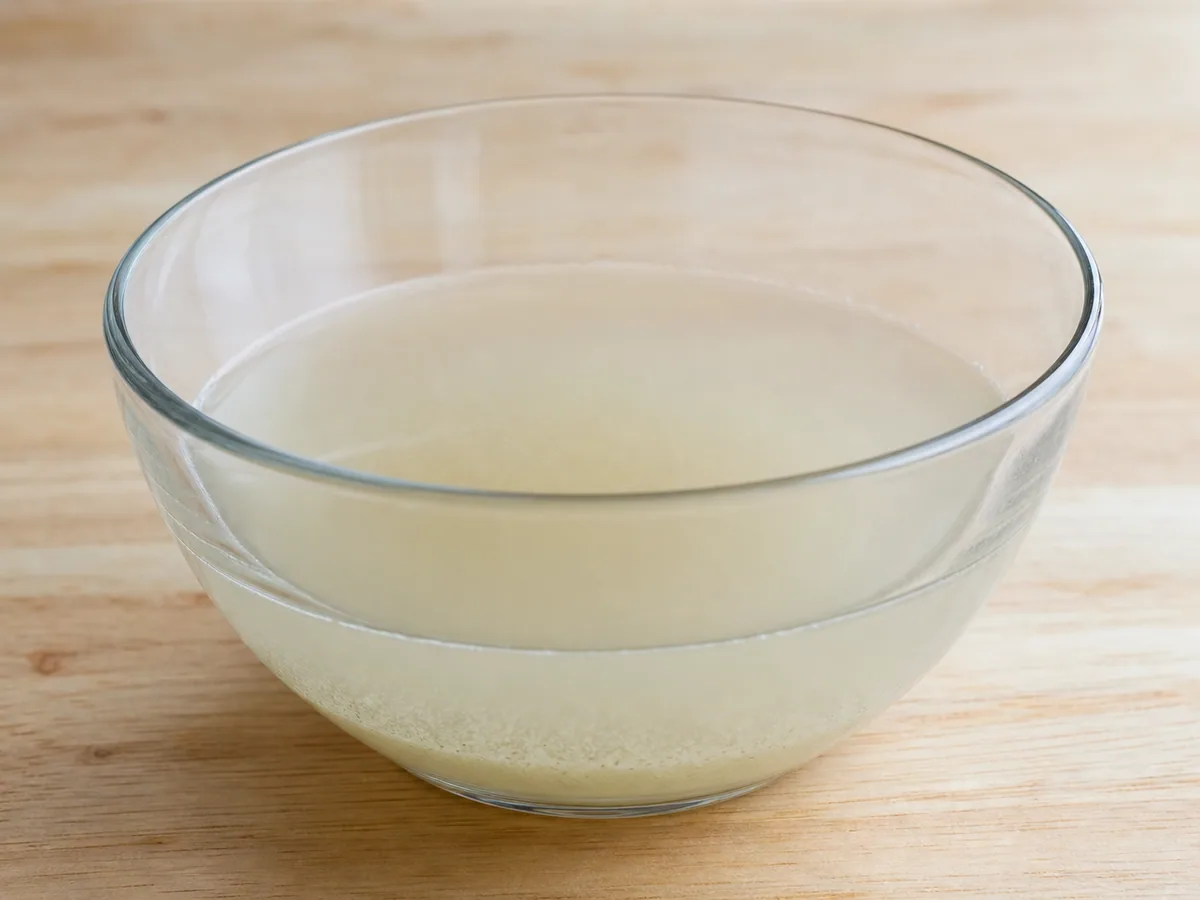
Let the cloudy malt liquid stand undisturbed for 30 minutes, until a pale layer of sediment collects on the bottom and the liquid above it looks noticeably clearer. Do not stir or move the bowl before pouring off the clear liquid in the next step.
30:00Warm the rice in the clear malt water
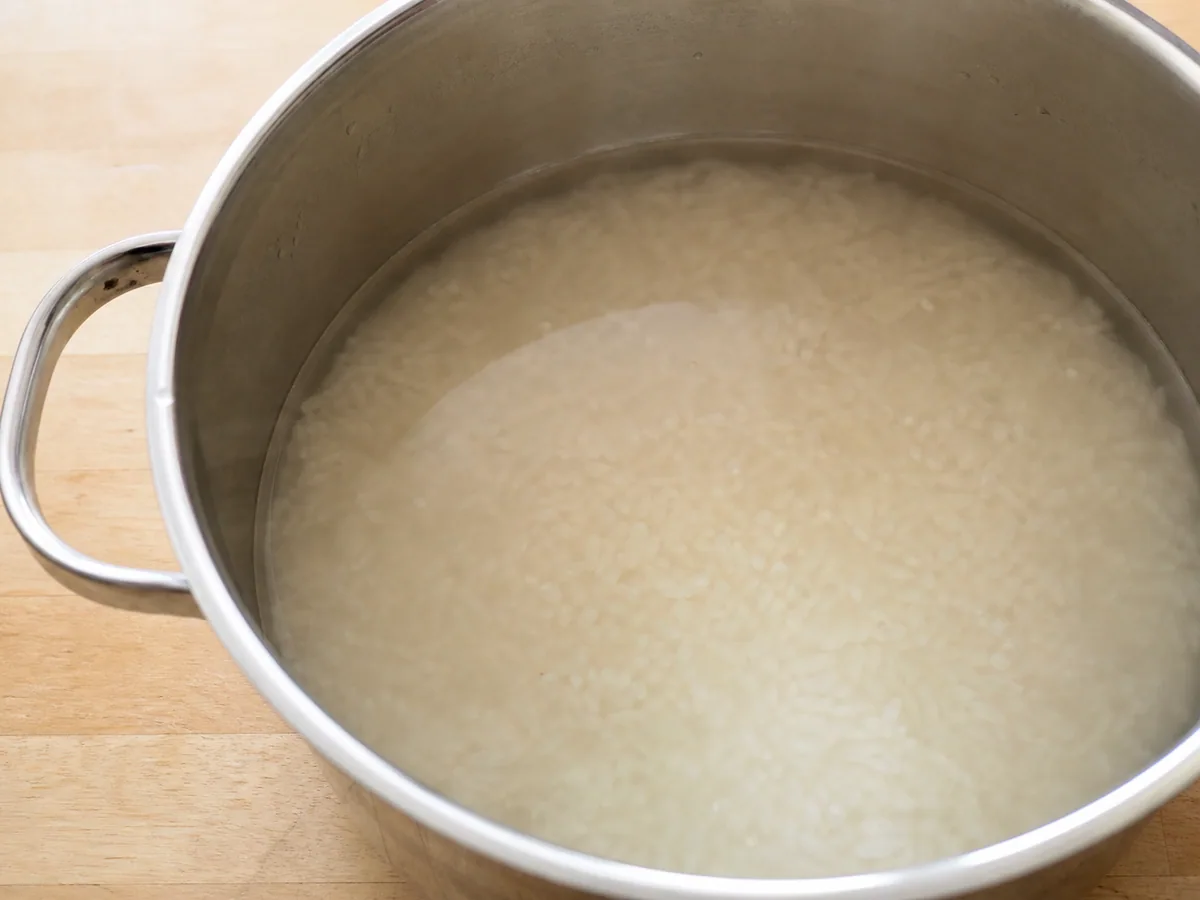
Slowly pour the clear malt water into a rice cooker, stopping before the sediment reaches the rim of the bowl. Add 200 g of cooked short-grain white rice and separate any clumps with a spoon. Set the cooker to warm and hold the mixture at 58-65°C (136-149°F) for 4 to 6 hours. Begin checking at 4 hours; it is ready when several rice grains float and the liquid tastes noticeably sweeter.
4:00:00Reserve rice for serving
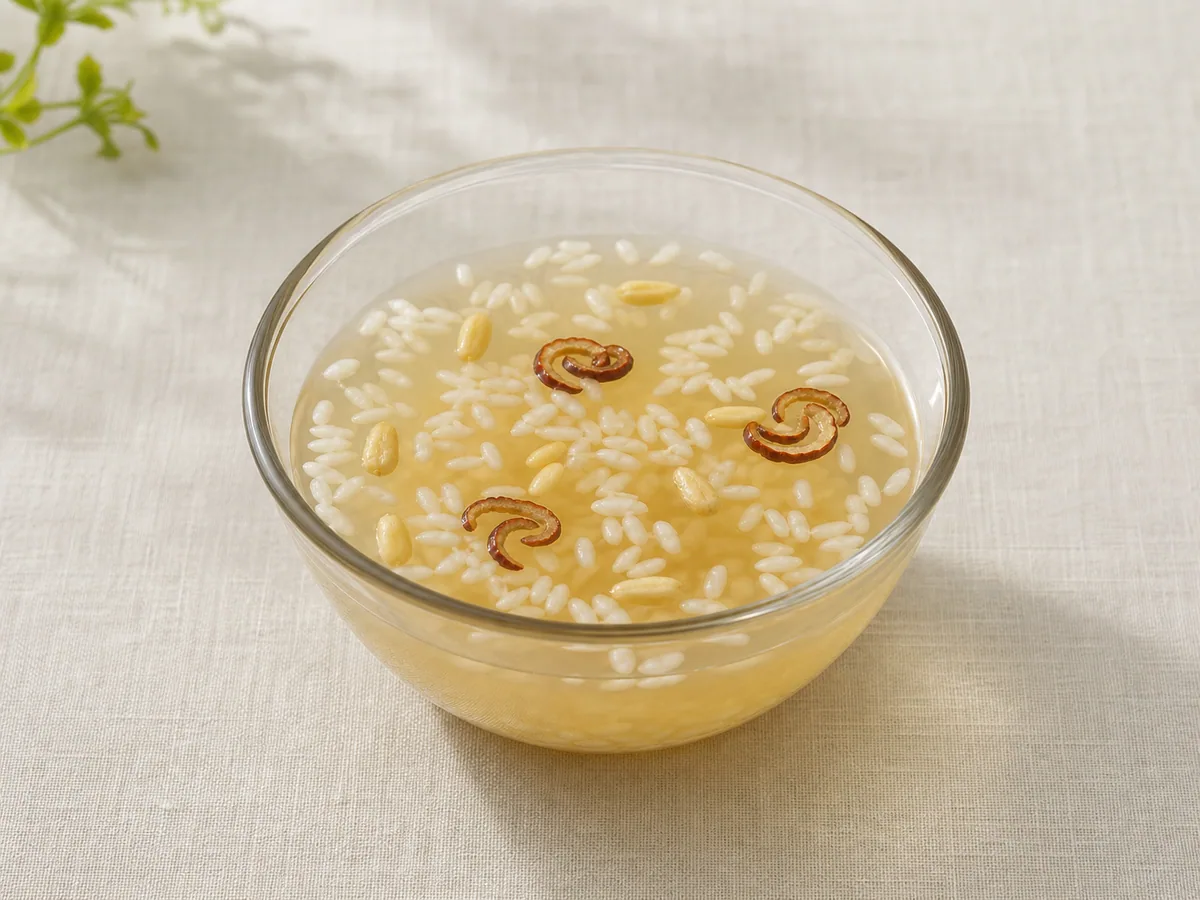
Use a slotted spoon to lift a small portion of the floating rice grains into a fine sieve. Rinse them briefly under cold running water and drain well; this removes surface syrup so the grains stay distinct in the finished glasses. Pour the remaining rice and malt liquid into a large pot.
Sweeten and boil the punch
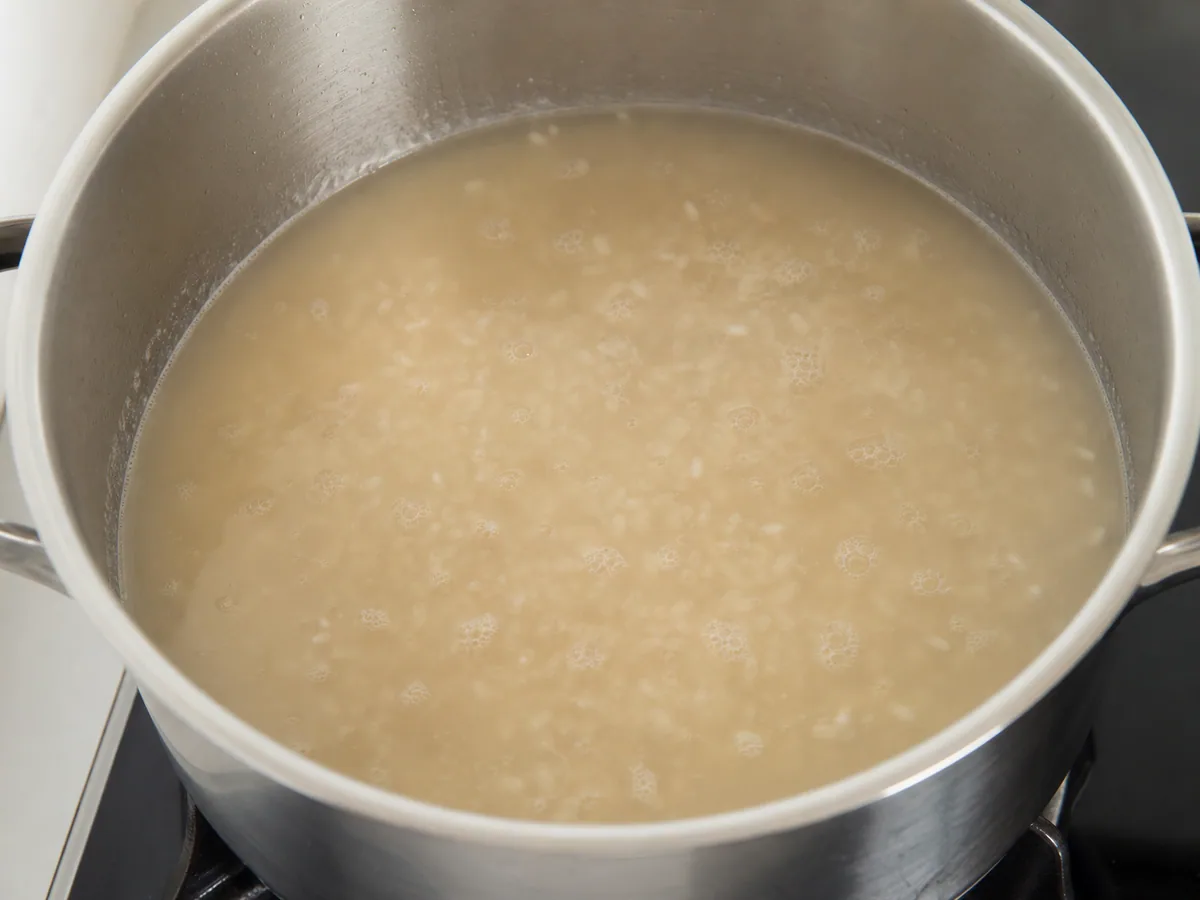
Stir 120 g of granulated sugar and 1 g of fine sea salt into the pot. Bring the punch to a full boil over medium-high heat, stirring until the sugar dissolves. Skim away any foam, then boil steadily for 10 minutes. The liquid should look pale amber and clear, with a rounded malt aroma rather than a raw grain smell.
10:00Cool and serve
Set the pot in a larger basin of ice water and stir occasionally for about 30 minutes, or until the punch is thoroughly cold. Divide it among glasses, add some reserved rice to each serving, and finish with pine nuts (optional) and dried jujube (optional).
30:00


Smart Substitutions
- No Korean yeotgireum? Use pure diastatic malted barley flour. Do not use malted milk powder or non-diastatic malt, because they will not provide the active enzymes needed for sikhye.
- Prefer a chewier grain? Use the same cooked weight of glutinous rice in place of short-grain white rice.
- Want a lighter sweetness? Reduce the granulated sugar by up to one-quarter; the malted rice will still contribute gentle sweetness.
- No pine nuts or jujube? Omit either garnish or both. The rice grains are the essential finishing detail.
Tips and Variations
- Check the warm setting with an instant-read thermometer; temperatures above 65°C (149°F) can weaken the malt enzymes before the rice becomes sweet.
- Use rice cooked slightly firm so the grains keep their shape during the long warm hold.
- Stop pouring the malt water as soon as sediment approaches the edge of the bowl; clarity depends more on this step than on later skimming.
What Went Wrong?
- No rice grains float after 4 hours Confirm that the malt is diastatic and that the liquid is holding between 58-65°C (136-149°F). Continue checking for up to 6 hours.
- Punch looks cloudy The settled malt powder was probably disturbed. Let the liquid stand briefly, then pour the clearer portion into a clean pot without scraping the bottom.
- Malt flavor tastes weak Knead and squeeze the malt bag more thoroughly during extraction, and make sure the powder is fresh and aromatic.
- Rice sinks in the glass Rinse the reserved grains under cold water and drain them well before adding them to the punch.
Nutrition Estimate
- Fiber: 1 g per serving
- Sodium: 51 mg per serving
Nutrition disclaimer:This recipe is provided for general cooking information only. Nutrition values are estimates and may vary by ingredients, brands, preparation methods, and serving sizes. Check ingredient labels and follow appropriate food-safety practices. This content is not medical, dietary, allergy, or professional food-safety advice.
FAQ
Found an error or have a suggestion?
Help us improve this recipe. Send us your feedback and include the recipe name so we can take a look.