Method
Prepare the groats and vegetables
Rinse 200 g of roasted buckwheat groats briefly in a fine-mesh sieve under cool running water, then shake off as much water as possible. Peel 200 g of large yellow onion and cut it into small dice. Wipe 340 g of cremini mushrooms clean and slice them about 6 mm (1/4 in) thick. Chop 8 g of fresh dill and set it aside for the finish.
Cook the buckwheat kasha
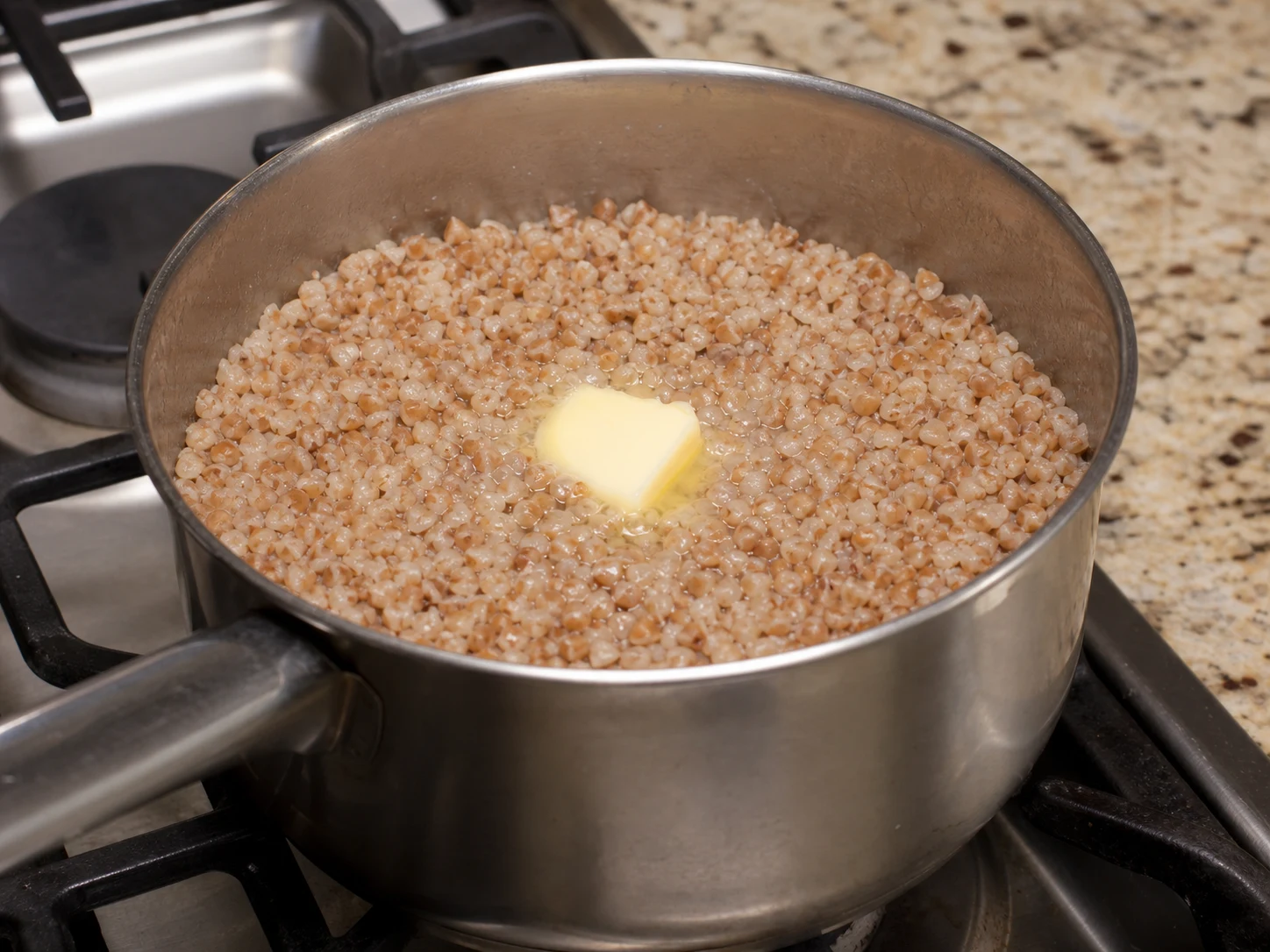
Bring 480 ml of water to a boil in a medium saucepan. Stir in 200 g of roasted buckwheat groats, 2.4 g of Morton coarse kosher salt for kasha, and 14 g of unsalted butter for kasha. Return the liquid to a gentle simmer, cover tightly, and reduce the heat to low. Cook for about 15 minutes, until the water is absorbed and the groats are tender but still distinct. Remove the pan from the heat and leave it covered while the vegetables cook.
15:00Soften the onions
Heat a wide skillet over medium heat. Add 15 ml of olive oil and 14 g of unsalted butter for mushrooms. When the butter foams, add 200 g of large yellow onion and spread it into an even layer. Cook for 6 to 8 minutes, stirring occasionally, until soft and pale gold; lower the heat if the edges darken before the centers soften.
06:00Brown the mushrooms
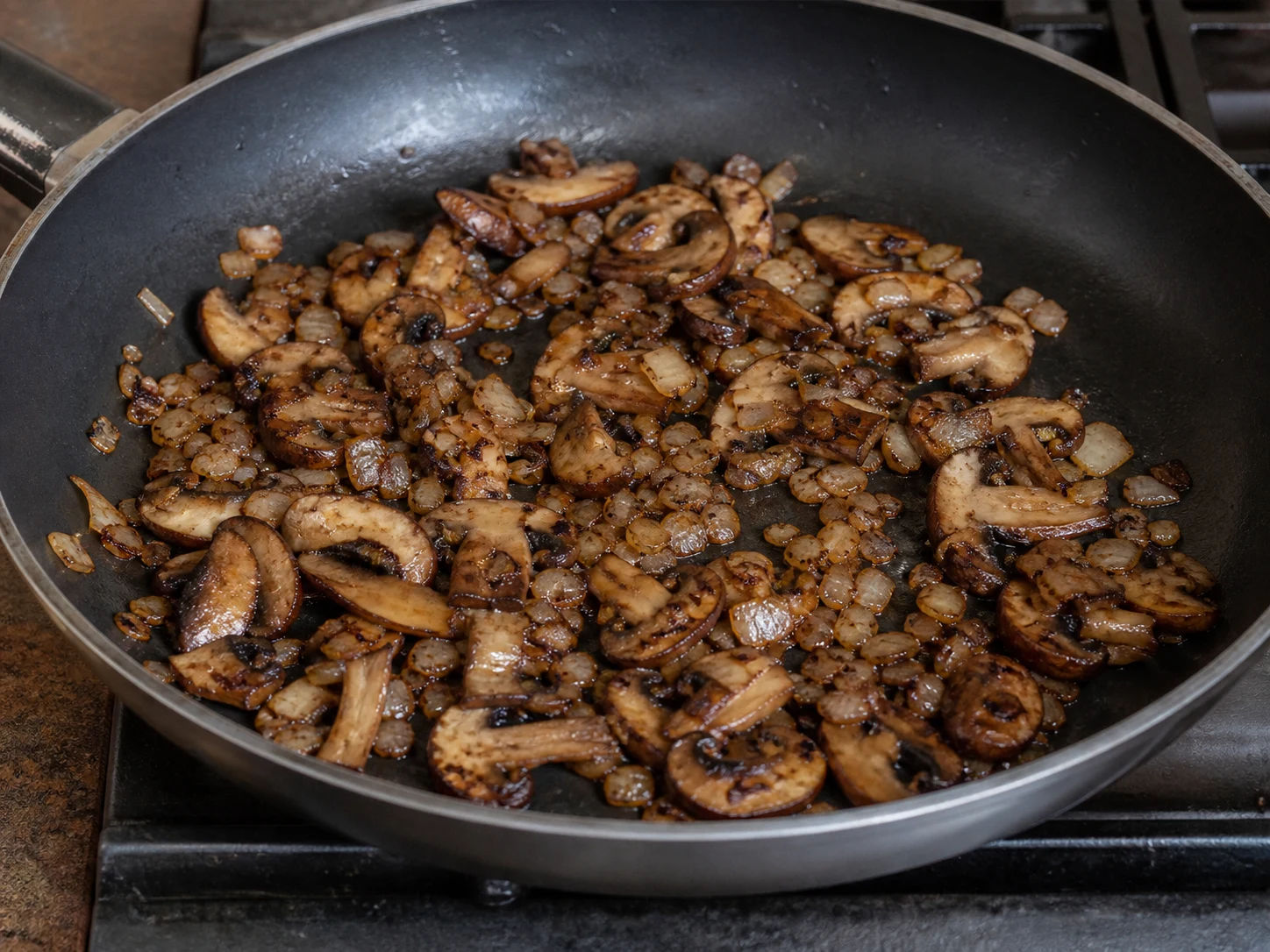
Raise the heat to medium-high and add 340 g of cremini mushrooms, 2.4 g of Morton coarse kosher salt for mushrooms, and 1 g of black pepper. Spread the mushrooms across the skillet and let them cook without constant stirring. Turn them every few minutes and continue cooking for 8 to 10 minutes, until their liquid has evaporated and the edges are well browned. Start checking at 8 minutes; cook longer if the skillet still looks wet.
08:00Finish and serve the kasha
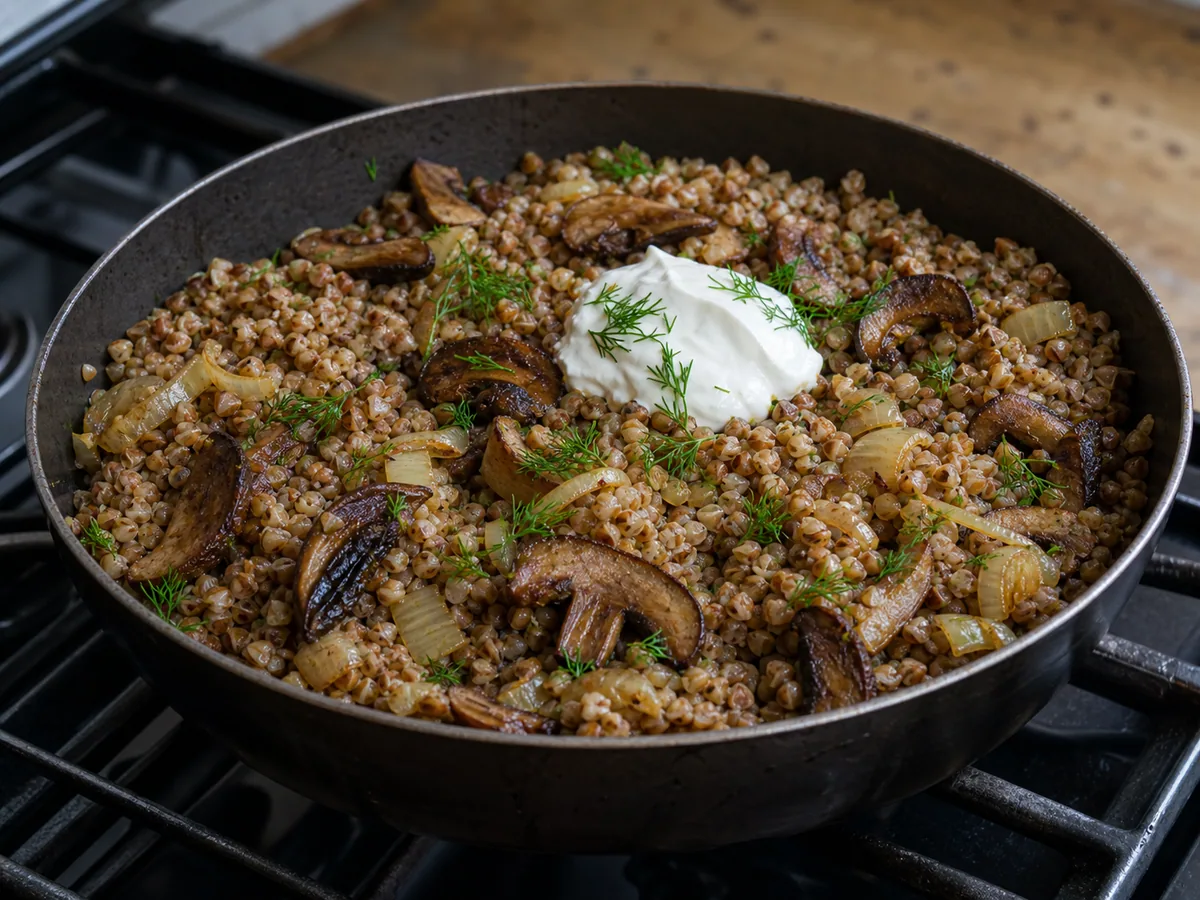
Uncover the saucepan and fluff the cooked kasha gently with a fork. Fold in the browned mushroom and onion mixture, then add 8 g of fresh dill and toss just until evenly distributed. Taste and adjust the seasoning at the table if needed. Spoon into warm bowls and serve with sour cream (optional).


Smart Substitutions
- No cremini mushrooms? Use white button mushrooms or a mix of cultivated mushrooms with similar moisture and cooking time.
- Avoiding butter? Replace both butter portions with additional olive oil; the result will be less dairy-rich but still savory.
- No fresh dill? Use flat-leaf parsley for a cleaner herbal finish, or a smaller amount of chives for mild onion flavor.
- No sour cream? Serve with plain Greek yogurt or crème fraîche, or leave the creamy garnish off entirely.
Tips and Variations
- Choose a wide skillet so the mushrooms contact the hot surface instead of piling up and steaming.
- Stir the buckwheat only when adding it to the water; repeated stirring can break the groats and make the kasha pasty.
- Let the mushrooms become properly brown before combining them with the grain—the browned edges provide most of the dish’s savory depth.
What Went Wrong?
- Kasha is mushy The heat may have been too high or the groats may have been stirred too often. Cook the next batch at a bare simmer and leave it undisturbed under a tight lid.
- Buckwheat is still firm Add a small splash of hot water, cover again, and cook over low heat for a few more minutes before checking.
- Mushrooms are gray and watery Increase the heat and spread them across a wider pan. Keep cooking until the released liquid evaporates before looking for browning.
- Onions are scorching Lower the heat and stir in a spoonful of water to loosen the dark spots, then continue until the onions are soft.
Nutrition Estimate
- Fiber: 7 g per serving
- Sodium: 490 mg per serving
Nutrition disclaimer:This recipe is provided for general cooking information only. Nutrition values are estimates and may vary by ingredients, brands, preparation methods, and serving sizes. Check ingredient labels and follow appropriate food-safety practices. This content is not medical, dietary, allergy, or professional food-safety advice.
FAQ
Found an error or have a suggestion?
Help us improve this recipe. Send us your feedback and include the recipe name so we can take a look.