Method
Prepare the vegetables
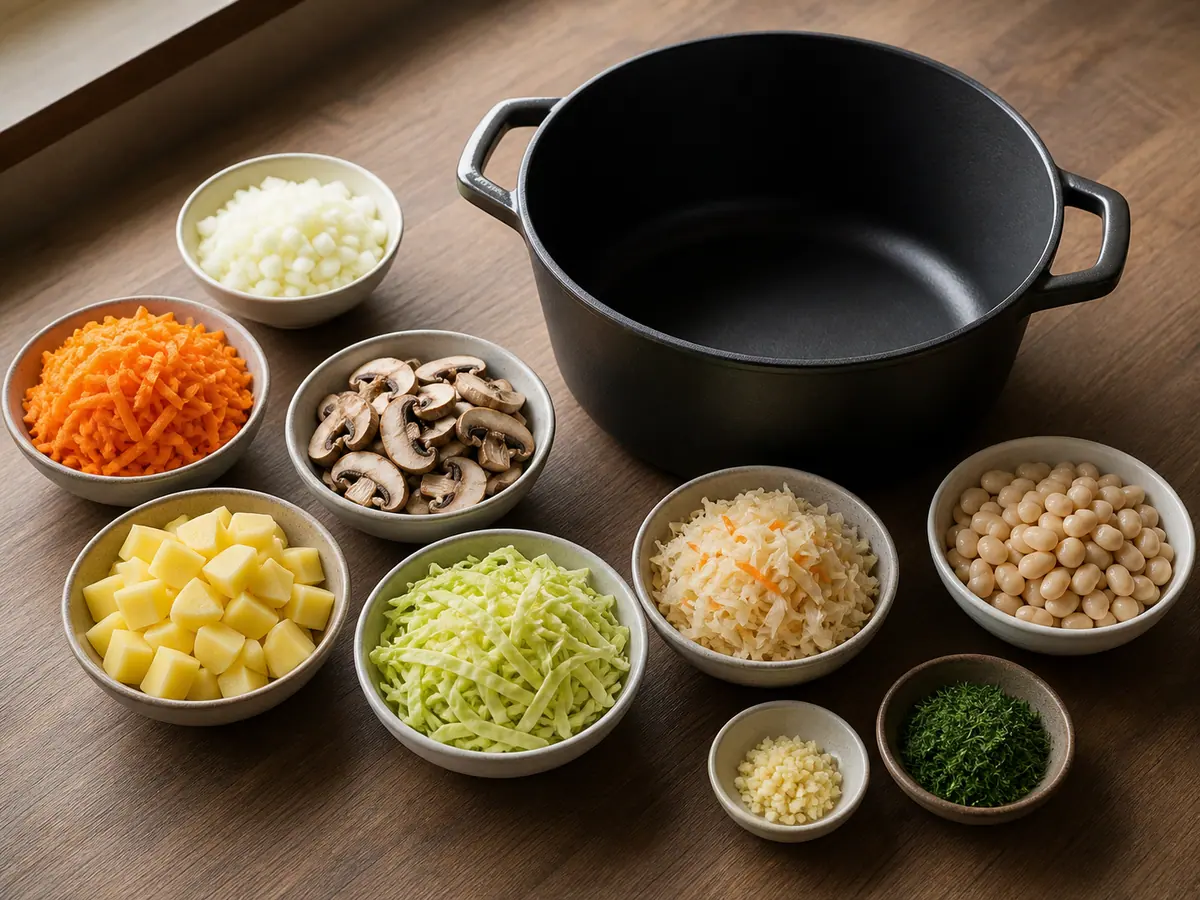
Prepare 180 g of yellow onion by peeling it and cutting it into small dice. Grate 150 g of carrots on the large holes of a box grater. Slice 200 g of cremini mushrooms. Prepare 450 g of Yukon Gold potatoes by peeling them and cutting them into 1.5 cm (1/2 in) pieces. Shred 300 g of green cabbage into short, thin ribbons. If the strands in 350 g of sauerkraut are very long, cut them once or twice. Drain 480 g of no-salt-added canned white beans well if they were packed in liquid. Mince 12 g of garlic cloves and chop 15 g of fresh dill, keeping both aside for the finish.
Brown the vegetables
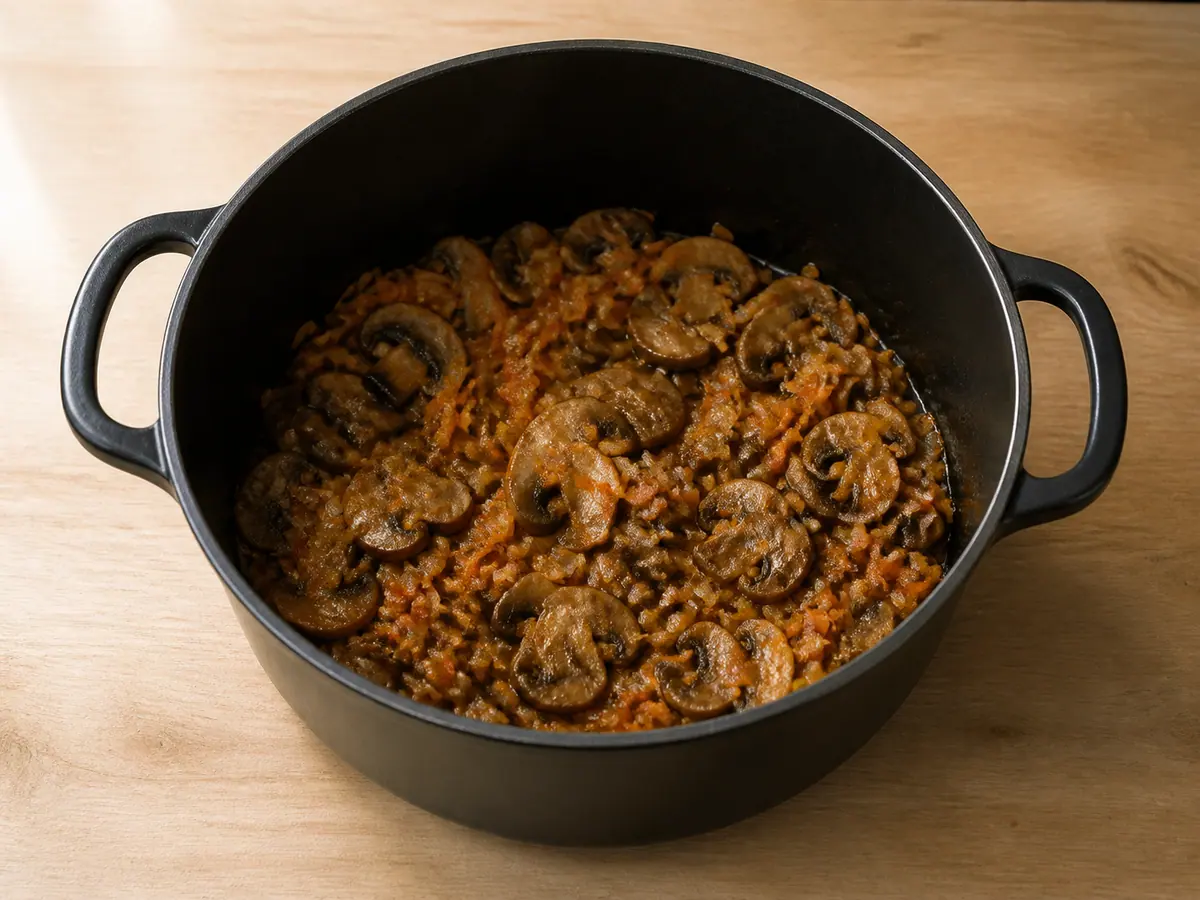
Heat 30 ml of sunflower oil in a large heavy pot over medium heat. Add 180 g of yellow onion, 150 g of carrots, and 200 g of cremini mushrooms. Cook for 8 to 10 minutes, stirring often, until the onion is translucent, the carrots have softened, and the mushrooms have released their moisture and begun to brown; use the timer as the first check.
08:00Cook the tomato paste
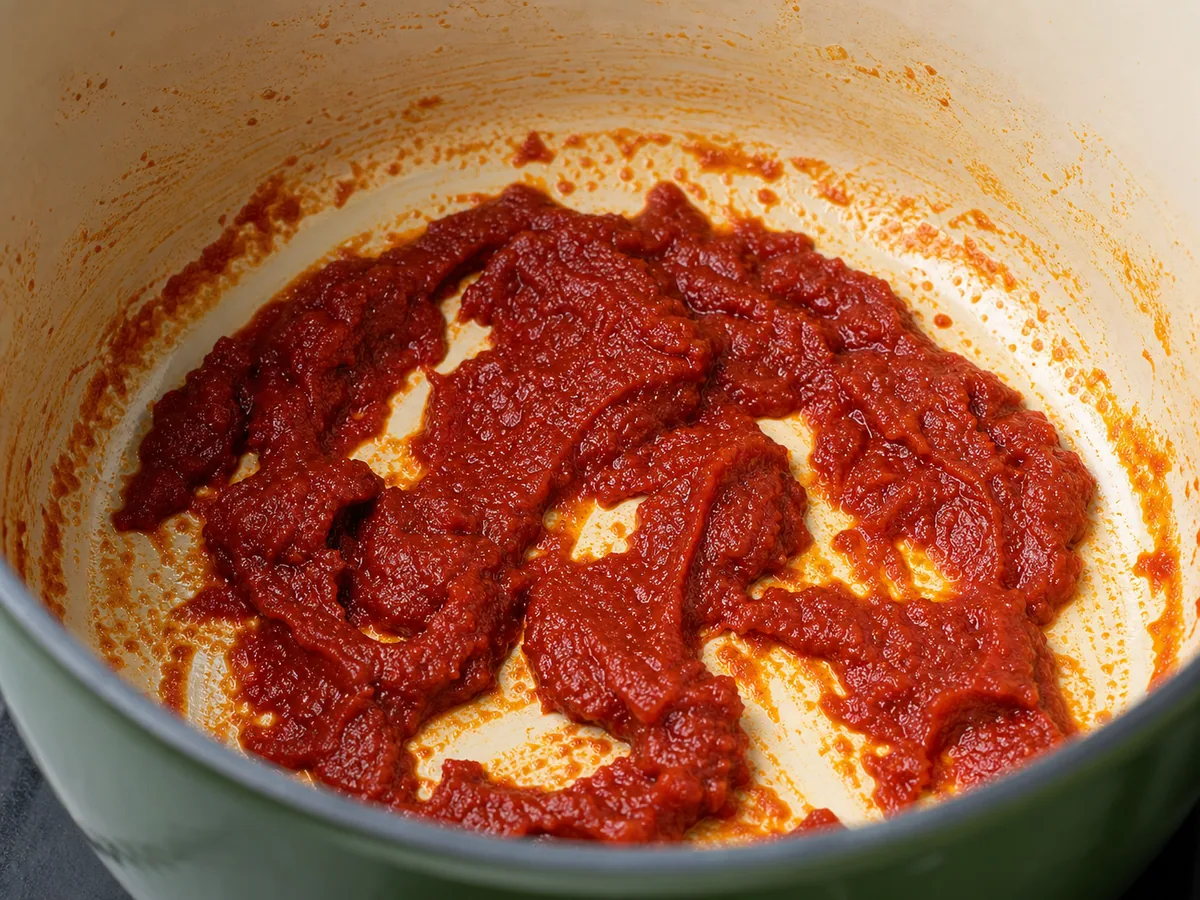
Add 30 g of tomato paste to the browned vegetables and cook for 1 minute, stirring continuously across the bottom of the pot, until the paste darkens slightly to a rusty red, coats the vegetables, and smells sweet rather than raw.
01:00Build the broth and cook the potatoes
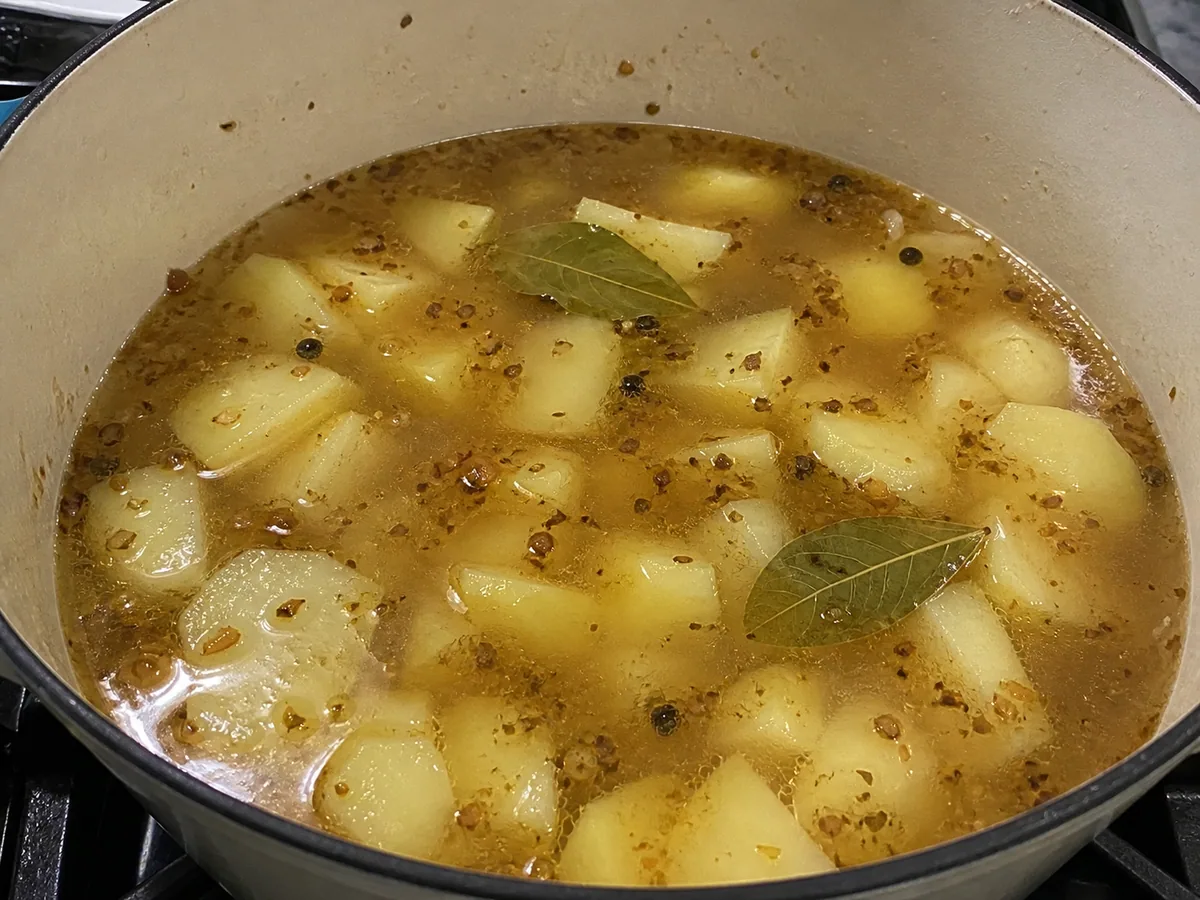
Pour in 1500 ml of water, scraping up the browned layer from the bottom of the pot. Add 450 g of Yukon Gold potatoes, 2 bay leaves, 4 whole allspice berries, and 1 g of black pepper. Raise the heat and bring the pot to a boil, then lower it to maintain a steady simmer. Cook for 12 to 15 minutes, using the timer as the first check, until a potato piece can be pierced but still offers a little resistance in the center.
12:00Simmer the fresh cabbage and sauerkraut
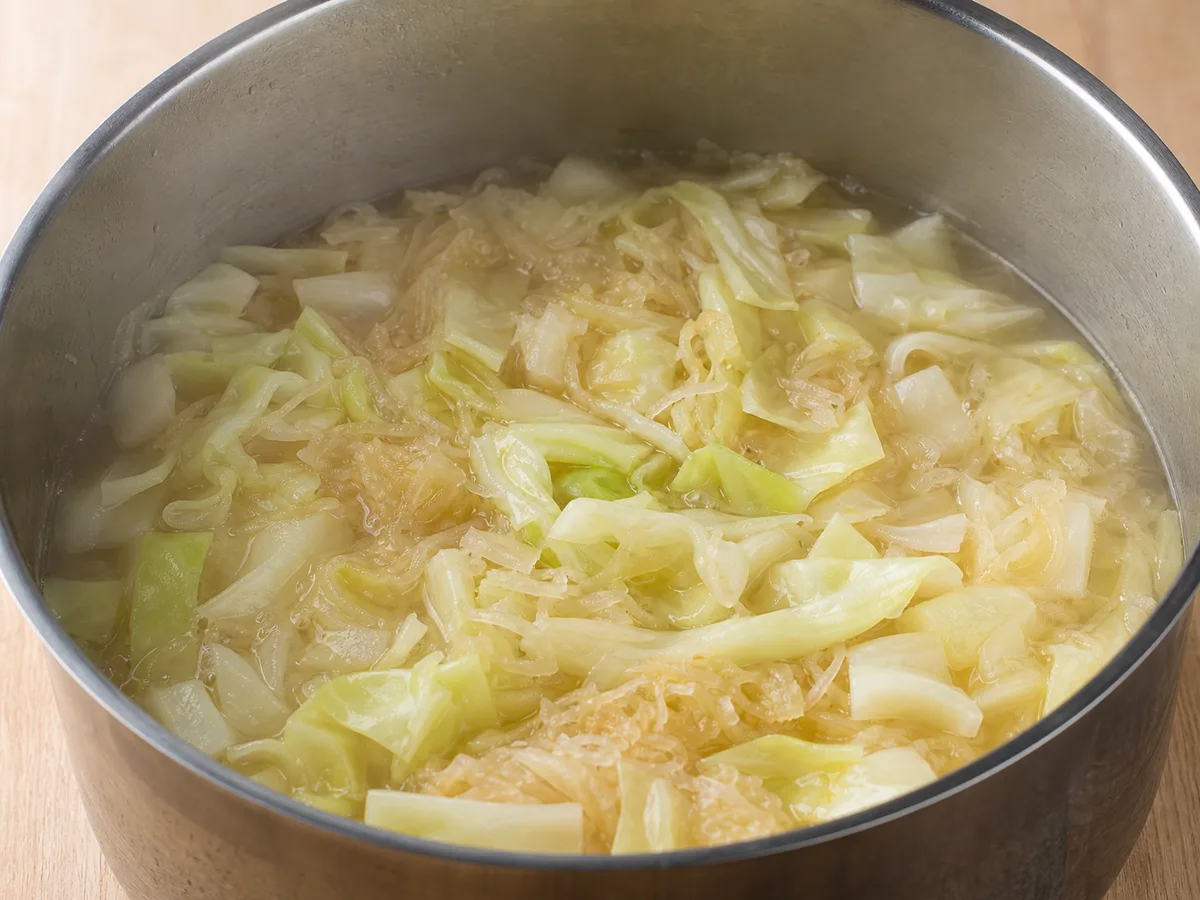
Stir in 300 g of green cabbage and 350 g of sauerkraut. Return the soup to a gentle simmer and cook for 10 to 12 minutes, using the timer as the first check. The fresh cabbage should be tender, the sauerkraut should soften into the broth, and the potatoes should be fully cooked without breaking apart.
10:00Warm the beans and finish with garlic and dill
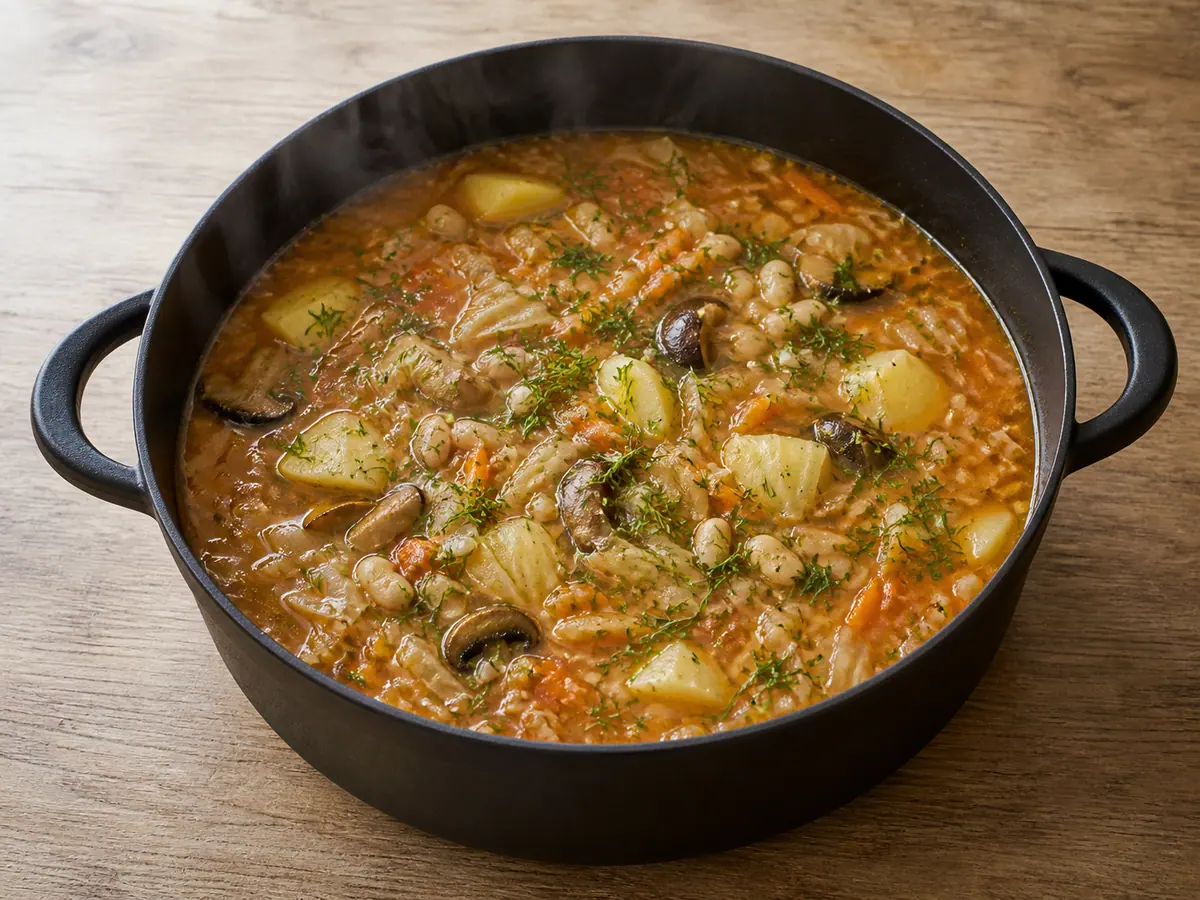
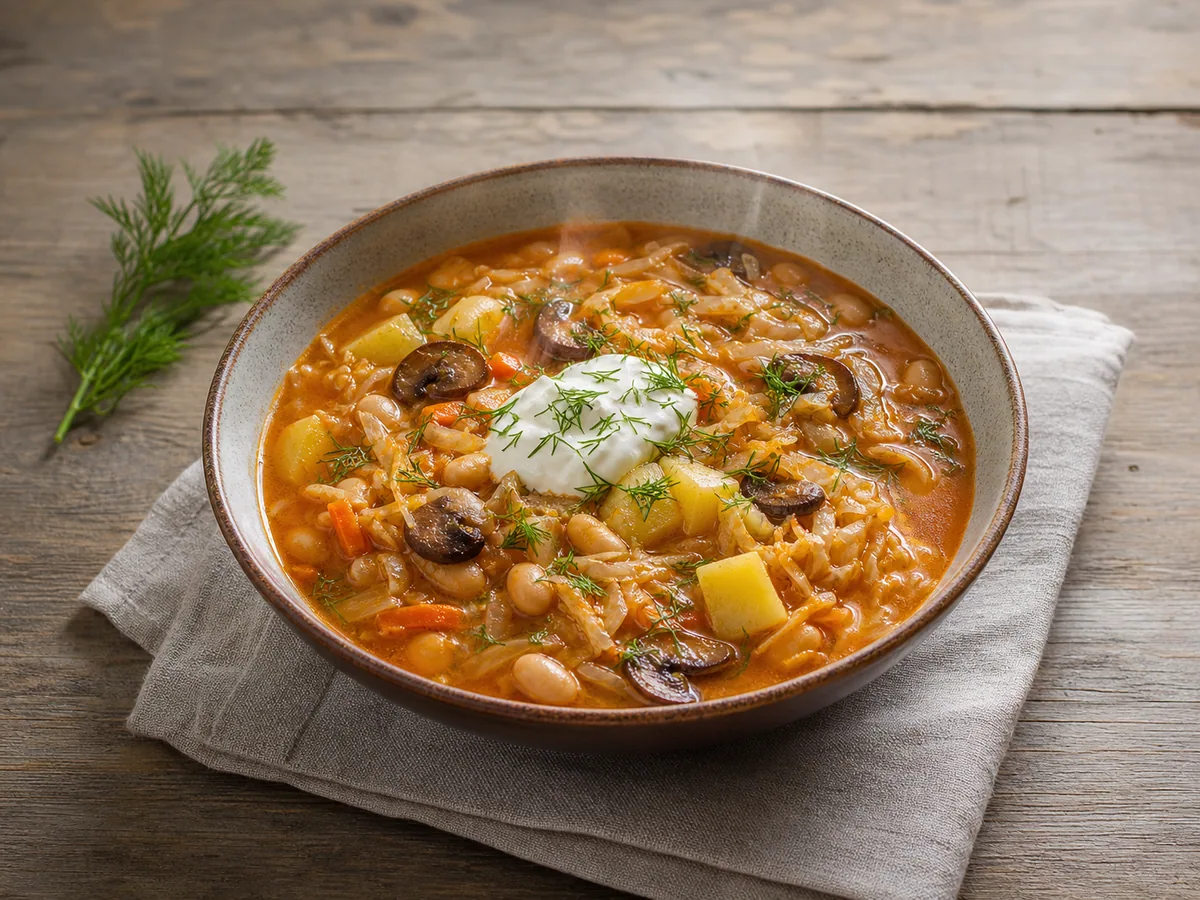
Add 480 g of no-salt-added canned white beans and simmer for 5 minutes, stirring gently once or twice, until the beans are hot and the broth looks lightly thickened. Remove the pot from the heat, then count and discard both 2 bay leaves and all 4 4 whole allspice berries berries. Stir in 12 g of garlic cloves and most of 15 g of fresh dill. Taste the broth; the sauerkraut should provide a clear sour-salty edge. Ladle into bowls, finish with the remaining dill, and serve with sour cream (optional).
05:00


Smart Substitutions
- No sauerkraut? Use more fresh cabbage and add lemon juice or mild vinegar at the table until the broth tastes pleasantly sharp.
- No white beans? Use butter beans, navy beans, or light red kidney beans with a similarly creamy texture.
- No sunflower oil? Use another neutral cooking oil, such as canola or grapeseed oil.
- No mushrooms? Omit them and cook the onion and carrots a few minutes longer to develop deeper browning.
Tips and Variations
- Taste the sauerkraut before it goes into the pot. If it is extremely salty, squeeze out some brine rather than washing away all of its character.
- Keep the cabbage at a gentle simmer; hard boiling can break the potatoes and make the broth cloudy.
- Add the garlic and dill after turning off the heat so their aroma stays fresh against the long-simmered vegetables.
What Went Wrong?
- Potatoes remain firm Acidic sauerkraut may have gone in too early. Keep the soup at a gentle simmer until the potatoes yield easily to a knife.
- Soup is too sour Dilute it with a little hot water and mash a few potato pieces into the broth to soften the sharpness.
- Broth seems thin Mash a spoonful of beans and potatoes against the side of the pot, then stir them back into the soup.
- Flavor tastes muted Add a spoonful of sauerkraut brine, more black pepper, or another handful of chopped dill just before serving.
Nutrition Estimate
- Fiber: 17 g per serving
- Sodium: 640 mg per serving
Nutrition disclaimer:This recipe is provided for general cooking information only. Nutrition values are estimates and may vary by ingredients, brands, preparation methods, and serving sizes. Check ingredient labels and follow appropriate food-safety practices. This content is not medical, dietary, allergy, or professional food-safety advice.
FAQ
Found an error or have a suggestion?
Help us improve this recipe. Send us your feedback and include the recipe name so we can take a look.