Method
Prepare and season the parsnips
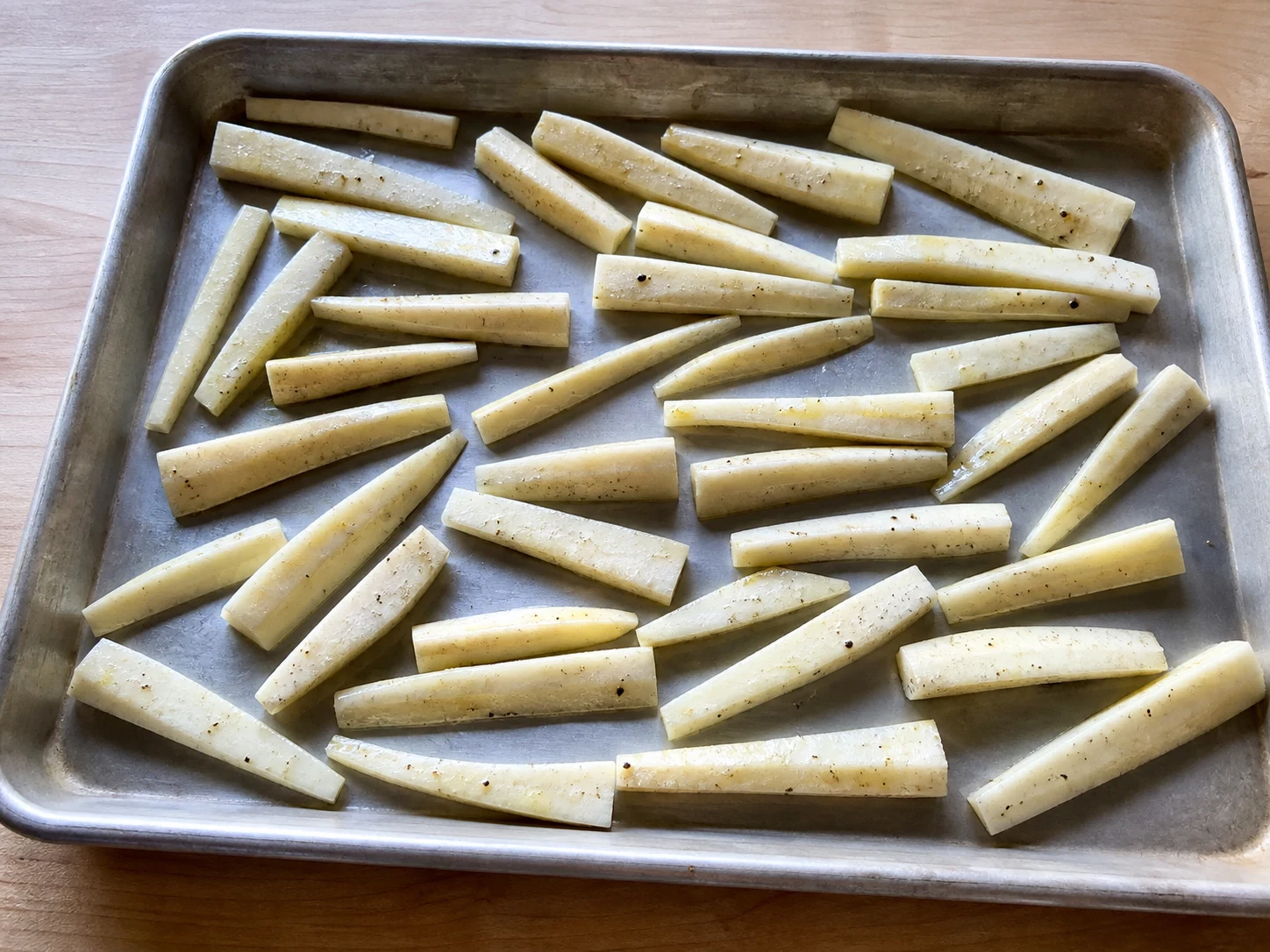
Heat the oven to 220°C (425°F). Trim 800 g of parsnips and scrub them well; peel away only rough or woody patches. Halve thick roots lengthwise and quarter very large ones. If a large root has a visibly fibrous or woody center, cut it out. Cut everything into batons about 7 cm (3 in) long and 1.5 cm (1/2 in) thick. Put them on a large rimmed baking sheet, add 30 ml of olive oil for roasting, 3 g of fine sea salt for roasting, and 1 g of black pepper, and toss until every surface is lightly coated.
Start roasting the parsnips
Spread the parsnips into one uncrowded layer with as many cut sides against the metal as possible; use a second sheet for a scaled batch rather than crowding the pan. Roast at 220°C (425°F) for 15 minutes. Start the timer, then continue immediately to the next step and make the gremolata while the parsnips roast.
15:00Make the gremolata while the parsnips roast
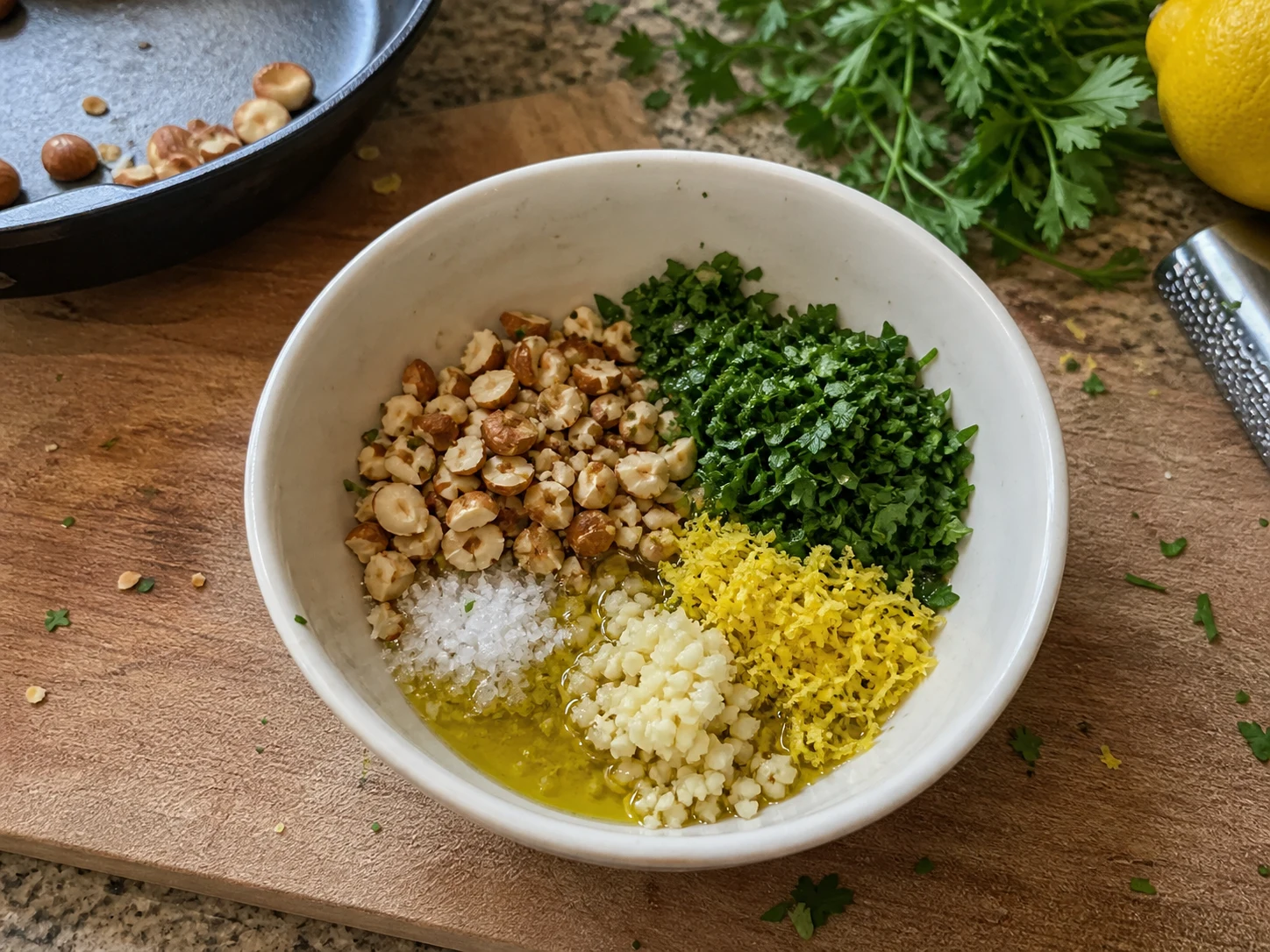
While the parsnips complete their first roasting interval, put 60 g of raw hazelnuts in a dry skillet over medium heat. Toast for 4 to 6 minutes, shaking the pan often, until fragrant and lightly golden; begin checking at 4 minutes. Tip them onto a cutting board, cool briefly, then chop into coarse crumbs. Chop 20 g of fresh flat-leaf parsley. Finely grate the zest from 1 lemon and mince 1 garlic clove. Combine the hazelnuts, parsley, lemon zest, and garlic with 15 ml of extra-virgin olive oil for gremolata and 1 g of fine sea salt for gremolata. Squeeze in half the lemon juice, then add more only if the mixture needs extra sharpness. Have the gremolata ready before the 15-minute roasting timer ends.
04:00Turn and finish roasting
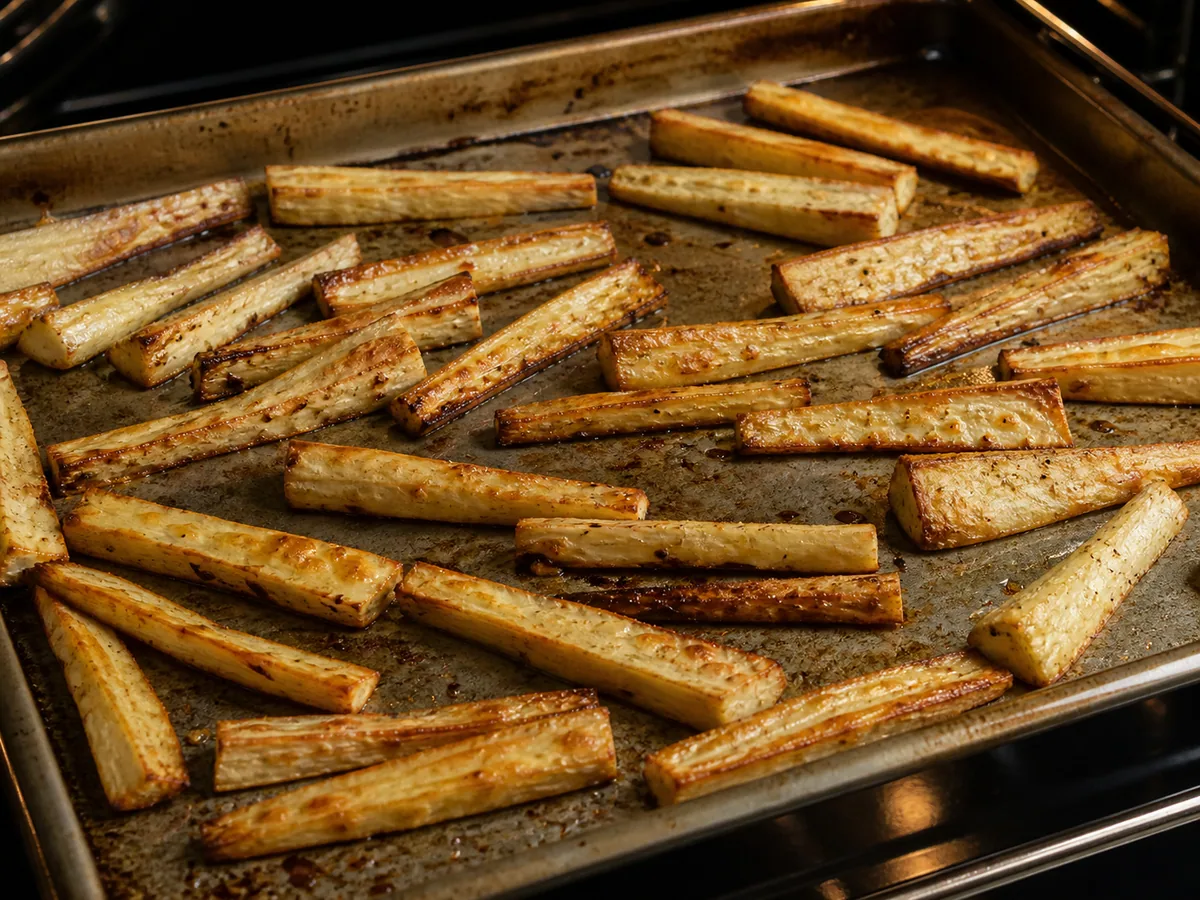
Turn the parsnip pieces so new cut sides touch the hot metal, then return the sheet to the oven. Roast at 220°C (425°F) for 10 to 15 minutes more, until the edges are deeply golden and the thickest pieces are tender when pierced. Begin checking after 10 minutes and remove thinner pieces early if they are already deeply browned.
10:00Finish with the hazelnut gremolata
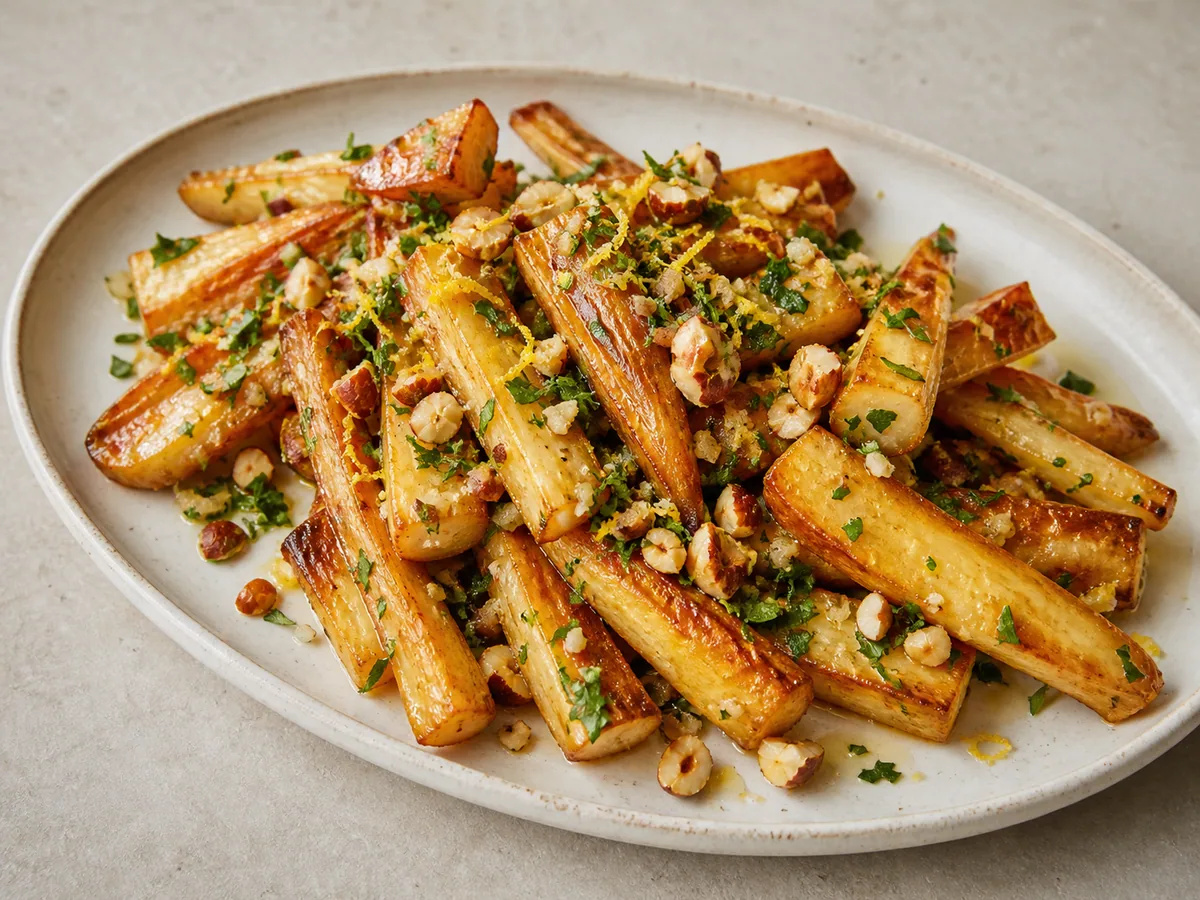
Transfer the roasted parsnips to a shallow serving platter. Spoon the hazelnut gremolata over the hot vegetables and turn them once or twice so some topping clings while plenty remains visible and crisp. Taste one piece and adjust with a little more lemon juice only if needed, then serve immediately.


Smart Substitutions
- No hazelnuts? Use the same weight of walnuts or almonds, or choose toasted pumpkin seeds for a different kind of crunch.
- No flat-leaf parsley? Use a mix of parsley and mint, or substitute cilantro for a more citrus-forward topping.
- No parsnips? Use carrots cut to the same thickness and begin checking them about 5 minutes earlier.
- Prefer gentler garlic? Use half the amount and stir it into the lemon juice before combining the gremolata.
Tips and Variations
- Place the broadest cut sides against the bare metal for stronger caramelization.
- Leave space between pieces; crowded parsnips release steam and stay pale.
- Add the gremolata after roasting so the parsley stays vivid and the hazelnuts retain their crunch.
What Went Wrong?
- Parsnips are soft but pale Spread them farther apart, turn the cut sides against the pan, and roast a few minutes longer.
- Thin ends are scorching Tuck very slender pieces toward the center of the sheet and move thicker pieces toward the hotter outer edges.
- Gremolata tastes harsh Add a little more olive oil and lemon juice to soften the raw garlic and balance the zest.
- Topping will not cling Spoon it over while the parsnips are still hot and turn the pieces lightly rather than stirring vigorously.
Nutrition Estimate
- Fiber: 12 g per serving
- Sodium: 420 mg per serving
Nutrition disclaimer:This recipe is provided for general cooking information only. Nutrition values are estimates and may vary by ingredients, brands, preparation methods, and serving sizes. Check ingredient labels and follow appropriate food-safety practices. This content is not medical, dietary, allergy, or professional food-safety advice.
FAQ
Found an error or have a suggestion?
Help us improve this recipe. Send us your feedback and include the recipe name so we can take a look.