Method
Prepare and season the chicken
Cut 800 g of boneless skinless chicken thighs into 4 cm (1 1/2 in) pieces and place them in a nonreactive bowl. Add 30 ml of fresh lemon juice, 3 g of ground turmeric, and 3 g of fine sea salt for chicken, then turn the pieces until evenly coated. Set the bowl aside while you prepare the spice blend. Do not rinse raw chicken. Wash hands, knife, cutting board, and any touched work surfaces with hot, soapy water before handling ready-to-eat ingredients.
Toast and grind the Chettinad spices
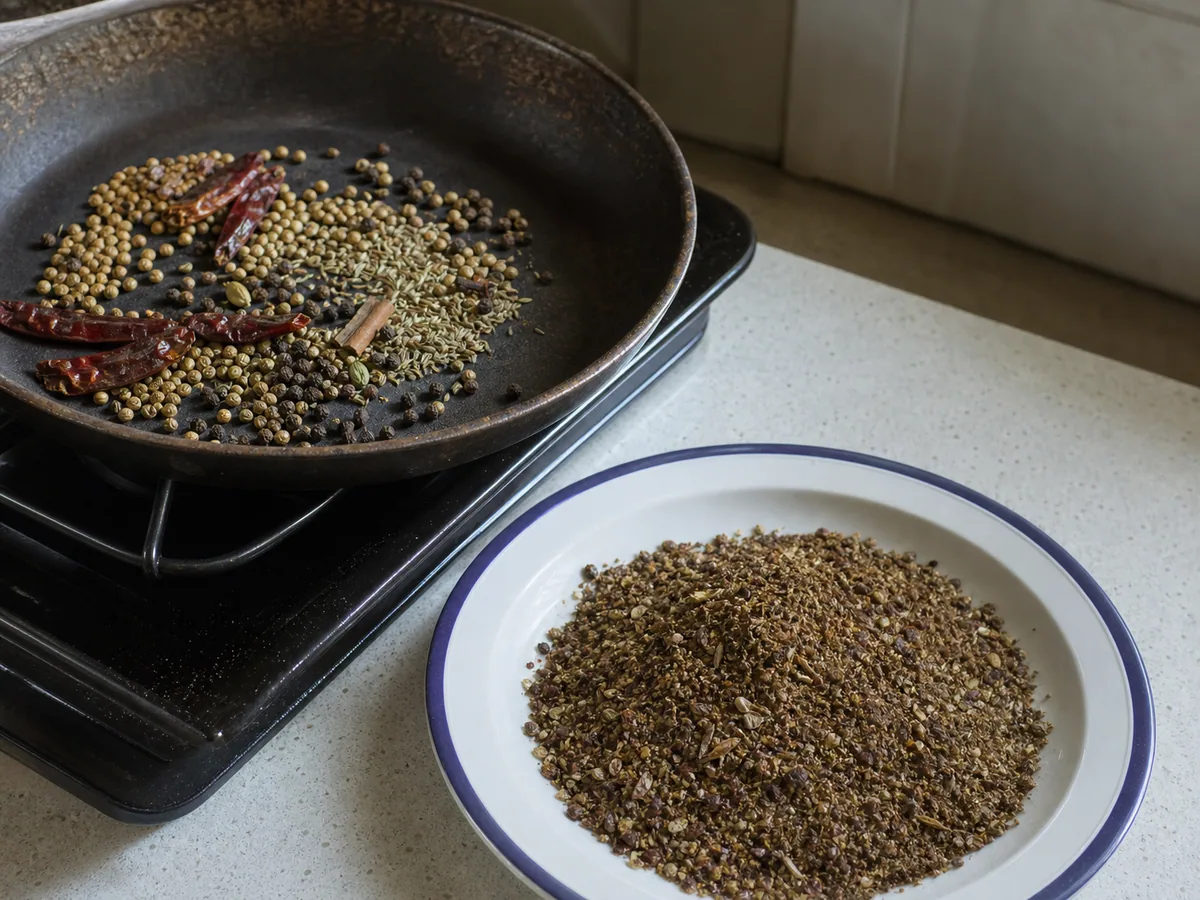
Heat a dry heavy skillet over medium heat. Add 14 g of black peppercorns, 8 g of coriander seeds, 4 g of cumin seeds, 4 g of fennel seeds, 4 dried red chillies, 1 cinnamon stick, 4 whole cloves, and 4 green cardamom pods. Toast for 2 to 3 minutes, shaking the skillet often, until the spices smell vivid and the coriander seeds deepen slightly without scorching. Transfer everything to a plate, cool until just warm, then grind to a coarse, sandy blend. Set aside about one-third of the blend for the final seasoning.
02:00Brown the shallots and curry leaves
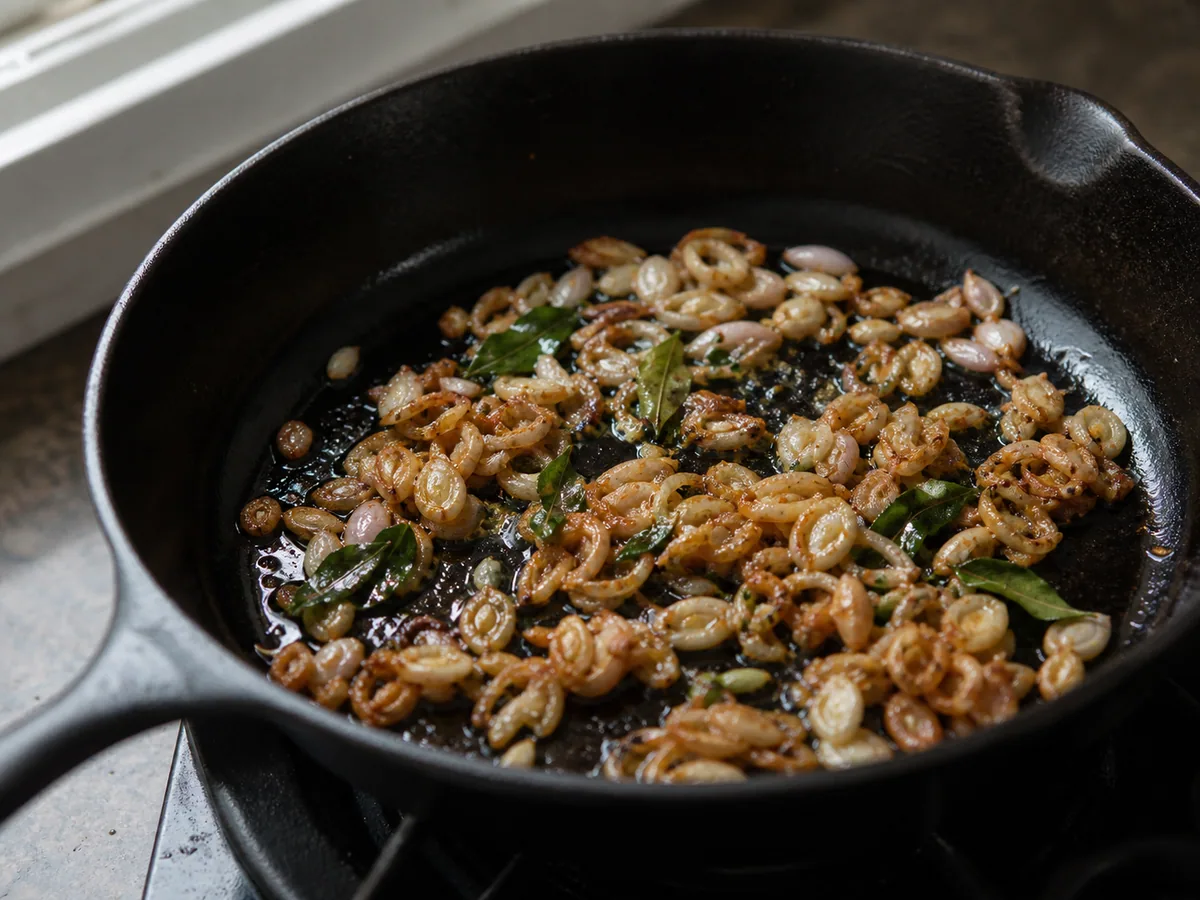
Peel and thinly slice 300 g of shallots before heating the skillet. Return the skillet to medium heat and add 30 ml of canola oil. Add the shallots with 8 g of fresh curry leaves and cook for 10 to 12 minutes, stirring regularly, until the shallots are soft and deeply golden at the edges. If they begin to darken before they soften, lower the heat and stir more frequently. Remove the skillet from the heat while you prepare the ginger, garlic, and tomatoes for the next steps.
10:00Cook the ginger and garlic
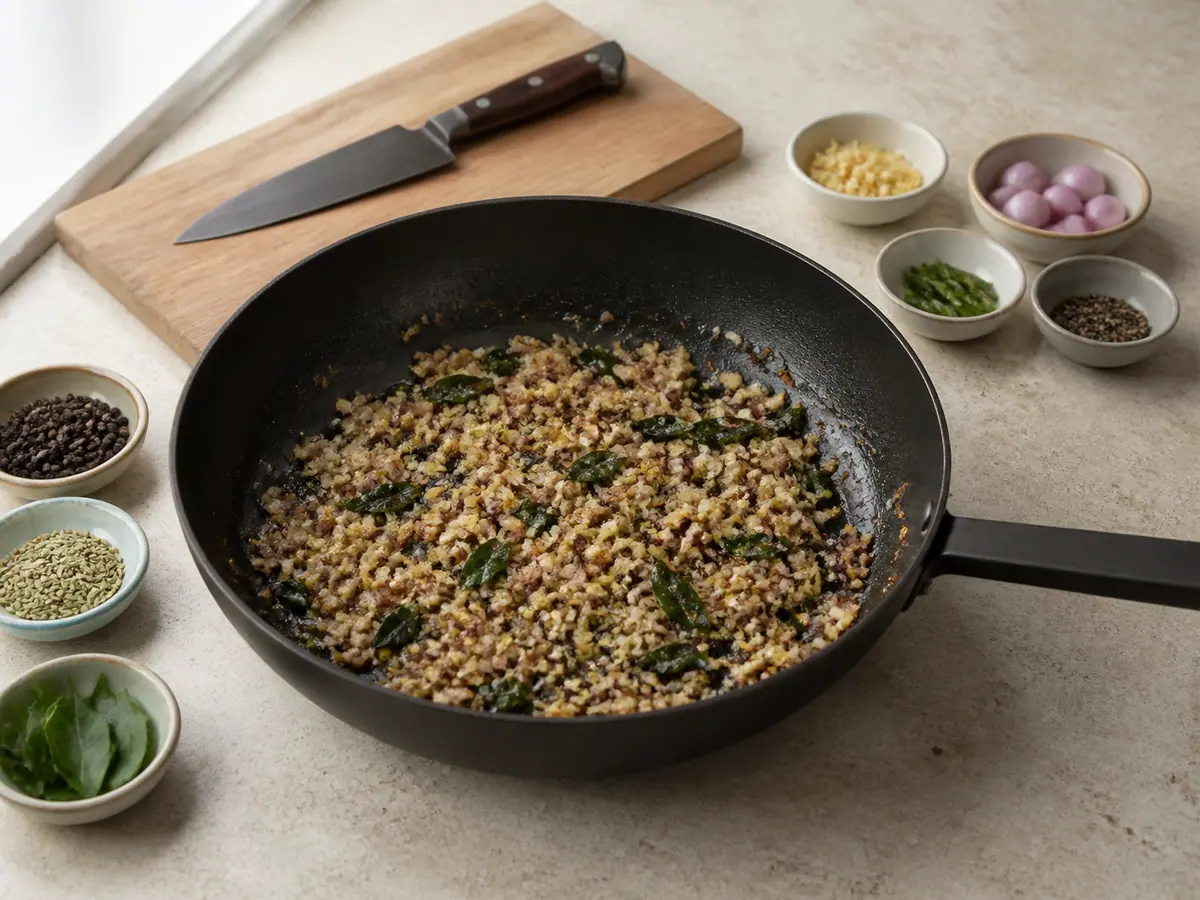
With the skillet off the heat, peel and finely grate 20 g of fresh ginger, mince 6 garlic cloves, and chop 250 g of ripe tomatoes, keeping the tomatoes separate. Return the skillet to medium heat. Add the ginger and garlic to the browned shallots and cook for 1 minute, stirring constantly, until fragrant and no longer raw-smelling. Keep the heat moderate so the garlic does not brown.
01:00Cook down the tomato masala
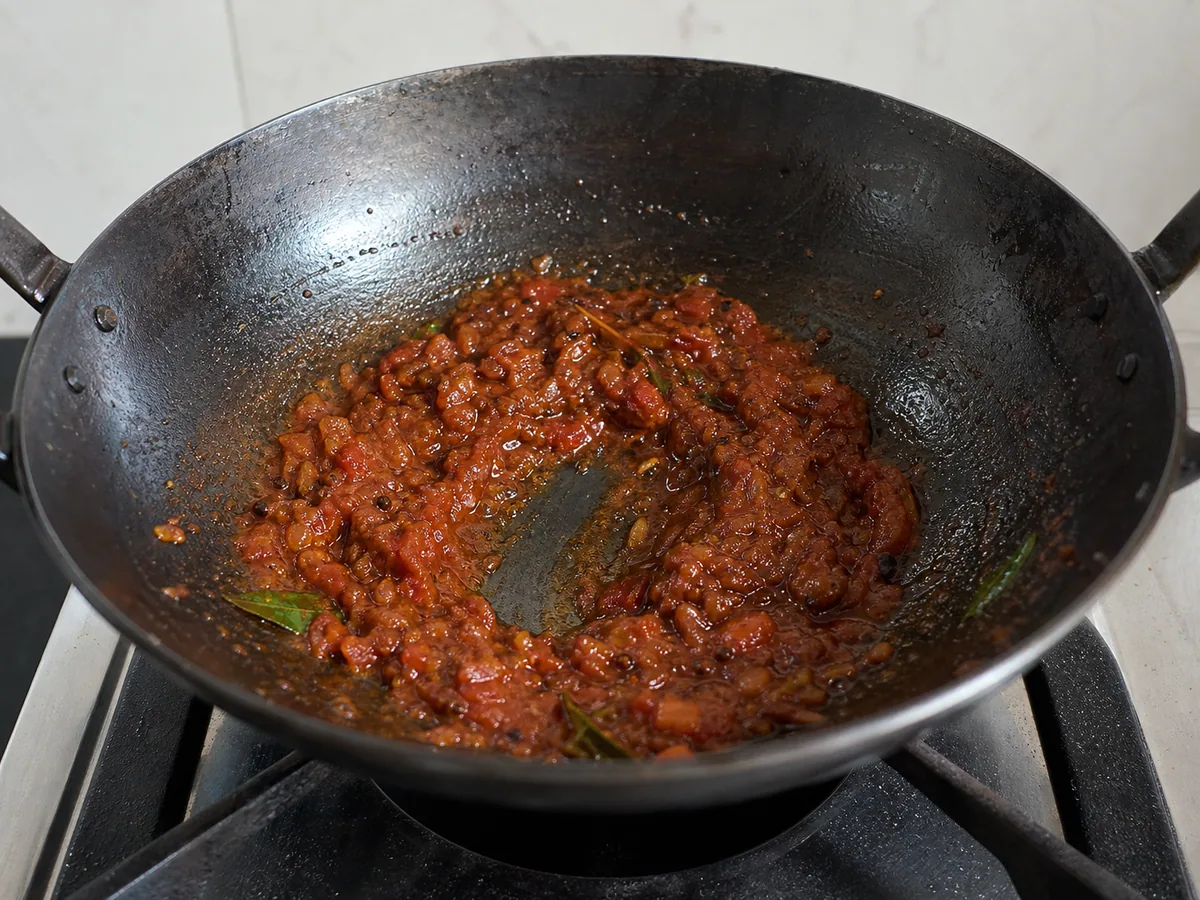
Add 250 g of ripe tomatoes and 3 g of fine sea salt for masala. Cook for 7 to 9 minutes, stirring and pressing the tomato pieces against the skillet, until they collapse and the mixture becomes thick, jammy, and glossy. The masala should hold a clear trail for a moment when dragged with a spoon.
07:00Coat the chicken with the masala
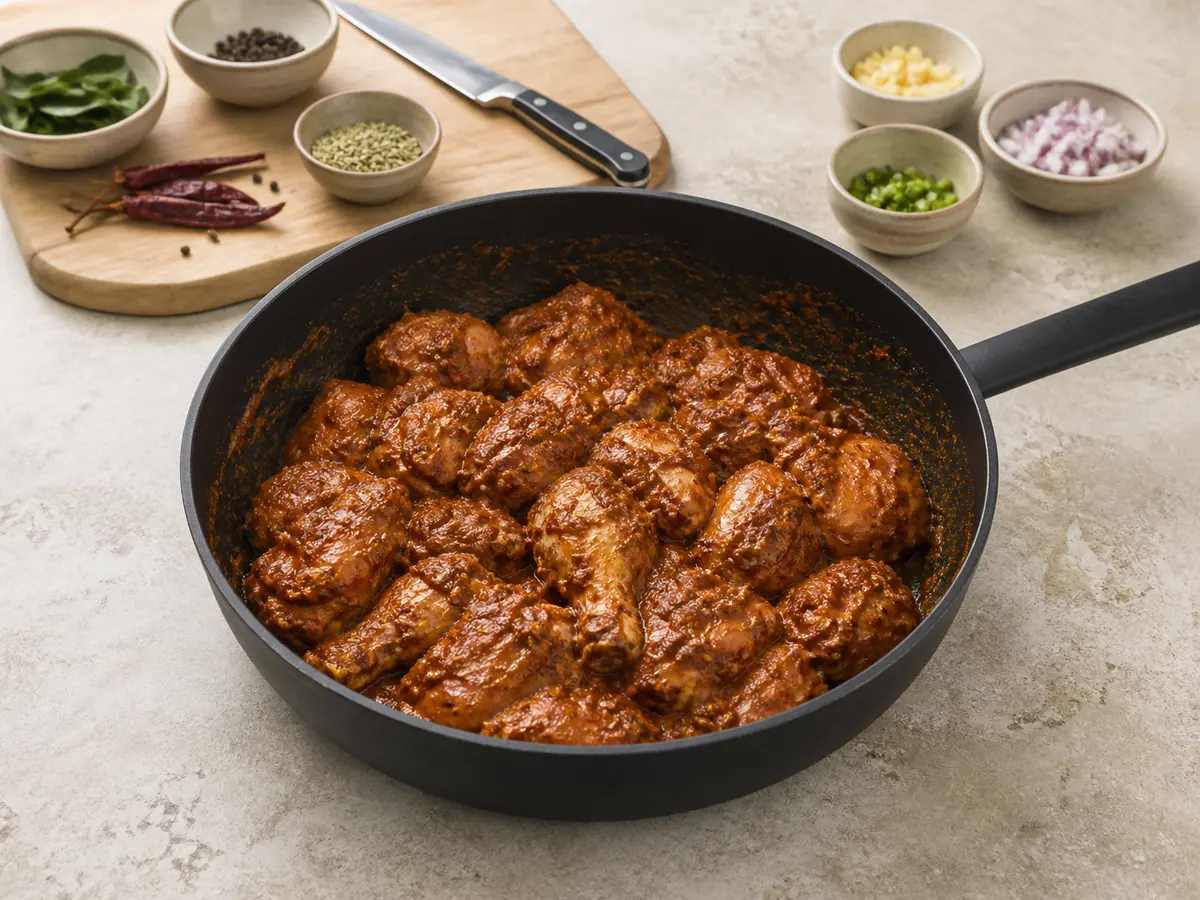
Increase the heat to medium-high. Add the seasoned chicken and the larger portion of the ground spice blend. Cook for 5 minutes, turning the pieces with a clean utensil, until the outside of the chicken loses its raw appearance and the masala clings to every piece. Do not return cooked food to the bowl or utensils that held raw chicken unless they have been thoroughly washed.
05:00Simmer until the chicken is safely cooked
Pour in 120 ml of water and scrape the bottom of the skillet. Reduce the heat to medium-low, cover, and simmer for 14 to 18 minutes, stirring once halfway through. At the first check, insert a food thermometer into the thickest chicken pieces; every piece must reach at least 74°C/165°F. Continue cooking and checking if needed before moving to the final reduction.
14:00Reduce and finish with pepper
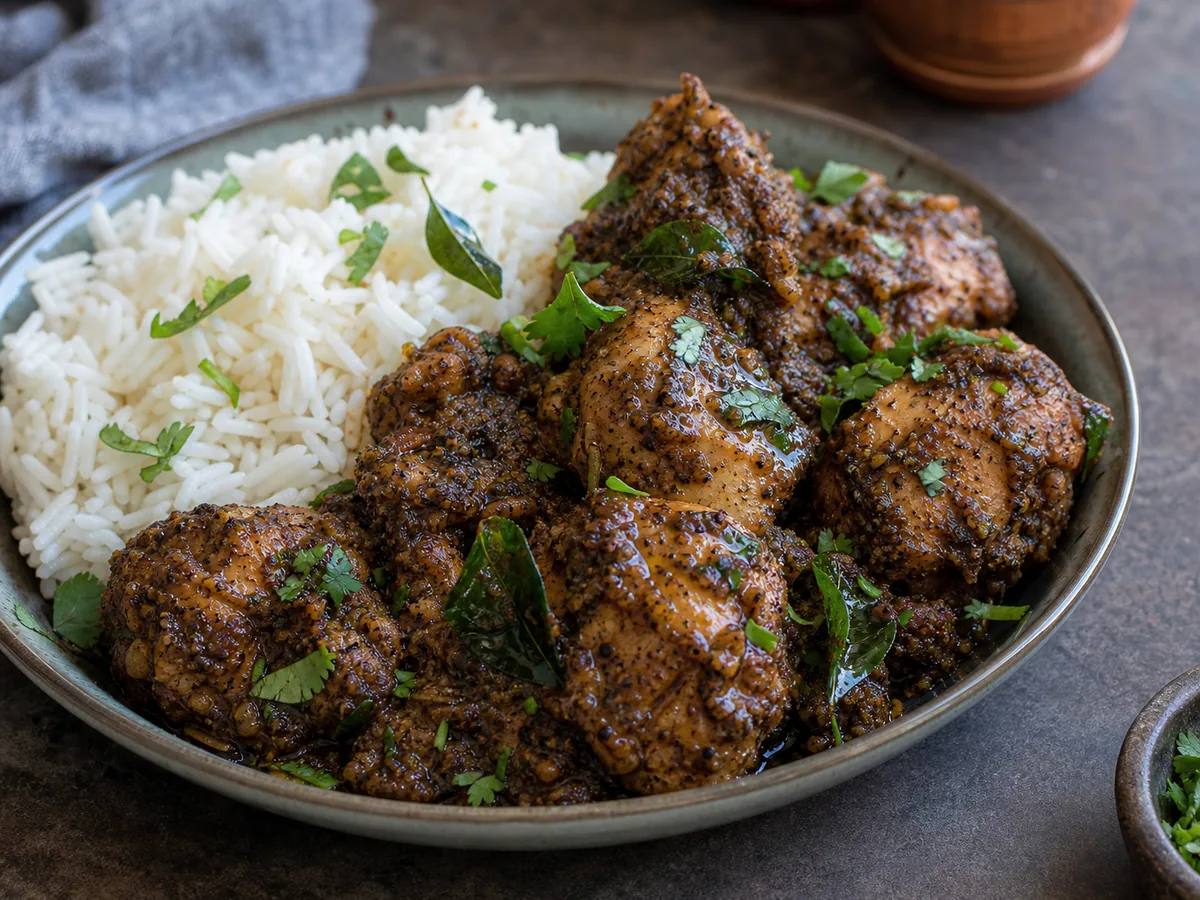
Uncover the skillet and raise the heat to medium. Cook for 4 to 6 minutes, stirring often, until the liquid reduces to a thick coating and small beads of oil appear at the edges. Stir in the reserved spice blend and 15 g of fresh cilantro, then remove from the heat. Serve immediately with steamed basmati rice (optional).
04:00


Smart Substitutions
- Prefer chicken breast? Use boneless skinless chicken breast, cut into slightly larger pieces, and begin checking the internal temperature several minutes earlier so it does not dry out.
- No curry leaves? Omit them and add a little extra cilantro at the end. The dish will lose some of its distinctive South Indian fragrance but the pepper-spice balance will still work.
- Want gentler heat? Use fewer dried red chillies and remove their seeds. Keep most of the black pepper so the dish remains recognizably pepper-forward.
Tips and Variations
- Use a wide skillet so moisture can evaporate quickly during the final reduction.
- Brown the shallots patiently; their sweetness is what rounds out the large amount of black pepper.
- Crack the peppercorns coarsely and add the reserved portion only at the end for a fresher aroma.
What Went Wrong?
- The spice blend tastes bitter The whole spices were probably toasted too dark. Start the blend again over medium heat and remove it as soon as the aroma becomes strong.
- The masala is watery Use a wider skillet and continue the uncovered reduction over medium heat, stirring often, until the sauce clings to the chicken.
- The chicken feels tough The pieces may be too small or overcooked. Cut them evenly and stop cooking once the thickest pieces have reached 74°C/165°F and the sauce has reduced.
- The pepper heat feels harsh Add a small splash of water and cook for another minute so the pepper disperses through the masala, then serve with plain steamed rice.
Nutrition Estimate
- Fiber: 6 g per serving
- Sodium: 730 mg per serving
Nutrition disclaimer:This recipe is provided for general cooking information only. Nutrition values are estimates and may vary by ingredients, brands, preparation methods, and serving sizes. Check ingredient labels and follow appropriate food-safety practices. This content is not medical, dietary, allergy, or professional food-safety advice.
FAQ
Found an error or have a suggestion?
Help us improve this recipe. Send us your feedback and include the recipe name so we can take a look.