Method
Prepare and brown the plantains
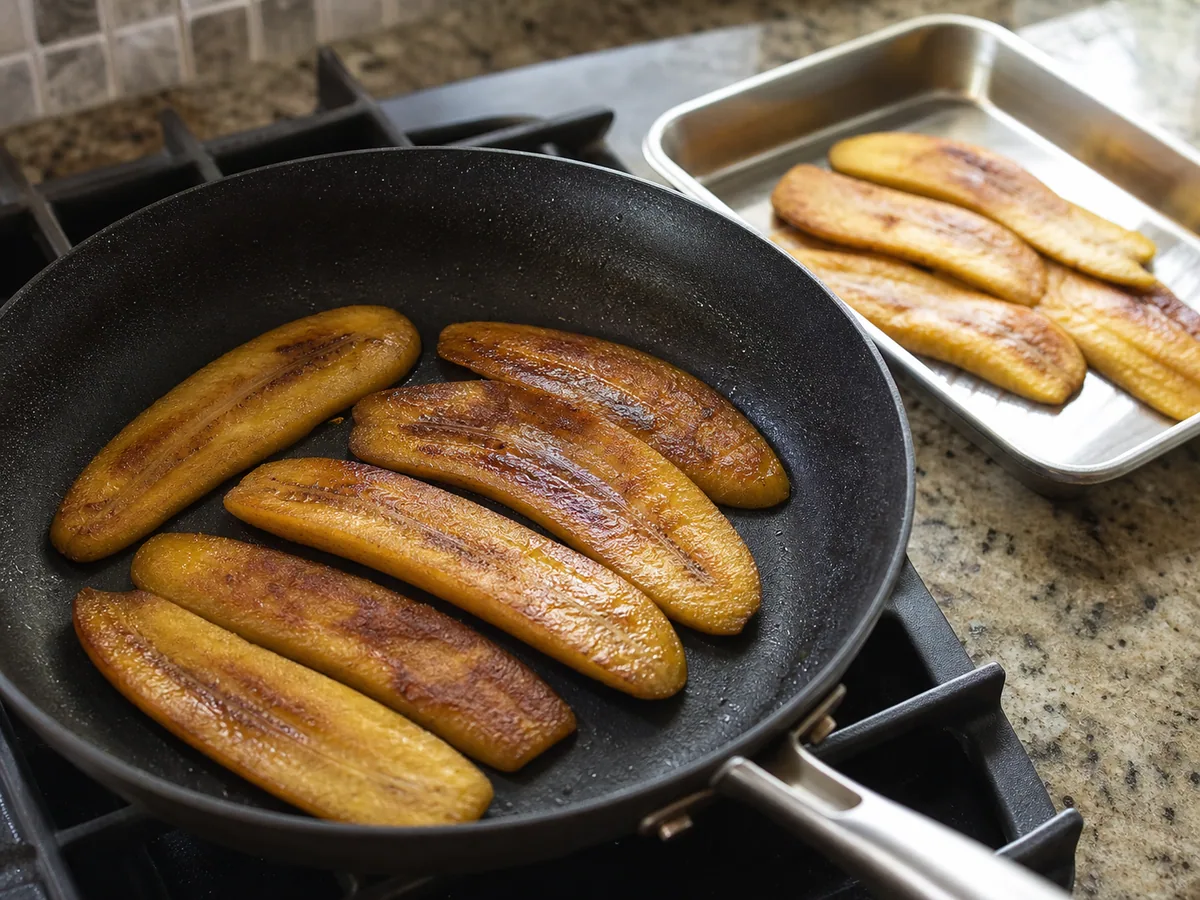
Heat the oven to 190°C (375°F). Use a 23 x 33 cm (9 x 13 in) baking dish (for 6 servings); for a scaled batch, choose a dish that keeps the layers at a similar depth. Measure 45 ml of neutral oil, brush a very thin film inside the dish, and reserve the rest. Trim and peel 900 g of very ripe plantains, then cut each one lengthwise into planks about 6 mm (1/4 in) thick. Heat a wide nonstick skillet over medium heat. Divide the reserved measured oil evenly among the batches, adding only enough each time to leave a thin sheen on the pan. Pan-brown the planks in batches until flexible and deep golden, about 2 to 3 minutes per side. Start checking the first side at 2 minutes. Transfer the browned planks to a tray.
02:00Build the aromatic base
Return the skillet to medium heat with a light coating of the measured oil left from frying. Chop 150 g of yellow onion and 120 g of green bell pepper, then add them to the skillet with half of 4 1/2 g of kosher salt. Cook, stirring often, until the onion turns translucent and the pepper softens without browning, about 5 minutes. Mince 4 garlic cloves, add it with 1 g of dried oregano and 1 g of black pepper, and stir for 30 seconds until fragrant.
05:00Cook the beef safely
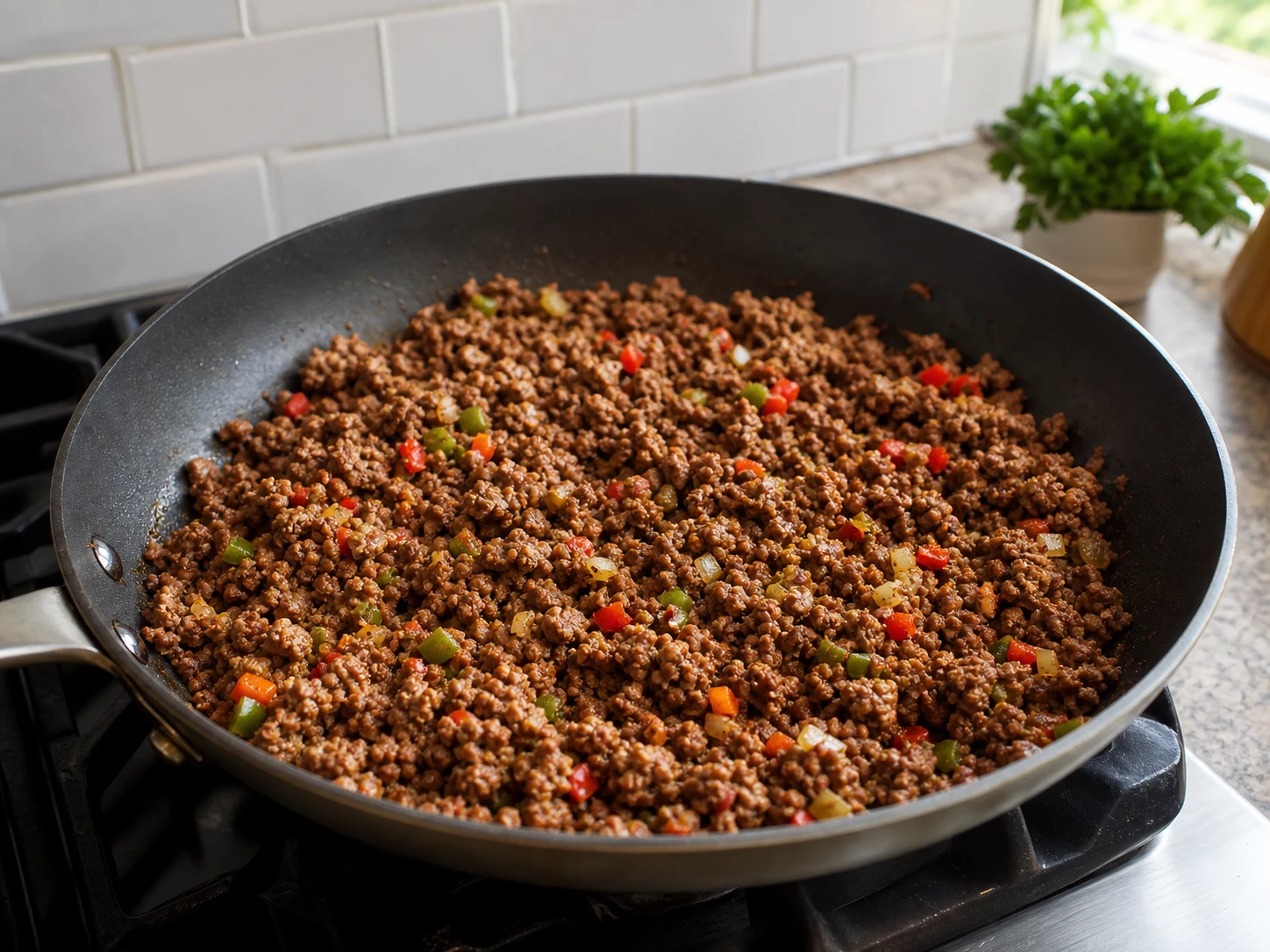
Add 450 g of 90% lean ground beef to the aromatic base and break it into small crumbles with a sturdy spoon. Cook over medium-high heat, stirring and turning the meat so no raw pockets remain. Begin checking at 8 minutes and use a food thermometer to confirm the beef reaches at least 71°C/160°F. Drain excess rendered fat if the skillet looks greasy. After handling raw beef, wash your hands and clean any utensil or surface it touched before continuing with ready-to-eat ingredients.
08:00Finish and reduce the picadillo
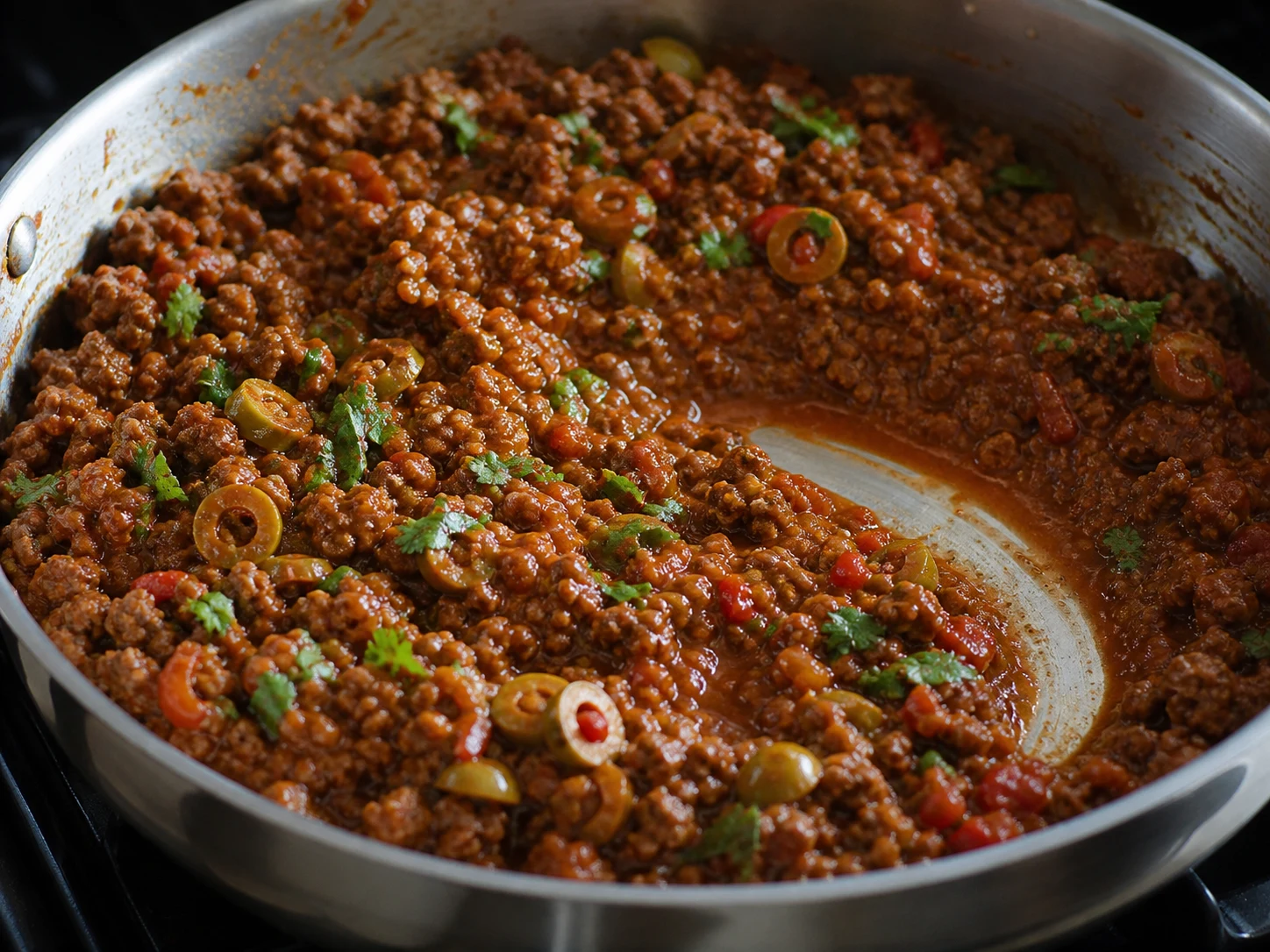
Stir 225 g of no-salt-added tomato sauce into the cooked beef. Slice 55 g of pimento-stuffed green olives, chop 15 g of fresh cilantro, and add both with the reserved half of the measured salt. Lower the heat to medium-low and simmer, stirring occasionally, until the filling is thick enough that a spoon drawn through the skillet leaves a clear path for a moment, about 8 minutes. Taste and adjust only after the olives and cheese have been considered, since both add salt.
08:00Layer the pastelon
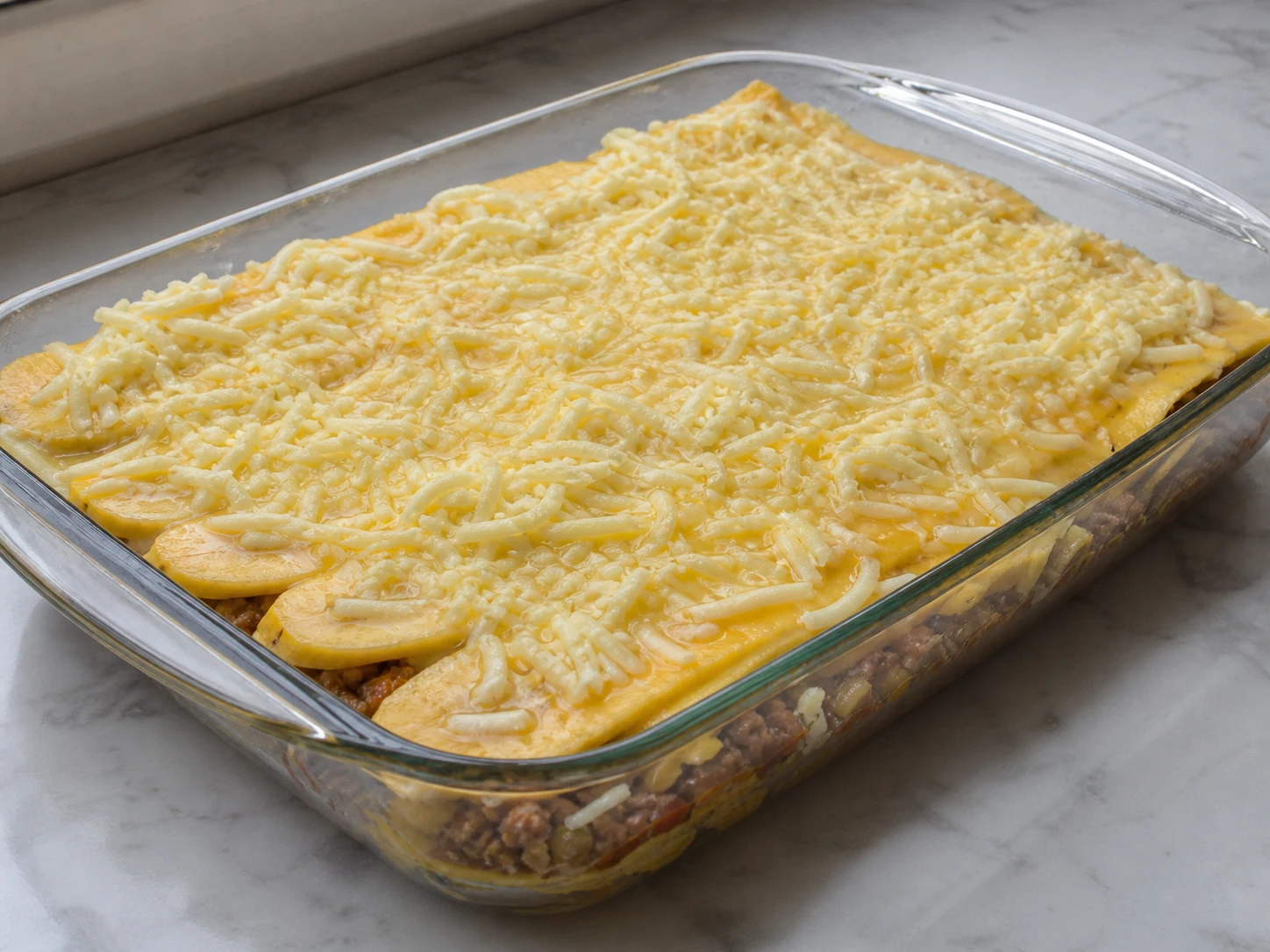
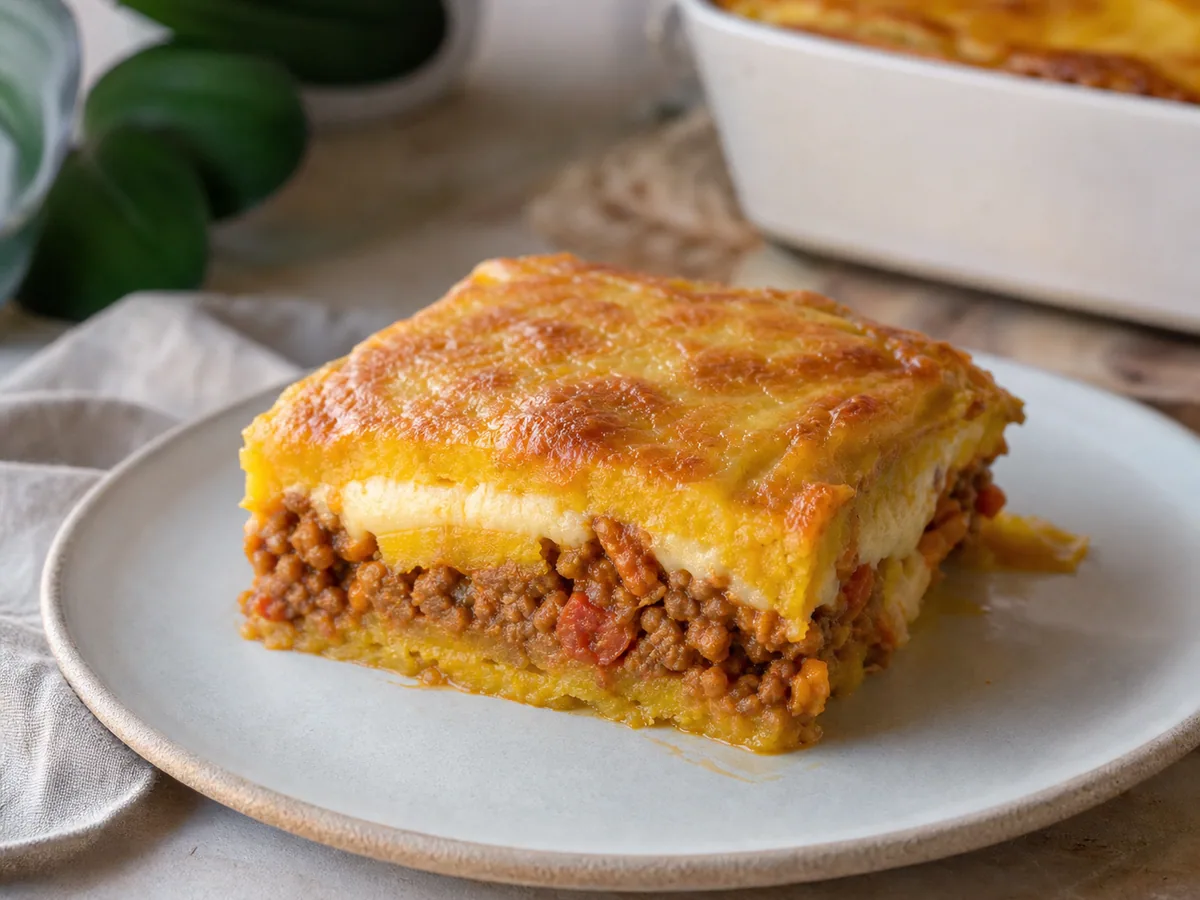
Shred 170 g of low-moisture part-skim mozzarella and divide the cheese into two equal portions. Whisk 2 large eggs until no streaks remain. Divide 900 g of very ripe plantains into two equal portions. Arrange one portion of the plantain planks across the greased baking dish, overlapping them slightly to close large gaps. Spread all of the picadillo in an even layer, then scatter one portion of the cheese over it. Cover with the second portion of plantain planks and finish with the reserved cheese. Slowly pour the beaten eggs over the surface and along the edges so the mixture can settle between the layers. Tap the dish gently on the counter once or twice to release trapped air.
Bake until set and browned
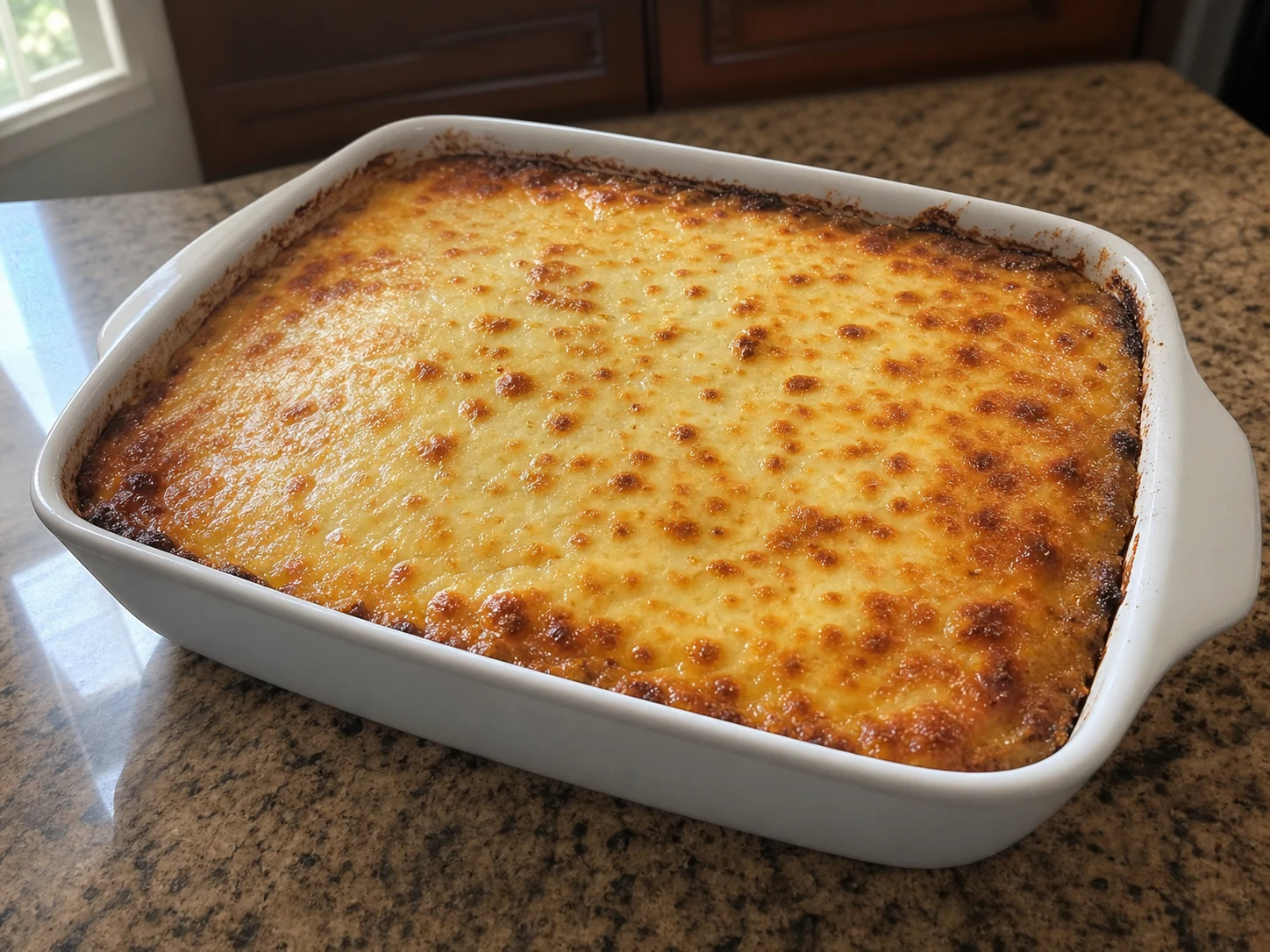
Bake the pastelon uncovered at 190°C (375°F) until the cheese is melted with scattered golden spots, the edges are bubbling, and the center is set rather than wet, about 25 to 30 minutes. Begin checking at 25 minutes. Insert a food thermometer into the center without touching the dish and confirm the casserole reaches at least 74°C/165°F before removing it from the oven.
25:00Rest, slice, and serve
Set the baking dish on a heatproof surface and let the pastelon stand for 10 minutes. This pause allows the egg binder and melted cheese to settle so the plantain and picadillo layers stay distinct. Cut into portions with a sharp knife, lift each slice with a wide spatula, and serve while the center is still warm.
10:00


Smart Substitutions
- No fresh cilantro? Use culantro when available for a more traditional recao-like aroma, or use flat-leaf parsley for a milder finish.
- No mozzarella? Use Monterey Jack or a mild white cheddar that melts smoothly.
- Prefer a leaner filling? Use 93% lean ground beef and watch the skillet closely because it releases less fat.
- Olives too assertive? Reduce them by half and add a small splash of mild vinegar to keep the picadillo balanced.
Tips and Variations
- Slice the plantains to a similar thickness so they soften and brown at the same rate.
- Reduce the picadillo until it looks spoonable rather than saucy; excess liquid weakens the layers.
- Overlap the plantain planks just enough to cover gaps without creating thick ridges.
What Went Wrong?
- Plantain planks split while frying They may be cut too thin or still too firm. Use deeply ripe fruit and turn the planks only after the first side has browned.
- Picadillo looks loose before layering Keep it in the skillet and simmer until a spoon drawn through the filling leaves a temporary clear path and no watery liquid pools in the pan.
- Top browns before the center sets Loosely tent the dish with foil and continue baking until the center reaches 74°C/165°F.
- Slices collapse on the spatula Allow the full 10-minute standing time and use a wide spatula to support the plantain layers.
Nutrition Estimate
- Fiber: 5 g per serving
- Sodium: 675 mg per serving
Nutrition disclaimer:This recipe is provided for general cooking information only. Nutrition values are estimates and may vary by ingredients, brands, preparation methods, and serving sizes. Check ingredient labels and follow appropriate food-safety practices. This content is not medical, dietary, allergy, or professional food-safety advice.
FAQ
Found an error or have a suggestion?
Help us improve this recipe. Send us your feedback and include the recipe name so we can take a look.