Method
Rinse and soak the rice
Rinse 320 g of white basmati rice in a large bowl, changing the water several times, until the water is only lightly cloudy. Cover the rice with cool water by about 5 cm (2 in) and soak for 30 minutes. Drain just before the cooking water reaches a boil.
30:00Prepare the saffron, dill, and potato
Crush 150 mg of saffron threads lightly between clean fingertips, place it in a small bowl, and pour 30 ml of boiling water over it. Let the color deepen for 10 minutes. Chop 30 g of fresh dill, chopped and lightly packed if it is not already prepared. Peel 200 g of Yukon Gold potato and cut it crosswise into even rounds about 5 mm thick; pat the rounds dry so they crisp cleanly.
10:00Start parboiling the rice
Bring 4 L (4 qt) water to a vigorous boil in a large pot and stir in 18 g of fine sea salt. Add the drained 320 g of white basmati rice, return the water to a boil, and cook for 3 minutes, stirring once gently so the grains move freely.
03:00Finish the parboil with the beans
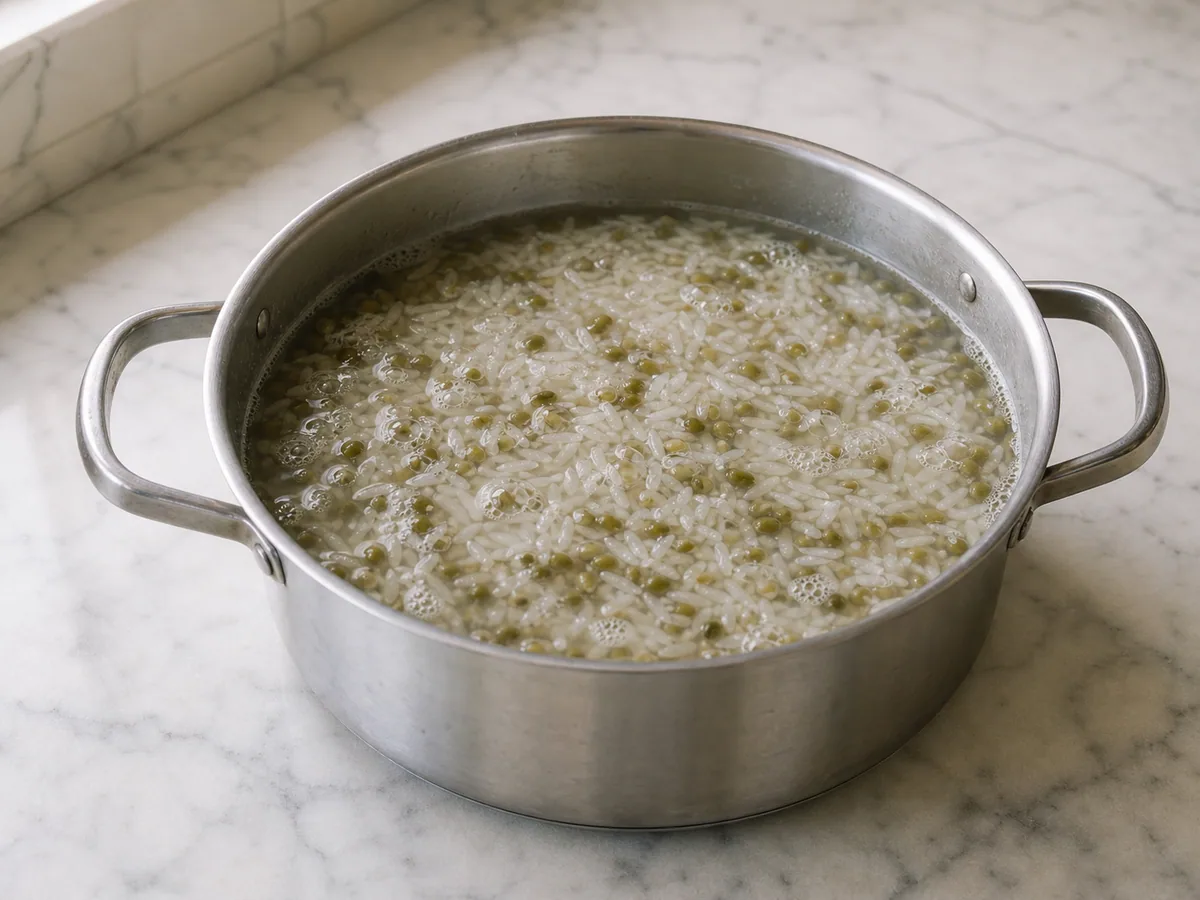
Add 300 g of shelled, double-peeled fava beans to the boiling rice and cook for 2 minutes. Check a grain: it should bend without breaking, with a flexible exterior and a firm, opaque center. If the center is still hard throughout, cook for up to 2 minutes more, checking every 30 seconds. Drain immediately in a wide colander and shake gently to release excess water.
02:00Build the tahdig and layer the rice
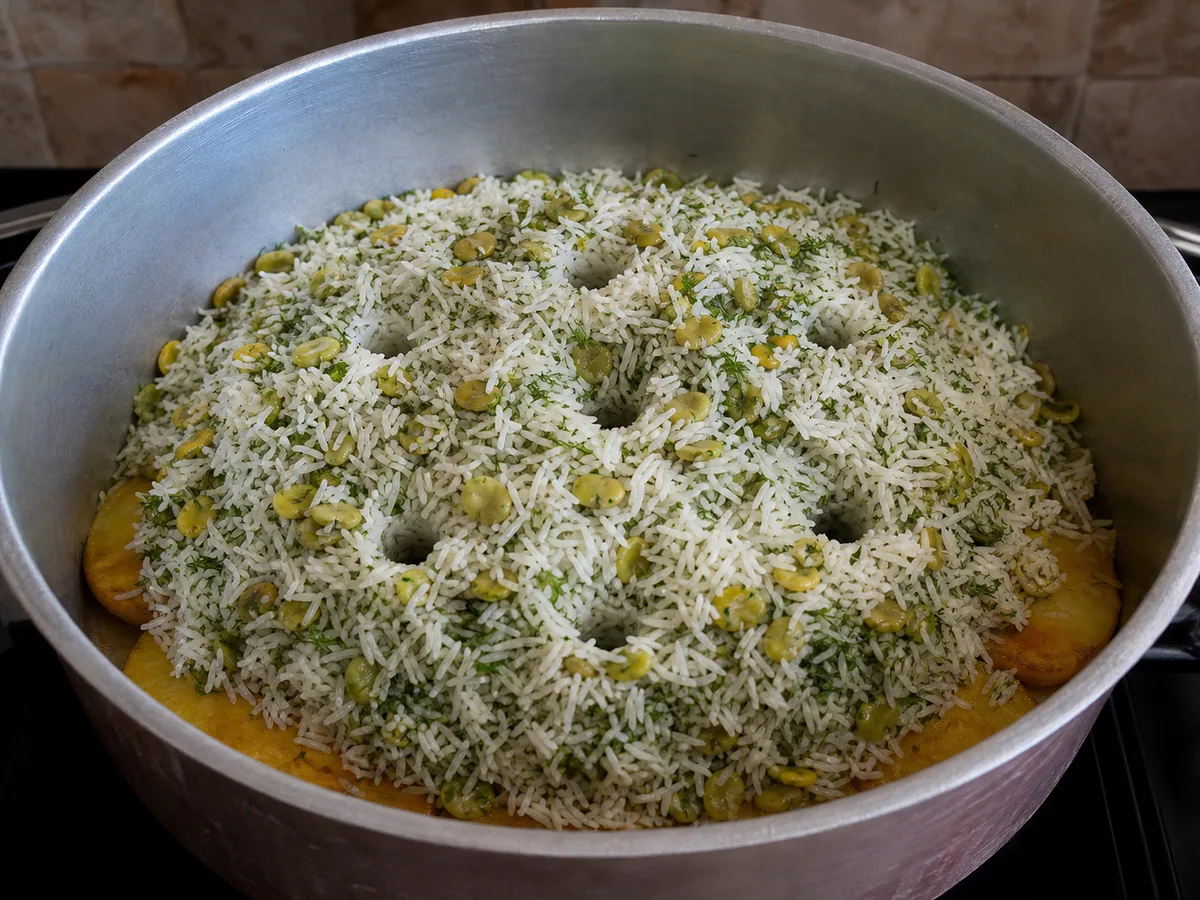
For 4 servings, use a 24 cm (9 1/2 in), roughly 4 L (4 qt), heavy nonstick pot; when scaling, choose a pot that keeps 200 g of Yukon Gold potato rounds in one snug layer while leaving room for a loose rice mound. Warm 60 ml of vegetable oil over medium heat. Arrange the potato rounds across the base, then add the drained rice and beans in three loose layers, scattering 30 g of fresh dill, chopped and lightly packed evenly between them. Shape the rice into a gentle mound away from the pot sides and poke four steam channels through the mound with the handle of a wooden spoon.
Establish steady steam
Drizzle the bloomed saffron mixture evenly over the mound. Cover the pot tightly and cook over medium heat for 5 minutes, until steady steam gathers under the lid and a quiet sizzle is audible from the base.
05:00Steam until fluffy and crisp underneath
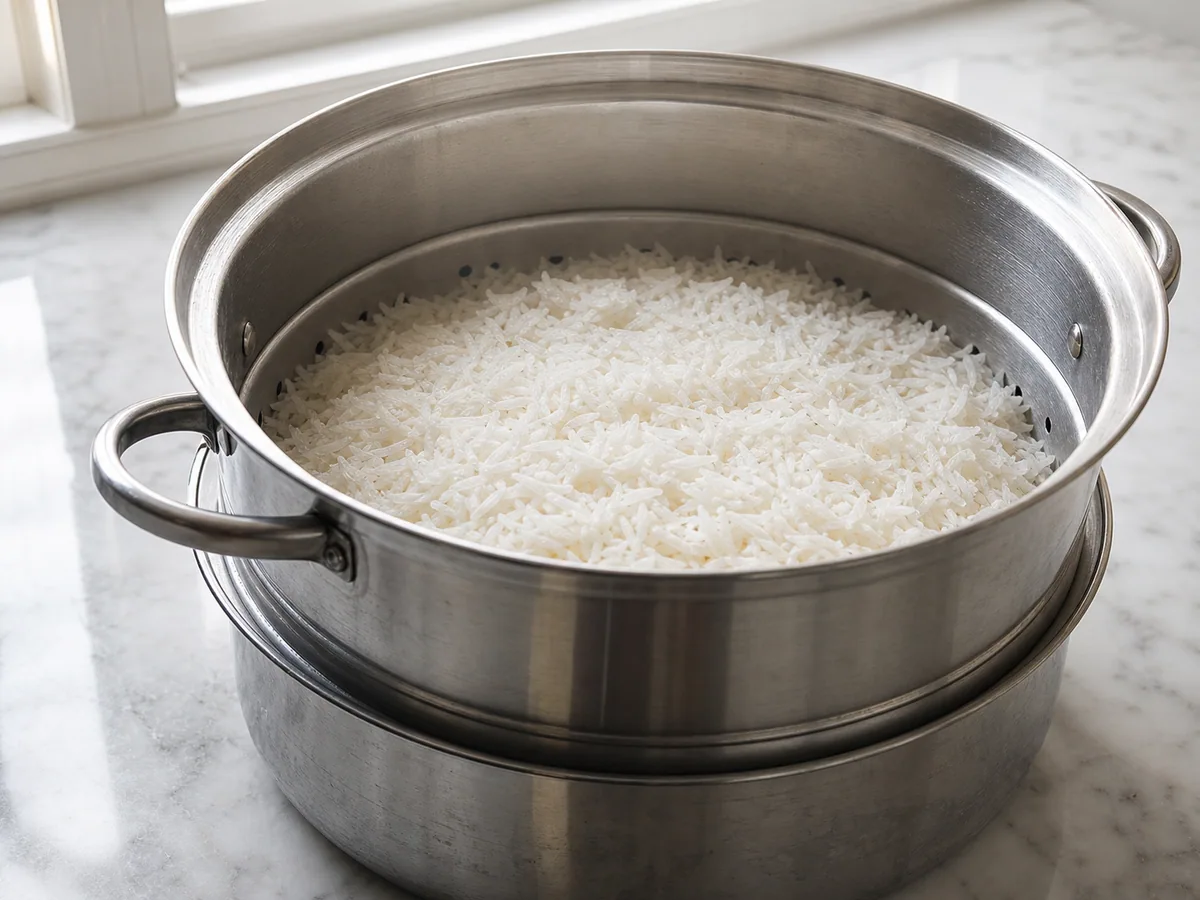
Reduce the heat to its lowest setting and steam for 40 minutes without lifting the lid. Check at 40 minutes: the rice should be tender and separate, and a potato edge carefully exposed with a thin spatula should be deep golden. If either cue is not ready, cover again and continue for up to 5 minutes more.
40:00Rest, turn out, and serve
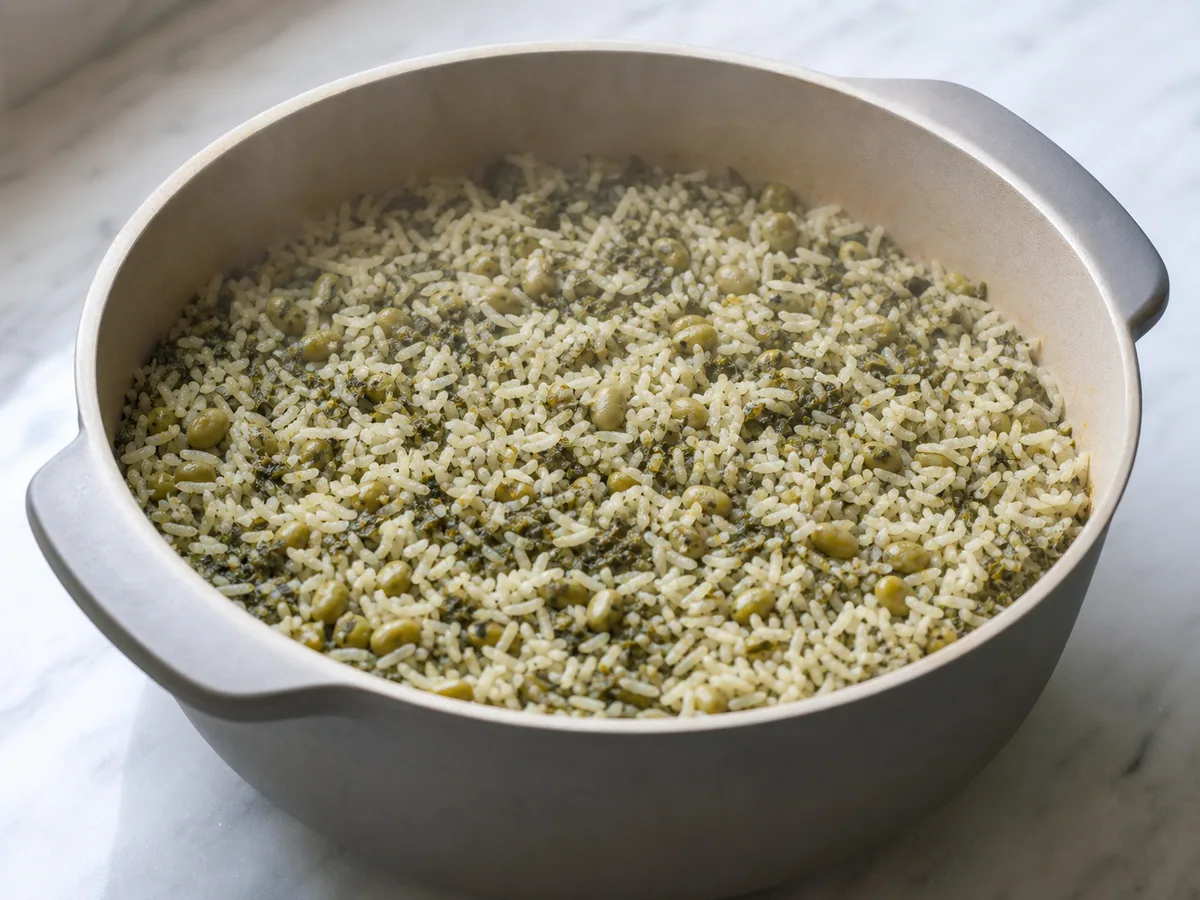
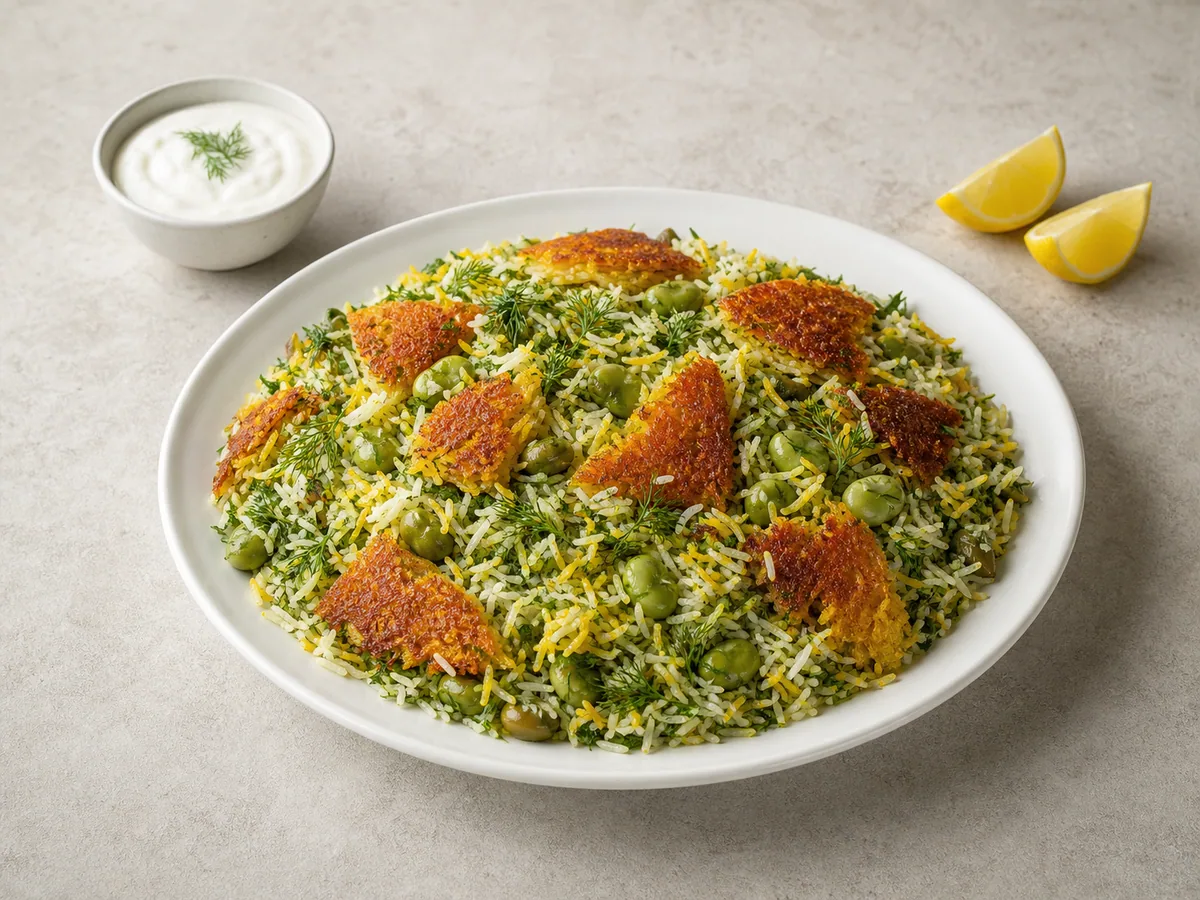
Remove the pot from the heat and let it stand, covered, for 10 minutes. Run a thin spatula around the edge, place a wide platter securely over the pot, and invert in one confident motion. Lift off the pot and arrange any loose potato pieces over the rice. Serve with plain whole-milk yogurt (optional) and lemon wedges (optional).
10:00


Smart Substitutions
- No fresh dill? Use 8 g (about 3 tablespoons) dried dill, rubbing it between your palms before layering to release its aroma.
- No fava beans? Use the same weight of shelled baby lima beans or shelled edamame; add them at the same point in the parboil.
- No potato for tahdig? Line the oiled pot with a single layer of lavash and keep the steaming heat gentle so the bread turns crisp rather than dark.
- No saffron? Use a small pinch of turmeric for warm color, understanding that it will not reproduce saffron's floral aroma.
Tips and Variations
- Keep every layer loose; pressing the rice down makes the finished grains compact and heavy.
- Choose a pot with a reliable nonstick surface and a heavy base so the tahdig browns evenly.
- Listen after lowering the heat: a quiet, steady sizzle is ideal, while sharp crackling suggests the base is too hot.
What Went Wrong?
- Rice is soft or clumped The parboil went too far. Drain when the outside is flexible but the center is still firm, and handle the grains gently while layering.
- Tahdig is pale The pot did not spend enough time over medium heat before steaming. Let steady steam develop before reducing the heat.
- Tahdig sticks to the pot Use a sound nonstick surface, coat the base completely with oil, and give the rice its full covered rest before turning it out.
- Rice is dry before the base is crisp The lowest heat setting may still be strong. Sprinkle a little hot water around the mound, cover again, and continue over gentler heat.
Nutrition Estimate
- Fiber: 6 g per serving
- Sodium: 640 mg per serving
Nutrition disclaimer:This recipe is provided for general cooking information only. Nutrition values are estimates and may vary by ingredients, brands, preparation methods, and serving sizes. Check ingredient labels and follow appropriate food-safety practices. This content is not medical, dietary, allergy, or professional food-safety advice.
FAQ
Found an error or have a suggestion?
Help us improve this recipe. Send us your feedback and include the recipe name so we can take a look.