Method
Prepare the steamer and tray
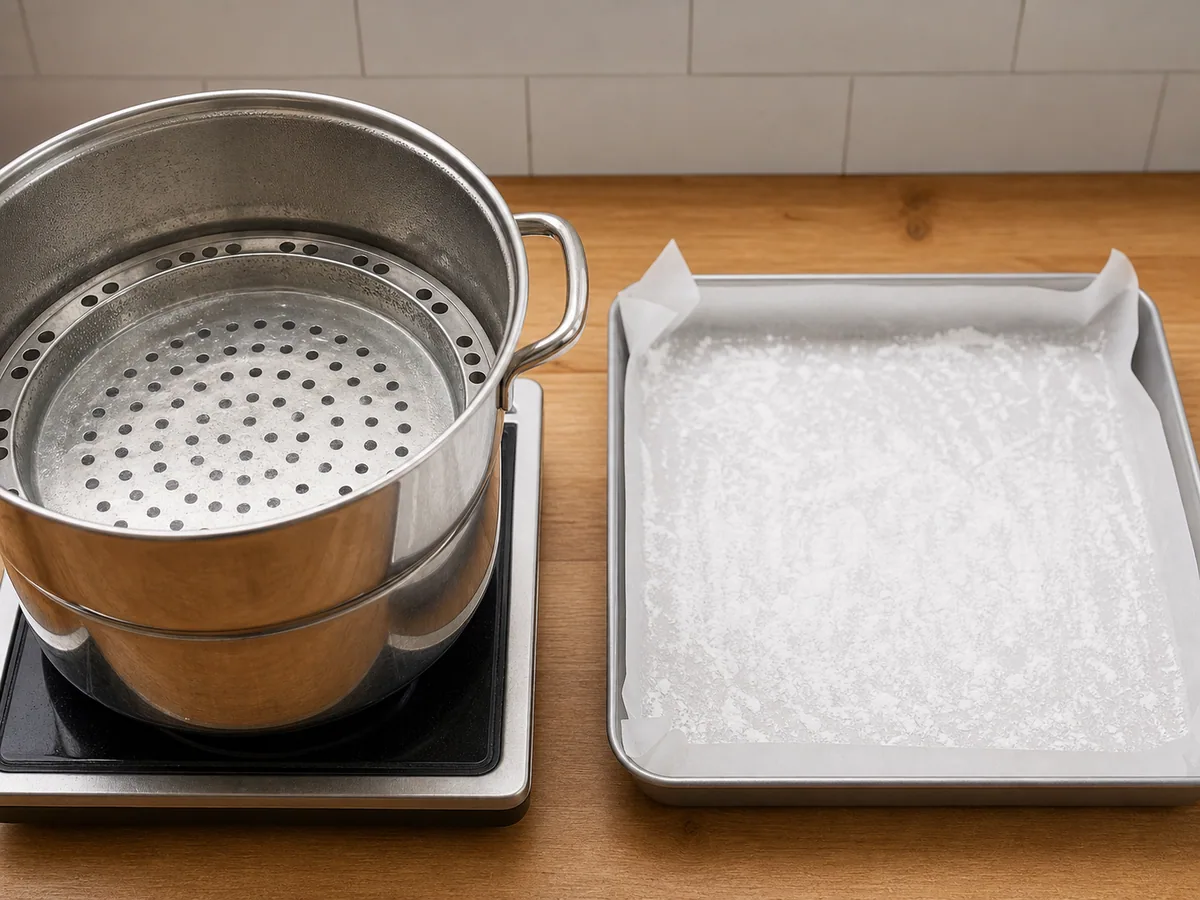
Bring 3 to 5 cm (1 to 2 in) of water to a steady simmer in a pot fitted with a steamer basket. Line a tray with parchment. Set 24 g of potato starch beside the tray, then use a small portion to dust the parchment in a thin, even layer.
Mix the matcha batter
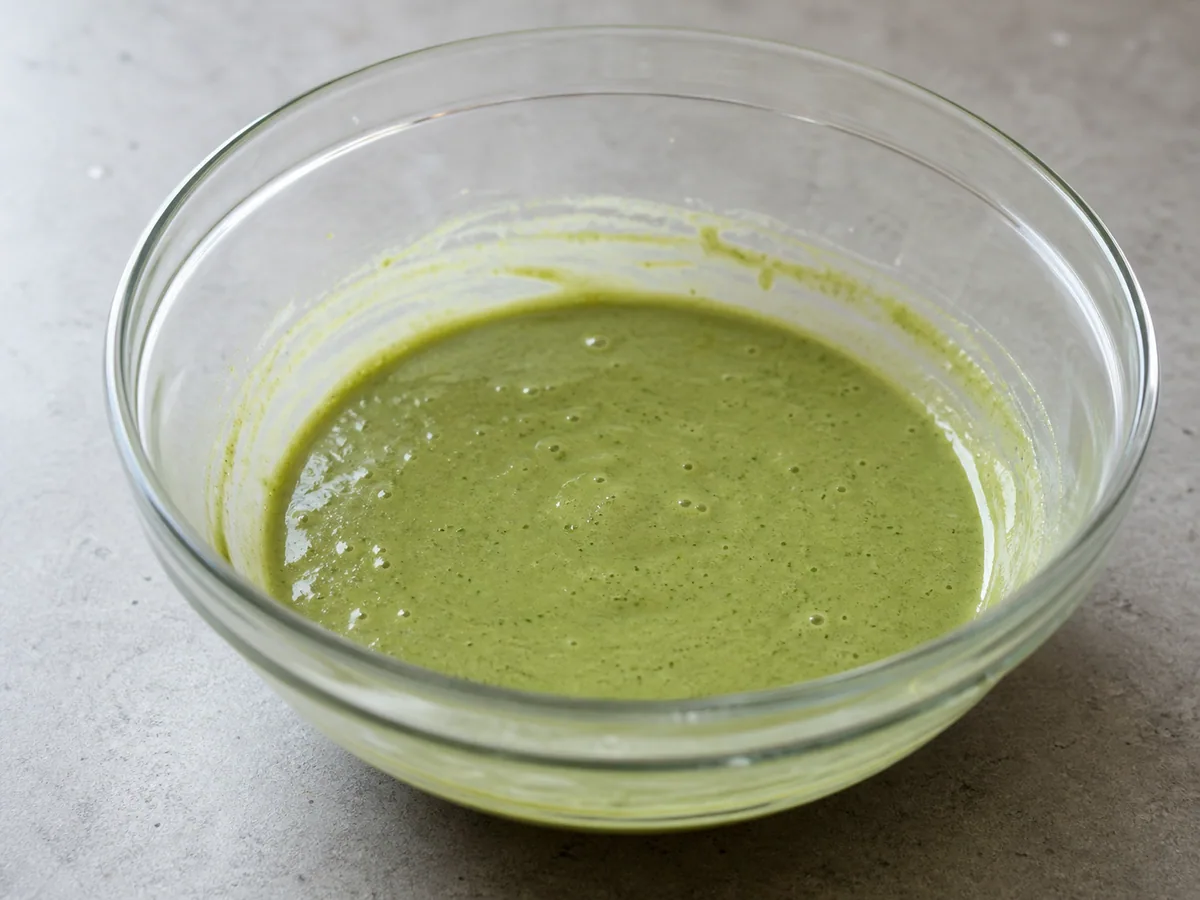
Sift 6 g of culinary matcha powder into a heatproof bowl. Add 160 g of mochiko sweet rice flour, 100 g of granulated sugar, and 1 g of fine sea salt, then whisk until the color is even. Pour in 240 ml of water in three additions, whisking well after each one and pressing out any small lumps. Scrape the bowl and continue whisking until the batter is smooth and falls from the whisk in a thick ribbon.
Steam and stir the mochi
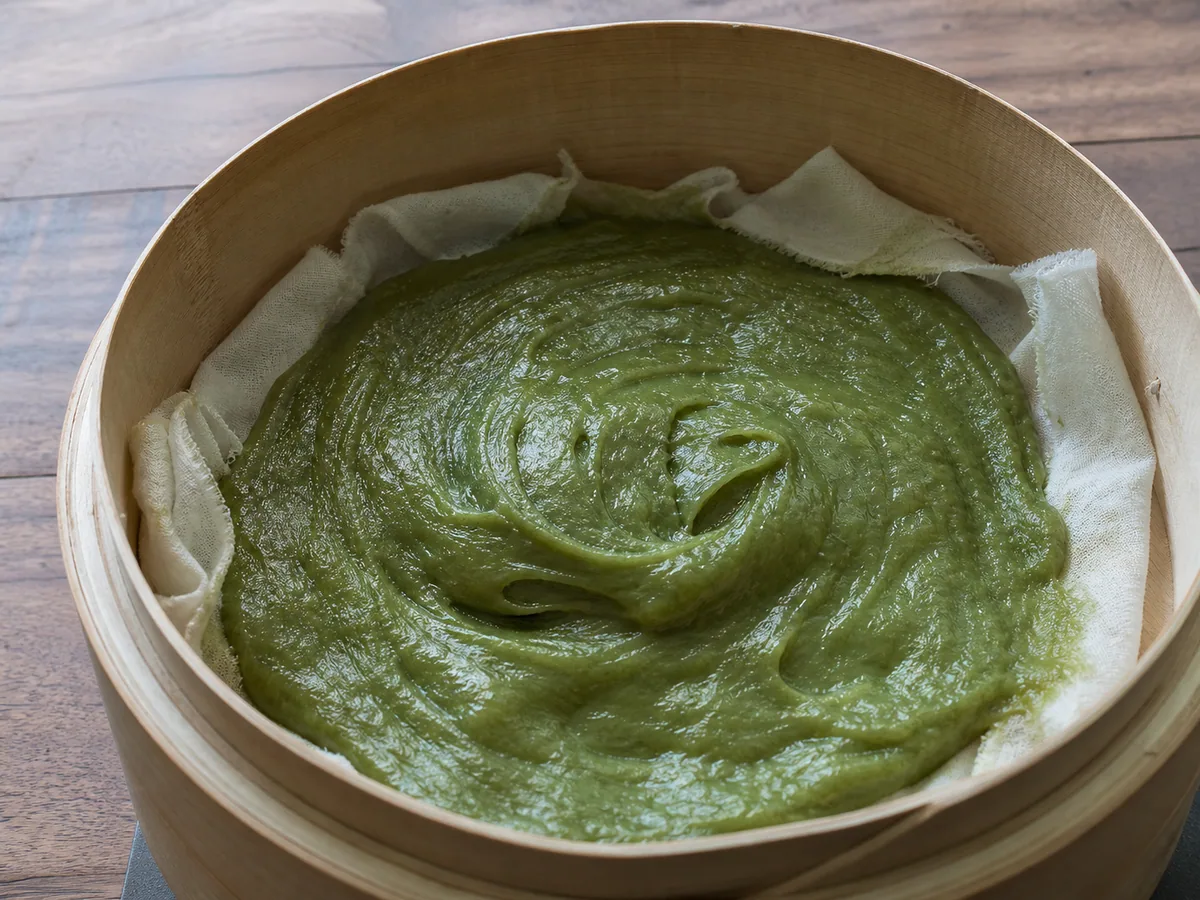
Set the bowl in the steamer and cover the pot. Steam over medium heat for 14 to 16 minutes. After 7 minutes, lift the lid away from your face, stir the thickening dough vigorously with a wet silicone spatula, smooth the surface, and cover again. Start checking at 14 minutes. The dough is ready when it is uniformly glossy, elastic, and free of chalky flour streaks; steam for 1 to 2 minutes longer if needed.
14:00Shape and let the mochi settle
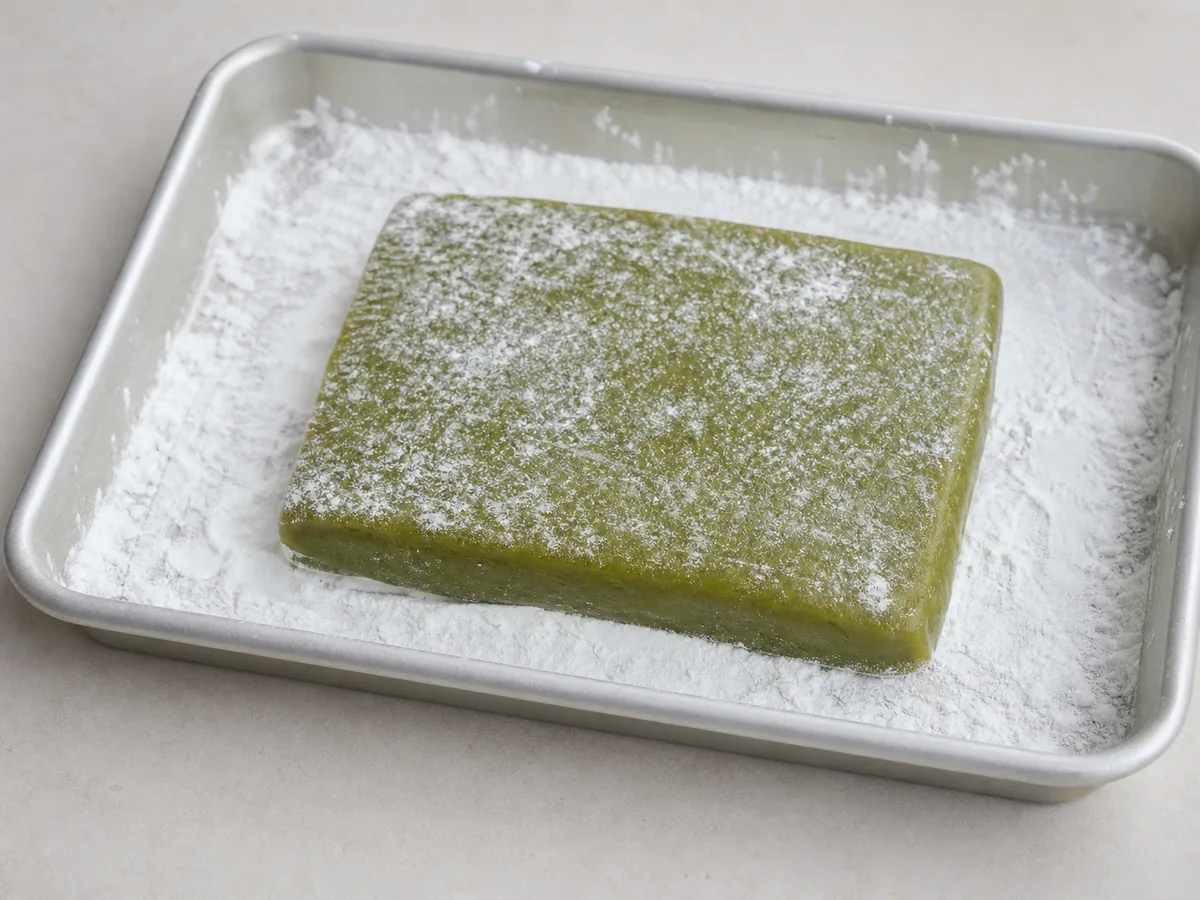
Scrape the hot dough onto the prepared tray, keeping hands away from the steam and sticky surface. Wet the spatula and press the dough into an even rectangle about 1.5 cm (1/2 in) thick. Dust the top lightly with some of the remaining potato starch. Let it stand for 20 minutes, until warm rather than hot and firm enough to cut while still supple.
20:00Cut and serve
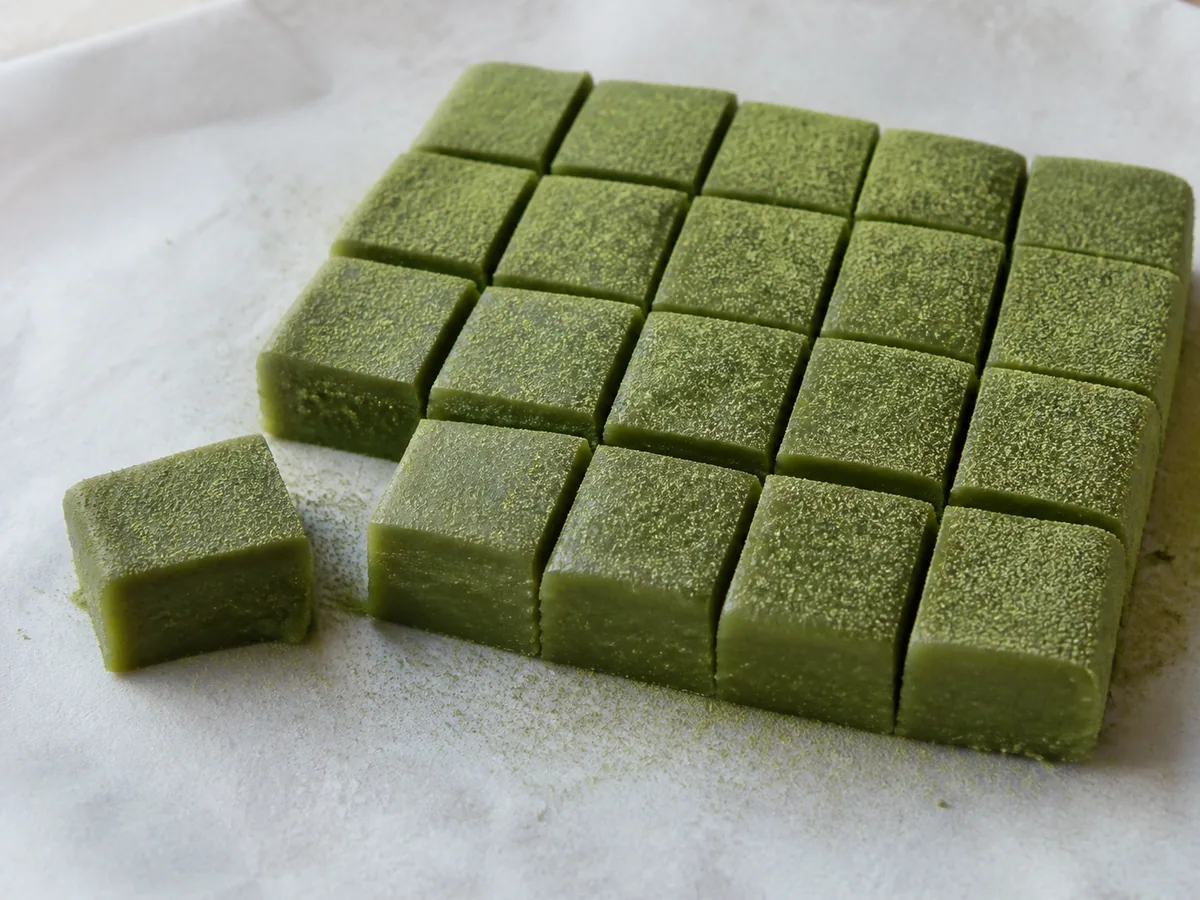
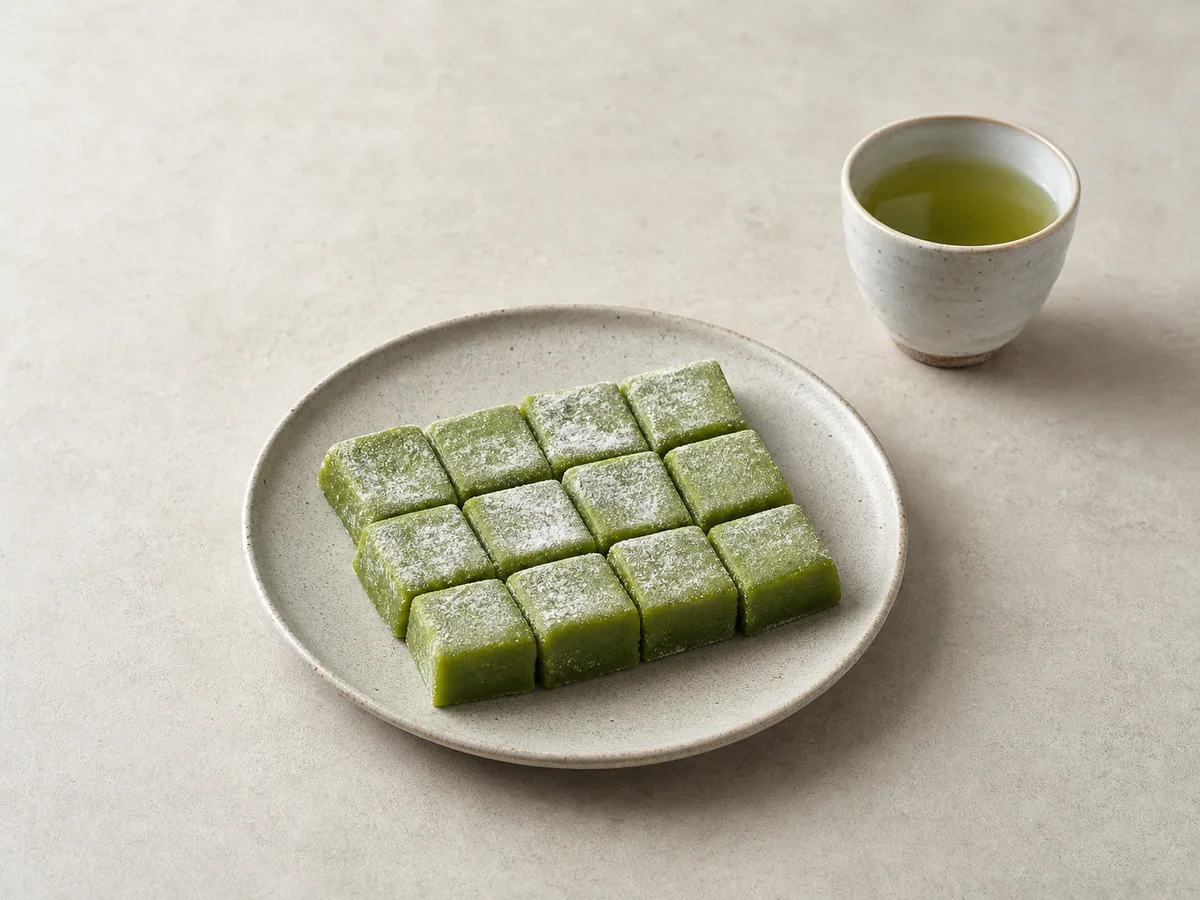
Dust a bench scraper or knife with the remaining starch. Cut the mochi into 16 small pieces, coating the fresh edges lightly and brushing away any heavy patches of starch. Arrange two pieces per serving and serve with brewed green tea (optional).


Smart Substitutions
- No mochiko? Use shiratamako at the same weight. Crush its granules with the whisk and add the water gradually, stopping when the batter is smooth and thick.
- No potato starch? Use cornstarch for dusting.
- Prefer a lighter tea flavor? Choose a mild culinary matcha and reduce it slightly; the texture will remain nearly the same.
- No brewed green tea? Serve the mochi on its own.
Tips and Variations
- Weigh the mochiko when possible; small volume differences can noticeably change the chew.
- Keep the steamer at a steady simmer rather than a hard boil so the bowl heats evenly.
- Wet the spatula before every contact with the hot dough to prevent dragging and tearing.
What Went Wrong?
- Batter has stubborn lumps Press them against the side of the bowl with the whisk before steaming; dry pockets will not smooth out later.
- Mochi looks chalky Steam it for another 1 to 2 minutes, stir well, and check again for an even glossy finish.
- Mochi spreads into a puddle The dough is undercooked. Return it to the heatproof bowl and steam again until it gathers into an elastic mass.
- Matcha tastes harsh Measure the powder carefully and use culinary matcha with a fresh, clean aroma rather than a dull or overly astringent powder.
Nutrition Estimate
- Fiber: 0.5 g per serving
- Sodium: 50 mg per serving
Nutrition disclaimer:This recipe is provided for general cooking information only. Nutrition values are estimates and may vary by ingredients, brands, preparation methods, and serving sizes. Check ingredient labels and follow appropriate food-safety practices. This content is not medical, dietary, allergy, or professional food-safety advice.
FAQ
Found an error or have a suggestion?
Help us improve this recipe. Send us your feedback and include the recipe name so we can take a look.