Method
Prepare the pan and oven
Heat the oven to 175°C (350°F). Use a 20 x 20 cm (8 x 8 in) metal baking pan (for 8 servings). For scaled batches, choose a pan that keeps the batter at a similar depth rather than scaling the dimensions linearly. Coat the inside with 15 g of unsalted butter, then line the bottom with parchment paper so the tender cake releases cleanly.
Mix the dry ingredients
Whisk 125 g of all-purpose flour, 6 g of baking powder, and 1 1/2 g of fine salt in a medium bowl until the leavening is evenly dispersed. Break up any compacted flour with the whisk, then set the bowl beside the mixer.
Separate the eggs and whip the whites
Separate 4 large eggs, placing the whites in a clean mixing bowl and the yolks in a second bowl. Keep every trace of yolk out of the whites. Beat the whites on medium speed until foamy, then add 50 g of granulated sugar for egg whites gradually. Increase to medium-high and beat for 2 to 3 minutes, until glossy medium peaks stand with tips that bend slightly.
02:00Build the yolk batter
Beat the yolks with 100 g of granulated sugar for egg yolks on medium-high speed for about 2 minutes, until pale, thick, and able to fall from the beaters in a ribbon. Mix in 80 ml of whole milk for cake and 5 ml of vanilla extract for cake on low speed just until smooth.
02:00Fold the batter and bake
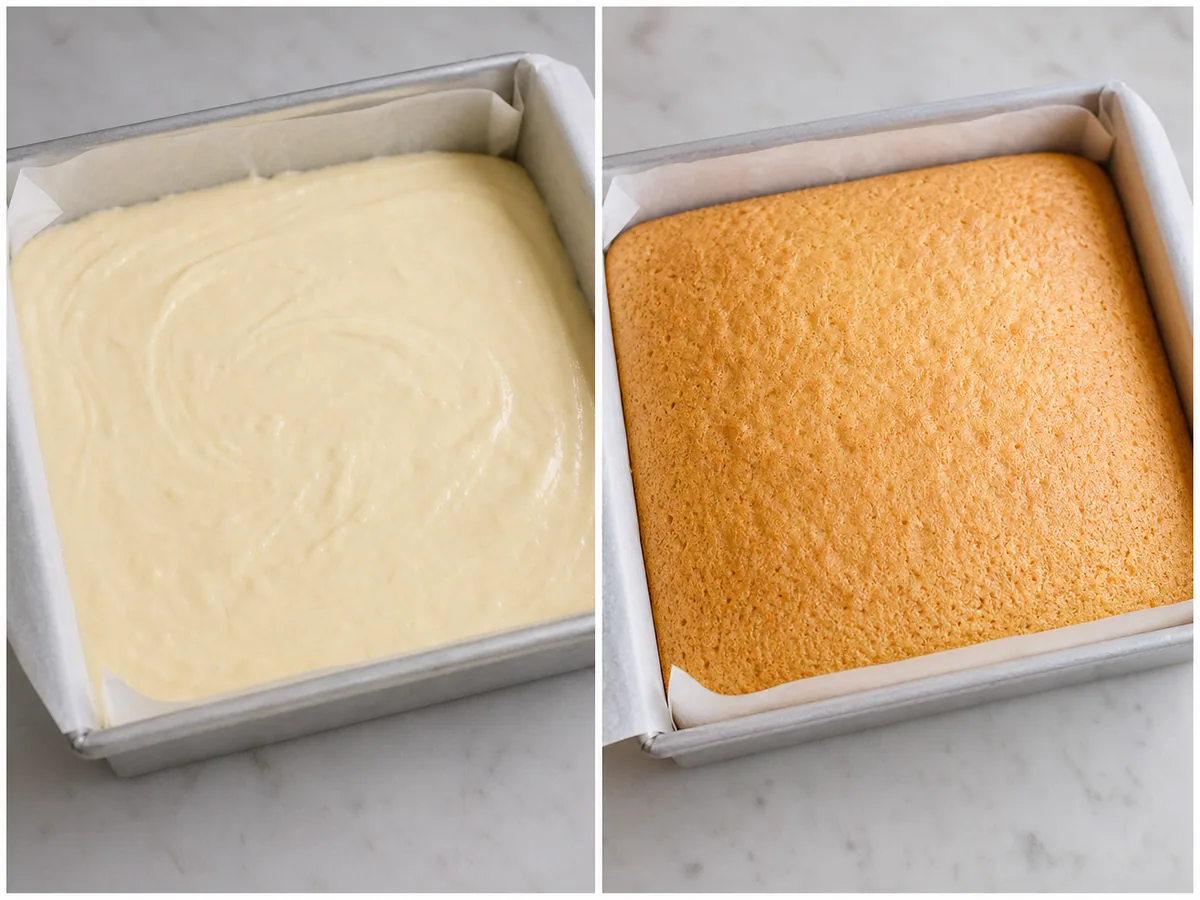
Fold the dry mixture into the yolk mixture in two additions, stopping as soon as no dry streaks remain. Fold one-third of the whipped whites through the batter to lighten it, then gently fold in the remaining whites without pressing out the air. Spread the batter evenly in the prepared pan. Bake for 25 to 30 minutes. Start checking at 25 minutes; continue as needed until the top is golden, the center springs back lightly, a tester shows no wet batter, and a food thermometer inserted into the center reads at least 93°C/200°F.
25:00Cool and pierce the cake
Let the baked cake stand in the pan for 15 minutes. Pierce the surface all over with a skewer, reaching nearly to the bottom without tearing the crumb.
15:00Mix the three milks and soak the cake
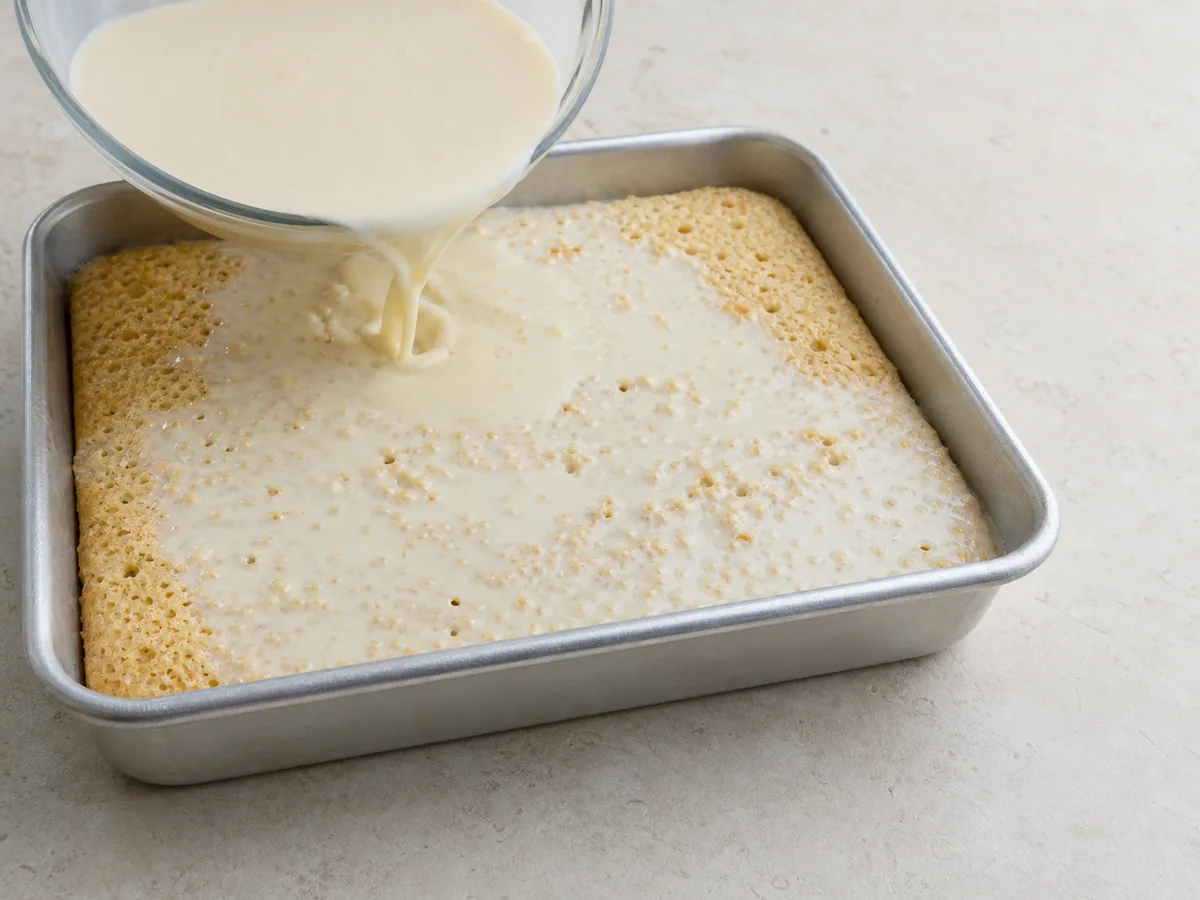
Whisk 200 g of sweetened condensed milk, 180 ml of evaporated milk, and 120 ml of whole milk for soaking until smooth. Pour the mixture slowly over the pierced cake in three passes, pausing between each pass so the liquid sinks into the sponge. Let the cake stand for 30 minutes, until most of the milk has been absorbed and the surface looks evenly moist rather than flooded.
30:00Whip the topping and serve
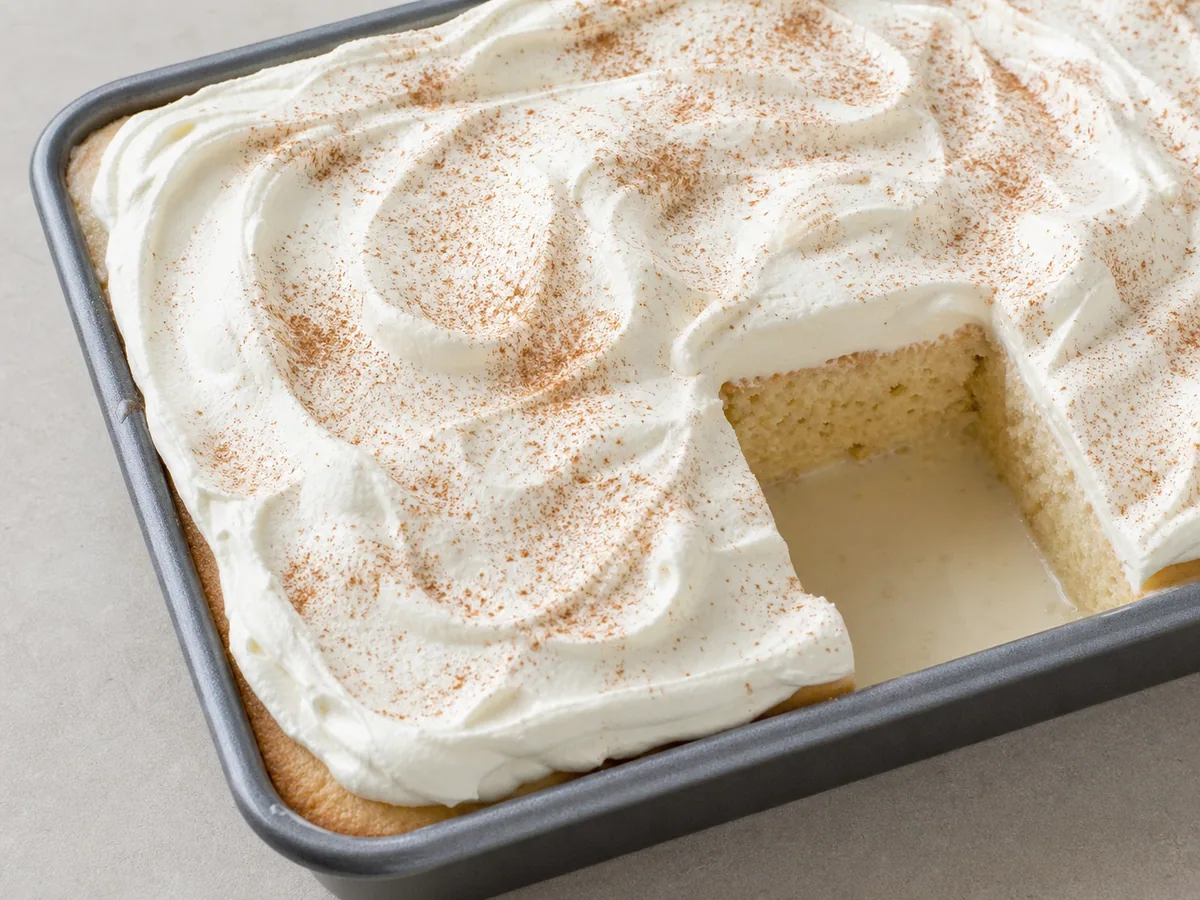
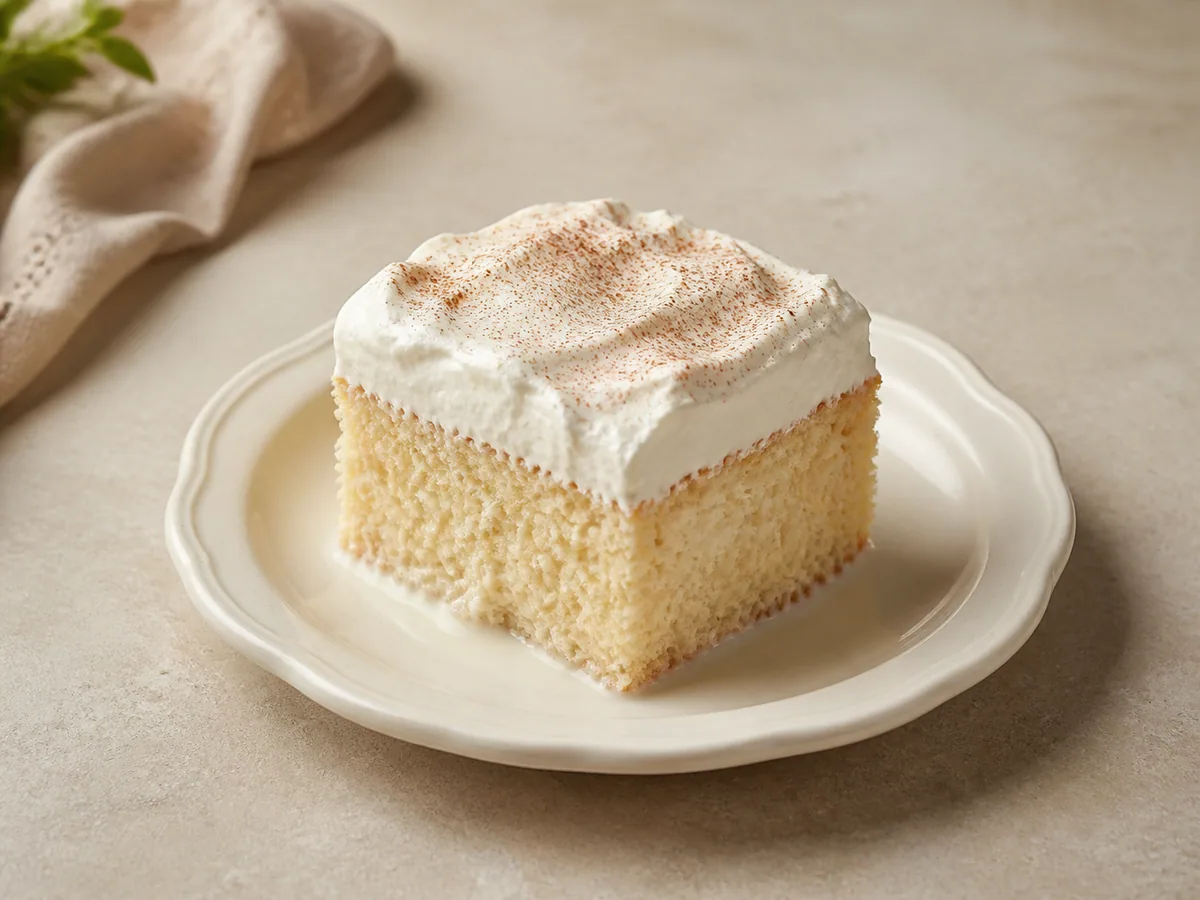
Beat 240 ml of heavy whipping cream with 24 g of powdered sugar and 5 ml of vanilla extract for topping on medium-high speed for 2 to 3 minutes, stopping when soft peaks hold their shape. Spread the whipped topping over the soaked cake with loose swirls. Dust lightly with ground cinnamon (optional), cut into squares with a clean knife, and serve.
02:00


Smart Substitutions
- No all-purpose flour? Use an equal weight of cake flour for an even finer crumb; fold carefully because the batter will feel more delicate.
- No whole milk? Use 2% milk in both measured milk portions. The cake will be slightly less rich but will still absorb well.
- No heavy whipping cream? Use whipping cream with at least 30% milk fat and stop beating as soon as soft peaks form.
- No cinnamon? Finish with a very light dusting of unsweetened cocoa or leave the topping plain.
Tips and Variations
- Use a spotless bowl and beaters for the egg whites; even a small smear of fat can reduce their volume.
- Fold with a broad spatula, turning the bowl as you work, so the batter stays airy enough to drink in the milk mixture.
- Wipe the knife between cuts for neat layers of sponge and whipped topping.
What Went Wrong?
- Cake is dense The egg whites may have lost too much air. Fold with fewer, broader strokes and stop as soon as the batter is uniform.
- Milk pools around the edges Pause the pour and give the sponge several minutes to absorb before adding the next pass. Pierce any dry-looking center spots again.
- Whipped topping looks grainy It has gone past soft peaks. Fold in a small splash of unbeaten cream by hand until the texture smooths.
- Cake tears while slicing Use a thin, sharp knife with a straight downward cut instead of sawing through the soaked crumb.
Nutrition Estimate
- Fiber: 0.5 g per serving
- Sodium: 250 mg per serving
Nutrition disclaimer:This recipe is provided for general cooking information only. Nutrition values are estimates and may vary by ingredients, brands, preparation methods, and serving sizes. Check ingredient labels and follow appropriate food-safety practices. This content is not medical, dietary, allergy, or professional food-safety advice.
FAQ
Found an error or have a suggestion?
Help us improve this recipe. Send us your feedback and include the recipe name so we can take a look.