Method
Mix the stiff dough
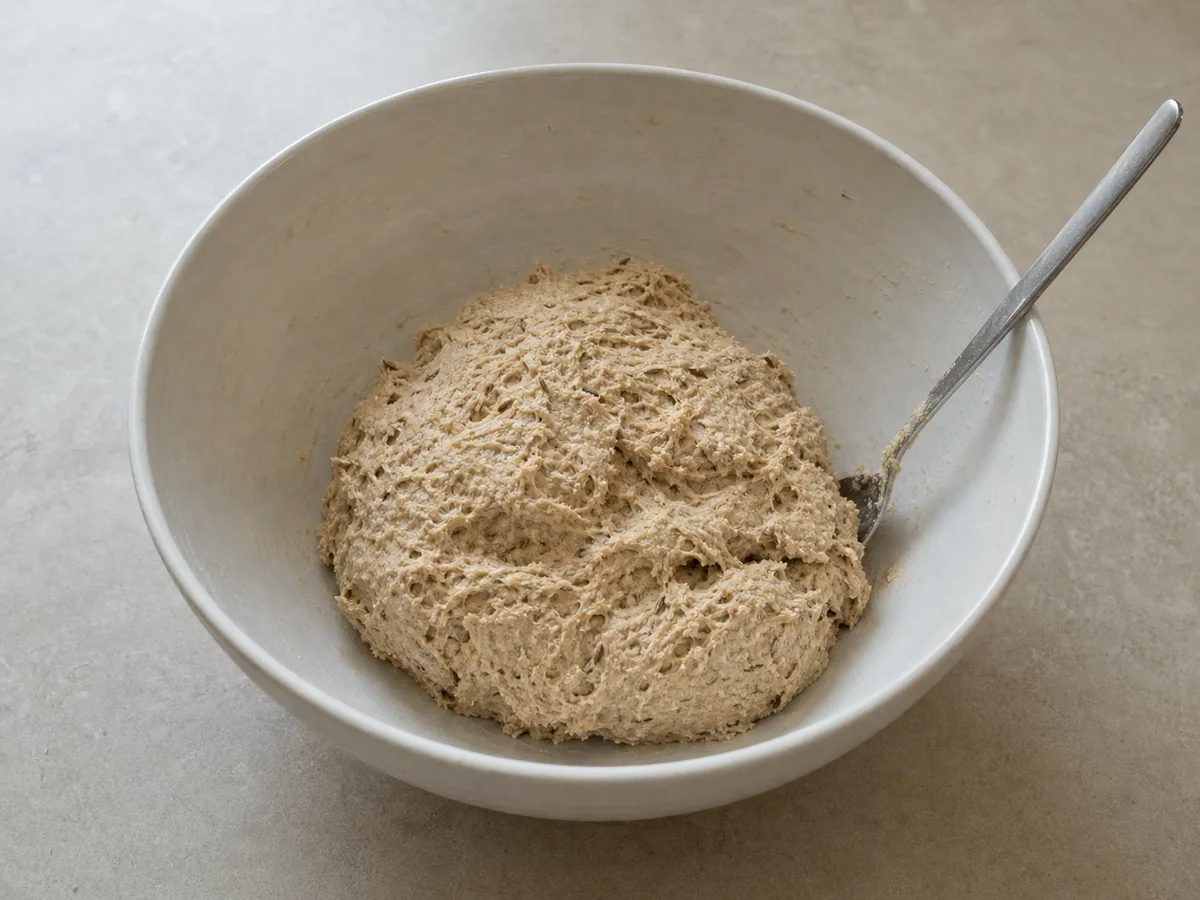
Warm 350 ml of water to 24°C (75°F). In a large bowl, whisk 510 g of bread flour, 135 g of whole rye flour, 5 g of instant yeast, 10 g of fine sea salt, and 10 g of caraway seeds for dough. Stir 30 g of barley malt syrup for dough into the warm water, pour it into the bowl, and mix with a sturdy spoon until no dry flour remains. The dough should feel firm and slightly tacky, not soft.
Knead until elastic
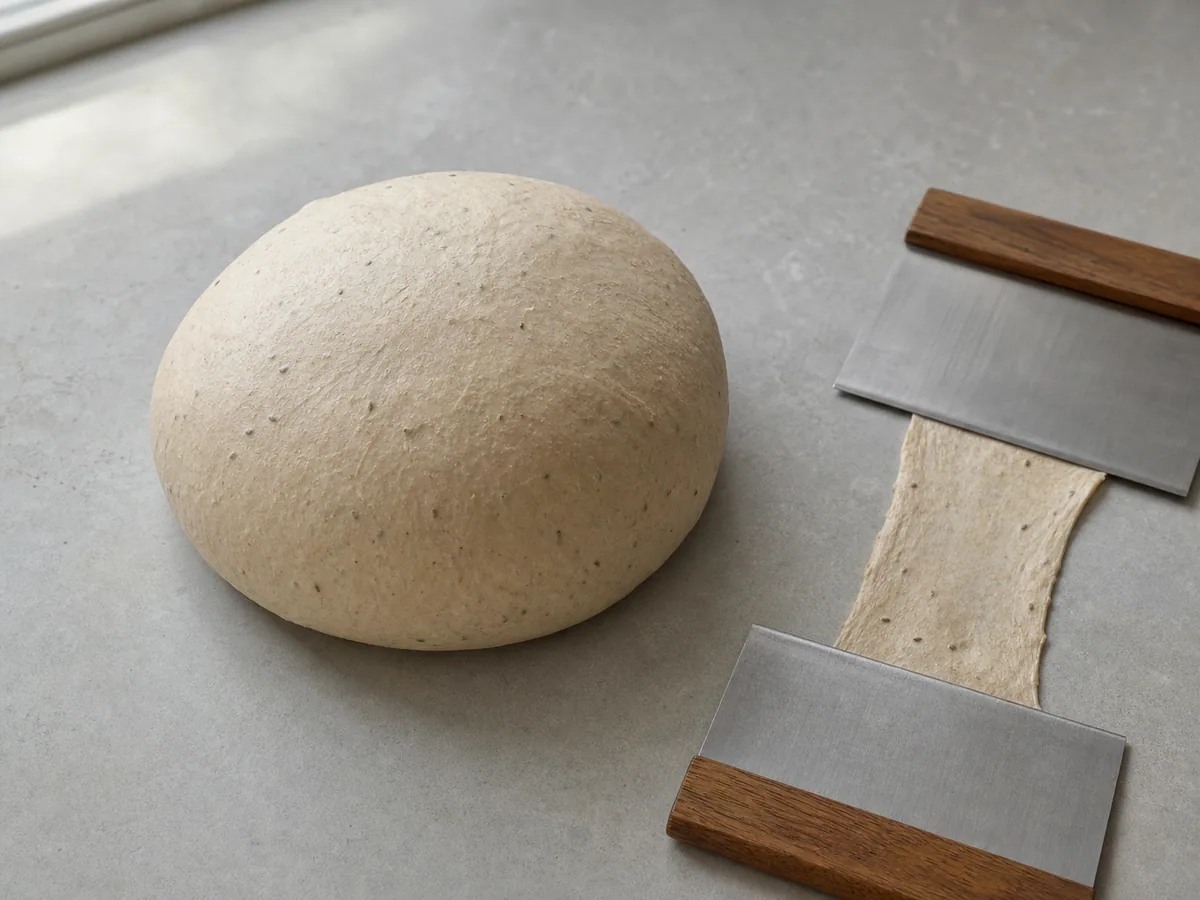
Turn the dough onto a clean work surface and knead firmly for 8 to 10 minutes. Push with the heel of your hand, fold, and rotate; the stiff dough will resist at first. Stop when it is smooth, elastic, and able to stretch into a thin patch before tearing. Check at 8 minutes and continue only if the surface still looks rough.
08:00Let the dough rise
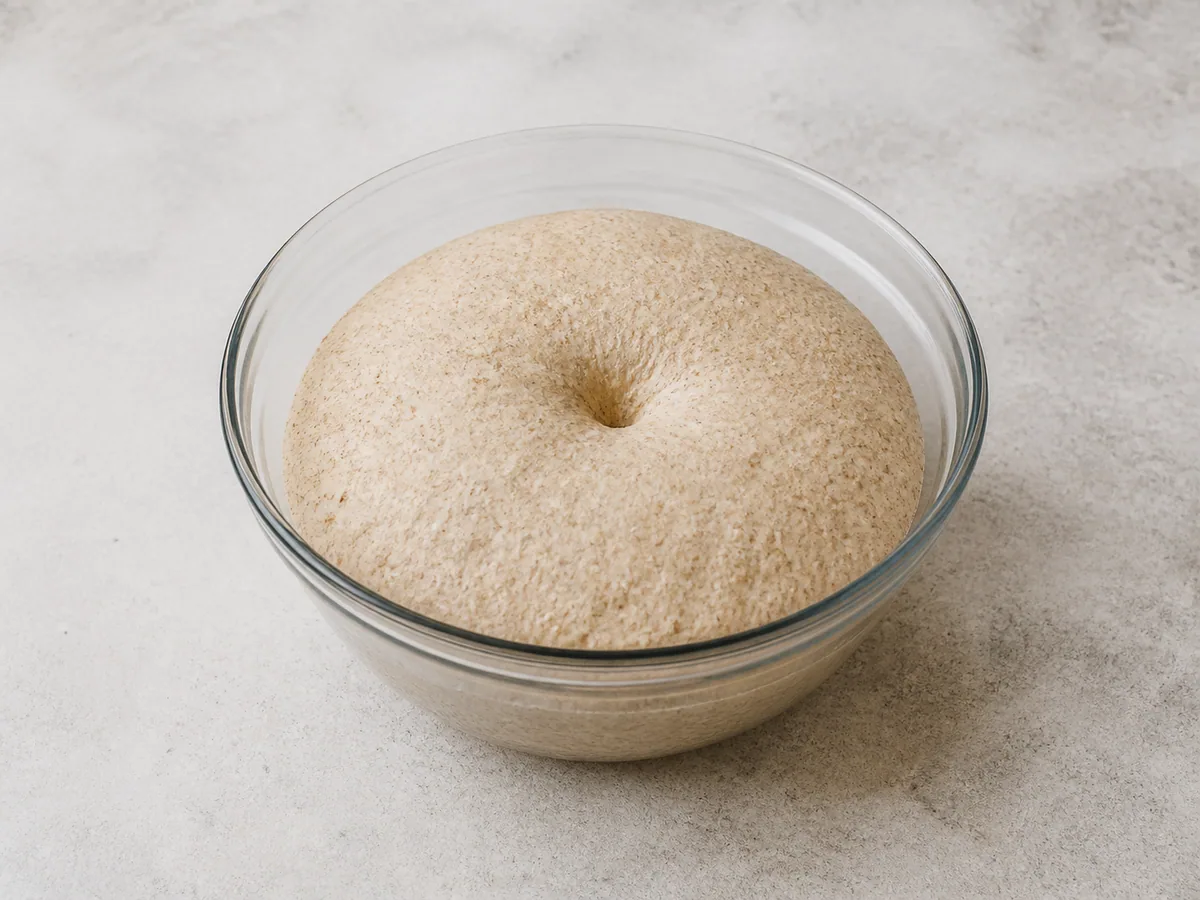
Place the dough in a clean bowl and cover it. Let it rise at a comfortable room temperature, ideally 21°C to 24°C (70°F to 75°F), for 60 to 75 minutes, until it looks about one and a half times its original size. Check at 60 minutes; it should feel aerated but still spring back when pressed.
60:00Divide and shape the rings
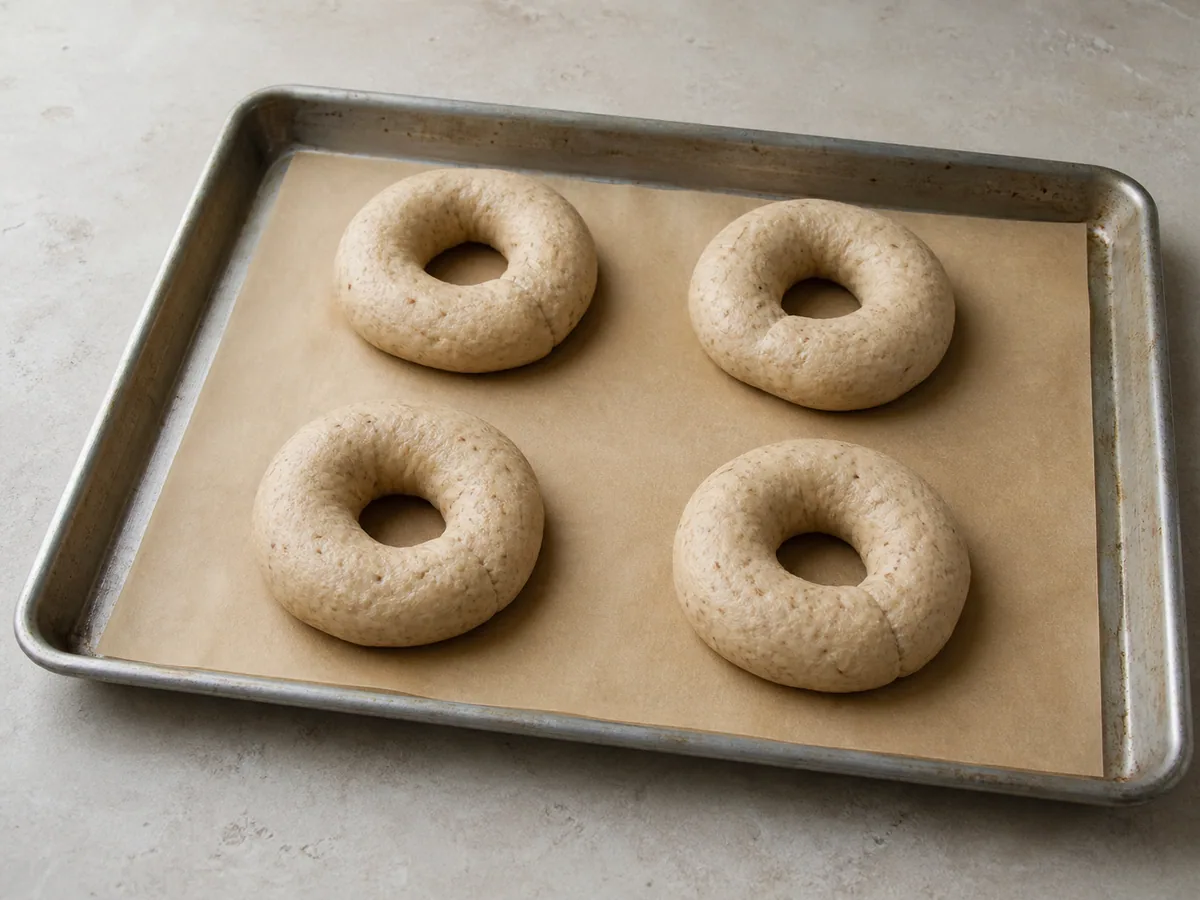
Line two sheet pans with parchment. Press the dough gently to release large gas pockets, then divide it into equal portions, one per serving. Roll each portion into a 23 cm (9 in) rope with slightly tapered ends. Overlap the ends by about 5 cm (2 in), press them together, and roll the seam against the work surface until it disappears. Set the rings on the pans with space between them, keep the center holes about 4 cm (1 1/2 in) wide, and cover each pan lightly as soon as it is filled.
Heat the oven and malt bath while the rings proof
As soon as both pans are covered, start a 20-minute proof timer. While the rings proof, heat the oven to 230°C (450°F) with racks in the upper and lower thirds. Fill a wide pot with water for boiling to a depth of about 8 cm (3 in), leaving plenty of headroom, and bring it to a gentle boil. Stir in 40 g of barley malt syrup for boiling until dissolved, then keep the bath bubbling steadily rather than violently. When the timer ends, check the rings in the next step; the oven and bath should already be ready.
20:00Check the proofed rings
When the 20-minute timer ends, check the covered rings. They should look slightly fuller, but the surface should still feel firm and spring back slowly when touched. If they have barely changed, let them stand for 5 to 10 minutes more while keeping the oven hot and the malt bath at a gentle boil. Do not wait for them to double, or they may collapse in the water.
Boil the bagels
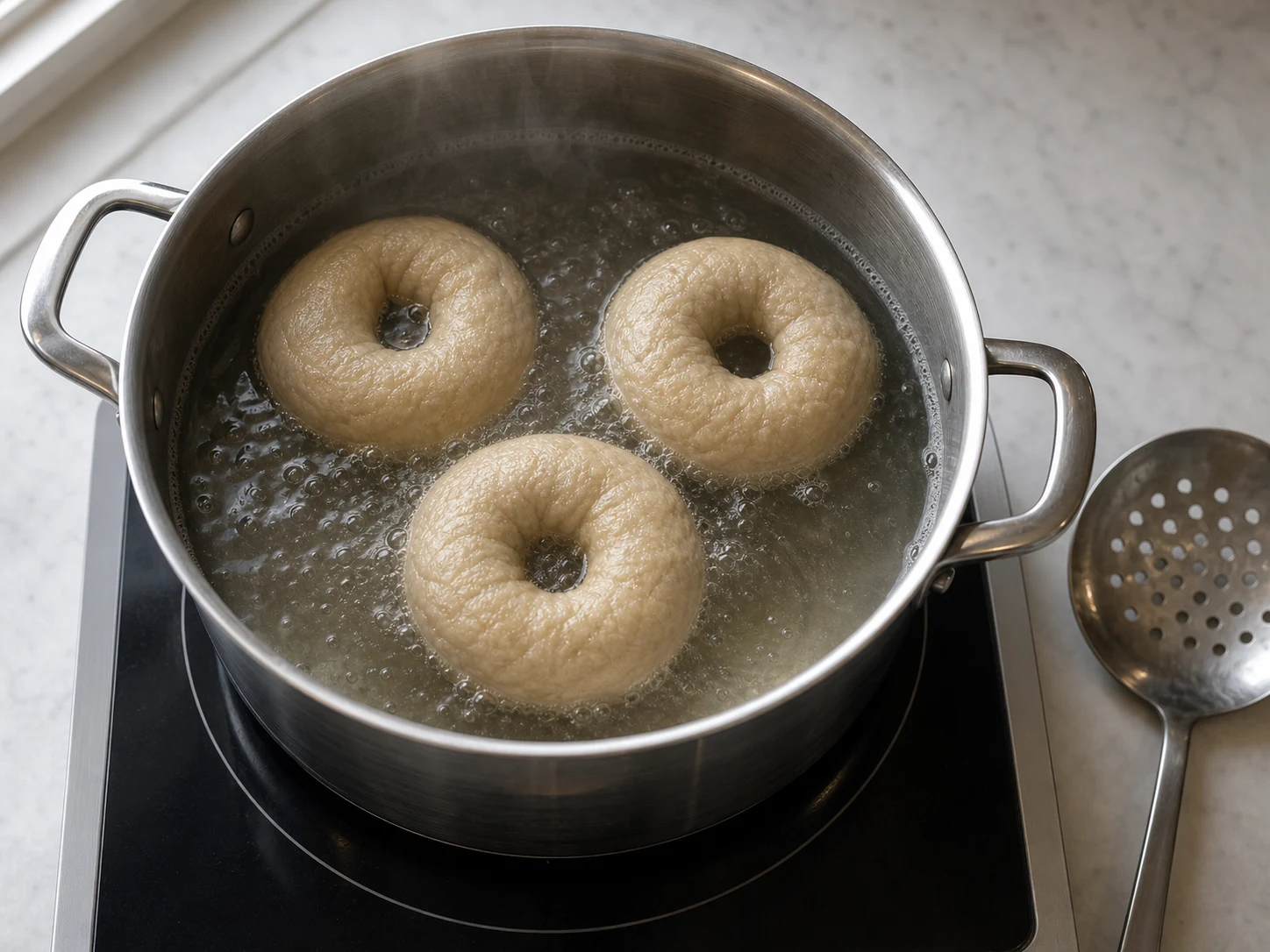
Lower two or three rings into the malt bath without crowding the pot. Boil for 90 seconds total, turning each ring once halfway through. They should swell slightly and develop a taut, faintly wrinkled surface. Lift them out with a wide slotted spoon, let excess water drain for about 10 seconds, and return them to the parchment. Repeat with the remaining rings while keeping the boil gentle.
01:30Top and bake
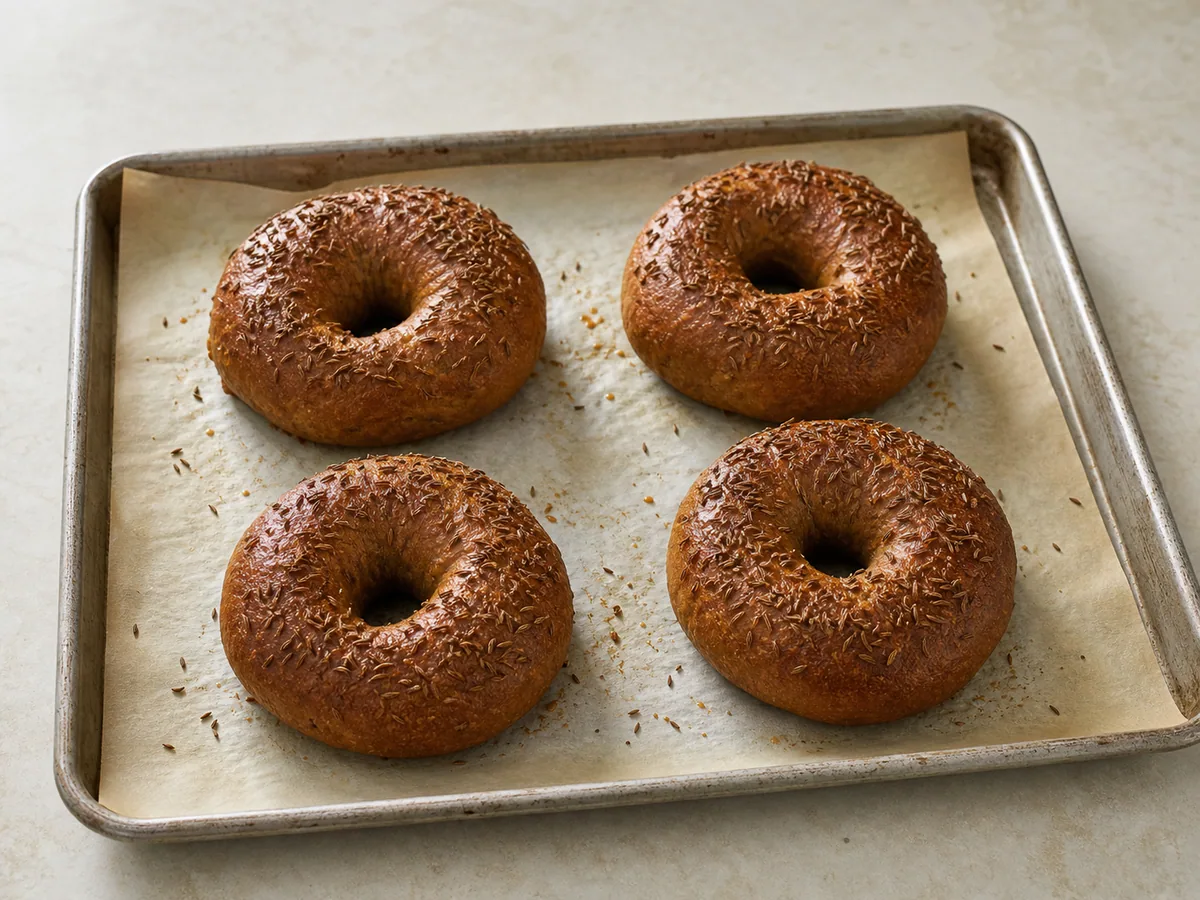
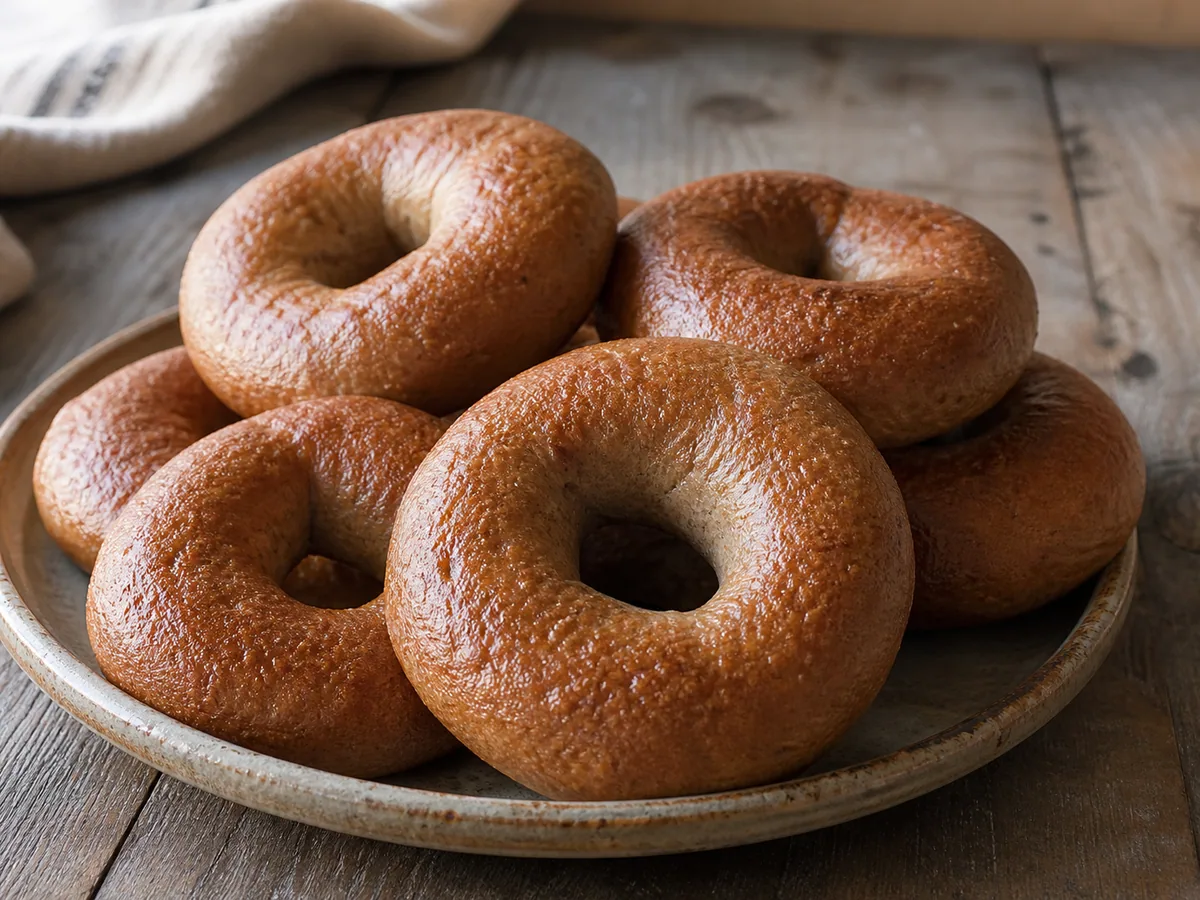
Sprinkle 5 g of caraway seeds for topping over the wet bagels so the seeds adhere. Bake for 20 to 24 minutes, rotating the pans and swapping rack positions once the tops begin to color. Check at 20 minutes. The bagels are ready when the crust is deep brown and firm, the bottoms sound hollow when tapped, and the centers register about 93°C (200°F).
20:00Cool before slicing
Transfer the bagels to a wire rack and let them cool for 20 minutes before slicing. This pause lets steam settle into the crumb so it stays chewy rather than gummy. Serve while the crust is still crisp and the rye aroma is pronounced.
20:00


Smart Substitutions
- No barley malt syrup? Use 30 g (about 2 1/2 packed tablespoons) dark brown sugar in the dough and 40 g (2 tablespoons) honey in the boiling water. The crust will be a little less malty but will still brown well.
- No whole rye flour? Use medium rye flour in the same weight for a slightly lighter crumb and milder flavor.
- No caraway seeds? Omit the caraway seeds from the dough. For the topping, use 2 teaspoons sesame seeds, or leave the rings plain and let the rye flavor lead.
- No bread flour? Use the highest-protein all-purpose flour available and knead until the dough passes the thin-stretch test; the finished chew may be softer.
Tips and Variations
- Weigh the flour when possible. A few extra spoonfuls can turn this already stiff dough into something difficult to knead.
- Roll the overlapped seam firmly against the counter; a visible ridge is the spot most likely to open during boiling.
- Keep the malt bath at a gentle boil. Aggressive bubbling can roughen the surface and knock the rings out of shape.
What Went Wrong?
- Bagels flatten in the water The shaped rings likely proofed too long. Boil the next batch as soon as they look slightly fuller and still feel firm.
- The seam opens Overlap the rope ends more generously, press them together, and roll the join until no ridge remains.
- Crust stays pale Confirm the oven is fully heated, dissolve the malt in the bath, and bake until the surface is a deep brown rather than light gold.
- Crumb is gummy Bake until the center reaches about 93°C (200°F), then give the bagels the full cooling time before slicing.
Nutrition Estimate
- Fiber: 5 g per serving
- Sodium: 500 mg per serving
Nutrition disclaimer:This recipe is provided for general cooking information only. Nutrition values are estimates and may vary by ingredients, brands, preparation methods, and serving sizes. Check ingredient labels and follow appropriate food-safety practices. This content is not medical, dietary, allergy, or professional food-safety advice.
FAQ
Found an error or have a suggestion?
Help us improve this recipe. Send us your feedback and include the recipe name so we can take a look.