Method
Start the rice
Rinse 280 g of long-grain white rice in a fine-mesh sieve until the water runs mostly clear. Combine 280 g of long-grain white rice, 600 ml of water for rice, and 3 g of kosher salt for rice in a medium saucepan. Bring to a boil over medium-high heat, stir once, cover, and reduce the heat to low. Simmer for 18 minutes without lifting the lid. Turn off the heat and leave the saucepan covered while you finish the étouffée.
18:00Prepare the trinity and herbs
While the rice cooks, dice 150 g of yellow onion, 75 g of green bell pepper, and 50 g of celery into roughly 6 mm (1/4 in) pieces so they soften at the same rate. Mince 12 g of garlic. Chop 8 g of flat-leaf parsley and slice 30 g of green onions, then keep the herbs separate from the raw vegetables.
Make the blond roux
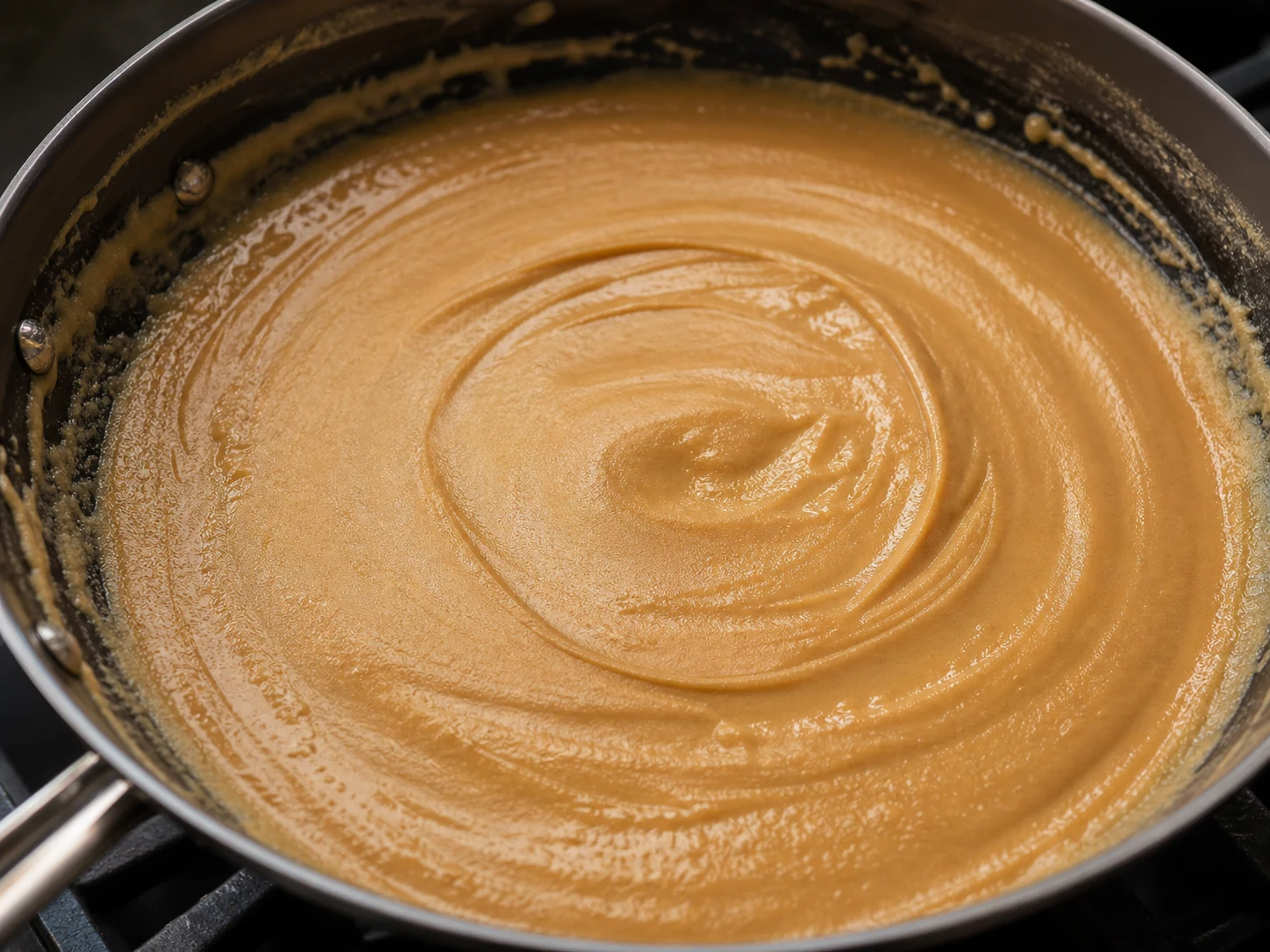
Melt 56 g of unsalted butter in a wide, heavy skillet or Dutch oven over medium heat. Whisk in 32 g of all-purpose flour until no dry pockets remain. Cook for 5 to 7 minutes, whisking almost constantly, until the roux is smooth, smells lightly toasted, and reaches a warm peanut-butter color. Begin checking at 5 minutes and lower the heat if dark specks appear.
05:00Soften the trinity in the roux
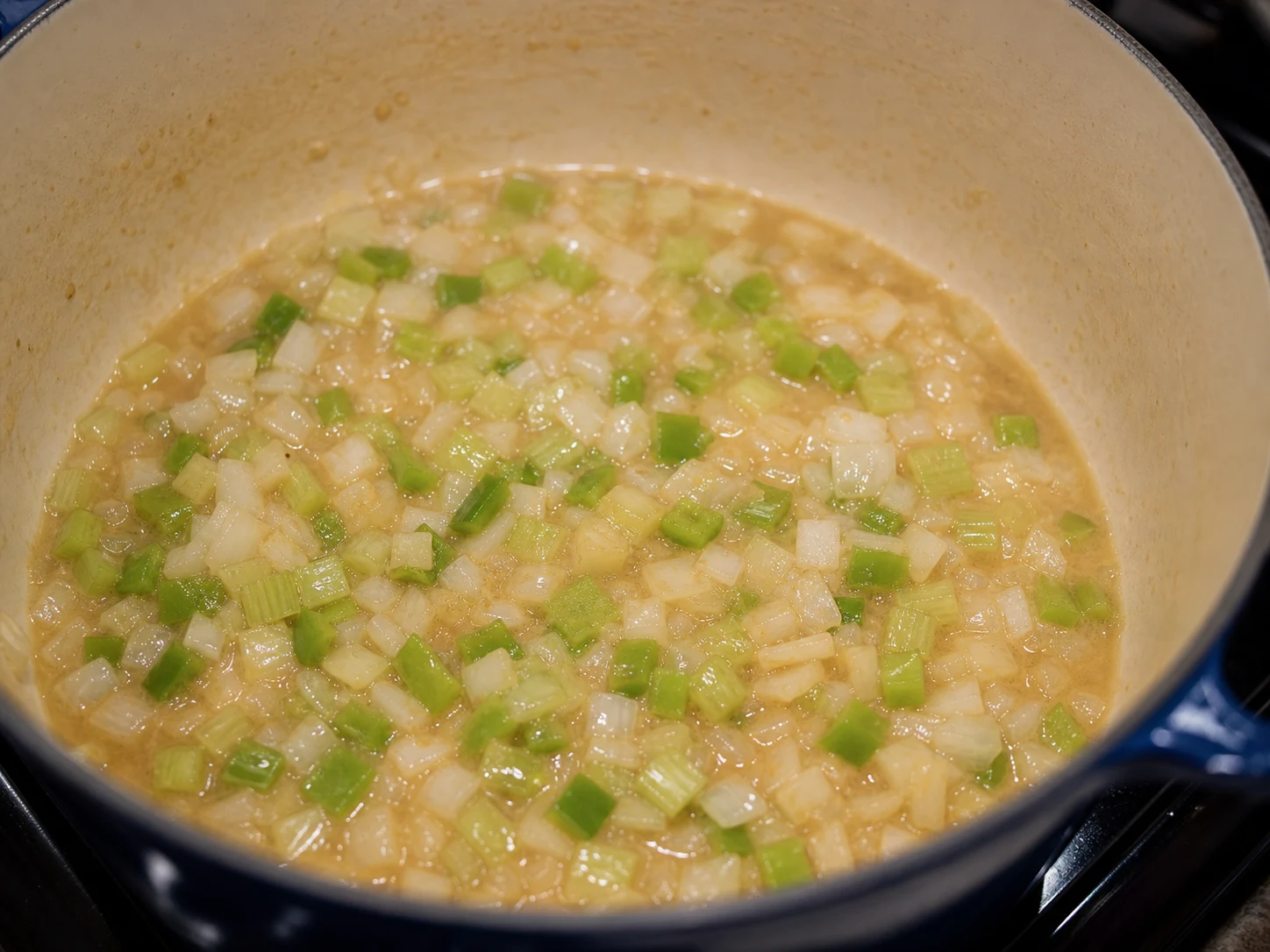
Stir 150 g of yellow onion, 75 g of green bell pepper, and 50 g of celery into the roux. Cook over medium heat for 6 to 8 minutes, stirring often and scraping the bottom, until the vegetables are soft and glossy but not browned. Begin checking at 6 minutes.
06:00Add the aromatics and seasonings
Add 12 g of garlic, 6 g of salt-free Cajun seasoning, 1/2 g of dried thyme, and 1 bay leaf. Stir for 45 to 60 seconds, just until the garlic is fragrant and the spices bloom. Stir in 15 ml of Worcestershire sauce, 5 ml of Louisiana-style hot sauce, 3 g of kosher salt for étouffée, and 1 g of black pepper without letting the roux scorch.
00:45Build and simmer the gravy
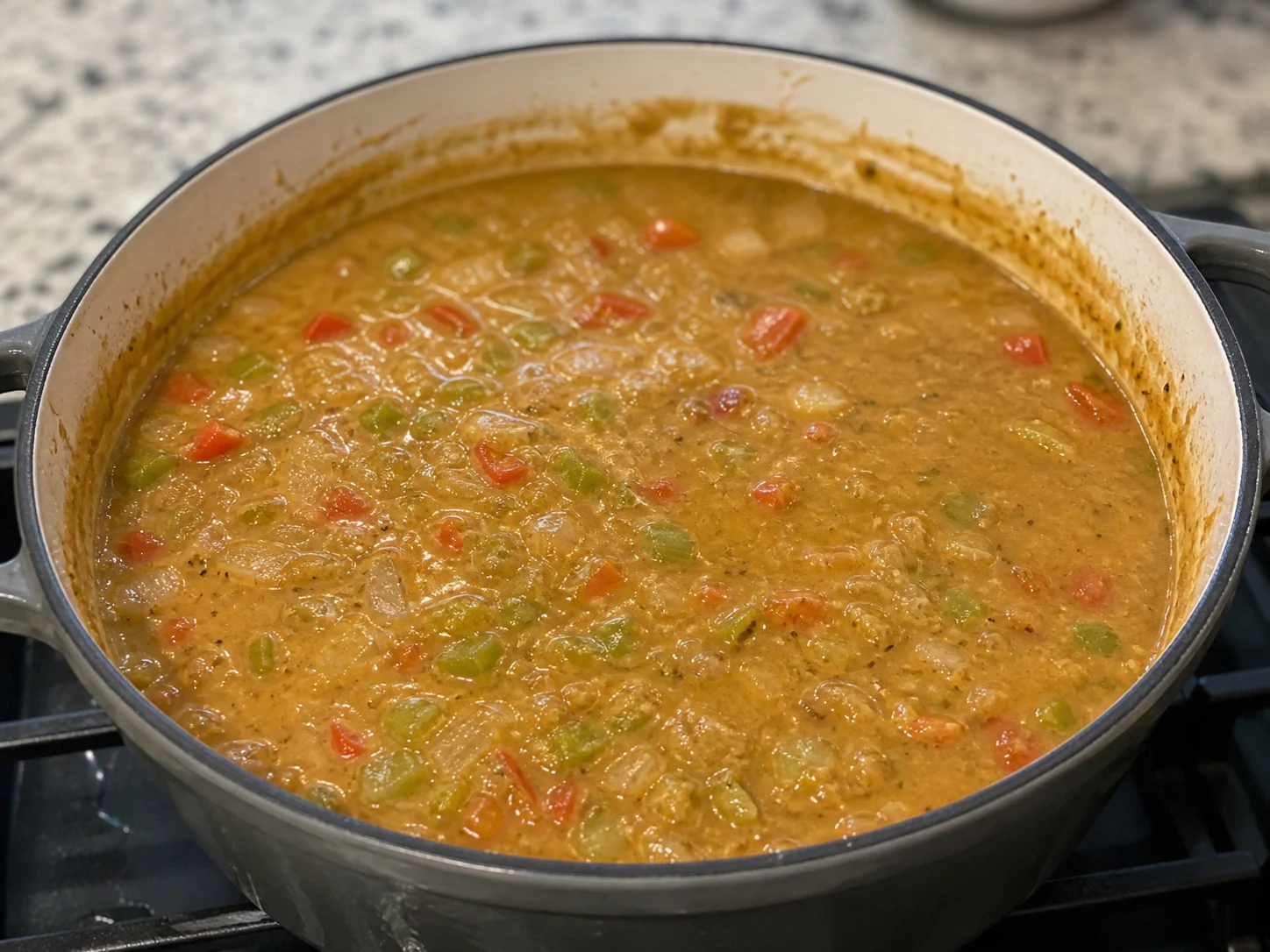
Pour in 480 ml of unsalted seafood stock in four additions, whisking each addition smooth before adding the next. Bring the gravy to a gentle boil, then reduce the heat to medium-low. Simmer uncovered for 15 minutes, stirring every few minutes, until it lightly coats a spoon and the vegetables are fully tender. Keep the simmer gentle so the bottom does not catch.
15:00Finish the étouffée with crawfish
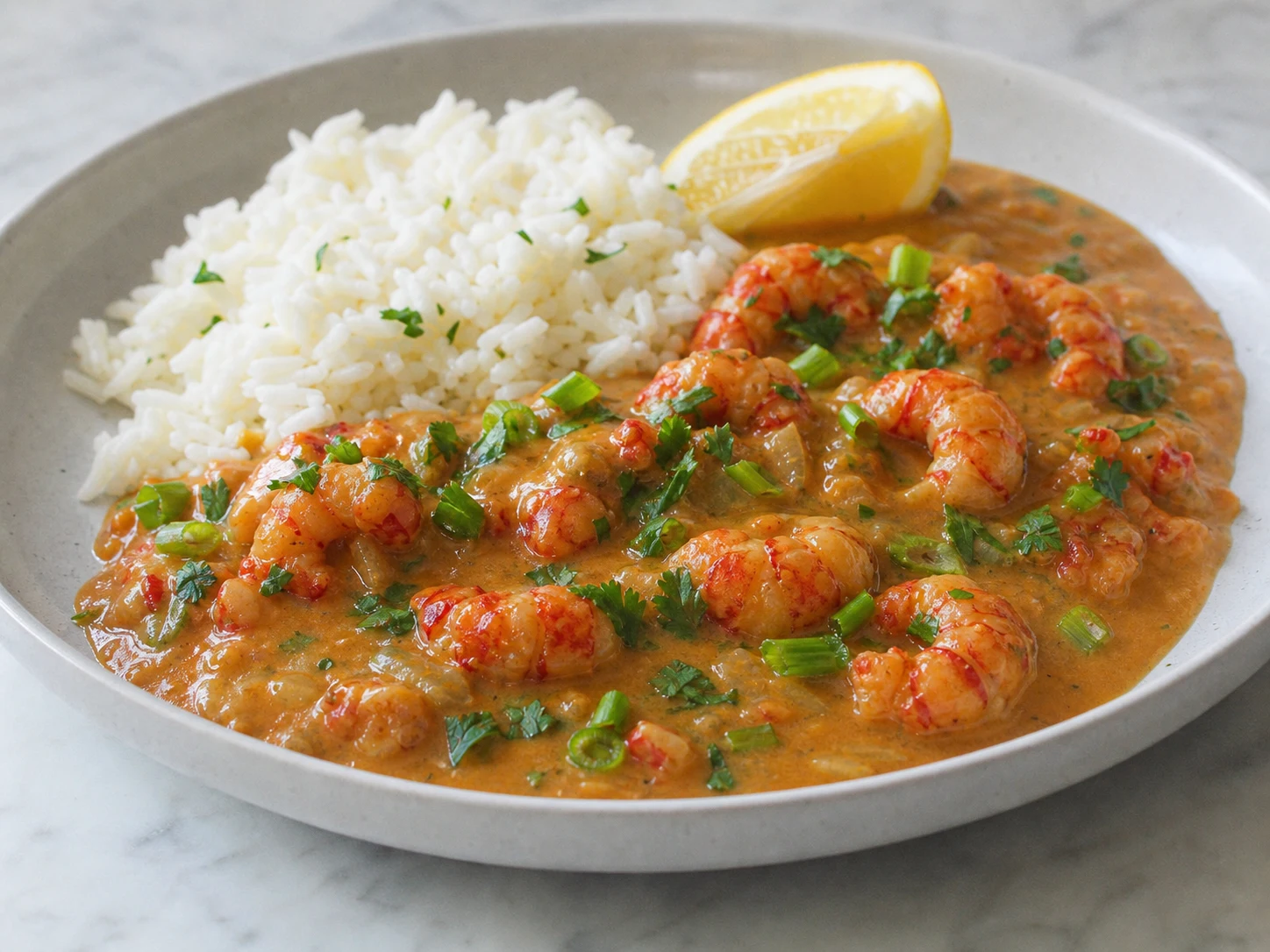
Add 454 g of cooked crawfish tail meat with fat and fold gently so the tails stay intact. Cook over medium-low heat for 4 to 6 minutes, stirring once or twice, until the crawfish is steaming and the sauce reaches at least 63°C/145°F; use a food thermometer to check the center of the sauce. Begin checking at 4 minutes and do not let the mixture boil hard. Remove the bay leaf, then stir in 8 g of flat-leaf parsley, 30 g of green onions, and 15 ml of fresh lemon juice.
04:00Fluff the rice and serve
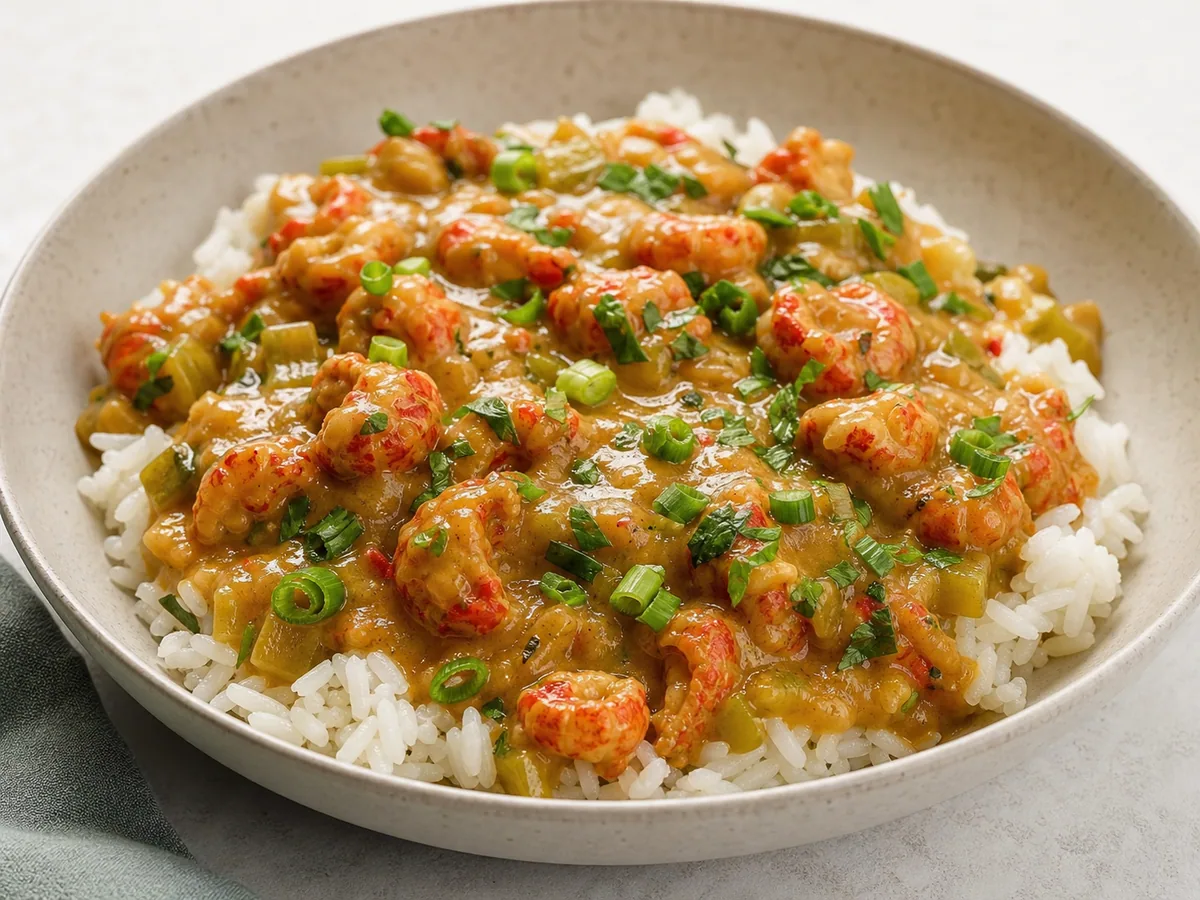
Fluff the covered rice with a fork, loosening any grains from the sides of the saucepan. Spoon the rice into warm shallow bowls and ladle the crawfish étouffée over the top, making sure each serving gets plenty of crawfish and gravy. Serve immediately while the sauce is silky and the rice is hot.


Smart Substitutions
- No crawfish tails? Use the same weight of fully cooked peeled shrimp and heat it gently until the sauce reaches 63°C/145°F.
- No seafood stock? Use unsalted chicken stock; the gravy will be less briny but will keep the same body.
- No unsalted butter? Use a neutral cooking oil in the same volume for the roux, knowing the sauce will taste less rounded.
- Prefer milder heat? Choose a mild salt-free Cajun seasoning and reduce the hot sauce, then adjust at the table.
Tips and Variations
- Choose cooked Louisiana crawfish tail meat packed with its natural fat when available; that orange-gold liquid deepens the sauce.
- Stop the roux at a warm peanut-butter shade. A darker roux brings gumbo-like toastiness and weakens its thickening power.
- Whisk the stock into the roux gradually. The first addition should form a smooth paste before more liquid goes in.
What Went Wrong?
- Gravy is lumpy Take the skillet off the heat and whisk firmly until smooth, then return it to low heat and continue adding stock gradually.
- Gravy is too thick Whisk in hot water a small splash at a time until it coats a spoon without holding stiff ridges.
- Gravy is too thin Simmer it uncovered for a few more minutes before adding the crawfish, stirring often to prevent scorching.
- Crawfish is rubbery The heat was too high or the tails cooked too long. Remove the skillet from the heat as soon as the sauce is hot and the safe temperature is reached.
Nutrition Estimate
- Fiber: 2 g per serving
- Sodium: 875 mg per serving
Nutrition disclaimer:This recipe is provided for general cooking information only. Nutrition values are estimates and may vary by ingredients, brands, preparation methods, and serving sizes. Check ingredient labels and follow appropriate food-safety practices. This content is not medical, dietary, allergy, or professional food-safety advice.
FAQ
Found an error or have a suggestion?
Help us improve this recipe. Send us your feedback and include the recipe name so we can take a look.