Method
Soak the chickpeas
Put 250 g of dried chickpeas in a large bowl and cover them with at least 8 cm (3 in) of cold water. Leave them to soak for 8 to 12 hours, until noticeably swollen and easy to split with a fingernail. They should remain firm rather than soft like cooked beans.
08:00:00Drain and dry the chickpeas
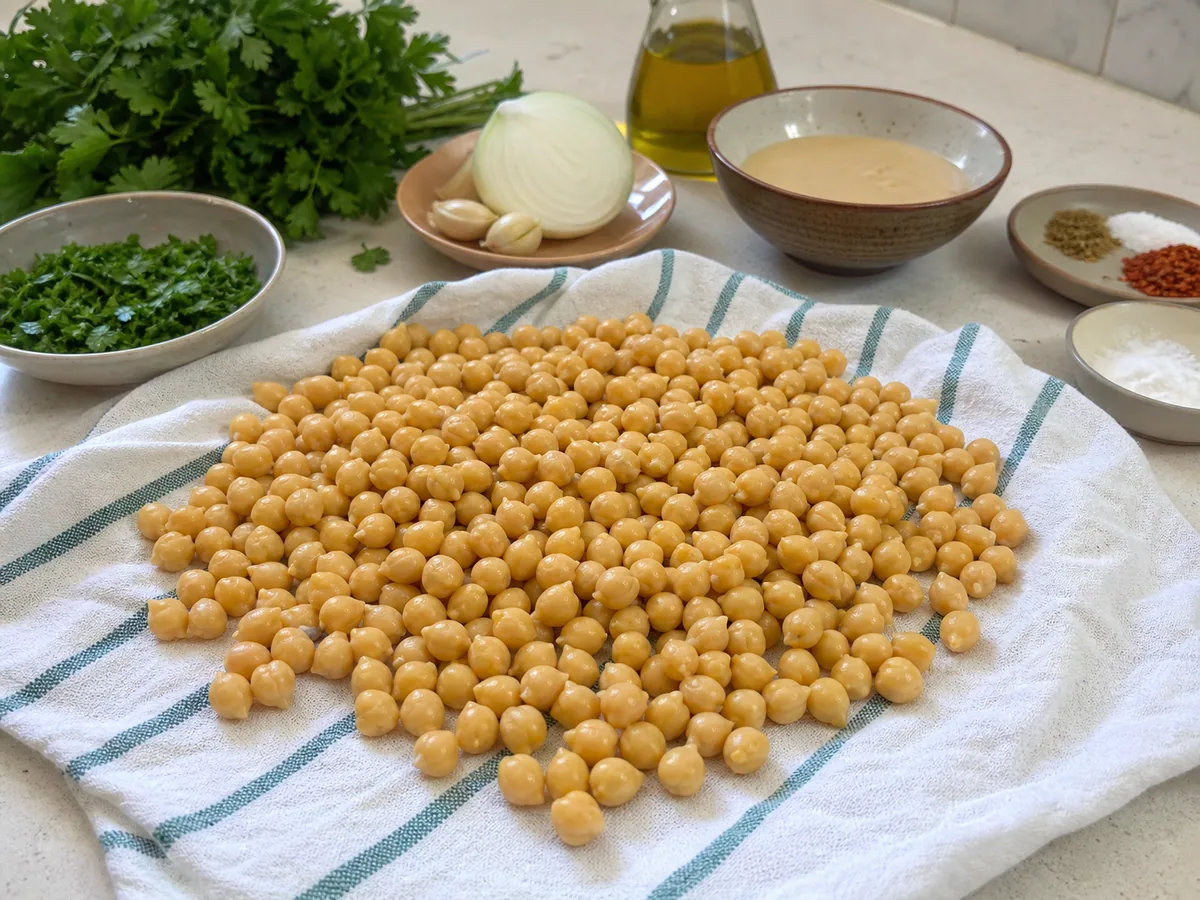
Drain the soaked chickpeas thoroughly, spread them on a clean kitchen towel, and blot away surface water. Let them air-dry for about 10 minutes while you prepare the remaining ingredients. A dry surface helps the falafel bind and keeps water from spattering in the hot oil.
10:00Grind the falafel mixture
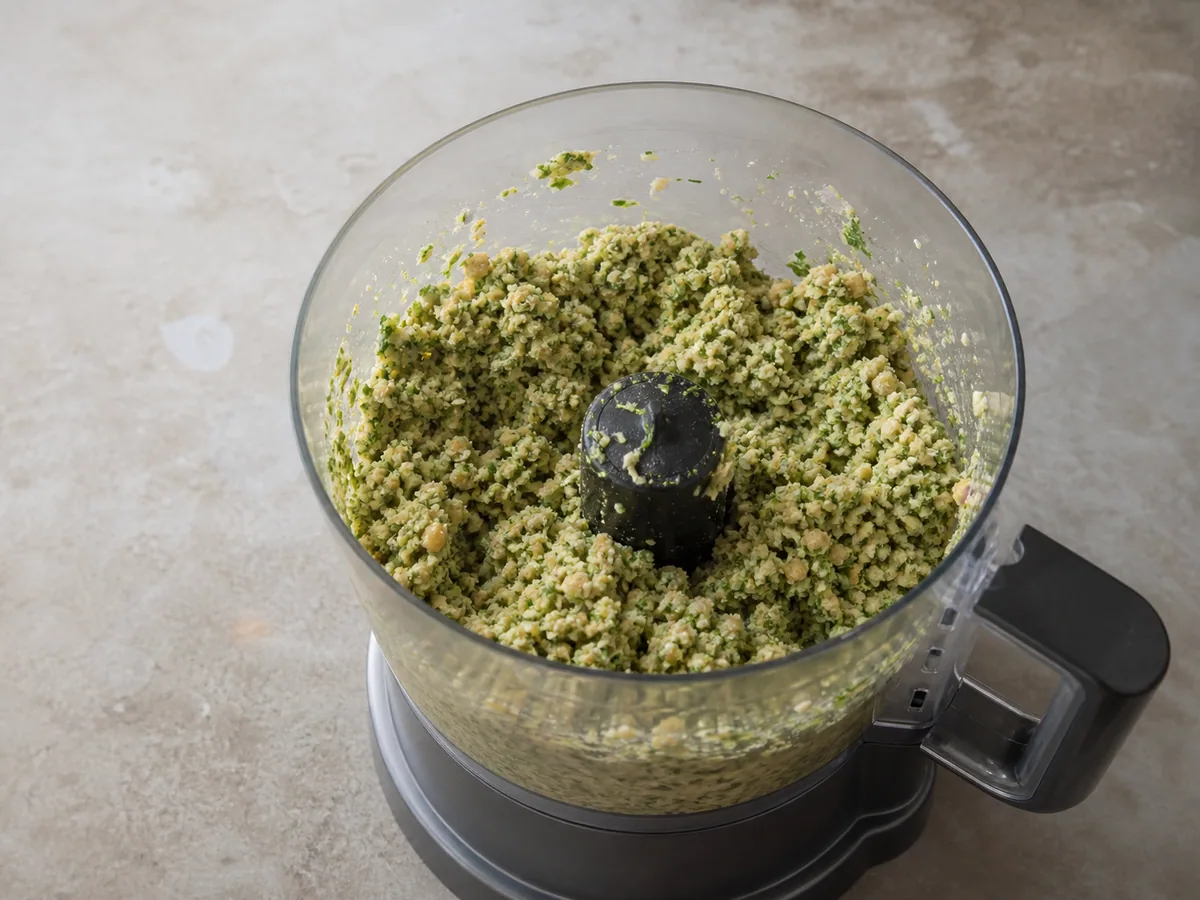
Cut 100 g of yellow onion into chunks and add it to a food processor with 3 garlic cloves for falafel, 30 g of fresh flat-leaf parsley, 20 g of fresh cilantro, 4 g of ground cumin, 2 g of ground coriander, 4 1/2 g of kosher salt for falafel, and 1/2 g of black pepper. Add the dried soaked chickpeas. Pulse in short bursts, scraping the bowl as needed, until the mixture resembles coarse sand with tiny chickpea pieces. Stop before it becomes a smooth paste. Squeeze a spoonful in your palm; it should hold together when pressed and crumble when nudged.
Rest the mixture and make the tahini sauce
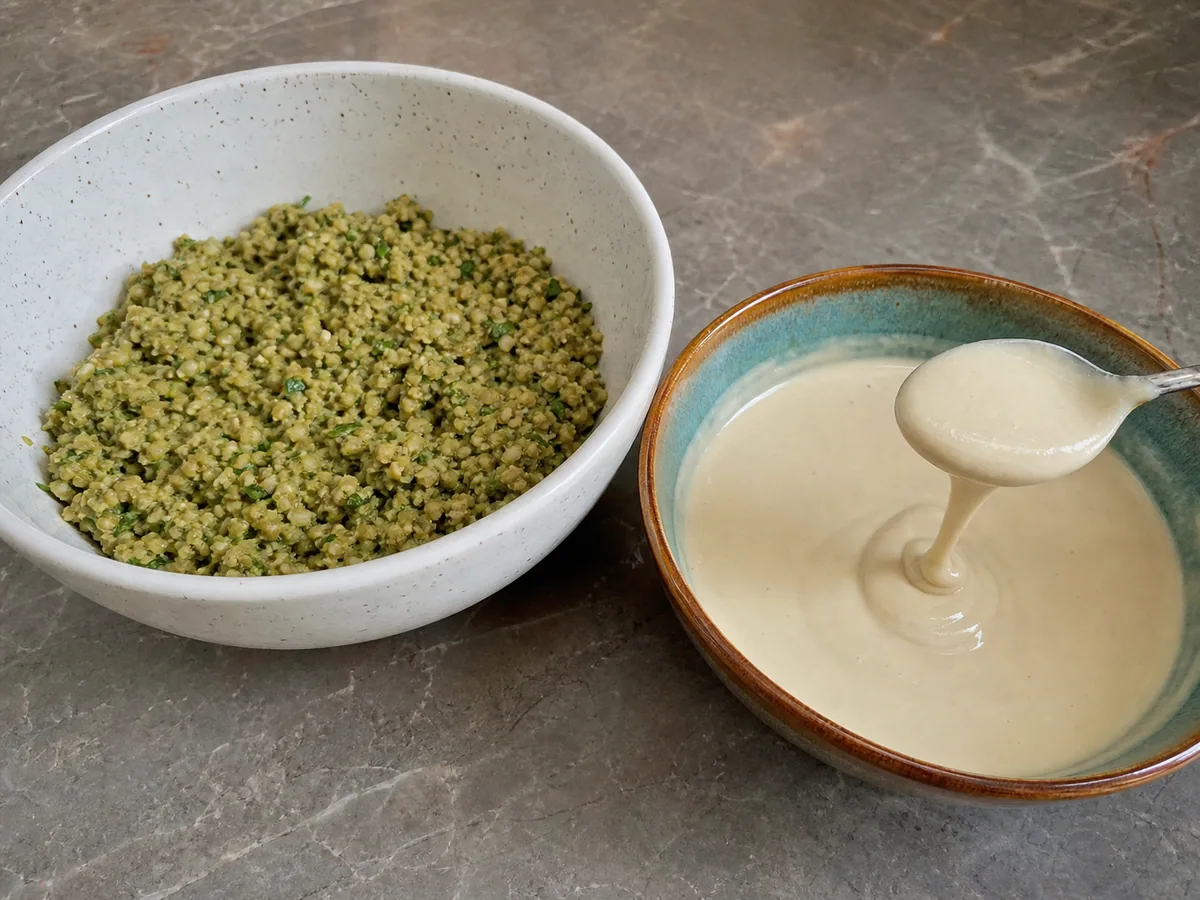
Transfer the falafel mixture to a bowl. Sprinkle 4 g of baking powder and 16 g of chickpea flour over it, then fold until evenly distributed. Let the mixture stand for 20 minutes. Meanwhile, whisk 80 g of tahini (sesame paste), 60 ml of fresh lemon juice, 1 garlic clove for tahini sauce, and 1 1/2 g of kosher salt for tahini sauce in a small bowl; it may tighten at first. Add 80 ml of cold water gradually and keep whisking until the sauce is pale, smooth, and thick enough to coat a spoon.
20:00Shape the falafel
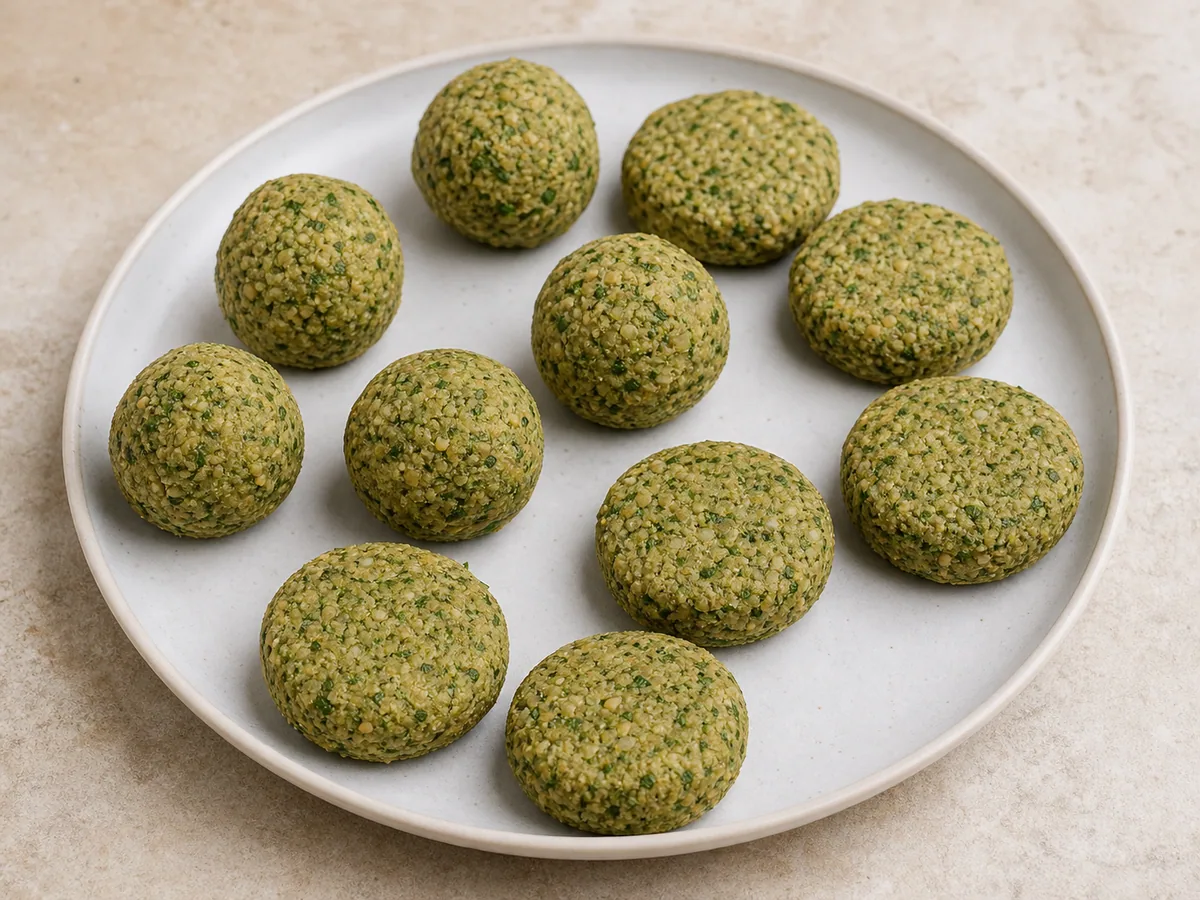
Scoop heaped tablespoons of the mixture and press each portion firmly into a compact ball or a slightly flattened round about 4 cm (1 1/2 in) wide. Arrange them on a plate without packing them tightly together, and continue until all the mixture is shaped. If the first one cracks at the edges, compress it more firmly rather than adding water.
Heat the frying oil safely
Pour enough neutral frying oil into a deep, heavy saucepan to reach 5 cm (2 in) deep while keeping the oil below one-third of the pan's height. Heat over medium-high heat to 180°C (355°F), checking with a deep-fry thermometer. Keep the tahini sauce and serving plate away from the stove, and make sure the shaped falafel are dry before they approach the oil.
Fry until crisp and deeply golden
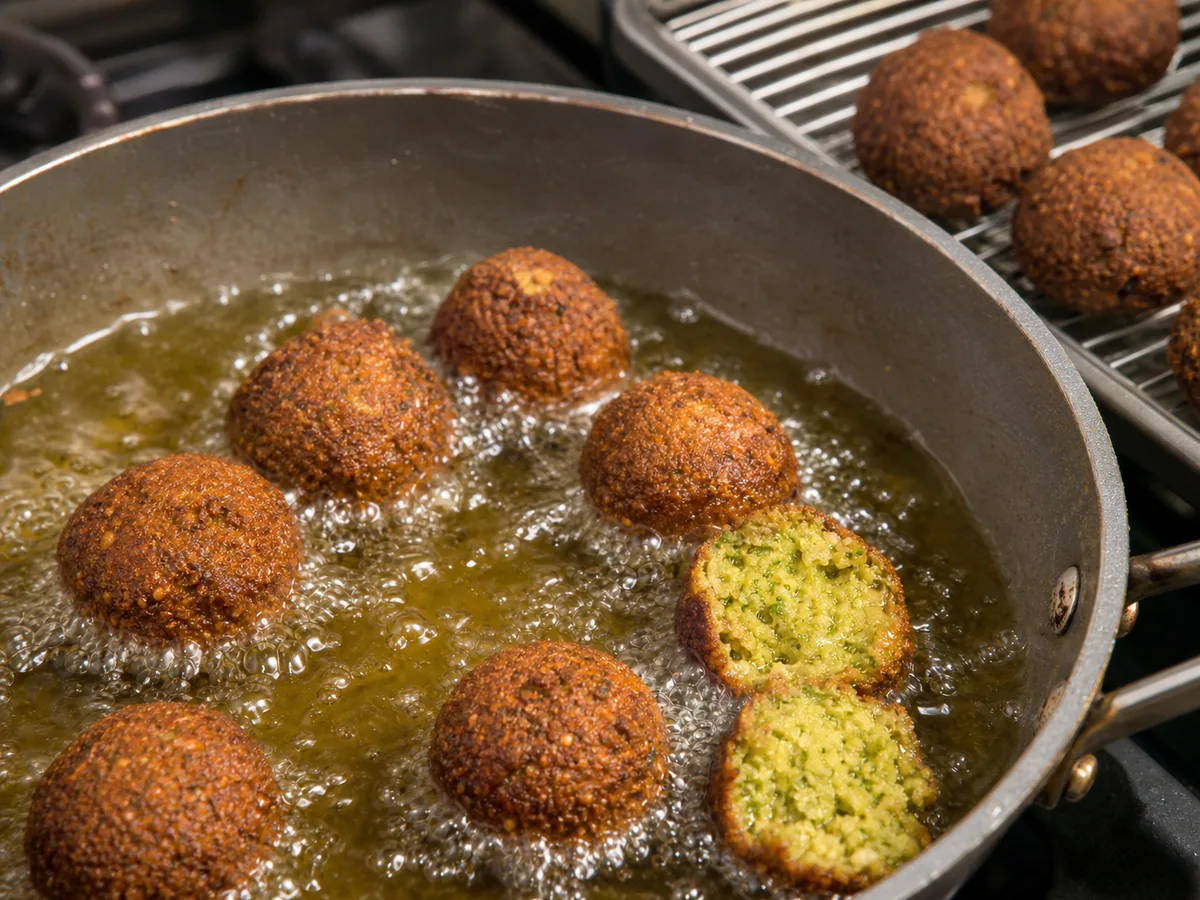
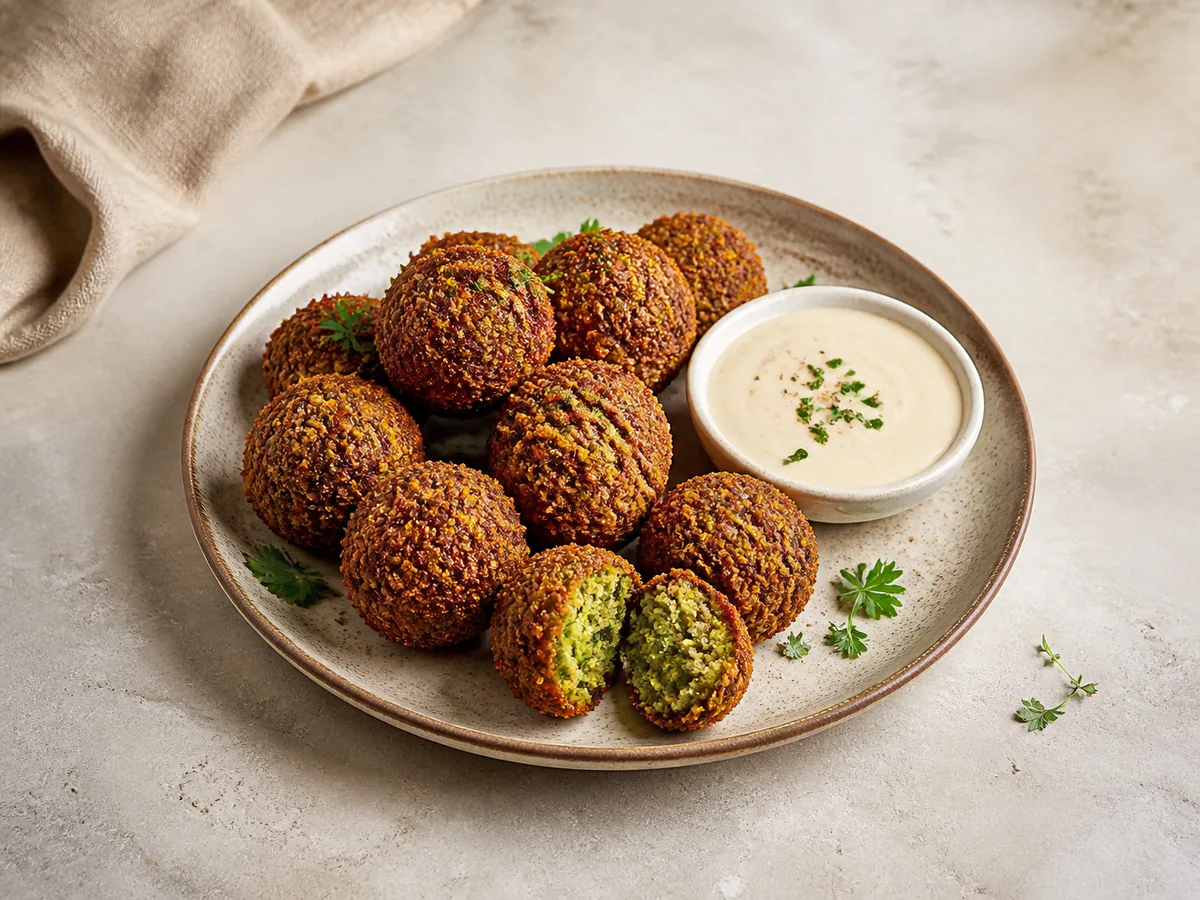
Lower one falafel into the oil as a test. It should bubble steadily and hold its shape. Fry the remaining falafel in small batches, leaving space around each one and maintaining 175 to 185°C (350 to 365°F). Turn them as needed and fry for 3 to 4 minutes, starting the first doneness check at 3 minutes. They are ready when deeply golden and crisp outside, with a hot, tender green center. Lift them out with a slotted spoon and drain briefly on a rack set over a tray.
03:00Serve with tahini
Pile the hot falafel onto a serving plate and spoon some tahini sauce alongside, keeping the rest in a small bowl for dipping. Serve immediately with pita bread (optional) and tomatoes and cucumber (optional) alongside.


Smart Substitutions
- No cilantro? Use the same volume of additional parsley, or replace half with fresh mint for a cooler herbal note.
- No chickpea flour? Use all-purpose flour in the same amount; the falafel will no longer be gluten-free.
- No ground coriander? Use an extra half-teaspoon of cumin and a small pinch of ground allspice.
- No tahini? Unsweetened sunflower seed butter gives a similarly creamy sauce with a different, milder flavor.
Tips and Variations
- Dry the soaked chickpeas thoroughly; surface water weakens the mixture and causes dangerous oil spatter.
- Use short food-processor pulses so the chickpeas become evenly coarse without turning pasty.
- Fry one test falafel first, then adjust the seasoning or add a small spoonful of chickpea flour before cooking the full batch.
What Went Wrong?
- Falafel breaks in the oil Process the mixture a little finer, press each portion more firmly, and let the mixture stand for another 10 minutes before testing again.
- Falafel is greasy Let the oil return to 180°C (355°F) and fry fewer pieces at a time so the temperature does not drop sharply.
- Outside browns before the center is hot Shape smaller rounds and keep the oil near 175°C (350°F) rather than letting it climb higher.
- Tahini sauce becomes stiff or grainy Keep whisking in cold water a little at a time. Tahini often tightens before it relaxes into a smooth sauce.
Nutrition Estimate
- Fiber: 11 g per serving
- Sodium: 750 mg per serving
Nutrition disclaimer:This recipe is provided for general cooking information only. Nutrition values are estimates and may vary by ingredients, brands, preparation methods, and serving sizes. Check ingredient labels and follow appropriate food-safety practices. This content is not medical, dietary, allergy, or professional food-safety advice.
FAQ
Found an error or have a suggestion?
Help us improve this recipe. Send us your feedback and include the recipe name so we can take a look.