Method
Prepare the mint and water
Rinse 30 g of fresh spearmint gently under cool running water and shake it dry. Set aside a few tender tips for the glasses. Bring 720 ml of water to a full boil in a kettle.
Rinse the tea leaves
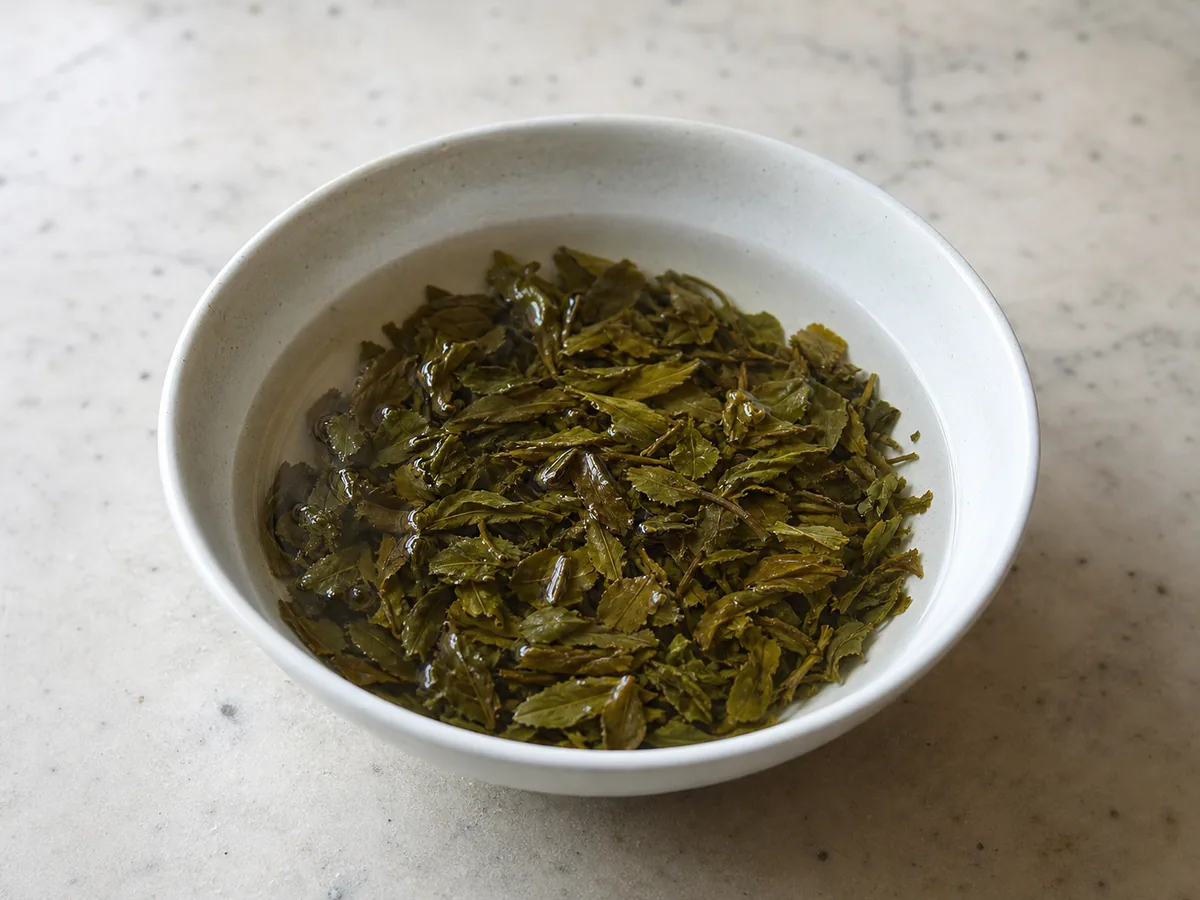
Add 10 g of gunpowder green tea to a small saucepan. Pour in just enough boiling water to cover the leaves, swirl for 10 seconds, then pour off the rinse through a fine-mesh strainer and return any caught leaves to the saucepan.
00:10Sweeten and infuse the tea
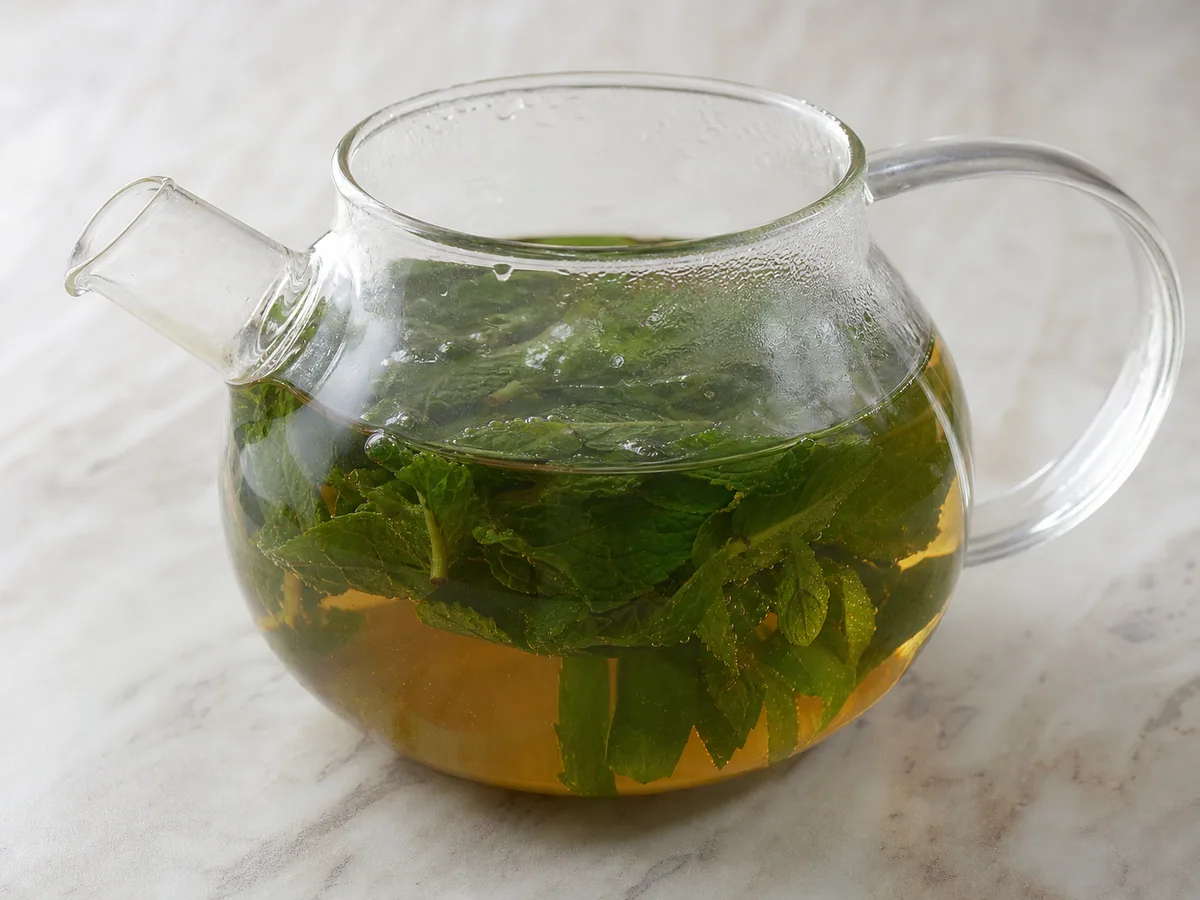
Add 60 g of granulated sugar and 30 g of fresh spearmint to the saucepan, keeping the reserved tips aside. Pour in the remaining boiling water and set the saucepan over medium heat. Bring the tea to a gentle simmer, then cook for 3 minutes; look for steady small bubbles around the edge, and lower the heat if it approaches a hard boil.
03:00Strain and mix the tea
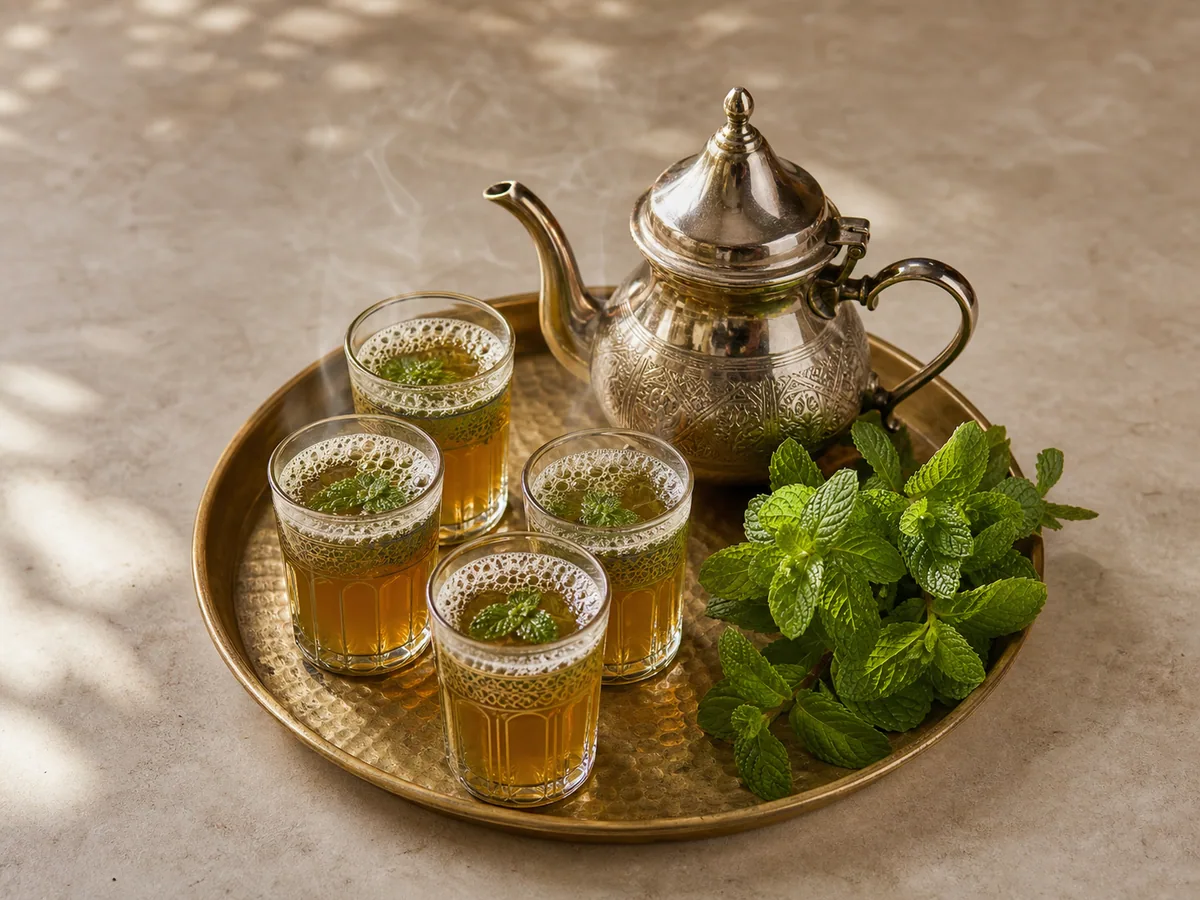
Remove the saucepan from the heat. Set a fine-mesh strainer securely over a warmed serving teapot and strain in the tea, leaving the leaves and cooked mint behind. Pour one glassful from the teapot, return it to the teapot, and repeat once more to distribute the dissolved sugar and even out the strength.
Pour and serve
Place a reserved mint tip in each small heatproof glass. Pour from the serving teapot in a thin, steady stream, raising it only to a modest height when you can do so safely and without splashing. Serve immediately while the mint aroma is bright and the surface is lightly foamy.


Smart Substitutions
- No gunpowder tea? Use a robust loose-leaf Chinese green tea; delicate green teas can turn sharp with this hotter brewing method.
- No spearmint? Use fresh peppermint for a cooler, more assertive finish, or combine several mild fresh mint varieties.
- Prefer less sweetness? Use less sugar to suit your table, while keeping enough to round out the tannic green tea.
- No serving teapot? Use a heatproof pitcher with a stable handle; strain the tea into it before the pour-back mixing step.
Tips and Variations
- Include the tender spearmint stems; they contribute aroma without needing to be chopped.
- Keep the simmer gentle and brief so the green tea stays brisk rather than aggressively bitter.
- For a foamy top, pour in a thin steady stream from a moderate height over the center of each glass.
What Went Wrong?
- Tea tastes too bitter The tea simmered too hard or too long. Dilute it with a little hot water and keep the next batch at a gentle 3-minute simmer, then strain it promptly.
- Mint flavor is faint Use a fuller bunch of fresh spearmint and keep several tender tips for the glasses so their aroma reaches the drinker first.
- Tea tastes uneven from glass to glass Repeat the pour-back mixing step in the serving teapot before pouring the glasses so the dissolved sugar and extracted tea are evenly distributed.
- Loose leaves reach the glass Pour through a fine-mesh strainer and move the saucepan gently so settled leaves are not stirred up.
Nutrition Estimate
- Fiber: 0 g per serving
- Sodium: 5 mg per serving
Nutrition disclaimer:This recipe is provided for general cooking information only. Nutrition values are estimates and may vary by ingredients, brands, preparation methods, and serving sizes. Check ingredient labels and follow appropriate food-safety practices. This content is not medical, dietary, allergy, or professional food-safety advice.
FAQ
Found an error or have a suggestion?
Help us improve this recipe. Send us your feedback and include the recipe name so we can take a look.