Method
Soften the onion
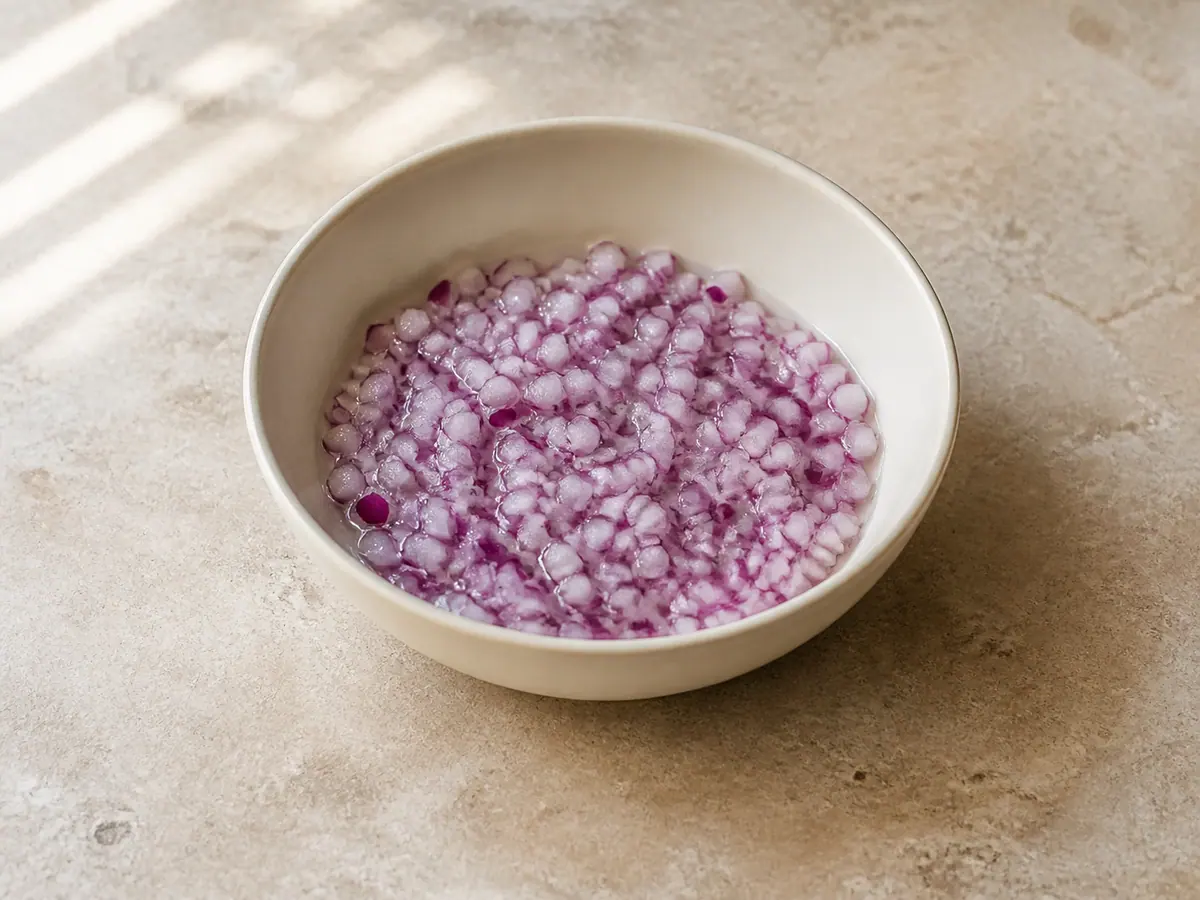
Cut 80 g of red onion into very fine dice and place it in a small bowl. Add 30 ml of fresh lemon juice, stir well, and let the mixture stand for 5 minutes. The onion should lose some of its raw edge while staying crisp.
05:00Prepare the tomatoes and herbs
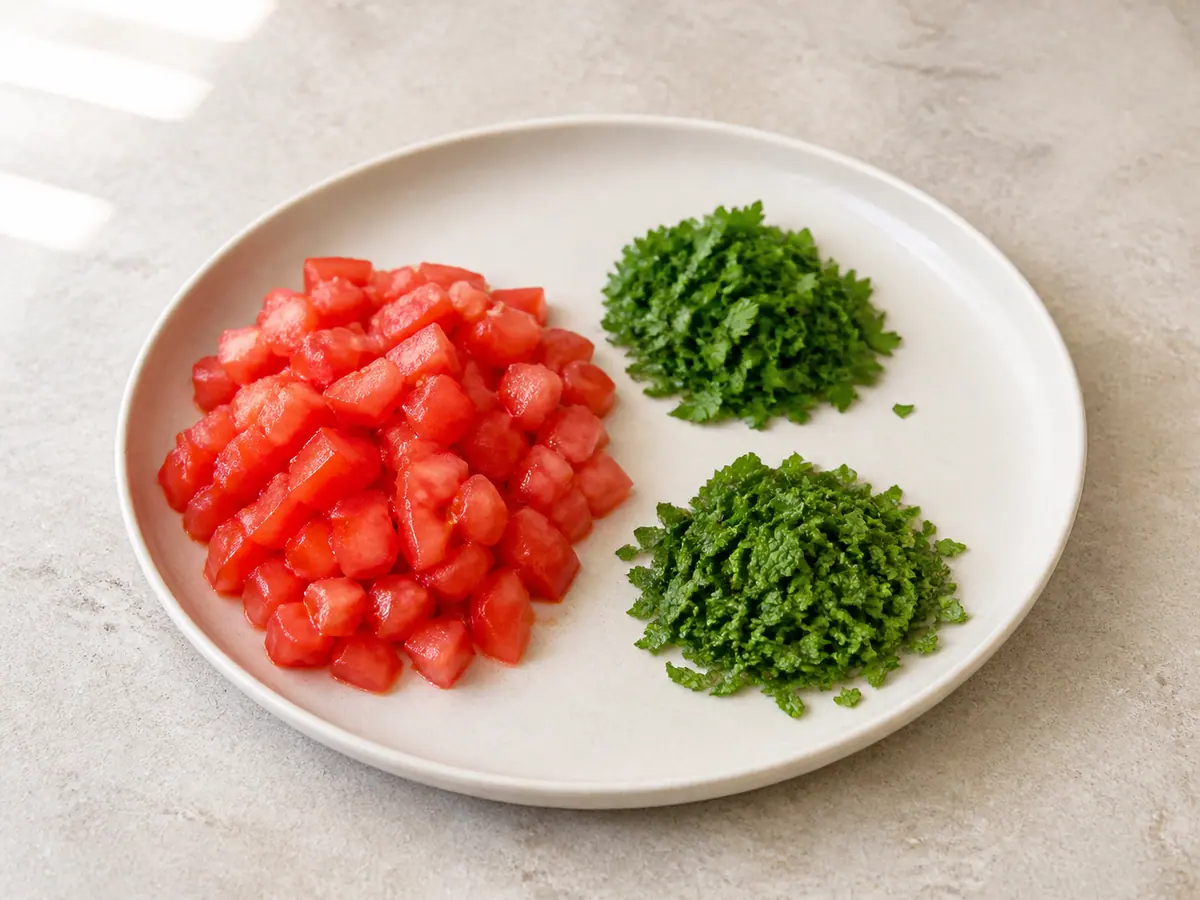
Rinse 400 g of ripe tomatoes, 20 g of fresh parsley, and 10 g of fresh mint thoroughly under running water, then dry them well. Cut 400 g of ripe tomatoes into roughly 1 cm pieces. Chop 20 g of fresh parsley and 10 g of fresh mint, discarding thick stems so the herbs stay tender in the finished plate.
Crumble and combine
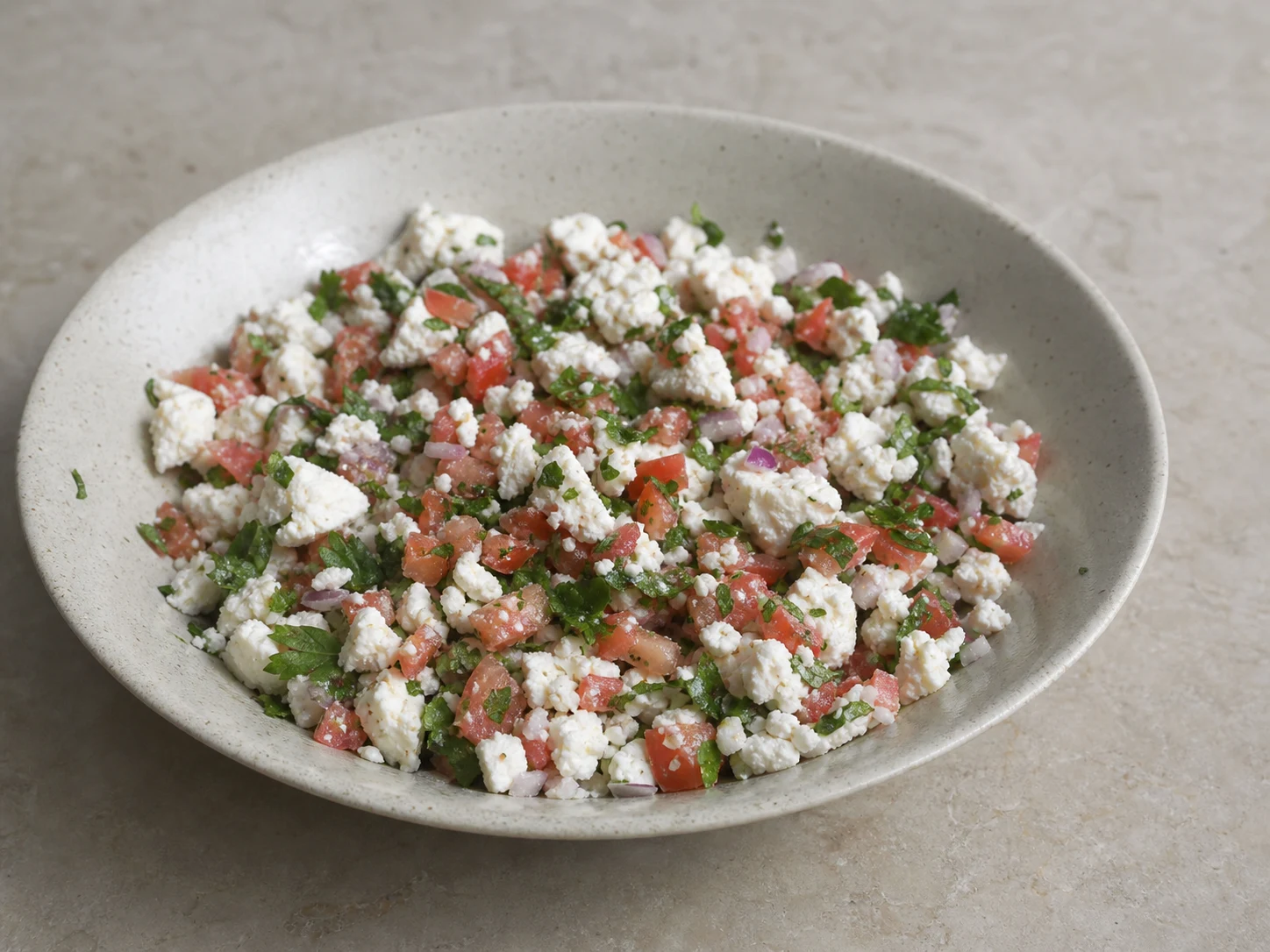
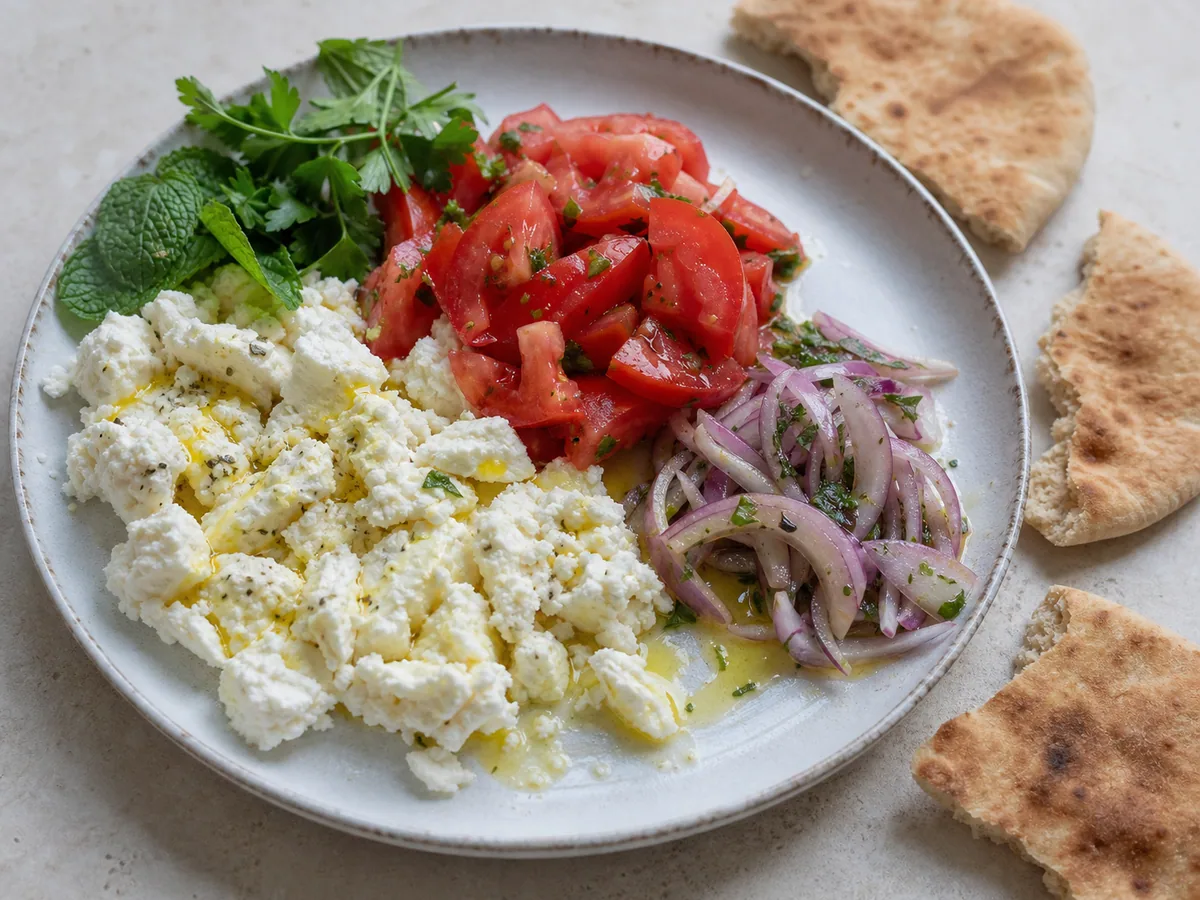
Using a fork, break 180 g of pasteurized shanklish cheese into irregular 1 to 2 cm pieces on a wide shallow serving plate; keep a mix of small crumbles and larger nuggets rather than mashing it smooth. Add 400 g of ripe tomatoes, the softened onion mixture, 20 g of fresh parsley, 10 g of fresh mint, and 1 g of black pepper. Fold gently two or three times so the ingredients mingle without turning the cheese pasty.
Dress and serve
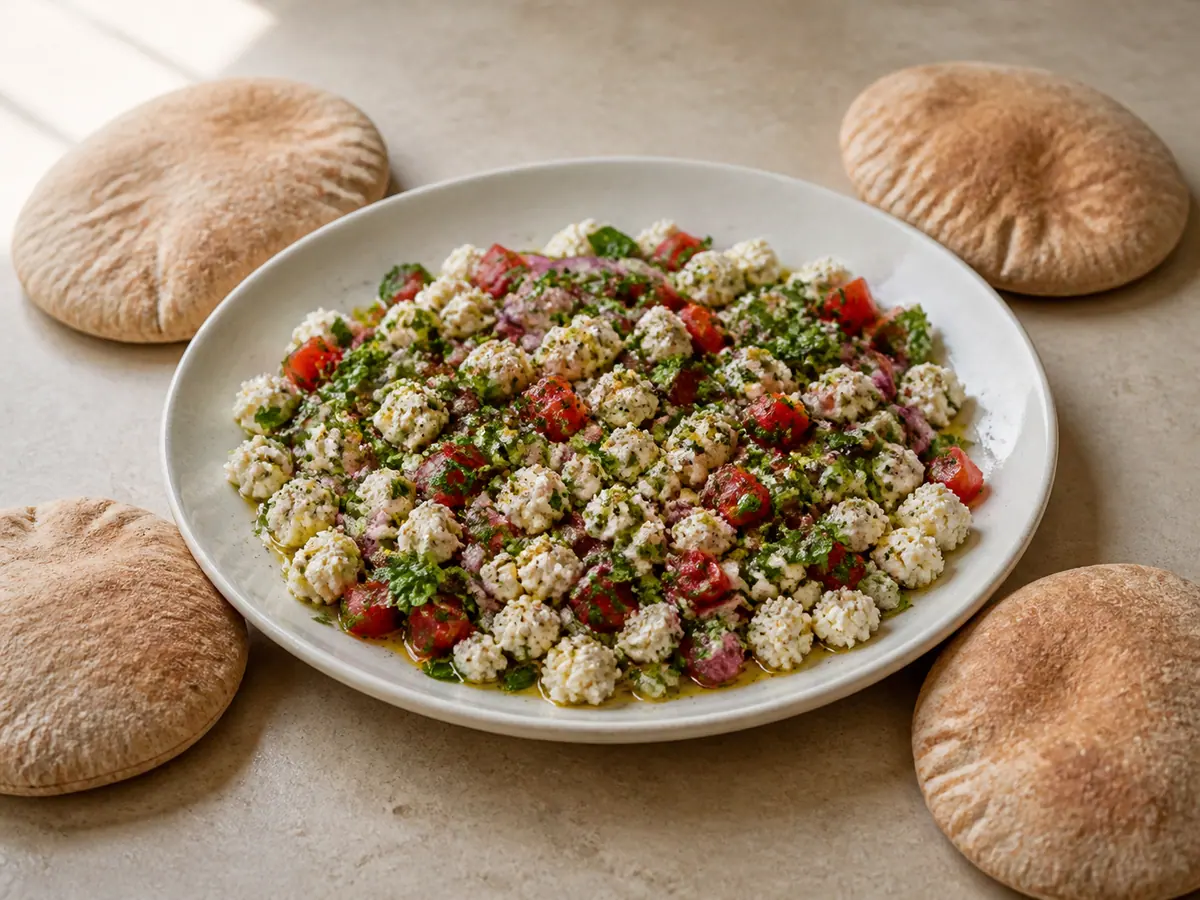
Drizzle 45 ml of extra-virgin olive oil evenly over the plate and fold once, just enough for the tomato juices and oil to coat the cheese. Taste a tomato-cheese bite before adjusting anything because shanklish can be assertively salty. Arrange 4 small whole-wheat pita breads, about 35 g each around the plate and serve immediately while the vegetables are crisp and the cheese remains crumbly.


Smart Substitutions
- No shanklish? Use firm feta and dust it lightly with za'atar. The result will be milder and less aged but will keep the salty, herbaceous contrast.
- No red onion? Use scallions or a mild sweet onion, cut very finely so it blends into the tomatoes.
- No fresh mint? Use additional parsley with a small amount of fresh oregano for a similarly green, aromatic finish.
- No whole-wheat pita? Serve with Lebanese flatbread, lavash, or another thin bread that can scoop the cheese and tomato mixture.
Tips and Variations
- Choose tomatoes that are ripe but still firm; very soft tomatoes can flood the plate before the cheese is mixed.
- Keep some shanklish pieces larger than the rest so the plate has distinct salty bites instead of one uniform texture.
- Add the olive oil only after the cheese and vegetables are combined to help the shanklish stay crumbly.
What Went Wrong?
- The plate is watery Set very juicy tomato pieces in a strainer for 2 to 3 minutes before combining, then use only enough of their juice to lightly dress the cheese.
- The cheese tastes too salty Fold in more ripe tomato and fresh herbs. Do not add extra salt before tasting the fully mixed plate.
- The onion is too sharp Cut it more finely and give it another 2 minutes in the lemon juice before adding it to the plate.
- The shanklish turns pasty Use a fork instead of a spoon, keep larger pieces intact, and fold fewer times after the tomatoes are added.
Nutrition Estimate
- Fiber: 4 g per serving
- Sodium: 740 mg per serving
Nutrition disclaimer:This recipe is provided for general cooking information only. Nutrition values are estimates and may vary by ingredients, brands, preparation methods, and serving sizes. Check ingredient labels and follow appropriate food-safety practices. This content is not medical, dietary, allergy, or professional food-safety advice.
FAQ
Found an error or have a suggestion?
Help us improve this recipe. Send us your feedback and include the recipe name so we can take a look.